Yellowstone National Park’s second-largest geyser is showing signs of getting active again.
Giant Geyser in the Upper Geyser Basin has erupted twice in two months. The last eruption occurred Aug. 17.
That might not sound like a lot, but Giant Geyser can go for years, even decades, without discharging a single drop of water. But when it goes, it goes big.
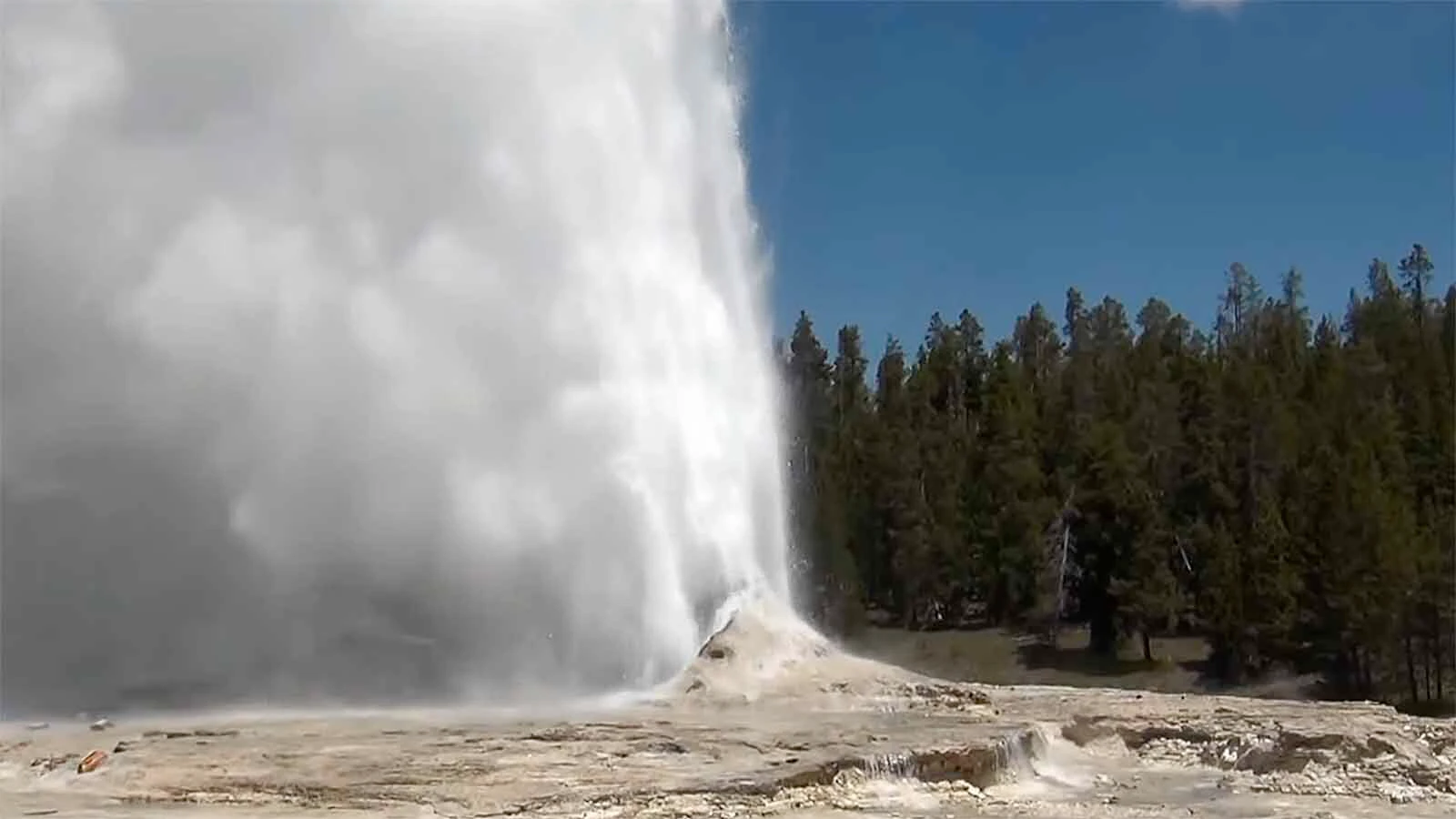
“The name is well-deserved,” said Mike Poland, scientist-in-charge of the Yellowstone Volcano Observatory. “The most recent eruption was estimated to be 150 to 200 feet tall for over an hour.”
Going Up
Giant Geyser is one of the largest, tallest, and most powerful geysers in Yellowstone, second only to Steamboat Geyser in the Norris Geyser Basin.
Giant’s eruptions can last up to two hours and reach a height of 250 feet, discharging an estimated 1 million gallons of water. According to Lee Whittlesey’s book “Yellowstone Place Names,” a 2000 eruption reached a height of 275 feet.
The duration between the last two eruptions of Giant Geyser, on Aug. 17 and June 26, was 52 days. Before that, the geyser had erupted twice in over six years.
Two eruptions in two months could be a sign that Giant Geyser is gearing up again.
"We might be able to say that Giant has entered a phase where it's a bit more active,” Poland said. “We know that it goes through these phases of being more and less active. I remember it had a number of eruptions in relatively rapid succession in 2018 before going quiet for a while.”
In 1997, the best year on record for Giant Geyser, it erupted 49 times.
Giant erupted 40 times between October 2017 and March 2019. After that, it didn’t erupt again until November 2023.
Hot Periods
Cody resident and “geyser gazer” Janet Jones has seen Giant erupt multiple times. With three eruptions since October 2025, she is excited that the geyser could be entering another active period.
“Giant has what they call hot periods, where the water is rising toward the platform where Giant sits,” she said. “There are smaller vents in front of Giant that start erupting, and we're seeing water in other features that are close to it.”
Giant Geyser is the dominant feature of the Giant Group, a collection of thermal features in the Upper Geyser Basin that behave as if they’re connected. The other features include Bijou Geyser, Catfish Geyser, Mastiff Geyser, the "Platform Vents," and Turtle Geyser.
During some eruptions, Giant, Mastiff, and Catfish have all erupted in concert. It’s a rare type of eruption known as the “Mastiff function.”
Anyone looking for signs of an imminent Giant Geyser eruption might want to check in on Mastiff Geyser first. That, at least, is one of the signs Jones knows to look for.
“Some of the eruptions I’ve seen have had Mastiff rising and surging, 50 feet or so, before Giant goes,” she said. “Others watch for changes at Grotto Geyser, because the connections between Giant and other thermal features reach almost to Riverside Geyser.”
All of these thermal features are a half-mile away from the Old Faithful Visitor Center, along well-maintained paths and boardwalks.
Giant Presence
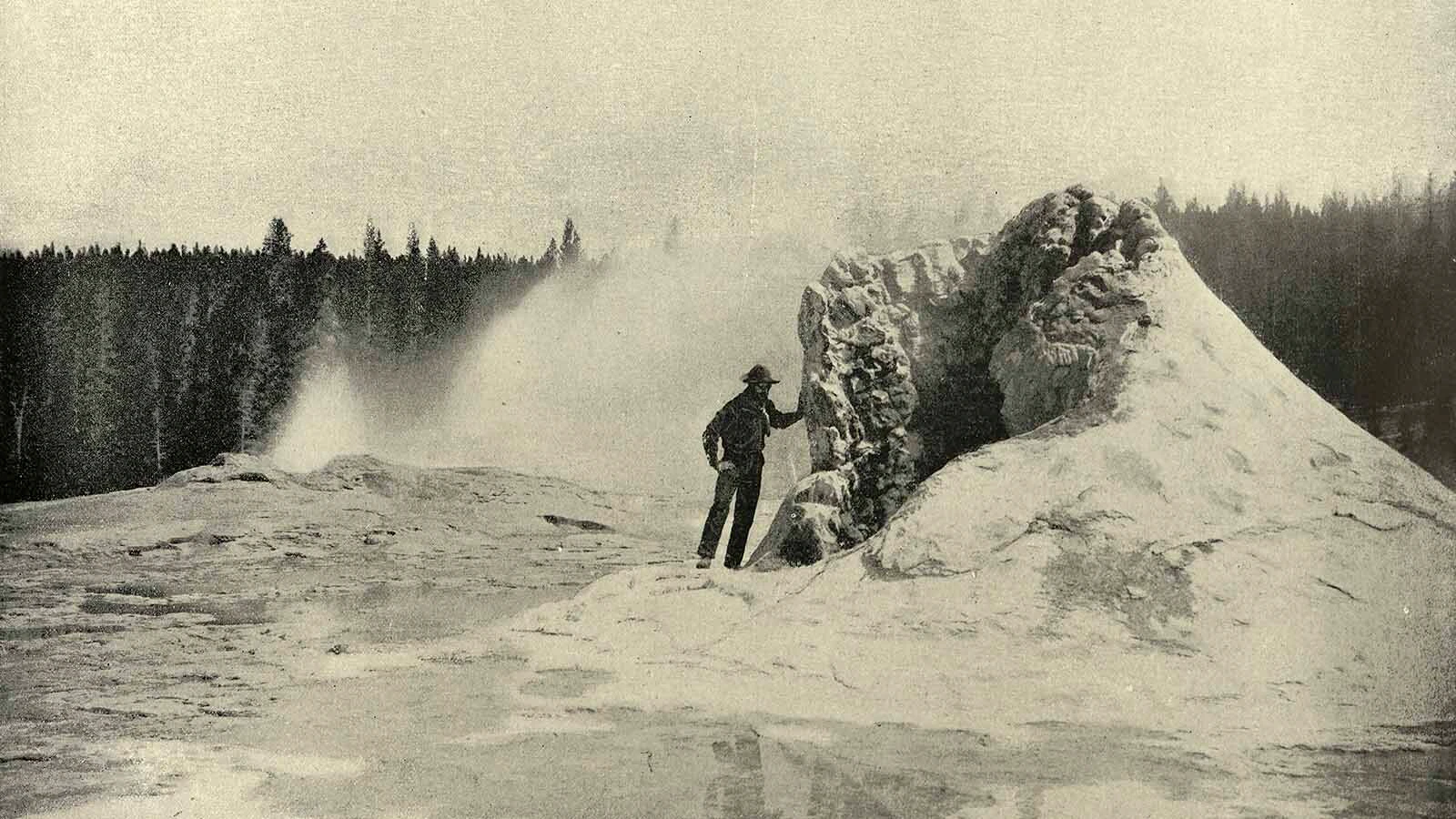
Giant Geyser has left a big impression since it was named during the Washburn–Langford–Doane Expedition of 1870.
“We thought it deserved to be called ‘The Giant’ as it threw out more water than any other geyser that we saw in operation,” wrote Walter Turnbull, who allegedly witnessed one eruption over three hours long in June 1871.
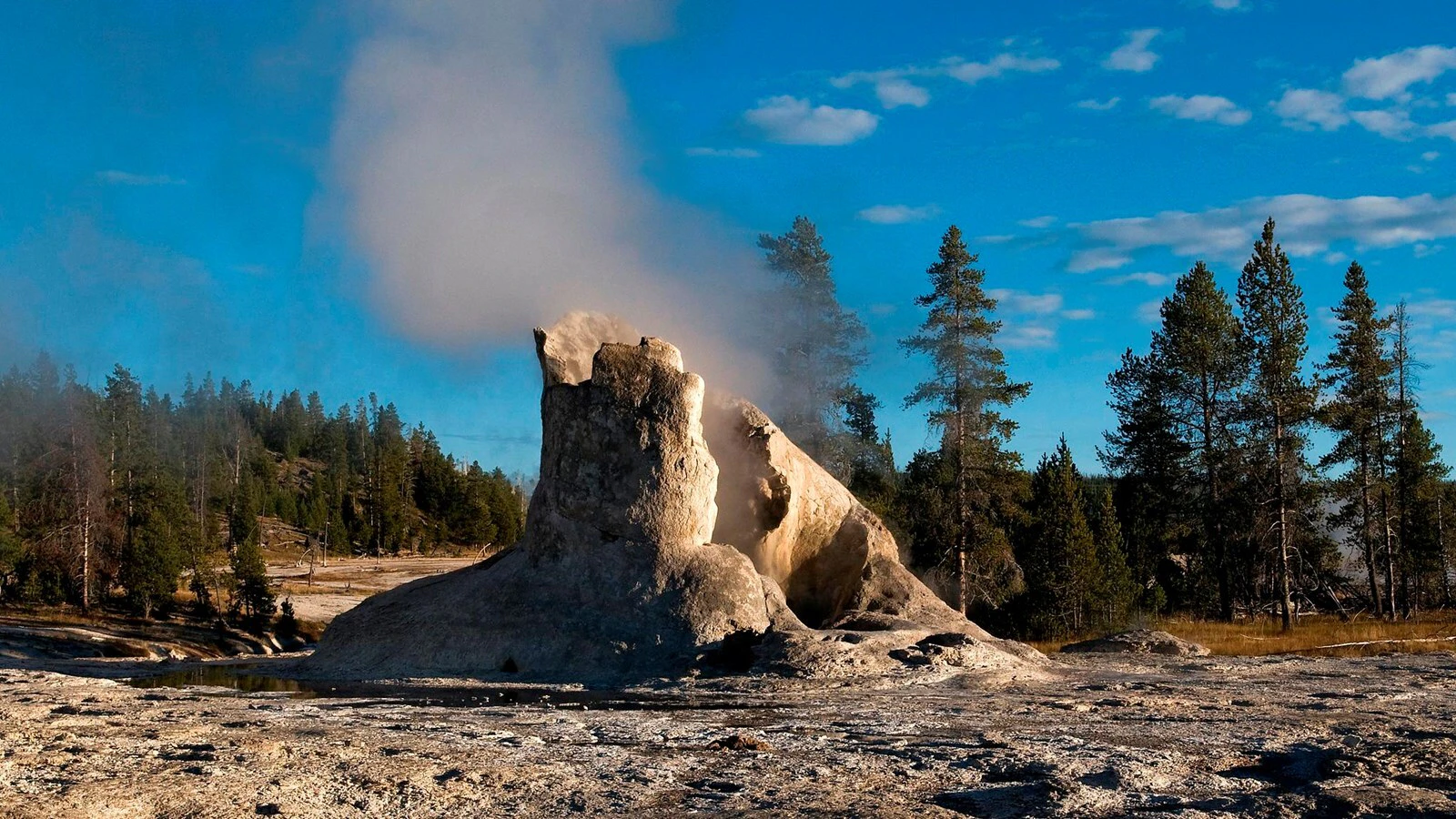
When it isn’t erupting, Giant is easily recognizable by its tall geyserite cone, which rises over 12 feet.
“The earliest description of Giant's cone was by a member of the Washburn expedition,” Jone said. “They described it as ‘a rugged deposit presenting in the form of a miniature model of the Colosseum,’ with an opening five to six feet in diameter.”
Because Giant Geyser eruptions can last well over an hour, anyone in the vicinity can rush over to catch an active and much rarer eruption while they’re waiting for Old Faithful to go.
“If it starts gaining momentum, it might erupt every 5 to 15 days,” Jones said.
Furthermore, a Giant Geyser eruption can be seen from the National Park Service’s Old Faithful livestream webcam. That’s another way people can experience, from a distance, the power of Yellowstone’s second-largest geyser.
Unlike Old Faithful, there are no guarantees that anyone waiting for a Giant Geyser eruption will see one. Even when it’s active, it’s unpredictable.
“I’d say that’s part of the magic of Yellowstone,” Poland said. “Most of these geysers are irregular performers, and you don't know when you're going to get these shows. If you happen to be there when you get an eruption like this, it's special.”
Contact Andrew Rossi at arossi@cowboystatedaily.com
Andrew Rossi can be reached at arossi@cowboystatedaily.com.