Shortly after President Donald Trump announced plans to allow an additional 300,000 metric tons of imported lean beef trimmings into the United States, Saratoga ranchers Kyle and Stacy Berger started getting phone calls and emails.
“People were calling, saying, ‘We don’t like this,’” Stacy Berger told Cowboy State Daily. “There are people who don’t like thinking about imported beef.”
Why not just buy a cow from a Wyoming rancher?
At a time when cattle prices are historically high and beef at the grocery store is giving shoppers sticker shock, buying directly from a rancher can sound appealing.
You know where the animal came from. You can choose how it is cut. You can fill the freezer in one shot.
But there are a few catches.
For starters, that cow standing in the pasture does not magically turn into an equivalent weight of neatly wrapped ribeyes, hamburger and roasts.
And figuring out exactly how much beef you'll get — and what you'll pay for it — requires a little cattle math.
“There are a lot of variables out there,” Berger said.
Crook County rancher Tyler Lindholm put it another way.
“Due to federal law, it’s a complicated question,” he said.
How Much Meat Is In A Cow?
Start with a steer weighing somewhere around 1,400 to 1,800 pounds.
That's about the range Celsie Sussex of Bear Mountain Beef in Hawk Springs, Wyoming, commonly sees coming through for processing.
Then start subtracting.
The animal's hide, head, feet, organs and other material aren't going home in your freezer alongside the T-bones.
Lindholm said a rough industry rule is that hanging weight — the carcass after slaughter and initial processing — comes in at about 63% of live weight.
And cattle have been getting bigger.
“Cattle is getting heavier and heavier,” Lindholm said. “The market is demanding bigger and bigger cattle.”
A large animal might produce 800 to 900 pounds of hanging weight, Lindholm said.
Sussex said an animal arriving at her facility at 1,400 to 1,800 pounds might produce roughly 700 to 900 pounds of hanging weight.
But you're not done subtracting yet.
Hanging weight still includes bones and fat that may not end up in the packages you carry home.
“Typically the difference in yields comes from the bones and fat,” Sussex said.
On a finished steer, that could include 20 to 30 pounds of fat and another 10 to 15 pounds of bones, depending on how the customer wants the animal cut.
So take a beef animal with a 900-pound hanging weight.
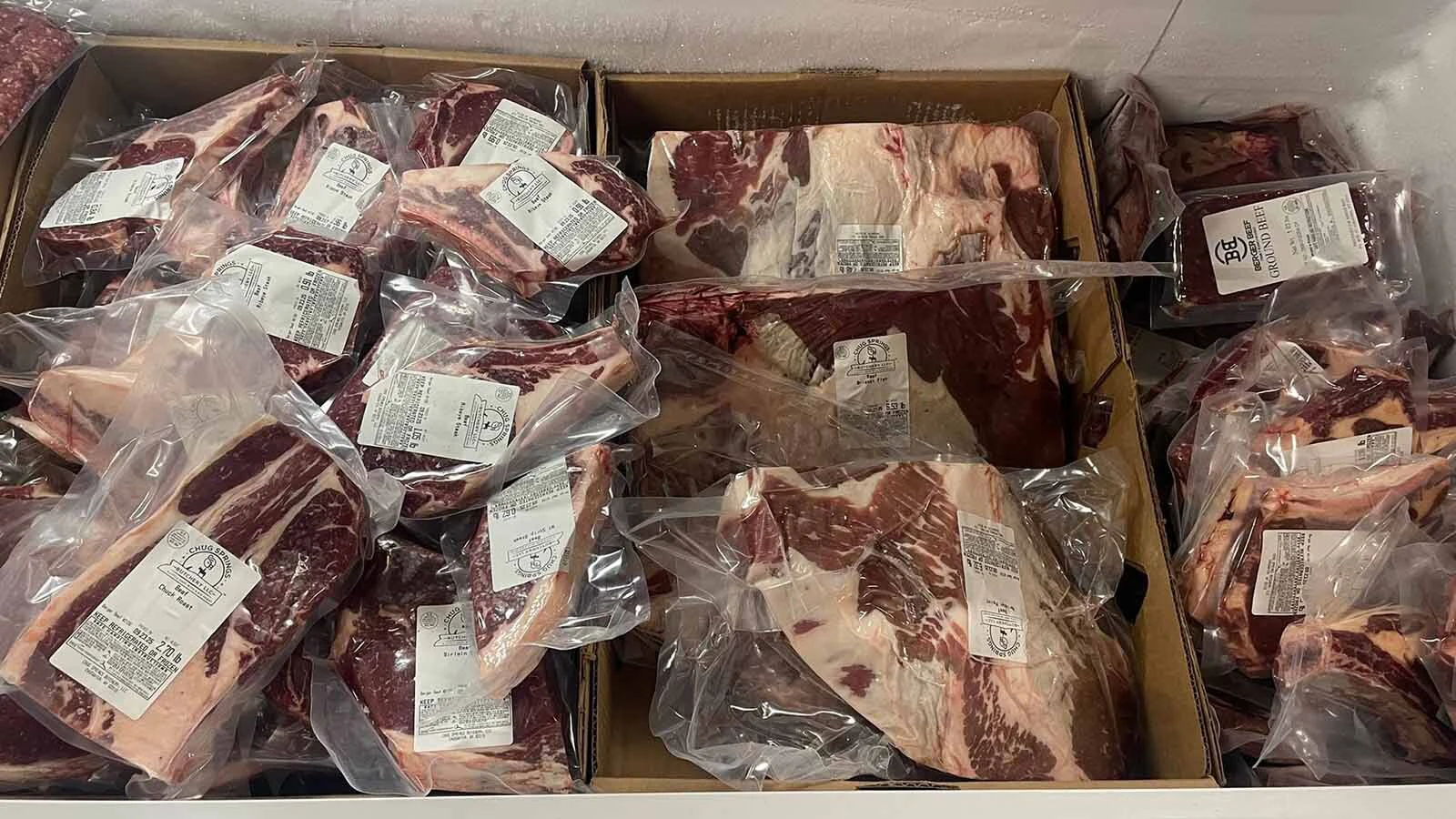
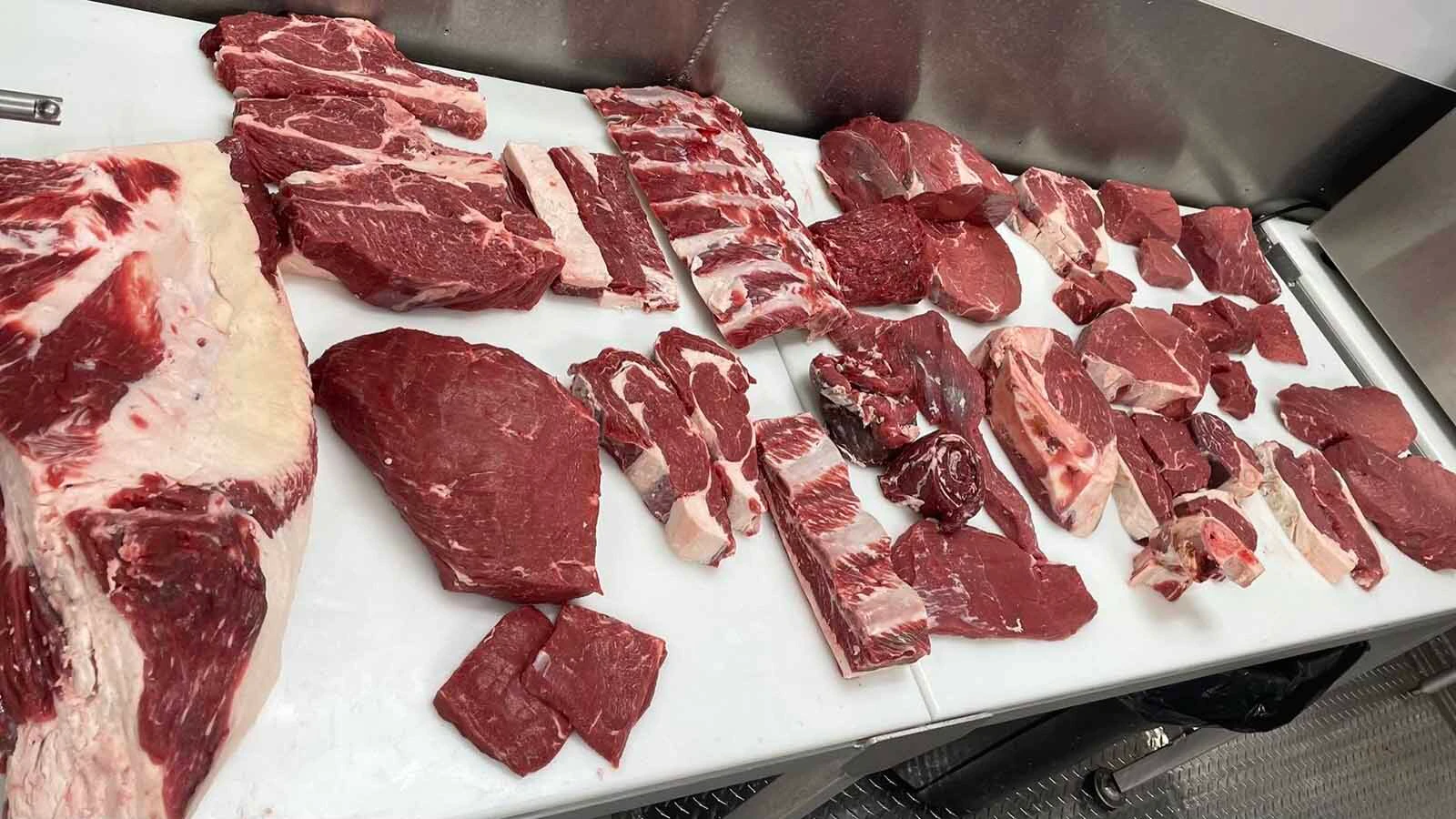
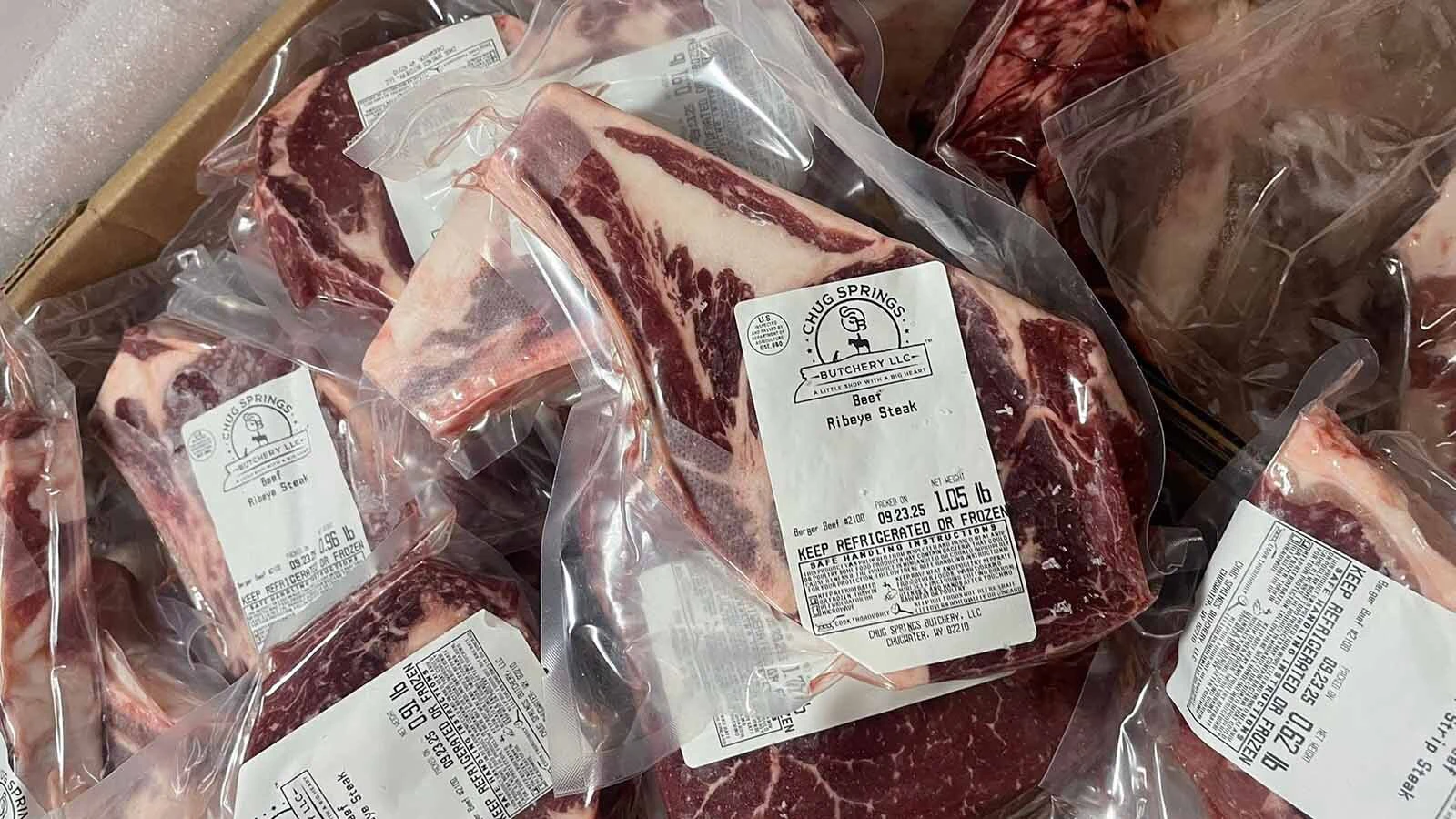
By the time the steaks, roasts, brisket and hamburger are wrapped and ready for the freezer, Sussex said a customer might end up with roughly 500 pounds of finished beef.
For a family of four who eat three meals of beef a week, that amounts to just under two years’ worth of meat.
And How Much Will That Cost?
Here, the cattle math gets even more interesting.
Lindholm offered a rough example based on current cattle prices.
The cow itself could cost about $2,950. Add roughly $1,300 for slaughter and processing, and a buyer could be looking at approximately $4,290 to put around 400 pounds of beef into the freezer.
Divide one by the other and suddenly the price isn't wildly different from what consumers are seeing at the grocery store — particularly once ribeyes, T-bones and other premium cuts are factored into the equation.
In Saratoga, beef grown by the Bergers has been selling for $9.99 a pound.
“We always charged per packaged weight because then people could compare to grocery store prices,” Berger said.
That's different from many direct-beef operations, which quote prices based on hanging weight.
That’s an important distinction.
If someone hears that a rancher is selling beef for, say, $5 or $6 a pound hanging weight, that doesn't mean the customer will end up with a freezer full of $5-a-pound steaks.
The customer is paying based on a carcass weight that includes bone and fat that may not make it into the finished packages.
Berger said she prefers to charge for what customers actually carry home.
“Our $10 a pound is pretty competitive at this point,” she said.
That price isn't guaranteed to last, though.
“The next time we have one processed, I’m sure we’ll have to raise our prices because the processing fees have been higher,” Berger said.
From Pasture To Package
Buying a cow also involves something grocery-store shoppers rarely have to think about: federal meat-processing rules.
Meat entering interstate commerce generally must be processed under federal inspection.
There is another route for someone who simply wants to fill his own freezer.
With custom slaughter, the customer takes ownership of the live animal, which can then be processed for that customer's personal use. That meat isn't eligible for retail sale.
Sussex said Bear Mountain Beef currently charges $1.30 per pound of hanging weight, plus a $100 slaughter fee.
And slaughtering an animal involves considerably more than turning a cow into hamburger.
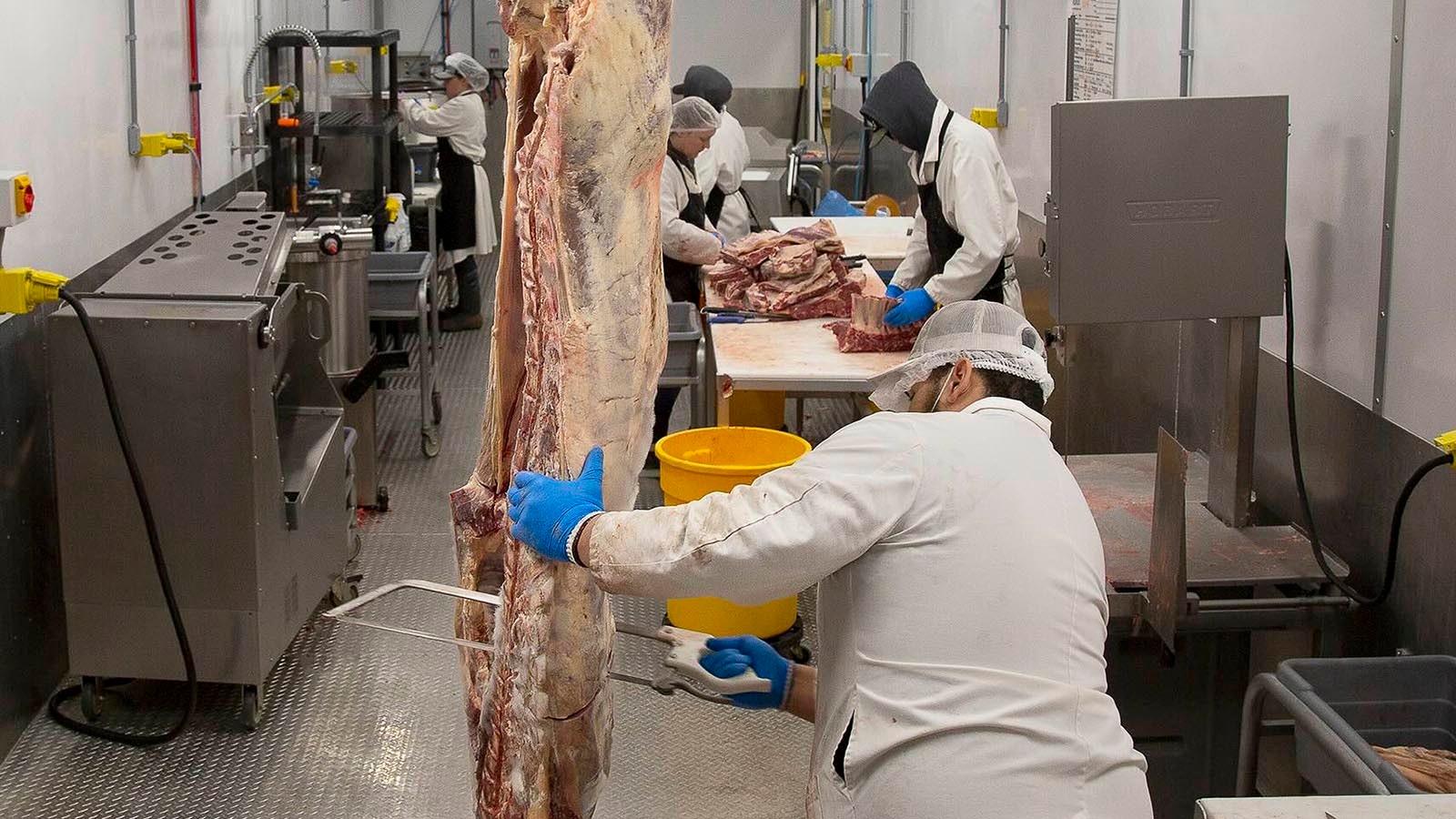
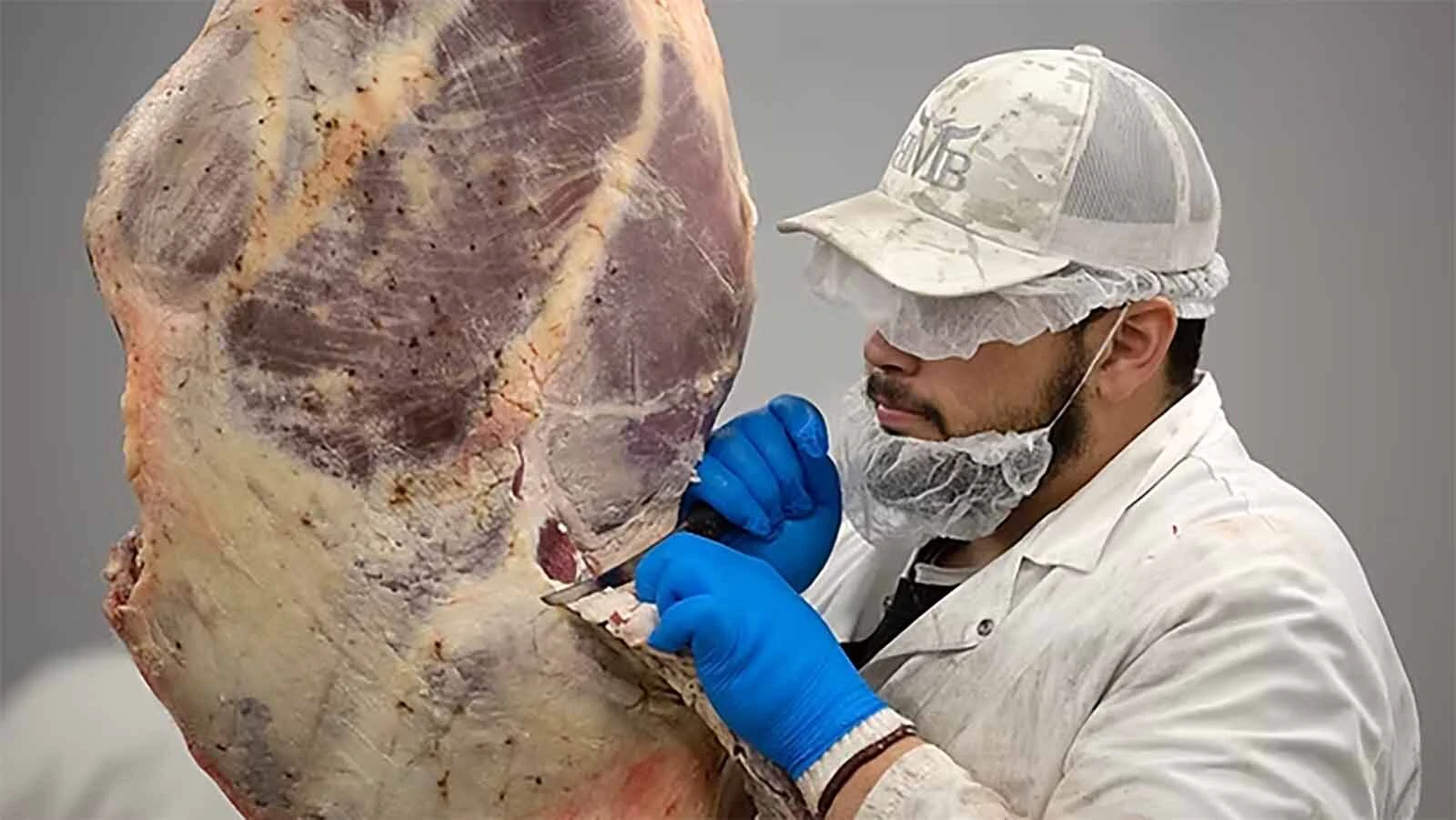
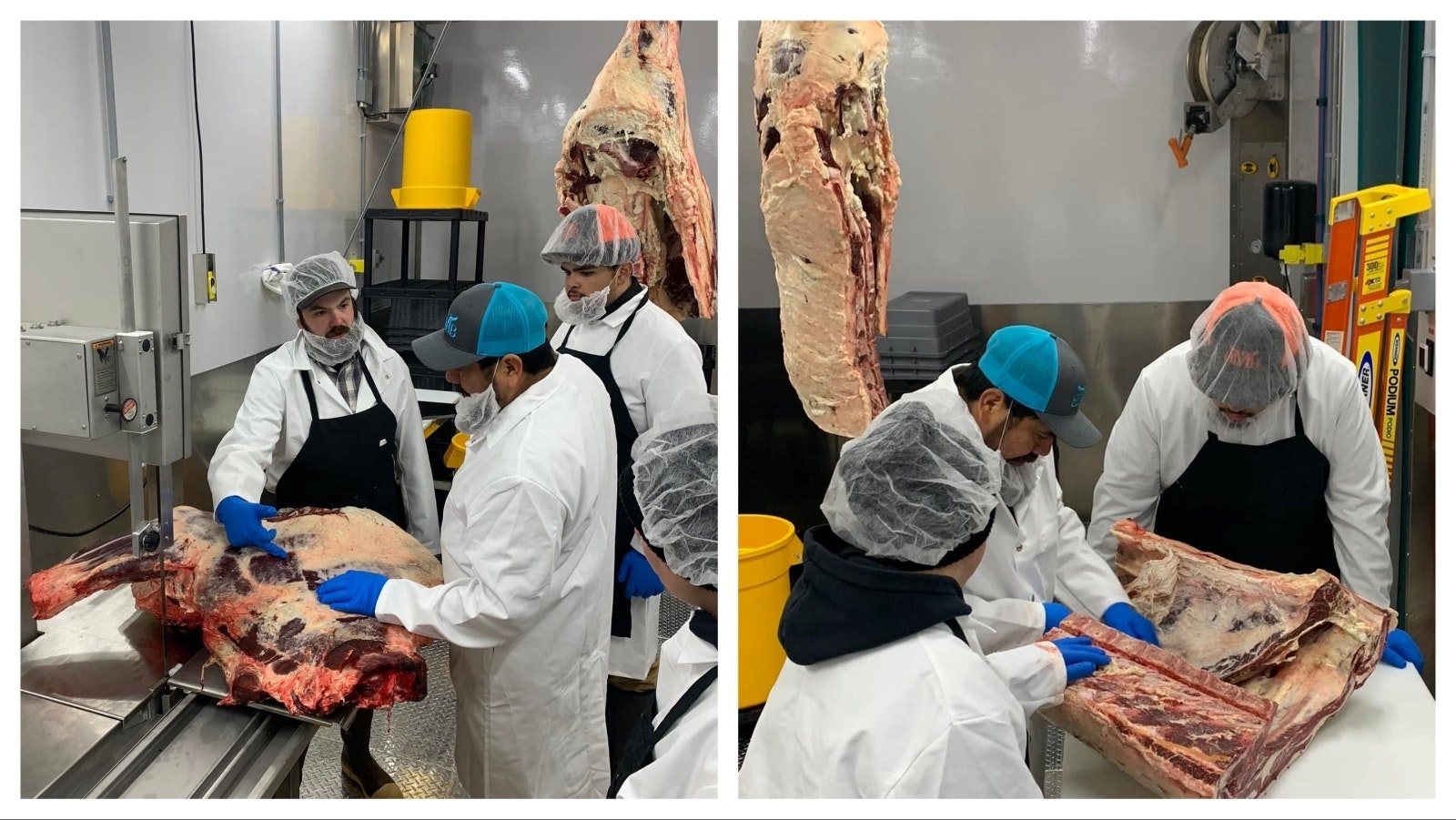
After the animal is stunned, the head, hide and legs are removed, Sussex said. The carcass is carefully trimmed to remove hair, dirt and other contamination before moving into a clean room, where the internal organs are removed.
The carcass is split in half, inspected and weighed.
Only then does that number called hanging weight enter the equation.
From there, the customer's choices determine what ultimately lands in the freezer.
How Do You Want Your Cow?
This is where buying directly from a rancher gets fun.
How thick do you want the steaks?
Bone-in or boneless?
How much hamburger?
What about the brisket?
Do you want soup bones?
And are you prepared to figure out what to do with cuts you may have never cooked before?
“When you’re selling a whole cow, people don’t know how to use all the pieces and parts,” Berger said.
She said she has considered putting together a cookbook to help customers make their way through an entire animal, although the project hasn't yet materialized.
What customers don't want as individual cuts can generally go into the hamburger pile.
The final amount of beef varies according to far more than the butcher's knife.
The animal's genetics, age and what it ate all plays into the equation.
Grass-finished cattle, for example, typically weigh less than grain-finished animals and produce beef with a different flavor.
“A lot of people are willing to pay more for grass finished,” Berger said.
Buying locally can also allow customers to get something much more customized than the shrink-wrapped package waiting under the supermarket lights.
Some locally processed beef can be aged for as long as 21 days, Berger said, allowing natural processes to tenderize the meat.
That makes it less like buying a commodity and more like buying a specialty product – the beef equivalent, she said, of choosing a craft beer over a mass-market one.
Some customers who make the switch tell her they don't want to go back to grocery-store beef.
First, Buy A Freezer
Before ordering an entire beef, however, there is one piece of equipment every aspiring direct-from-the-ranch shopper ought to own.
A very large freezer.
For 500 pounds of finished beef, Sussex recommends roughly 18 to 22 cubic feet of freezer space.
A common rule is approximately 1 cubic foot for every 35 to 40 pounds of meat, she said, with extra room needed because briskets, roasts and other bulky cuts don't stack as neatly as one-pound packages of hamburger.
In other words, the little freezer over the refrigerator probably isn't going to cut it.
Nor does everyone need to buy an entire beef.
Customers can buy halves, quarters or other shares, depending on how a rancher structures the sale.
Why Not Just Sell More Beef?
With consumers interested in buying locally and Wyoming full of cattle, it might seem like a golden opportunity for ranchers.
It's not quite that simple either.
The Bergers haven't finished an animal for a specific customer in more than a year.
The reason is the same one consumers are confronting at the meat counter: cattle are expensive.
“When we started selling beef, we could buy one for $1,200,” Berger said.
The last time they bought an animal to sell as beef, they paid more than $3,000.
She said she is reluctant to put exact figures on cattle because prices change so quickly.
“Cattle prices are so high we’re almost not able to do it,” she said.
Some consumers are willing and able to pay what ranchers need to charge.
Many aren't.
“Some people can and some people will,” Berger said, “but the price point doesn’t work for a lot of people.”
And ranchers can't simply decide on Tuesday that they'd like to have some steaks ready to sell Friday.
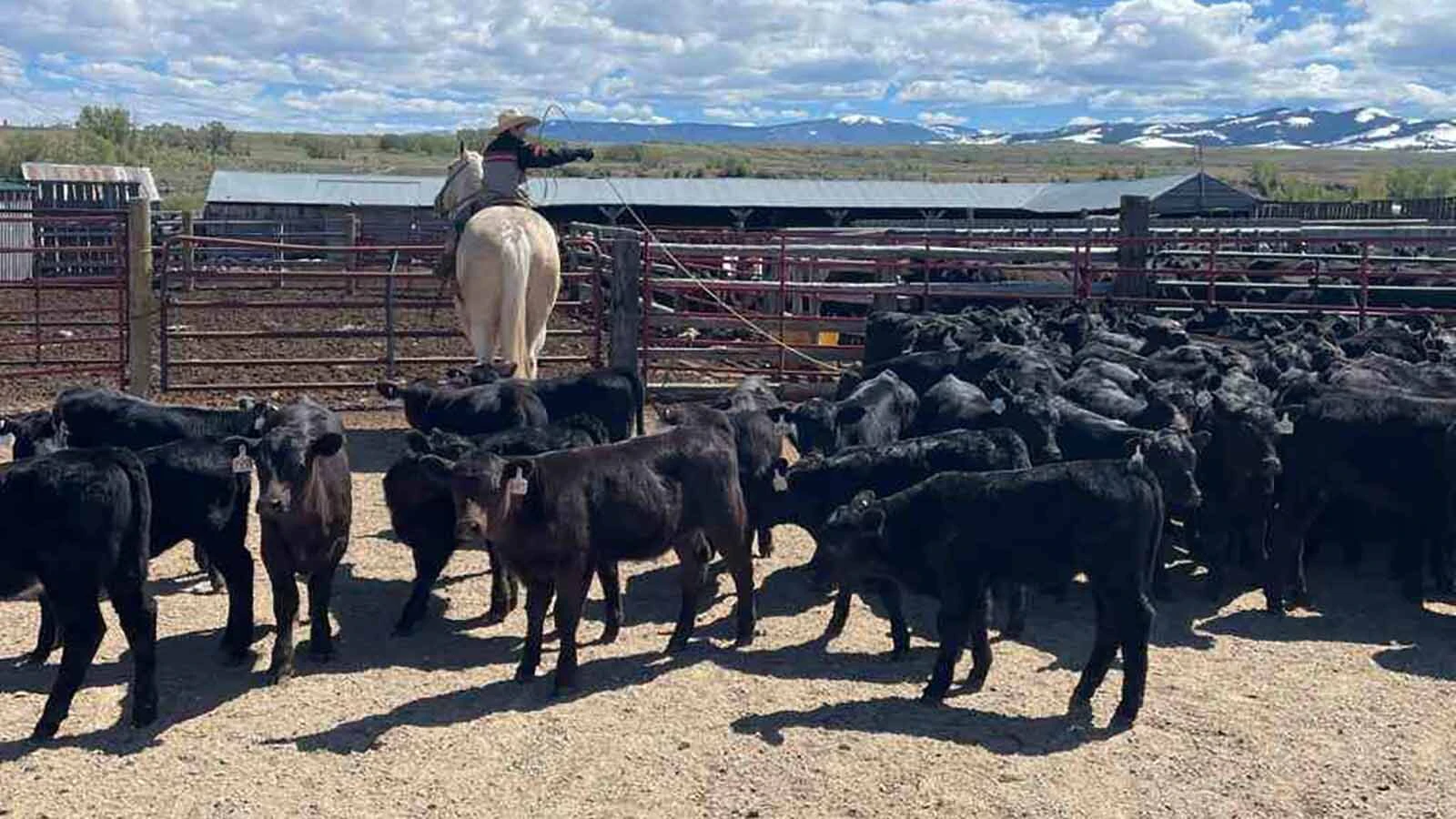
The Bergers work six to nine months ahead to finish cattle.
They have to decide how many animals to buy, how to feed them and how much demand they're likely to have months down the road.
Margins Slim For Producers
And if customers don't buy the beef, it means the rancher is still responsible for the cow.
“The margins are really small because feed is expensive, transportation is expensive,” Berger said.
The Bergers do sell ground beef through a local retailer and have found another surprising success: beef sticks and summer sausage.
Consumers want local meat, Berger said.
They also want dinner to be easy.
A customer who doesn't have time to thaw a roast and cook it for three hours might happily grab a $10 package of beef sticks instead.
It's a far cry from the original vision of helping people fill their freezers with high-quality Wyoming beef.
But it illustrates the strange economics of today's cattle business.
Consumers are looking at expensive steaks and hamburger in grocery stores and wondering whether there's a better way.
Ranchers are looking at record cattle prices, feed bills and processing costs and wondering whether they can afford to sell directly to those consumers.
Between them stands a 1,500-pound animal that eventually becomes perhaps 400 to 500 pounds of steaks, roasts and hamburger – along with a long chain of expenses, regulations and decisions.
Buying a cow can still be a way to know exactly where your beef came from, customize what's in your freezer and support a local rancher.
Just don't expect the math to be as simple as cow plus butcher equals cheap steak.
“We still haven’t been able to make it a business model that works for us,” Berger said.
Kate Meadows can be reached at kate@cowboystatedaily.com.