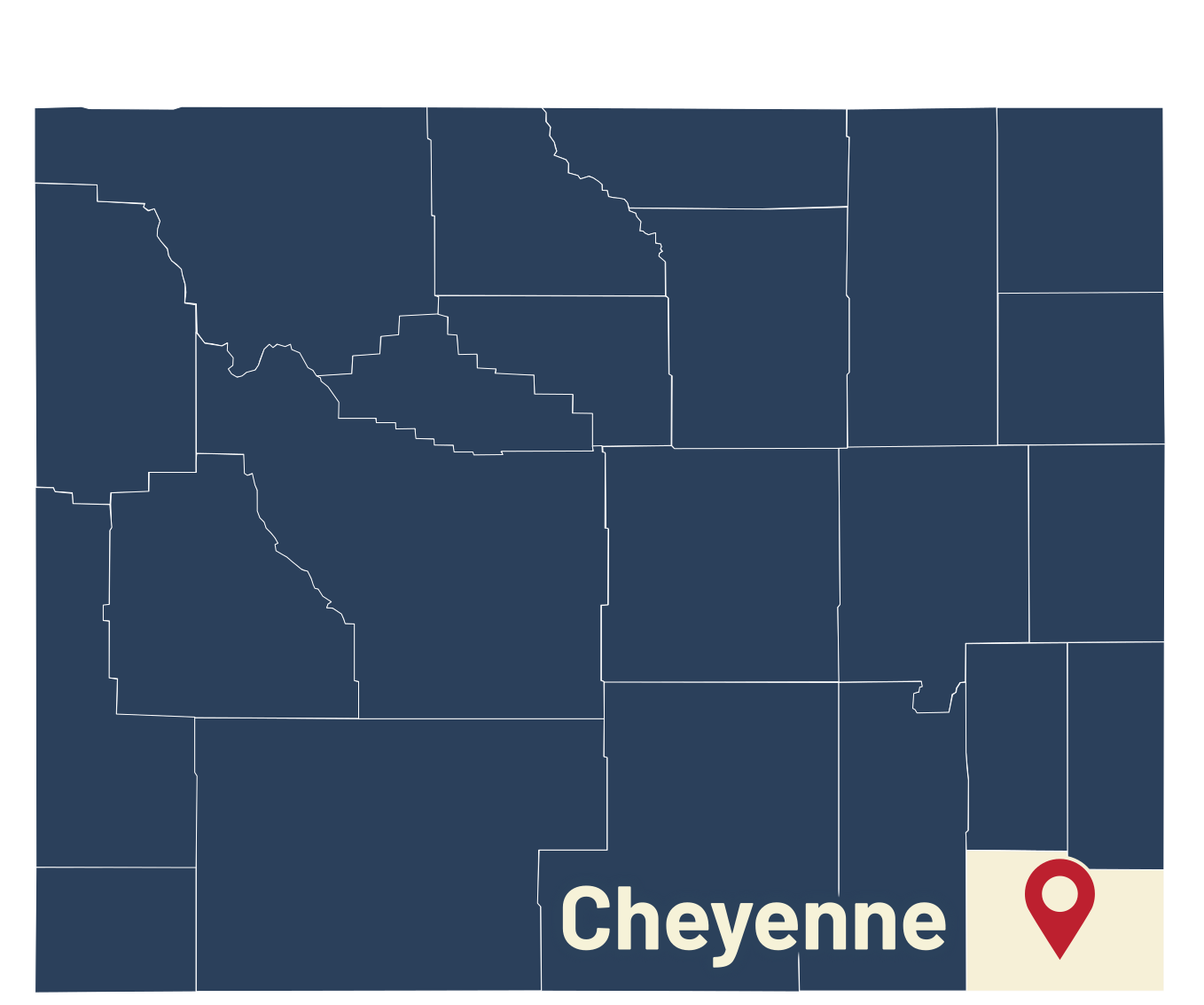
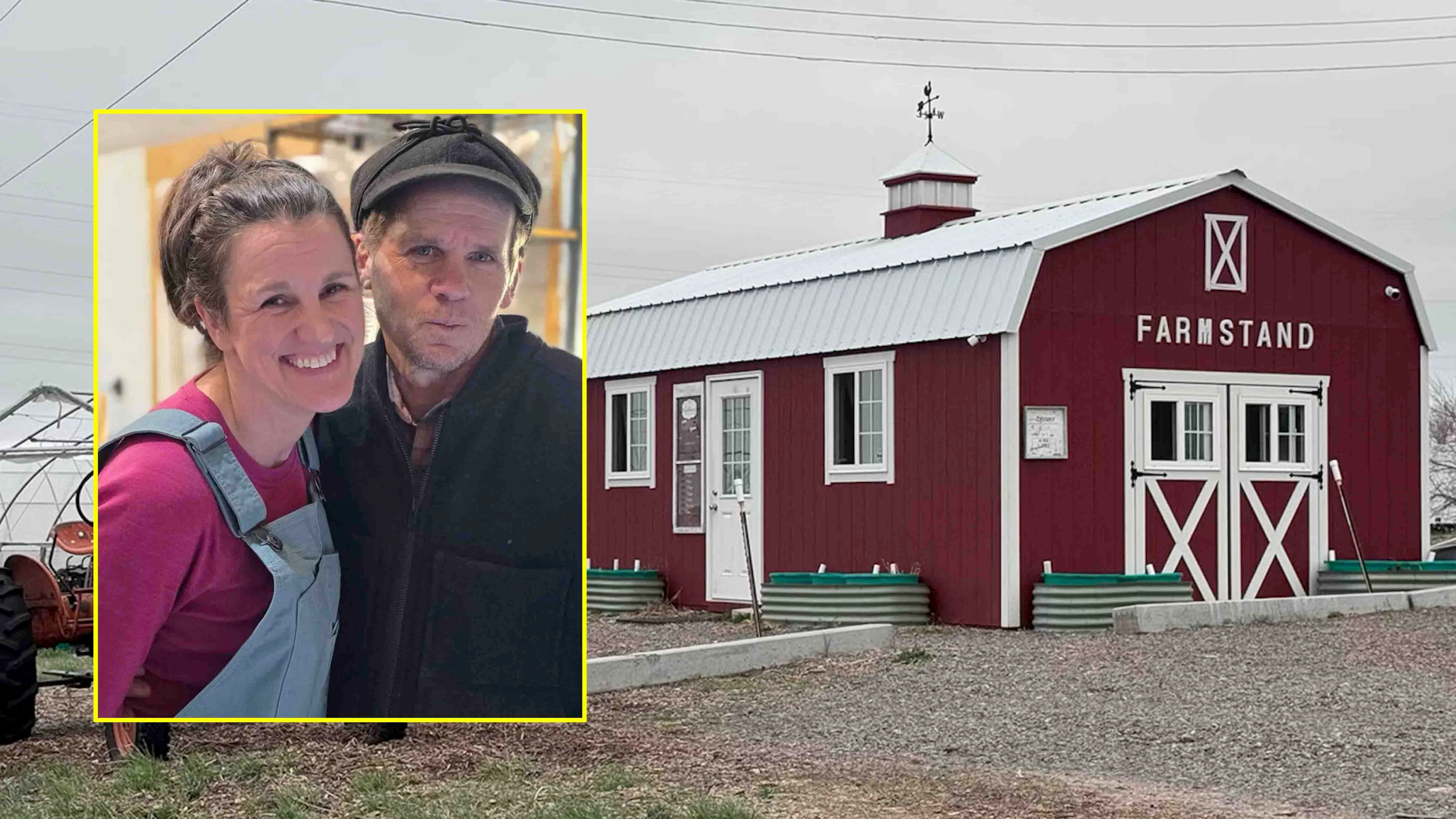
Eight months into a contentious fight over the proposed annexation of Wy Fresh Farm, the Cheyenne City Council still has not annexed the longtime urban property.
Now, the rules designed in part to address concerns raised by that fight have become the latest point of contention.
Proposed changes to Cheyenne's agricultural regulations would overhaul how farms, livestock, gardens and other agricultural uses are treated within city limits.
City officials say the goal is straightforward: Make it easier for people to legally engage in agricultural activities under a development code that was largely written with residential, commercial and industrial development in mind.
Wy Fresh Farm owners David and Tommie Kniseley say the proposed rules don't solve the problems they've spent months asking the city to address.
Specifically, David Kniseley said the city refuses to recognize the applicability of the Wyoming Right to Farm and Ranch Act or to address nuisance exemptions in their ordinance.
"The city planning commission will hear a proposal to amend the City zoning code relative to urban farms. WYfresh was not consulted," David Kniseley wrote in a social media post. "It appears to us to be unworkable and an attempt to stop operations like ours in Cheyenne."
The Planning Commission was scheduled to consider the changes Monday, but the meeting was postponed for lack of a quorum – the second time consideration of the agricultural amendments has been delayed. The city's Planning Commission calendar lists its next meeting for Oct. 5.
That delay is particularly significant for the Kniseleys.
Cheyenne City Council is scheduled to take up the final reading of their annexation Nov. 9, after postponing the matter for eight months in March in part to give the city time to work through its agricultural regulations.
"There is a real possibility we could be annexed before the urban ag ordinances are adopted," the Kniseleys shared on their WY Fresh Farm social media page Monday.
If that happens, the Kniseleys say they fear they could be slapped with a $750 fine for their 49-acre property not being up to city code, a misdemeanor criminal charge that could result in six months in jail.
Particular zoning concerns they have previously brought to the council include fences on the property being completed to city code, being unable to replace a flock of meat birds if their current flock got wiped out by disease, and differences between county and city drainage practices.
Updating Old Rules
Cheyenne Senior Planner Seth Lloyd told Cowboy State Daily the city's agricultural regulations haven't received a comprehensive update since the Unified Development Code (UDC) was adopted in 2012.
Since then, Wyoming has made changes affecting small-scale agriculture that the city hasn't had much occasion to confront.
That's largely because there isn't much agricultural land inside Cheyenne.
"We don't have a lot of applications for new farm-type operations," Lloyd said.
As a result, he said, some of the conflicts between Cheyenne's development code and actual farming practices weren't readily apparent until agricultural properties in county pockets faced annexation.
"There's a lot of things in UDC that make sense for standard commercial, industrial development but don't make a lot of sense when we try to apply it to a working farm," Lloyd said.
Some of those issues, he acknowledged, probably could have been addressed when the UDC was originally adopted, but there wasn't a thorough cross-check of how its various requirements would apply to agricultural operations.
Now the city is trying to do that.
"We are trying to make it easier for any property to do farm-type stuff and get to be legal for what they're doing anyway," Lloyd said.
6-Inch Grass Doesn't Make Sense
For example, a county pocket north of Lowe's had been used to graze cattle, Lloyd said. But once agricultural land comes within city limits, another section of Cheyenne code creates an obvious problem: Grass generally isn't supposed to grow higher than 6 inches.
That's not compatible with raising grass for cattle to eat.
"We want to grow grass so cattle can come and graze it," Lloyd said.
The city has already amended its code to exempt grazing properties from that requirement.
"If you're a grazing property, you don't need to cut your grass down to six inches," Lloyd said.
It is the kind of conflict city planners weren't necessarily thinking about when regulations were written for an urban environment, he said.
Similar questions surfaced as owners of other county pockets contemplated what annexation would mean for agricultural practices that had been perfectly ordinary outside city limits.
Wy Fresh Farm sits within one of those pockets – a roughly 49-acre area south of Cheyenne made up of 16 parcels surrounded by city limits. David and Tommie Kniseley have farmed there for about 20 years, and their farmstand sells products from dozens of other local farms and food producers.
Lloyd said the city isn't trying to write regulations specifically for Wy Fresh or any other individual property.
Instead, planners have to consider how any change would apply throughout Cheyenne.
"We're looking for general applicability," he said, "trying to make it beneficial for all properties."
Overhauling Agricultural Rules
The proposed changes grew largely out of the county-pocket annexations, Lloyd said, but planners began finding agricultural issues that could apply more broadly.
The city's Unified Development Code was adopted in 2012. Wyoming subsequently changed state rules involving small-scale agriculture, leaving Cheyenne's existing "Limited Agriculture" category outdated.
Planning and Development Director Charles Bloom said during an Aug. 21 City Council work session that the proposed changes are intended to provide more certainty for both properties being annexed and people already living in Cheyenne.
"We do feel we put together a pretty good solution that provides some certainty for folks that are being annexed that have agricultural uses, and also provides some more certainty that needs to be done for the everyday citizen in the community," Bloom said.
The city is proposing four agriculture-related ordinance changes.
Among the changes is replacing the existing "Limited Agriculture" category with a new category called "Gardens and Homemade Foods."
Under the proposed definition, that category would cover property used to grow, harvest, prepare or process food or drinks when the operation produces no more than 10,000 individual food or drink products annually and generates no more than $10,000 in annual gross revenue from those products.
Examples include residential gardens, community gardens and small-scale agricultural operations on larger parcels. Livestock could also be included where permitted by municipal code.
The amendments would also create a definition for "agritourism," covering commercial enterprises that combine agricultural production and tourism, such as pumpkin patches, corn mazes and petting zoos.
Other changes would eliminate some site-plan requirements that city staff says don't make sense for ordinary agricultural activity.
Where The City Draws The Line
Lloyd acknowledged the proposed changes won't give agricultural property owners everything they might want.
"We know we are not going as far as people would like," he said.
One dividing line is when activity on agricultural property begins functioning more like a commercial retail business.
"If you're selling a lot of your stuff out of your property, we're going to continue to look at it as retail use," Lloyd said.
The city, he said, is trying to balance making its codes more accommodating to legitimate agricultural practices against essentially exempting agricultural properties from regulations that apply elsewhere in Cheyenne.
"We're trying to strike a balance as to which codes need updating, but we're not just going to bend over backward," Lloyd said. "We need to understand how this applies to the entire city and not just one parcel."
'Would 100% Block Anyone'
For the Kniseleys and their supporters, the changes don’t go far enough.
David Kniseley told Cowboy State Daily the proposed urban farm ordinance "would effectively shut our operations down and keep others from starting like endeavors."
Tyler Lindholm, author of Wyoming's Food Freedom Act, told Cowboy State Daily the proposed regulations would "100% block anyone from doing anything like this."
He sees the issue as one of private property rights.
"This is very clearly another erosion by the City of Cheyenne of private property rights," Lindholm said.
Among the issues still unresolved, according to the Kniseleys, are provisions affecting working animals used on the farm.
In a letter to the city, the Kniseleys' attorney, Gay Woodhouse, said Wy Fresh needs protections for livestock guardian dogs, livestock working dogs, barn cats and dogs used for rodent control, along with other issues the family raised with the city in May.
Kniseley said the city has not met directly with the family since March. He accused officials of ignoring the City Council's direction to work through the problems during the eight-month annexation delay.
Eight Months Of Fighting
For the Kniseleys, the latest dispute is another chapter in what has become a long fight over the future of their farm.
Cheyenne began pursuing annexation of Wy Fresh Farm as part of a broader effort to bring county pockets surrounded by city limits into the city.
City officials have said annexing those pockets would provide clearer boundaries for city and county services and reduce confusion over jurisdiction. The Kniseleys have argued that bringing their farm under city regulations could fundamentally change the way they are allowed to operate.
On Feb. 23, the City Council voted 7-2 to move the annexation forward after about 90 minutes of public comment.
Then, on March 9, after more than four hours of testimony, council members unanimously agreed to postpone the final annexation vote until Nov. 9. The delay was intended in part to give the city time to develop clearer urban farming rules.
Just over two weeks later, the Kniseleys faced another regulatory fight when the Wyoming Department of Agriculture ordered Wy Fresh Farm to stop selling certain meats after a complaint from the Laramie County Public Health Department.
Council woman Dr. Kathy Emmons is executive director of the Laramie County Health Department.
State agriculture officials said the farm needed a food license to sell the products. The Kniseleys maintained that they had reached an understanding with the department in 2022 that they did not need such a license under Wyoming's Food Freedom Act.
Now, with the Nov. 9 annexation vote drawing closer, the agricultural rules that were supposed to provide clarity remain unfinished.
The Planning Commission's next meeting is scheduled for Oct. 5.
Kate Meadows can be reached at kate@cowboystatedaily.com.