
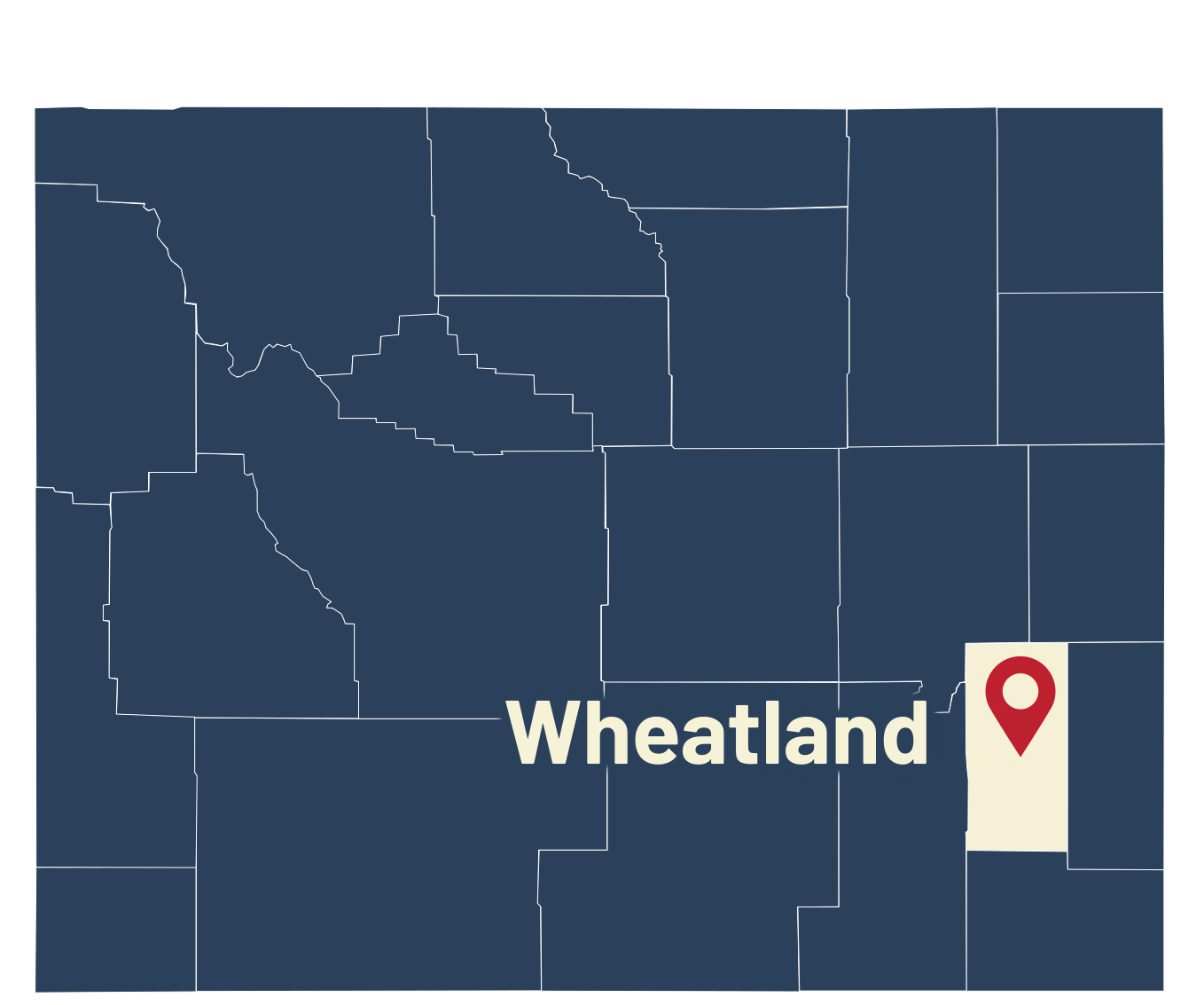
WHEATLAND — Bryan Mantle took out a knife and cut off the head of a large rattlesnake that had been pounded into the ground by the nearly 20 wild Wyoming mustangs in a holding pen.
Its rattles were torn off.
A big black horse among the 118 scattered in pens and pasture on the Mantle Ranch — part of the family’s three-decade mission to take in wild BLM horses and prepare them for adoption — had a slightly swollen face and nostril.
That was a good sign.
“If they get bitten in the face, there is not anywhere for the blood to go,” said Bryan, who with his wife, Katie, and wrangler, Bo Daake, runs an operation started by his dad, Steve Mantle.
“I’ve never lost a horse that has been bitten in the face. But I’ve lost some who have been bitten in the legs," he said.
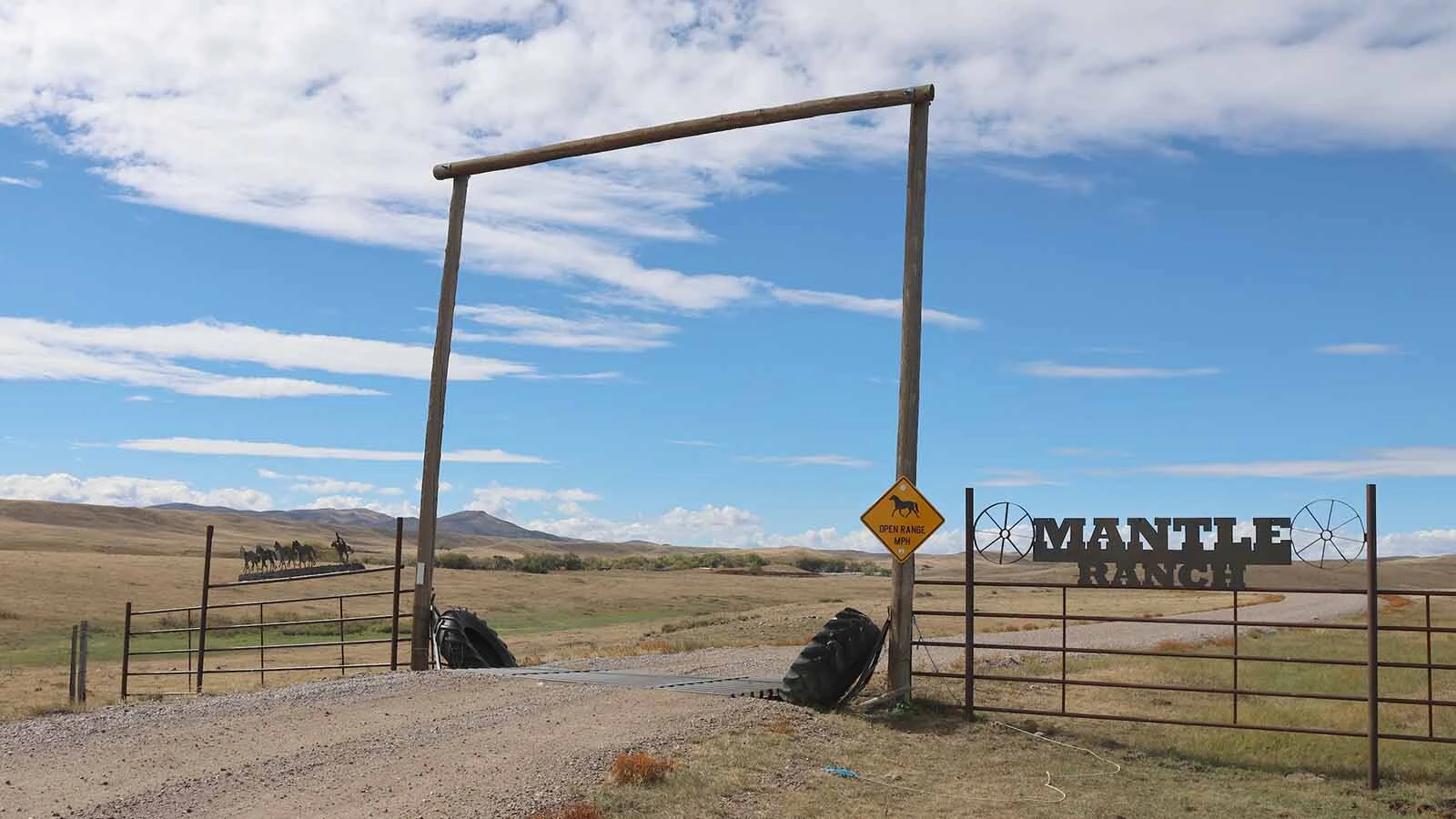
And so goes the unpredictable daily agenda on an 800-acre ranch that also includes additional leased property southwest of Wheatland.
Patriarch Steve said he moved his family to the ranch in 1996 and had a cattle operation for a while.
He attended a BLM adoption to get a couple of colts for his two sons, and a BLM official told him the agency was going to put out a contract to train some of the older horses and make them more adoptable.
He told Brian to bid on it.
“I was like, ‘Yeah, I don’t want anything to do with it,’” he said. “He just kept at me all day long and so finally, I said, ‘OK, send it to me. He did. We looked it over, bid on it and got it.”
Brian found out that no one else submitted a bid. So in 1998 he began his initial effort to train 6- to 14-year-old wild mustang horses -- a lot of them fresh-cut studs.
Their job was to get them “gentled.”
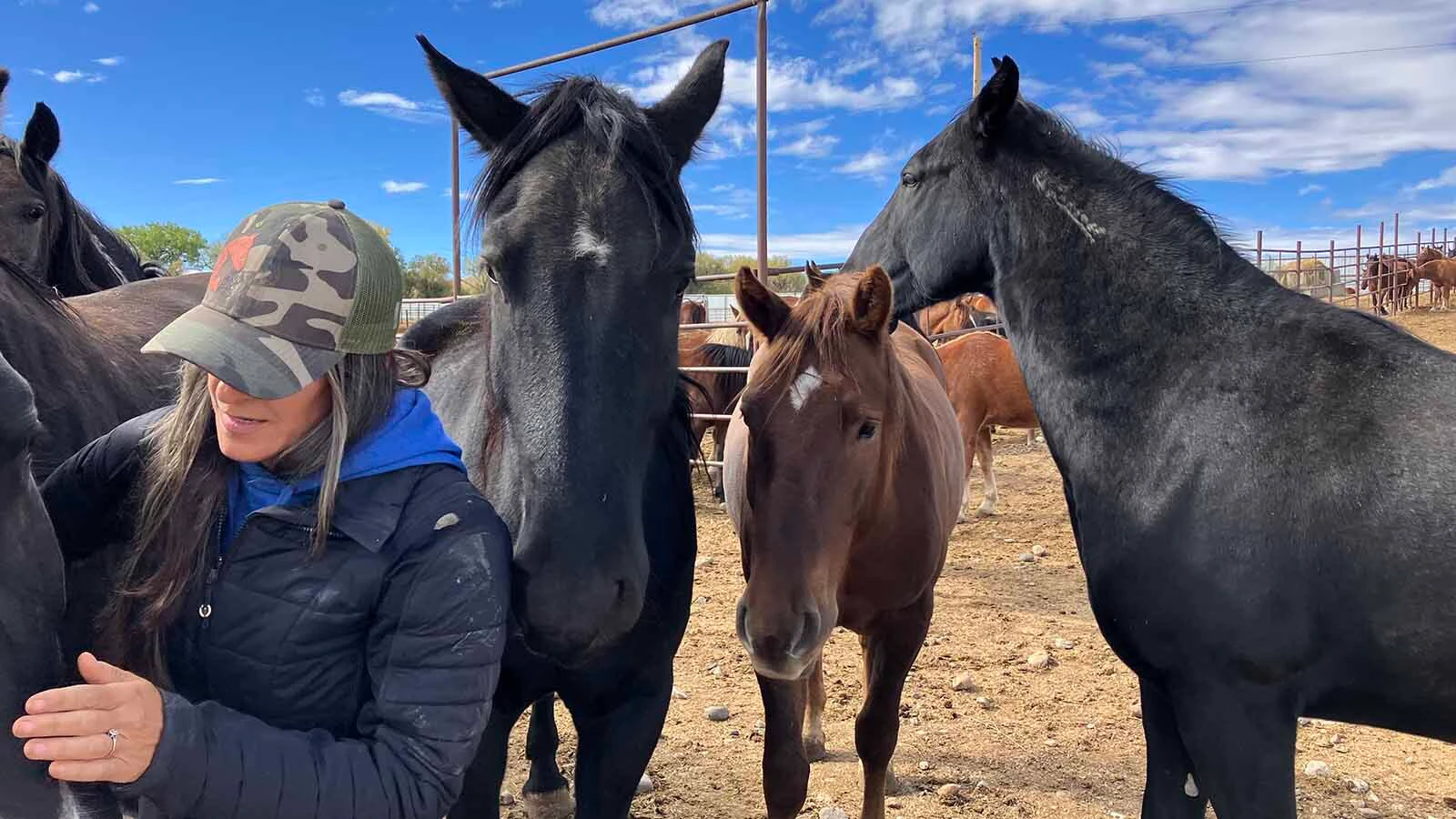
Katie Mantle draws a crowd in the mustang pen. (Dale Killingbeck, Cowboy State Daily) 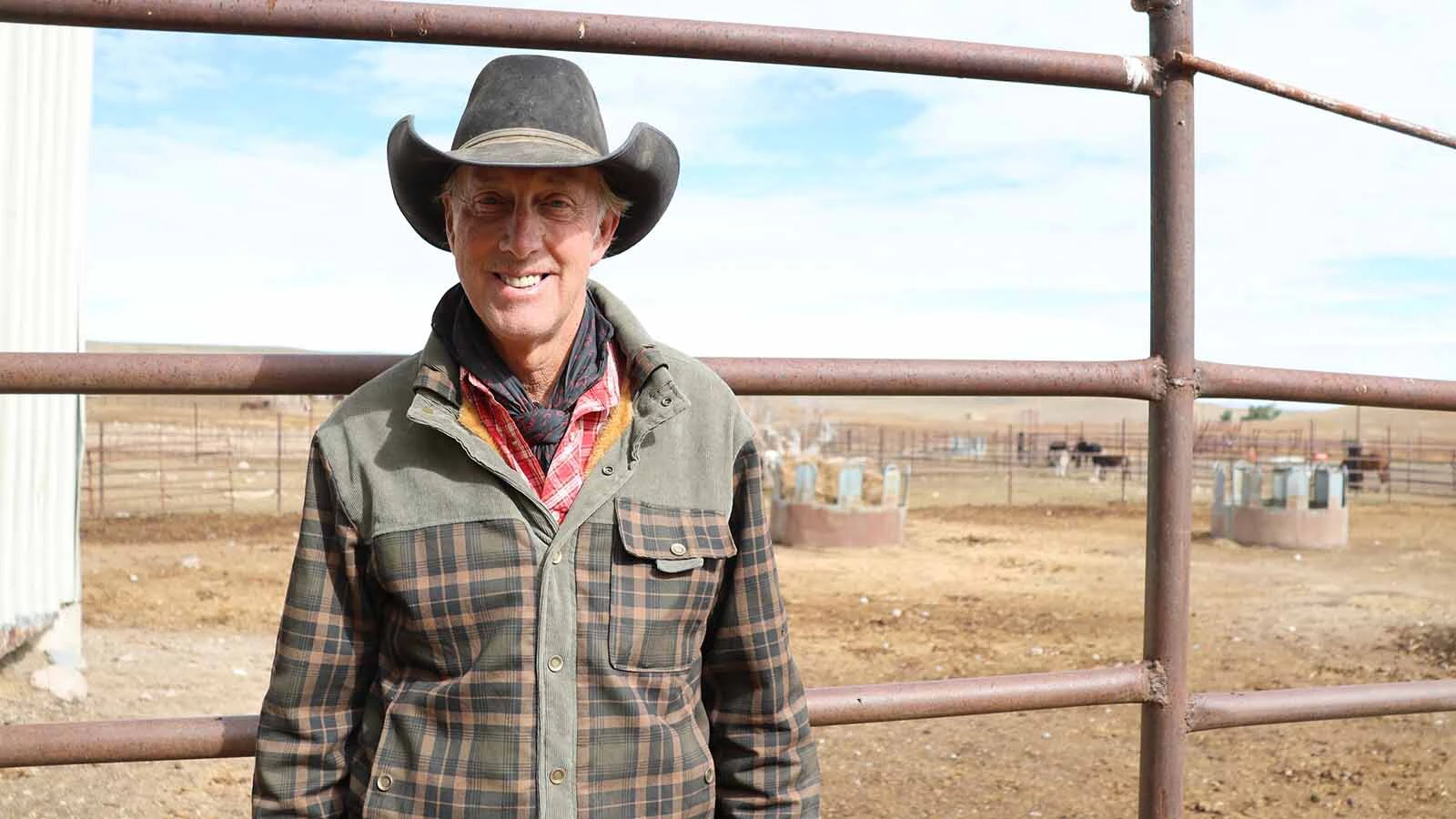
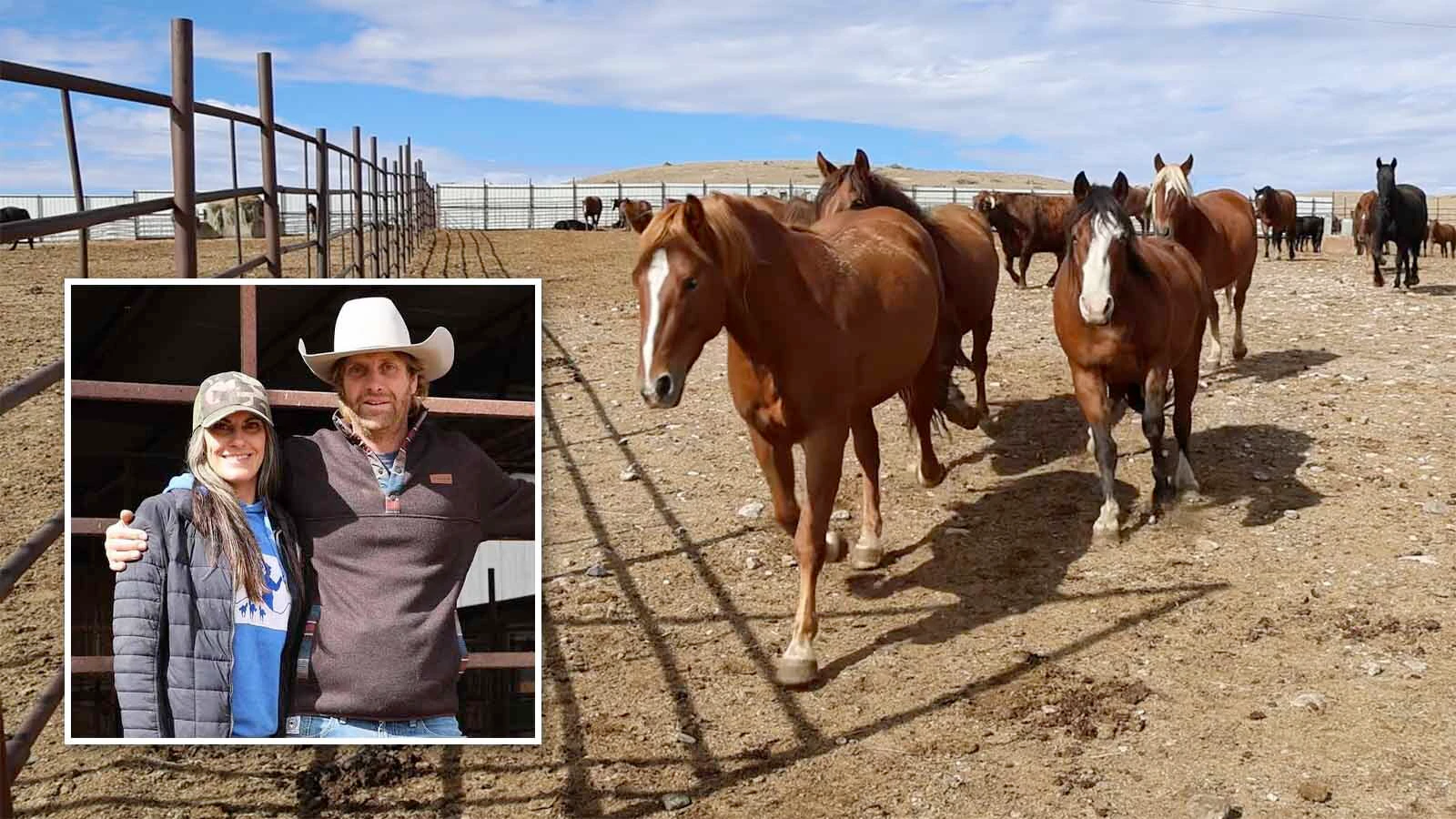
Steve Mantle started Mantle Ranch as a cow operation, but a contract with the BLM for training horses has now become a long and fruitful ride involving about 2,000 head. (Dale Killingbeck, Cowboy State Daily) 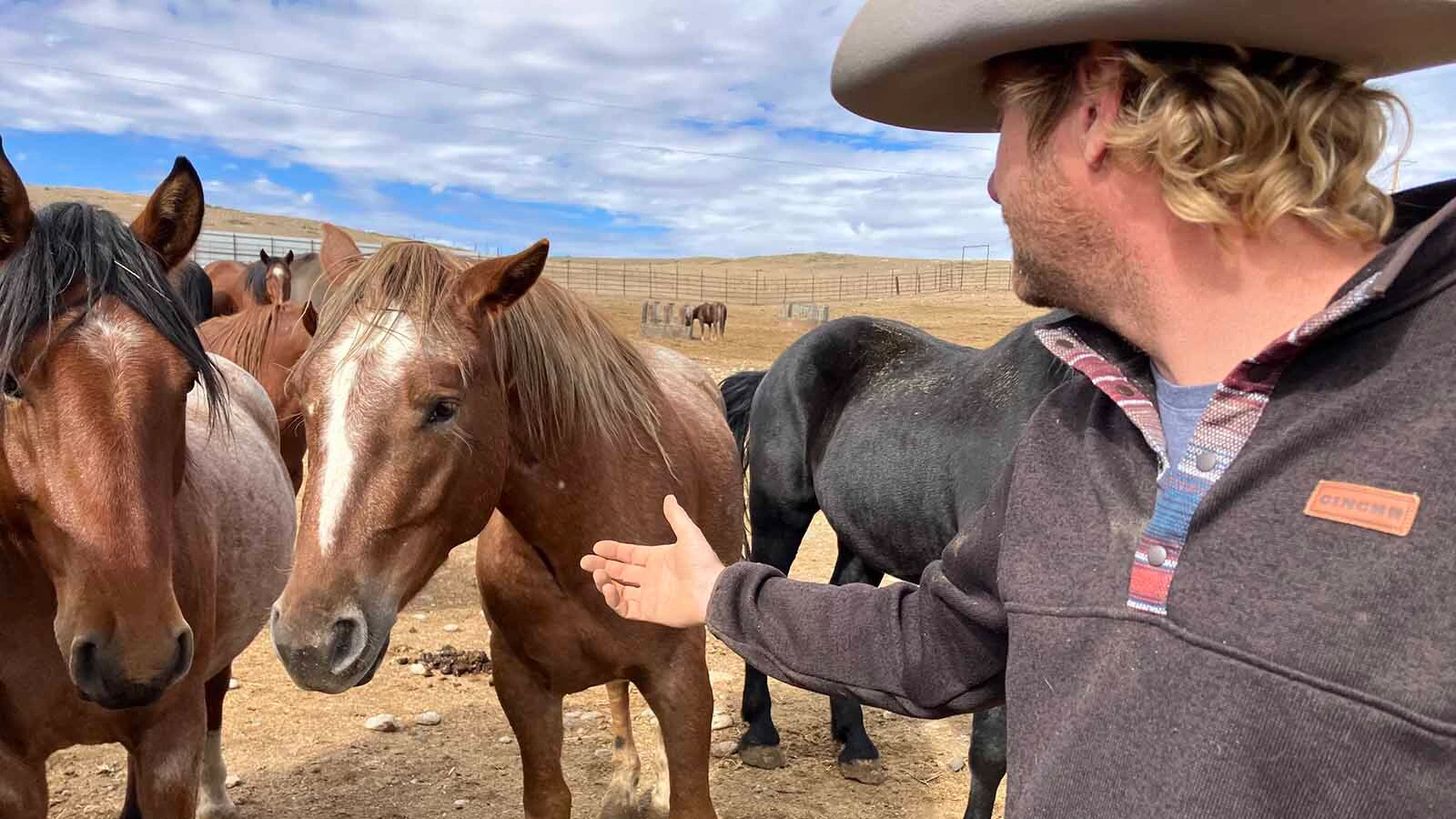
Bryan Mantle reaches out to build relationships with the horses. (Dale Killingbeck, Cowboy State Daily) 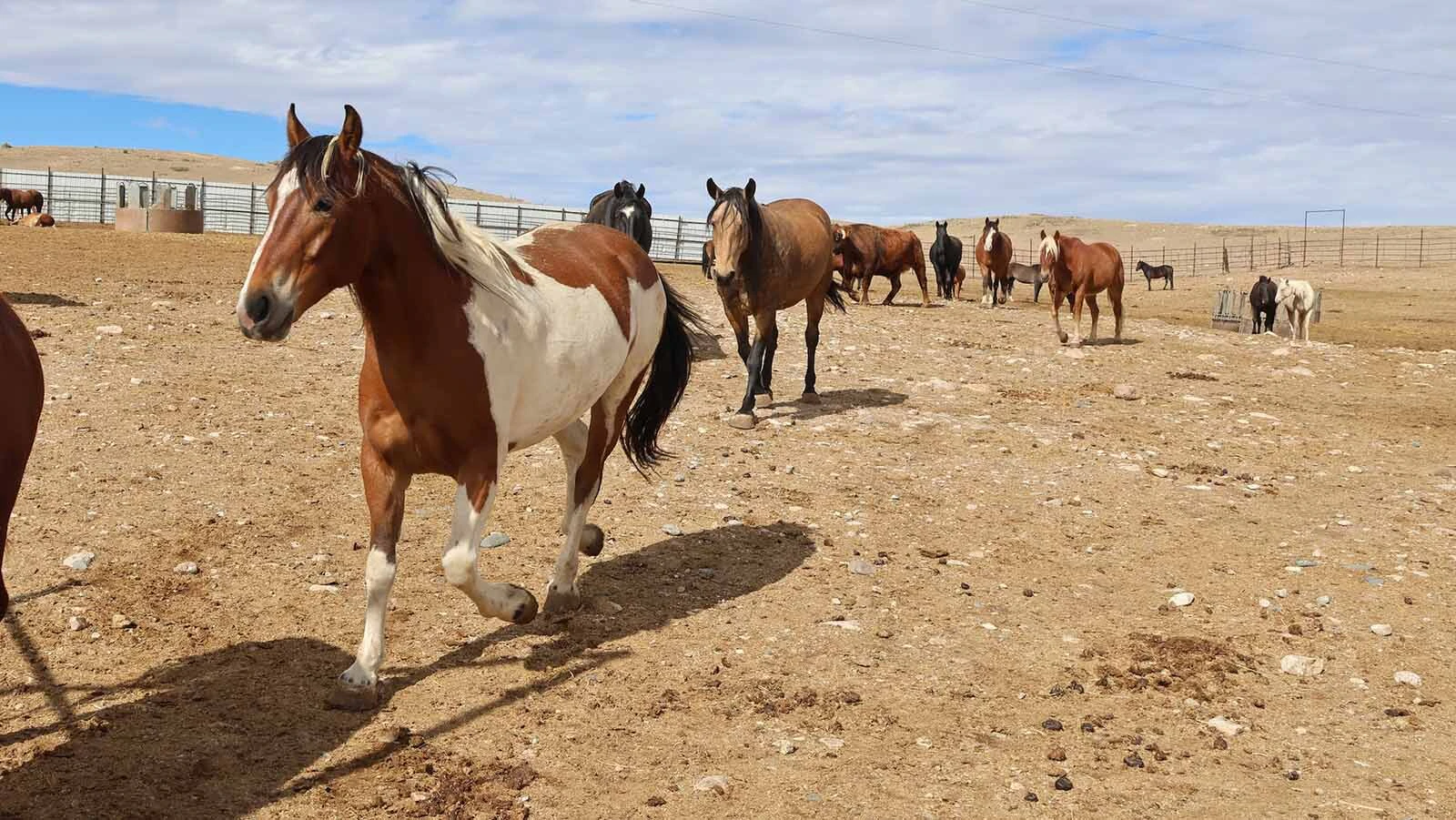
Mustangs run around a corner in their large holding pen. (Dale Killingbeck, Cowboy State Daily) 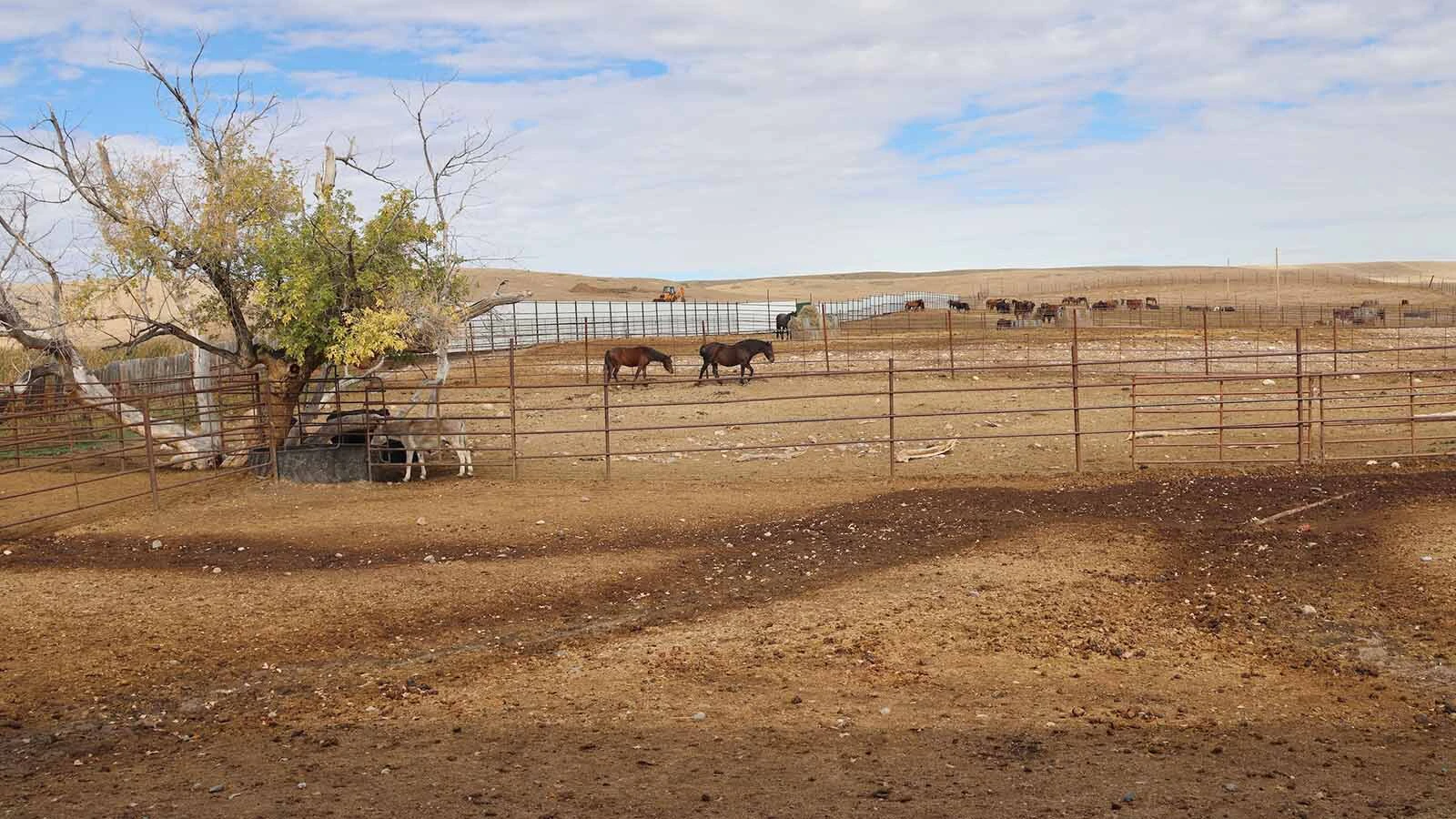
Horses on the Mantle Ranch are fed big bales of hay in pens and watered from springs piped into tanks in their pens. (Dale Killingbeck, Cowboy State Daily) 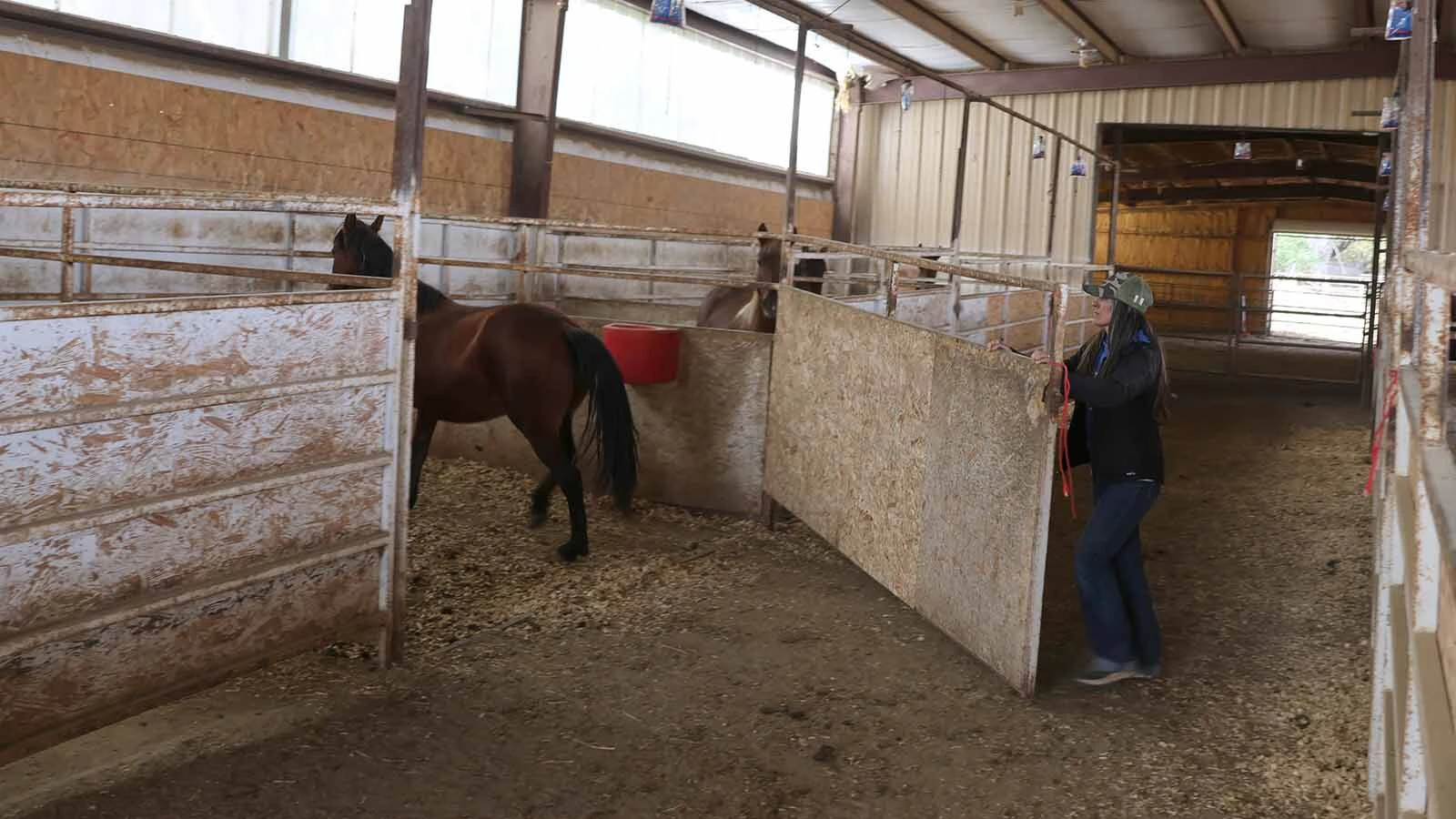
Katie Mantle puts a mare who has gone through an hour of training back in the stall. (Dale Killingbeck, Cowboy State Daily) 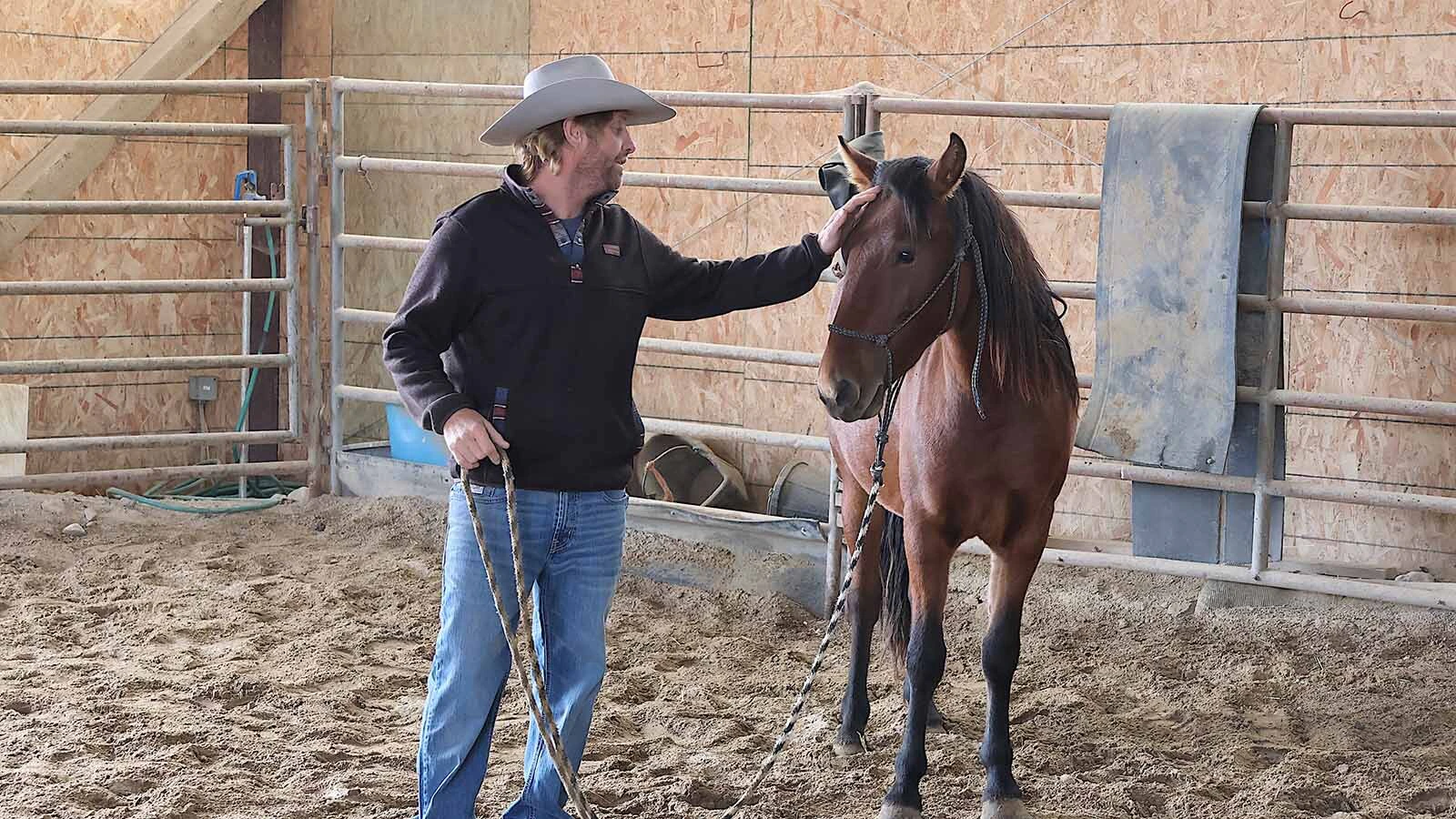
Bryan Mantle gains some trust from a skittish mare. (Dale Killingbeck, Cowboy State Daily) 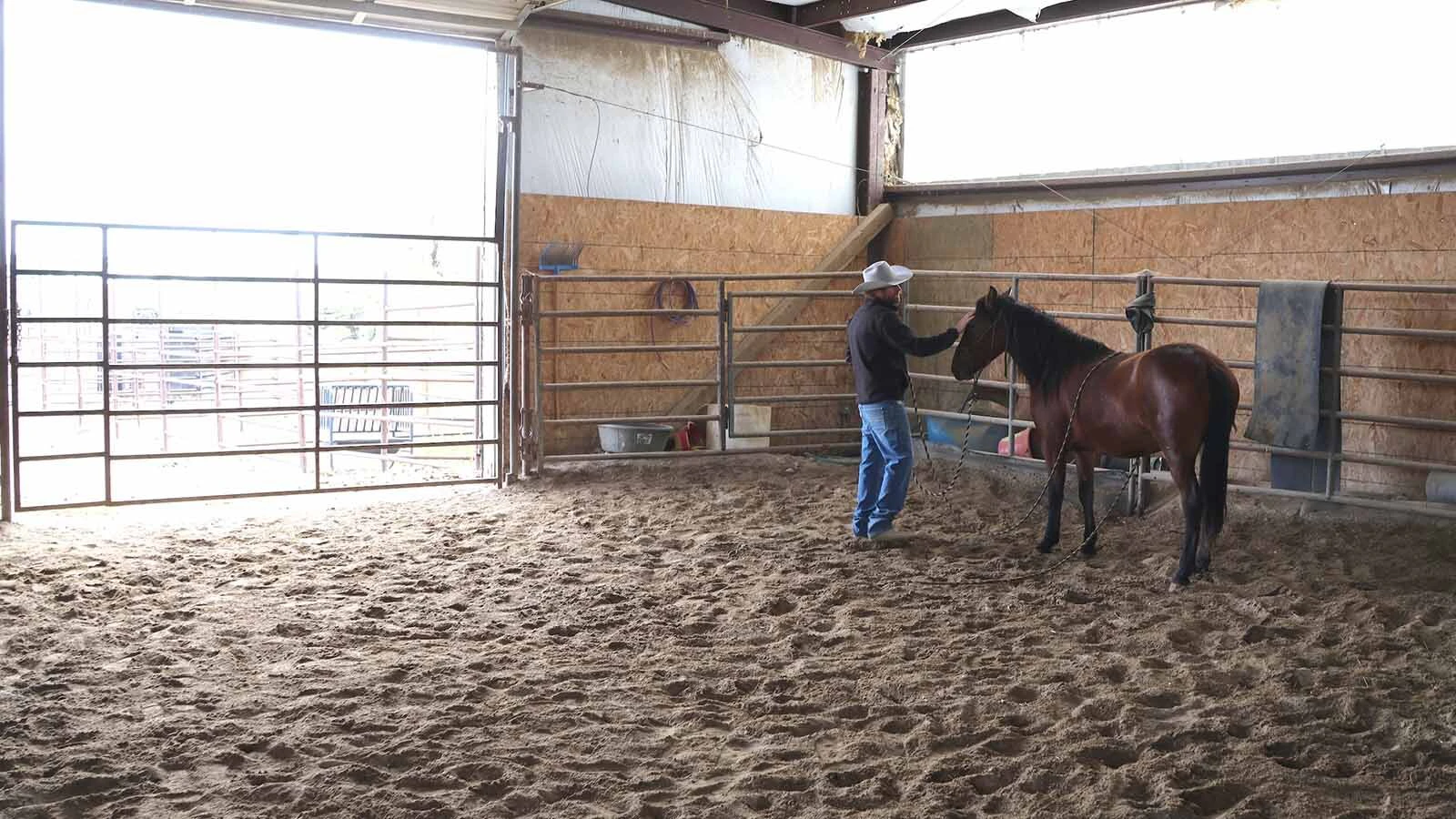
Bryan Mantle works with a mare who has just begun the “gentling” process. (Dale Killingbeck, Cowboy State Daily)
The Beginning
Their original contract involved 60 head.
The BLM supplied 10 at a time. The Mantles were given 30 days to get the horses to the place where they could be caught, led, and loaded into a trailer.
“Out of that 60, about 45 of them met the contract requirements,” Steve said. “Some of them washed out. They were just too wild.”
But the BLM and the Mantles quickly learned that when older horses were adopted out and not worked with daily, most reverted to their “wild” ways.
On one occasion, someone pulled a trailer onto the Mantle Ranch, sent an adoptee out into the pasture, and took off.
Steve then had a conversation with the BLM Advisory Board during a visit to the ranch around 2000 or 2001.
The suggested the agency send him younger horses, and he would build a barn where the horses could be worked through the winter and provide more horses that not only could be “gentled” but ridden before adoption.
BLM requirements for “gentling” a horse mean it must be possible to catch, halter and lead the horse, load it into a trailer, and handle its feet.
“By having the horses at that level where they’re gentle and ‘Mary’ can go and catch it, tie it up, brush it, then if she has the ability, she can put the extra training in herself,” Steve said.
“If she doesn’t have the ability, she can take it to a trainer. Because most trainers, they won’t take them at this stage here," he added
He said the feet are key to knowing whether a horse is ready because a mustang’s first form of defense is flight.
If a horse allows someone to pick up, hold, and handle the feet, “they’re trusting you to do a whole lot more.”
The winter work also created more horses that were attractive to prospective adopters — although the BLM has holding facilities in the West for “untouched” horses.
The BLM agreed to try it out and sent them younger horses. Mantle brought in a trainer to instruct the family on better techniques, which helped jump-start the training process.
Since then, the ranch has added to its initial barn.
Over the past 25 years they have worked with about 2,000 head from BLM roundups, helping transition the horses from refusing to approach humans to being willing to be led into a horse trailer.
Timelines
The BLM gives the Mantles 90 days to gentle horses and 120 days for them to be started under saddle.
They are the only non-prison program ranch working with the BLM to train wild mustangs in the West.
Bryan and Daake do much of the horse training these days.
Katie does a lot of the paperwork and coordination with the BLM’s online corral that offers its horses and burros for adoption.
Once a bidder is selected to adopt or purchase an animal, the BLM contacts the bidder to complete the paperwork.
The BLM sends the ranch a ship list, provides an address and name of the buyer, schedules a brand inspection and checkup with a vet, and deals with other issues before the horse leaves the ranch.
“If someone comes here to adopt, they have to have their approved application from the BLM and other paperwork,” Katie said. “Then it’s our job to do brand inspection, health check, Coggins test, and all that and ship it out.”
Once a horse is adopted through the online auction process, the adopter must provide at least a year of care before becoming eligible to receive the horse’s ownership paperwork.
The ranch regularly participates in Cheyenne Frontier Days to encourage the adoption of the horses and burros in the BLM program.
Bryan said the training routine involves bringing 10 horses at a time from the current herd into barn stalls.
Each day they work with each horse to get it accustomed to wearing a halter and being petted, among other BLM checklist items.
On a day when Cowboy State Daily visited, Steve said the ranch was scheduled to receive another semi-truck load of 30 to 35 horses soon.
Bryan was working on a small mare to get her accustomed to human touch.
The horse had only recently been introduced to a halter as he worked with her in the barn arena using a lead rope in various ways to see how the mare would respond.
“Sometimes less is more with these guys,” Bryan said, stroking her nose and then moving to pet her neck and side.
The horse flinched away.
“She’s a little nervous on the side, so that’s why we’re just trying to get her comfortable," he said.
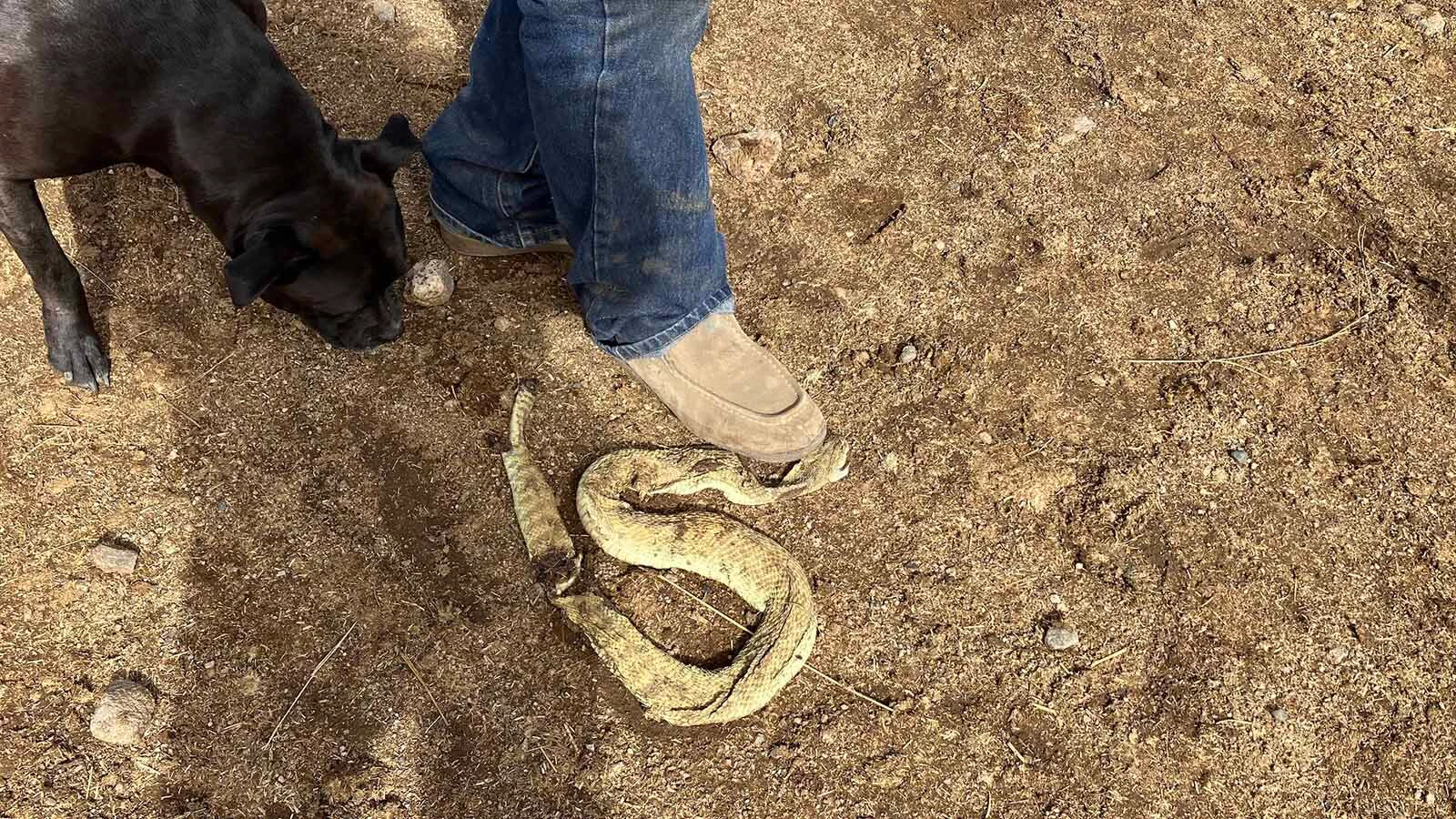
A rattlesnake did not successfully navigate a mustang pen. One horse showed swelling in its face after being bitten by the snake. (Dale Killingbeck, Cowboy State Daily) 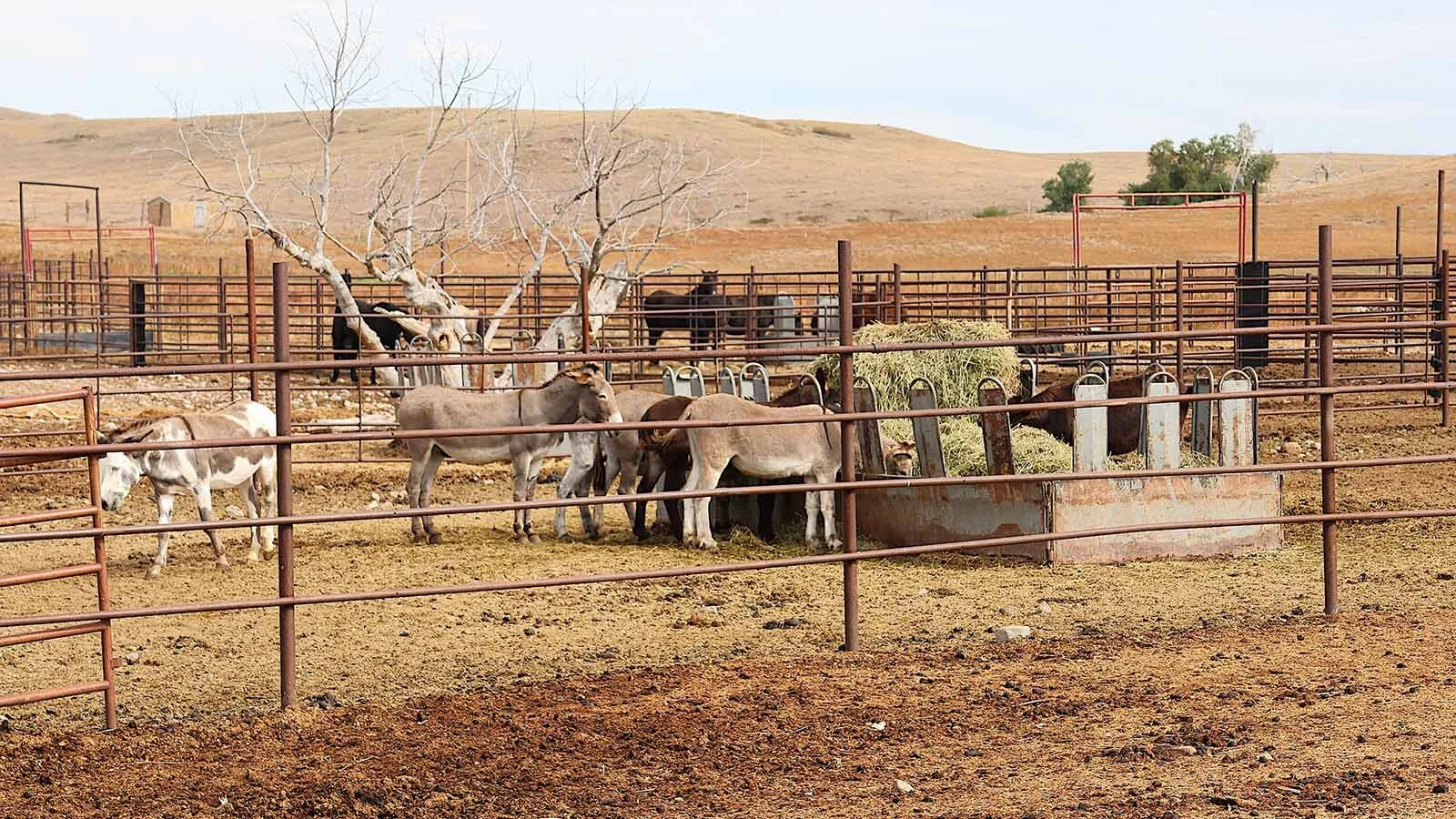
In addition to mustangs, Mantle Ranch also hosts a few BLM burros that are available for adoption. (Dale Killingbeck, Cowboy State Daily) 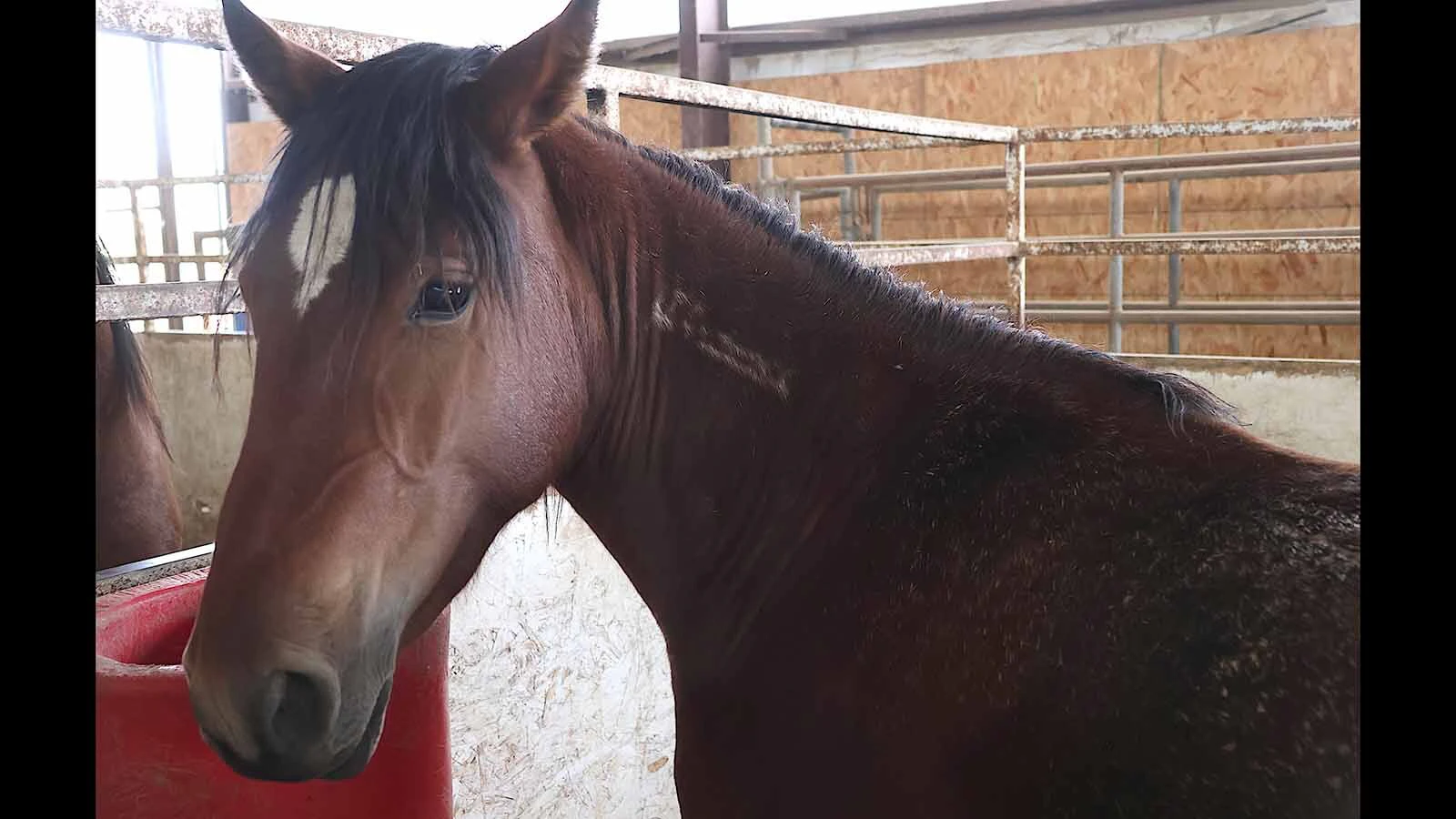
Each BLM mustang arrives with brand mark on its neck and a microchip that identifies each horse. (Dale Killingbeck, Cowboy State Daily) 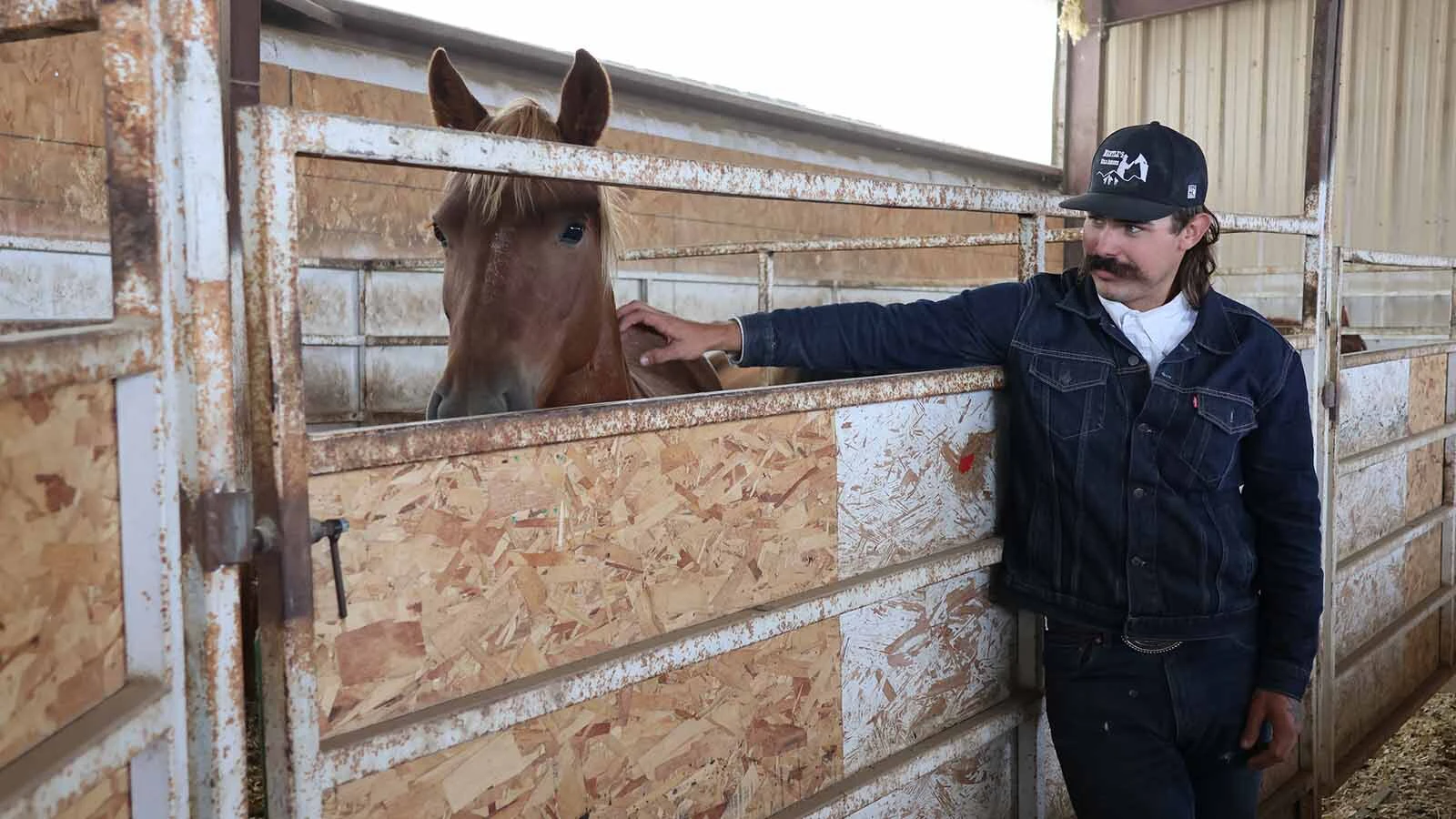
Bo Daake helps train and wrangle the horses at Mantle Ranch. He grew up in Nebraska and has been around horses all his life. (Dale Killingbeck, Cowboy State Daily) 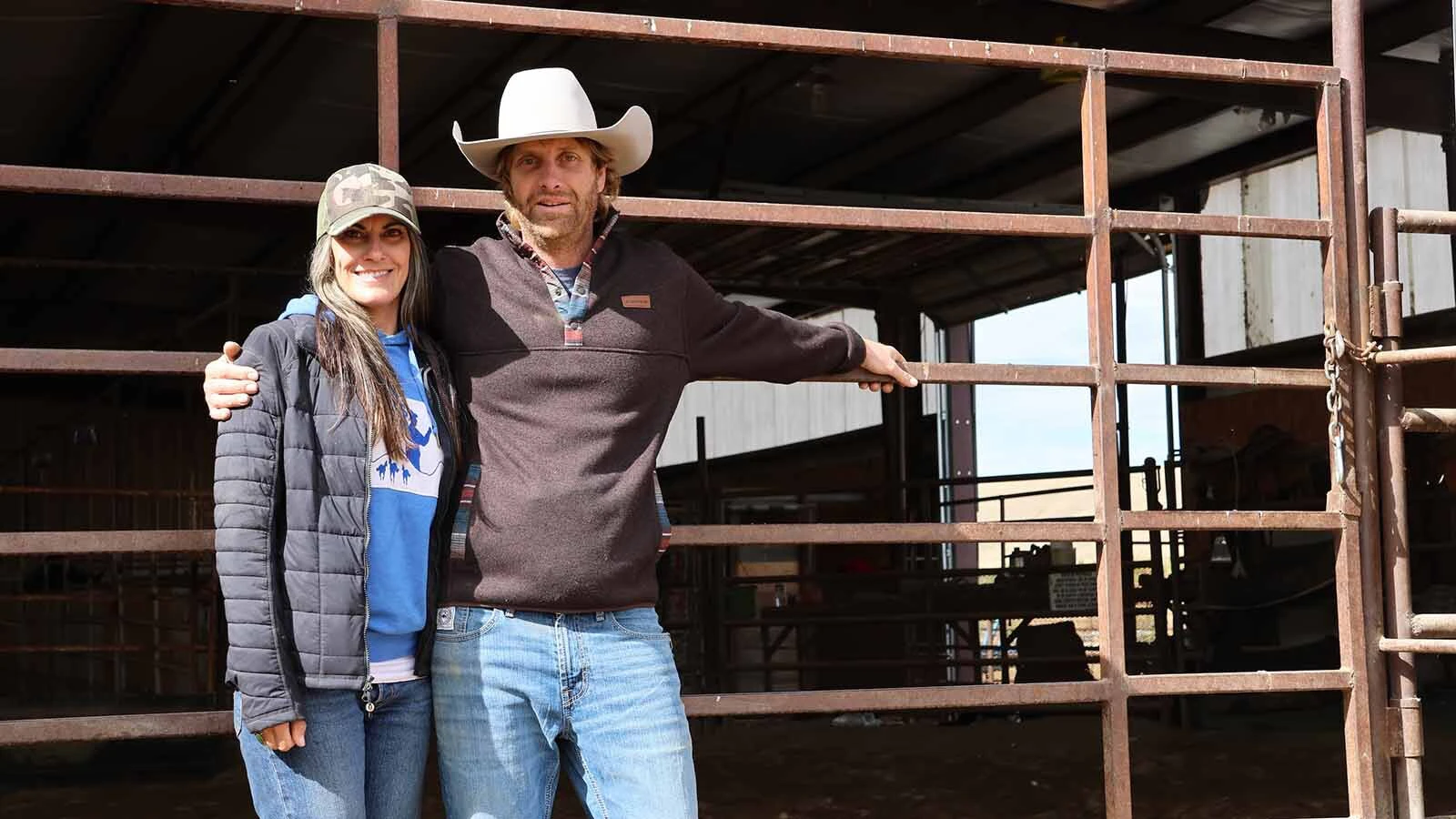
Bryan and Katie Mantle handle the daily operations at Mantle Ranch that involves meeting BLM requirements, hosting people who want to adopt horses, and all the spontaneity that 118 horses can deliver in a training process. (Dale Killingbeck, Cowboy State Daily)
Individual Attitudes
Each horse is different and requires a timeline that can range from two weeks to nearly the full 60 days to be gentled.
Bryan said there is a noticeable difference between working with a 5-year-old horse and a 2-year-old. The older they are, typically the longer it takes.
Horses being prepared for saddles get ridden in a long corridor between high-fenced pens.
Bryan said he’s been riding since he was 4 or 5 years old.
At 13, he started training his first mustang.
Unlike rodeo cowboys who know when their horse is going to buck, training mustangs for saddle work is not as predictable, he said.
“You might be out here and you’ve ridden him for an hour and then you’re like, ‘OK, now he seems like he’s doing pretty good,’ and you let your guard down,” Bryan said. “Then, all of a sudden you’re off. Yeah, bucks your butt off.”
Bryan, 43, said sometimes it boils down to knowing you have to “take a beating” from the horse before it is willing to be reined and ridden.
Most of the horses at the ranch currently were gathered in Wyoming, but they get them from across the West.
Steve said the ranch was approached years ago to see if they had any black or gray horses in training that could be shipped to the Arlington National Cemetery caisson program.
“There was a big gray horse we shipped there and two black horses that we shipped,” he said. “The one, he didn’t do so well pulling the caisson, but the colonel or whoever was in charge of that division took him over as his own personal horse and rode him all the time. They called him Wyatt.”
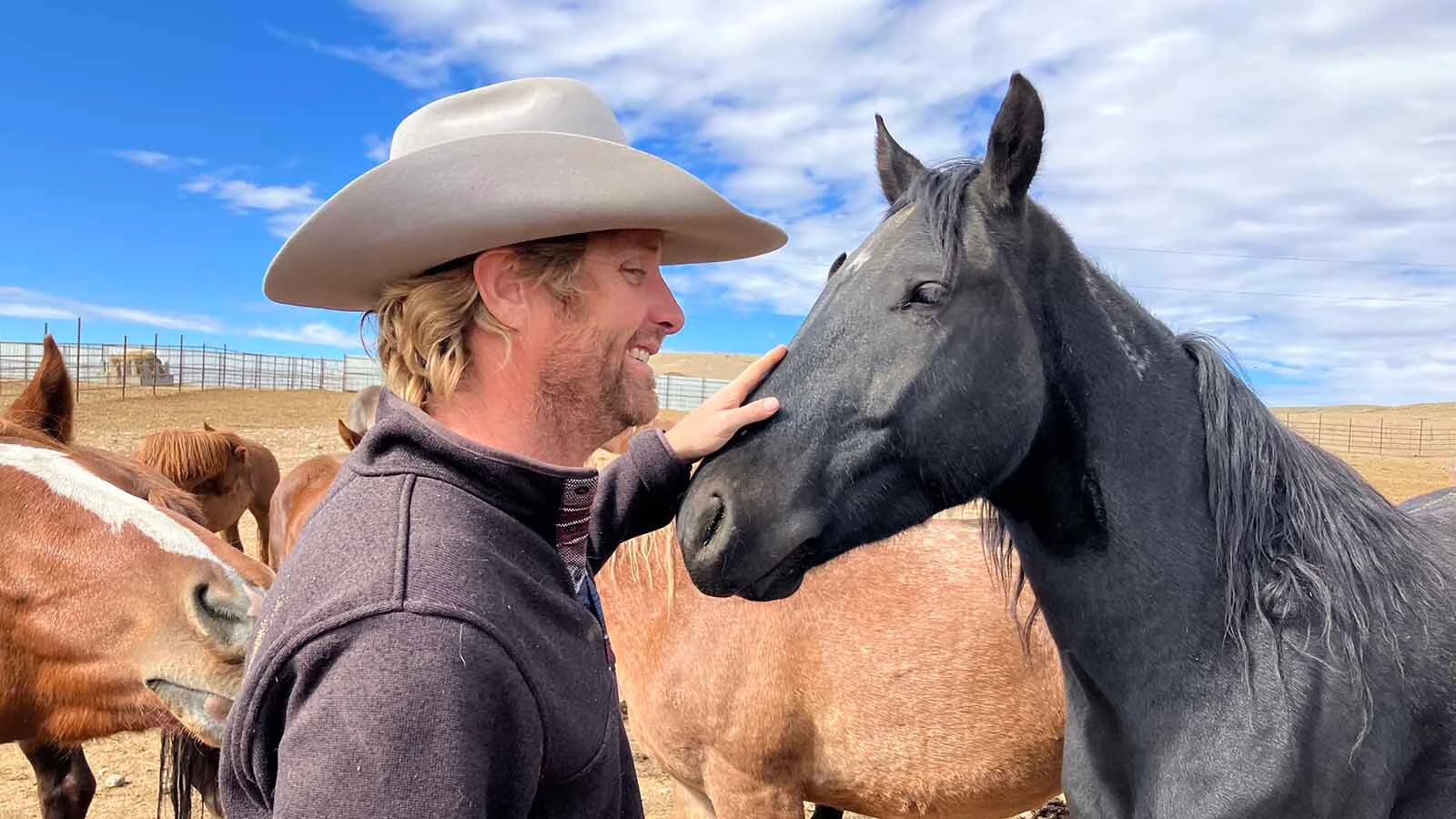
Nice 'Office'
Katie said she enjoys helping train the horses. Stepping out into the scenery that serves as her "office" on most days remains a bonus.
“That’s kind of a double-edged sword in the winter,” she said. “Even though we have a barn, it still can get nasty and cold and hard to be outside and you have to do it anyway.
"They can’t chop their own water or feed themselves, so we still come outside no matter what.”
Large round hay bales provide the feed for pens that include mares, geldings, burros from the BLM and the family’s own horse stock.
Spring-fed water is piped into all the holding pens and the horses stalled in barn for training require daily chores with feed, stall cleaning, and watering.
Talk by the BLM about eliminating horse-training programs leaves their long-term future uncertain. The agency has already cut some programs in which incarcerated people train horses.
Although they have a 10-year contract and are in the fourth year, the Mantles are only guaranteed to have work through the current fiscal year that ends Sept. 30, 2027.
“You can always start over on things, but you know when it’s been this long and basically what your life is, we’ll see what happens and if they do all that or what goes down,” Bryan said.
"A lot of people like coming here and getting some of these horses because we are open Saturdays and Sundays," he added.
Steve said the family’s ties to training government horses go back at least a couple more generations.
A librarian in Cheyenne found a photo of his grandfather training a horse at Fort Russell, now F.E. Warren Air Force Base, in the 1920s.
“We haven’t progressed very far,” he laughed. “We’re still working horses for the government.”
Contact Dale Killingbeck at dale@cowboystatedaily.com
Dale Killingbeck can be reached at dale@cowboystatedaily.com.


