
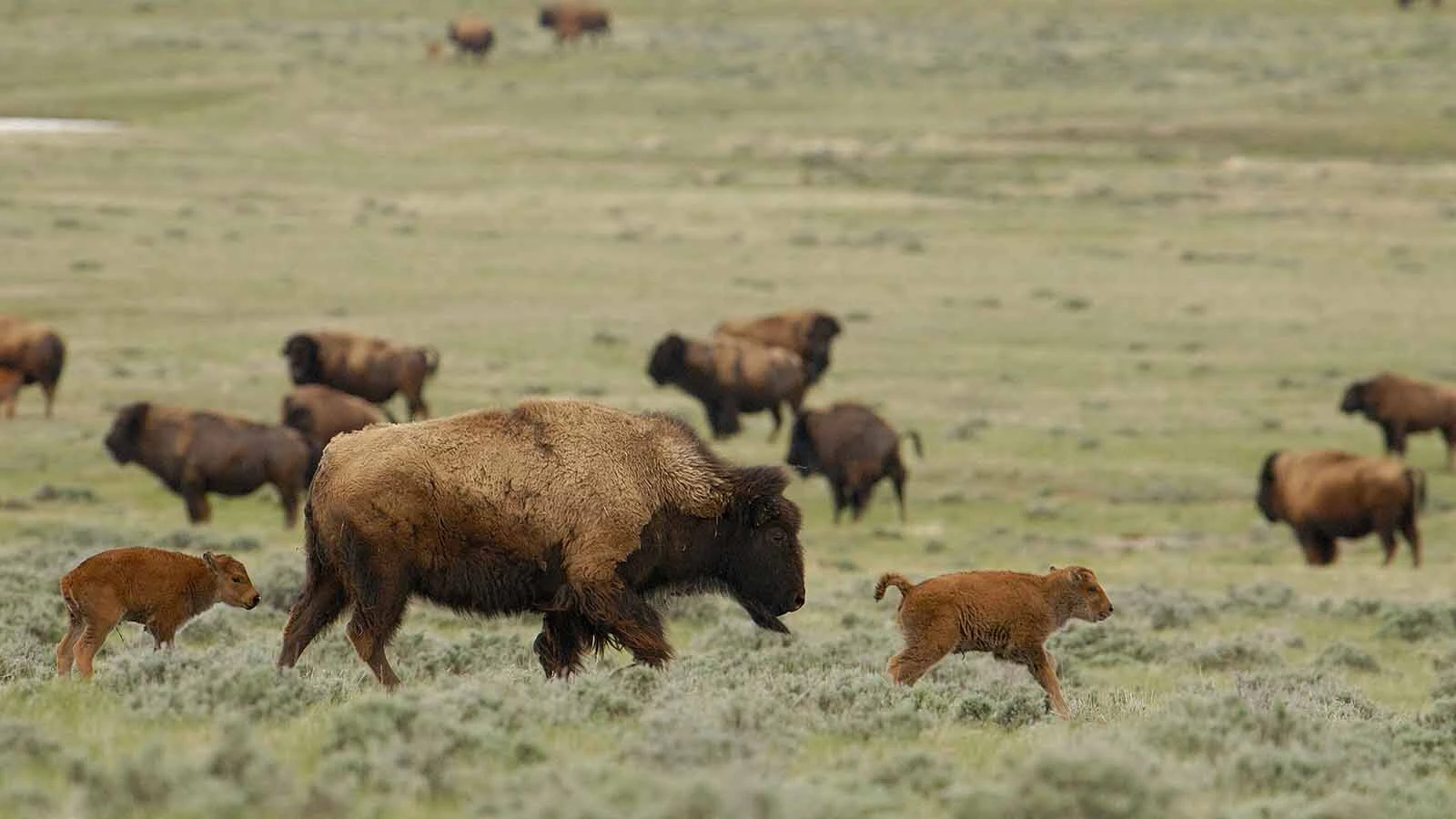
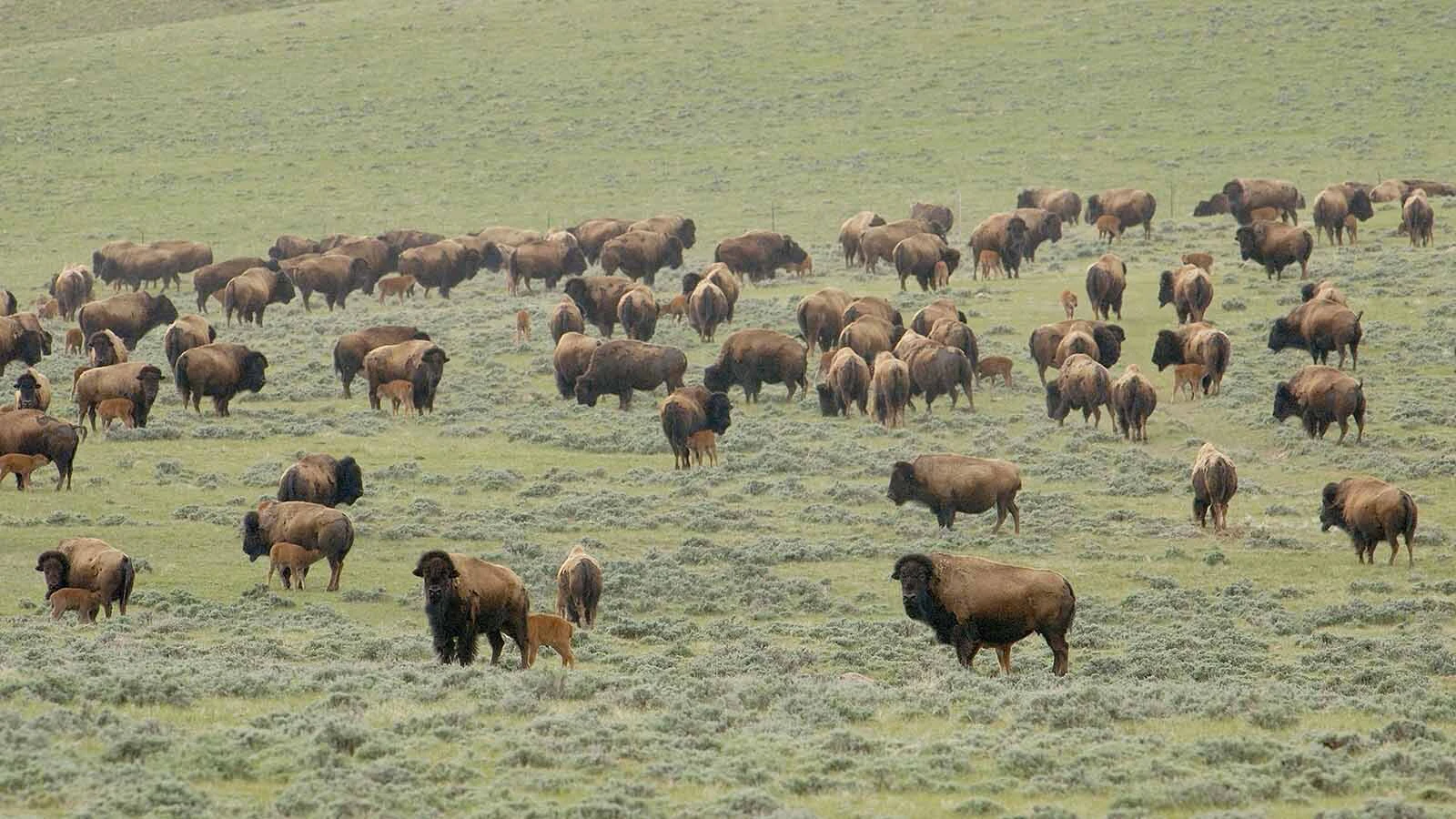
Historical estimates put the number of bison that once roamed the Great Plains between 30 million and 60 million. By 1890, roughly 1,000 remained in North America.
Today, more than 400,000 bison graze in public and private herds across North America. Their return is one of the West’s most remarkable wildlife recoveries, but it didn’t just happen in national parks or nonprofit preserves.
It happened because ranchers, showmen, and entrepreneurs — including some in Wyoming — figured out how to make a living with bison and, in doing so, pulled the species back from the brink.
“From 1870 to 1880, in that decade, we pretty much erased 32 million bison,” author Jane Little Botkin told Cowboy State Daily. “By 1880, there were 300 to 500 left in the entire United States.”
A survey by New York Zoological Society’s William T. Hornaday in 1889 found 285 animals on federal lands, mostly in eastern Montana and another 256 grazing in private herds around the West. Canada’s herd was estimated at 550 — a combined total of 1,091 animals in the United States and Canada.
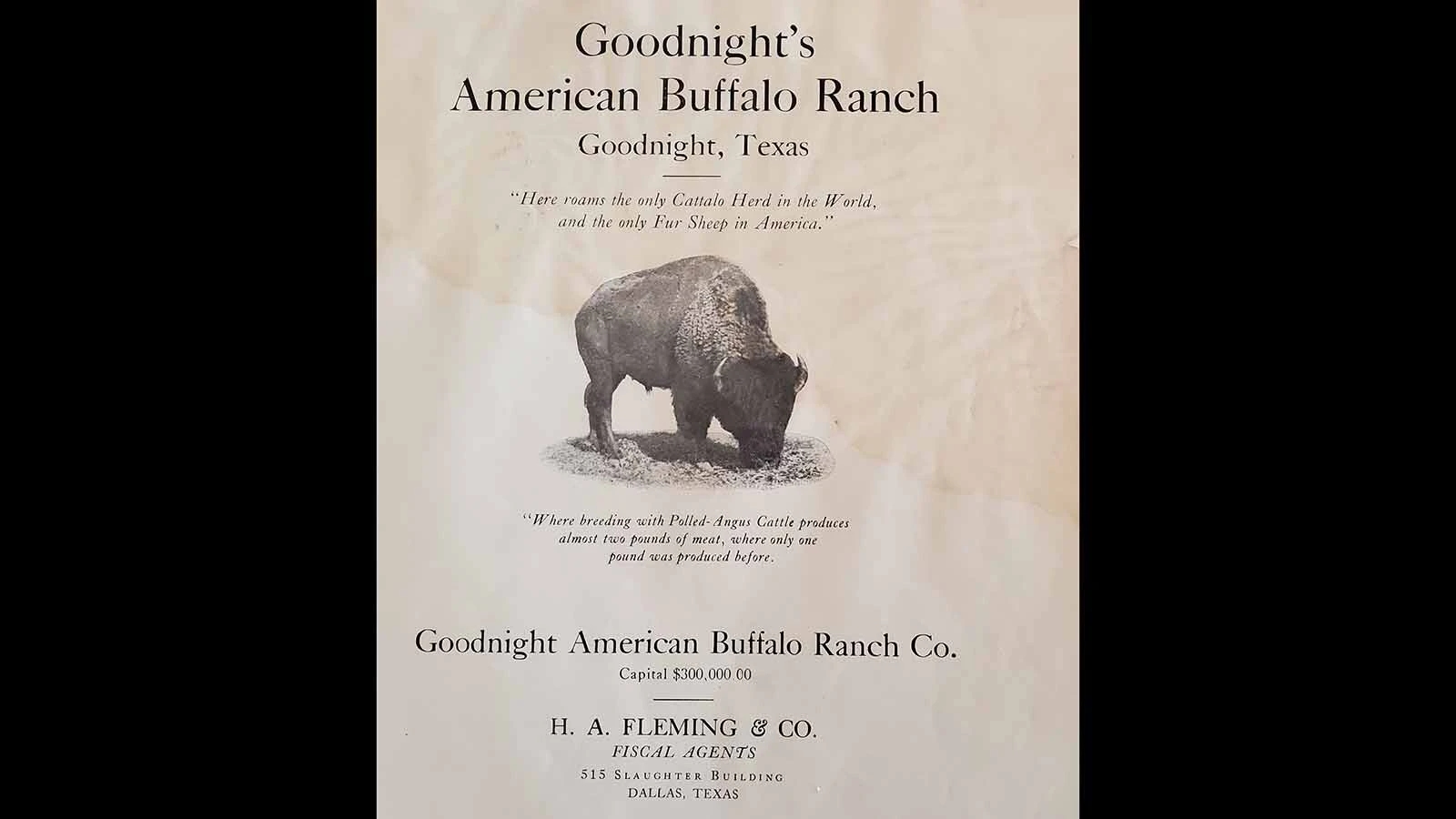
Botkin tells some of the story behind the species’ unlikely survival in her forthcoming book, “The Breath of a Buffalo: The Life of Mary Ann Goodnight,” due out in March 2027.
“She’s one of the primary reasons we have bison to raise them,” she said. “She saved the southern bison, in a nutshell.”
Molly Puts Her Foot Down
Historians have credited her husband, Charles Goodnight, with that, but Botkin says that’s not true.
“Charles ordered a buffalo hunter to go down into Palo Duro Canyon (Texas) and this was the winter of 1878,” she said. “And by this buffalo hunter’s account, he exterminated 15,000 bison.”
Many of the baby bison couldn’t keep up with their mamas, so were left alive, Botkin said. They were crying for milk and trying to smell or even nurse their dead mothers — even as the hunters were trying to skin the carcasses.
“So Mary Goodnight kept hearing these cries, and of course she’d seen the buffalo hunting,” Botkin said. “So she complained about the cries from the buffalo one morning when she woke up, and her husband, Charles, immediately told a couple of the cowboys, ‘Go shoot them.’”
But that’s not what Mary “Molly” Goodnight wanted.
“That’s when she put her foot down and said, ‘No.’ So they brought her two young calves, and put them on longhorn cows to nurse,” Botkin said. “And then after that, she paid $75 to every cowboy who could bring in a calf.”
That was three months’ wages at the time, a powerful incentive that helped Mary Goodnight build a southern bison herd. Her rescue herd would become part of a wider, often commercially motivated network that helped keep bison alive — a network in which Wyoming would become a major player.
Buffalo Bill Connection
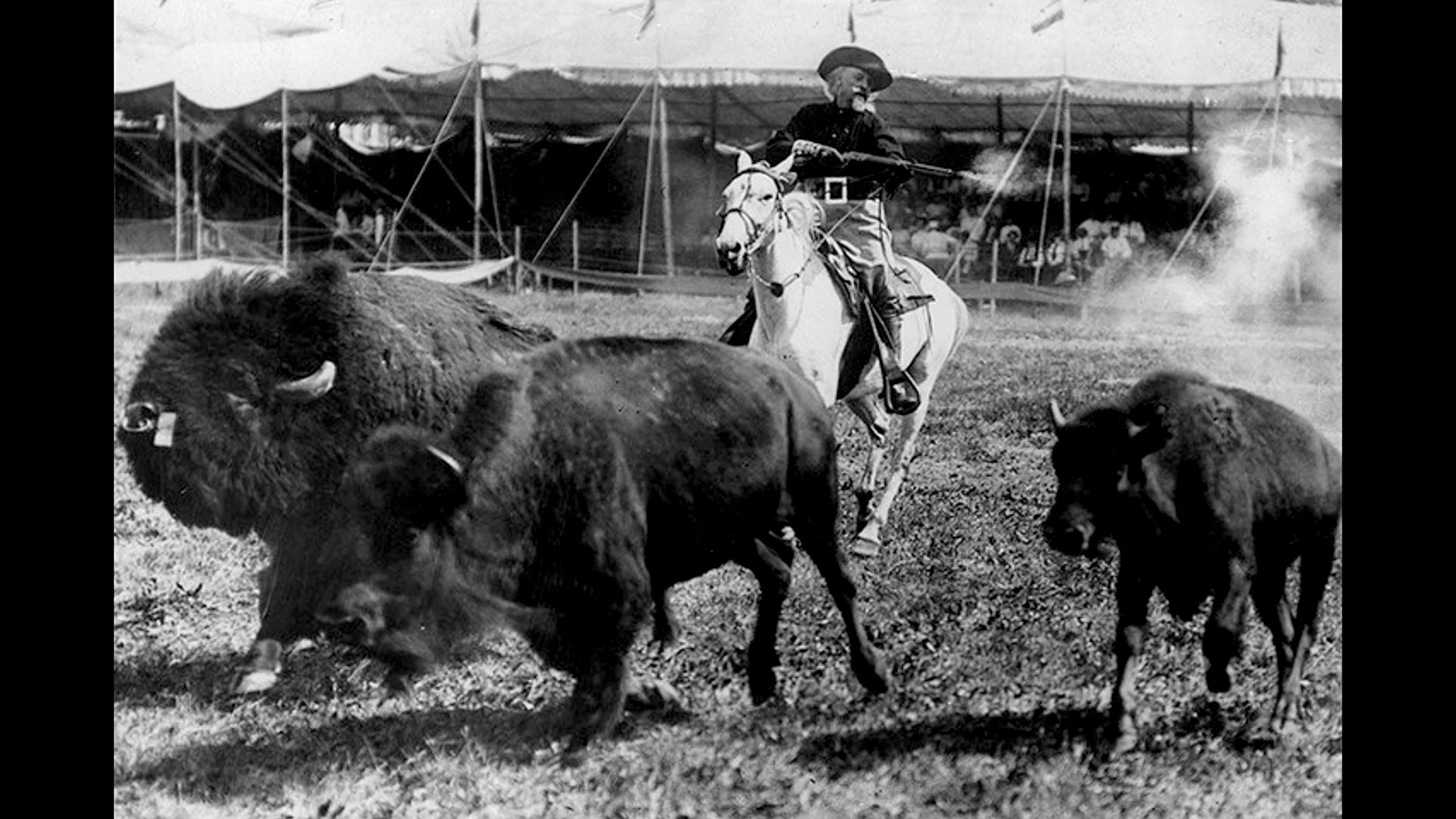
Buffalo Bill Cody might not be the first name that comes to mind when thinking of bison preservation, given that the “buffalo” part of his name comes from killing thousands of them to feed railroad workers in 1867 and 1868. But it was Cody’s famous Wild West Show that raised the profile of bison and planted the nearly extinct creatures in the hearts of millions across the U.S. and Europe.
Cody didn’t believe bison could or ever would recover. But he did believe a stampede of 20 or so of these magnificent beasts could thrill millions of people — and he was right.
He raised a small herd on his ranch in Nebraska for his show. Those bison even performed for Queen Victoria’s Golden Jubilee.
At first, it was just a curiosity, Botkin said.
“We could look back and think, ‘Wow! That was really some time period,’” she said.
But curiosity turned to awareness and, somewhere along the way, coalesced into a desire to save the species. That operated on several fronts.
Ranchers were inspired to raise their own bison herds in little pockets across the West — including in Wyoming — believing that the animal might one day become a valuable, novel commodity.
That ultimately even included Charles Goodnight, who history records as saying bison are “the most profitable farm animal in America.”
Charles pursued cattle-bison cross-breeding as well as ideas like buffalo-tallow soap and buffalo-hair textiles. While these ideas never took off in Goodnight’s lifetime, they were part of motivating some ranchers to keep bison around.
Scarcity, meanwhile, drove up prices — its own kind of incentive. When the Pablo-Allard Ranch sold out in 1907, for example, Michel Pablo sold his herd for $250 a head to Canada — a small fortune at the time.
Bets On Bison
Three bulls from the southern herd Mary Goodnight built would eventually supplement the remnants of a small wild bison herd found unexpectedly in Yellowstone National Park, along with some cows that came from the Pablo-Allard Ranch, Mike and Kathy Gear told Cowboy State Daily. They are retired bison ranchers, as well as bison archaeologists.
“That laid the foundation for so many of the northern herds,” Mike Gear said. “You also have a kind of scurrilous fellow by the name of Charles Jesse Jones, who went by the name Buffalo Jones, who captured 14 animals. He became the first game warden in Yellowstone National Park.”
French Canadian Frederick Dupuis, living in South Dakota, captured some napping calves in Montana in the early 1880s, according to historical records. They eventually helped seed the herd at Custer State Park.
Public preservation, meanwhile, picked up steam in 1905, when then-President Theodore Roosevelt and Hornaday founded the American Bison Society and established the National Bison Range in Montana to protect and restore the species.
“So you have all these bison ranchers who are buying and selling animals and are really responsible for the salvation of the bison gene pool,” Mike Gear said. “They’re constantly trading, constantly moving animals around, and keeping genetic diversity in the herds.”
Oldest Continuous Bison Ranch
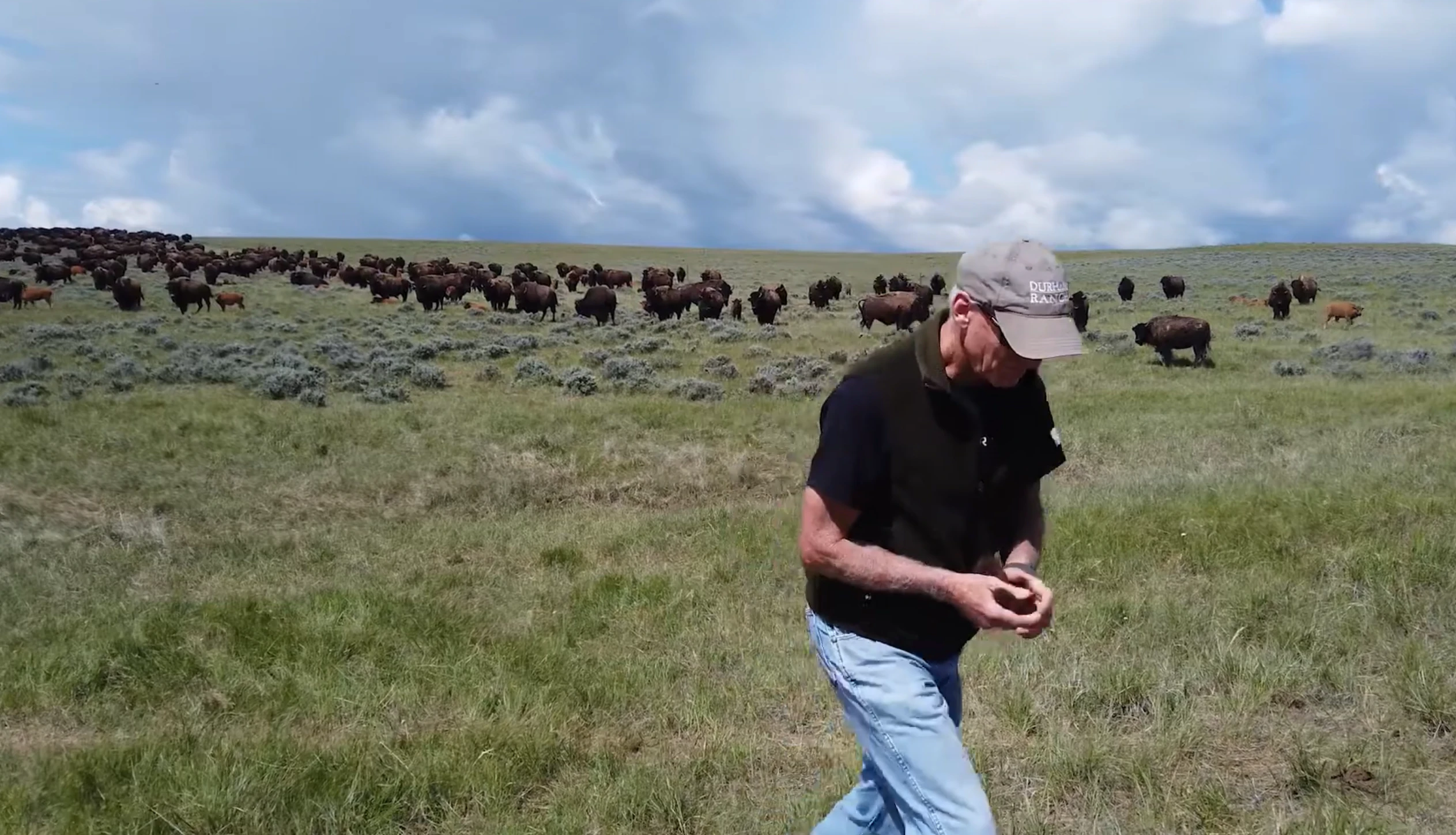
The oldest and largest continuous commercial bison operation in North America began in Wyoming with the Durham Ranch, owned by the Flocchini family.
They’ve been selling bison meat since 1965, when Armando Flocchini bought the Wright family homestead. Flocchini family members told Cowboy State Daily in a 2025 interview the ranch already had bison when it was purchased. Their origin, based on DNA, has been traced to Yellowstone’s herd.
Armando immigrated to America from Italy in the late 1800s and made his living as a butcher in California. In the 1930s, he bought the Durham Meat Company, which sold premium specialty meats. He renamed the Wright homestead to the Durham Ranch, matching his existing brand.
Durham Ranch’s bison herd has had as many as 5,000 head, and sells its premium bison cuts in all 50 U.S. states.
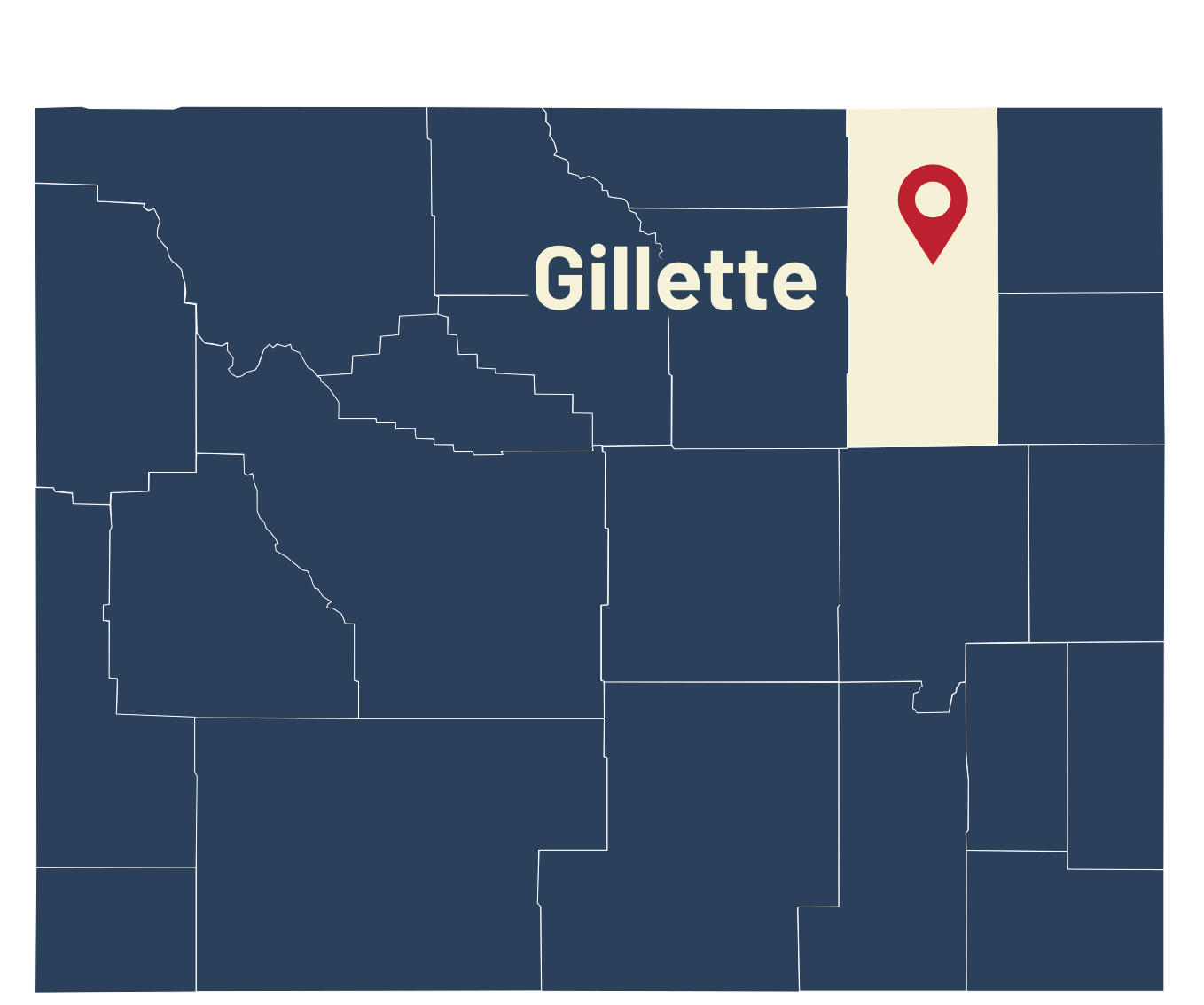
Several Wyoming restaurants also carry meat from the ranch, including Pokey’s Barbecue and Smokehouse in Gillette, Hank’s Roadside Bar and Grill in Wright, the Prime Rib Restaurant and Wine Cellar in Gillette, 77 Steakhouse and Saloon in Hulett, and Open Range Steakhouse in Wright.
A number of restaurants in Jackson and other places carry meat from the Durham Ranch, a list that’s constantly changing and ever-growing.
“They have been hugely important purveyors of meat and bison products,” Kathy Gear said. “Another one, too, is Boyd Meyer in Cheyenne at Cold Creek Buffalo Company. He manages about 750 buffalo, and his primary contribution is buying and selling buffalo. He buys from everywhere — Canada, Oklahoma, California.”
Ted Turner Taps Health Movement
The Gears credit Ted Turner as one of the most important figures in the modern bison comeback.
“He started buying bison in 1976 and he started Ted’s Montana Grill so that he could introduce people to the meat product,” Kathy Gear said. “He just recently passed away, but Turner Enterprises has 13 buffalo ranches in six states in America, and they manage about 50,000 bison.”
Turner died in May.
The Gears, like many ranchers at the time, got into raising bison to help save the species, but they remember how Turner’s efforts changed the marketplace for the better.
“When we first got into the industry, there really was no bison market,” Kathy Gear said. “You got into it because you knew you were part of the salvation of the species. Then Ted got involved and actually helped create a market for the product, which was so wonderful.”
Power Of Commercial Conservation
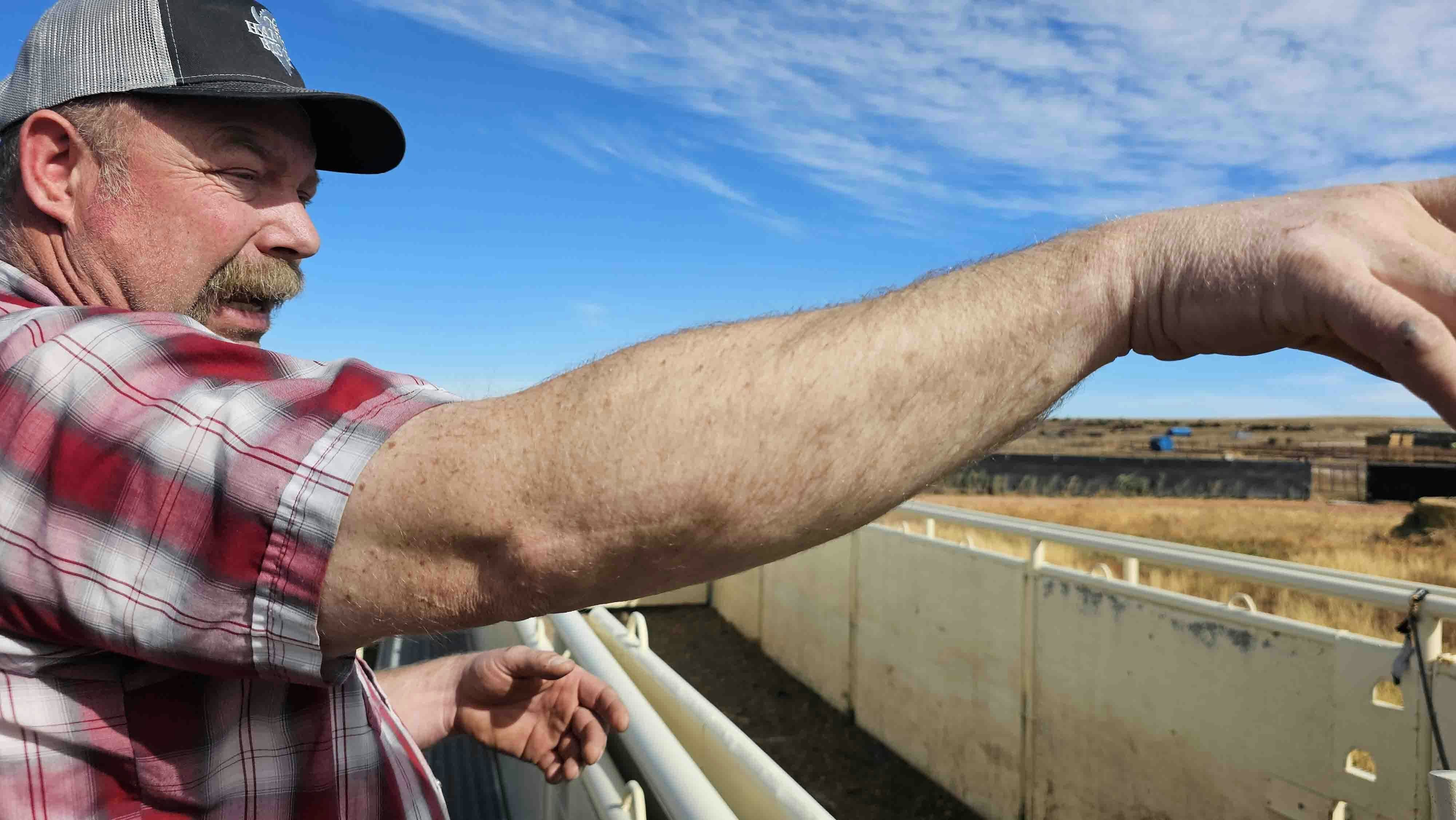
Ken Klemm, past president of the National Bison Association and a longtime bison rancher in Wyoming, calls the bison success story “conservation through commerce.”
He has researched bison numbers through history to illustrate its power. The numbers, he said, are telling.
“By 1990, the bison herd totaled about 90,000,” he said. “And the term, conservation herd, started to come into play at that time.”
While the term was poorly defined at the time, Klemm has identified about 25,000 head in that category.
The rest were in for-profit herds.
“We started to see some good growth there in the late 80s,” he said. “This coincided with the American public coming to the realization that what you eat affects your health.”
The concern about fat, calories and cholesterol gave bison meat a real edge.
“It’s lower in fat, calories and cholesterol than even skinless white chicken meat,” Klemm said. “So it started to become popular.”
At about the same time, people started figuring out how to build effective fences for bison instead of “Jurassic Park” fences, Klemm added.
“We figured out how to transport them in ways that were conducive to raising bison in a low-stress manner,” he said. “So that’s 1990. Then we jump to 2000, and that 90,000 to 95,000 number jumps to 360,000, while your public herd numbers were still 20,000 to 25,000.”
Today, herd numbers are more than 400,000, Klemm said, while conservation herd numbers haven’t changed. To him, that shows the power of conservation through commerce.
“Those numbers have grown exponentially, and it’s because we’ve developed a feedback mechanism,” he said. “The public likes it, so there’s money in it, and therefore you can generate the bison. The same thing has happened in Africa with all sorts of animals there as well.”
Non-profit conservation has a tendency to stall, Klemm added.
“It requires someone to tax somebody,” he said. “Or somebody to donate money with no return on investment. It’s not a very good model for growth, that’s the bottom line.”
The Great Plains once lost almost every bison. It took more than pity and policy to bring them back, though.
It took paychecks.
As long as there’s money — and pride — in raising bison, those shaggy, fluffy cows are likely to keep moving across western horizons.
Renée Jean can be reached at renee@cowboystatedaily.com.


