CHEYENNE — the U.S. Department of the Interior is ready to intervene in the more than 100-year-old dispute over Colorado River water if the seven Western states involved can’t come together on a realistic plan to manage the resource.
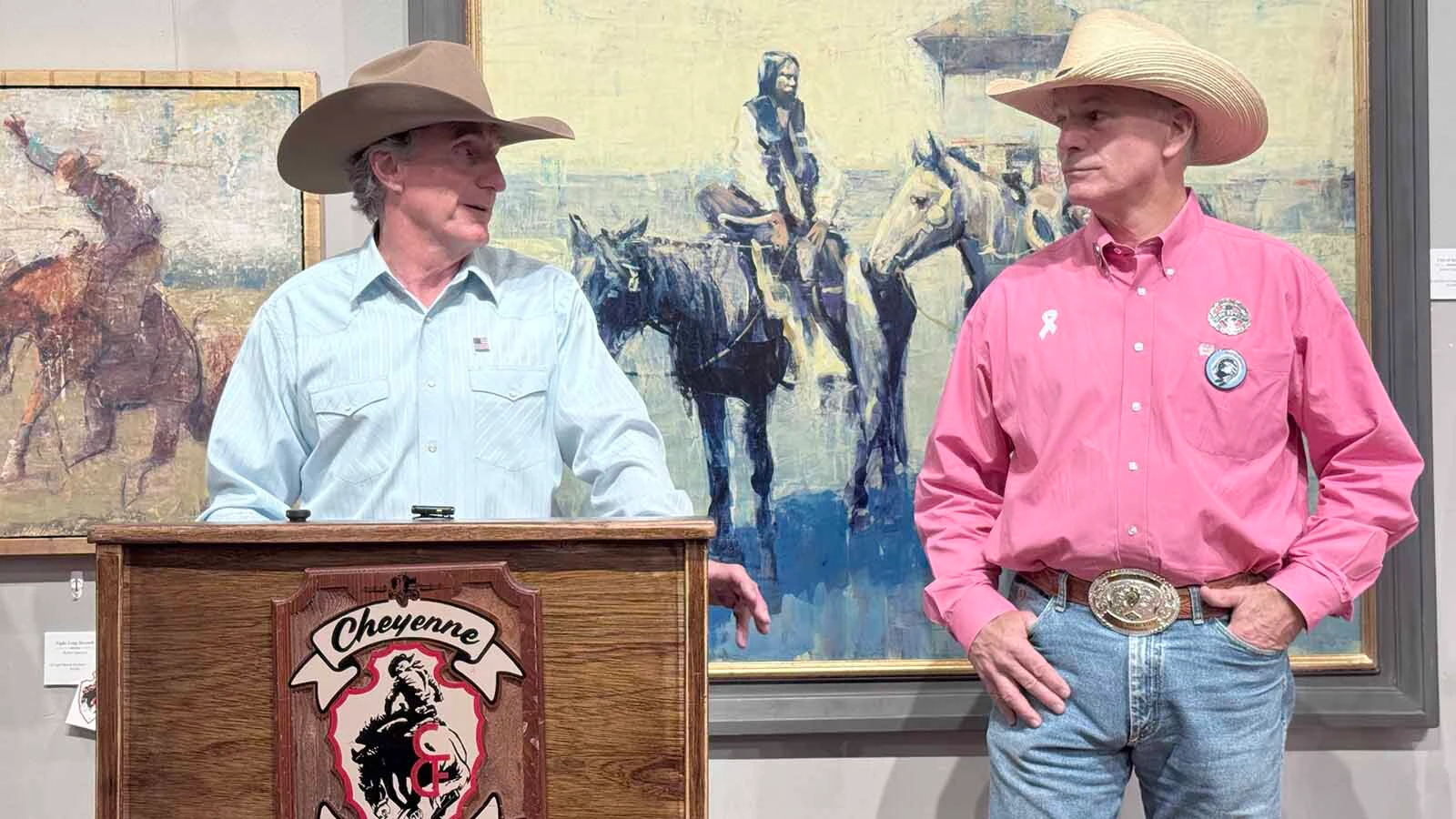
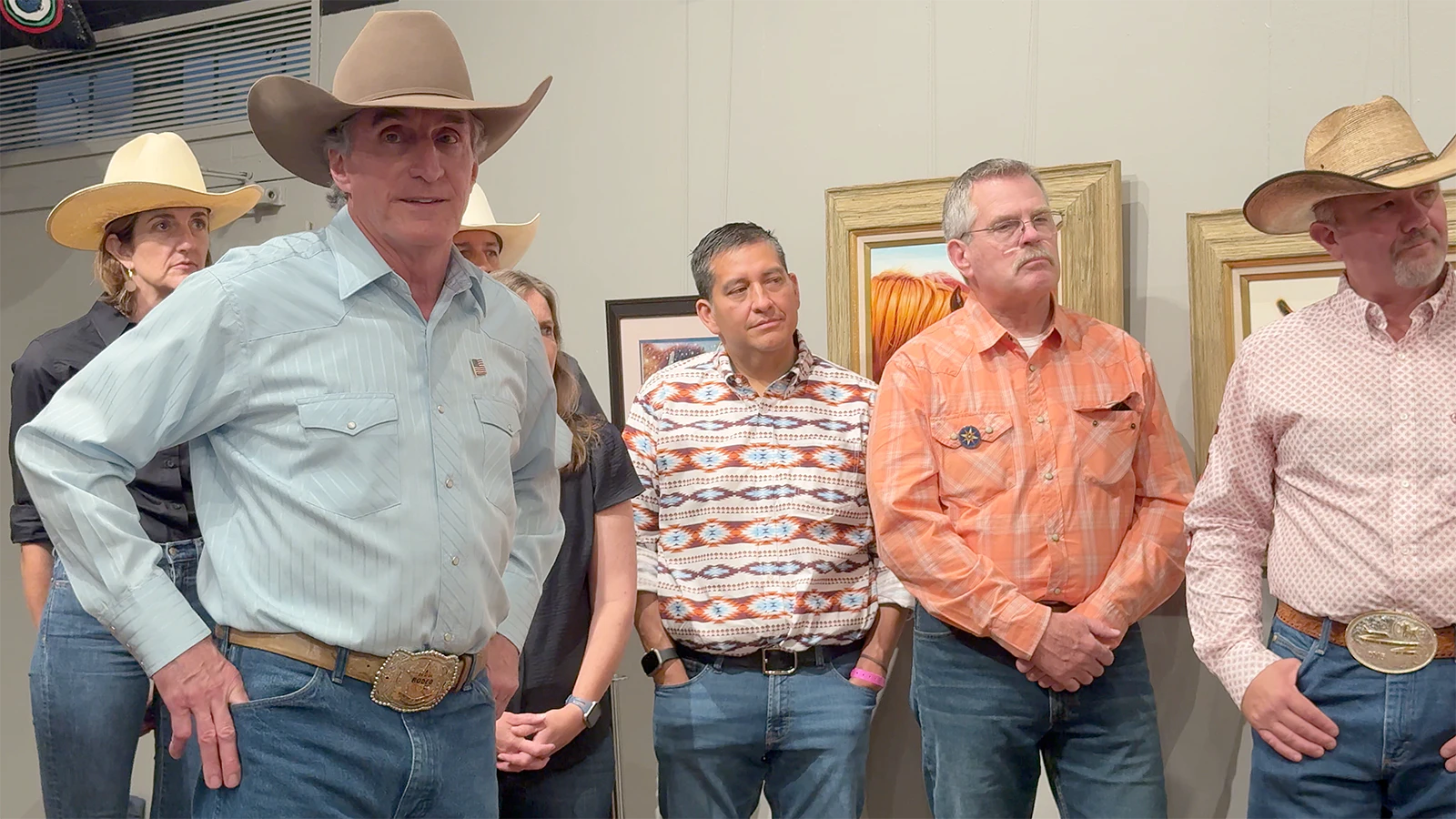
That was part of the message U.S. Interior Secretary Doug Burgum shared during a Thursday visit to Cheyenne Frontier Days with a large number of his department heads.
Burgum also said that after multiple meetings with governors of the Colorado River upper and lower basin states, he’s confident they’ll come to a new agreement that can replace the 1922 compact now in place.
“I’ve said before … if we come up with a plan that nobody likes, we probably have the right plan,” said Burgum, who was North Dakota’s governor before tapped by President Trump to head the Department of the Interior.
“Because when you have a shortage (of Colorado River water) that’s this severe, if somebody was happy and somebody was unhappy, then it’s not the right amount of sharing the pain or shouldering the responsibility,” he continued.
A July 31 deadline to comment on his department’s plan for the Colorado is a little more than a week out, he said, adding that something has to be ready by the time the new water year starts Oct. 1.
“There has been no consensus among the seven states,” Burgum said. “There are disagreements between the upper and lower basin. When they can’t agree, then it kicks it back to the federal (level), and the federal government essentially becomes the water master.”
Even if that happens, Gov. Mark Gordon, who hosted Burgum and his staff, said Wyoming’s share of water is protected by water rights that are senior to the 1922 compact.
“The water rights prior to that are going to be unaffected,” he said. “The Bureau of Reclamation owns the water, we don’t own water in Flaming Gorge. They control that.”
But so far, he said the second Trump administration has been listening to states, farmers “and listen to the people who actually use the resource, and they’ll use their judgment as they can.
“But I want to make sure people understand that Wyoming water law is sacrosanct, and it’s not going to be affected.”
Numbers Crunch
A sort of perfect storm of issues is bringing the long-debated Colorado River crisis into focus.
The guidelines of the compact were set more than a century ago during a wet year with plenty of water, setting a baseline that’s just not there every year, Burgum said. Added to that is this past record dry winter and low snowpack in the upper basin.
When the water was divided up in 1922, there were 16 million acre-feet of water available from the Colorado River, he said. This year there’s only 3.5 million available, which increases pressure from lower basin states for the upper basin — which includes Wyoming — to release more water.
“This year, we think that the amount of new water coming into this thing is going to be 3.5 million,” he said. “So, there’s the idea that everybody wants their appropriated share. The water isn’t there.”
Adding to the crisis is the sheer number of people who depend on the Colorado River for drinking water, irrigation, power generation and recreation, Burgum said.
“There are 42 million people that live in an area served by this, and then we ship water out to places like Denver and Salt Lake to serve those other metro areas,” he said. “So, the number of people that are depending on the Colorado is, like, quadruple what it was.
“So, we have one-fourth the water and four times the people — and we’re going to figure it out.”
On Energy
Burgum’s Thursday visit coincides with the Day of the American West at Cheyenne Frontier Days.
He and Gordon also highlighted Wyoming’s place as one of the nation’s energy-producing leaders and the need to continue developing that.
“The American West today … really powers our nation and it feeds our nation,” Burgum said. “And you can’t have national security without energy security.
“We (also) know we’re not going to have national security if we don’t have mineral security. And, of course, the West has historically been a place where we’ve had mining and management of critical minerals.”
He reassured people that his agency works for its “customers,” which he describes as people who use federal lands for a lot of different things — including grazing, minerals development and recreation.
“There has been kind of a trend the last 30 years where across these states with (large swaths) of public lands that we’re going to stop mining, we’re going to stop grazing, we’re going to stop doing timber,” Burgum said.
“All of that effort around some false ideal that by moving those activities to other countries or other parts of the world is going to be good for the world or good for the environment,” he added.
When it comes to energy, “Wyoming really is a powerhouse,” Gordon said. “We have all kinds of energy and we’re very anxious to be able to get more of it developed and out. And we do that here in Wyoming with an incredible amount of care.”
Local Control
Fresh off an announcement last week that the Department of the Interior wants to hand management of grizzly bears over to states, Burgum said Thursday that’s part of a larger philosophy of putting local control first.
“It’s a basic belief, and that's why we're moving back towards local control,” he told the small crowd of reporters and onlookers in a corner of the Old West Museum on the CFD campus.
“The people that live on the land know it best, and we should be a partner and a supporter, not a barrier to that,” he said. “And the law for most of the public lands are multiple use, and that includes grazing, recreation, energy, timber and wildlife.”
Greg Johnson can be reached at greg@cowboystatedaily.com.