Bison in Yellowstone National Park have been on a tear this summer, tossing a grandpa in a campground, chasing a man around cabins and even popping a tire on a tourist's car.
Some of it might have to do with bulls being in the rut, or mating season.
And some of it might be just plain bad attitude, a bison rancher told Cowboy State Daily.
“This isn’t a bug, it’s a feature of bison living in close quarters with people and not being trained to be wary of them,” Ken Klemm said.
Klemm is past president and a lifelong member of the National Bison Association. He has managed some of the world’s largest bison ranches.
On his ranches, Klemm said he goes through entire cases of bear spray, keeping ornery bison in line.
“You’ve got to get both eyes and the nose. If you get them in both eyes and the nose, they know to stop,” he said.
However, just carrying bear spray with no training or experience is ill-advised, Klemm added.
“You have to know how to use it. And you have to be mindful of the wind,” he said.
"Displacement Behavior"
Biologist George Wuerthner told Cowboy State Daily that keeping a safe distance from bison is the best way to avoid conflict.
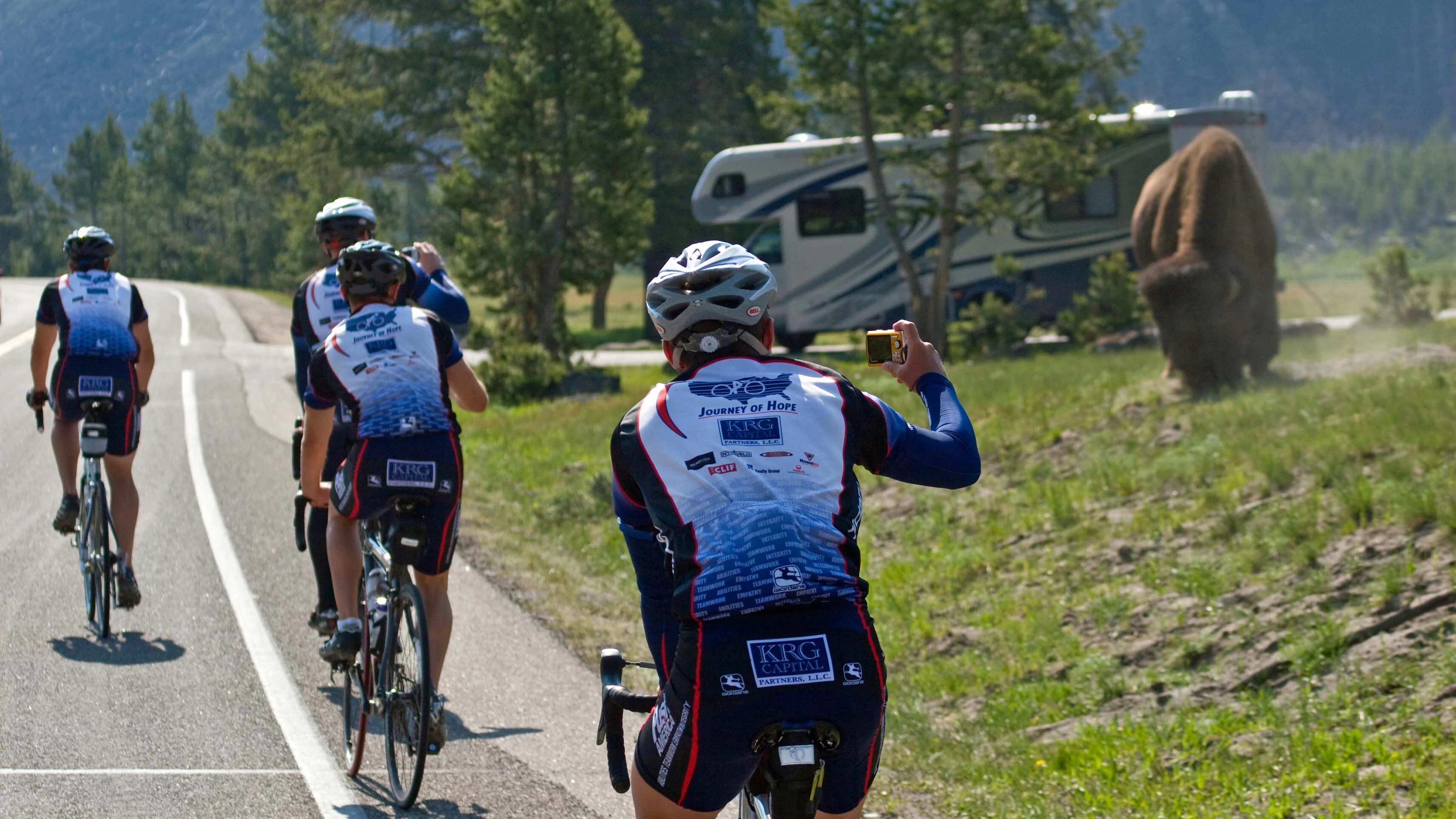
The rule in Yellowstone and Glacier national parks is that visitors should stay at least 25 yards away from bison.
When all else fails, bear spray works as a bison deterrent, Wuerthner said.
Bison will sometimes display “displacement behavior,” or take out their frustrations on whatever — or whoever — is around, said Wuerthner, who has worked in the Greater Yellowstone Ecosystem for decades and is president of the Montana Wild Bison Coalition.
“It’s like if a guy cuts you off in traffic and makes you angry, and you end up yelling at your kids because of it,” he said.
Recent incidents of bison aggression could also be attributed to bulls being in the rut, Wuerthner said.
The bison rut runs from mid-July through September.
During that time, bulls can be “all ginned up on hormones,” he said.
Bad Bison Behavior
On July 10, a bull bison went after Carl McDaniel, 65, in the Bridge Bay Campground, south of Fishing Bridge.
The bison caught up with McDaniel and flipped him about 8 feet into the air, seriously injuring him.
The bison then went after people in the next campsite, although nobody else was injured.
Wuerthner and Klemm both said they didn’t think McDaniel did anything to provoke the attack.
Video of the incident indicates “he was observing the park’s rules for safe distance from wildlife,” Wuerthner said.
Another video, taken by a park visitor on or about July 14, shows a bison chasing a man around cabins at Lake Hotel on Yellowstone Lake.
The man turns to face the bison several times, with his back to a cabin, before he finally manages to open the cabin door and scramble inside.
Another video, taken Monday in Yellowstone, shows a bison casually walking up to a car and puncturing one of its tires with its horns.
Klemm said that when bison display those sorts of behaviors, there should be consequences, such as getting hit with bear spray.
“If those bulls knew that there was a risk associated with going after people, they would find something else to take their frustration out on,” he said.
Bison are also “experts at reading body language” and might single out people who appear weak or frightened, he said.
Worrisome Trends
With increased tourist traffic in Yellowstone and bison becoming acclimated to crowds, Wuerthner and Klemm said they’re concerned there could be more incidents.
“I do worry about it, and not just during the rut,” Wuerthner said. “I see people all the time who are way too cavalier about approaching bison.”
Klemm said aggressive bison should be dealt with quickly through some sort of negative reinforcement, such as getting hit with bear spray.
“When you get an animal like that, action does need to be taken, or that will become a learned behavior throughout the herd,” he said.
He also recommends avoiding close contact with bison whenever possible.
“If I went camping with my family, I wouldn’t stay in a campground with buffalo walking through it,” he said.