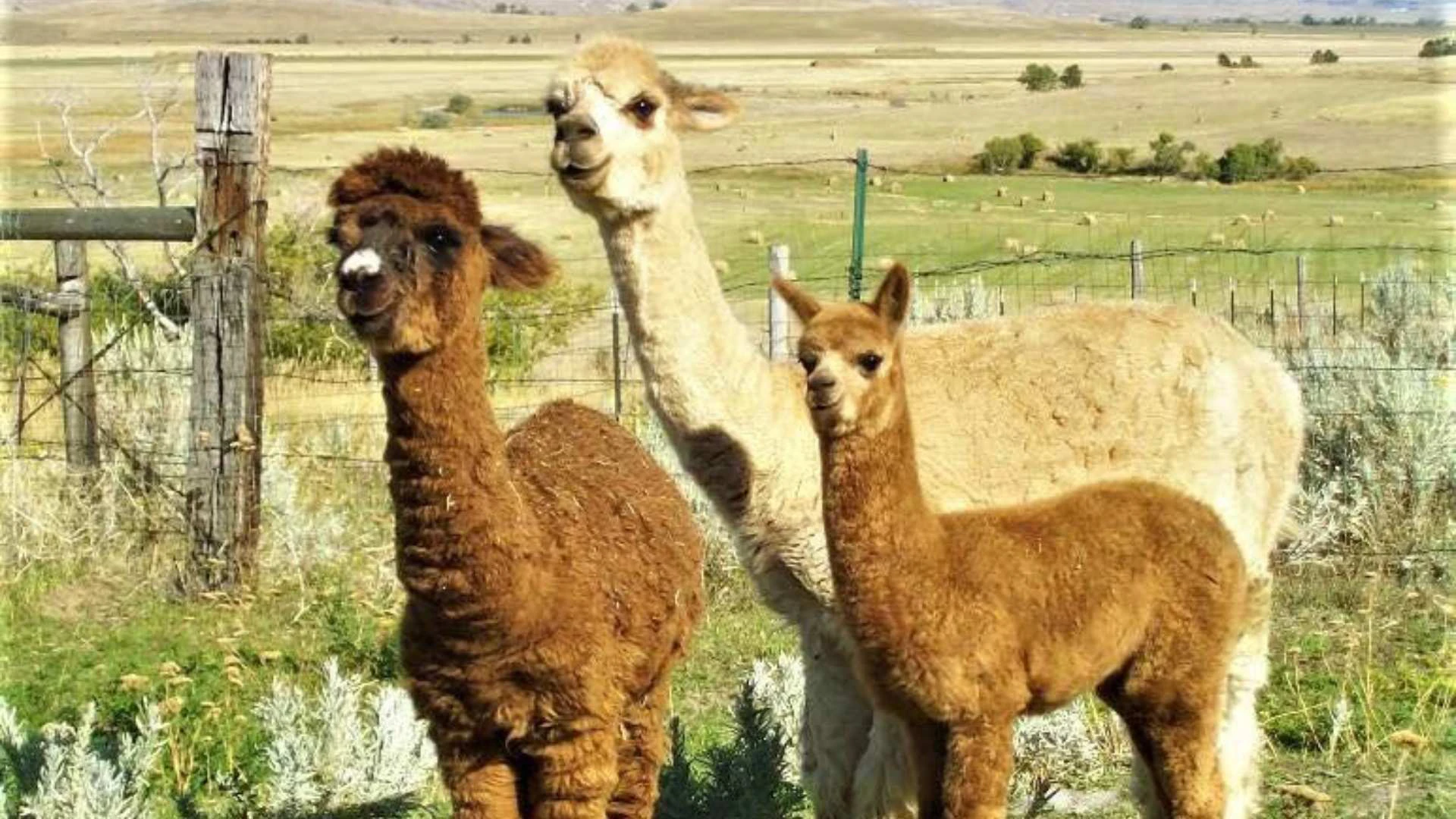
It’s a twist on the familiar image of a sunset over cattle on the Wyoming range, where several small growers have turned to a longer-necked, softer-footed species — alpacas.
These gentle, shy, and highly herd-oriented animals are generally friendlier with humans than their llama cousins (both species are South American members of the camelid family), and their fiber produces soft, lightweight fleece comparable to cashmere.
Many small ranchers in Wyoming are choosing to raise alpacas rather than other livestock for more than just these reasons.
“They are the easiest livestock animal we have ever dealt with, and I think we've dealt with every kind of livestock animal out here,” said Jan Sapp, who with her husband keeps a herd of 108 as Powell-based Arrowhead Alpacas.
“They are smart,” she told Cowboy State Daily. “They are curious. It takes us about three days of 15 minutes per day to train an alpaca to be parade ready — from they've never been haltered to being able to walk in a parade.”
Wyoming Is Alpaca Country
Wyoming’s climate is ideal for alpacas.
The animals evolved in the mountainous terrain of the South American Andes, and their bodies are in tune with high-altitude regions and often extreme temperatures.
Sapp said she first learned about the benefits of alpaca fleece when her husband, who is a part-time missionary, would go to Peru and bring back alpaca sweaters for her.
“I was a special education teacher in Florida, and even though when you think of Florida you don't think cold, air conditioning is really cold,” she said. “I would wear the alpaca sweaters, and they were wonderful. They kept me warm, and I didn't get too hot.”
Sapp also learned that alpaca wool is hypoallergenic.
“It does not have lanolin, and usually lanolin is what people are allergic to,” she said. “It's also about five times warmer than sheep's wool.”
Family Business
Sapp said that when she and her husband started seriously considering moving West, their three adult sons thought that sounded like a great idea and decided to move with their folks.
“When we knew that they wanted to come West with us, I thought, ‘Well, what could we do as a family?'” she said. “So I started researching alpacas.”
An unsolicited email promoting an alpaca growers’ seminar in Oregon piqued Sapp’s interest, and the family decided to attend just to get a feel for the industry.
“We all said, ‘OK, we are going to go learn about Alpacas, but we are not going to buy alpacas,’” said Sapp. “We came back to Florida owning seven females and a share of a stud.”
The Sapps began researching suitable plots of land in Wyoming. On a property-search mission to the Sheridan area, they took a wrong turn on the way back from Yellowstone National Park and found themselves in Powell.
“I had brought my daughter-in-law, who'd never been West, and a stack of real estate papers,” said Sapp. “She was looking through the papers, and she says, ‘Hey, I think I see this property that's for sale.’
“And so we swung in, and there's like seven people in a minivan that piled out, and the lady was in the yard, and I said, ‘Is it still for sale?’ And she paused, and she said, ‘Well, yes, it is.’ And it was perfect, because we needed housing for essentially three families.”
To make an income from their alpaca adventure, the Sapps partnered with other business owners to create everything from socks and sweaters to potholders and trivets, items that the Sapps offer for sale at their Heartworks store in downtown Powell.
“The socks can be worn year round, because they keep your feet warm in the winter, but then they wick moisture off your feet so they keep cooler in the summer,” she said.

Alpaca felt products at Heartworks in Powell. (Getty Images) 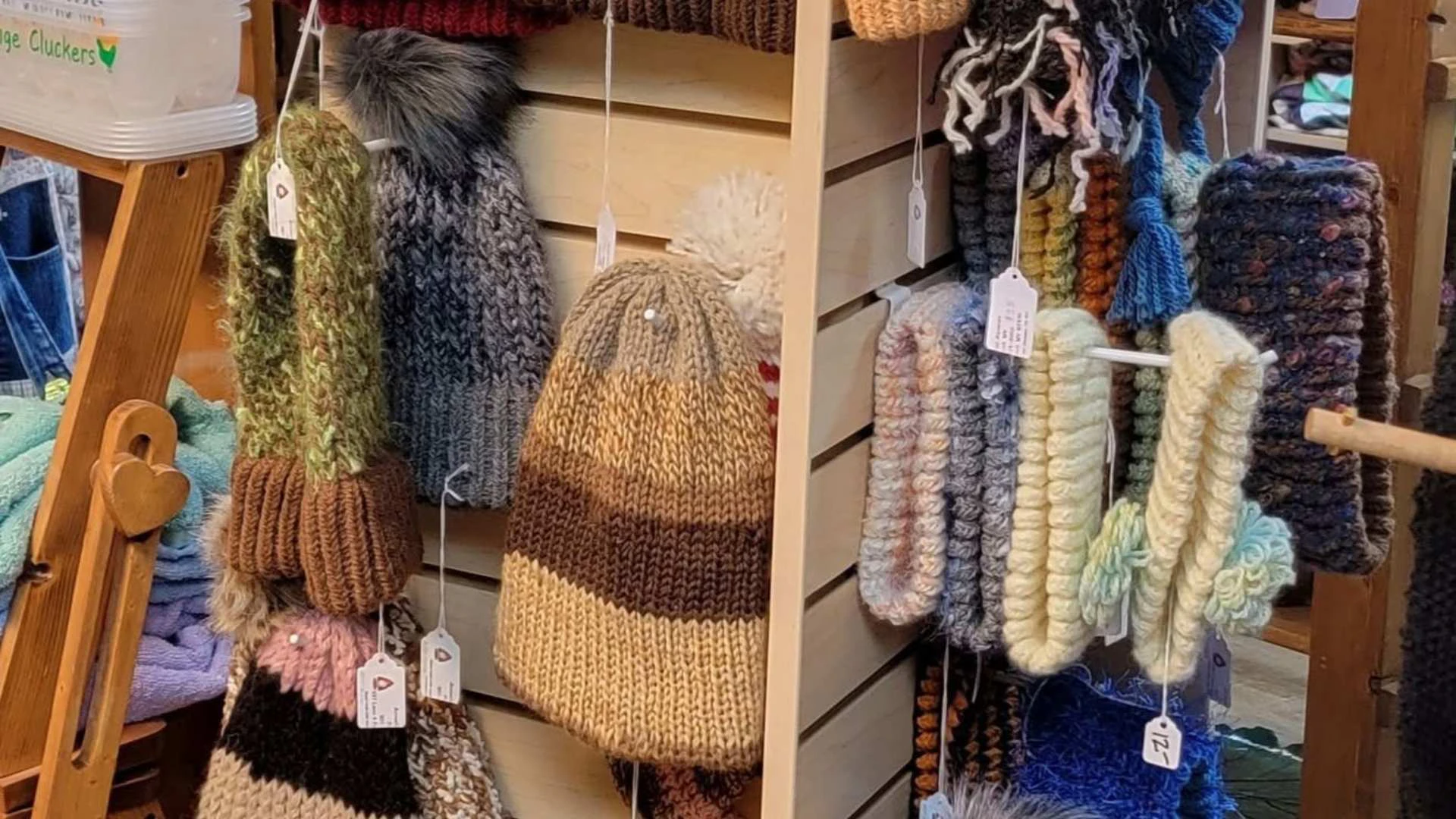
Hearworks in Powell sells many items made from Alpaca felt. (Wendy Corr for Cowboy State Daily) 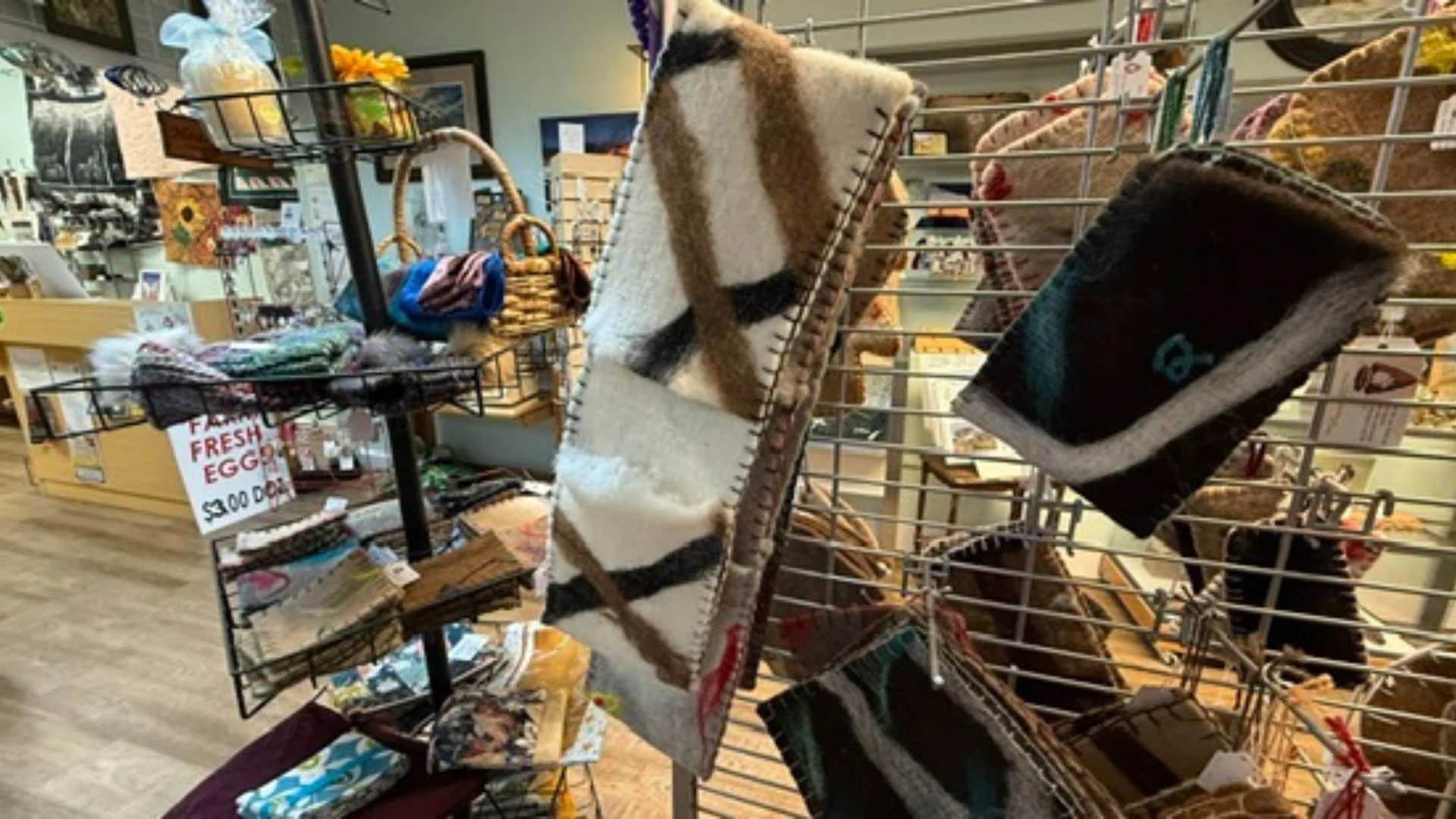
Hearworks in Powell sells many items made from Alpaca felt. (Wendy Corr for Cowboy State Daily) 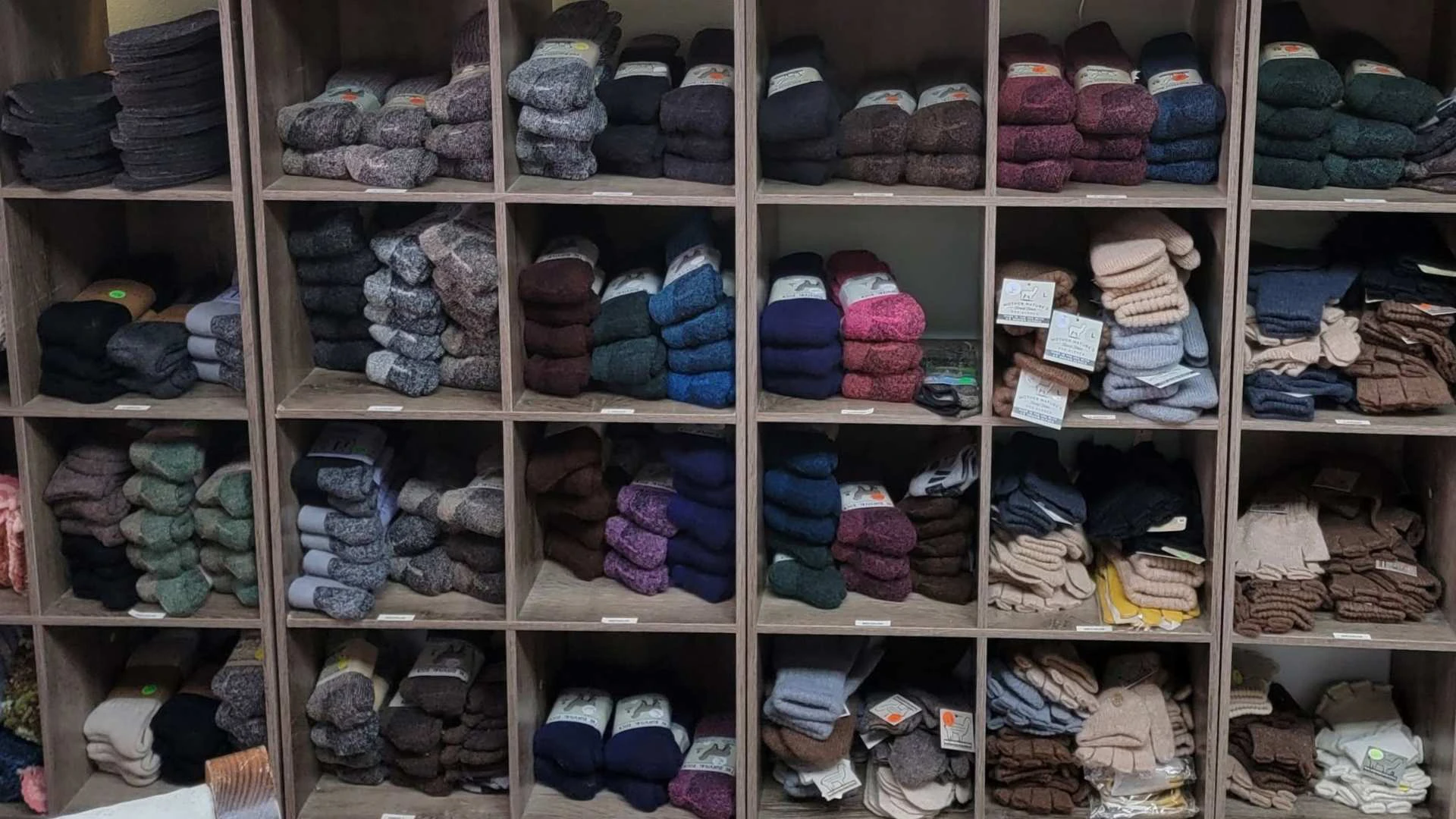
Hearworks in Powell sells many items made from Alpaca felt, like fleece socks.
Mountain Business
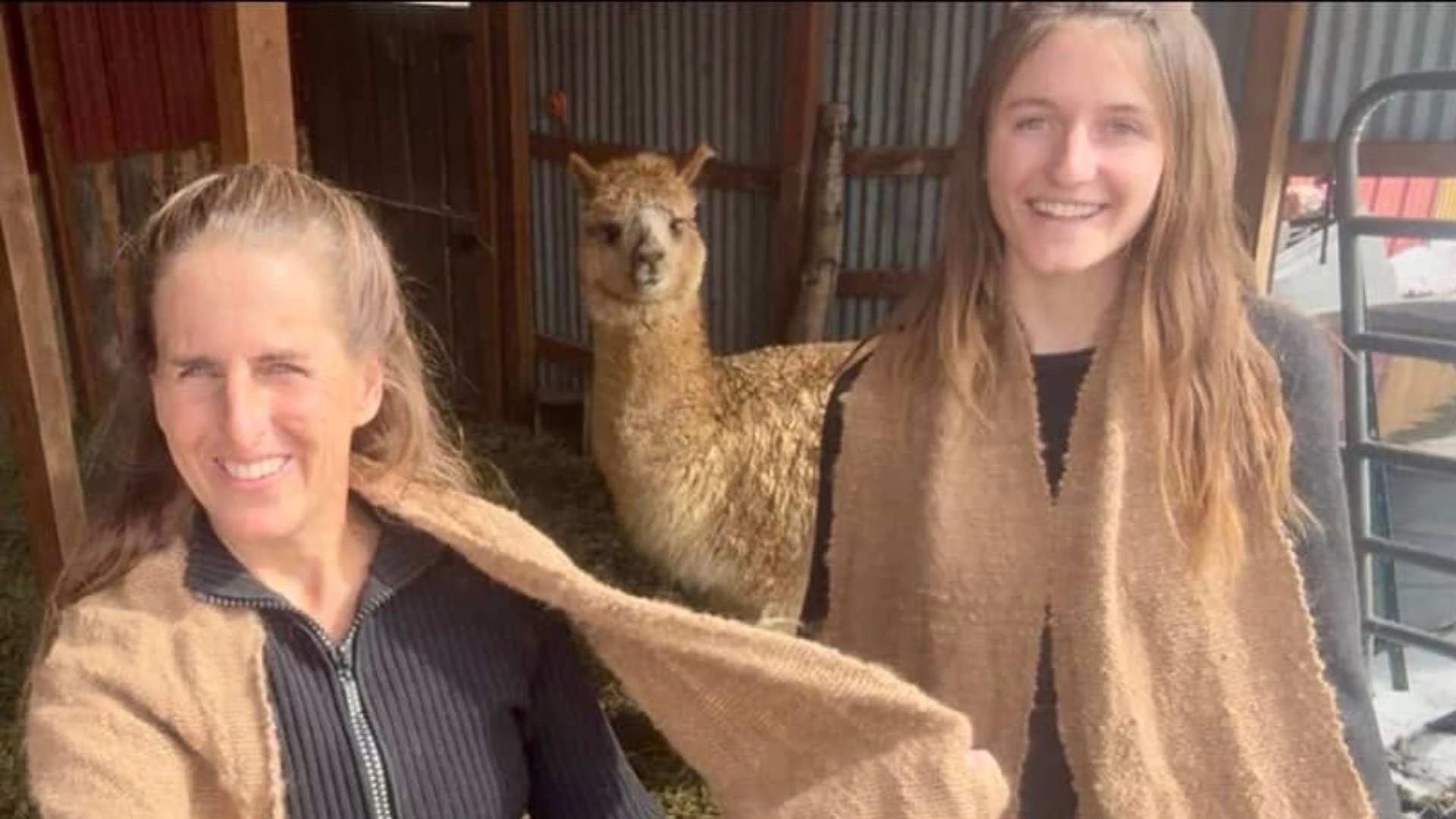
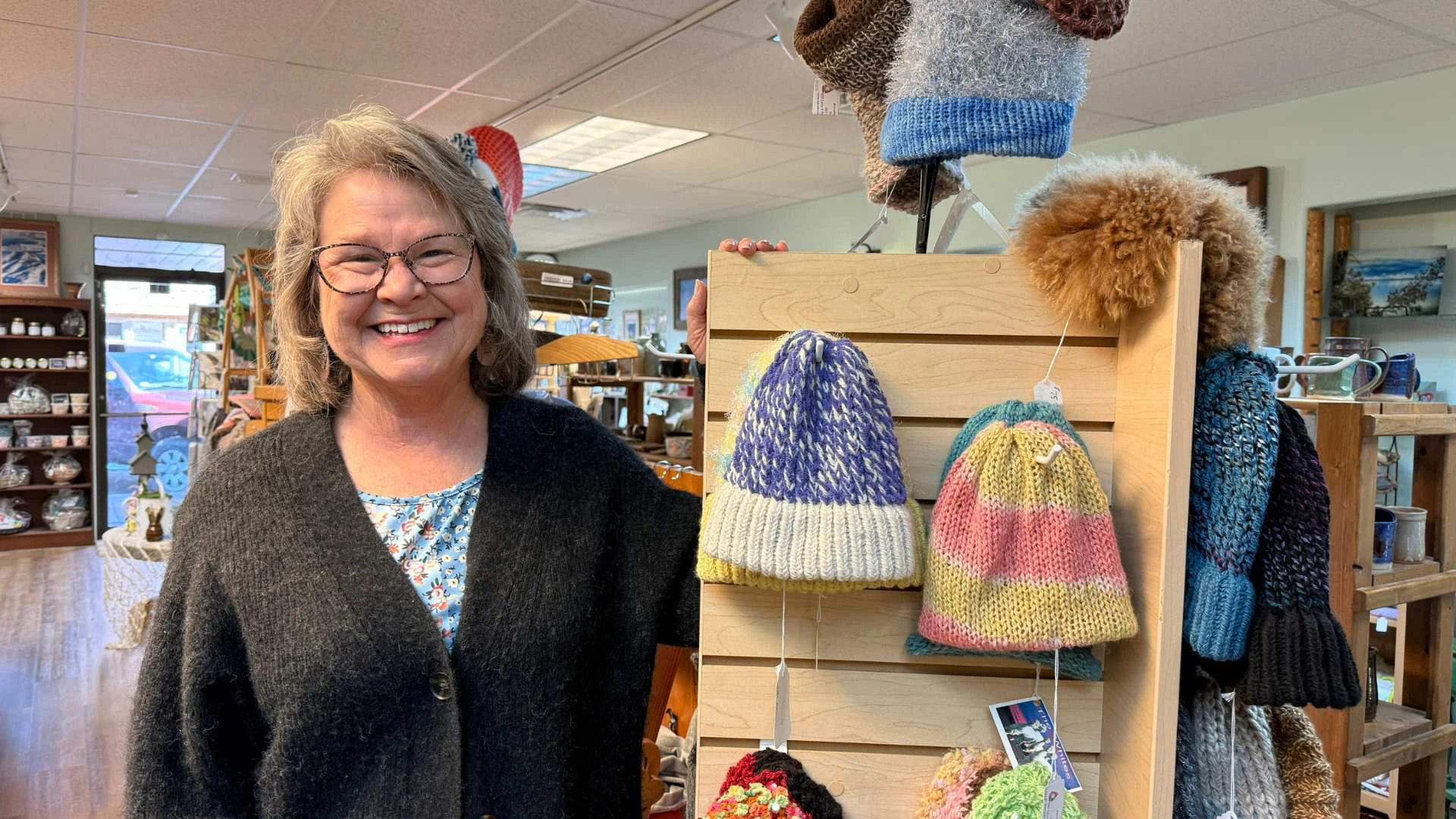
Mariann Eckendorf and her daughter, Maria, have been raising alpacas since 2005 in Parkman, a small community in the Big Horns.
They own 21 of the animals, and their focus is on the fiber — shearing, carding, spinning and weaving their own alpaca fleece products.
“We shear them ourselves, and then we card the fiber and spin and weave and crochet and do wet felting and dry felting,” she explained. “Every single hair gets sold every year as a finished, value-added product.”
Eckendorf said that she also started her alpaca business for family reasons.
“After the birth of my one and only daughter, Maria, I wanted to stay home with her,” she said. “I was a school teacher, and I wanted to stay home and raise her and not put her in day care.”
Eckendorf said she had a couple of options at the time: either buy a fitness center in Sheridan or live off the land.
“I thought, ‘I don't want my daughter growing up in a gym,’ so I just went into alpacas and started learning about them,” said Eckendorf. “She's 21 now, so we're a women-owned business. And the alpacas are like our family.”
The Whole Package
Eckendorf said she and her daughter process all the fiber that their alpacas provide.
“The more you can do yourself, the more you can make,” she said. “Because you can't really sell raw fiber and make money off alpacas. By the time you feed them and vaccinate them you would go in the hole.”
The Eckendorfs market their products as Big Horn Mountain Alpacas, selling their merchandise all over the country.
“With the internet, I ship every day,” said Eckendorf, “and then social media has helped a ton to get people to know us.”
But Sapp pointed out that the fiber doesn’t provide all the income, especially as the animals grow older.
“As they age, their fiber coarsens, and alpacas are all about fine fiber,” said Sapp. “So rather than feeding and taking care of an animal that we can't use their fiber, their last gift is their meat. They are marketed as grass fed, natural, and antibiotic free.”
And, she added, there are other benefits that alpacas provide.
“Their poo is amazing to grow vegetables in,” she said. “When I had a box garden, I only grew in composted alpaca poo. I did not use soil, and had beautiful, beautiful vegetables.”
Grow Your Own Herd?
The national Alpaca Growers Association reports that there are 1545 registered alpacas in Wyoming, and Eckendorf has some advice for anyone who wants to add to those numbers.
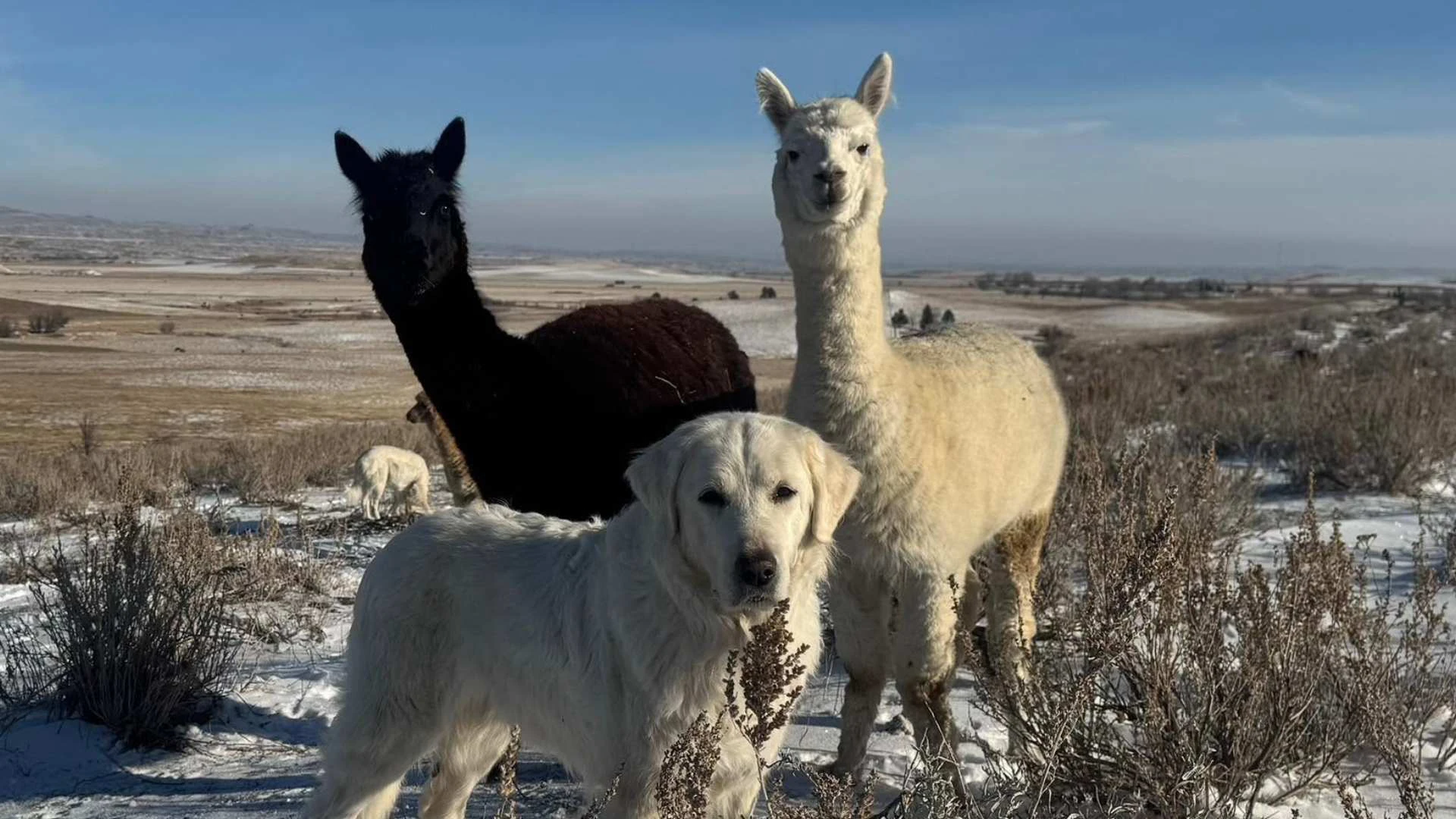
“They're a herd animal, so don't just get one or they'll be pretty sad,” she said. “You want to get at least three. And make sure you protect them, because they’re not like llamas — they won’t protect themselves.”
Fencing is a must, and Eckendorf also recommended livestock guardian dogs, of which she and her daughter have nine.
“We can coexist with foxes and coyotes, because we have our guardian dogs,” she said. “We’ve never had an animal killed by a predator, and we’ve never had a dog get out and kill anything.”
But Eckendorf cautioned that for anyone considering livestock guardian dogs, such as Great Pyrenees or Anatolian shepherds, they must be committed to training.
“They're not going to just be born knowing not to kill your chickens,” she said. “Barnabas, my last rescue dog, took two and a half years until I felt he was chicken-safe.”
Wicked Smart
Sapp pointed out that alpacas are exceptionally intelligent. She said she learned quickly that if she verbally cautions the animals about an upcoming water hazard or other obstacle, they responded.
“If I warned the alpacas that, ‘OK, we've got water coming up, it's a strange noise, but it's going to be fine,’ they just carried on like nothing,” she said. “But if I didn't say anything and if I didn't warn them, they would totally freak out.”
There’s more, said Sapp.
“We have a couple deaf alpacas, and a lot of the adults know some basic sign language,” she said.
Sapp said that she and her husband would like to retire from the alpaca business, but it’s a long game.
“Their lifespan is upward of 25 years,” she said. “Our youngest two are 1 year old. Right now we have 108, but we have already downsized.”
Wendy Corr can be reached at wendy@cowboystatedaily.com.