
Douglas photographer Mark Panasuk enjoys transforming a dark scene into something beautiful.
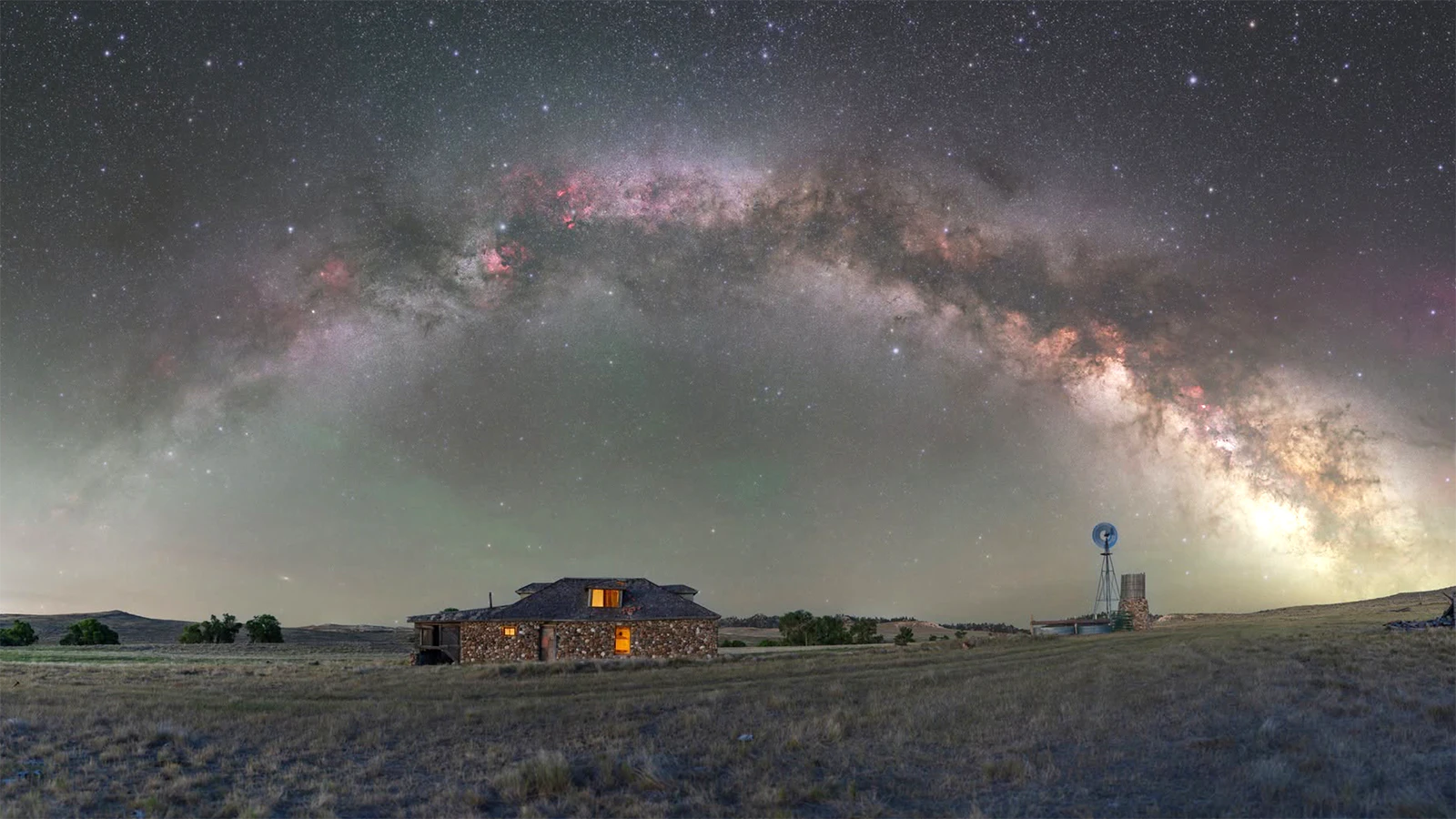
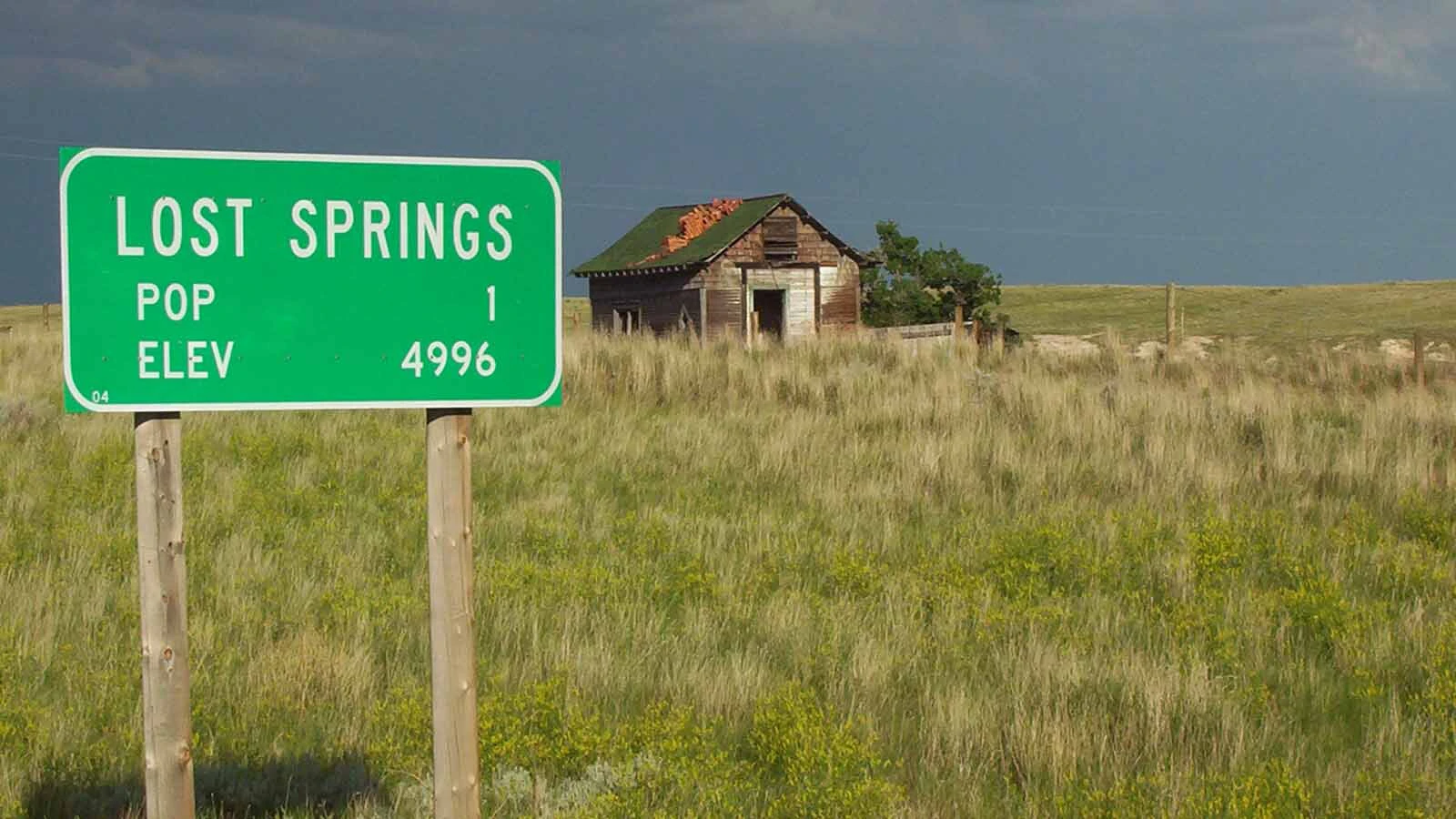
He’s always on the lookout for another interesting setting, and when he found an abandoned stone ranch house north of Lost Springs, Wyoming, he knew he had something special.
Unlike the famous line from poet Dylan Thomas, he portrayed the property as going “gentle into that good night.”
Digging into its history, Panasuk became even more enamored with capturing the stone walls and grounds with the Milky Way above it because it once was home to one of the most successful Back ranchers in the West — Jim Edwards.
“It was kind of a unique house in that it was big house, two story, out in the prairie here in eastern Wyoming,” Panasuk said. “It had several buildings … and he was really inventive because he put in that water tower.”
The tower was built with an opening that appeared to allow a space for a fire that would keep the water from freezing in the winter.
The house had a bathroom with toilet, shower, and the property also featured a stone garage.
There is evidence of several other outbuildings that once were around it. Several accounts of the property state that Edwards was the first in the area to have indoor bathroom facilities.
Panasuk got permission from the current landowner to photograph the house and grounds, and the result shows the Milky Way like an arch above it framing the property.
He said he put a light inside the house, which has lost its windows, because he thought it made a better piece of art.
Creating the final image required a combination of 35 photos and three-minute exposures to fully reveal the Milky Way.
He used a computer program to stitch the digital images together to make it one.
Panasuk said he spoke with some of the ranchers around the property and learned that a father or grandfather knew Edwards, who made a name for himself well beyond Wyoming.
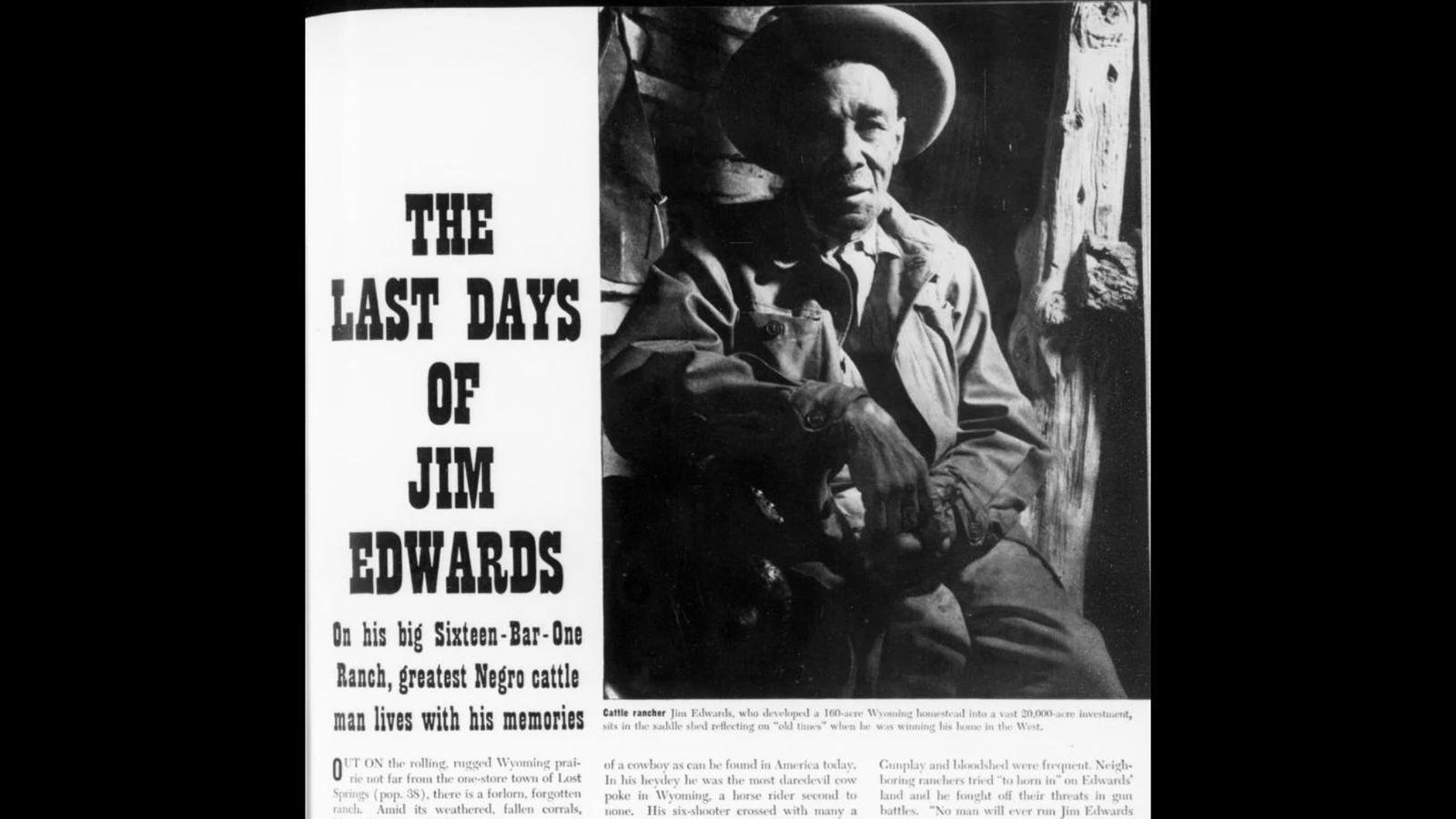
Turns out that Edwards is a featured name at the Homestead National Historic Park in Beatrice, Nebraska, and Ebony Magazine once profiled him in its March 1949 issue that had Billy Eckstein on the cover.
Magazine Profile
The profile was titled “The Last Days of Jim Edwards” and characterized him as a “legend” in Wyoming and a name that would remembered well beyond his death.
A history of Edwards written for the Black Past website says he was “one of the most successful African American homesteaders in the state of Wyoming.”
And “Pages From Converse County’s Past” compiled in the 1980s revealed that he was commonly known as “(N-word) Jim.”
But that word did not stop Edwards from becoming a successful rancher and business man. His coming and goings had fairly frequent mentions in the social columns of the local rural newspapers.
The Black Past account of Edwards' life says that he was born on Feb. 14, 1874, and arrived in Wyoming in 1900 with his father and a group of Italian miners responding to newspaper ads about work in a Lusk coal mine.
The miners drove Edwards out, and he walked to Lusk and found work on the Wilson Brother’s Running Water Ranch.
Over the next 14 years, he rose to the rank of foreman and was a good sheepman, cowboy and horse trainer.
In his final years at the ranch, a dispute with the Wilson brothers led to a lawsuit that Edwards won in 1923, giving him $3,000 in back wages plus interest. The Wyoming Supreme Court increased it to $4,000.
The Lusk Free Lance on Nov. 1, 1923, reported that the dispute had been over an accounting of his share of sheep as well as his wages.
1913 Homestead
Meanwhile in 1913, the Wilsons helped him homestead acreage on Harney Creek.
Edwards recruited other blacks to homestead on land around him, and he eventually bought their properties.
"Converse County's Past" states that Edwards married Lethel Dawson in 1914 in Denver, and that her parents cooked on a river boat on the Mississippi River
When her father contracted tuberculosis, they moved to Denver for his health.
A story looking back on Lost Springs in the Casper Star-Tribune on April 6, 1974, reports that Lethel’s father was a full-blooded Indian and her mother black.
After her marriage to Edwards, she traveled to Denver from time to time to sing on radio stations.
The Lusk Standard newspaper on Sept. 12, 1919, reported that “Mrs. Jim Edwards” had just become the “happy” owner of a new piano.
“Now, we’ll have some jazz,” the editor wrote.
In the Ebony Magazine story a few years after his wife’s death, Edwards was still in charge of his 14,000-acre Sixteen-Bar-One Ranch.
He had named it the Sixteen-Bar-One because it represented the ratio of white ranchers to black ones.
Edwards told the reporter that when he first arrived in Wyoming and then later set up his homestead, gunplay with neighboring ranchers and would-be outlaws was not uncommon. He was tested.
“No man will ever run Jim Edwards off of his land,” Edwards told the magazine. “Let ’em know right away that you’re going to fight for what you own. Just because a man’s colored is no reason for people to think he’s a coward.”
That philosophy likely was part of the reason for a story in the Niobrara County News on Dec. 3, 1914, when Edwards still served as herder for the Wilson Brothers and had a “mix-up” with a herder from another ranch over their bands of sheep.
Edwards had the man arrested, but later “dismissed the case and paid all the costs.”
Sheep ‘Straying’
Another mention of Edwards in the Lusk Herald a year earlier had him complaining that he had a lot of trouble with sheep “straying away.”
The Ebony account said that at one time, Edwards had 20,000 acres of land with oil rights, and during his normal operations had more than 1,000 head of cattle, 9,000 sheep, 200 horses, 5,000 chickens and 500 hogs.
He told the reporter that what he considered most important in his success was a “clean mind and a few years ago a pistol.”
“I didn’t have to use my pistol much, but then you don’t have to when you make your decision to stand at the outset,” he added.
Edwards built the stone house himself, helped pay for the construction of the Congregational Church in Lusk — where his wife sang in the choir — and told the reporter that Lethel had been “the guiding influence in my life.”
And it turned out that ranching was not his only interest and business success.
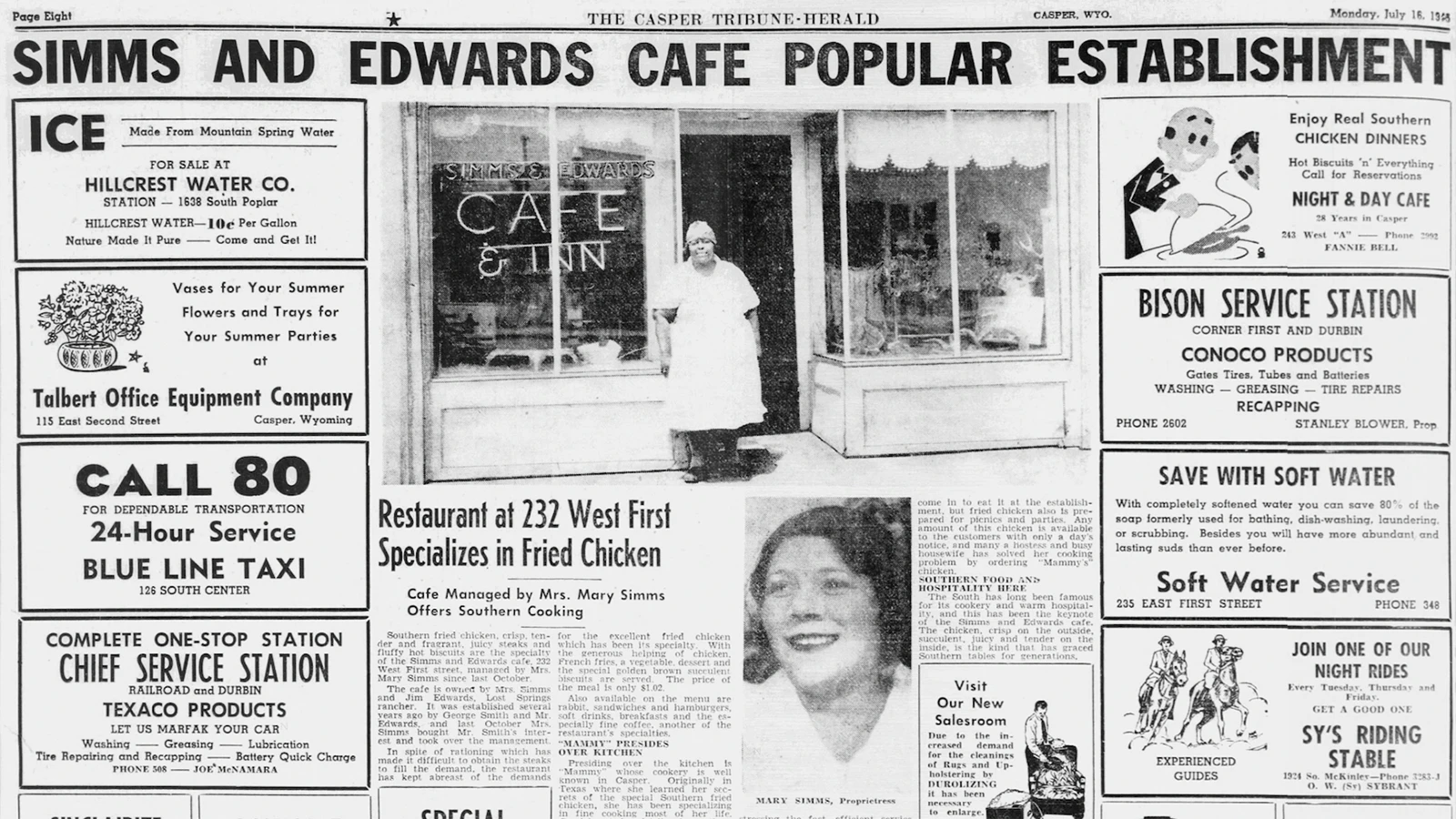
A feature story in the Casper Tribune-Herald on July 16, 1945, profiled a restaurant co-owned by Mary Simms, a black woman, and Edwards that specialized in Southern fried chicken.
“In spite of rationing which has made it difficult to obtain the steaks to fill demand, the restaurant has kept abreast of the demands for the excellent fried chicken which has been its specialty,” the newspaper reported. “With the generous helping of chicken, French fries, a vegetable, dessert and the special golden brown succulent biscuits are served.”
Edwards’ love Lethel died of leukemia in 1945, according to the Converse County history, and he sold his ranch that contained 18 sections to four buyers in 1950.
The Scottsbluff Star-Herald on Jan. 7, 1951, recounted Edwards’ death at age 76.
“A Scottsbluff man died from suffocation Saturday night after water boiled away in a pot in which chicken was being cooked filling a basement room with smoke,” the newspaper reported. “The dead man was James E. Edwards, age unknown, who rented a room at 801 East Eighth Street.”
He is buried in Scottsbluff.
Panasuk said he was happy to get a photo of the once prosperous ranch while it still stands.
“The sad part about it is that probably about in 10 years it’s all going to be gone,” he said.
Dale Killingbeck can be reached at dale@cowboystatedaily.com.


