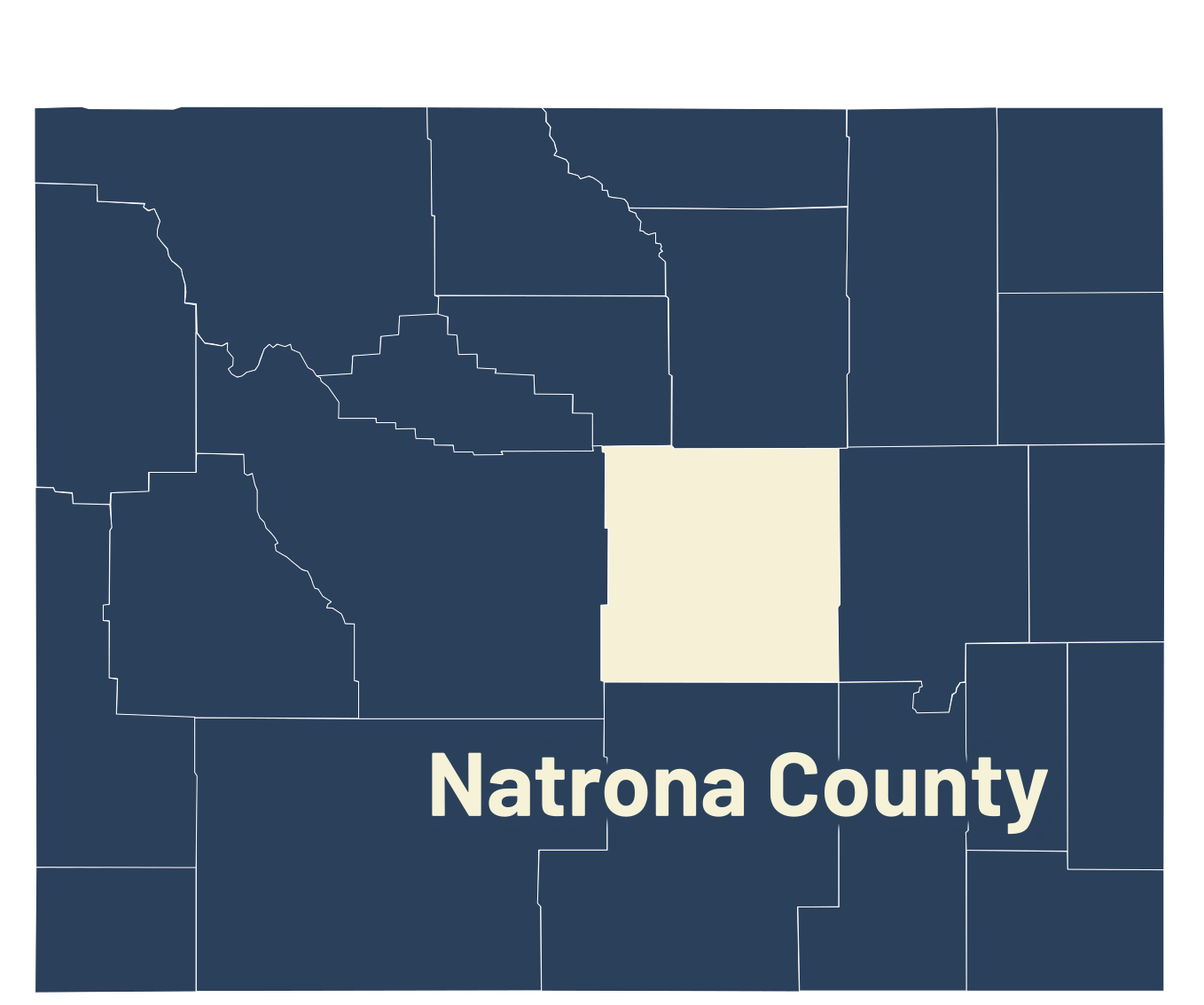
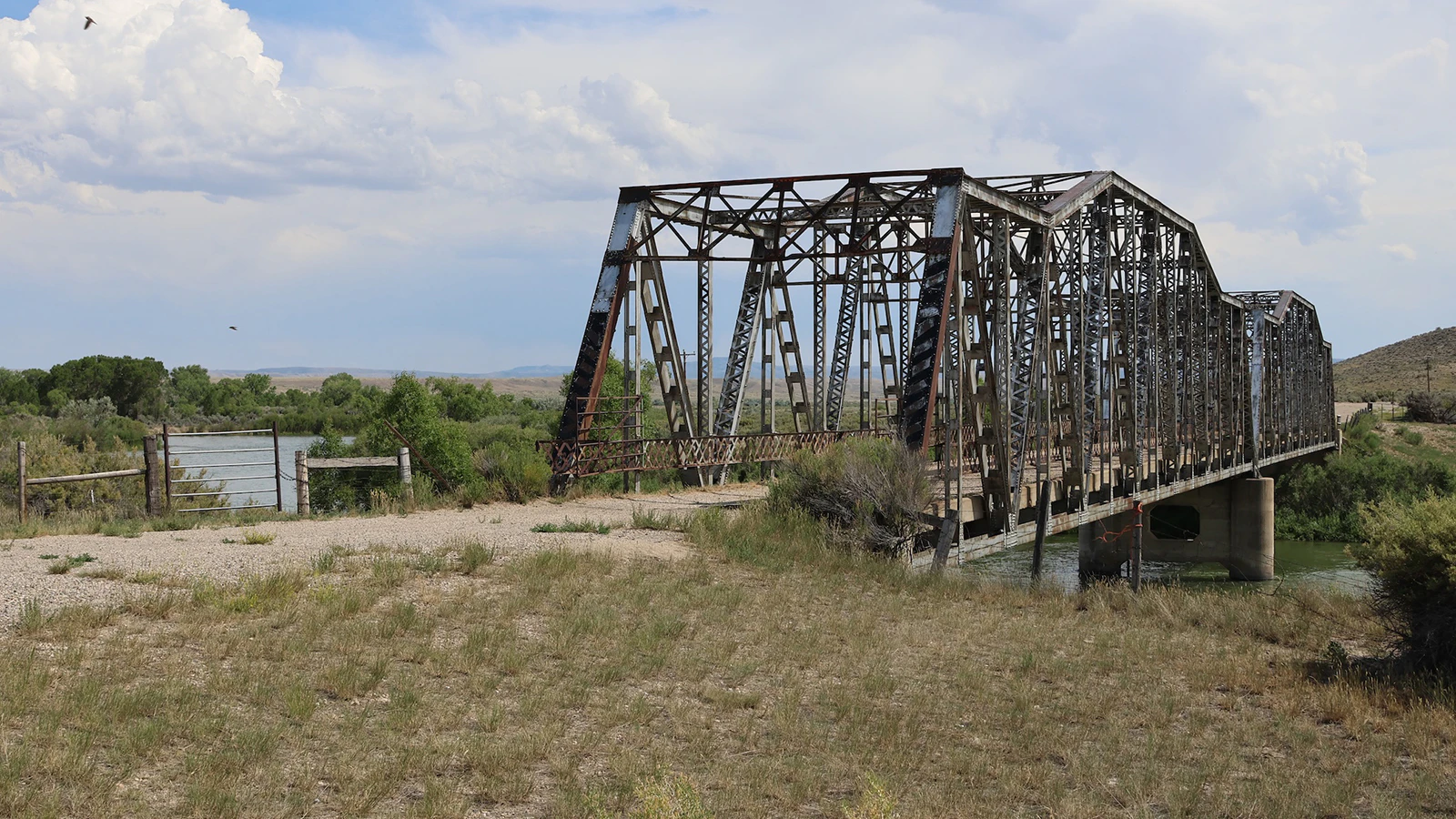
On a recent afternoon, the Old Government Bridge 20 miles southwest of Casper stood as a landmark on the North Platte River for fishermen floating underneath.
But if those nuts, bolts and steel beams could speak, they would tell stories about the bootlegger arrested in the 1930s and teen runaways rescued on a bitter winter day in the 1940s.
Beyond decades of use that witnessed Model A Fords and little Chevy trucks to Buick Roadmasters and semis crossing its 300-foot span, the bridge resurfaced in national headlines tied to the abduction and murder of a young Montana woman.
“Lawmen recover body of woman,” The Billings Gazette reported on April 3, 1988. “The body was about a half-mile downstream from the old government bridge … evidence found on the bridge indicates that an incident took place there that may relate to the body.”
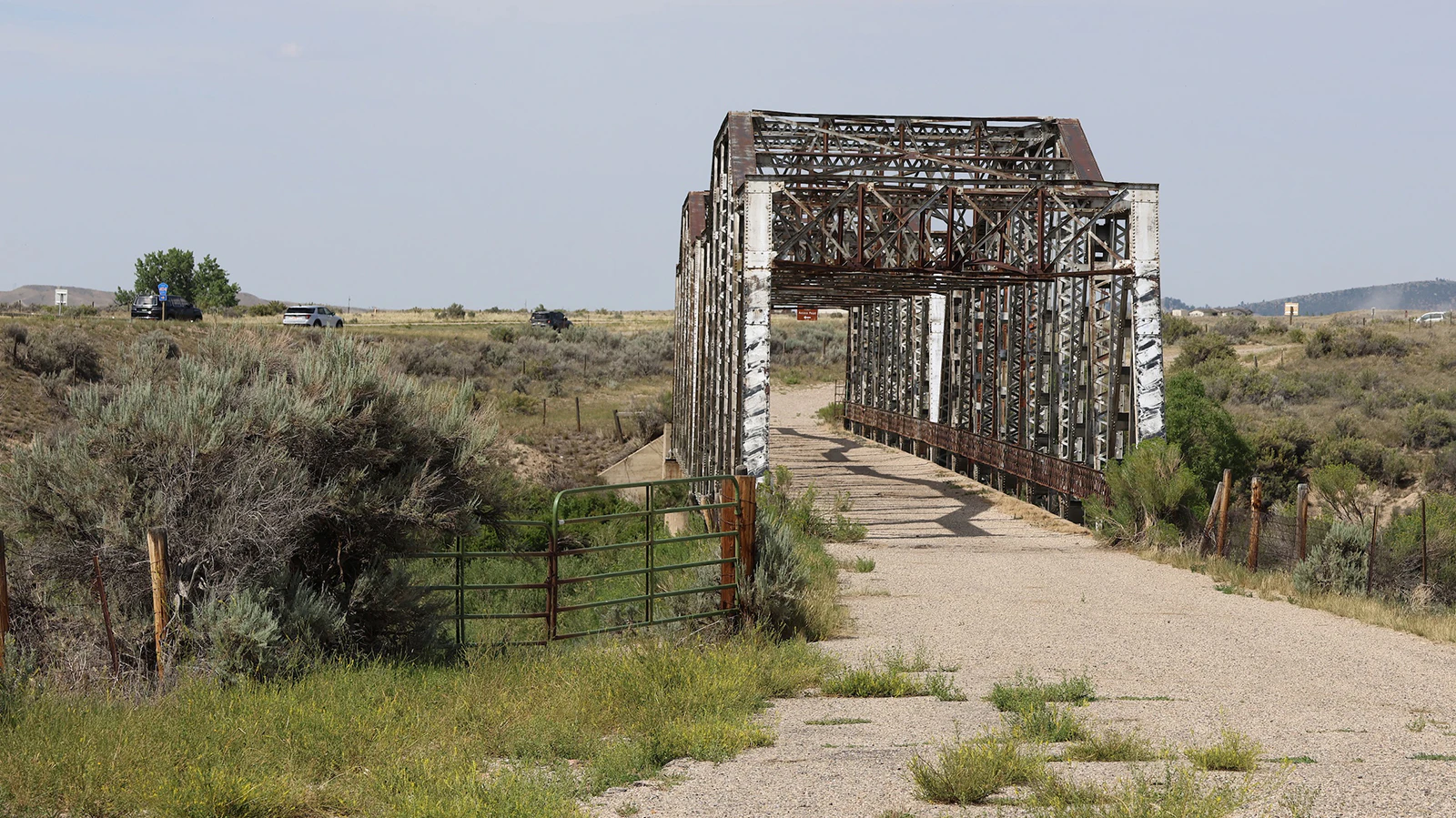
Today the bridge, accessible just south of Wyoming Highway 220 off Country Road 404, continues to serve as a place where cattle can cross above the swift North Platte.
Spokespersons for Natrona County Road & Bridge, the Wyoming Department of Transportation, the Bureau of Land Management as well as the Bureau of Reclamation, all say they don’t own the bridge.
WYDOT spokesperson Jeff Goetz said his records show that in 1961 the then State Highway Department initiated efforts to abandon the structure and realign the highway.
“By September of that year we were working on the new route where the highway is now,” he said. “That involved the Bureau of Land Management and local landowners to get right-of-way. And then it was determined at that time that the bridge was used to move cattle.”
The department then decided to vacate the bridge but leave it standing for landowners to move their herds. Goetz said in 1967 it was officially vacated and turned over to “Miles Land and the BLM.”
A spokesperson for the BLM in Denver said the agency does not own the bridge but does administer the land.
Attempts to reach a Miles Land & Livestock Co. found online and based in Casper were not successful by publication time.
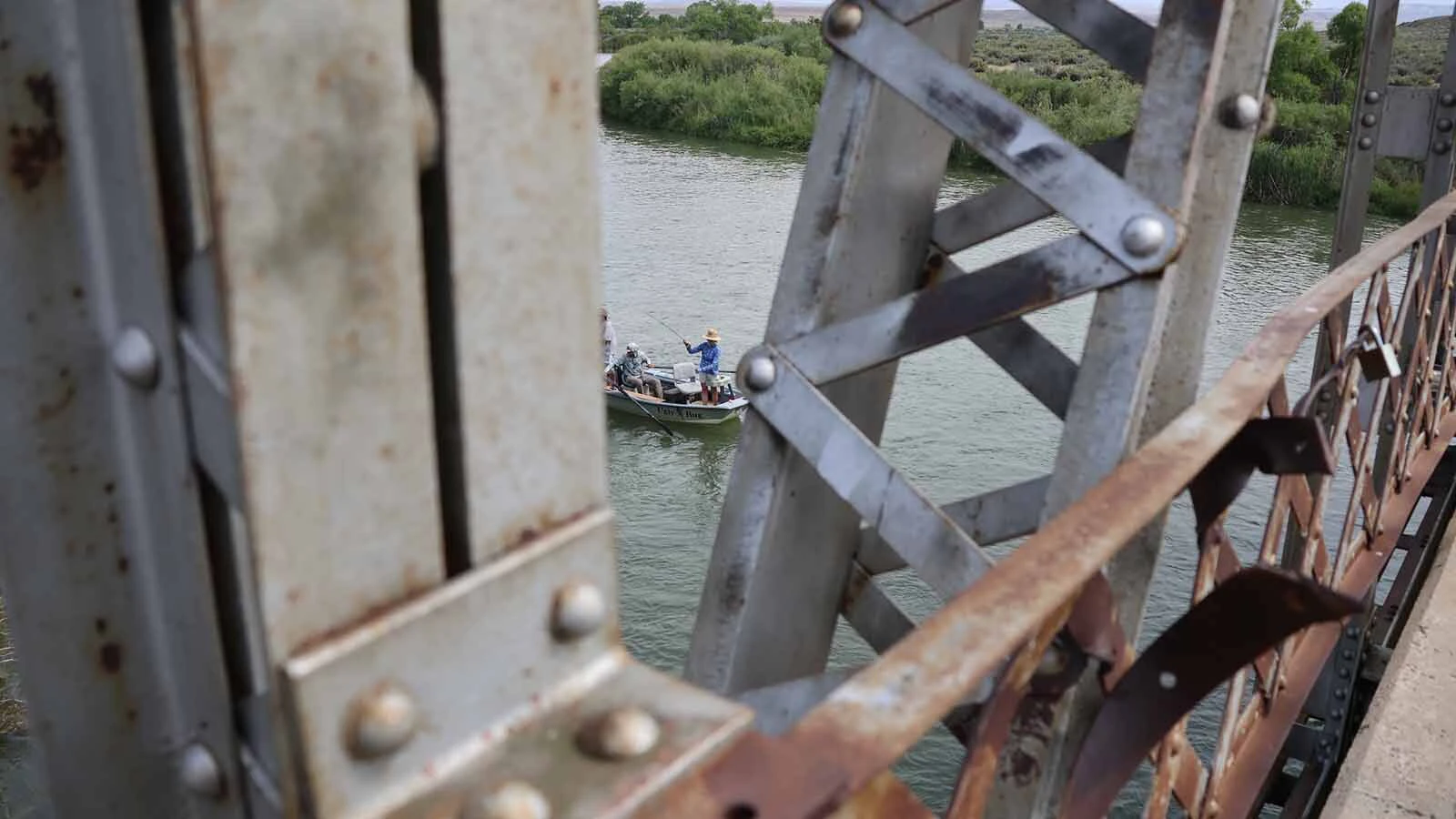
Fishermen float down the North Platte under the bridge. (Dale Killingbeck, Cowboy State Daily) 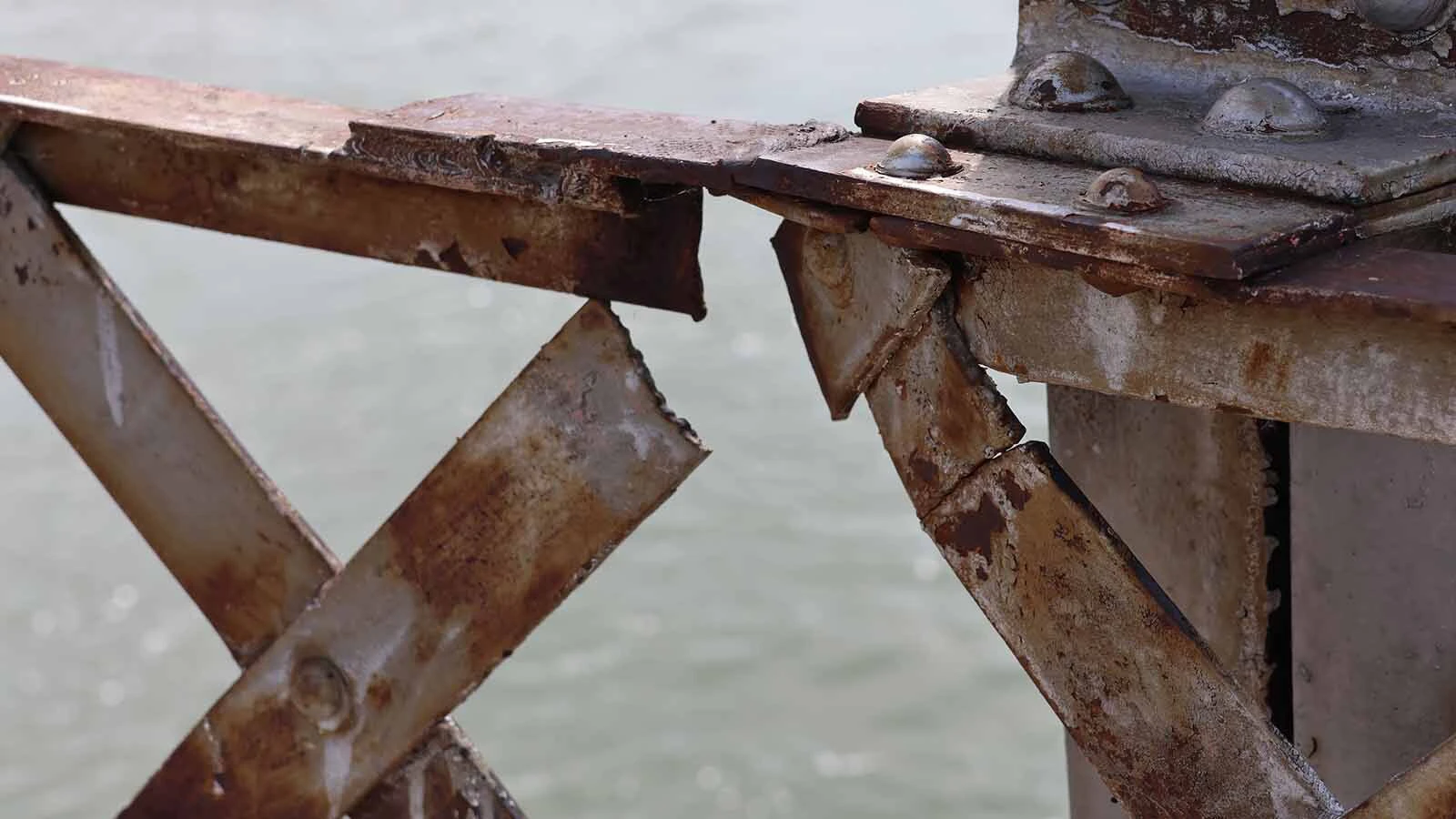
The broken metal on the side of the bridge shows its century-old age. (Dale Killingbeck, Cowboy State Daily) 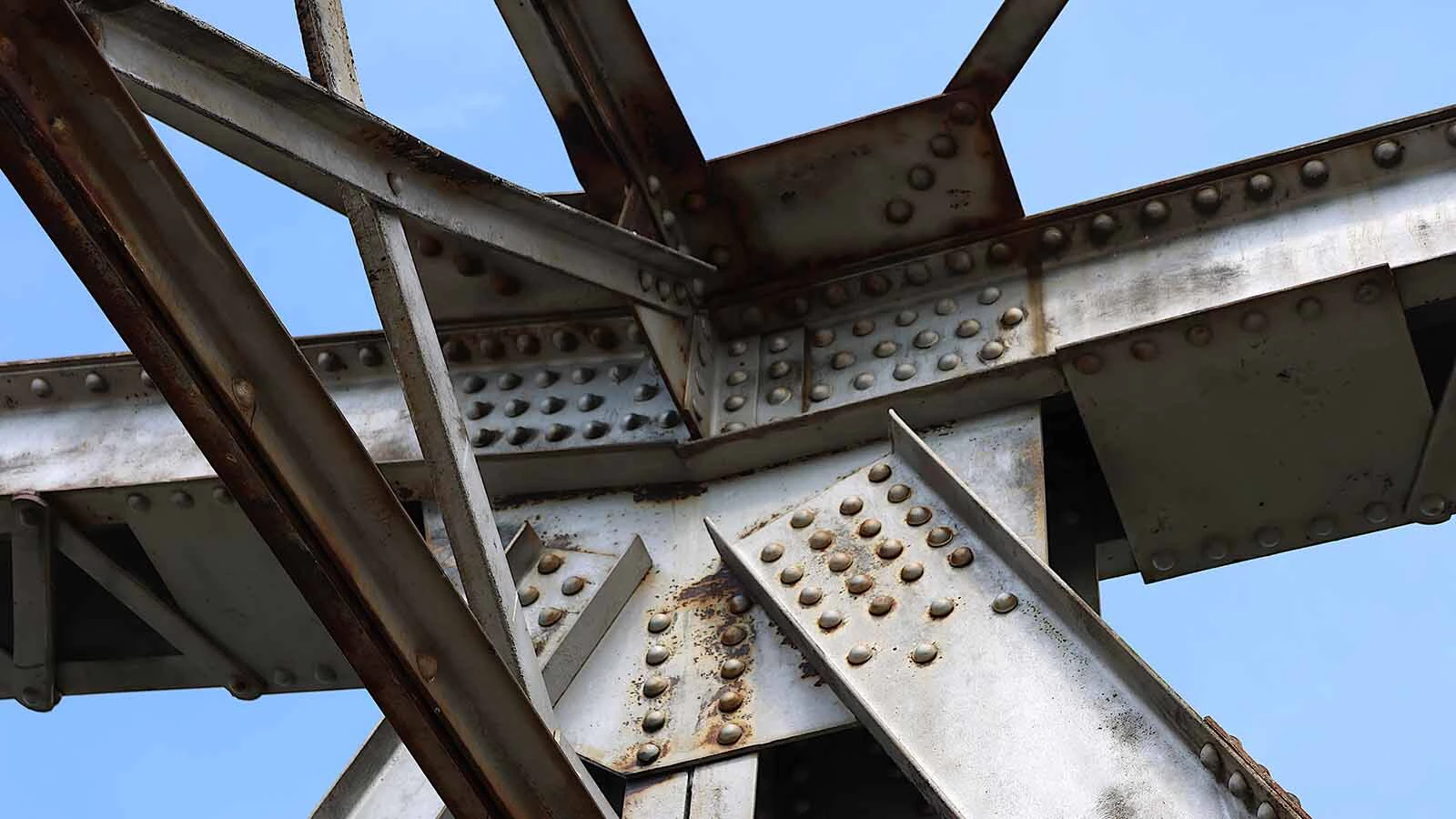
Beams and bolts at the top of the bridge brought it all together in 1924. (Dale Killingbeck, Cowboy State Daily)
Cottonseed Cake Stolen
On Dec. 30, 1937, James H. Miles, an Alcova rancher and former Natrona County commissioner, told the Casper Daily Tribune that his son been involved in an accident on the government bridge. He told the paper his son was driving a truck filled with bags of cottonseed cake and that an oncoming truck from a Sheridan brewing company collided with Miles on the bridge.
“In rounding a curve on the bridge approach, the Sheridan truck swerved past the center of the road,” the rancher reported.
While he was stranded overnight, thieves stole seven bags of cottonseed cake, Miles reported.
The bridge’s foundations trace back to 1923, when heavy rains sent water surging down the North Platte, taking out the previously sturdy wooden 1905 bridge upstream. That bridge was built to access the Pathfinder Dam area and allow for the wagons of material and men to complete its construction.
Within weeks, the State Highway Department had bids out for a replacement structure that would carry traffic between Casper, Alcova, Rawlins and beyond.
“Construction of a new steel bridge across the Platte River on the Alcova Road will be started immediately,” the Casper Daily Tribune reported on Aug. 9, 1923. “On a bid of $48,341 the contract was awarded by the state highway department to the Missouri Valley Bridge company. Natrona County is to pay $22,500, the state is taking care of the balance.”
Bridge plans called for two expansion trusses, two abutments and one pier. Its roadway was designed to be 18 feet wide.
During work on the bridge in 1924, a young Nebraska man named Alex Brown, who had just started his job the same day, fell into the river and was swept away on Saturday, May 11. His body would not be recovered until June 22.
The current carried the body into Casper, where it was found lodged against bridge pylons.
The bridge opened later that year.
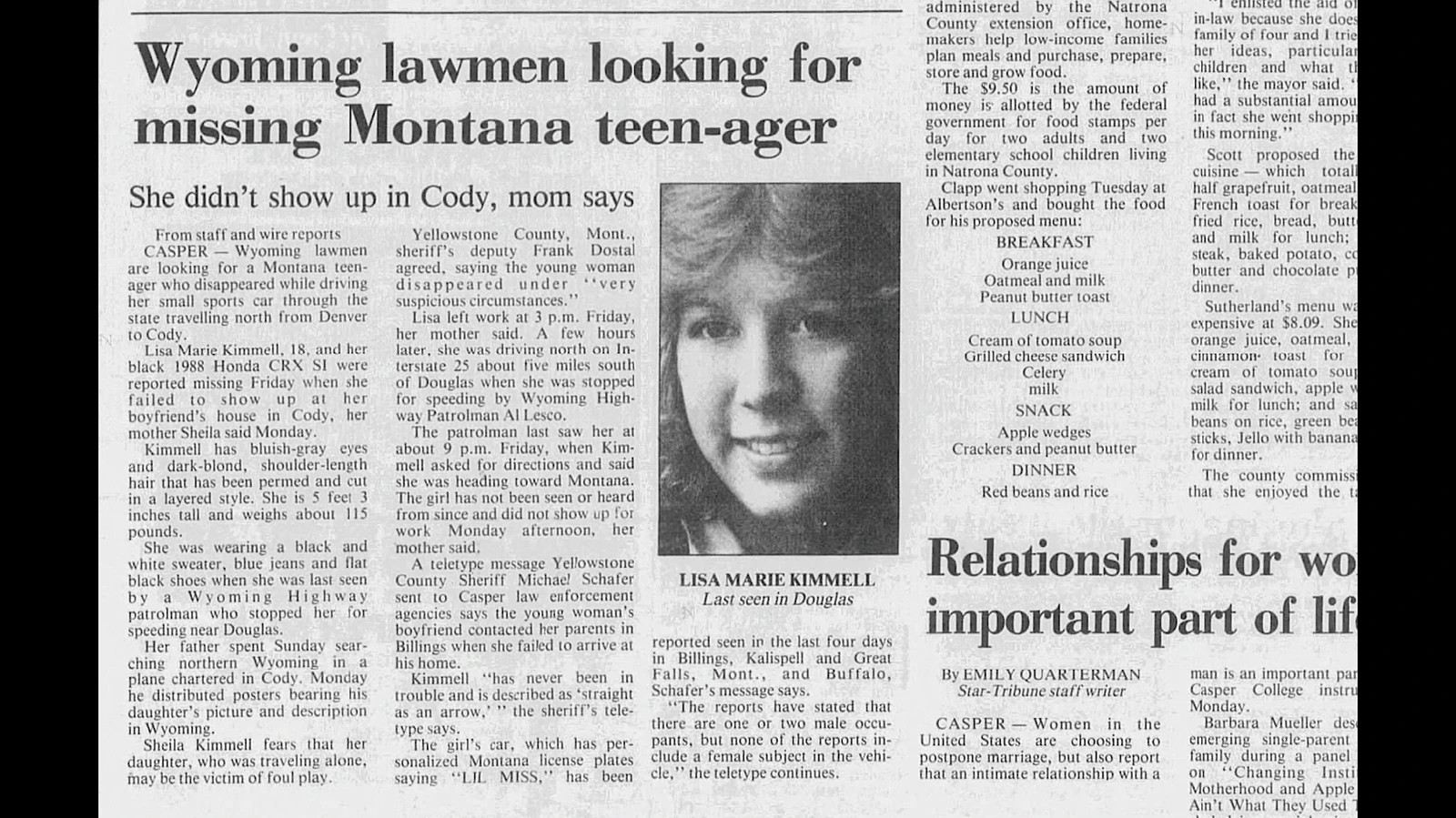
The Casper Star-Tribune on March 30, 1988, reported a missing 18-year-old Montana woman. Her body would later be found in the North Platte. It was determined the body was thrown off the bridge. (Newspapers.com) 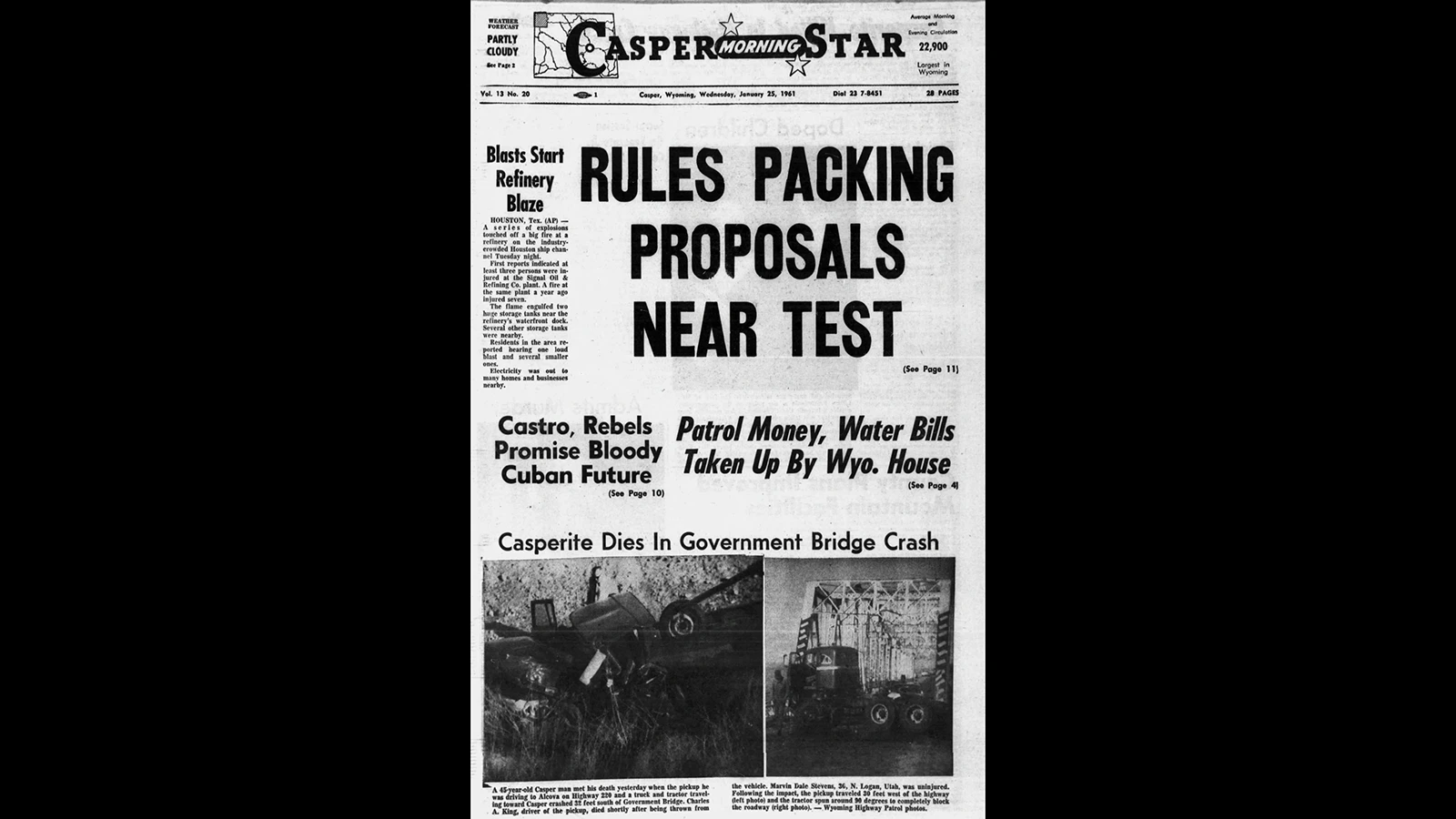
The Casper Morning Star in January 1961 put a wreck on the bridge on its front page. (Newspapers.com)
Bootlegger Magnet
The old government bridge site also seemed to be a popular place for bootleggers to ply their trade. In March 1924, Natrona County Sheriff’s deputies took a motorboat up the river to the bridge site and arrested a bootlegger named C. W. Wambaugh, who was running a still in a cabin nearby.
In 1927, law officers found a still house just east of the bridge that had 35 gallons of whiskey. They followed wagon tracks and found a 5-gallon and three 10-gallon kegs hidden among the sagebrush, the Casper Herald reported on Feb. 17, 1927.
In 1945, on a bitterly cold March 4, two teens, Charles Adamson, 19, and Patricia Wilson, 14, were found in a “precarious condition” by a passerby headed to Rawlins. He noticed them foundering in the snow near the bridge, and stopped to pick them up.
The boy had taken off his shoes and put them on the girl, who fainted in the car. The man drove them to a Casper hospital, where they were admitted.
The Casper Daily Tribune reported the pair had told their parents they were married. The girl’s mother threatened to have the marriage annulled, which might have triggered their efforts to start walking to Rawlins.
The bridge was designed to cross the North Platte at its narrowest location. Engineers put it at an angle to the highway, requiring cars to navigate a 45-degree turn from the highway to the bridge.
The small cars and slow speeds in the 1920s and early 1930s posed few issues. But as more modern, bigger and faster machines came off assembly lines, drivers unfamiliar with the bridge sometimes crashed or worse.
A May 20, 1948, photo on the front page of the Casper Tribune-Herald showed the body of a 23-year-old Rawlins woman lying on the bridge outside her passenger car’s door. The photo cutline stated the vehicle swerved out of control, struck an abutment, and took her life. Her husband and a passenger were hospitalized.
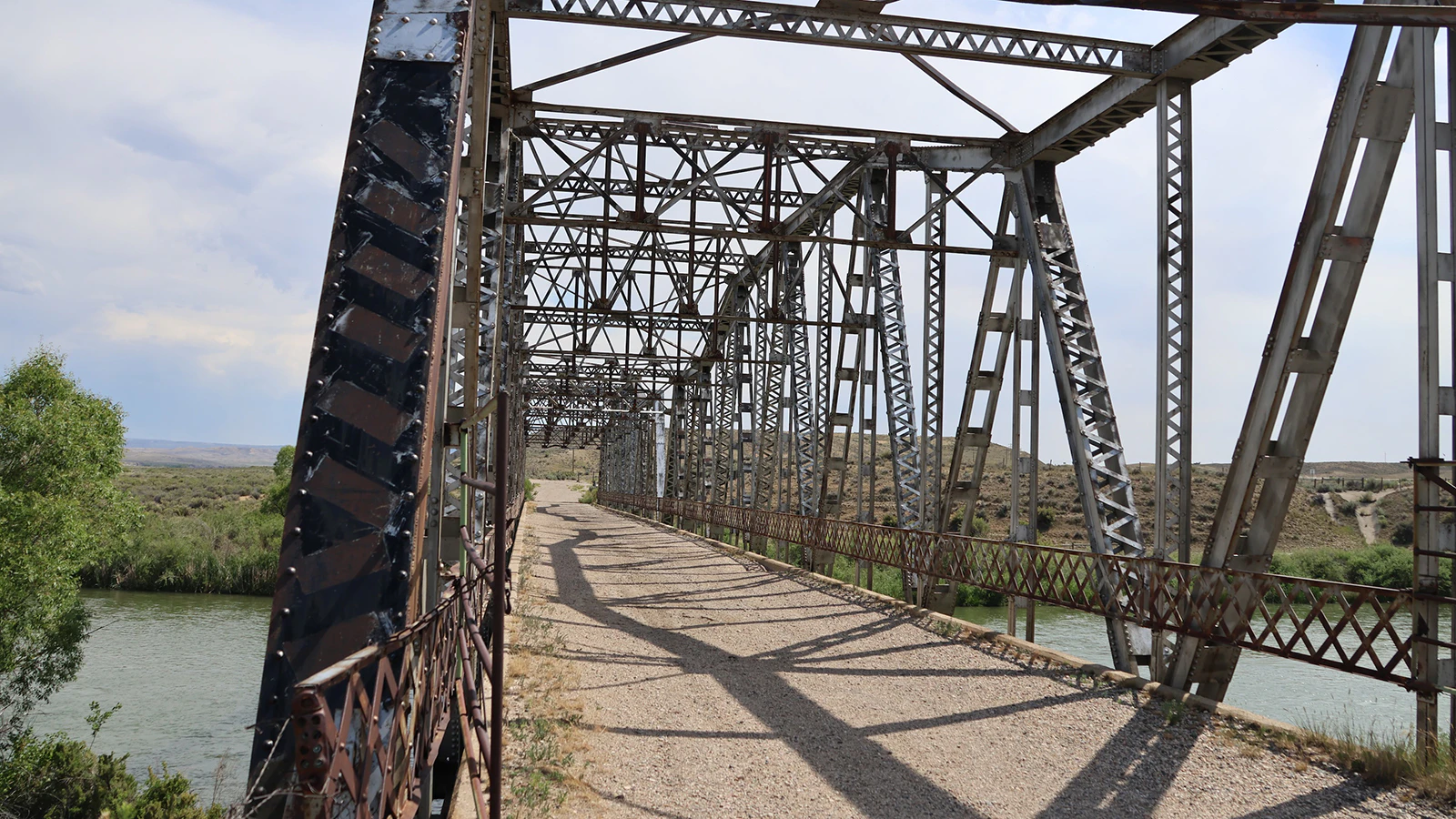
The width of the bridge is 18-feet, a tight squeeze for opposing vehicles in the 1950s and 1960s. (Dale Killingbeck, Cowboy State Daily) 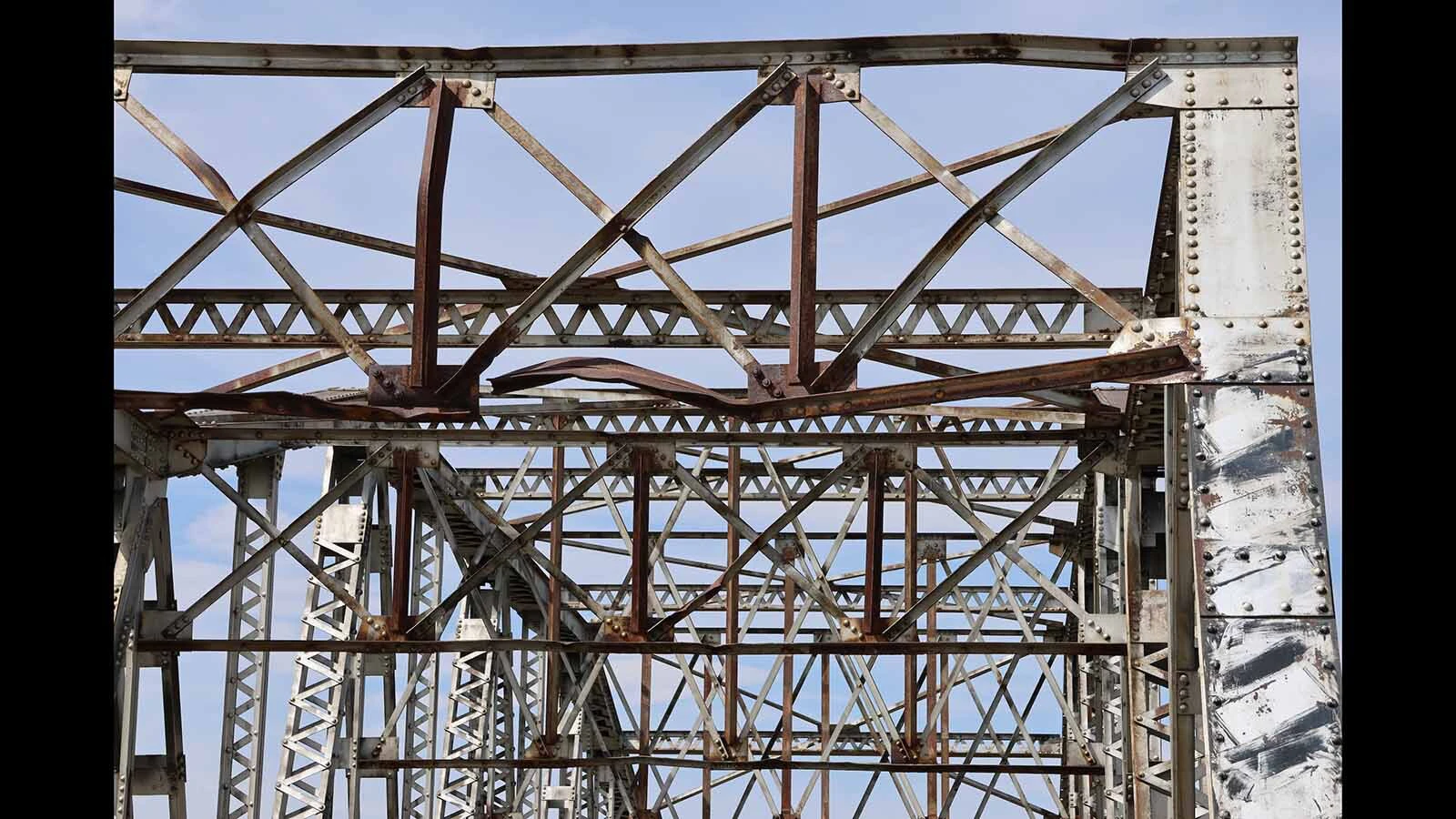
Bent and broken metal at the top of the bridge reveal a possible accident in its past. (Dale Killingbeck, Cowboy State Daily)
Christmas Day Crash
On Christmas Day 1955, a William Orchard, 19, of Baggs, was another fatality after his car hit the bridge.
Four days later the Casper Star-Tribune editorialized that Orchard was a Casper College student on his way home and that his body and car were found sprawled across the highway by a motorist after some time. The writer acknowledged that speed and fatigue were likely a factor in his death but also called for construction of a new bridge.
“Government bridge is a relic of horse-and-wagon-road building,” the editorial stated. “It is too narrow for assuredly safe passing under the best of circumstances. Its sharp approaches are potential death traps to anyone unfamiliar with the route and to others in whom familiarity breeds contempt.”
The newspaper called for attention to bridge safety and the possibility of a new bridge.
In 1962, the State Highway Department awarded a Casper contractor the job to replace the old bridge after his $163,000 price was the low bid.
The Casper Star-Tribune on May 20, 1962, reported that the new bridge would be built just downstream of the steel structure and was expected to be completed that November.
“The new bridge will be located a short distance downstream from the old structure and will result in eliminating two kinks in the approaches to the old bridge,” the newspaper reported. “These kinks have been blamed for many highway accidents in past years.”
The old bridge for several years became a quick glance from motorists speeding past over the highway bridge to the north and a landmark for river guides to mention.
'Lil Miss' Murder
Then, in 1988, the old government bridge resurfaced in headlines after an 18-year-old girl named Lisa Marie Kimmel of Billings, Montana, was reported missing along with her black 1988 Honda CRX Si with personalized plates that read “Lil Miss.” She had been traveling from her work in Denver to Billings and was due in Cody to pick up her boyfriend.
A Douglas police officer stopped her for speeding around 9 p.m. March 25. She wasn't seen again until her body was recovered from the North Platte about one-half mile downstream from the old government bridge on April 2 by two fishermen.
Natrona County Sheriff Ron Ketchum told the Casper Star-Tribune for its April 19, 1988, edition that Kimmel’s blood was found on the bridge and that he believed that is where she was thrown into the river.
The county coroner reported she had been stabbed to death. Later information stated that she had been sexually assaulted and struck in the head.
The case went unsolved until 2002, when police linked federal prisoner Dale Wayne Eaton’s DNA to the crime and recovered the Honda from Eaton’s property in Moneta. He was extradited in 2003 from a prison in Colorado. Eaton was tried, found guilty, and sentenced to death.
That sentence was vacated by a federal judge in 2014 and converted to a life sentence in Wyoming’s Department of Corrections, where Eaton remains.
Also in 2014, a Casper area member of Geocaching, a type of treasure hunt experience that includes a hidden container with a logbook, made the bridge a geocache site for players to search for and sign the book.
At the website geocaching.com. the founder named it the “Lil Miss Memorial Cache.”
The person wrote that it was meant to “serve as a memorial for Lisa Marie Kimmel whose young life was taken away.”
Dale Killingbeck can be reached at dale@cowboystatedaily.com.