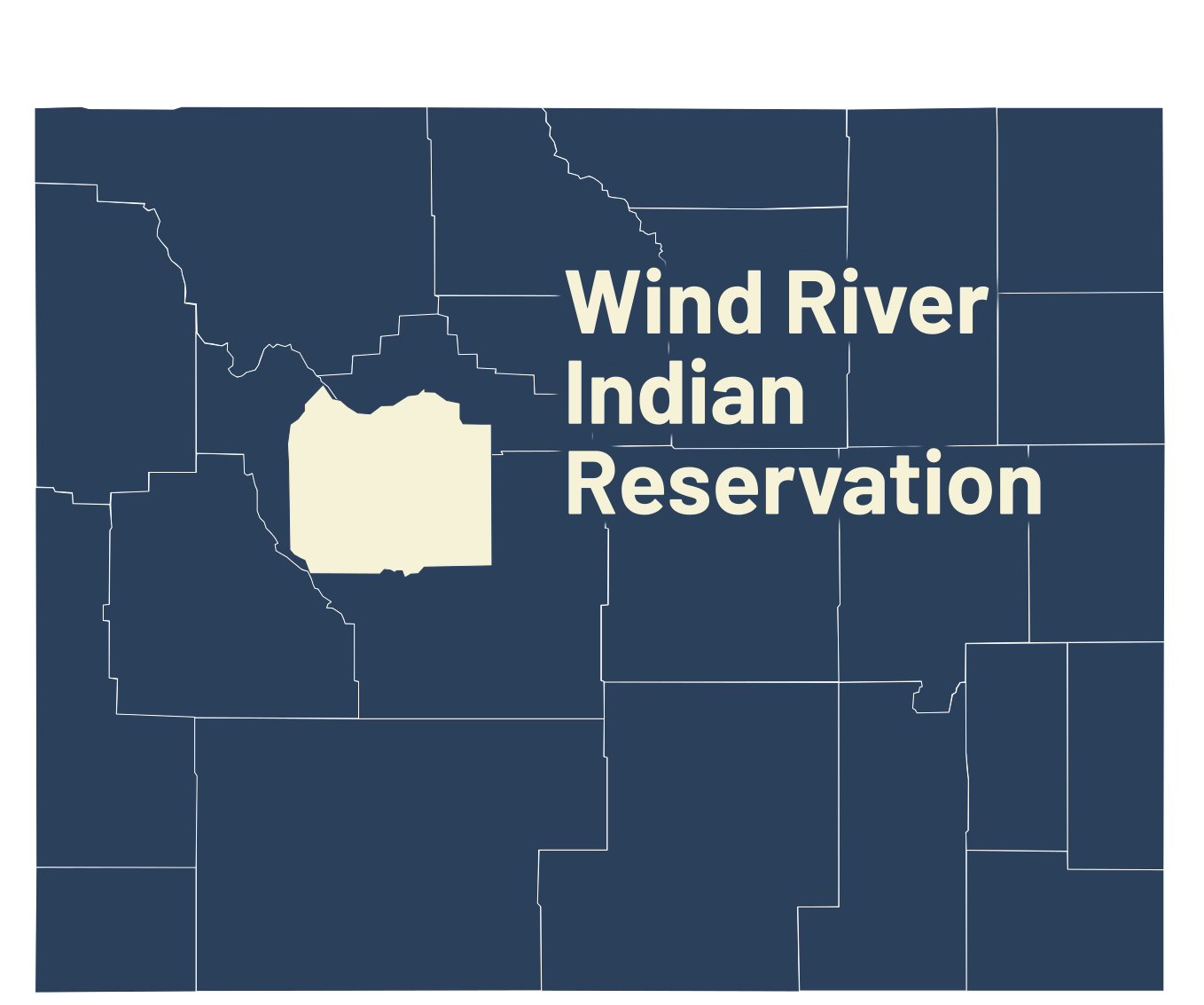
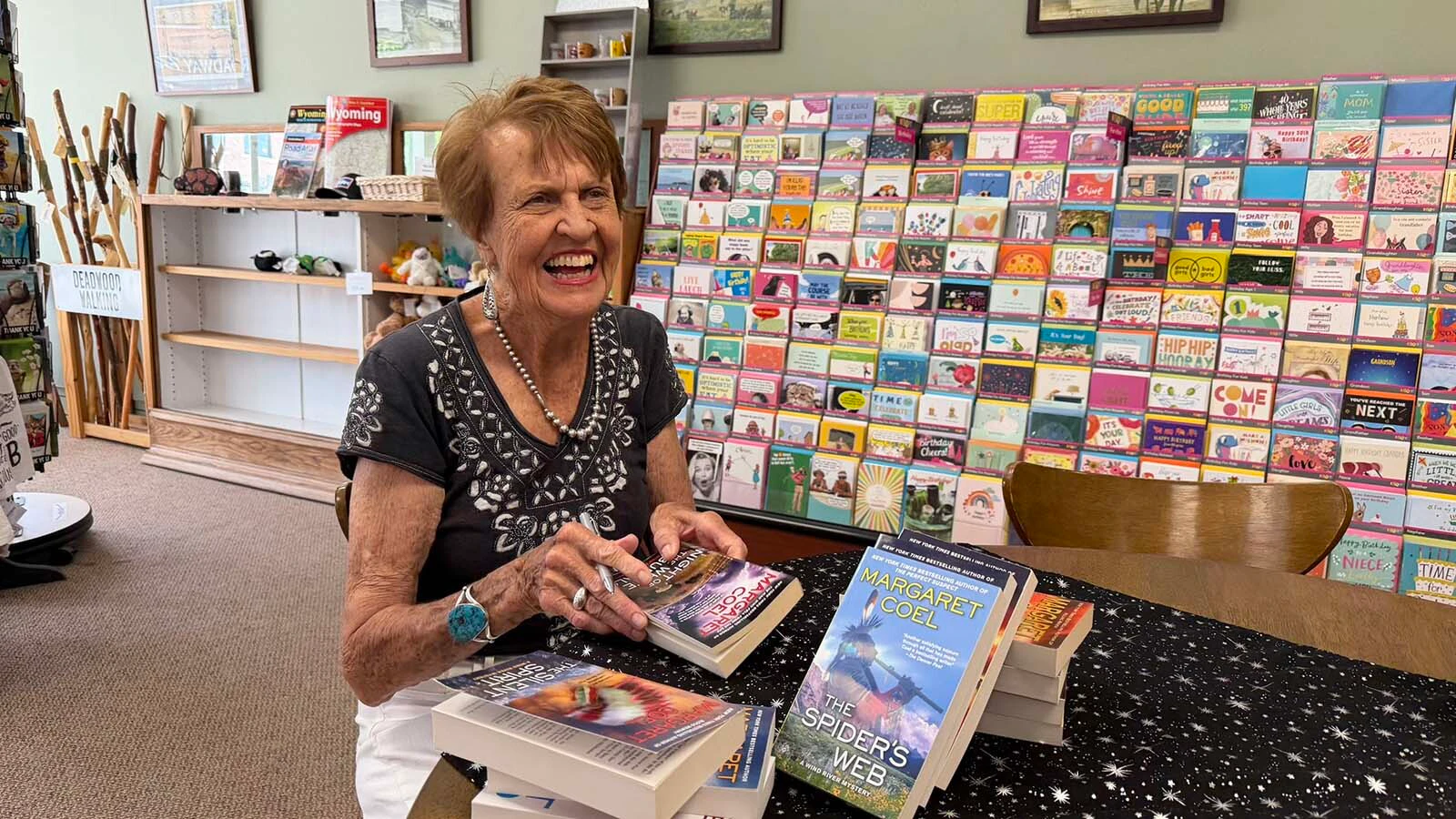
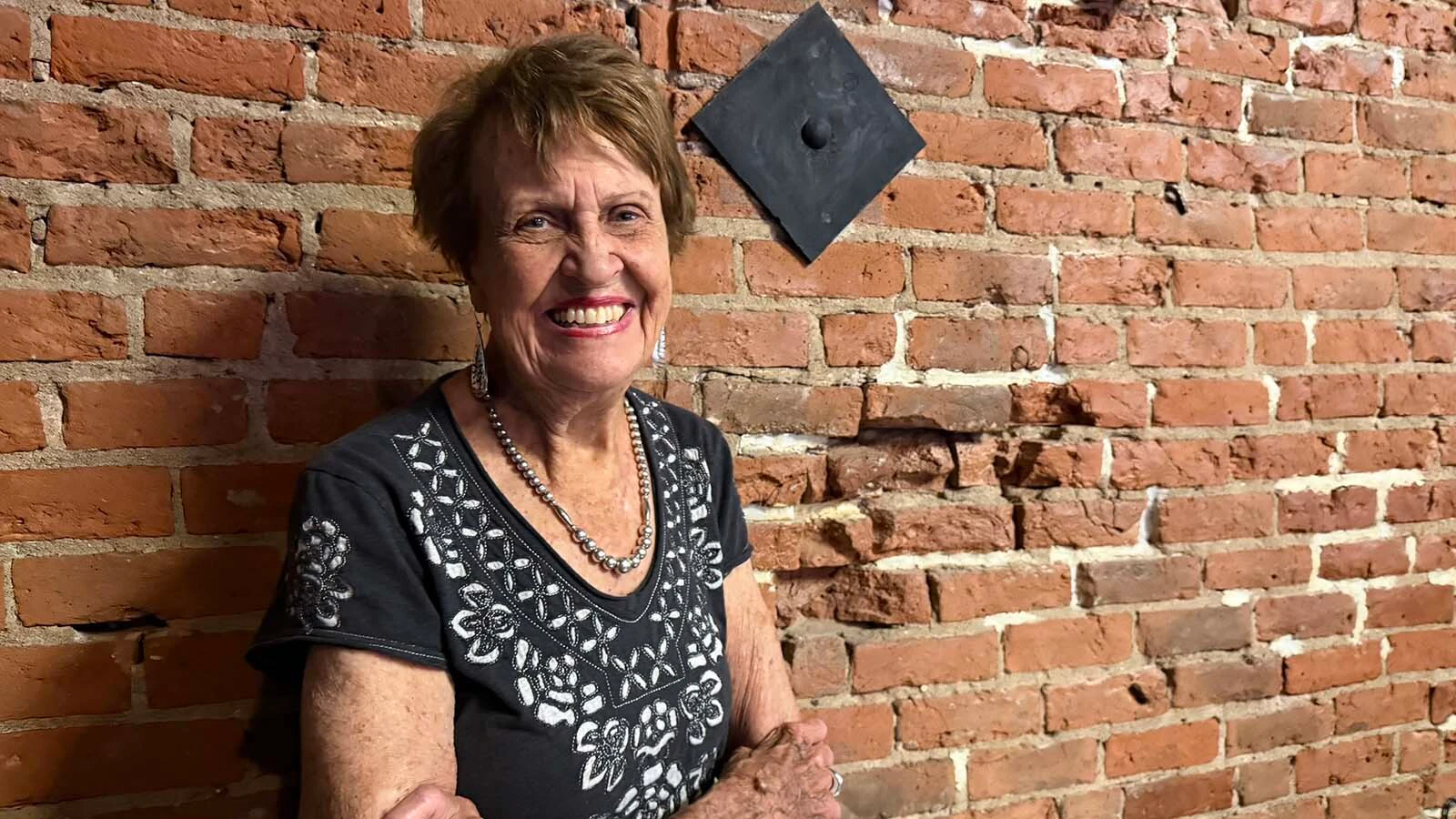
Journalist Margaret Coel’s journey to become The New York Times best-selling author of a fiction series about mysteries and murders on the Wind River Reservation began with a question: Who was this “Left Hand” that had his name everywhere in Boulder, Colorado?
“We have Left Hand Creek, Left Hand Canyon and Indian Mountain,” said Coel. “The town of Niwot is named for him. Niwot is the Arapaho word for 'left hand'."
Coel discovered that Left Hand was a Southern Arapaho who would bring his people to Boulder to their winter camping area each year.
“I always thought he was a really well-known unknown,” said Coel, who lives in Boulder. “We all knew his name, but we didn't know who he was, and I got interested in him as a journalist.”
She intended only to write an article, but when she learned more about him, such as he was fluent in English in the mid-1800s, her curiosity was piqued. Her article became her first book, “Chief Left Hand.” Published in 1981, it is still in print and selling.
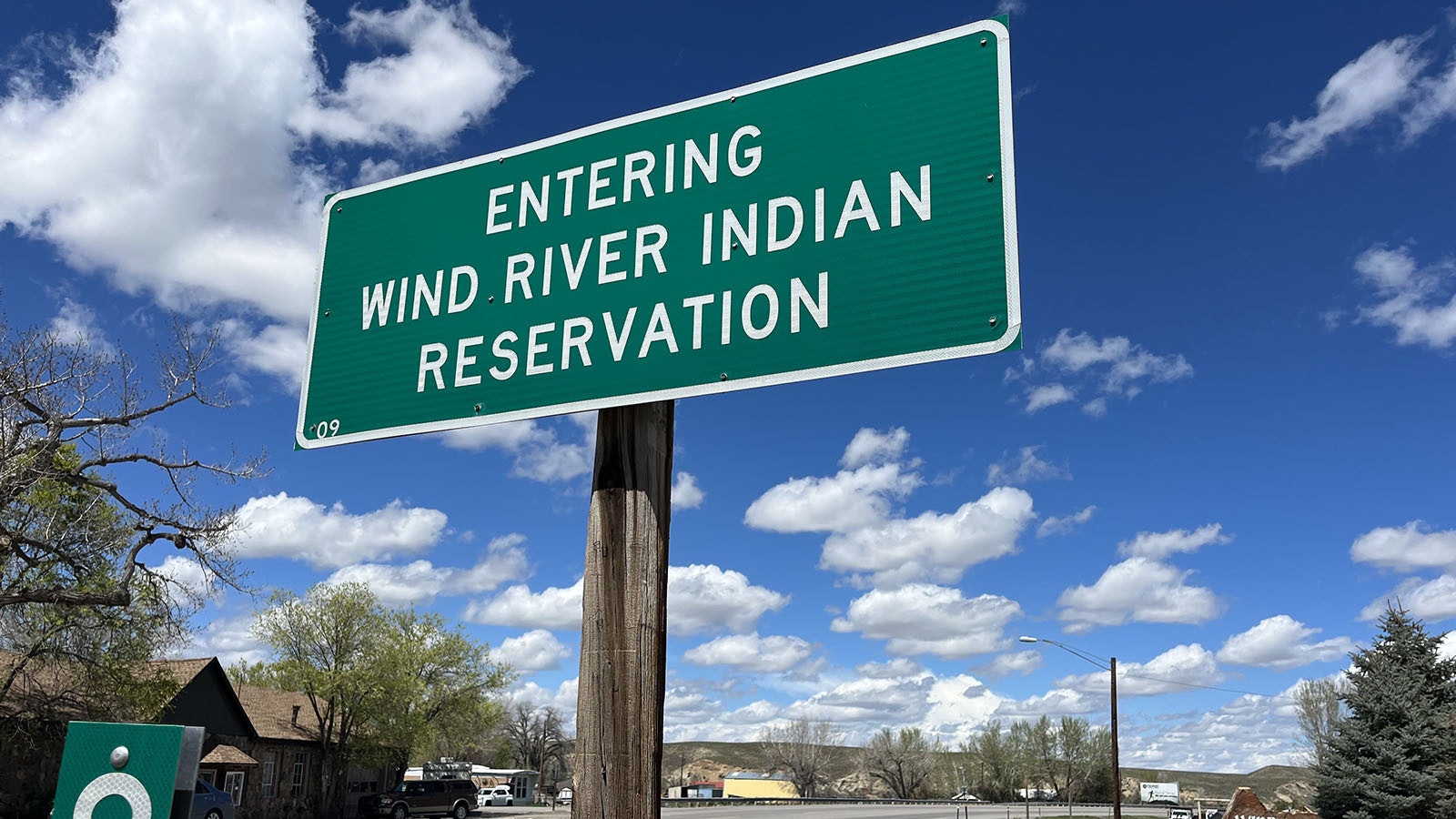
“I started coming to the reservation then and began to get to know the people,” Coel said. “I met some wonderful people and learned some stories.”
Scotty Ratliff, a Shoshone, was especially helpful to Coel when she first came to the reservation. The first time she said she met Ratliff, Coel had an appointment with Arapaho elders. As a journalist, she was all set with questions.
"Margaret, zip up your lips. You don't ask anything,” Ratliff said to Coel. “You just sit there, and they will tell you what they want to tell you and you will learn things you wouldn't know to ask about.”
She always abided by his words and connected with people on the reservation.
“I just kept coming back and getting to know more people,” Coel said. “They were so friendly to us.”
Catholic Father And Arapaho Lawyer
“Left Hand” had introduced Coel to the publishing world and she decided her next project would be to write fiction.
“I thought maybe I could do that and set it on the Wind River Reservation,” Coel said. “I wrote the first book, “The Eagle Catcher,” and ended up writing 22 novels set on the reservation.”
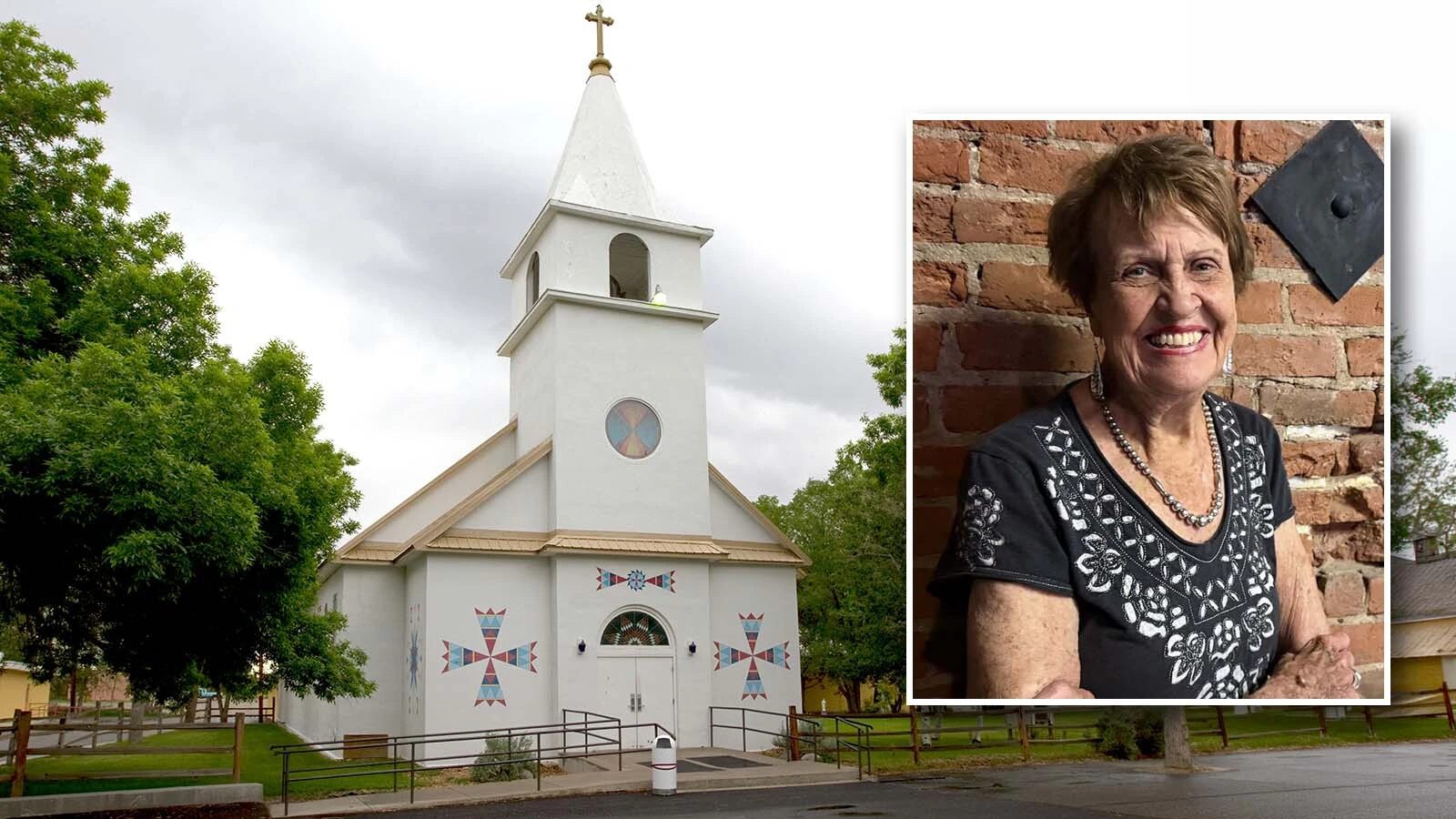
The focus of Coel’s fiction is a mission on the reservation based on St. Stephen's Mission, which she calls St. Francis Mission in her books. Coel has two main characters, the first of whom is a Jesuit priest who she said came from her dreams.
“They're not based on real people, and they're probably not a composite,” Coel said. “I call them my dream people.”
Her second character is Vicky, an Arapaho lawyer who is determined to use the white man's law to help her people instead of hurting them.
“I realized I had this white man on the reservation solving all the problems, and I knew what was wrong with that picture,” Coel said. “I thought, no, we need a really strong Arapaho voice, and we need a woman.”
That gave Coel the idea for Vicky Holden, so named because “she's holding on.” Coel describes her female lead as a “a holding-on person” who is a lawyer and there to help her people.
“Those are my two people, and they get involved in solving crimes,” Coel said. “I've laughed about that with Father Drew at St. Stephens. Father John doesn't have time to be a priest. He's so busy being a detective.”
The Stories Find Her
Coel said she loves history and many of her novels go back in time. Through her fiction, she tries to show how what has happened still affects the way people live today.
“Eye of the Wolf”, for instance, deals with the Bates Battle and the animosity and uneasiness between the Shoshone and Arapaho tribes. Even though they live together, inter-marry, and have to resolve issues, Coel said they remain two distinctly different people and were traditional enemies.
“A couple of my Arapaho friends have said they're pretty sure the government deliberately put the Arapahos on the Shoshone Reservation thinking they would kill each other, and then that would be the end of the government's problems,” Coel said. “Isn't that horrible? There's probably some truth to it.”
Coel's first book that hit the New York Times bestseller list was “The Lost Bird.” It was a novel about Indian babies stolen from the reservation and put on the black market.
“What I found out in doing my research was that it was alive and well,” Coel said. “It was pretty horrible and these people were finding out they had been taken from a tribal family.”
The details Coel came from the newspaper accounts of stolen children rediscovering their families.
“One of my Arapaho friends, Virginia Sutter, said to me, 'If something happened on one reservation like that, you can be sure it happened on another',” Coel said.
She created a story then about a young Arapaho infant who was stolen from her parents.
“When that book came out, it made the New York Times bestseller list, which was exciting,” Coel said. “But I also got a phone call from a young Arapaho woman who asked me how I knew her story.”
The woman told Coel she had been taken from her family as an infant and adopted into a white family in Longmont, Colorado. She grew up in Colorado and was treated well but she knew they were not her family. When she returned to the reservation, she discovered who her parents were. Just like the characters in Coel’s fiction, her mother was dead but she found her father.
“That happened in my book,” Coel said. “My main character had been taken, and I had a whole plot about how that happened which was just like this young woman's real story.”
When Coel got the call that this book made the best-seller list, she admitted she first thought they were about to cancel her contract because she wasn’t selling enough books.
Coel instead received the good news instead that her book had resonated with readers. Over the years, different books in her murder mysteries have made the best-selling list.
Mixing History With Mystery
“I love bringing in the history and seeing how history is still important today,” Coel said. "It still impacts us."
She said that as a historian, she does not take liberties. Occasionally, small facts must be changed to make her stories flow better, but in those cases she lets her readers know.
In “Buffalo Bill's Dead,” Coel wanted to tell the story of Buffalo Bill Cody, his Wild West Show and what it meant to the Arapahos who were there. It became a mystery about the theft of artifacts in the past and present.
“I've learned so much over the years coming to the reservation, and I've been so influenced by their spirituality,” Coel said. “If I didn't feel that way, I would not have written 22 novels about them.”
Every time a book came out, Coel would send a copy to each of the Four Old Men, the Tribal Council, St. Stephen's, and to many others she had come to knows.
“I wanted the people to know what I was writing,” Coel said. “I figured if they didn't like it, they would let me know.”
A New Modern Audience
The world of books has changed over the years and Coel now mostly sells e-books and audiobooks.
“I just got a new audiobook publisher, so there are new readers, and they're doing new editions,” Coel said. “It's amazing. It just keeps going.”
When her first novel came out in 1996, Coel said her character Father John had a landline with a long cord. At night, when he went to bed, he had to put the phone on the stairway so he could stretch the cord upstairs. That way, if he got a call in the middle of the night, he could hear it.
As the books went on, Father John got a mobile phone but the service didn't work on the reservation.
“Technology has changed so much, and I've tried to let Father John keep up with technology,” Coel said.
Coel may have retired from writing, but her books continue to evolve with the same technology as a new generation are introduced to her murder mysteries on the Wind River Reservation and the Arapaho people that Coel has come to respect and admire.
Jackie Dorothy can be reached at jackie@cowboystatedaily.com.