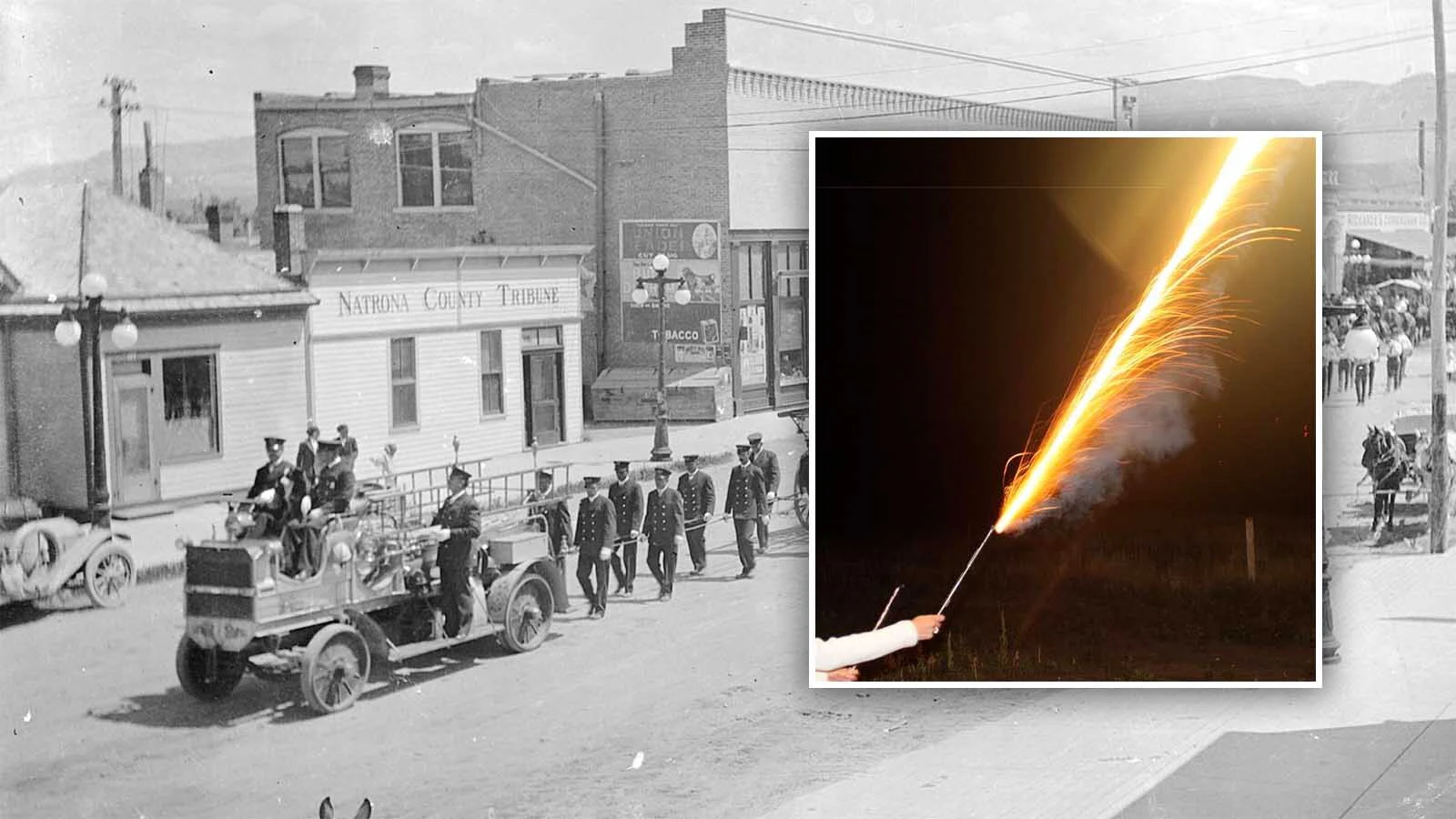
The nation’s 250th birthday celebrations around Wyoming likely won’t hold a candle to what happenewd on the dusty streets of 1899 Casper leading up to the Fourth of July 127 years ago.
That’s because a similar blowout today would lead to arrests, fines and possibly hospital stays.
Just before the turn of the past century city businessmen, a former sheriff, and other enthusiastic male residents spent a few hours on June 29 chasing and shooting each other with Roman candles — 3,000 of the fiery devices, according to a local newspaper account.
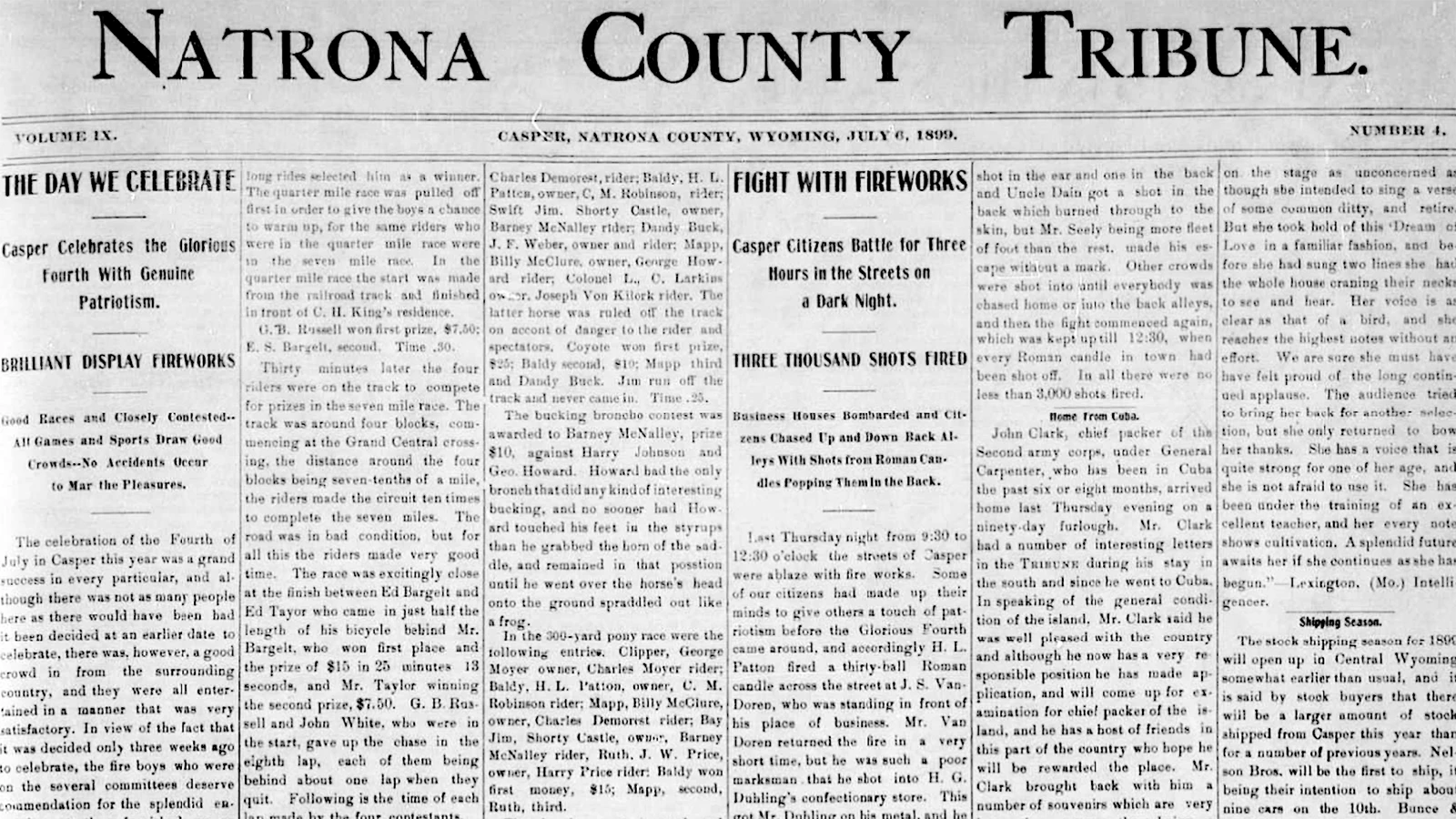
“Last Thursday night from 9:30 to 12:30 o’clock the streets of Casper were ablaze with fireworks,” The Natrona County Tribune reported on July 6, 1899. “Some of our citizens had made up their minds to give others a touch of patriotism before the Glorious Fourth came around.”
That “touch” involved grown men shooting each other with the fireworks and transforming themselves back to their “glorious” youth when rules, regulations and consequences to unsafe behavior were just empty words spoken by adults who held no fascination with the noise, light, fire and heat of the pyrotechnic device.
So, days before the nation’s 123rd birthday, store owner Hugh L. Patton, 38, fired a 30-ball Roman candle across the street at John S. VanDoren. Patton was a former Casper town marshal and Natrona County Sheriff who had resigned in 1897 to join the Teddy Roosevelt Rough Riders during the Spanish American War, where he had served as a lieutenant.
VanDoren, an agent for a stage line to Lander and ice cream shop owner, returned fire. But instead of hitting Patton he sent his firework sputtering into the confectionary shop run by Harry G. Duhling, 33.
Just that day, the June 29 edition of the Natrona County Tribune noted on page five that Duhling in his confectionary shop “had a big supply of firecrackers and fireworks on hand.”
“Better place your order with him now for your Fourth of July supply,” the editor reported.
Pre-Fourth 'Celebration'
But the Roman candles among that supply of fireworks didn’t garner a sale because the great pre-Fourth of July fireworks war was on.
The June 29 edition also carried a big ad touting the Fourth’s activities under the management of the Casper Fire Department, which included a $300 display of fireworks at the end of the day.
Where the fire department was on June 29 as more men joined the firework fracas is not clear.
The newspaper editor who obviously had an interest in the fight described Duhling just after 9:30 p.m. June 29 as going into his store stash of Roman candles and firing back at VanDoren. But the wily VanDoren had recruited reinforcements and built a fort out of egg cases as a defensive tactic.
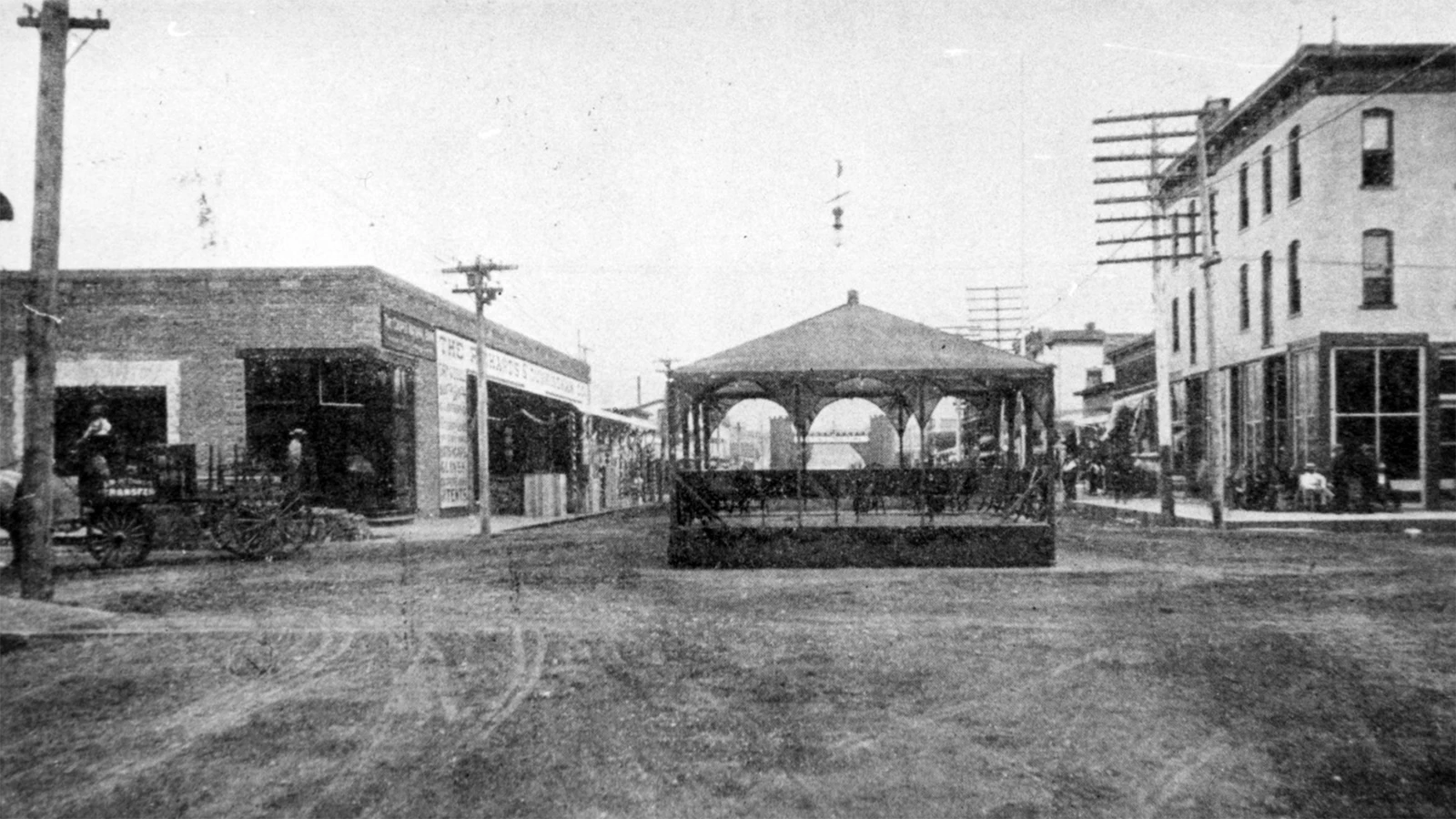
“He (VanDoren) sent three fire balls across the street, taking in the businesses from Fred Roedde’s restaurant to the Grand Central Hotel,” the Natrona Tribune reported. “By this time at least 20 men were on each side of the street armed with 30-ball Roman candles.”
The Tribune editor described the men from both sides as running into the middle of the street and shooting each other with a Roman candle when they were three or four feet apart until their ammunition “was exhausted.”
After carrying on for some time, the warriors turned on the growing number of spectators who had been drawn to the battle.
“A volley was sent into a party who were on the porch of the Grand Central hotel,” the newspaper reported. “There were a number of ladies in the crowd, all of whom lost no time getting inside.”
Burning Bystanders
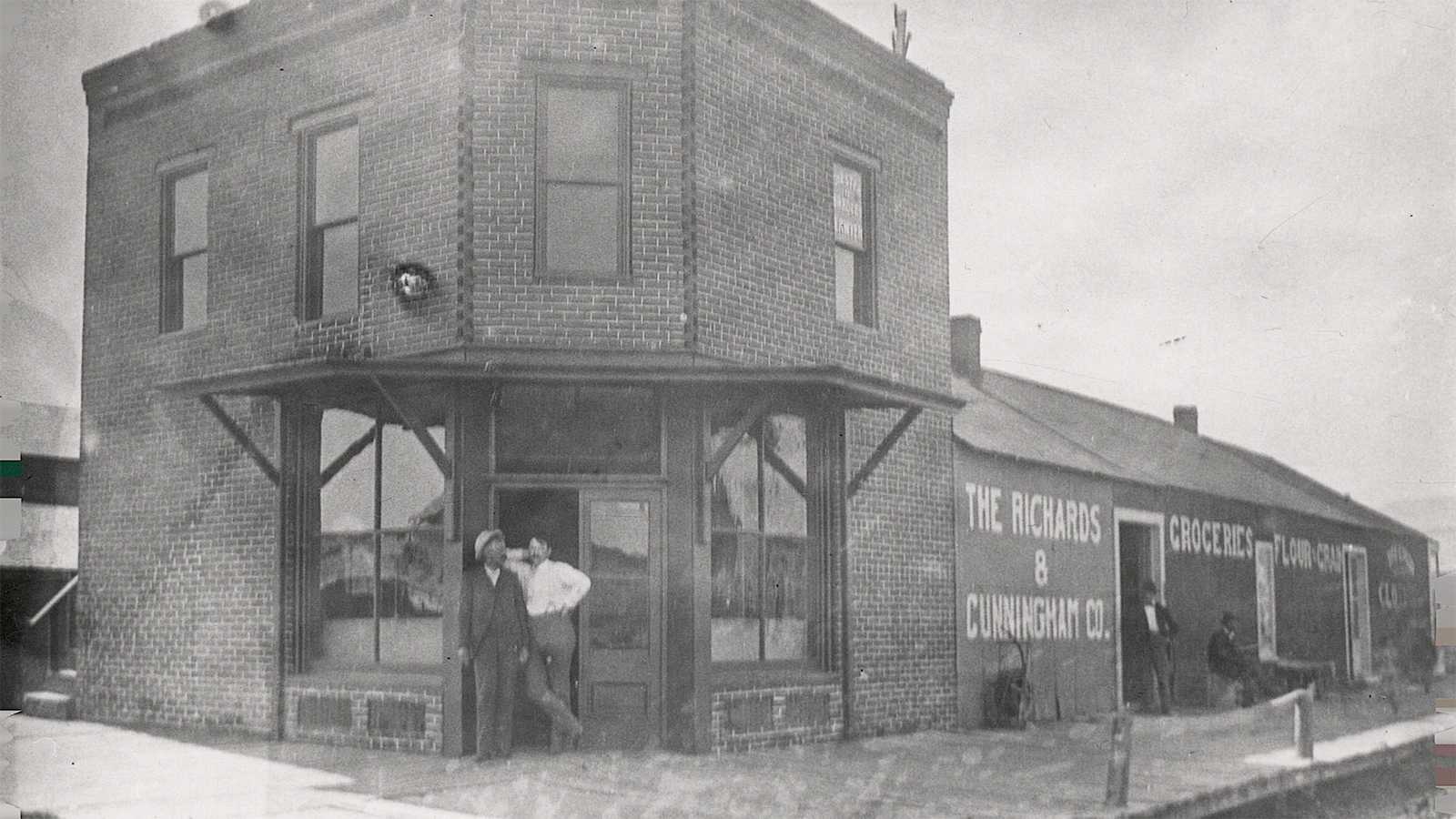
After chasing the hotel guests inside, the group went after some men watching from an alley behind the Cunningham store, chasing them down the alley and sending a shot that burned Robert F. Potter, a bookkeeper for C. H. King, the grandfather of future president Gerald Ford, in the ear and shooting “Uncle”Jeremiah Dain in the back, burning him “to the skin.”
Dain, 68, owned a paint shop in Casper.
The newspaper editor mentioned “quite a number of the participants were burned” and then named some names, including John Shaffer with a burned finger, Charles Nichols with a burned front vest, Lee Culver with a burn on the front of his coat, VanDoren with a forehead burn and J. B. Bradley who was burned on the face.
“Other crowds were shot into until everybody was chased home or into the back alleys and then the fight commenced again, which was kept up until 12:30 a.m. when every Roman candle in town had been shot off. In all there were no less than 3,000 shots fired,” the Tribune editor wrote.
At Wyoming Banner Medical Center, Dr. Ben Kautza, medical director for the surgical trauma department, listened to a description of the battle and said it “would be shocking” if someone didn’t die as a result due to the burn and wound care available in the West in 1899.
“We barely had antibiotics, so, wound care back then was cleaning and frontier salves, almost native-type medicine,” he said. “It would be shocking if people didn’t have really bad kinds of complications … as far was wound issues, wound infections, skin deformities.”
Kautza said Roman candles pose a threat as a projectile to the eyes and face in addition to igniting clothing and creating third-degree burns. Other issues involve a faulty candle exploding in the person’s hand and “kind of taking your hand or arms with it.”
As a surgeon in Pittsburgh a few years ago, the Fourth of July, Memorial Dayand other holidays meant people would pull out fireworks, misuse them or have faulty ones that brought them to the hospital with “devastating hand injuries” related to an explosion in a person’s hand.
During the past two Fourth of Julys in Casper, Kautza remains thankful he has not seen a “Roman candle fight” but he’s seen a few hand injuries from firework explosions.
If It Happened Now
At the Casper Police Department, spokesperson Rebekah Ladd said if the Roman candle war happened in 2026 it would have resulted in a police response and investigation that included canvassing the area to get the wounded to care.
Any “hazardous material” would also have been removed, she said.
Officers would also interview those involved and review available evidence to determine each person’s actions and intent,” Ladd said. “The investigation would included assessing the nature and extent of any injuries, which could help determine whether potential assault charges would be classified as misdemeanors or felonies.”
Ladd said additional charges such as disturbing the peace would also likely be considered, with the ultimate charging decisions depending on the outcome of the investigation.
“Regardless, the Casper Police Department strongly discourages this type of behavior, even still, in 2026,” she said.
Patton, who instigated the whole Roman candle war, went on to become a Wyoming state representative in 1909 and was appointed U.S. marshal for Wyoming by President Taft in 1912. He was re-elected Natrona County sheriff, serving from 1915-17.
VanDoren, also an instigator, went on to become the Casper city treasurer for several years.
Potter, one of the burn victims, moved to Douglas in 1900 and in 1905 successfully established the Douglas Enterprise newspaper.
Contact Dale Killingbeck at dale@cowboystatedaily.com
Dale Killingbeck can be reached at dale@cowboystatedaily.com.