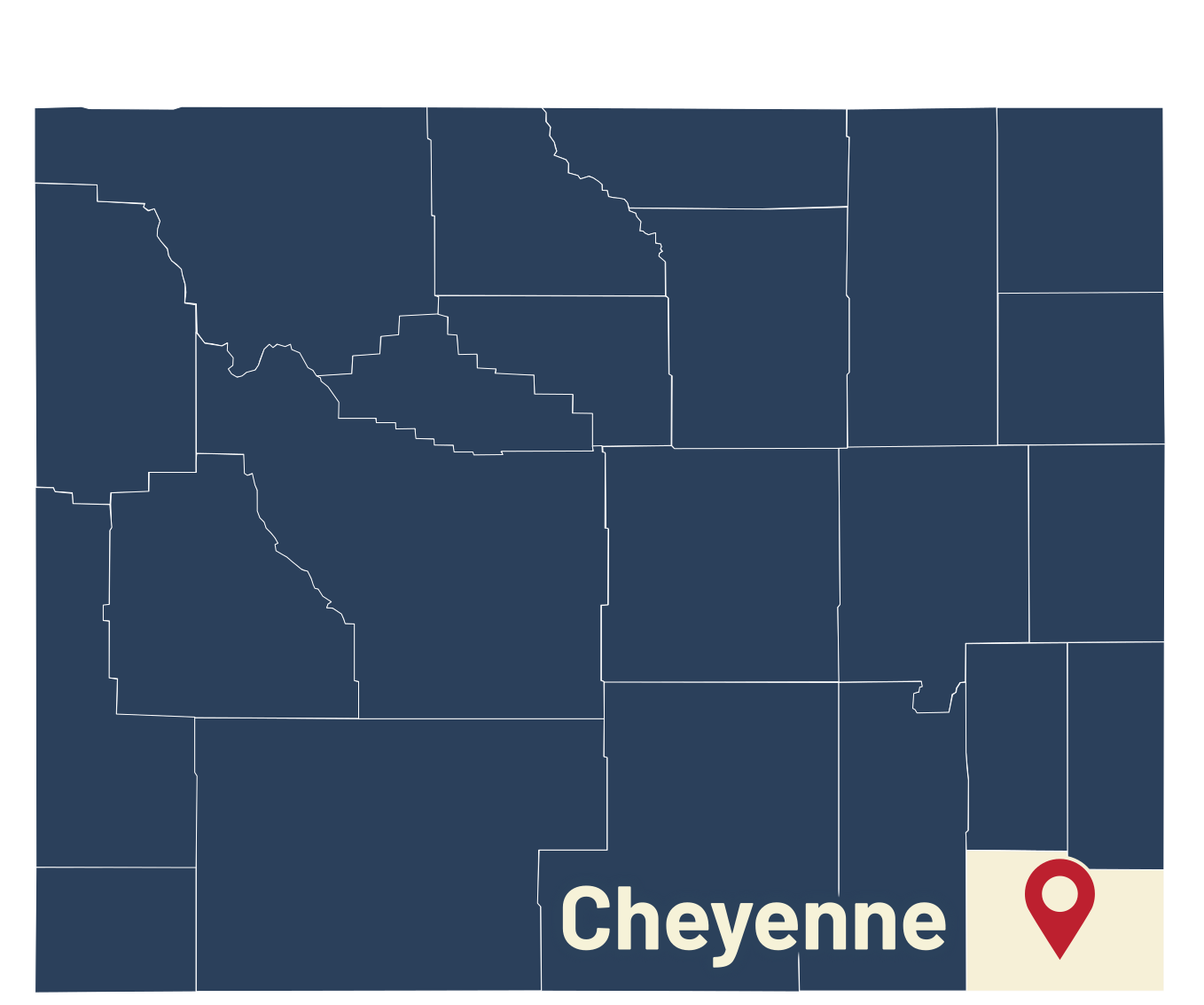
CHEYENNE — A project to clean up an abandoned Atlas missile site west of Cheyenne has been at a standstill for the past two years.
Because there was no progress to report, the Restoration and Advisory Board for the Belvoir Ranch Cleanup Project has not held a meeting since July 2024
Consisting of local citizens and water officials, the RAB is the civilian oversight group for this huge complicated project that has been studied for more than two decades.
Although the multi-million dollar project has stalled in the past, this is the longest hiatus to date.
It may end shortly with a new feasibility study, according to information from the Wyoming Department of Environmental Quality.
At issue is the solvent trichloroethylene (TCE), that airmen used to scrub the nuclear warhead rockets of their liquid fuel during the 1950s and 1960s.
Huge amounts of TCE, a known carcinogen that may cause liver cancer, ran off the launching pads into the ground and ultimately into the aquifer that provides about 30 percent of the City of Cheyenne’s water.
The U.S. Army Corps of Engineers, the group in charge of the project, earlier found the Atlas Belvoir Ranch Project contamination plume to be 4 to 12 miles long and 3 miles wide in places.
At one time, their studies showed the leading edge of the plume was estimated be 7 or 8 miles west of Cheyenne and was moving slowing toward the capital city.
The city had already experienced contamination in its municipal systems due to TCE.
The Army Corps of Engineers several years ago built a water treatment plant for the city, as well as carbon filter systems for area landowners who rely on well water.
The studies also showed that soil and groundwater samples from a well dug at a flame pit next to Launching Service Building No. 1 at the Atlas site showed the heaviest concentration of TCE found at the site to date.
The groundwater samples showed TCE levels of 240,000 parts per billion.
This compares to the 5 parts per billion that is the TCE level in water considered safe for human consumption by the Environmental Protection Agency.
One former project director on the project said it will take two remedies to deal with the contaminated plume — one at the top and one at the bottom.
“There never has been a cleanup,” said Kevin Royce of Cheyenne, the co-chair of the RAB in a phone interview.
Royce has been associated with the project for more than 15 years, first as as technical consultant from his position in the Wyoming Water Development Commission, and after his 2021 retirement, as co-chairman of he RAB.
Two years ago the board was left with an unfinished feasibility study and then nothing further.
“It’s been at a standstill,” Royce said.
The feasibility study by a large engineering firm was rejected by the Corps of Engineers, which refused to extend its contract.
For the new study, it took the Department of Defense a year to select another contractor.
Nearly a decade ago, in 2017, Wyoming’s Sen. John Barrasso, responding to complaints from citizens, had to step in and prod action on the project.
This time, the Barrasso staff wrote in an e-mail, the Wyoming Department of Environmental Quality has assured that work will proceed now with a new contractor and feasibility study.
The feasibility study is drafted,and should be ready for DEQ review soon.
The DEQ and the Corps of Engineers then will select a clean-up remedy, or remedies, and develop a “Decision Document,” the DEQ statement said.
That document should be available this summer or fall.
If this moves forward, the next step will be a recovery plan at long last.
Several years ago, a corps project director said his organization was committed to the project.
“We can’t let that plume pass into the city,” Doug Simpleman said.
“We can’t let that happen”
Contact Joan Barron at 307-632-2534 or jmbarron@bresnan.net