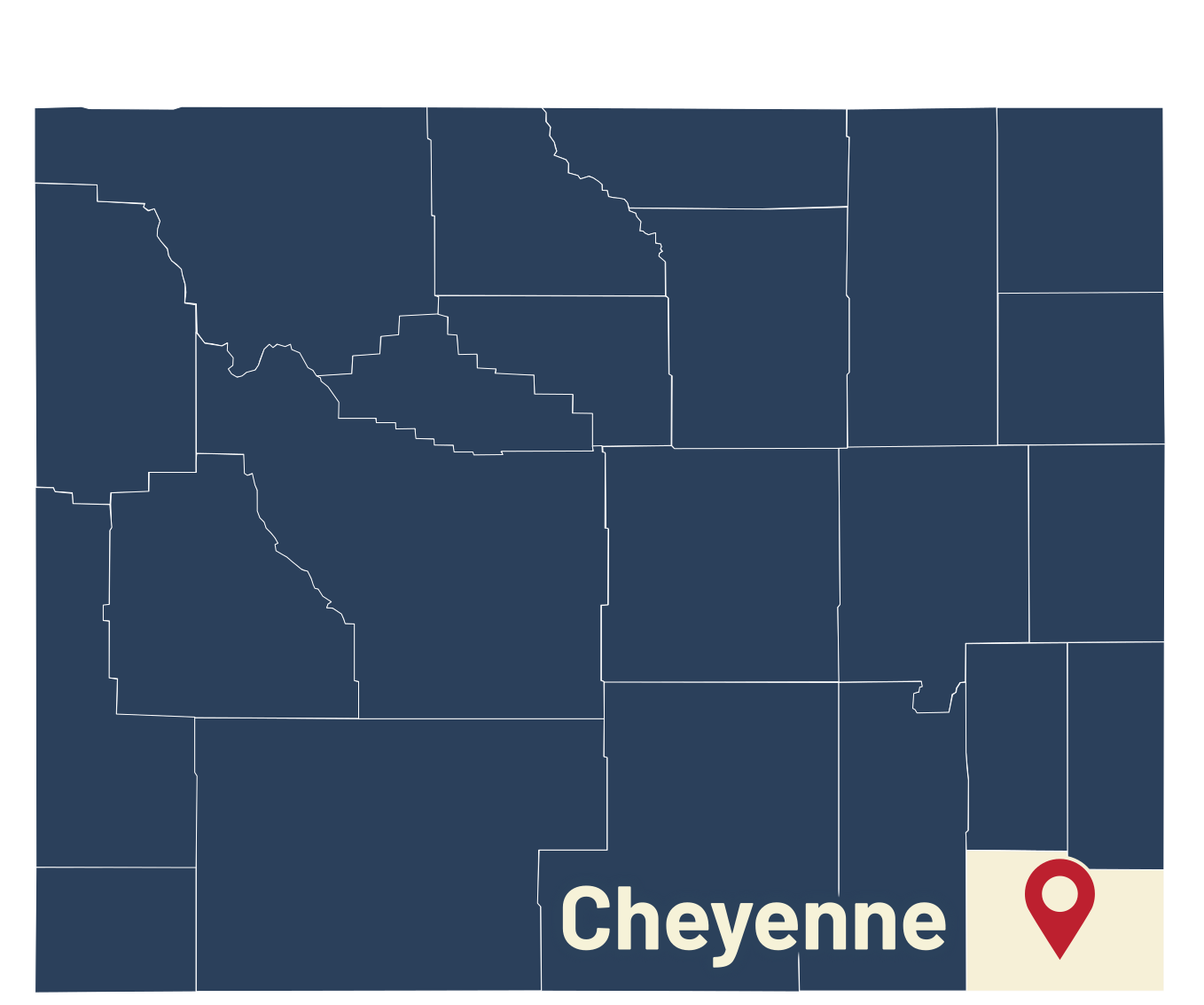
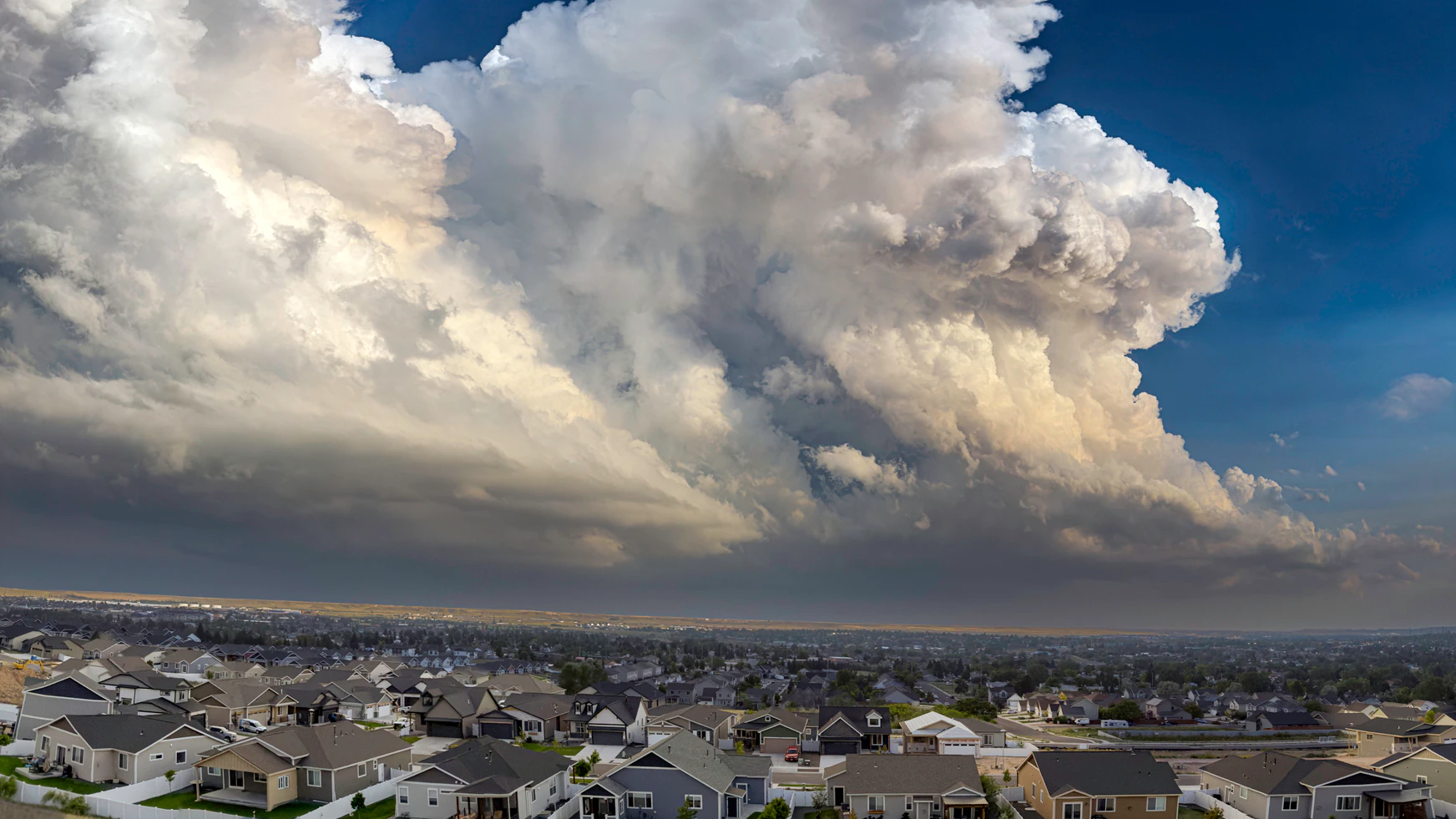
For much of the week, the southeast corner of Wyoming sat beneath a series of severe thunderstorm and tornado watches as forecasters warned of damaging winds and isolated twisters.
For many Wyomingites, especially those living around Cheyenne, the warnings were nothing new.
While tornadoes often grab the headlines, longtime residents know another summer menace can be just as destructive: monster hail.
The southeast corner of Wyoming has earned a reputation for storms capable of dropping baseball-sized chunks of ice, shredding roofs, smashing windshields and turning an ordinary June afternoon into an insurance adjuster's busiest day of the year.
Meteorologists say that's no accident. Wyoming's unique geography helps create some of the nation's most favorable conditions for severe hail-producing thunderstorms.
Storm Season
Cheyenne meteorologist Colby Goatley said June marks the beginning of Wyoming's most active severe weather season because warm, moisture-rich air from the Gulf of Mexico finally pushes far enough north to collide with colder air arriving from Canada.
That combination creates the unstable atmosphere thunderstorms thrive on.
Meteorologists begin each morning searching for the ingredients that could transform an ordinary summer afternoon into one filled with severe weather warnings.
Moisture near the ground, colder air aloft, an unstable atmosphere and shifting winds at different elevations all help determine whether thunderstorms are likely to become severe.
"June is an active month because the warm, moist air primarily from the Gulf ... is finally able to start intruding into this region," Goatley said. "Combined with the colder air we're getting from the north, it helps fuel thunderstorm activity."
'Hail Market'
Justin Ochsner has spent years watching what those storms leave behind.
The Cheyenne roofing contractor with Residential Roofing LC said southeast Wyoming is so prone to damaging hail that people in the industry simply call it "a hail market."
"The general lifespan of a roof in Cheyenne is about eight years, just because of weather — between wind and hail," Ochsner said.
Elsewhere in the country, asphalt-shingle roofs often last 20 years or more. In southeast Wyoming, intense ultraviolet rays, relentless winds, freeze-thaw cycles and frequent hail dramatically shorten that lifespan.
"We do live in what we call a hail market because we get hit with hail so often," Ochsner said.
Some years produce relatively little damage. Then the cycle flips.
"We might have a drought for three or four years, and then we'll get hit two or three years in a row," Ochsner said.
He points to Aug. 1, 2025, as one of the worst recent examples, when baseball- and softball-sized hail battered parts of Cheyenne. The phones started ringing as homeowners discovered damaged roofs across the city, he said.
Even homeowners who invest in impact-resistant shingles aren't always spared.
Fresh hail damage often appears as dark bruises on shingles, Ochsner said. Over time, Wyoming's intense sunshine eats away the damaged asphalt until the fiberglass mat underneath is exposed, eventually leading to leaks if the roof isn't replaced.
Live With It
For lifelong Cheyenne residents, severe summer weather is simply part of living on the High Plains.
State Rep. Landon Brown, R-Cheyenne, remembers destructive hailstorms in 2018 and again last Aug. 1. But the city's history with violent weather stretches back much further.
As a child more than 30 years ago, Brown remembers tornadoes touching down around Cheyenne. His parents still talk about the devastating tornado of 1979 and the August 1, 1985 flood, which killed 12 people. The flooding claimed lives in what is now Brown's legislative district.
"Lots of stuff has happened here," Brown said. "We have such a unique setup here that a lot of people don't realize just how unique Cheyenne is."
That history has shaped how residents react when severe weather is forecast.
"If they know it's happening, they try to go find a place to go," Brown said, referring to moving vehicles under cover. "But there's also people that just ... know that it's part of living in Cheyenne, that we're going to have hail-damaged cars for a while."
While this week's storms have passed, Brown said nobody in Cheyenne believes the season is over.
"Frontier Days is always the time that we get one or two good storms," he said.
For Goatley, Wyoming's reputation for unpredictable weather is well earned.
Within the weather community, he said, forecasters know just how active the state can become during the summer.
The public, perhaps, not so much.
"People are looking at the Plains," Goatley said. "But we're where the storms like to start."
Why Cheyenne?
The answer, in large part, lies in the Rockies and the Laramie Range.
Storms frequently develop along Wyoming's higher terrain before drifting east onto the plains, where atmospheric conditions become especially favorable for hail growth.
"The mountains themselves serve as a great initialization for storms," Goatley said. "You'll see them form off that terrain and then move eastward."
Many of those same storms continue marching into Nebraska and Kansas, but southeast Wyoming often experiences the earliest and most explosive stages of their development.
As Goatley puts it: "We're where the storms like to start."
Goatley said Wyoming residents — particularly those living east of the mountains — are more likely to contend with hail and damaging straight-line winds than tornadoes.
For newcomers, that's one of the first lessons summer teaches.
"Definitely the hail," Goatley said when asked what people moving to Wyoming should know. "Especially east of the mountains."
Although tornadoes do occur in Wyoming, he said residents shouldn't expect the giant, long-track twisters more commonly associated with the Southern Plains.
"It's definitely something to at least be aware of," Goatley said. "But definitely don't plan on any Oklahoma-style monster tornadoes."
Instead, Goatley said Wyoming weather demands respect because of its variety.
"Wyoming's weather is wild and wonderful," he said. "You get a little bit of everything. If you're bored of one season, just wait for the next."
Kolby Fedore can be reached at kolby@cowboystatedaily.com.