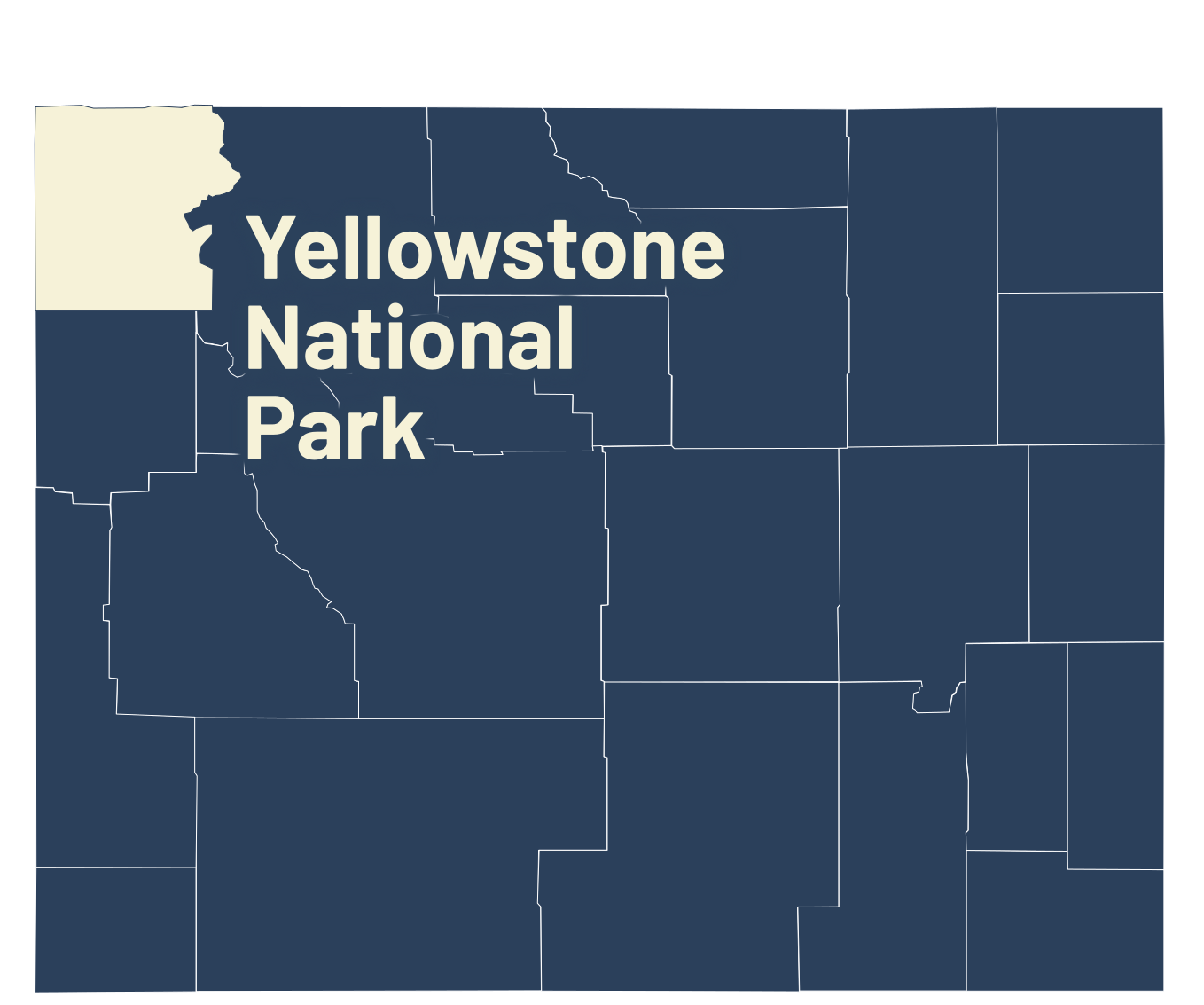
Yellowstone National Park’s “first” petroglyph remains one of its most controversial. Even calling it a petroglyph could raise the ire of some archaeologists.
While Yellowstone was a significant site for many indigenous cultures that left behind plenty of artifacts, rock art was — and remains — rare in the park.
That changed with the discovery of the Old Faithful petroglyphs in 1977.
To this day, archaeologists are divided over how to interpret these petroglyphs and the stories they tell. It’s a debate that’s only become more interesting in recent years.
“Not everyone agrees that it's a petroglyph,” said retired archaeologist Mavis Greer. “For me, there’s no question that it is, but who made it and when are still very controversial.”
The Old Faithful Petroglyphs
Greer is one of the few archaeologists who has seen and studied the Old Faithful petroglyphs.
In 2011, she wrote a short paper on the site with fellow archaeologists John Greer and Elaine Skinner Hale, who was on Yellowstone’s Cultural Resource staff at the time, and even that was subject to controversy.
“I was very excited to see the site, but I don’t think (the National Park Service) was all that happy about what we wrote,” she said. “They don’t want any publications anywhere showing that this and other rock art sites have been found in Yellowstone.”
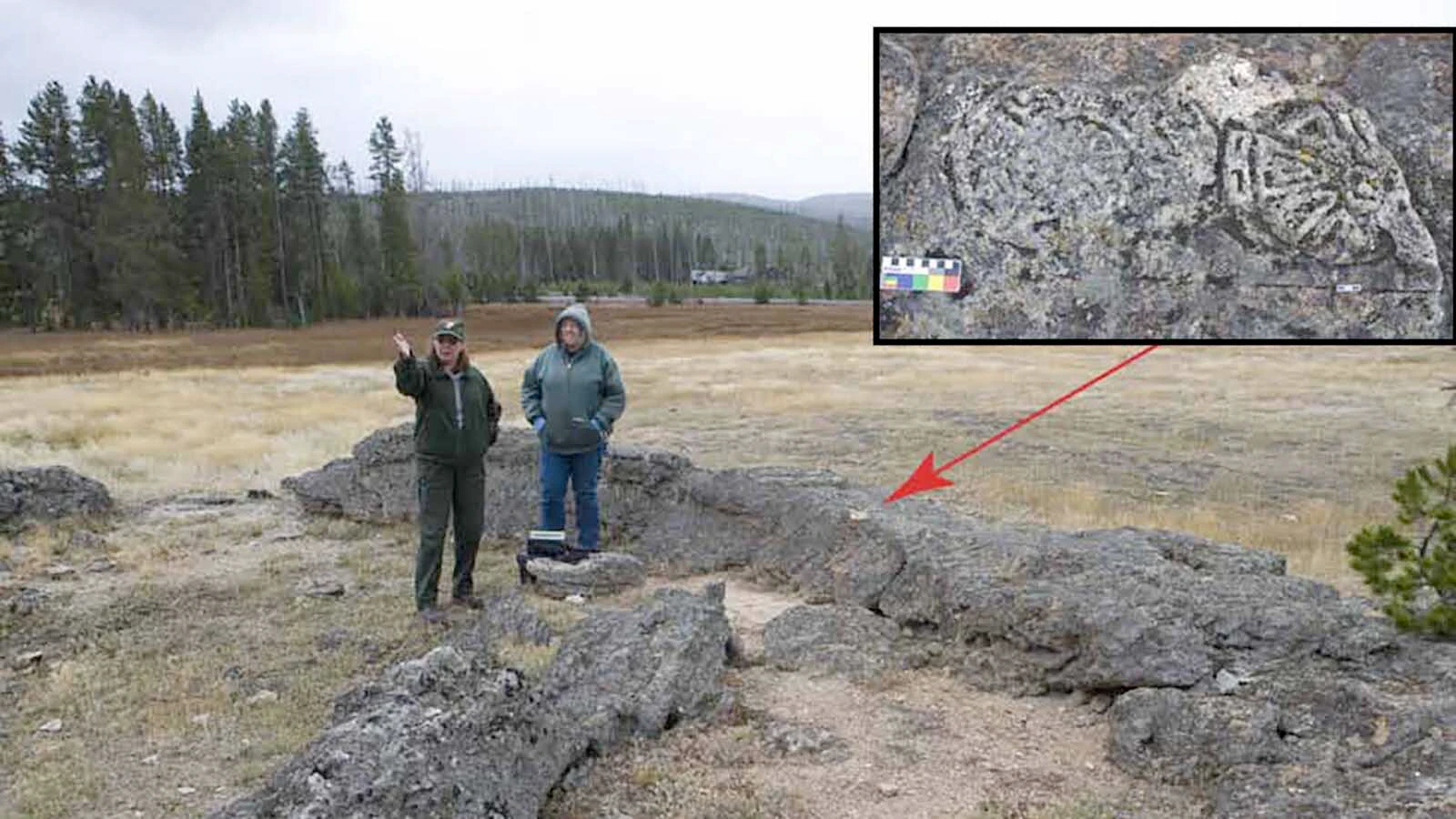
Greer didn’t discover the Old Faithful petroglyphs. A Yellowstone visitor, Nicole Cromwell, wrote a letter to park staff informing them that she’d found two petroglyphs carved into the rock near an extinct geyser in 1977.
Today, the petroglyphs are in an area that isn’t accessible to the public. Greer is one of the few who’s been able to see them.
“The petroglyphs were made when the pool was dry, and the rocks are ideal height for sitting, so this would have been a good camping area in the past,” she said.
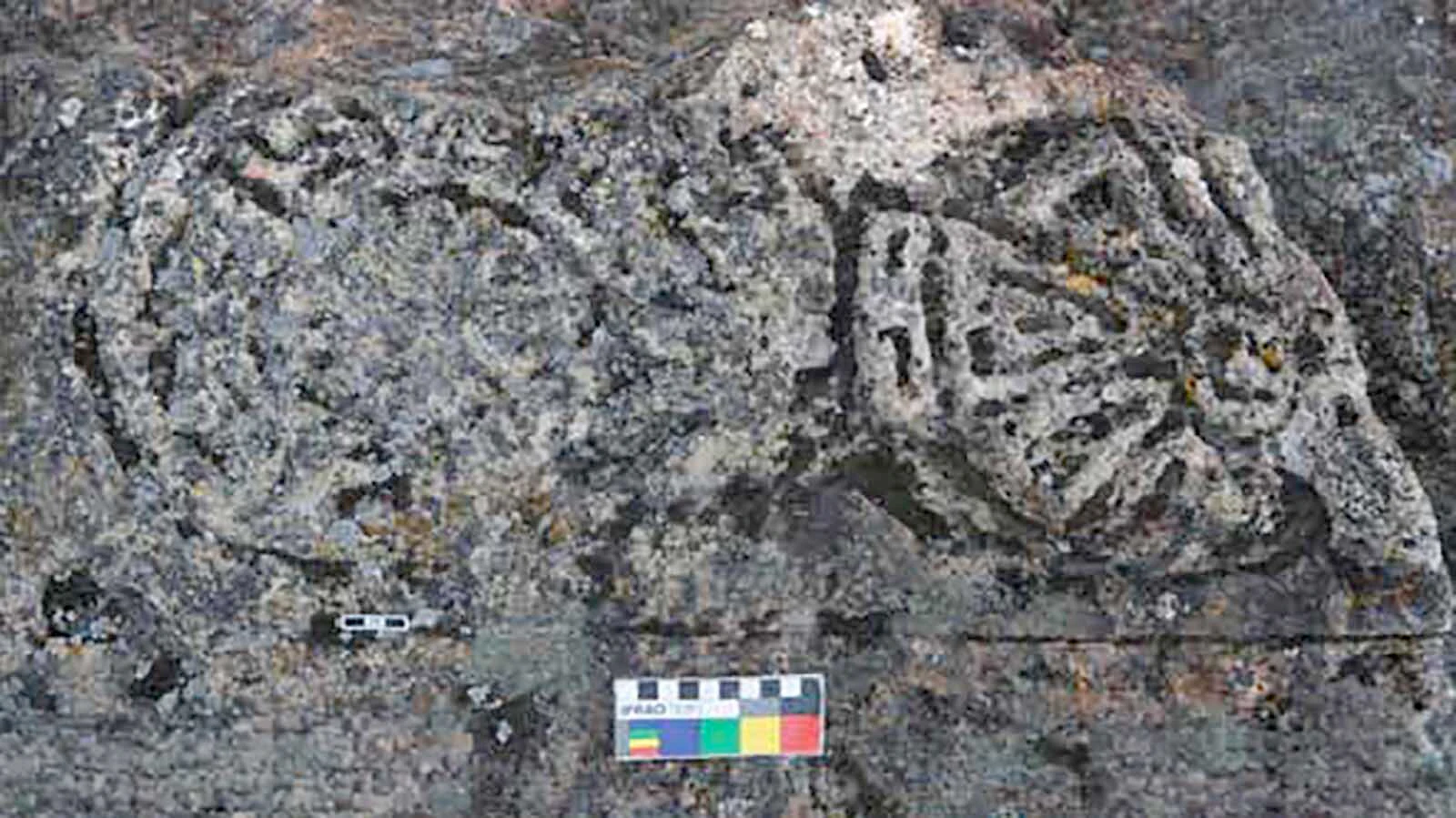
Both petroglyphs are circular shapes with spokes and other shapes emanating from the center, resembling wheels. What the design was meant to depict has been debated for the last 49 years.
The prevailing interpretation is that these petroglyphs are wheels.
Specifically, they depict the wheels of wagons or, potentially, stagecoaches carrying white Europeans into northwest Wyoming.
That was the assumption when the petroglyphs were first studied in the 1970s.
Paul Sanders with the office of the Wyoming State Archaeologist reached the same conclusion during a 2008 survey of the site.
Many archaeologists don’t even believe it’s Aboriginal rock art. They think the “wheels” were carved by white Europeans rather than any of the tribes associated with Yellowstone.
Greer doesn’t agree.
“There are lots of wagon wheels in rock art across the northern plains, and none of them are similar to what's at Old Faithful,” she said. “I believe they were made by Native Americans before first contact with Europeans.”
Shields And Status
Greer believes the petroglyphs depict the shields of indigenous warriors, a common image on rock art panels throughout North America.
Most petroglyphs are believed to have had spiritual or ceremonial significance to the tribes and individuals that created them. According to Greer, shields fall under the umbrella of ceremonial art.
“The design of the petroglyph was whatever was on the actual shield,” she said. “There had to have powerful symbols on their shields, and they would often make petroglyphs of their shields where others could see that they had that power.”
Shields would have been unique to each individual, and covered with images, designs, and colors representing their personal power and position.
That’s why shield petroglyphs are so common, but none are the same.
“It’s a geometric-type design that was used by a lot of different tribes,” Greer said. “They were very ornate and colorful, and depicted powerful animals, spiritual helpers, and other things that helped them not get shot.”
Greer believes shield petroglyphs need to be interpreted through the lens of intertribal warfare. Shields were important status symbols for men in indigenous tribes.
“They had a lot of conflict between tribes because that was a way that men got status in their tribe,” she said. “In order to gain any status, you had to have engaged in something that showed you were brave and an outstanding warrior.”
In that sense, a shield petroglyph was like a self-portrait. It was a one-to-one depiction of the shield its artist used in battle, down to the same designs and colors.
While most of the color has vanished in the hundreds or thousands of years since they were carved, the intricate and unique designs and symbols remain.
“The design of the petroglyph is whatever design was on the actual shield that they were using when they were out in a battle,” Greer said.
Which Wheel Or No Wheel?
There are legitimate petroglyphs depicting the wagons of European settlers.
One of them is at Castle Gardens, one of Wyoming’s most renowned petroglyph sites.
The confirmed wagon petroglyph at Castle Gardens is one of the reasons Greer cited for why she doesn’t believe the Old Faithful petroglyphs depict wagon wheels.
For one thing, the circular designs at Old Faithful are very intricate and asymmetrical. The wheels on wagon petroglyphs are much simpler, emulating the spoked design of an actual wagon wheel.
Also, Greer isn’t aware of any petroglyphs of wheels without wagons. It’s something she researched for her 2011 paper.
“Wheels, by themselves, are even less common in rock art than complete wagons or vehicles,” she said. “The only possible single wheel we found is at Newspaper Rock in eastern Utah, and its identification is based only on its circular form with rays, not any historical association with a wagon or other items, (so) there is no evidence that it’s a wheel.”
For Greer, it’d be highly unlikely to find a petroglyph depicting a wagon wheel without also depicting a wagon. Meanwhile, it’s quite common to find isolated shield petroglyphs.
“When these wheels are compared with the Old Faithful figures, they both are round with spokes or rays,” she said. “The similarities end there.”
There is another type of wheel that had great spiritual and ceremonial significance to indigenous tribes: medicine wheels.
Medicine wheels, like the Medicine Wheel National Historic Landmark in the Bighorn Mountains, were usually constructed in sacred areas.
While the Old Faithful geyser basin could easily have been a sacred area deserving of a medicine wheel, Greer doesn’t think that’s a likely explanation for the petroglyphs.
“When viewed from a stylistic perspective of cultures in the northwestern Plains and Rocky Mountains, a shield design is a better explanation.”
Who, When, Why
So, if the Old Faithful petroglyphs weren’t depicting wagon wheels, and they weren’t made by a European, who made them? When were they made?
Those questions, according to Greer, are much harder to answer.
“There are just too many tribes that were traveling through Yellowstone in the last thousand years,” she said. “Even with a lot of investigation, I don’t think anyone would be comfortable saying its Shoshone as opposed to the Crow, Blackfeet, or Kiowa.
"The Cheyenne and Arapahoe were there, too. Any one of them could have made those petroglyphs.”
Determining the age of the petroglyphs would also be difficult, but that’s another reason why Greer believes they aren’t depicting wagon wheels. They look too old.
“The petroglyphs are in a geologic situation where if a European had made it, it would look a lot fresher than it does,” she said. “It looks like it's been there for some time.”
Greer didn’t have enough data to give an approximate age range for the Old Faithful petroglyphs, but she’s confident that they’re too old to be wagon wheels.
She believes the petroglyphs are older than the first wagon wheels in western North America.
“My only thought is that they were created pre-contact,” she said. “That's not saying much, because the contact period for this area starts in 1800, but it’s something.”
Not So Open Secrets
The Old Faithful petroglyphs remain the best-known petroglyphs in Yellowstone National Park, but even they aren’t common knowledge to the typical tourist.
Anyone who wants to see them can’t.
“It's in an area of the park where you cannot go without a ranger,” Greer said. That makes it easier to keep the location secluded.”
While there’s plenty of accessible information on Yellowstone’s archaeology, petroglyphs, and other indigenous rock art are rarely mentioned.
Greer believes that’s simultaneously deliberate and accidental.
Greer is aware of other Yellowstone petroglyphs and rock art panels discovered within the last two decades, but information about them is scarce.
That’s partly because they’re inaccessible to most tourists and scientists.
“I think most archeologists thought there was rock art in Yellowstone, but nobody had gone out there and really searched for it before,” she said. “Doing a rock art survey in the park is not a simple thing. You’d need money, horses, and a camping crew to find those places.”
Greer also believes the National Park Service has a vested interest in restricting what gets published about these sites, at least until they’re better understood.
From what she’s heard, the newly discovered sites are more fragile than the Old Faithful petroglyphs.
“The new sites have been paintings rather than petroglyphs,” she said. “That’s just the nature of the rock that they're dealing with.
"On limestone and even types of granite, they're more likely to have paintings than petroglyphs.”
Greer’s 2011 paper on the Old Faithful petroglyphs is still the most recent scholarly work on any rock art in Yellowstone, and it’s “still controversial,” according to Greer.
“That one’s been known for a long time, and I wouldn't say there are a lot of people who think it's a confirmed petroglyph yet,” she said.
The ultimate takeaway is that there’s much more to learn about the history of indigenous tribes in Yellowstone, and the known and yet-to-be-discovered rock art will deepen our understanding of the park’s place in human history.
“There's been a lot of work on indigenous use of Yellowstone prior to and even after the coming of Europeans,” she said. “The history of the park goes back thousands of years, and these rock art panels show us there’s still so much to discover and learn.”
Andrew Rossi can be reached at arossi@cowboystatedaily.com.