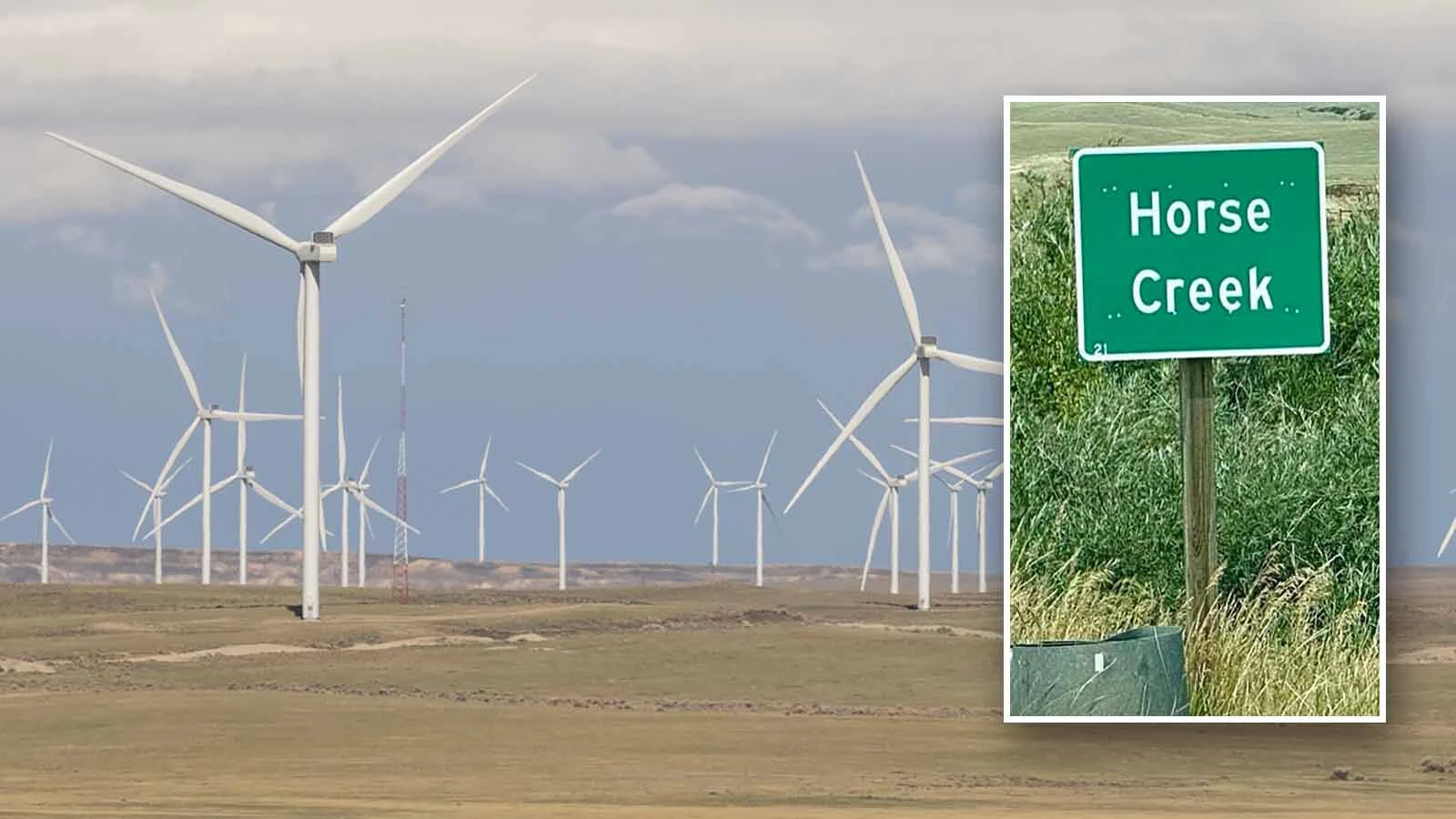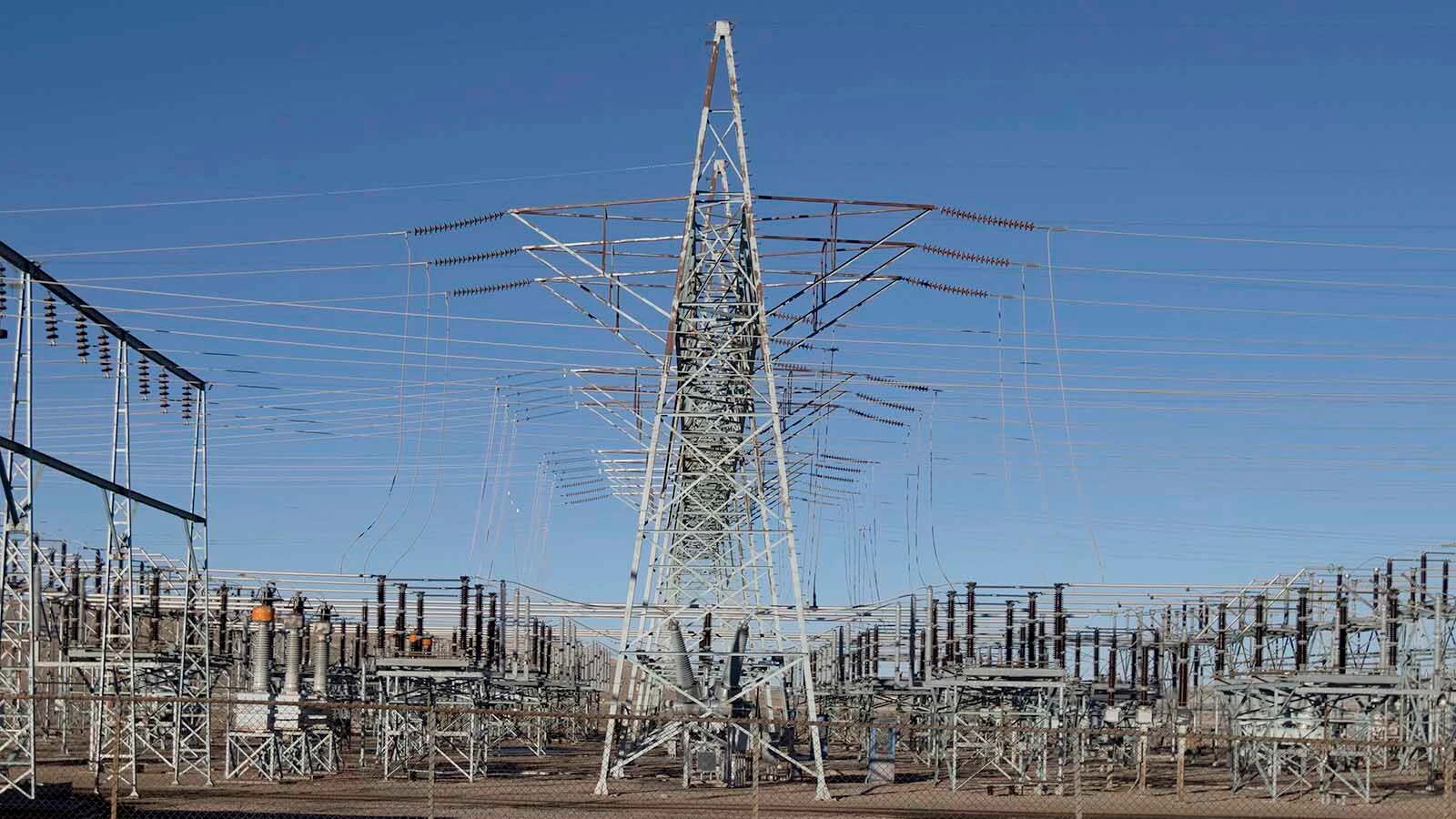
Wyoming has long prided itself on being an energy powerhouse, exporting far more energy than its residents consume.
The state produces roughly 12 times more energy than it consumes, a fact regularly touted by data centers planning to build in Wyoming, who suggest their projects will help keep more of the state's coal, gas, and electricity at home.
But beneath their hopeful rhetoric are a few hard-edged realities that haven’t been talked about as much.
Take Project Jade as just one example.
The massive — or “hyperscale” —data center will come into Wyoming with a "bring-your-own-power" hub engineered for an initial 2.7 gigawatts of power — roughly three times what some industry analysts have said the state uses now. Ultimately, it can scale to 10 gigawatts.
That’s almost as much power as Wyoming's existing power plants can produce all together, according to the federal Energy Information Administration, whose most recent figures list net summer power generation capacity for Wyoming at 10.8 gigawatts in 2024.
The company has said it intends to generate its own power, but nothing in its permitting prevents it from seeking a grid interconnection later. Recently proposed legislation from Sen. Cynthia Lummis, R-Wyoming, meanwhile, would require the same "just and reasonable" standard governing transmission service to also apply to large load customers seeking to connect to the grid. The bill is clearly aimed at preventing such projects from being slow-rolled, if they tick off all the regulatory boxes.
Project Jade, meanwhile, isn’t the only large-load proposal in the queue.
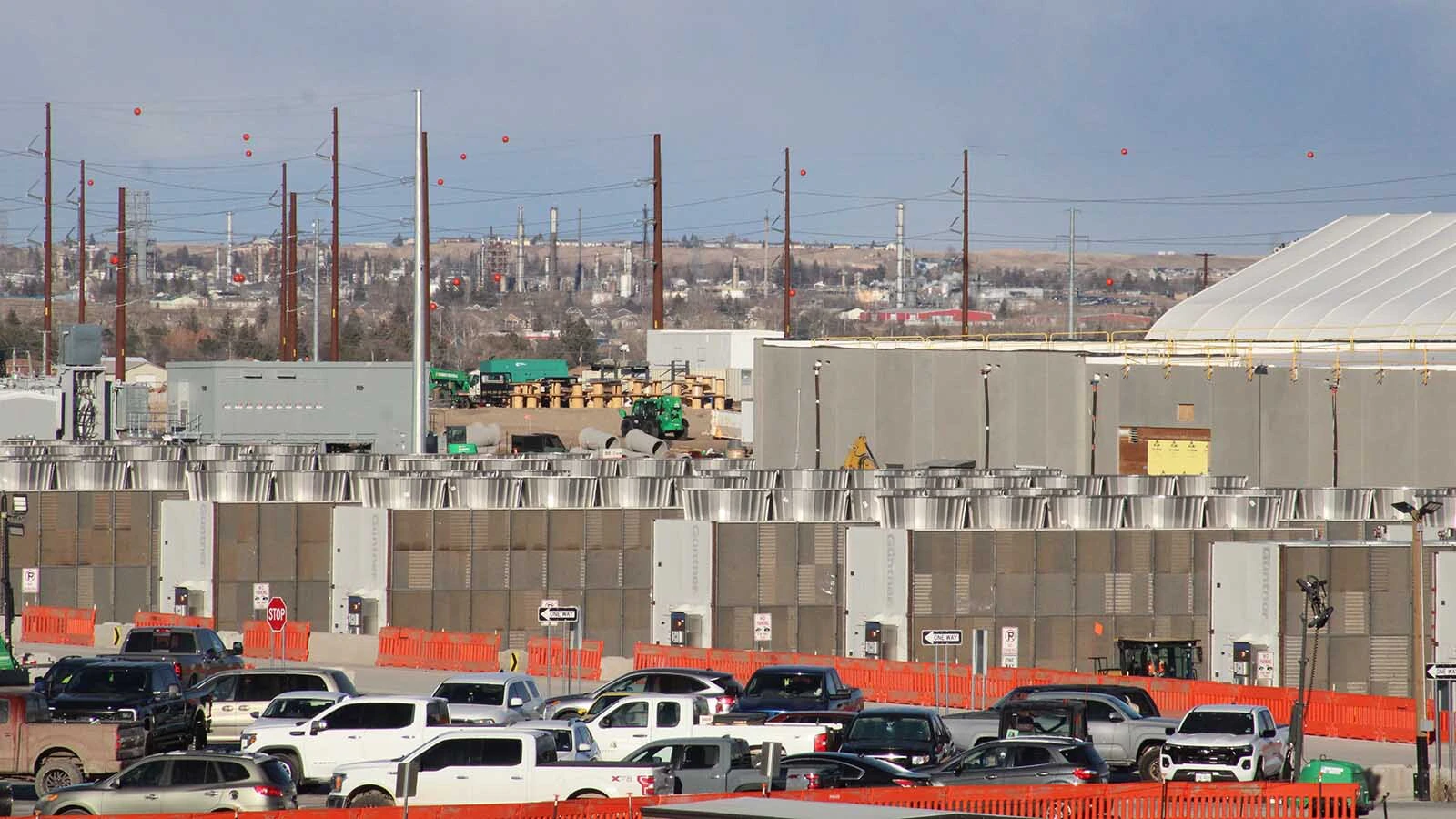
Meta, Related Digital, Microsoft — Cheyenne has 14 data centers that are either under construction or have entered definite planning stages, according to figures from Cheyenne LEADS. How many of those will want to connect to the grid is so far unclear.
That makes grid consumption one ginormous elephant trying to squeeze into Wyoming’s electricity room.
No one is yet sure just how to accommodate the unprecedented power needs of these data centers.
“It’s like comparing the Earth to Jupiter,” state Sen. Cale Case, R-Lander, told Cowboy State Daily. “It’s taken us over 100 years to grow the electric grid to where we are today. Over 100 years.”
Now state regulators, utilities and industrial consumers are scrambling to answer the same basic question. How can the electricity grid accommodate this kind of out-size growth without adversely affecting regular residential consumers?
Consumers Must Be Held Harmless
For Wyoming Office of Consumer Advocate Director Anthony Ornelas, the concern isn’t abstract.
He was blunt about saying that Wyoming’s grid is nowhere near ready to serve the kinds of loads now being contemplated. There’s nowhere that he sees as ready for a 10 gigawatt facility right now.
“I feel very confident in saying that … pretty much anywhere within the state, we are not yet able to handle that type of load growth,” Ornelas said. “It’s going to require new generation, and it’s going to require a substantial amount of high voltage or grid-level transmission build-out as well.”
So far there’s no consensus either on how to get there, even as multiple legislative committees grapple with the questions.
“It’s at the forefront of everyone’s minds,” Ornelas said. “It’s being discussed in the Corporations Committee, in the Minerals Committee, in the Revenue Committee and, I’m less involved, but also the Blockchain Committee.
"Over the past few years, there has been various types and forms of legislation intended to try to get a handle on this or address it … and I would just say there’s a lot of differing opinions depending on which interests are kind of advocating at the moment.”
The only clear consensus, so far, is that whatever solutions are adopted, they must hold regular residential consumers harmless.
Century Of Growth All At Once
Rocky Mountain Power representative Tom Carter told lawmakers during a June 4 Minerals Committee meeting that his company has been working on the problem the past several years.
“We have conversations about legacy customers and their growth,” he said. “We have conversations around data centers and their growth and opportunities. We have conversations about growth through economic development.”
All of those are different types of loads with different types of challenges.
For the last century, Rocky Mountain Power’s growth has been built around traditional, “zero-to-25-megawatt” customers, which range from residential consumers to small industrial users and shopping centers, which has grown at a flat rate of around 2 to 3%.
That kind of growth doesn’t trigger much investment due to the regulatory compact utilities operate under. It could mean a substation here or a short line there, nudging capacity forward as communities slowly grow.
Hyperscale projects, meanwhile, are talking about loads that range from three to 10 times what Wyoming residents consume — a century’s worth of growth in one or two deals.
One problem with those loads, Carter said, is that they often appear speculative in nature.
“Maybe they don’t have an existing customer yet,” he said. “But they could potentially have an existing customer, whether it’s the hyperscaler space or in the economic development world.”
Regardless, there’s no existing revenue model for utilities to handle speculative loads.
“The question we have to ask ourselves, not just as a utility, but as a state, is who should carry the risk on a speculative load?” he said. “The utility does play a role in making this a reality, but we are not necessarily the driver in all economic development.
"We have a role to play and we want to work with the state, and with this committee, and with our communities and with our customers on making sure these situations can and will move forward.”
Carter added he appreciates seeing what other parts of the state are doing, such as Cheyenne’s large-load tariff, but added that other parts of the state are different, and there “isn’t a one-size-fits-all solution.”
“Let’s try not to pigeon-hole a solution,” he said. “But let’s identify ways to allow for regions and industries and organizations to find the solution that works best for them.”
One Model: Cheyenne’s Large-Load Tariff
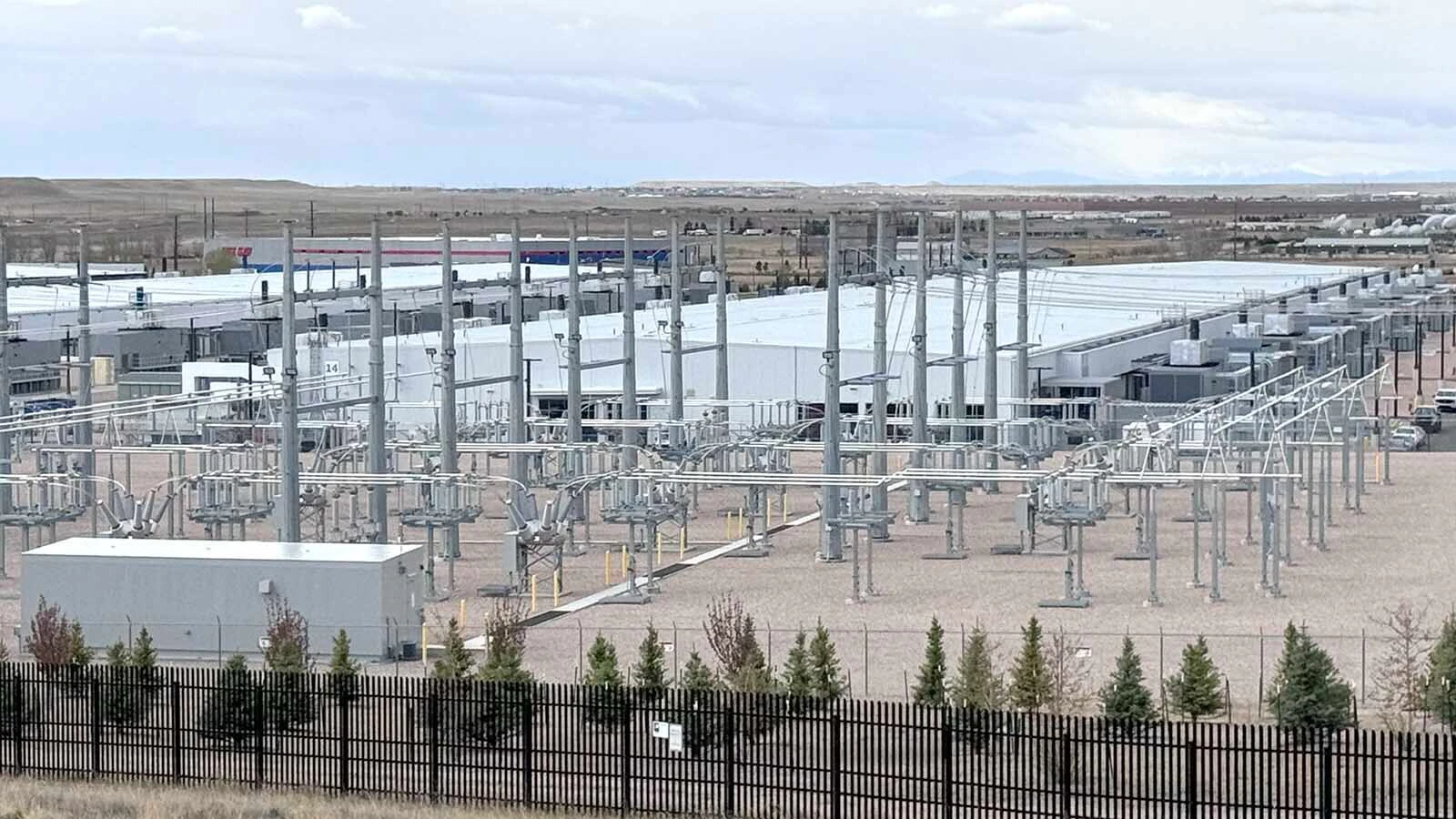
In Cheyenne, regulators and Black Hills Energy have been wrestling with the questions surrounding large-load data centers for more than a decade.
The utility partnered with Microsoft to develop a large-load tariff designed to ensure that data centers would pay 100% of the cost of serving them power, from infrastructure to the power itself.
“The tariff allows us to provide market energy and renewable energy options to data centers without impact on retail rates and creates a clear separation where the large customer is responsible for the costs associated with the new infrastructure needed to serve them,” Black Hills Energy told Cowboy State Daily in an email.
“While our existing residential and small business customers remain insulated,” the company adds. "In addition to our LPCS tariff, we use service agreements, facilities agreements, deposits, and other negotiated commitments to manage the energy demands of large use customers and potential customers.”
That approach has worked well so far to insulate regular consumers in Cheyenne from rate hikes.
“Black Hills Energy’s tariff is working somewhat,” Case said. “It’s hard to say it’s not. It’s brought some large loads onto the system. It’s had the blessing of the Public Service Commission.”
But none of those loads were as big as the proposed loads working their way to Cheyenne.
“Only Tallgrass is doing that kind of load now,” Case said, referencing the company developing Project Jade. “And it’s a ways from being operational.”
Ornelas agreed the tariff has so far done a good job of “isolating those we call hyperscale or data center type loads from the remaining customer base.”
“That includes any energy they purchase from the market,” he said. “It includes any generation capacity that they choose to build or contract to have built. It also includes any upgrades or new builds of transmission facilities to transport that power.”
But the solution hasn’t seemed to work for other parts of the state, Ornelas added, despite numerous attempts at legislation to help unlock the economic potential these types of developments offer.
Federal Solutions Needed?
As Wyoming officials wrestle with how to handle the “Jupiter-sized” loads coming at the state, U.S. Sen. Cynthia Lummis, R-Wyoming, is pushing a federal fix she says is aimed at protecting grid reliability and ratepayers nationwide.
Lummis on Thursday introduced the POWER Up Act to “modernize rules for high-power grid connections, by creating “clear, uniform federal rules for how massive electricity users — anything with the load of a city like a large data center — connect to the interstate electrical transmission grid.”
Lummis’ bill would define the threshold of a large user as 100 megawatts or more. The Federal Energy Regulatory Commission (FERC) could adjust that figure if needed for grid reliability, the release added.
It would also let FERC handle these large loads, ensuring that data centers and advanced manufacturing facilities get the same “just and reasonable” standard that governs transmission services for power generation.
FERC would have 18 months to issue a final rule setting standardized procedures for large-load interconnection, including hybrid facilities that pair on-site generation with grid-connected loads at a single point of interconnection.
The bill includes a carve-out for state authority, protecting state and local jurisdictions over siting, permitting, construction, retail rates, local distribution and generation.
“When a facility wants to draw as much power as a city, that is not an ordinary retail question. It is a grid question,” said Lummis. “Ratepayers need a clear process, informed by best practices, clear rules, and clear accountability. That is what this bill provides.”
America needs more power for data centers, Lummis added, as well as advanced manufacturing. It’s a matter of economic and national security.
“The question is whether we handle that growth with clear rules and reliable planning, or with confusion and delay,” she said. “Massive demand is here, and America needs a framework that supports investment in our communities while protecting the grid and the people who rely on it every day.”
Mixed Reaction In Wyoming
Reaction in Wyoming to Lummis’ POWER Up Act was mixed. Some warned it would weaken state control, while others welcomed it as a needed framework for massive new power demands.
Case said the bill essentially “federalizes” large-load connections like those coming to Cheyenne.
“This has implications,” he said. “FERC hasn’t always been the most timely agency to deal with. Large loads are 100 megawatts, so way below the scale talked about by the newest data centers.”
Open access, as required by the bill, meanwhile, will increase competition and could mean utilities aren’t supplying the energy — something Case anticipates utility companies will oppose.
Rocky Mountain Power told Cowboy State Daily by email that it hadn’t had a chance to fully review the proposal, but pointed out that
Wyoming does have an established framework for large electric loads that is designed to protect reliability and existing customers.
“We look forward to seeing how this proposal complements what the state is doing,” the statement said.
Heather Madrid, who has been circulating a petition against data centers, said she saw the legislation as “good for most places,” but added her concerns are about things like land consumption and squeezing out other businesses, and housing impacts.
“(Data centers don’t generate foot traffic and they’re ugly, fenced-off warehouses,” she said. “It’s unattractive for retail, hospitality, tourism, outdoor recreation, etc.”
She also lamented the sense that taxpayers and voters have lost their voice “because most of our elected leaders are representing the wealthiest people in the world instead of doing their jobs, which is to protect us from them, not the other way around.”
Cheyenne LEADS Executive Director Betsey Hale called the proposed legislation a “win-win-win-win.”
“(It’s) a win for large users, a win for rate payers, a win for communities, and a win for Wyoming energy,” she said. “Uniformity in regulations and predictability in process are critical for economic growth of all large load users and for protection of existing rate payers.”
Rep. Daniel Singh, R-Cheyenne, on the other hand, sees it as much-needed clarity.
“I’m very glad to see Sen. Lummis leading on this,” he said. “She understands Wyoming’s role as an energy powerhouse, and she has consistently been ahead of the curve on the intersection of energy, technology and federal policy.
Transmission bottlenecks are real, Singh added, especially when it comes to data centers, AI facilities and other large industrial loads coming online. Clearing that up just helps Wyoming, which he sees as the “mitochondria of America.”
“Wyoming is one of the great power-producing states in the country and we should be able to move Wyoming energy efficiently to major loads across the country,” he said. “That helps our producers, strengthens the grid, and keeps America competitive.”
Renée Jean can be reached at renee@cowboystatedaily.com.