The Wyoming Supreme Court on Wednesday rejected a former Casper police officer’s argument that a judge wrongly disregarded his plea agreement when sentencing him to a prison sentence five times longer than the one for which he’d bargained.
This sends a message to all defense attorneys to lock down their clients’ plea agreements in writing, the defendant’s appeal attorney Ryan Semerad told Cowboy State Daily in a Wednesday phone interview.
“Going forward as a defense attorney, you should make it crystal clear, on the record, that when my client is entering a guilty plea to a charge pursuant to a plea agreement, we’re offering that guilty plea directly in exchange for the state’s promises about the outcome of this case,” said Semerad. “That we’re not offering our plea agreements into the air – for nothing.”
Gritty Incident First
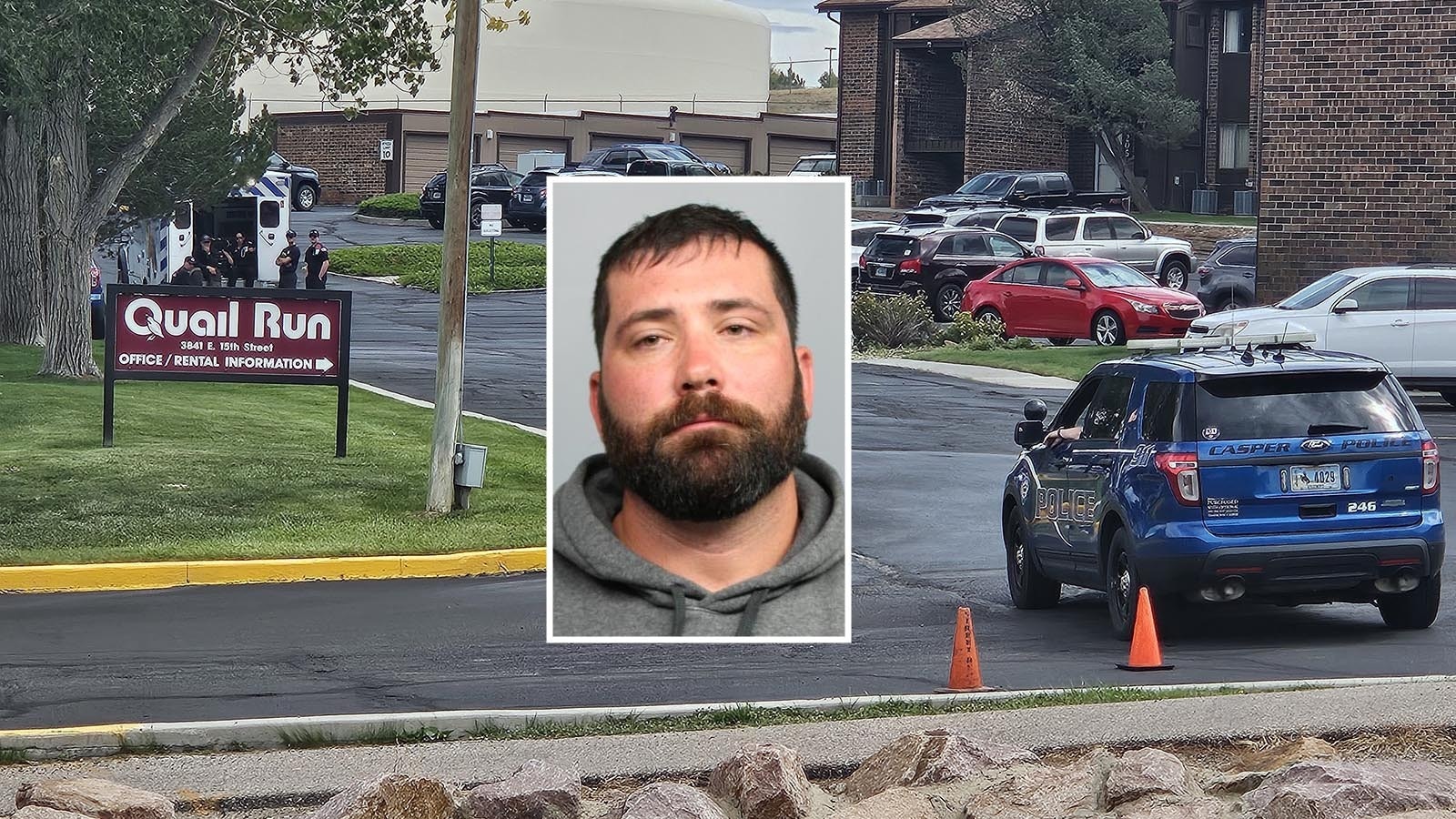
Michael Scott Hughes, now 32, was still a Casper Police department officer on Aug. 22, 2024, when he grew frantic and suicidal inside his home at the Quail Run apartments complex, court documents say.
So Natrona County Sheriff’s deputies responded to the scene. Hughes’ girlfriend was in the apartment and was reluctant to leave Hughes, who was reportedly making suicidal gestures with guns and making suicidal statements.
Hughes told his girlfriend to leave and when she didn’t, he fired a pistol round into the ceiling of the apartment – so the girlfriend left, telling deputies Hughes was now alone in the apartment, and had been drinking.
Deputies evacuated the other apartments and told Hughes' upstairs neighbor to shelter inside her bathtub before evacuating her and two other people – including her teenage son – from the apartment about two hours later.
The neighbor “stepped on something hard in her living room” on her way out, and later found it was a bullet, shot through the concrete and lodged in the carpet.
The sheriff’s office sent a tactical team and crisis negotiators, who stayed in contact with Hughes until the early morning hours of Aug. 23.
Hughes kept drinking and deputies kept evacuating neighbors, the high court’s Wednesday opinion recounts.
The standoff continued that day. Hughes called and texted family, friends, coworkers, and crisis negotiators. He “repeatedly attempted to entice law enforcement to enter the apartment and threatened to kill anyone that entered,” the opinion says.
Law enforcement personnel heard other gunshots. The tactical team sent a drone into the apartment through the broken window but Hughes captured it, damaged it, and threw it outside.
Hughes fired a round through a window and toward the tactical team – hitting no one – that afternoon. The round shot toward an unoccupied playground and another building.
Finally, at 4:15 p.m., Hughes handcuffed himself and let the tactical team arrest him. Investigators found three handguns and three spent shell casings in the apartment.
Second, What Happened In Court
Once charged and in court, Hughes pleaded not guilty to five counts of aggravated assault (felony punishable by up to 10 years in prison), one count of felony property destruction (also up to 10 years), and one count of reckless endangering (up to one year in jail).
Two months after the not-guilty plea, Hughes asked for a change of plea hearing.
The prosecutor informed Natrona County District Court Judge Catherine Wilking at that time that Hughes would plead guilty to everything except the property-destruction charge, which the state would drop, and the state would agree to limit its sentencing argument to no more than five years in prison.
That’s because while the state could argue for up to five years’ prison time on each felony, it agreed that these sentences would run concurrently, or simultaneously, the court record shows.
The high court’s Wednesday opinion says prosecutor and defense aired this agreement in court, but it wasn’t put in writing.
Wilking told Hughes he couldn’t withdraw his guilty pleas if she rejected his agreement.
Hughes said he understood those conditions.
At Hughes’ later sentencing hearing, Wilking heard statements from Hughes' upstairs neighbors and a psychologist who had met with Hughes post-arrest.
She announced she wouldn’t follow the prosecutor’s recommended five-year cap. And she sentenced Hughes to five sets of four- to five-year sentences for the felonies and the maximum one-year sentence for the misdemeanor – for a total of 21 to 26 years in prison.
Third, Legal Stuff
Semerad entered the case to represent Hughes on appeal.
The attorney argued to the high court that Wilking understood Hughes’ plea agreement incorrectly, and that its one-count-left-off structure showed Hughes retained the right to withdraw his guilty pleas and go to trial if Wilking rejected the sentencing cap.
“The District Court rejected the plea agreement and sentenced Mr. Hughes to … five times what Mr. Hughes bargained for,” Semerad wrote in Hughes’ appeal brief. “This appeal turns on whether plea agreements are predictable contracts or lottery tickets.”
Semerad argued that the high court should bar trial courts from adding to plea agreements “under the guise of ‘interpretation’” and make those courts explain their reasoning when they reject plea agreements.
The Supreme Court’s unanimous opinion, penned by Justice Robert Jarosh, disagrees with this interpretation.
Firstly, it’s harder for the high court to overturn what Wilking did since Hughes didn’t object to her actions at the time, the opinion says.
The Jarosh opinion also views what Wilking did in an entirely different vein of reasoning than the argument Semerad deployed.
“Mr. Hughes’ second (argument) relies on the premise that the district court rejected, at least in part, the plea agreement during the change of plea hearing. We disagree,” says the opinion. “The district court unequivocally accepted the plea agreement and followed through with its acceptance” by dismissing the property destruction charge and holding her sentence until after the parties argued terms in court.
In the high court’s conclusion, the judge rejected the state’s sentencing recommendation which was nestled within the plea agreement, not the plea agreement as a whole.
Wilking wasn’t required to list her reasons for rejecting the state’s sentencing argument, says the opinion, but the court “nonetheless explained its rationale on the record.”
Wilking had pointed to the severity of crimes, number of victims and “heinous nature of Mr. Hughes’ actions.”
Semerad commented Wednesday, “We strongly disagree with the opinion. We respect the court’s decision, but we strongly disagree.”
“Every sentencing term in a plea agreement is, inherently, something that a defendant is exchanging his guilty plea for. It’s not window dressing. It’s not, you know, a nice idea. It’s not a gift. It’s an agreement. I’ll give you guilty pleas if you’ll do something the state agreed to do.”
Clair McFarland can be reached at clair@cowboystatedaily.com.