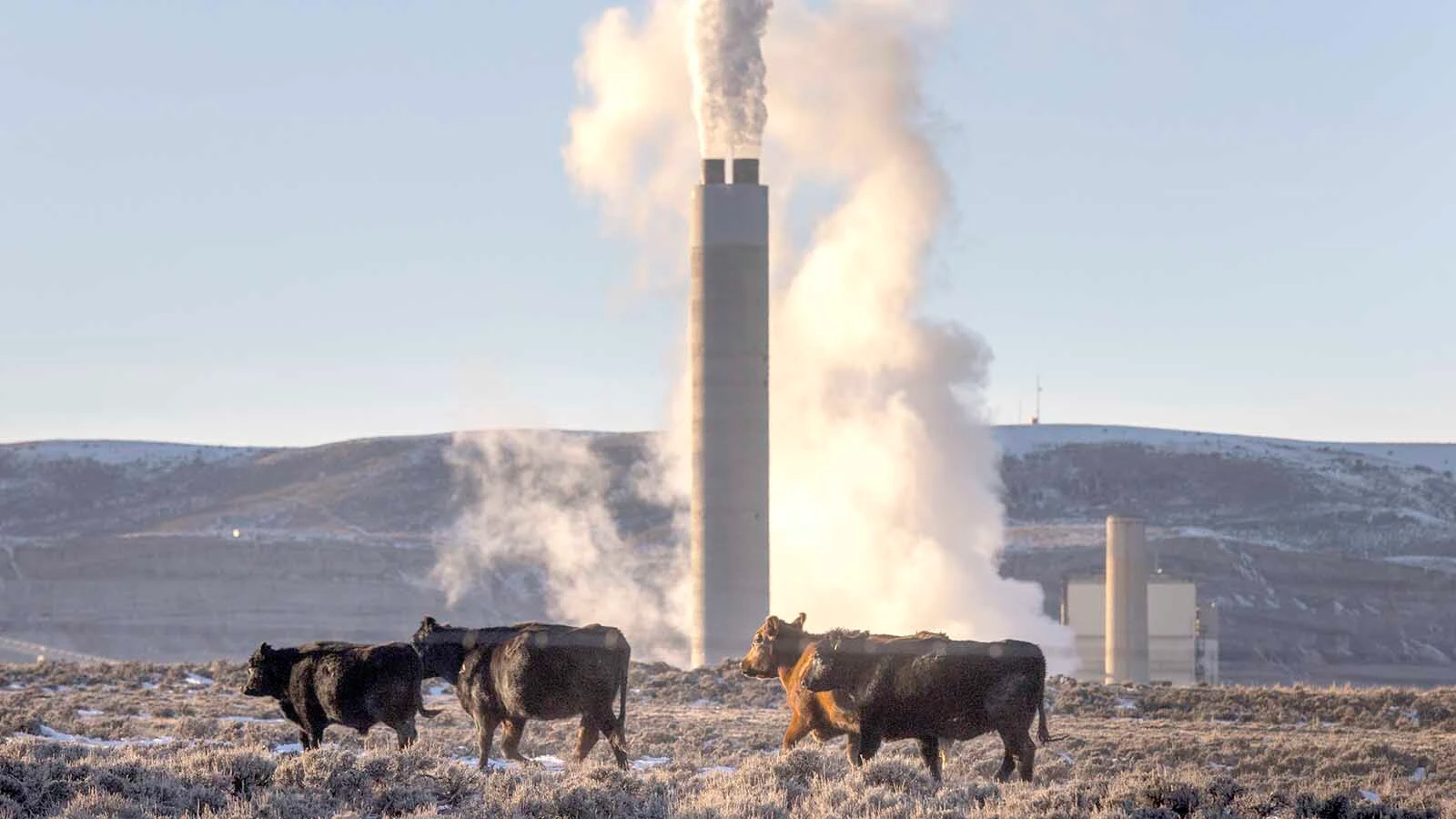
A first-of-its-kind renewable natural gas facility under construction in central Nebraska will convert cattle manure into pipeline-quality fuel, creating a new revenue stream for one of the region's largest feedlots.
But industry leaders say Wyoming's cattle industry isn't structured in a way that would make a similar project practical anytime soon.
Neogenyx Fuels, a developer of advanced fuel solutions, began construction last month on an agricultural renewable natural gas facility at Adams Land & Cattle near Broken Bow, Nebraska.
The project will capture methane produced by decomposing livestock manure and convert it into renewable natural gas, or RNG, that can be injected directly into existing natural gas pipelines.
Wyoming Not A Natural Fit
While the concept may sound appealing in a state known for both cattle and energy production, Wyoming lacks one key ingredient: large concentrations of cattle in feedlots.
"We don't have anything of a volume that would lend itself to that type of facility," said Jim Magagna, executive vice president of the Wyoming Stock Growers Association.
Unlike Nebraska, where large commercial feedlots are common, most Wyoming cattle spend much of their lives on open ranges and ranches, making manure collection on the scale required for renewable natural gas production difficult. Wyoming’s handful of feedlots are much smaller.
Still, Magagna said he can see why feedlot operators would be interested.
"I think it has potential," he said. "It creates another revenue source."
That additional income could prove attractive as cattle prices remain near record levels while the nation's herd sits at historic lows.
Turning Manure Into Fuel
According to Ameresco, the parent company of Neogenyx Fuels, the Nebraska facility will use anaerobic digestion technology to transform manure into renewable energy.
Eight large anaerobic digesters will break down manure in oxygen-free environments, producing biogas rich in methane. The gas will then be refined into pipeline-quality renewable natural gas and injected into the local distribution system.
The process also produces useful byproducts. Remaining solids can be converted into livestock bedding, and nutrient-rich materials can be used as agricultural fertilizer.
Traditional natural gas is extracted from underground rock formations through drilling. Renewable natural gas, by contrast, captures methane that would otherwise be released into the atmosphere as manure naturally decomposes.
After impurities such as moisture and carbon dioxide are removed, the resulting gas can be used in many of the same ways as conventional natural gas, including as a transportation fuel.
Neogenyx Fuels CEO Michael Bakas said in a statement that the project represents an investment in rural America while creating jobs and expanding opportunities for agricultural producers.
"This project positions agriculture as a major domestic energy producer and export engine," Bakas said.
Similar Projects Emerging Across The Region
The Nebraska project reflects a growing interest in renewable natural gas production across livestock-producing states.
In neighboring South Dakota, a facility near Brookings has spent the past two years producing renewable natural gas from dairy manure and supplying energy customers through the natural gas system.
By The Numbers
While Wyoming might not be poised for its own cow-manure-to-gas boom, the Nebraska project demonstrates how agricultural operations are increasingly looking for ways to turn waste products into additional sources of revenue and energy.
According to estimates based on data from the University of Missouri and Blue Gas Express, it takes anywhere from 39 to 138 pounds of raw cow poop to produce 1 pound of liquid natural gas (LNG).
An average home consumes the energy equivalent of about 15 to 20 pounds of natural gas per day, which means that for the roughly 30,000 housing units in Cheyenne, that works out to about 450,000 to 600,000 pounds of gas daily.
Producing that much energy from cattle manure would require somewhere between 17.5 million and 82.8 million pounds of cow poop.
Put another way, powering Cheyenne for a single day would take enough manure to make even Wyoming's most seasoned rancher pause for a moment.
Which may be the strongest argument yet for why renewable natural gas projects tend to work best where cattle are concentrated by the tens of thousands rather than scattered across Wyoming's wide-open ranges.
Kate Meadows can be reached at kate@cowboystatedaily.com.