
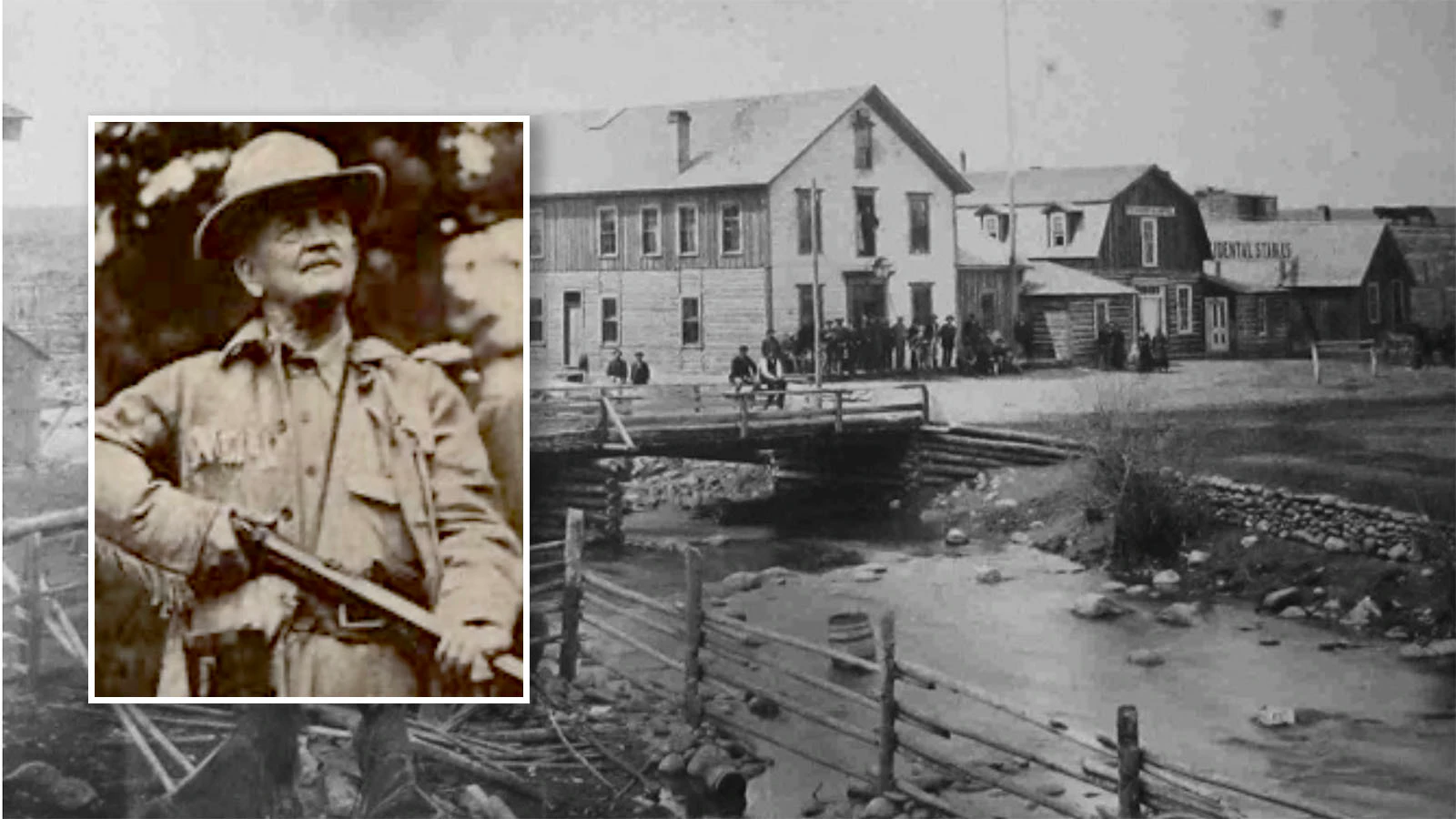
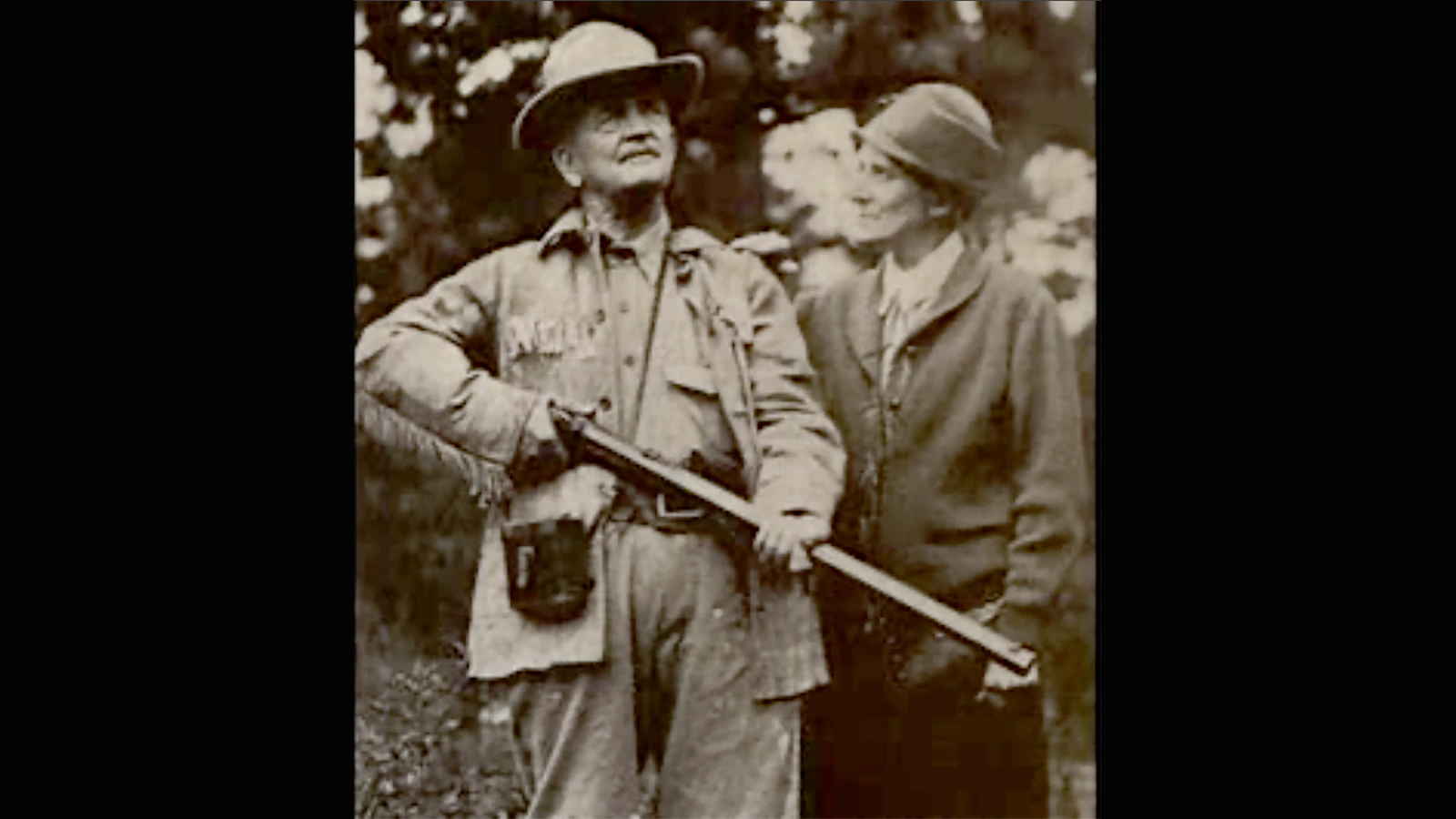
Oliver Perry “O.P” Hanna — pioneer, Indian fighter, frontiersman and first settler in Sheridan County — was 30 years old when law and order came to Buffalo, Wyoming.
He related just what these changes meant for the future state of Wyoming in his memoir, “An Old-Timer’s Story of the Old Wild West.”
Hanna had gone West when he was just 16 and had seen many changes over his lifetime.
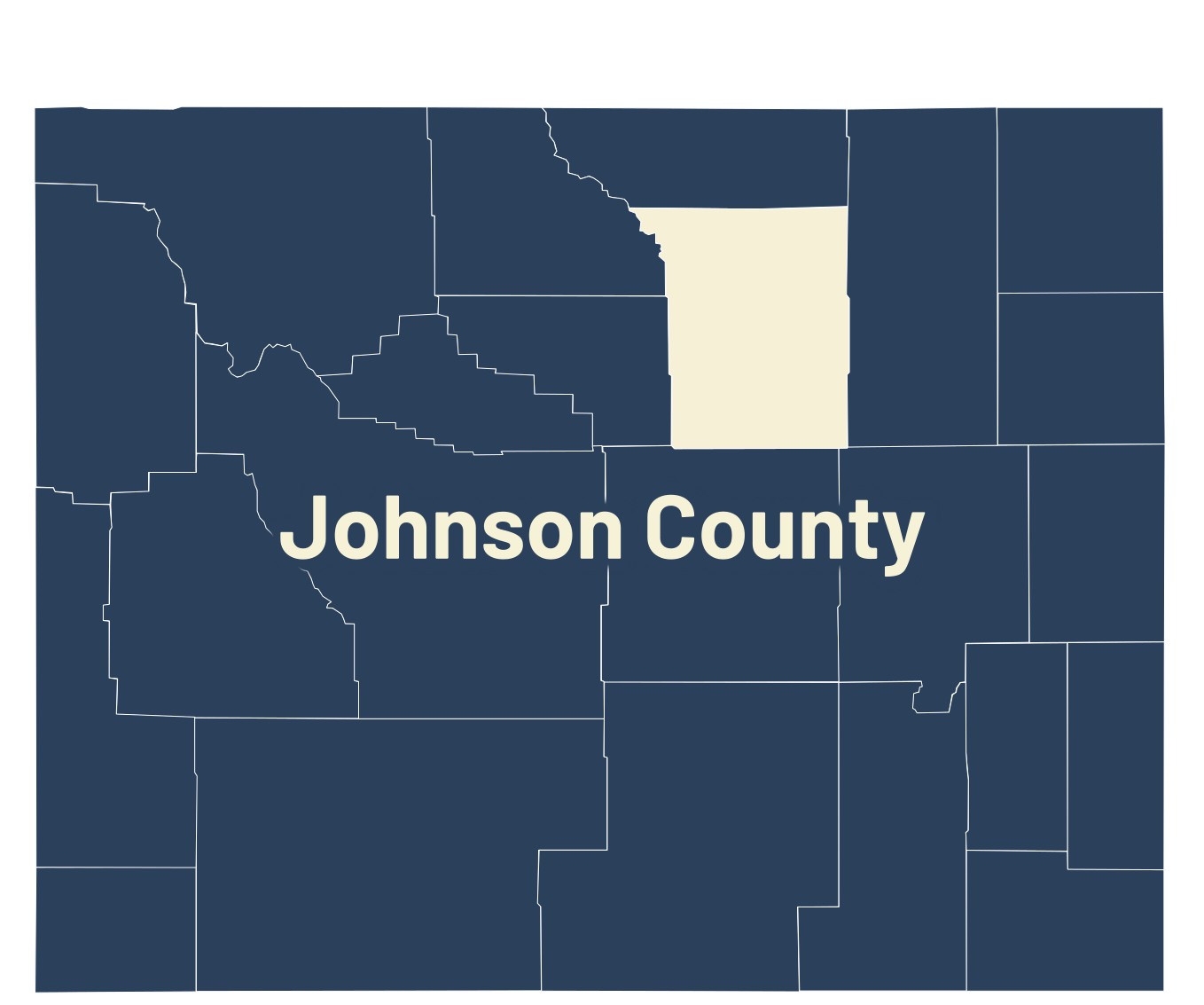
One notable change came in 1881 when the new Johnson County was formed in the Powder River and Bighorn country.
An organizational election had been held April 19, 1881, and the new county government formed on May 10 of that year, Hanna’s birthday.
Buffalo was named the county seat and Johnson County originally included all of today’s Johnson County, Sheridan County and portions of Big Horn and Washakie counties east of the Big Horn River.
Judges, lawyers and others were appointed to maintain the peace and court was soon called to session.
Hanna’s name was drawn as one of 16 men to serve on the county’s first grand jury, and he had to go to Buffalo to sit on the backlog of court trials.
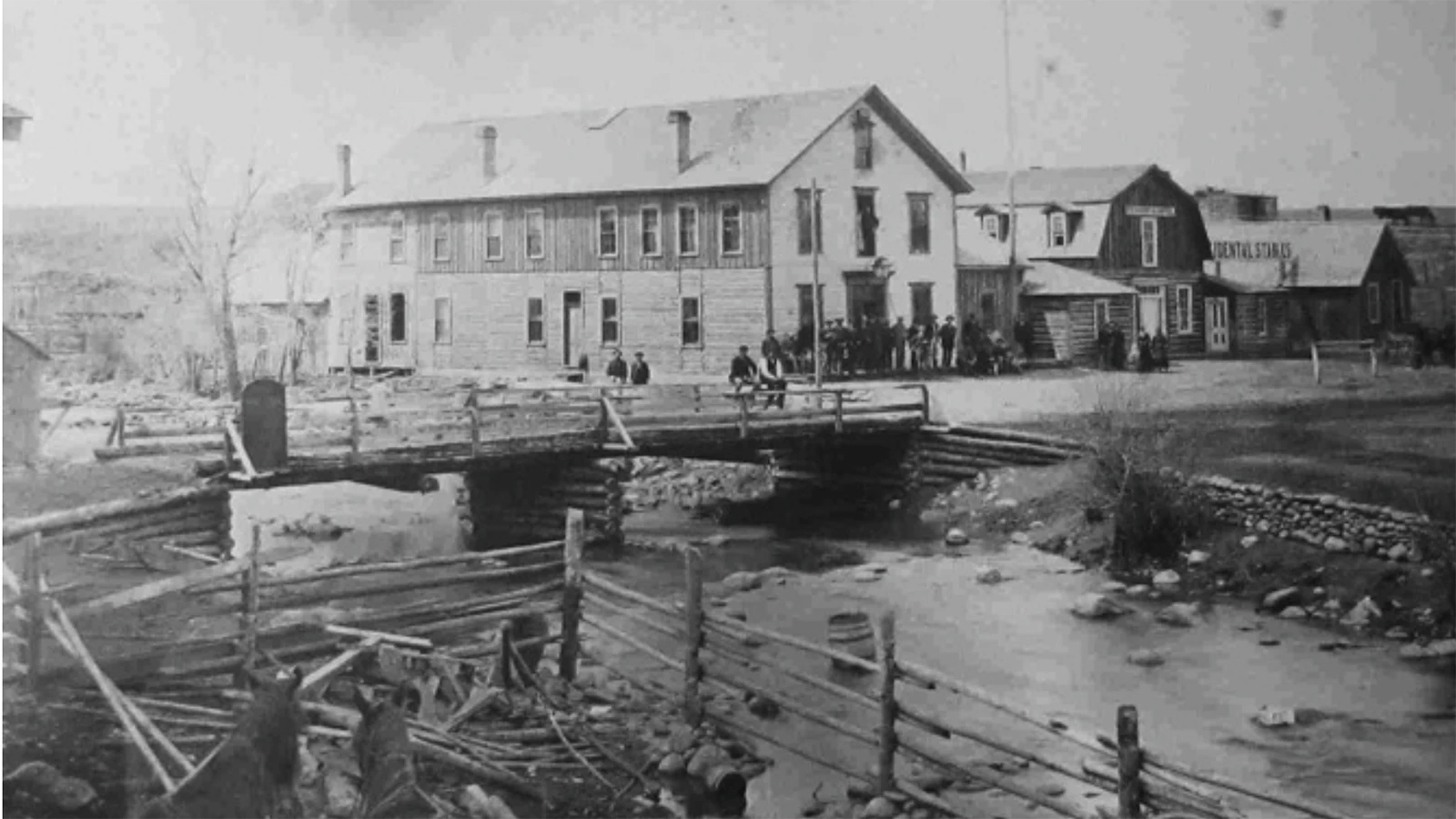
To illustrate the changes the new law and order was bringing to Buffalo was the fact that the new county courthouse had originally been a dance hall.
The new county commission bought the building, transforming it to a place, they hoped, of decorum and respect.
Feuding Neighbors
During the two weeks that Hanna was in Buffalo learning how to be a proper law-abiding citizen, trouble was brewing with his neighbors on Little Goose Creek.
The town of Big Horn had a council, a cemetery and a vigilante committee, according to Sally Springer, author of “Big Horn City Tidbits of History.”
It was this latter committee that had sprung into action, led by Elder Benton, who was the Baptist minister, resident doctor, dentist and veterinarian.
“They condemned Buck Martin, who had settled on a ranch up the creek near Elder Benton, as an undesirable citizen,” Hanna wrote.
Old “Buck” Martin, according to Springer, was a trapper, mountain man and miner who had built a “cabin of sorts” on what was later known as Kemp Creek.
It is now the Bar 13 Ranch south of Big Horn.
“Buck was a loner who had an intense dislike for people and a mean streak to boot,” Stringer wrote. “Those who found it neighborly to stop by his cabin found a mountain lion chained to one of the interior cabin walls.”
These visitors rarely came back for a second visit.
Martin had put in a garden but did not fence it properly, and the horses and cattle got to it and destroyed some of the vegetables according to Hanna.
Martin used his shotgun on the stock, filling their hides with fine shot. After a while, he began using coarser shot until one of Benton's mules got such a big dose that he died the next day.
Benton rode up and down the creek, called the brethren together, and related his outrage.
The vigilante committee decided that justice was needed for the murder of the mule and that Martin should hang.
New Law & Order
Unaware of what his neighbors were planning, Hanna was learning what it meant to be on the first grand jury in Buffalo.
Judge Blair was the first judge to hold court in northern Wyoming, and when the 16 men of the jury appeared before him, he looked them over.
Blair then promptly appointed Hanna as foreman.
Hanna said that gave him a shock and after a few moments, he jumped to his feet in protest.
“Judge, you've made a very poor selection,” Hanna said. “I have never had anything to do with court or law in my life, and I don't know any more about it than a Crow Indian.”
Blair was not to be swayed and told Hanna, “Well, you can't learn any younger.”
Blair gave Hanna some instructions, an armful of documents, and the grand jury filed out to a little log cabin that was situated near the old dance hall, now converted into the courthouse.
Hanna said he dropped his armload of documents on the table and shouted, "Boys, if you know what to do with those papers, come on and go to it. I don't.”
Fortunately for Hanna, jury member Ed Chapman was experienced in the legal business and explained what to do, and before long the new grand jury had things running smoothly.
“We were in session about two weeks and made many indictments, as the country was full of thieves, crooks and murderers,” Hanna said.
It was also full of lawyers ready to defend all the accused.
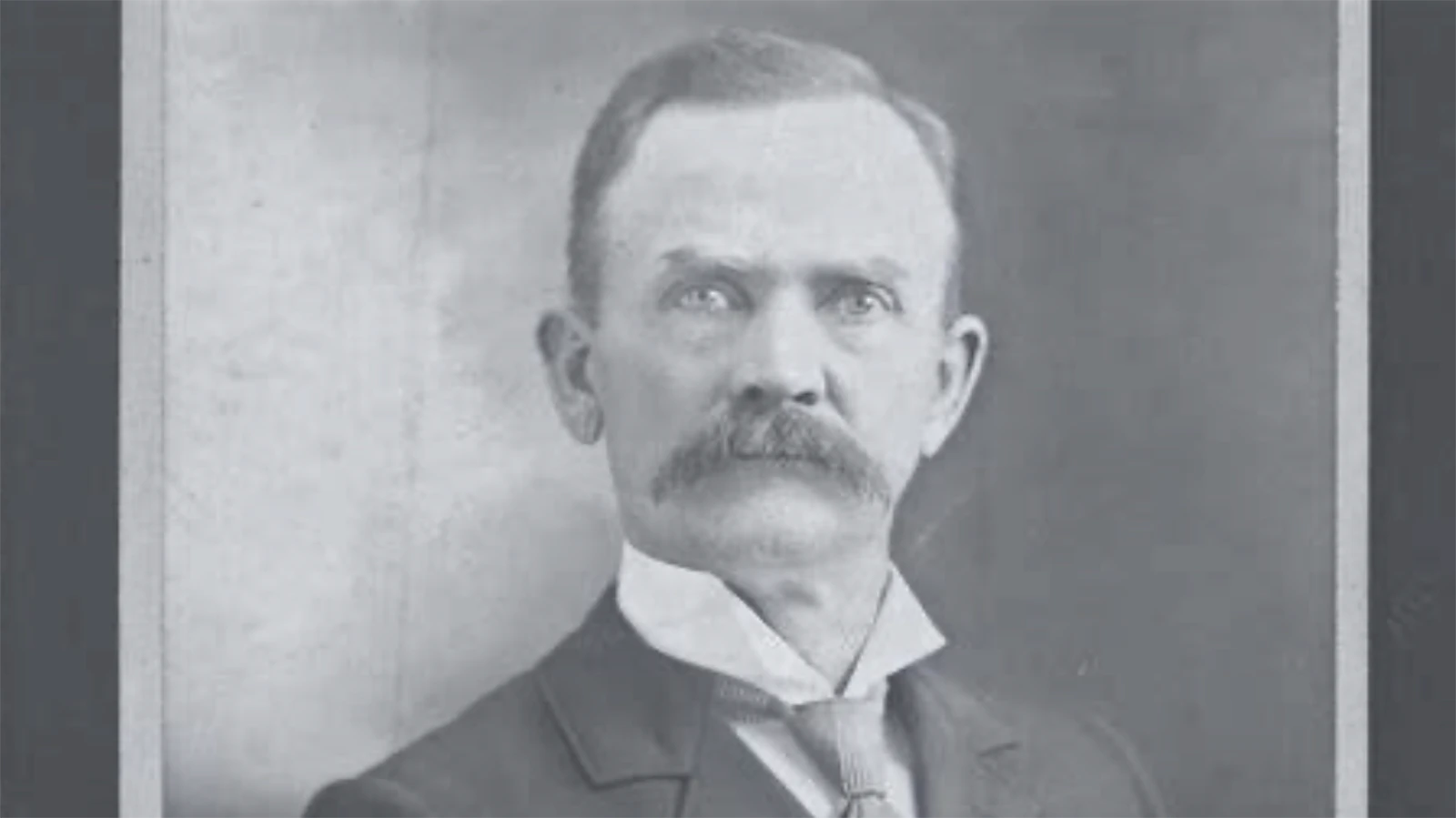
Hanna was not the only one who was learning the ropes of law and order. The new justice of the peace for Buffalo was G.E.A. Moeller and he was not experienced in regulating law and order.
According to Hanna, Moeller was presiding at his first case that had long, drawn-out arguments by the lawyers, objections to questions put to the witnesses, and they were not making any headway.
All at once Moeller jumped up and shouted, “Stop the evidence! Stop the evidence! My mind is made up!”
Moeller turned to the prisoner and said, “I fine you $100 and 60 days in jail.”
A lawyer started to protest, but Moeller threatened to put him in jail for contempt of court. The case was thus settled.
“I am not sure, but that plan would work very effectively in many cases at the present time,” Hanna later wrote.
As for Moeller, he became one of the prominent citizens of Buffalo in later years.
An Old-Fashioned Hanging
Armed with his new knowledge of the law, Hanna returned home to Big Horn to discover that all his neighbors had gone up to Benton’s ranch to hang Buck Martin.
He immediately grabbed his fastest horse, Buster, and rushed up to the ranch.
“When I arrived, they were all greatly excited,” Hanna wrote. “Bill Davis was telling them the way the Vigilante Committee used to attend to men like Martin in ‘California.'”
Davis had a new rope and was showing the men how to tie a hangman's knot. The Big Horn residents “were all excited,” and many of them were ready to take part in the hanging.
Hanna understood their motivation.
“In those days, horses and mules were at a premium and it was a serious thing to lose one,” Hanna said.
However, after spending two weeks on the county’s first grand jury, Hanna said he “felt differently about the hanging matter.”
He got up on a wagon and made a talk to the people gathered around.
Hanna said he told them that they now had a court to try criminals, and if they hung Martin they would be the first to break the law, and there would be some very sorry men.
“I told them how that scene of a hanging man would be before them always,” Hanna said. “They began to cool off and, after talking it over, decided to escort Buck out of the country.”
The committee went to Martin’s cabin and told him of their decision. He was told very plainly that if he ever came back, he was doomed for the gallows.
The men hitched his team to the wagon, put all his belongings in it, told him to get in and drive, which he did. T
wo men were detailed to guide him to the Montana line 30 miles north. That was the last the townfolk ever heard of Buck Martin.
“I was told by the good citizens that had I not arrived just when I did and made that talk about the grand jury and the law, they surely would have hung him,” Hanna said.
Jackie Dorothy can be reached at jackie@cowboystatedaily.com.


