
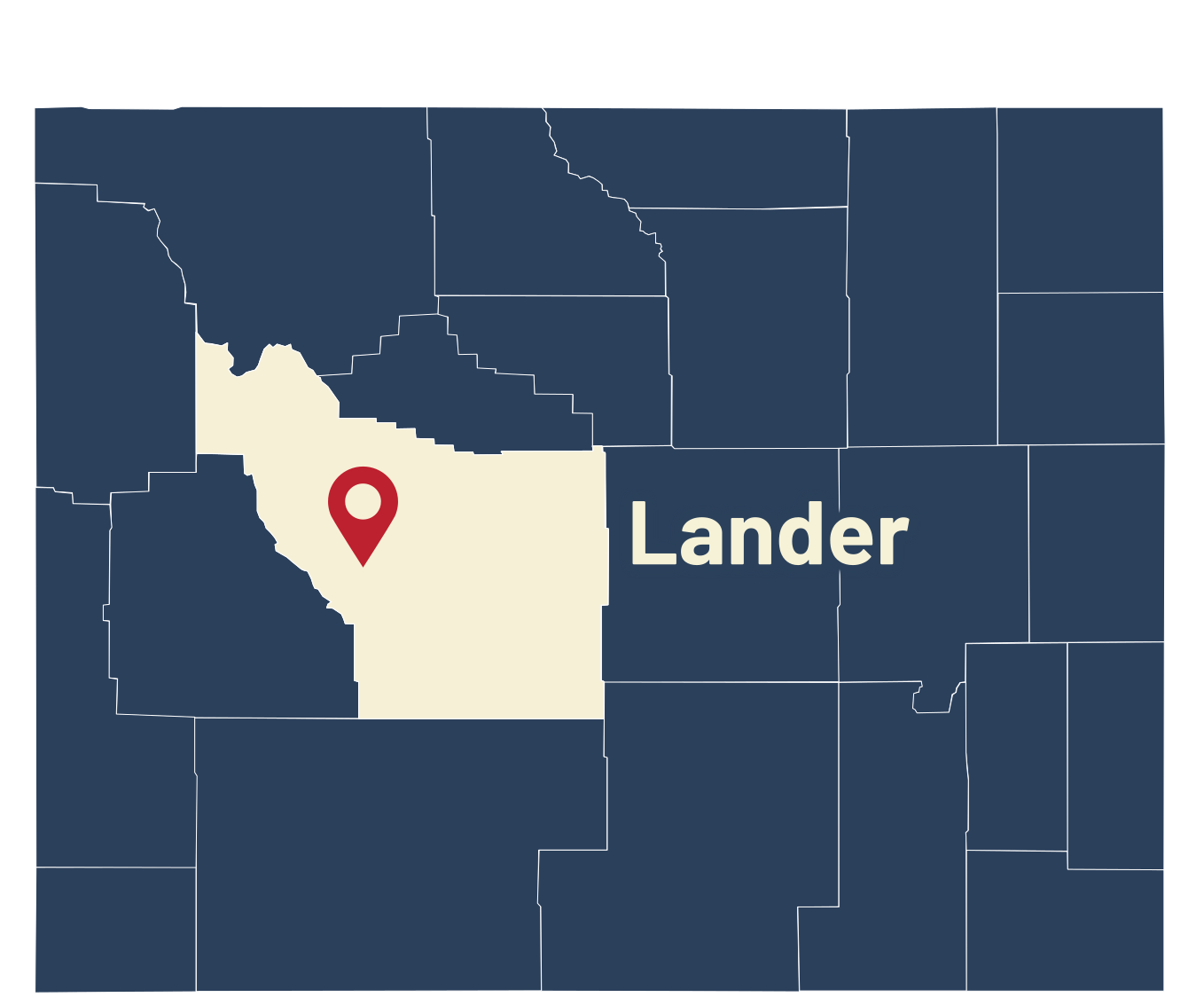
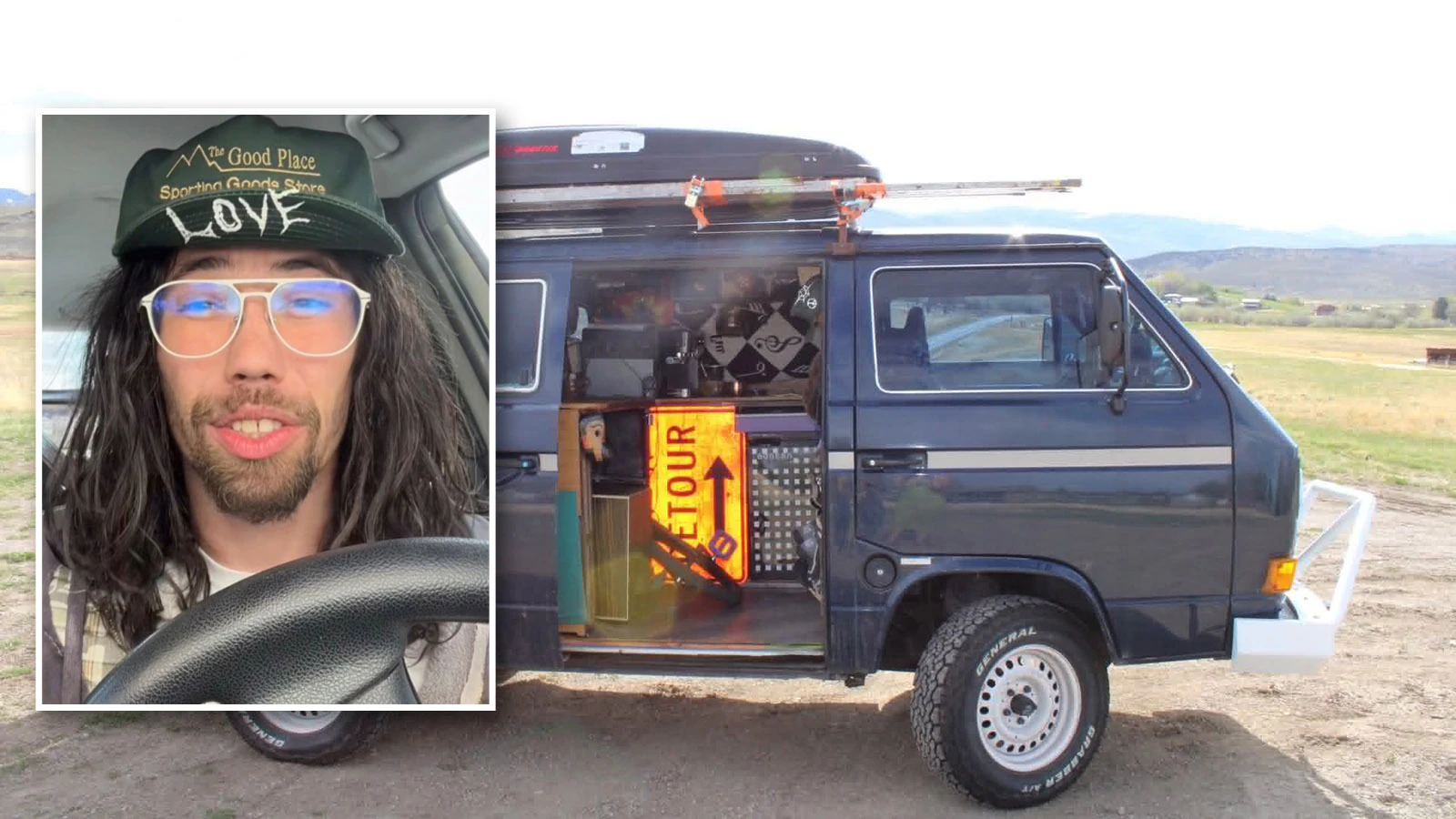
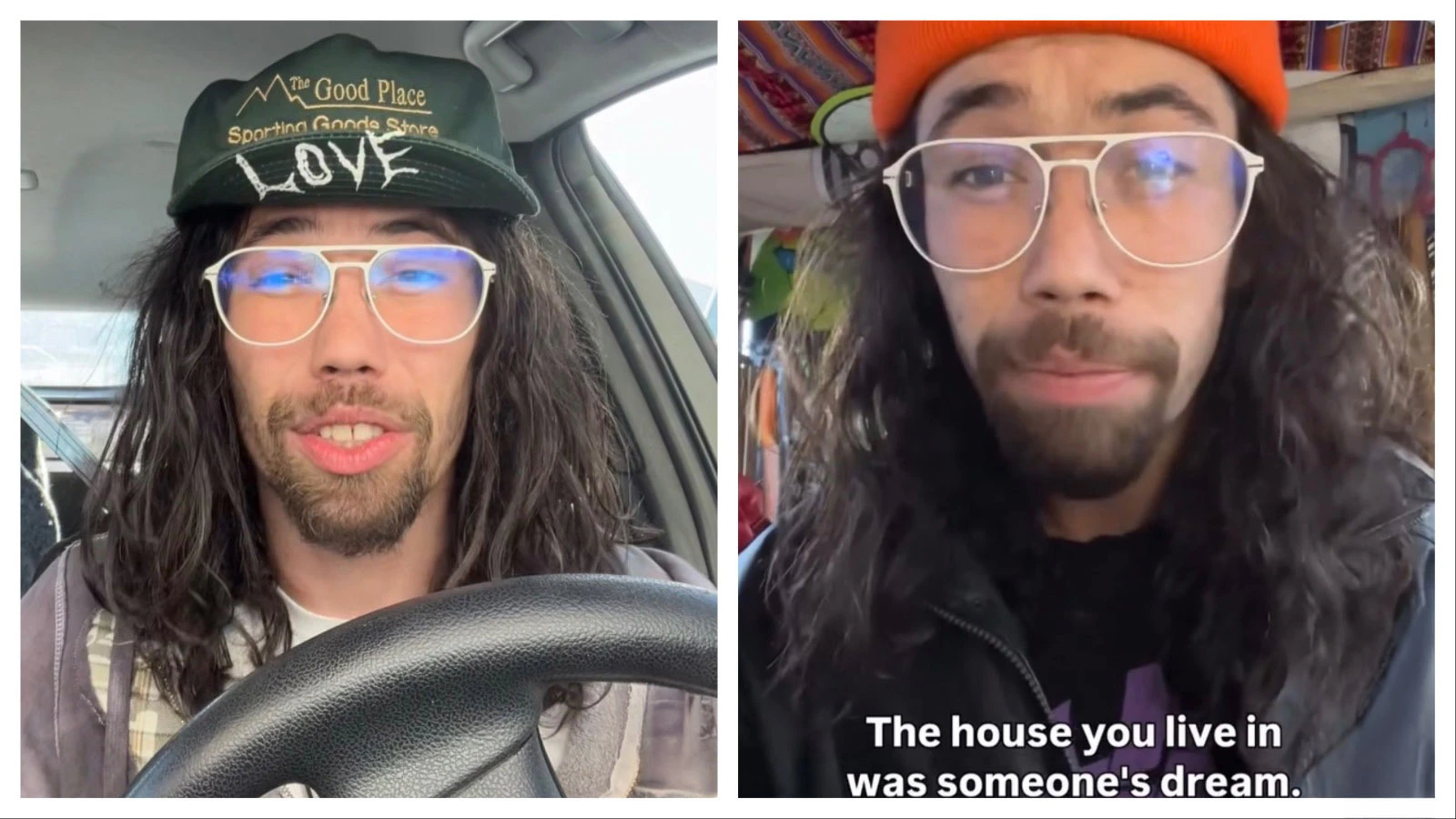
Lander native Jake Kauffman may be the chillest dude in Wyoming, and now the Wyoming artist is chasing freedom in a VW van.
If he’s become an eclectic artist with a mellow take on life, it’s because of a less-than-chill upbringing.
At 14 years old, Kauffman flatlined after drowning in the murky water of ironically named Lucky Pond, his body dragged out by his brother.
And depending on your perspective, everything that came afterward — the drugs, the ranch for wayward boys, the years sleeping in vehicles and wandering highways of the American West — may have started with that life-altering baptism.
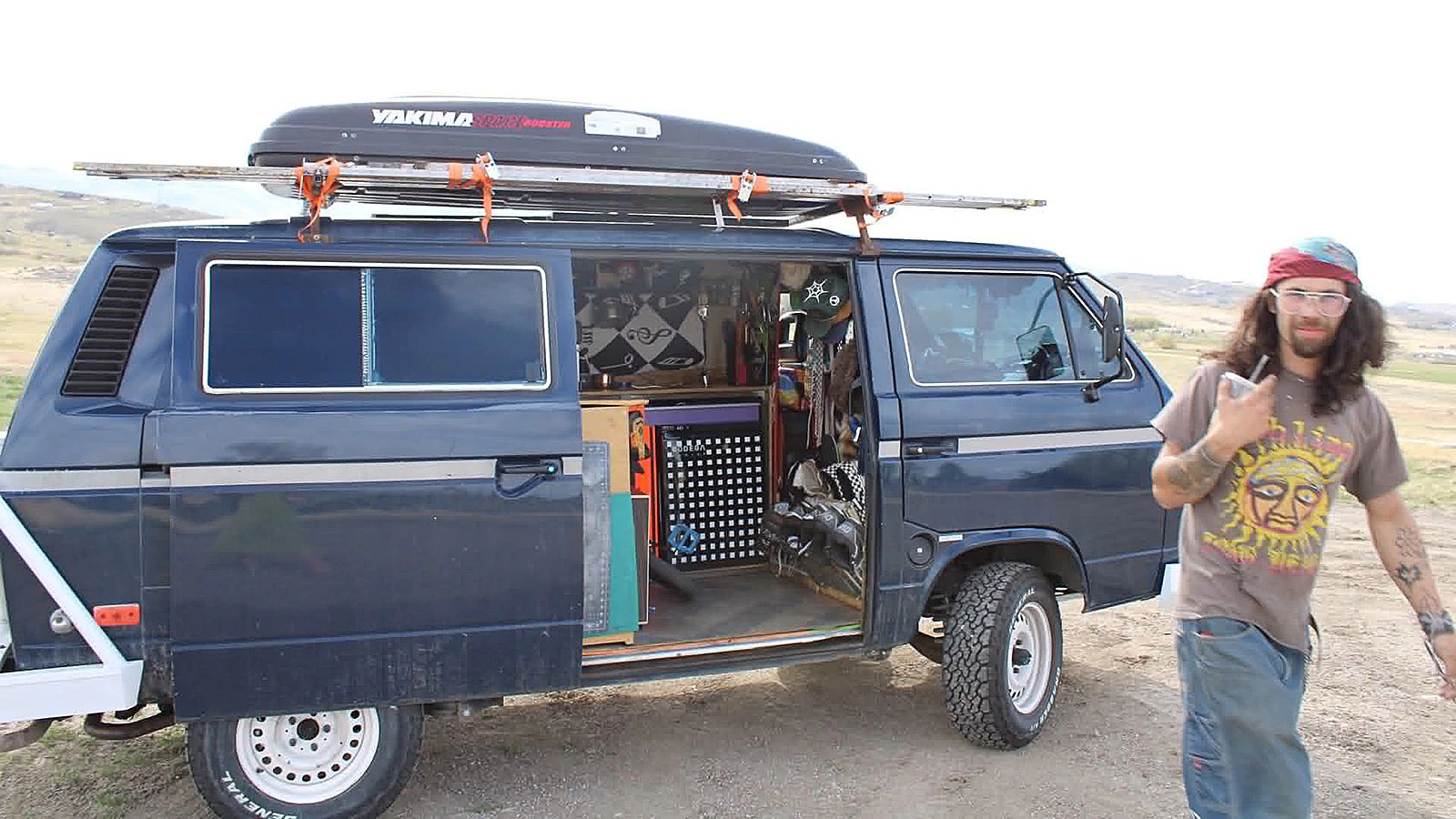
Now 22, Kauffman is leaving Wyoming, packing his life into a battered 1987 Volkswagen van with his girlfriend, Pheadra, another road drifter he met in Oregon while they were both living out of vehicles.
Kauffman says the van is basically “a really big backpack.”
It carries welding equipment, three sewing machines, musical instruments, tools, clothing designs, a coffee maker, survival gear, art supplies, and every half-finished idea Kauffman thinks might someday turn into a paycheck or a purpose.
It even has a bright orange “detour” sign from literally taking the detour when directed.
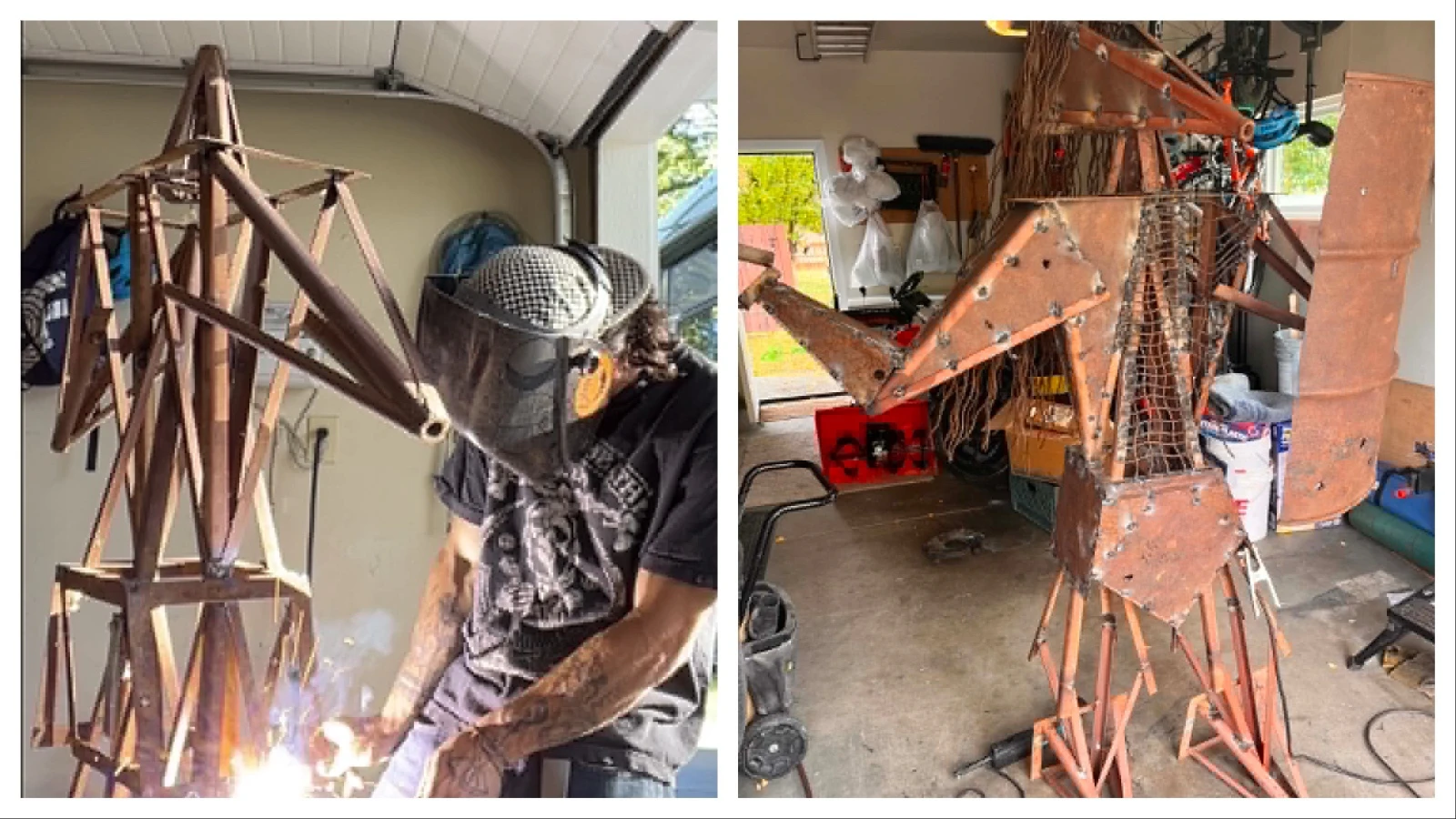
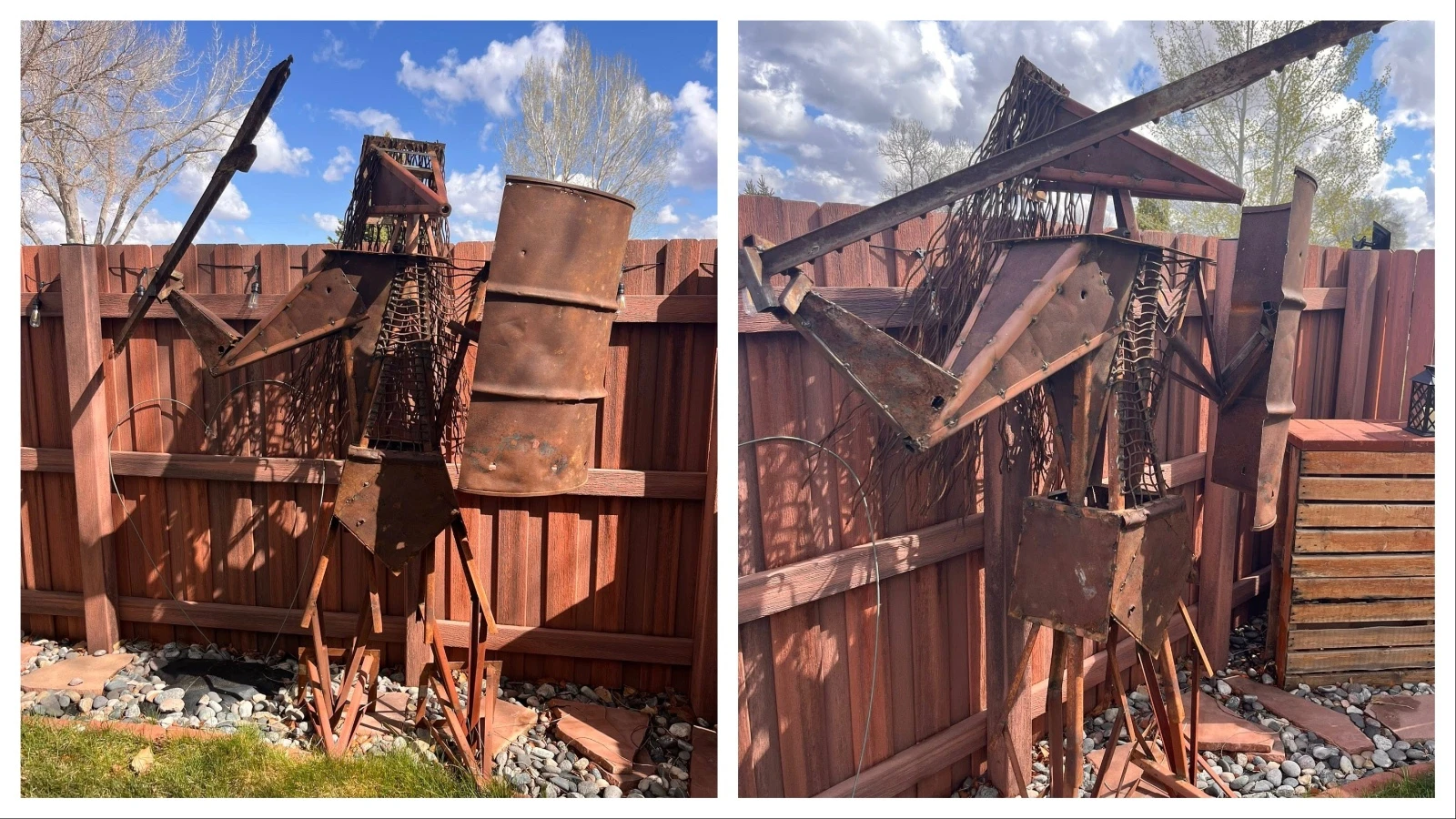
Before leaving town, he needed to get rid of one last thing: a towering scrap-metal sculpture called “Anubis,” the Egyptian god that guides souls to the underworld.
It’s a rusted warrior built from trailer jacks, oil drums and salvaged steel.
He posted online that he needed somebody to take it before this past Friday, otherwise it risked being abandoned behind his parents’ house like some post-industrial desert relic.
The sculpture found a home in time, but the frantic search for somebody to adopt a giant metal god became a surprisingly fitting metaphor for Kauffman himself: a kid who spent years feeling discarded, drifting through wreckage, and trying to weld meaning back into his life one strange piece at a time.
‘This Is Killing My Actual Soul’
Kauffman talks the way a lot of people who have survived catastrophe talk — casually, almost too casually, like a scientist describing the anatomy of a frog while its guts hang from a surgically sliced stomach.
“I’ve actually had kind of a crazy life as a young person,” he said.
After the drowning came what he describes as a traumatic brain injury, followed by substance abuse and escalating trouble.
He was sent away to a boys ranch, the six months after getting released from the ranch he overdosed on prescription pills doctors had given him.
“Since that overdose, I realized that I needed to do something different with my life,” he said. “I needed to more or less find what my purpose in life is.”
That pursuit of purpose became obsessive, and he began posting daily affirmations online, short fragments of philosophy, survival and encouragement meant for people trapped in the same emotional loops he once was.
“The little seeds of wisdom that I’ve heard throughout my life are what significantly changed the way I perceive and look at the life I live,” he said.
“If I’m able to spread some seeds of wisdom ... maybe someone can use it to inspire something in their own life rather than staying in the loop that I was in,” he said.
At 18, he briefly attempted conventional adulthood in Powell. He rented a house for $1,200 a month while working 12-hour days for $10 an hour.
He decided that was “no way to live.”
Kauffman said didn’t have time to play guitar or do the things that made him happy, and he remembered thinking, “This is killing my actual soul and my existence.”
So he burned the whole idea down.
Scrap Metal Gods
Kauffman’s art feels inseparable from the instability of his life. His brand is called DHC: Death Honors Consciousness.
“The death of myself when I drowned, or when I overdosed, or when I realized that I have to die to myself to basically create a new person to live a new life — that is what honored my consciousness,” he said.
He speaks about death the way some people talk about weather systems or changing seasons; not as evil, but as necessary transition.
“Death isn’t inherently bad,” he said. “Death is really just change.”
That philosophy runs through nearly everything he builds.
“Anubis” came together from materials many people would throw away: discarded trailer jacks, industrial drums, steel odds and ends scavenged from Facebook posts and welding jobs around Lander.
“To me, it’s just discarded material,” he said. “For a lot of my life, I felt like I was discarded.”
The rust stays visible. The dents aren’t hammered out. The ugly welds remain ugly. The scars become the point.
“It’s really powerful to take something people deem as trash and turn it into something that has new meaning,” he said.
Anubis: Guardian Of The Dead
Ironically, the sculpture ultimately found a home with a woman grieving her late husband.
She told Kauffman the piece reminded her of him — a protector watching over their daughters.
She plans to engrave her husband’s name into the sculpture as a memorial.
Kauffman seemed almost stunned by the emotional connection she expressed about his work.
“What was trying to let darkness out of my soul became something somebody else saw as protection,” he said, marveling at the reversal.
“The chaos of it allows me to really create the art I want to create,” he said of his nomadic lifestyle.
Most people spend enormous amounts of energy trying to eliminate uncertainty from their lives. Kauffman appears to chase it deliberately.
He describes wandering the country almost like improvisational jazz. No hard destinations. No five-year plan. Just movement, intuition and adaptation.
“I don’t really ever have quite a destination planned,” he said.
Instead, he follows art festivals, music gigs and random opportunities across the West.
He sells clothing, rings and handmade pieces during summer markets.
Larger sculptures happen only when he stays somewhere long enough to accumulate tools and scrap piles.
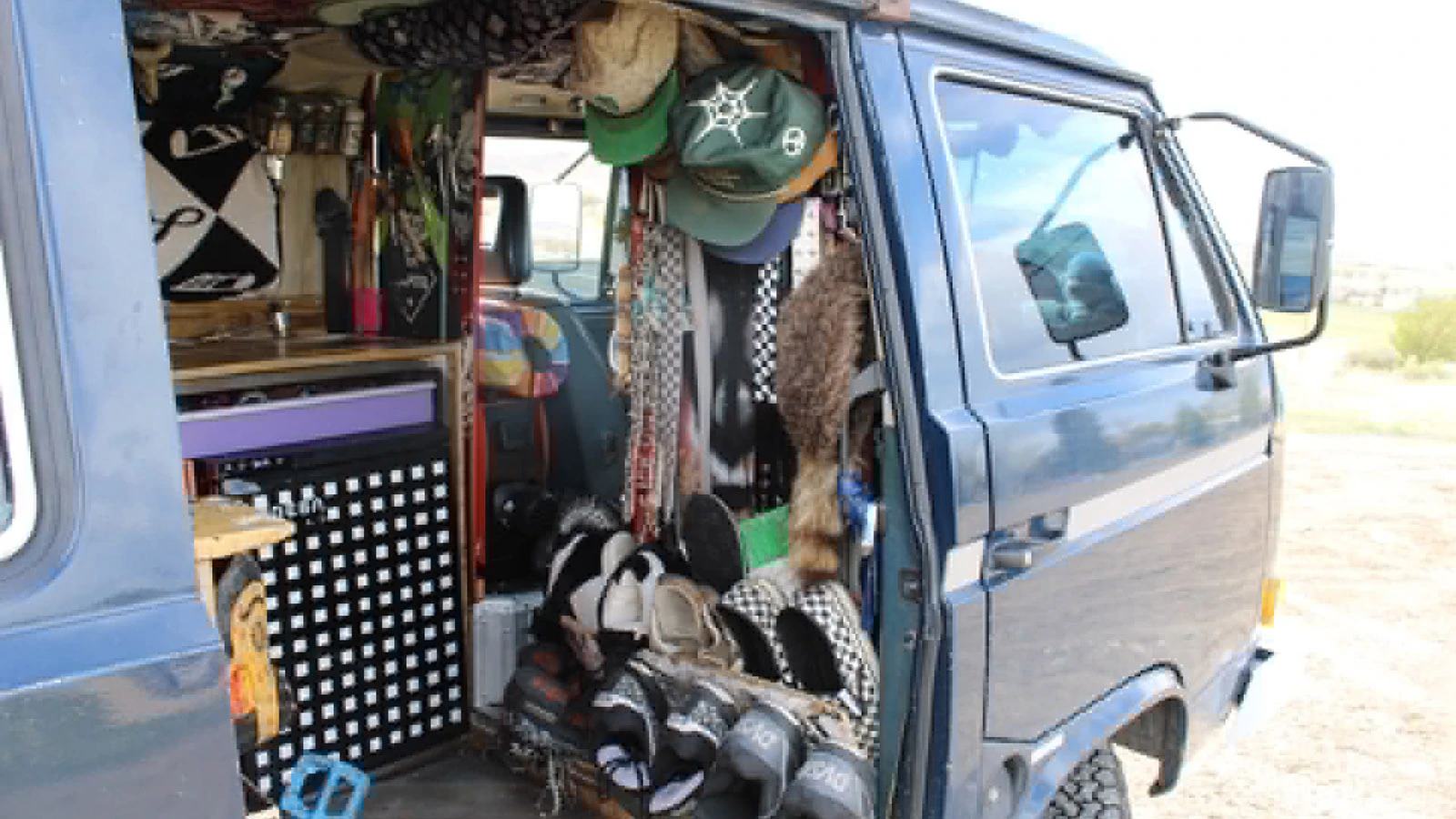
The ’87 VW
Kauffman knows most people romanticize van life.
He also knows they’re usually imagining sunsets and freedom, not getting robbed in the desert.
Before the Volkswagen, he lived in an RV while doing trade work around the Southwest.
One day in Tucson, he returned from work to find nearly everything he owned stolen: instruments, tools, years of equipment and survival gear.
That loss somehow led to the van itself.
He became fixated on owning a vintage Volkswagen and started sketching one over and over again.
Weeks later, a van was posted online. The owner wanted $6,000. Kauffman offered $2,500. Eventually the owner relented. The van didn’t even run when he bought it.
Now he’s invested roughly $25,000 into rebuilding it. It’s his baby, he admitted.
The Van, The Girl And Whatever Comes Next
Kauffman met Pheadra the way people in nomadic subcultures often meet: by coincidence and with intensity.
At the time, she was living in an Astro van in Bend, Oregon, after growing up in California.
Eventually, she upgraded to a converted mini school bus. Kauffman returned to Wyoming with her so he could help turn the bus into something livable.
Now the two are preparing to head back onto the road together.
Pheadra spent time working at a bakery in Lander and, according to Kauffman, quickly became beloved there by locals.
Wyoming suited her in unexpected ways.
“She’s sad to leave,” he said.
Kauffman gravitates toward places that remind him of Lander — outdoor towns like Bend and Moab where art, climbing, wandering and semi-feral creativity coexist in dusty harmony.
“They feel like Lander in a different font,” he said.
It’s a perfect description for the strange archipelago of Western mountain towns where drifters, artists, ski bums, welders, river guides and recovering addicts perpetually orbit one another.
Kauffman insists he’ll return to Wyoming eventually. For now, though, the road still feels right.
“Humans are inherently designed to be creative,” he said. “If you want to figure out a way to live the life you want, it’s up to you to be creative to make that happen.”
So now he keeps moving west in a rattling Volkswagen packed with heavy machinery and scrap fabric and buttons, chasing art festivals and strange encounters across the desert while carrying the ghosts of several previous versions of himself.
And somewhere out there, on a highway cutting through red rock and sagebrush, another version of Jake Kauffman is probably still waiting to be found.
Kolby Fedore can be reached at kolby@cowboystatedaily.com.


