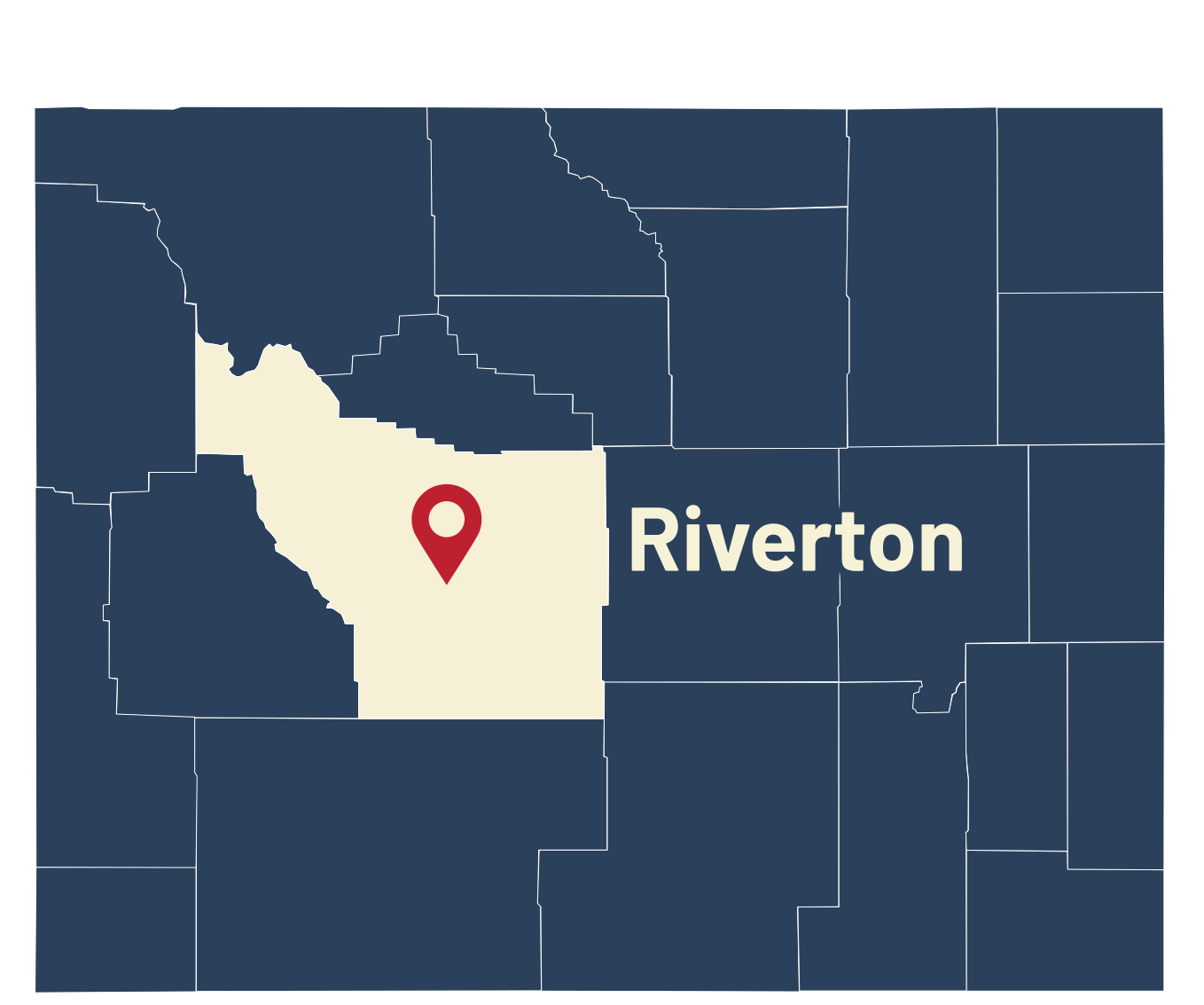
RIVERTON — Sunflower shoots aren’t something most people have ever tried as a garnish on their soup. But many found it delicious at Central Wyoming College this week, along with the rest of the Indigenous menu.
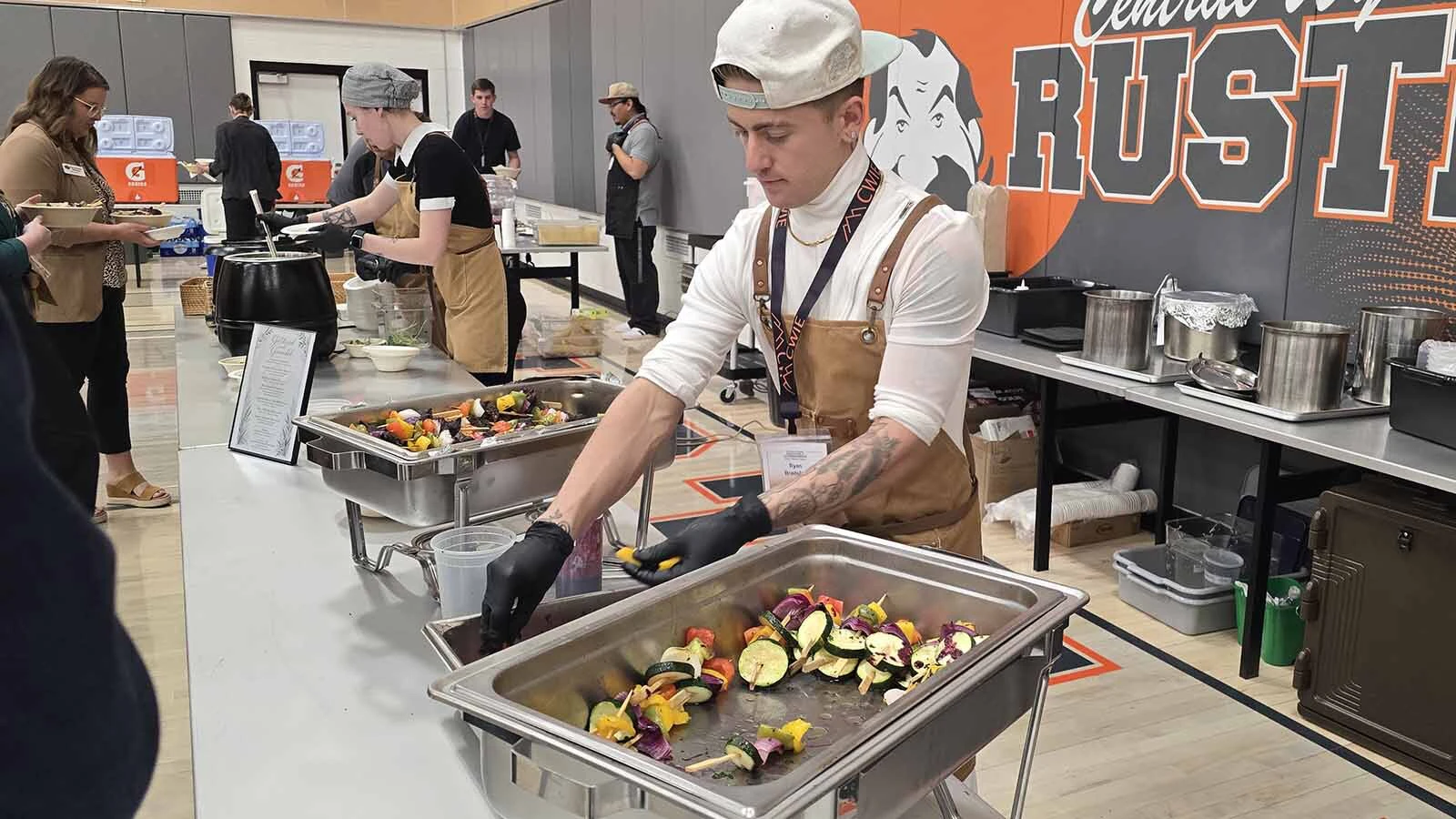
The food was prepared by CWC students and proudly served during the college’s 2026 Innovation and Entrepreneurship Conference, using a menu inspired by James Beard award-winning Indigenous Chef Sean Sherman, as well as the Wind River Food Sovereignty Project.
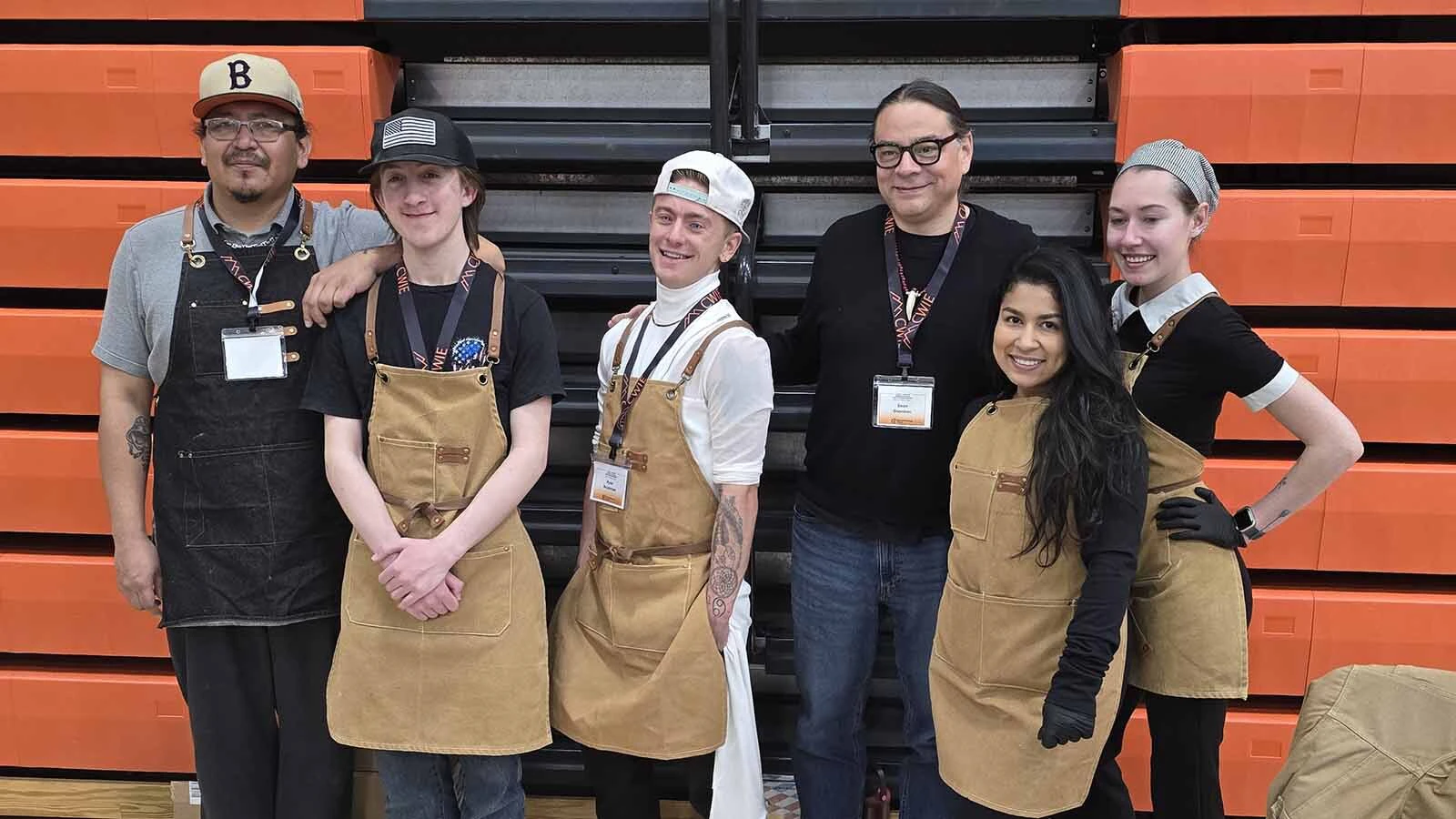
Sherman, who owns an Indigenous restaurant in Minnesota, had been invited to come speak about reclaiming Native foods at the conference, but wanted to do more than that. So, he helped CWC culinary students develop a North American-centric lunch plate.
Everything on the menu used ingredients native to North America. That meant no wheat, no sugar, no beef, pork or chicken — the ingredients European settlers brought that displaced indigenous foods.
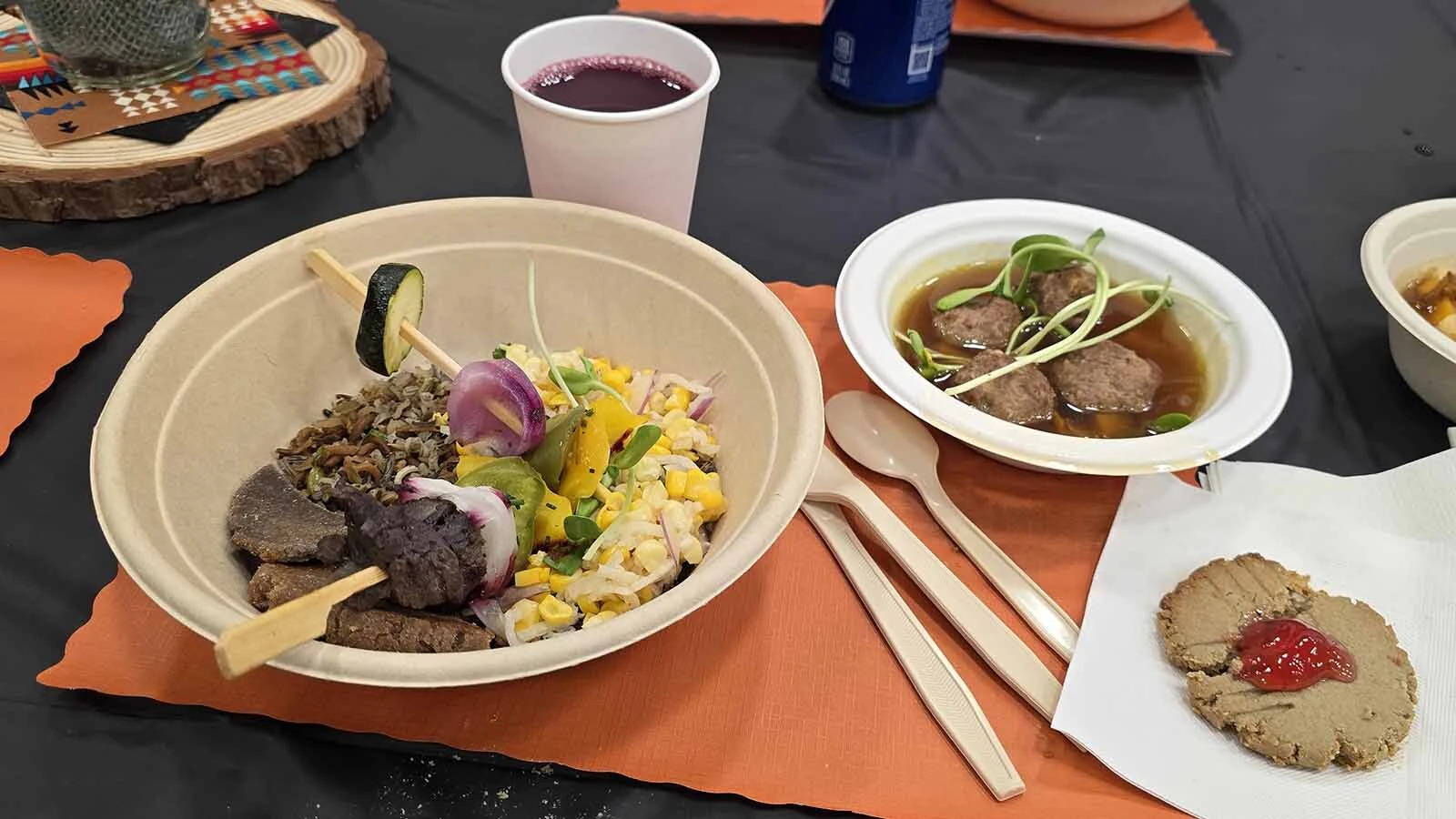
Instead, there were huckleberry-braised bison skewers with a wild rice and juniper pilaf, as well as bison meatball soup, roasted mushroom and bean medley, corn-wild rice cake, and jicama sweetcorn slaw. The bison meatball soup was a recipe from Wind River Food Sovereignty Project.
Dessert was a crumbly, but good, sunflower cookie topped with a dollop of plum jam, washed down with a deeply purple honey-sweetened chokecherry tea.
Ivan Posey, an enrolled member of the Wind River Reservation, wasn’t shy about saying the food was delicious. He had already eaten every bite of the lunch when Cowboy State Daily came along and sat at the same table.
It was all really good, he said, but not like anything he’d ever eaten before in his life.
“I think if we could get it in our communities in this day and age of fast food and restaurants, it’s probably a healthy and a historical benefit,” he said. “Not only to the Indigenous people, but to any people we know. But it takes time and work to make these in this day and age of fast food.”
Posey remembered a time when the tribe had offered some buffalo meat for free, but no one came to get it. People weren’t interested in buffalo at the time, for whatever reason.
“If they could just get people to grasp how good it is — I mean, like this is really good,” he said, then added half seriously added, “But I’ll probably get sick this afternoon because I ate too healthy.”
Huge Draw
CWC’s entrepreneurship conference has been making a name for itself in just two years by bringing celebrity entrepreneurs to campus for a statewide chat about startup culture.
This year’s lineup, like last year’s, was a huge draw, pulling in hundreds of people from across Wyoming.
Not only were there entrepreneurs from Wyoming at this event. There was also a delegation from Nepal, as well as a German entrepreneur who was looking for investors for his mobile app.
A Cheyenne startup, meanwhile, looking to manufacture a new AI-assisted kitchen appliance brought his product along in hopes it would catch the eyes of New York Times bestselling author Daymond John, who is an investor on ABC’s reality television series "Shark Tank."
Other keynote speakers included Student Maid Founder and best-selling author Kristen Hadeed, and globally recognized thought leader and best-selling author Gary Schoeniger. All of them, and Sherman, too, have rags-to-riches stories that have already inspired millions.
What Is Lakota Food?
Sherman is a rock star in food circles for his success in rebuilding Indigenous cuisine essentially from scratch.
The James Beard Award-winning chef’s cookbooks not only reclaim traditions that had been all but lost, they reframe them with modern sensibilities, making them widely accessible to just about anyone.
While other keynotes during the Innovation and Entrepreneurship Conference focused on scaling startups and leading teams, Sherman’s message was more about how just doing something you love can lead to great things, even when you least expect it to.
That’s more than just lucrative. It’s deeply satisfying in ways money can’t begin to touch — even as that money helps expand the vision so that more can be done.
“I was born and raised on Pine Ridge Reservation in South Dakota,” he told Cowboy State Daily. “And I grew up in restaurants, working in restaurants, from the time I was 13 on.”
That wasn’t because he had any particular special interest in the culinary industry at the time. He started out as a dishwasher, and his goal was just to help his family make ends meet.
Sherman worked hard, though, and rose rapidly in the culinary industry, eventually learning about cuisines from all over the world.
“I knew French really well, and Italian really well, and Spanish really well, and just a little bit of everything else,” he said. “I learned about foods from Africa, and from Southeast Asia, and from Japan.
"And I was really interested in all of these different food types, but then one day I realized that I didn’t really know anything about my own heritage food when it came to growing up on Pine Ridge and being an enrolled member of the Lakota Nation.”
That sent him on a path of discovery, one with lots of questions, and not necessarily many easy answers.
As Sherman is fond of putting it, there was no “Joy of Native American Cooking” to guide him on this quest, nor was there any AI assistant eager to make up an answer for him.
The one thing he did now was that the fry bread that’s often thought of as American Indian food wasn’t what he was looking for. He wanted to reach back to the culinary roots of his tribe — before so much was lost in the cultural upheaval that followed European colonization.
“Like what was Lakota food?” he said. “What kind of wild plants did we use? Did we have domesticated plants? Did we grow stuff or trade with people? How did we process things? What did we use for fats and salts and sugars? How did we have a balanced diet?”
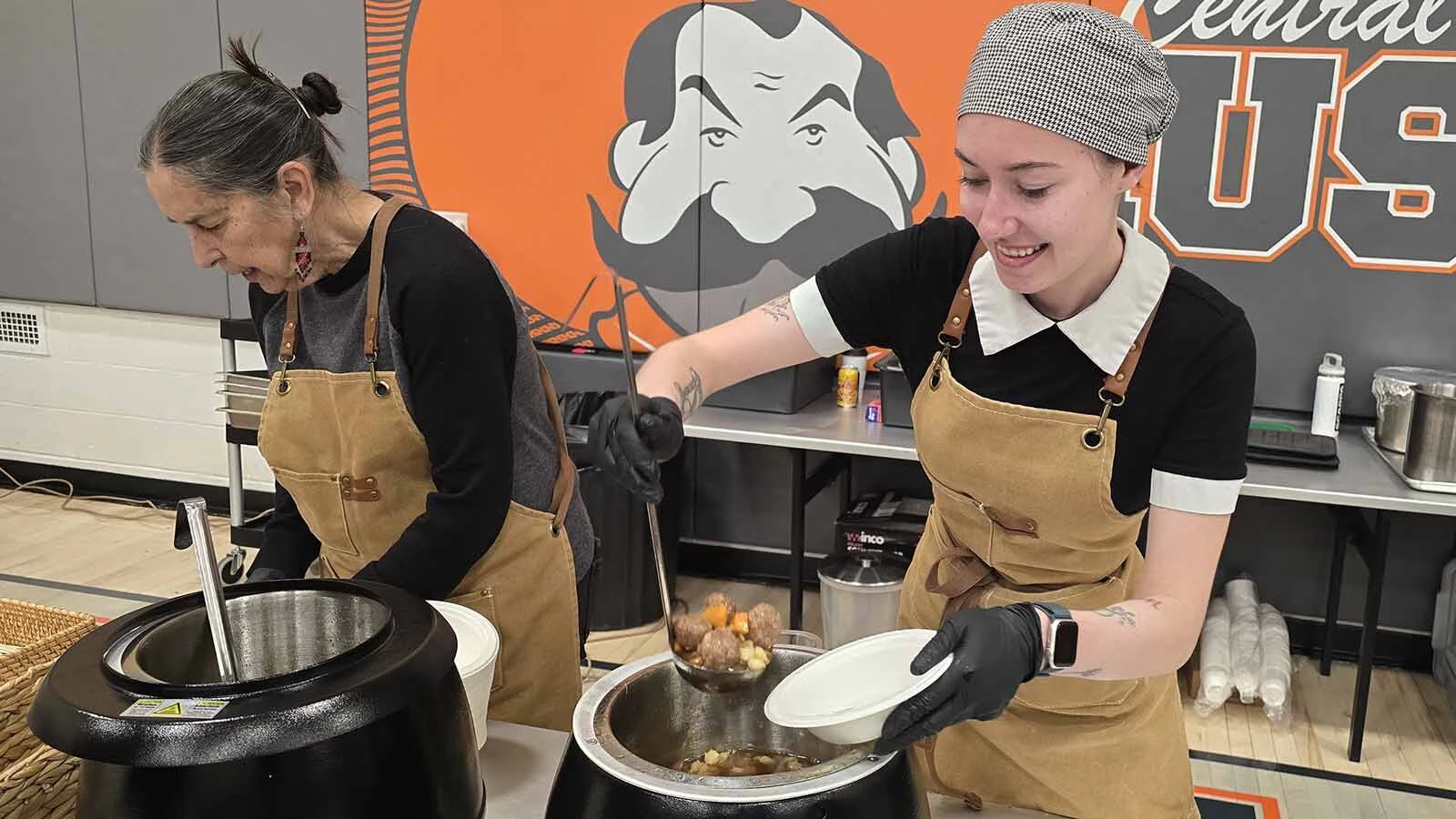
A Central Wyoming College culinary student serves up a bowl of posole for an all-Indigenous lunch during the 2026 Innovation & Entrepreneurship Conference in Riverton. (Renee Jean, Cowboy State Daily) 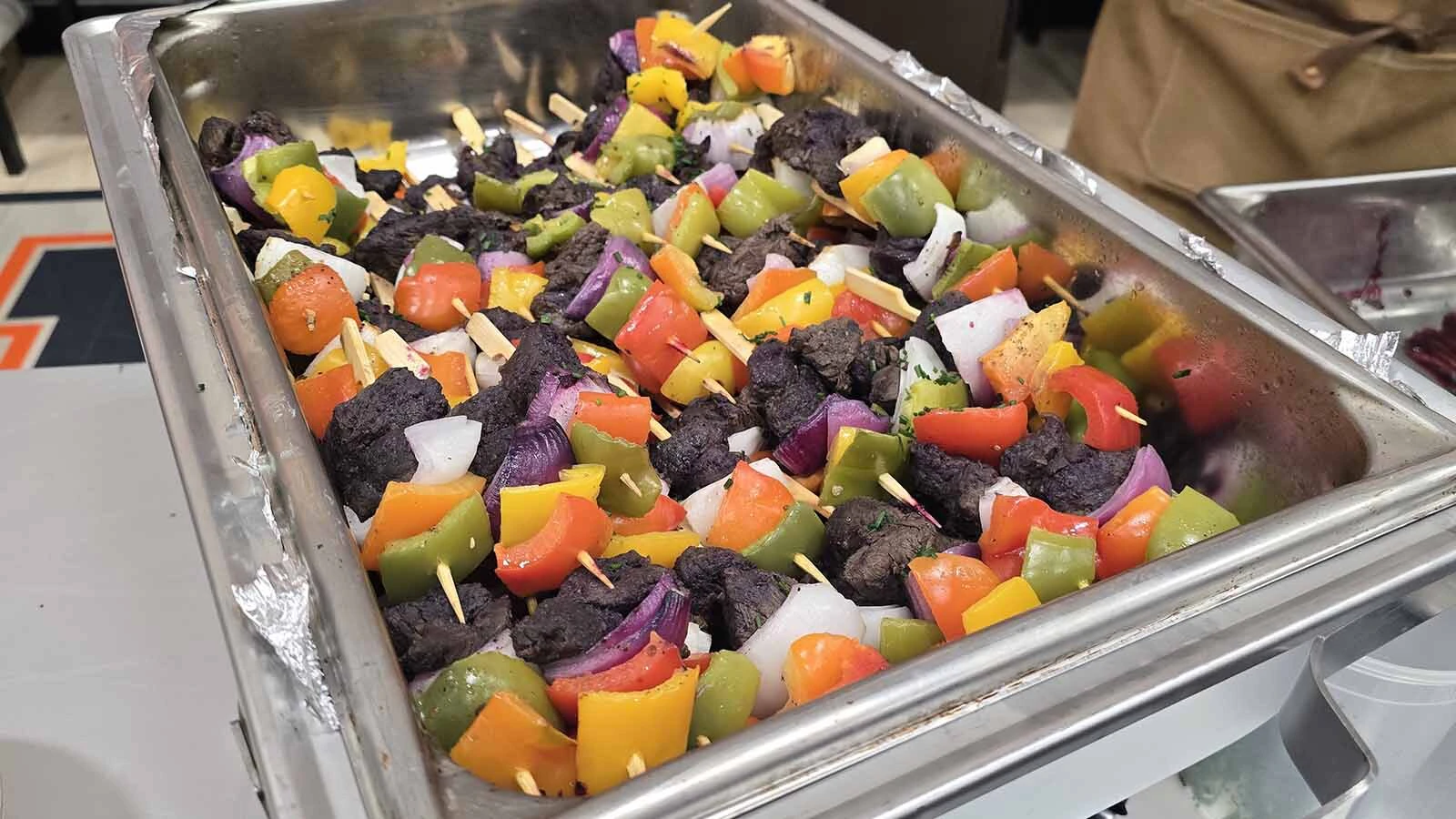
Bison skewers are paired with a delicious huckleberry sauce for an all-Indigenous food menu served during the 2026 Innovation & Entrepreneurship Conference. (Renee Jean, Cowboy State Daily) 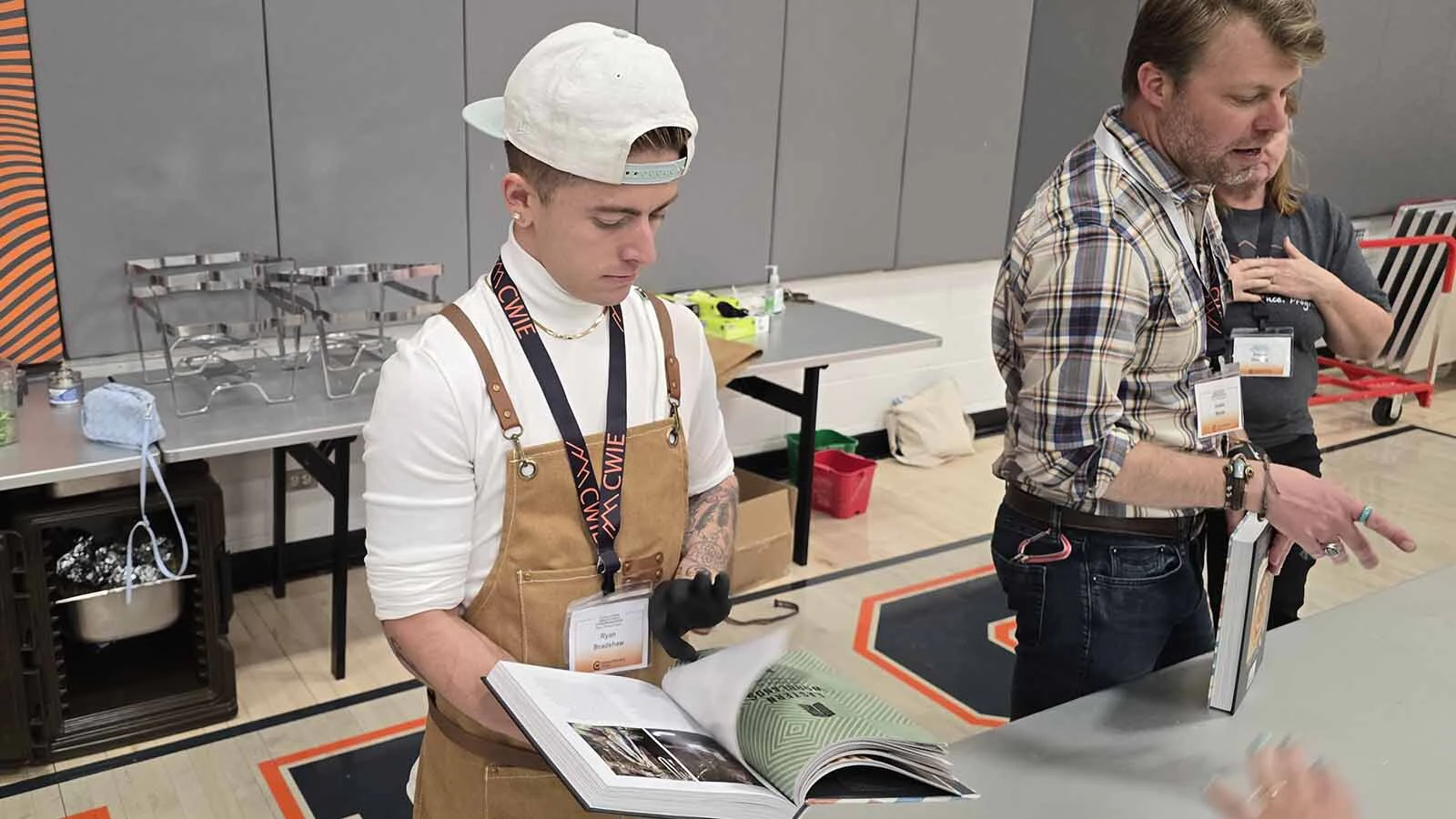
Central Wyoming Collegge culinary student Ryan Bradshaw flips through his copy of Chef Sean Sherman's latest cookbook, "Turtle Island," during he 2026 Innovation & Entrepreneurship Conference. (Renee Jean, Cowboy State Daily) 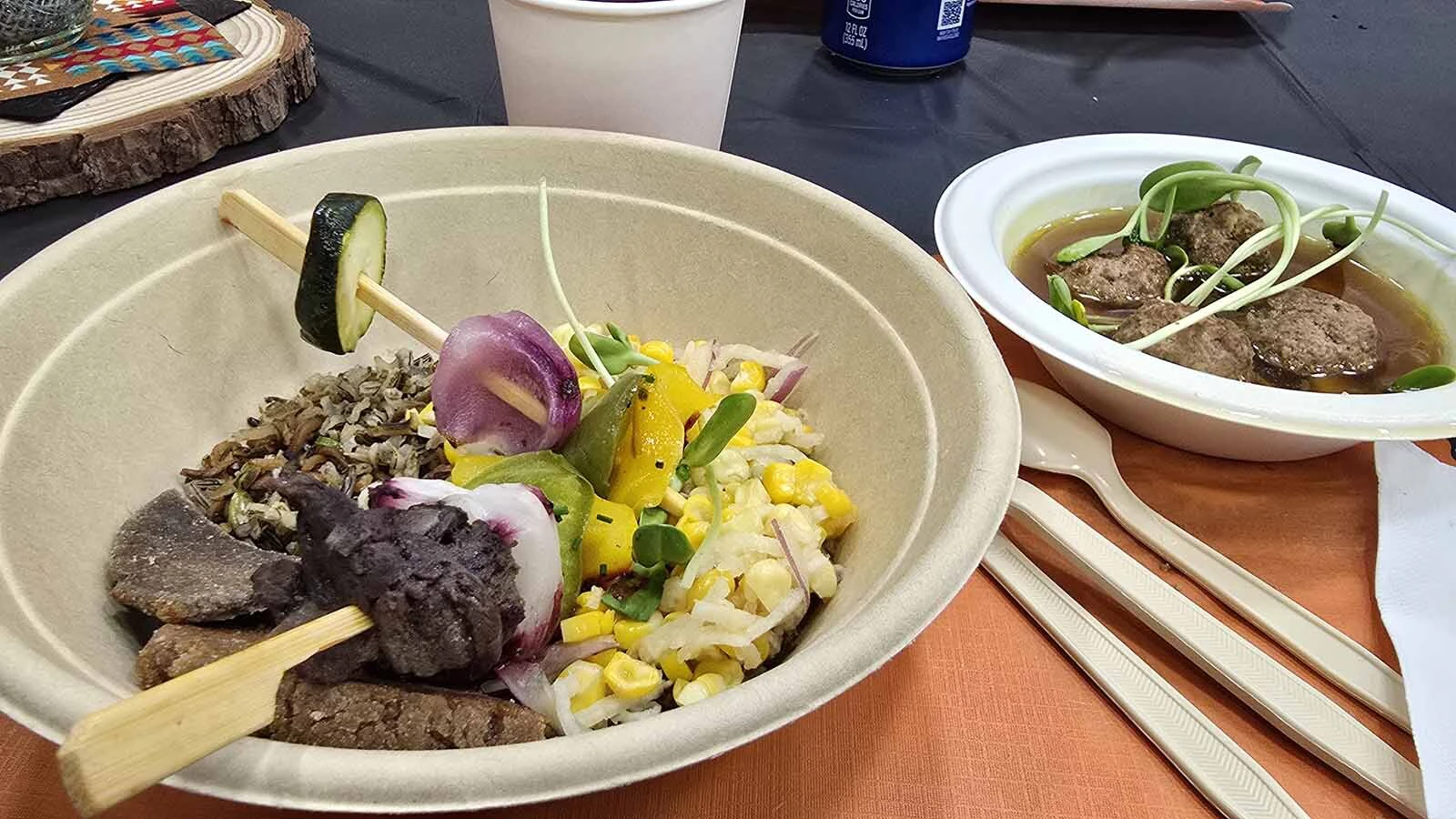
The all-Indigenous lunch plate included huckleberry-braised bison skewers with a wild rice and juniper pilaf, as well as bison meatball posole, roasted mushroom and bean medley, corn-wild rice cake, and jicama sweetcorn slaw. (Renee Jean, Cowboy State Daily) 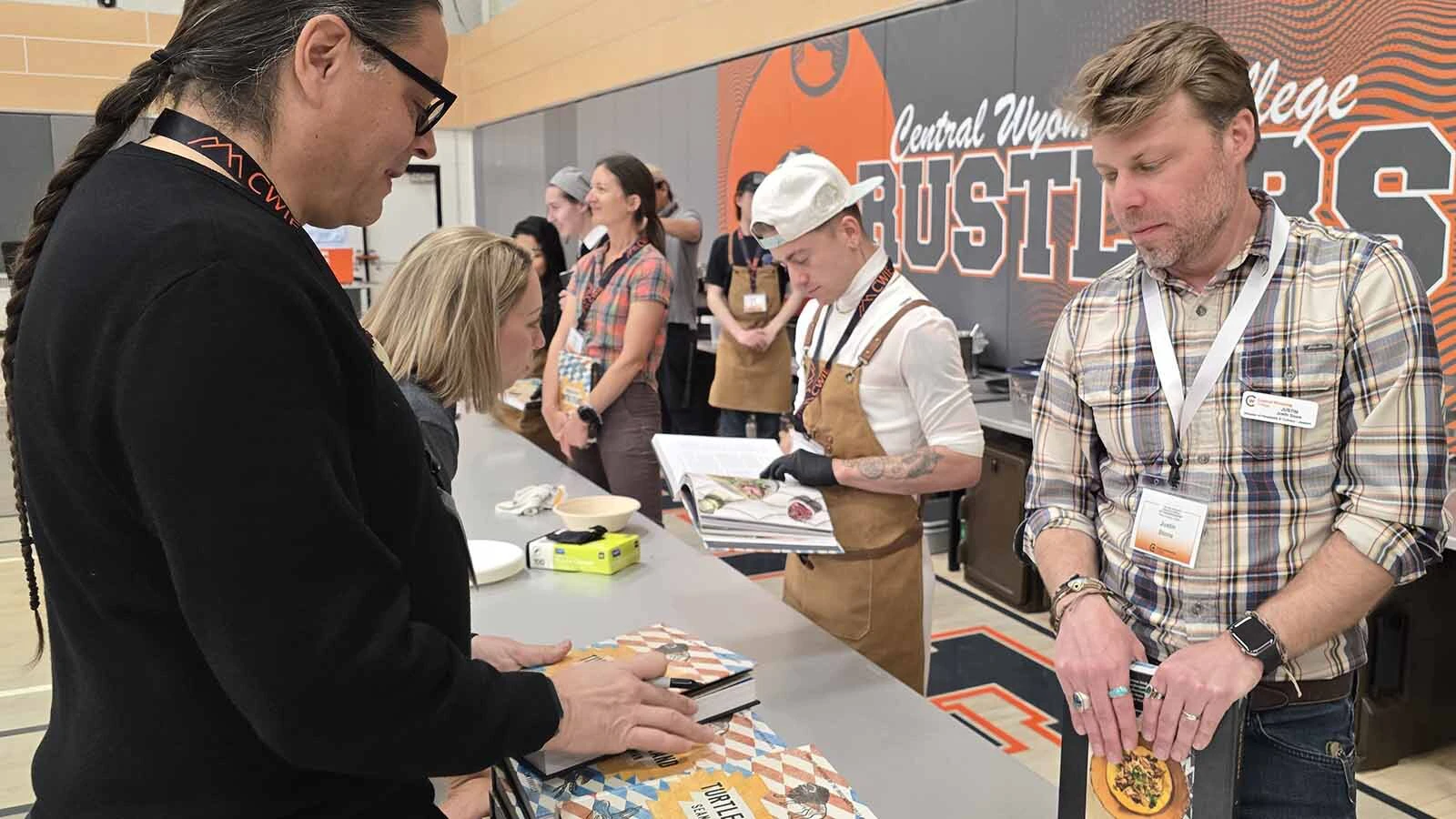
Chef Sean Sherman talks to CWC Director of Hospitality and Culinary Programs Justin Stone during the 2026 Innovation & Entrepreneurship Conference in Riverton. (Renee Jean, Cowboy State Daily)
Growing An Indigenous Food Ecosystem
Sherman didn’t have a trust fund to work with at the time, just a wealth of curiosity propelling him on a path that he didn’t know would necessarily lead to anything lucrative.
“I think when I started The Sioux Chef, I had about $3,000 life savings and a credit score of about 420,” he said. “I had to figure out how to maneuver through all the things — talking to banks, figuring out all the pieces.”
Ultimately, he found what worked best for him was just putting his authentic self out there and letting his passion for Indigenous foods shine.
“I did the cookbook right away, and then people started asking me to come and talk to situations like this one,” he said. “And so I would talk about native foods, but mostly, I like to talk about why we don’t have Native American foods everywhere.”
Now, with a second cookbook out, he’s growing an entire ecosystem to support this whole new approach to food, one that prioritizes pre-colonial ingredients, sourced to the extent possible from Native American producers.
“Everything we do is under a nonprofit to help promote more Indigenous food operations, and just put more resources out there for native people. You want to see healthier food options for tribes. You want to create a lot more education, like the cookbook, for example, of just helping to give people ideas of what they can do and just to help influence more healthy foods.”
North America’s Natural Diversity
Part of what Sherman also likes to talk about is diversity.
“We had a lot of stuff going on,” Sherman said. “In U.S. history books, they don’t talk about how much amazing, beautiful diversity there was out there, with hundreds of different languages and religions and food systems, basically all over the place.”
That diversity included a variety of different protein sources — beaver, seal, whale, bison, venison, rabbit, fish, seafood and more. As well as a variety of plants — prairie turnips, bitter root, wild lake rice, corn, peppers, beans, squash, sunflowers, chokecherries, and more.
The diversity is what was capturing CWC culinary student Ryan Bradshaw’s eye.
“This was creative,” Bradshaw said as he flipped through a gifted, signed copy of Sherman’s latest cookbook, “Turtle Island,” looking at all the pictures. “It’s flavors I’ve never worked with, it’s colors I haven’t seen before. It’s different aromatics.
"It’s an entirely new style, and I appreciated all the new ingredients. Just very natural. I wouldn’t have thought to use a flour from a bulb such as this.”
The flavors and the weight of the dishes he and his fellow students prepared also impressed Bradshaw.
“It’s light and summery and just completely different,” he said. “And it’s natural. There’s no poison here. There’s nothing poison, no too much sugar, no overpower anything. It feels like it came straight from the Plains itself, with the colors and the flavors and the textures.”
Bradshaw has big plans for his culinary training after he finishes his program at CWC. He’s headed to Auguste Escoffier School of Culinary Arts to train for 30 weeks on fine pastries, after which he’ll head to Barcelona, Spain to learn molecular gastronomy.
“Then I want to open up a club, Club Adam,” he said. “It’s going to be a molecular gastronomy club … and a celebrity elite venue for billionaires. It’s going to be … something that hasn’t been done on this side of the West Coast, Rocky Mountains, because there’s no job title, molecular gastronomist. You don’t just apply for it, you have to create it. It’s science, it’s business, and you have to start from the ground up.”
As someone envisioning his own, future culinary revolution, Bradshaw was inspired by what Sherman has done with his cookbooks and eager to soak up every word of how the chef did it.
“I will have to read the whole thing,” he said, nodding toward the cookbook in his hand. “If chef gave you a gift, it’s best to cherish that gift. Yeah, he gave it for a reason. He didn’t spend his time writing this out for no reason.”
Expanding The Impact
This won’t be the last time CWC’s culinary students put together Native American recipes, CWC Director of Hospitality and Culinary Programs Justin Stone told Cowboy State Daily.
His program is partnering with Native Voices out of Jackson Hole to prepare more Indigenous dishes that will complement regional and tribal affiliations of each artist involved in the program.
“There will be a food item, an art, and then an artist,” Stone said. “And then culinary folks sort of hosting at each one of these gallery locations in Jackson.”
Exposing the students to Indigenous foods is something Stone feels strongly about, given that the Wind River Reservation is a large part of the college’s service district. When he learned that Sherman had ties to the Wind River reservation already, it became natural to reach out and see if the chef was interested in being involved in this year’s conference.
“Both our Lander and Riverton campuses sit just outside or just inside the Wind River Reservation,” Stone said. “So it means a lot, I think, for the college to be directly supportive and (offer) a pathway and an opportunity for that population. And then also to be partnering with them at a very equal level, as much as we can, in all of our program areas.”
It’s been exciting and interesting for the students to dig into the history and learn about authentic North American ingredients.
“This is arguably the oldest food on this continent we have,” he said. “(What’s new) is using it, pulling ingredients, and educating about some of those harder to source, less mainstream ingredients that are just as good if not better.
"And one thing I think Sean has been so successful at in his career is bringing Indigenous food up into the modern era and making people understand how delicious, how great, and how relatively easy it is to prepare it in a modern way.”
Renée Jean can be reached at renee@cowboystatedaily.com.