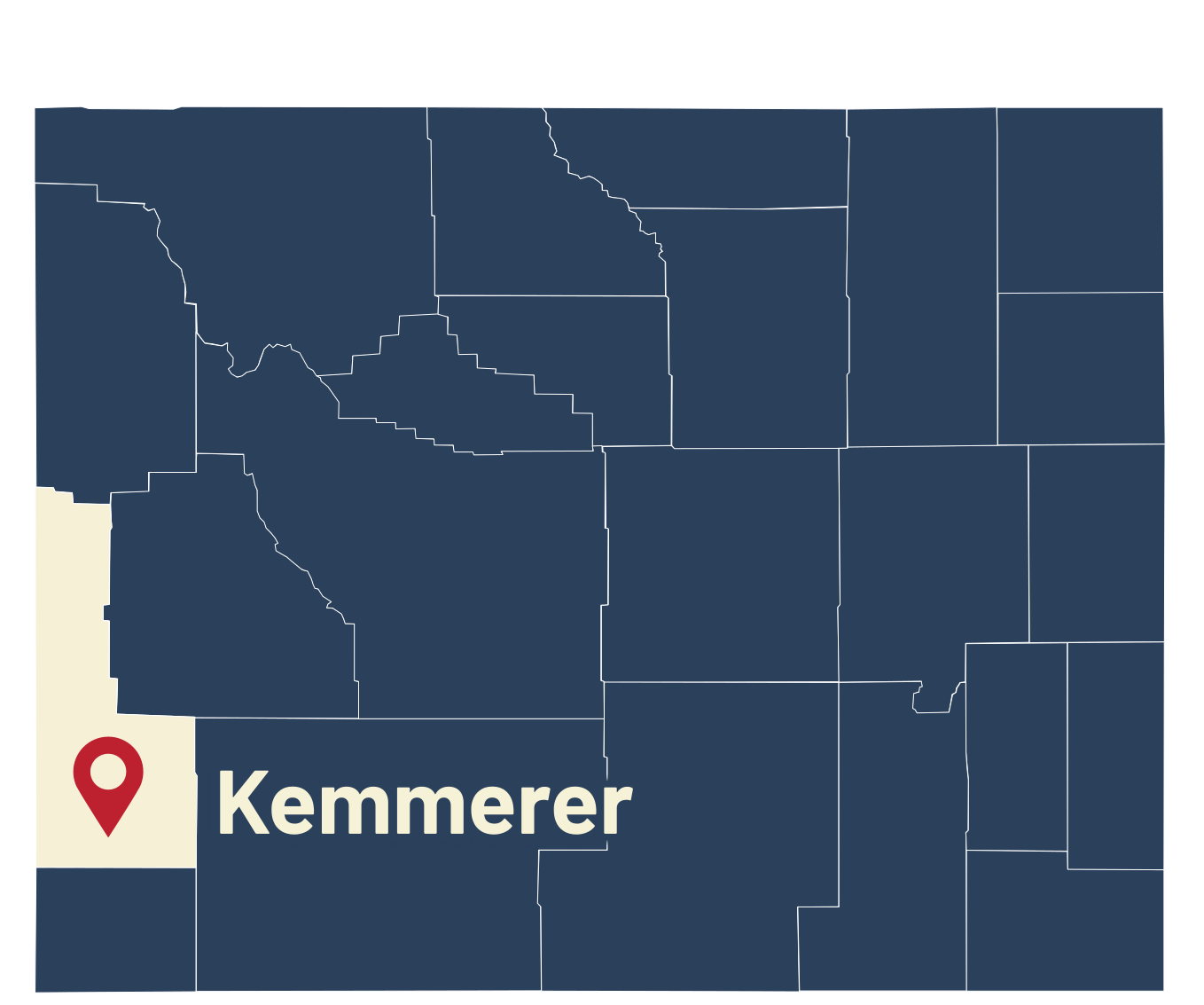
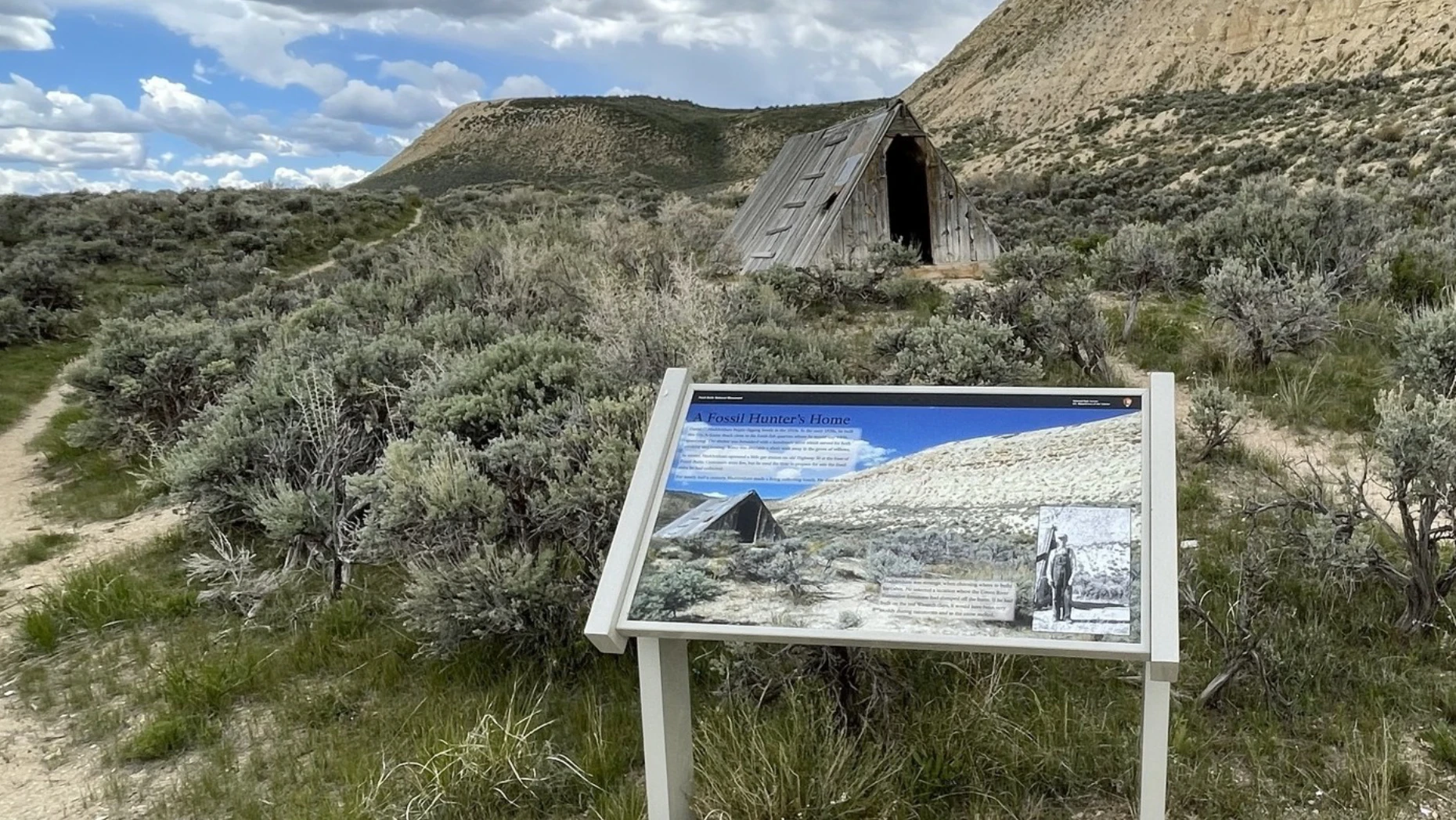
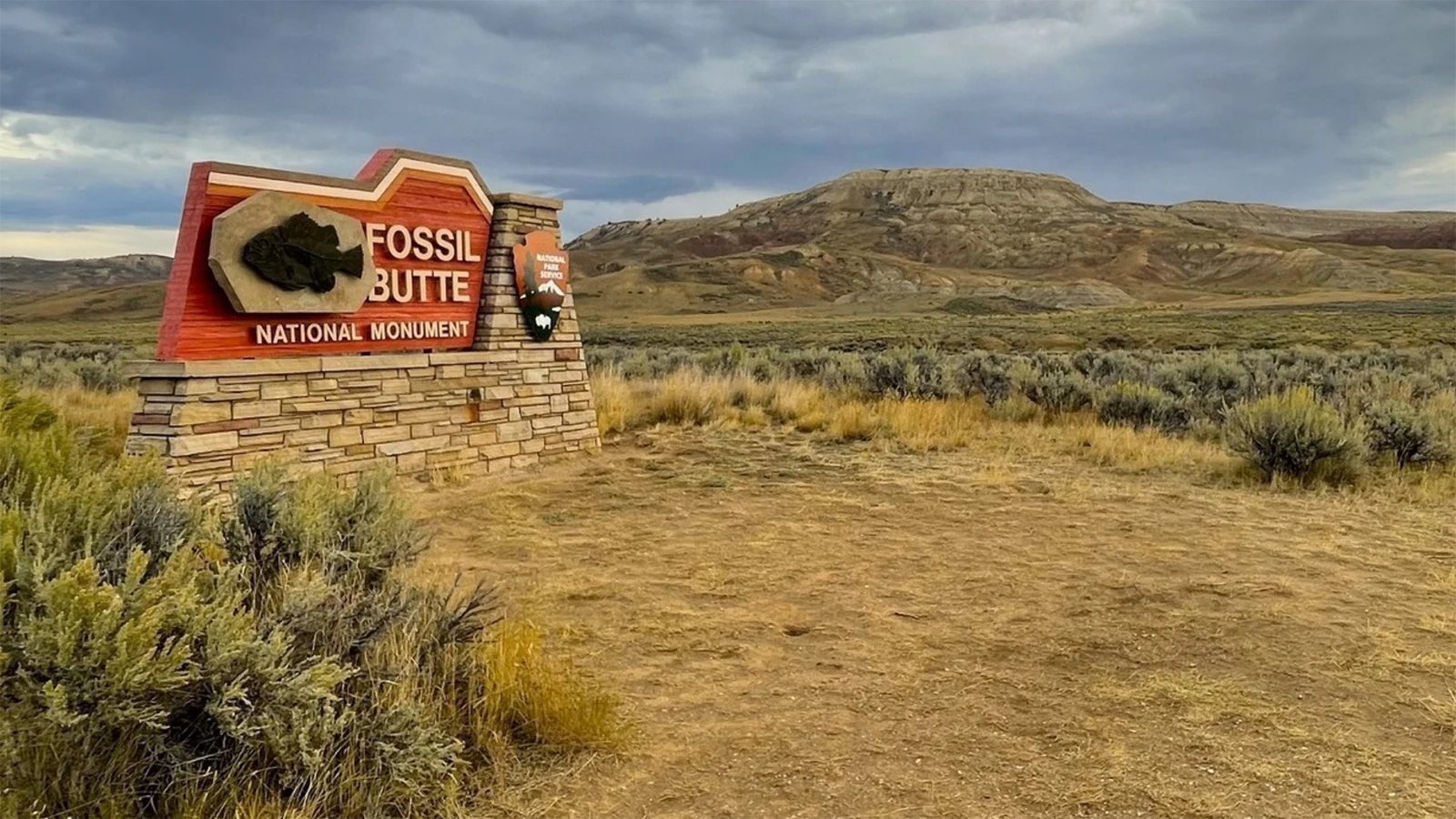
An A-frame hut that now has a protective structure over it at Fossil Butte National Monument west of Kemmerer carries links to a man who mined fossils for more than 50 years.
A bathtub in it that once allegedly was used to mix up a poisonous and deadly brew is long gone.
But the fossil hunter’s legacy includes ties to the remains of two people put 6 feet under before their time. One in Kemmerer, the other in an unknown cemetery.
During David Charles Haddenham’s 89 years, the English-born Wyoming transplant made his mark in the scientific world selling prehistoric fossils of fish and other creatures to museums in Paris, Germany and around the world, as well as to the Smithsonian and other museums.
He also made a name locally in the Kemmerer region starting at a young age as someone willing and able to mete out his own brand of frontier justice.
A story in Evanston’s Wyoming Press on Dec. 29, 1900, reported that Haddenham was exonerated at an inquest over the shooting of a man who had once been married to his mother.
The verdict in Diamondville said Thomas Palin died as a result of his “own violence.”
“Palin had assaulted the boy’s mother and was beating her when her son came to her assistance and shot Palin, the weapon being used a revolver,” the newspaper stated. “The woman is a Mrs. Small and had been divorced from the deceased for about 12 years, during which time he frequently threatened her life.”
Haddenham was 19 at the time.
Born in 1881 to William James Haddenham and Mary Ann Burton, on Jan. 16 in Nottingham, England, he was the last of eight children born to the couple. His father by 1883 had already emigrated to America and sent for his family to join him.
The account states that Haddenham’s mother met a man on the ship sailing to England and after arriving in Wyoming abandoned her husband and children. A Uinta County record shows she married Palin in 1883. Together they had three children.
Mike Haddenham, 69, of Colorado Springs, a retired engineer and great-grandson of David C. Haddenham, said he did not know the story about his great-great grandmother but didn’t doubt it.
“That is probably true,” he said. “Cause she was probably mad at him (William Haddenham) for moving her away from England. It takes a different type of people to be in Wyoming in the winter.”
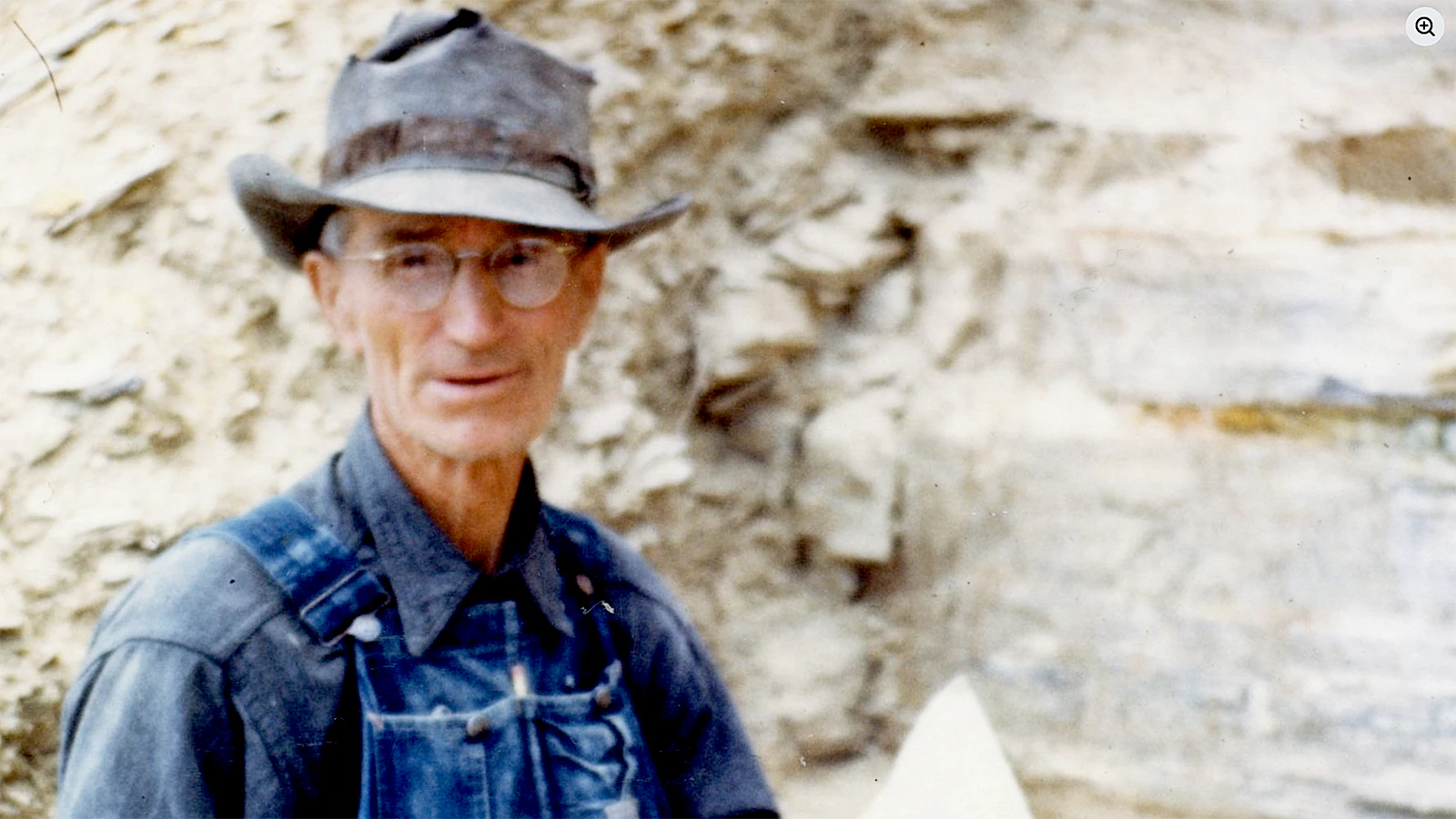
David C. Haddenham spent a lifetime quarrying fossils off of Fossil Butte west of Kemmerer. (Courtesy National Park Service) 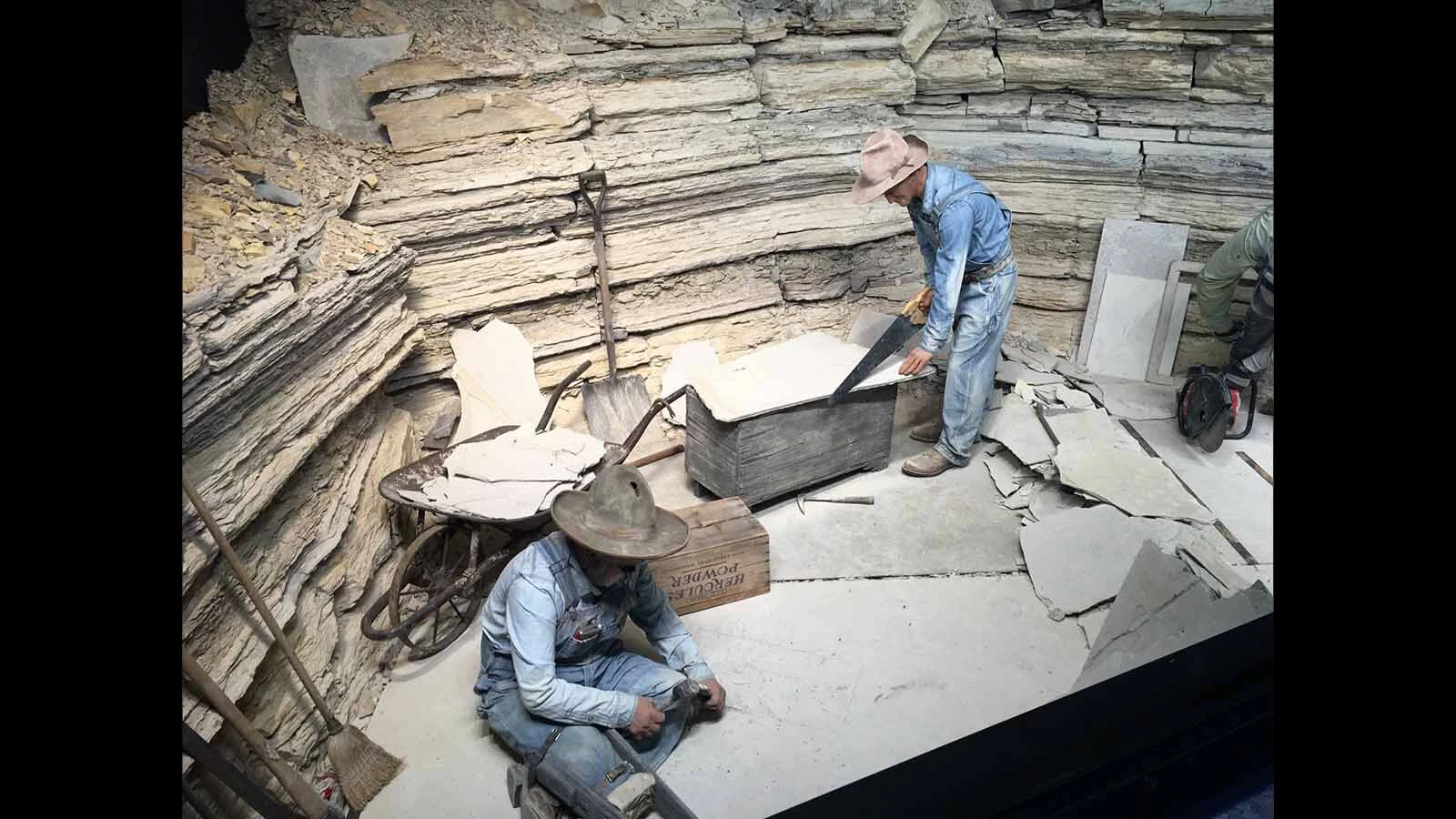
A display showing David Haddenham and another fossil miner quarrying rock containing fossils at the Fossil Butte National Monument visitor center. (Courtesy National Park Service) 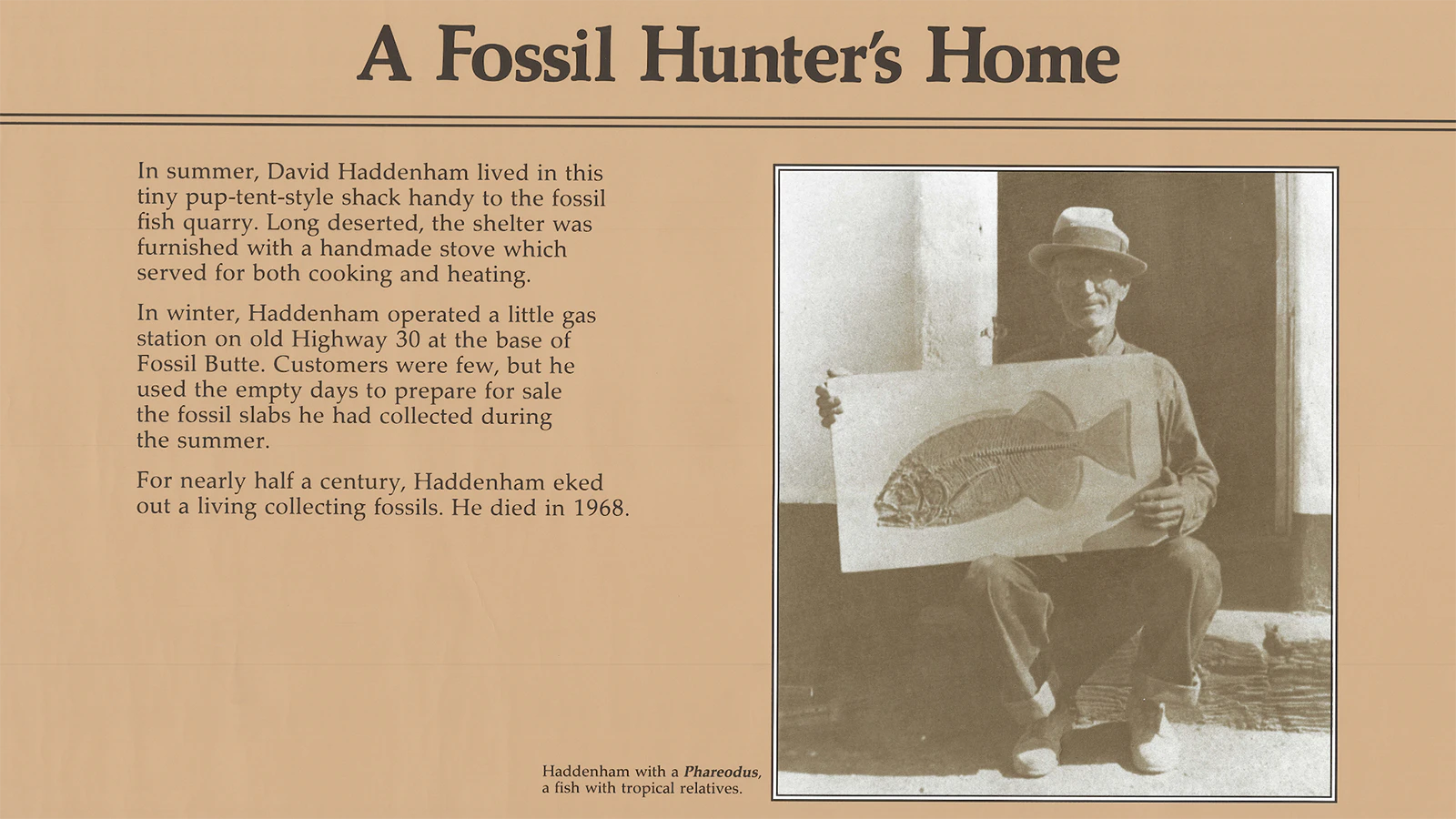
David Haddenham shows off a fish that he quarried and recovered. (Courtesy National Park Service)
'Awesome Guy'
Mike Haddenham remembers his great-grandfather as “an awesome guy” who he would visit during the mid-1960s when David C. Haddenham moved to Lander to be near his son, David F. Haddenham.
By the time he knew him, his great-grandfather had stopped his quarrying of fossils but had stories to tell about his efforts and shared small fossil fish with his great-grandson.
David Haddenham also showed his great-grandkids photos of the fossils he had at the Smithsonian, University of Wyoming and other places nationally and internationally.
Mike Haddenham said he was unaware of his great-grandfather shooting his great-great grandmother’s ex-husband.
A newspaper account on Dec. 22, 1900, reported his great-grandfather was staying with his mother in Diamondville and Palin, a coal miner, came and threatened her.
David Haddenham pointed a pistol at him and told him to leave. Palin tried to come back into the house and Haddenham shot him twice.
Haddenham then went to authorities and reported what he had done. Cowboy State Daily could not determine where Palin was buried.
The then-19-year-old went on to marry the daughter of a prominent Wyoming rancher, Mary Byers, at 23, and his name appeared frequently in the community pages of local newspapers as he went on successful hunts and visited relatives.
In one story he gained control of runaway horses that took off in Kemmerer’s downtown triangle where the original JCPenney store sits.
In 1915 Haddenham was a key witness in a murder trial that involved the shooting death of a friend who had been at Haddenham's house prior to his killing.
Haddenham testified the shooter came to his door and was looking for his friend who was in a relationship with the shooter’s former girlfriend.
The friend was visiting and Haddenham refused to let the angry man inside his house. When his friend left Haddenham’s home later that night for town, he was confronted by his jealous rival and killed.
In 1920, Haddenham was convicted of assault and battery on his father-in-law after John Byers named his younger daughter, Anna Richey, who had married and divorced the former local school principal, as manager of his ranch. Haddenham had been fulfilling that role.
“David Haddenham, the former manager of the ranch, visited John Byers, the owner, and the interview ended in a personal encounter between the two, in which the former is said to have received the worst of it,” the Kemmerer Republican reported on April 23, 1920. “At any rate, Mr. Haddenham appeared before the local justice of the peace Wednesday night and paid a fine for assault and battery.”
Meanwhile, by 1920, Haddenham instead of following the other men in Diamondville, Almy, and other places around Evanston and Kemmerer into coal mines, had for two decades put his effort into a digging up prehistoric treasures.
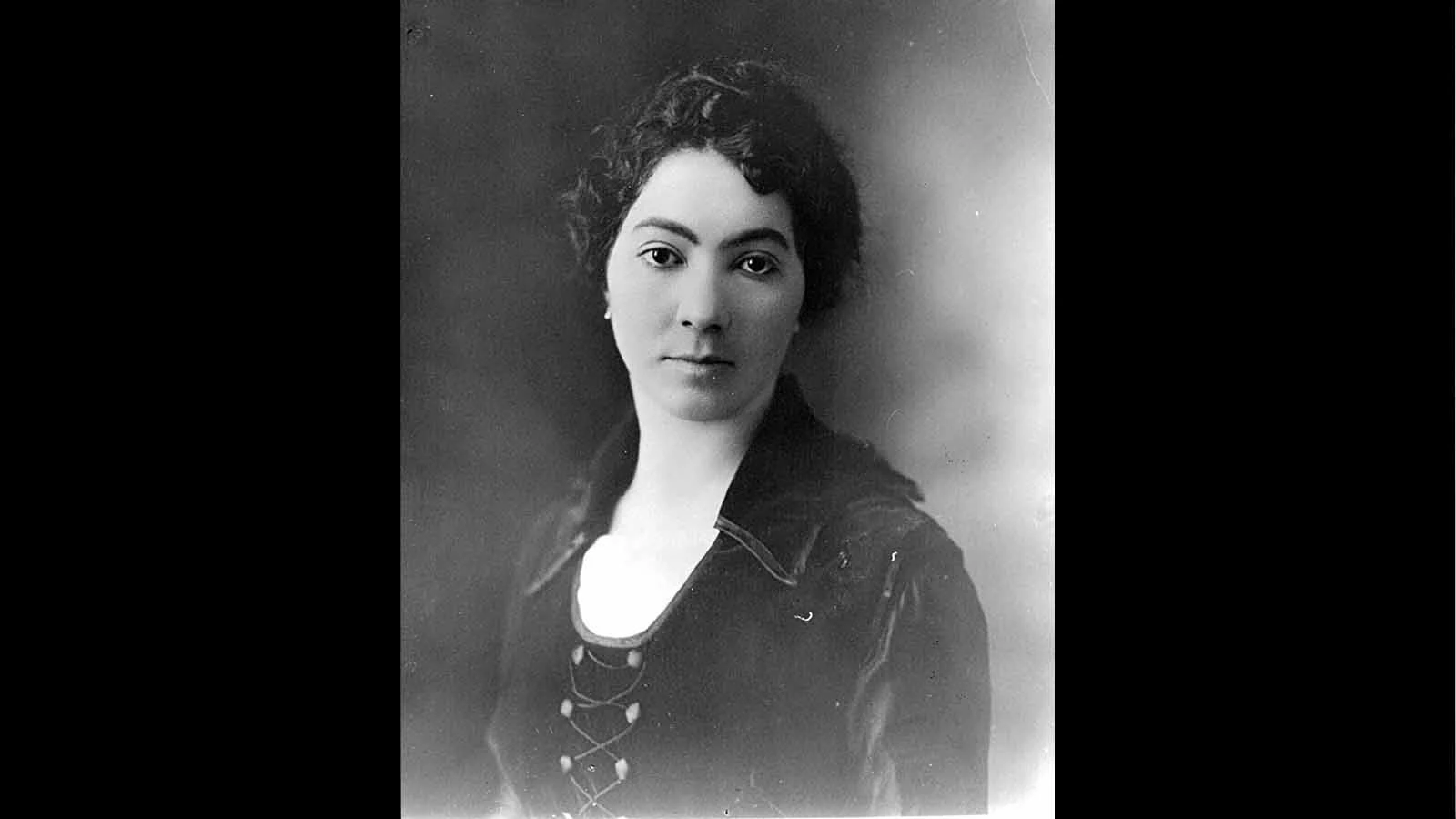
Anna Richey was poisoned by someone prior to going to prison for cattle rustling. David Haddenham was initially sought as a suspect. (Courtesy National Park Service) 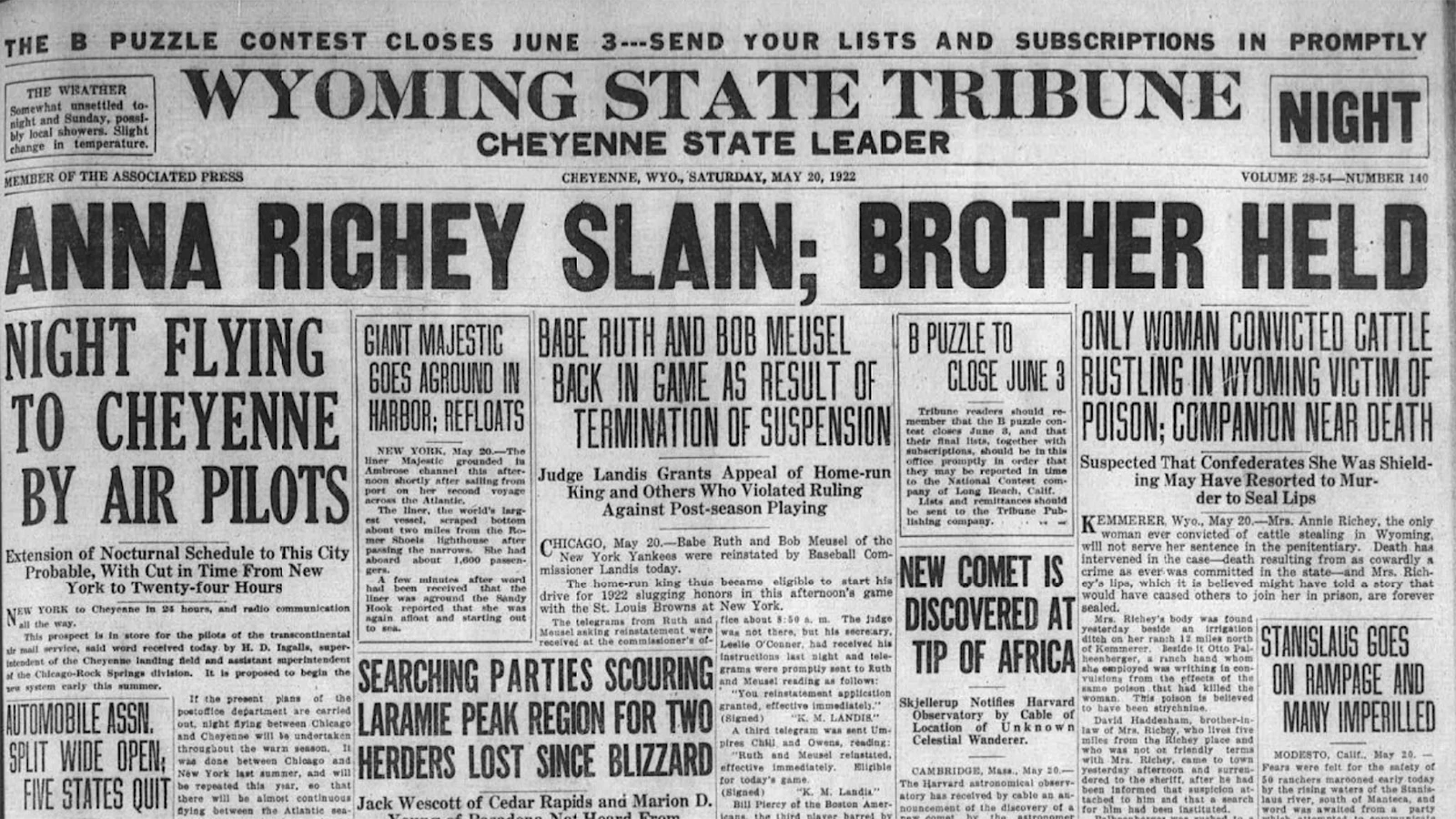
The Wyoming State Tribune used a banner headline to announce Anna Richey’s death and David Haddenham’s surrender to authorities. (Courtesy Wyomingnewspapers.com) 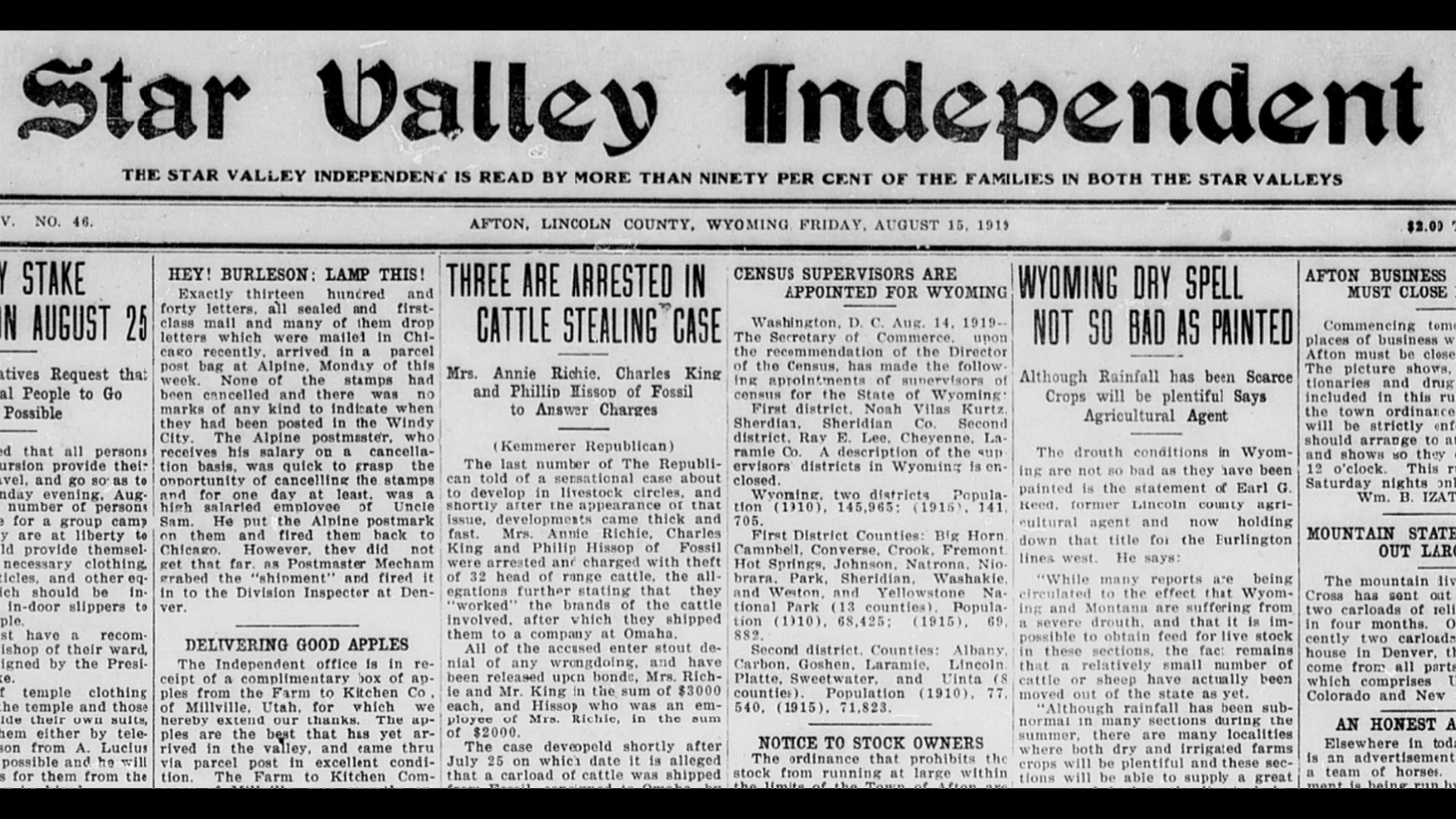
The Star Vallen Independent on Aug. 15, 1919, covered the arrest of Anna Richey for cattle rustling. The article mentioned David Haddenham has one animal that was among those whose brands were reworked and sent to Omaha for slaughter. (Courtesy Wyoming Newspapers.com) 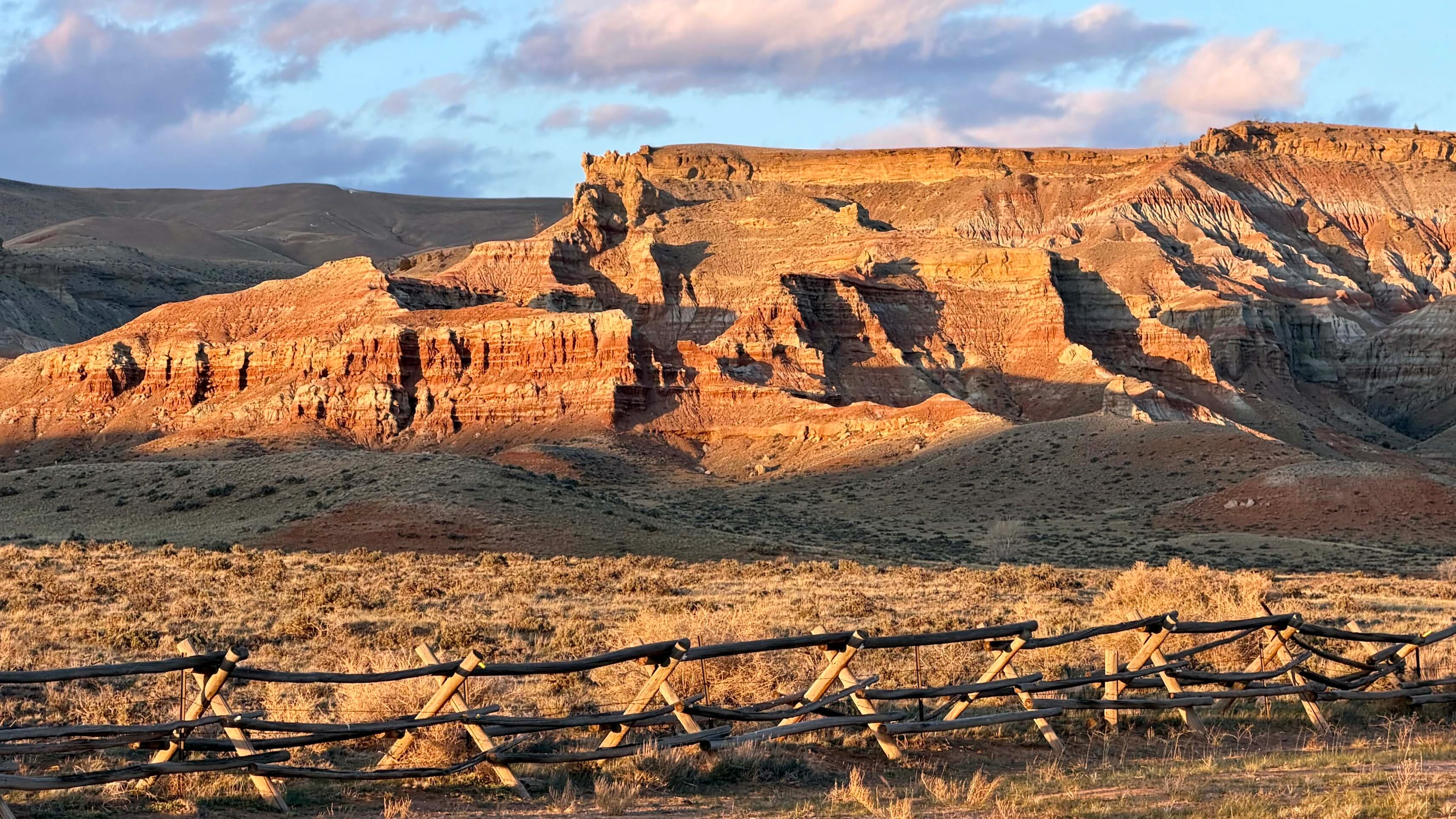
"Evening sunset casting shadows across the Dubois Badlands." (Reader photo: Lynn Stewart) 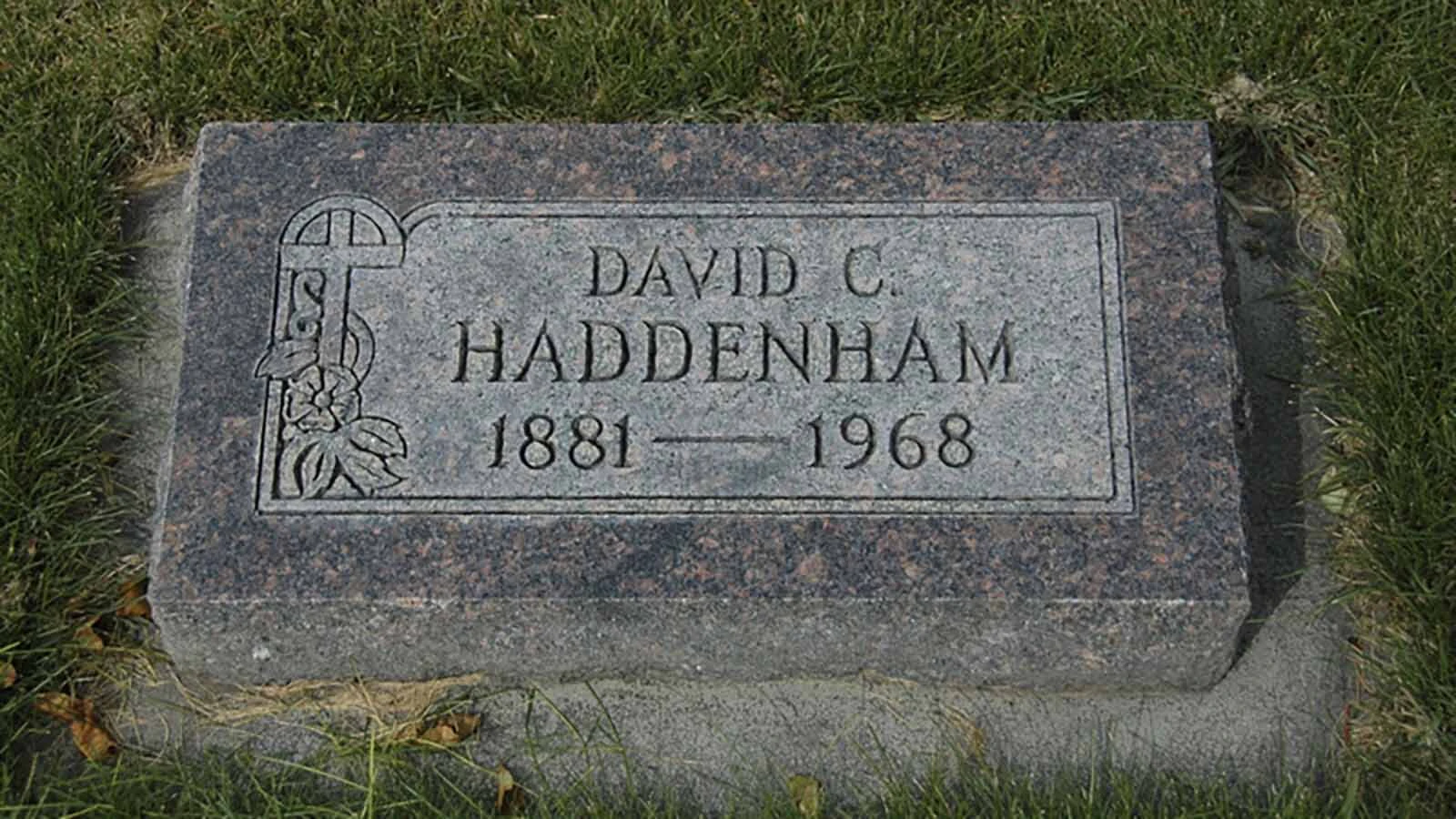
David Haddenham is buried in Kemmerer, Wyoming. (Courtesy Find a Grave)
Building The Hut
Haddenham started mining fossils from Fossil Butte during the summer months. In 1918, he built an A-frame hut 12 feet long, 8 feet wide, and 7 feet tall that still stands on the southeast side of what is now Fossil Butte National Monument.
The cabin is listed on the National Register of Historic Places. According to information on the registration form for the cabin, Haddenham had told others that he began quarrying fossils at Fossil Butte in the 1890s and continued for much of the rest of his life.
Haddenham was credited along with a couple of other early fossil hunters for perfecting a method to quarry the fossils and was helped in the process by his brother, George, and later in life by his son and grandsons.
Mike Haddenham said he knows that his grandfather David F. Haddenham helped his dad until he went to South Pass, purchased a gold mine, and became a gold miner.
During the Depression, Haddenham sold a fossil of a gar fish to a Paris museum for $500. He also found buyers in Germany, Japan and the United States, according to the National Register form.
Haddenham operated a “museum” and gas station for tourists for several years at the Fossil Butte site.
The National Register form states that his grandson, Robert Haddenham, explained his father’s process for quarrying the fossils. It involved dynamiting an area bounded by cracks.
The remaining rocks were either blasted or chiseled by hand to expose the fossil layer. He used chisels and saws to cut the fossil slabs into squares and cleaned the fossil with his own hand-made tools.
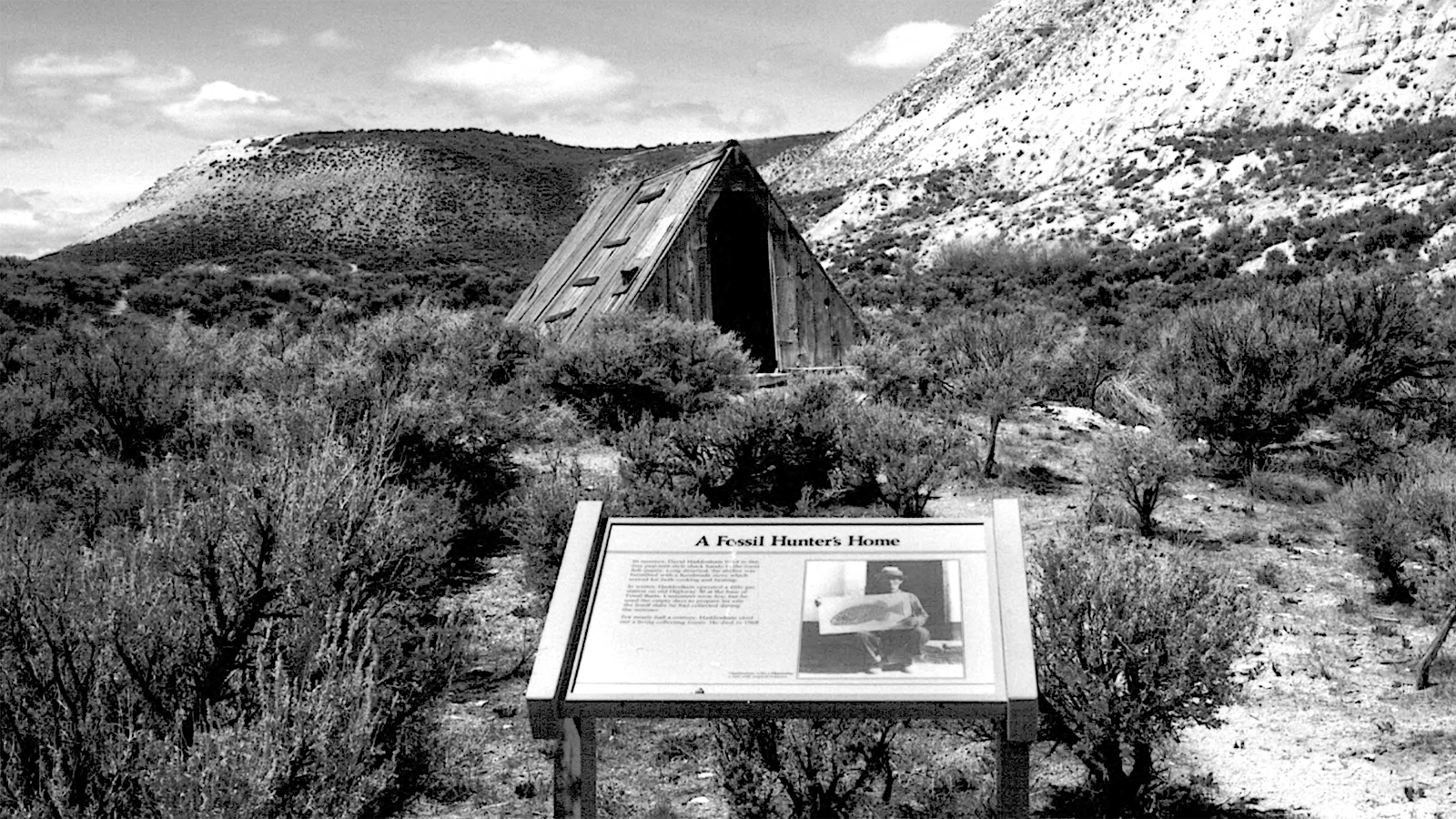
A photo of the cabin submitted with the National Register of Historic Places registry form in 2003. (Courtesy National Park Service) 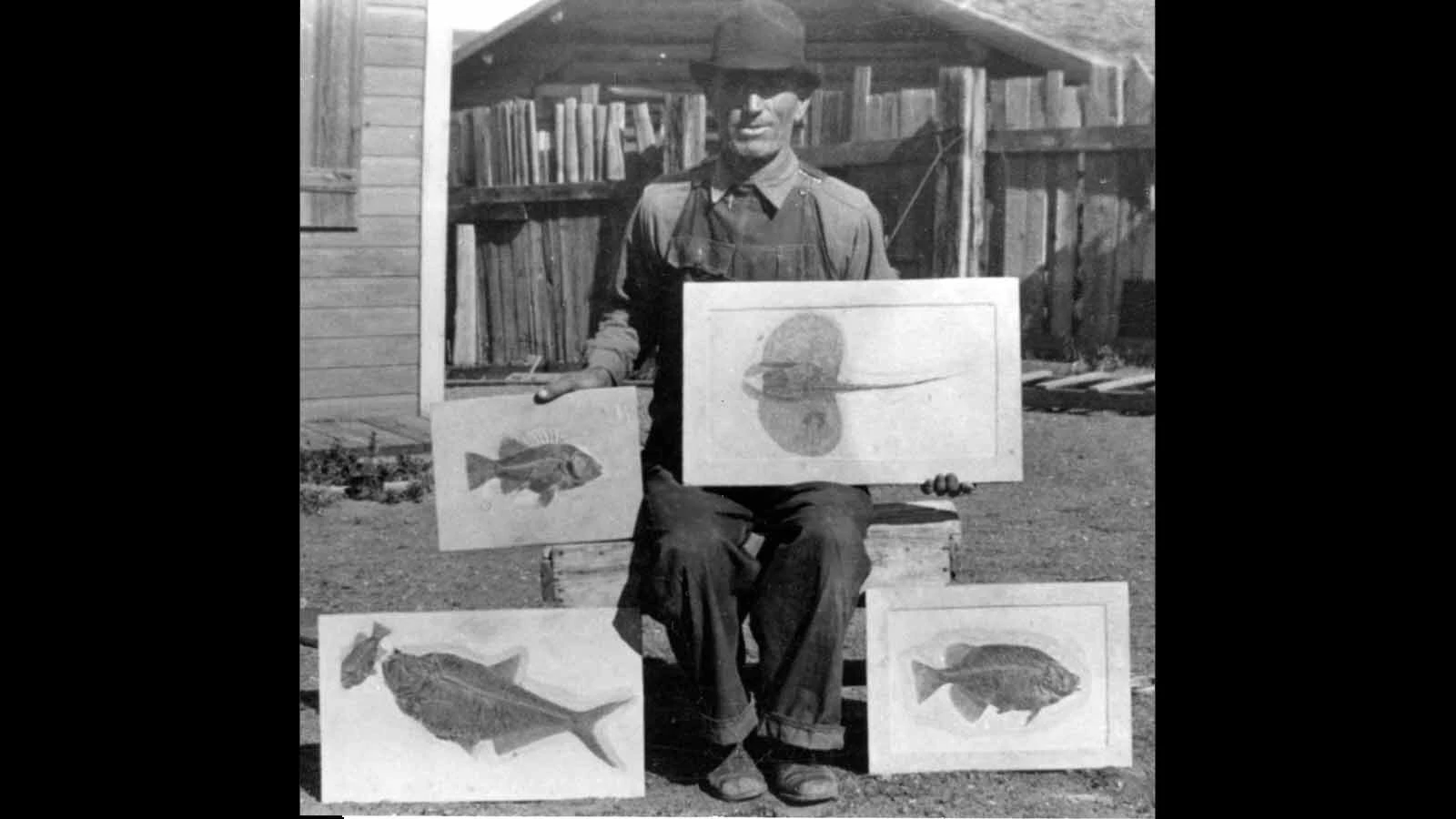
David Haddenham with some of his fossils including a stingray. (Courtesy National Park Service) 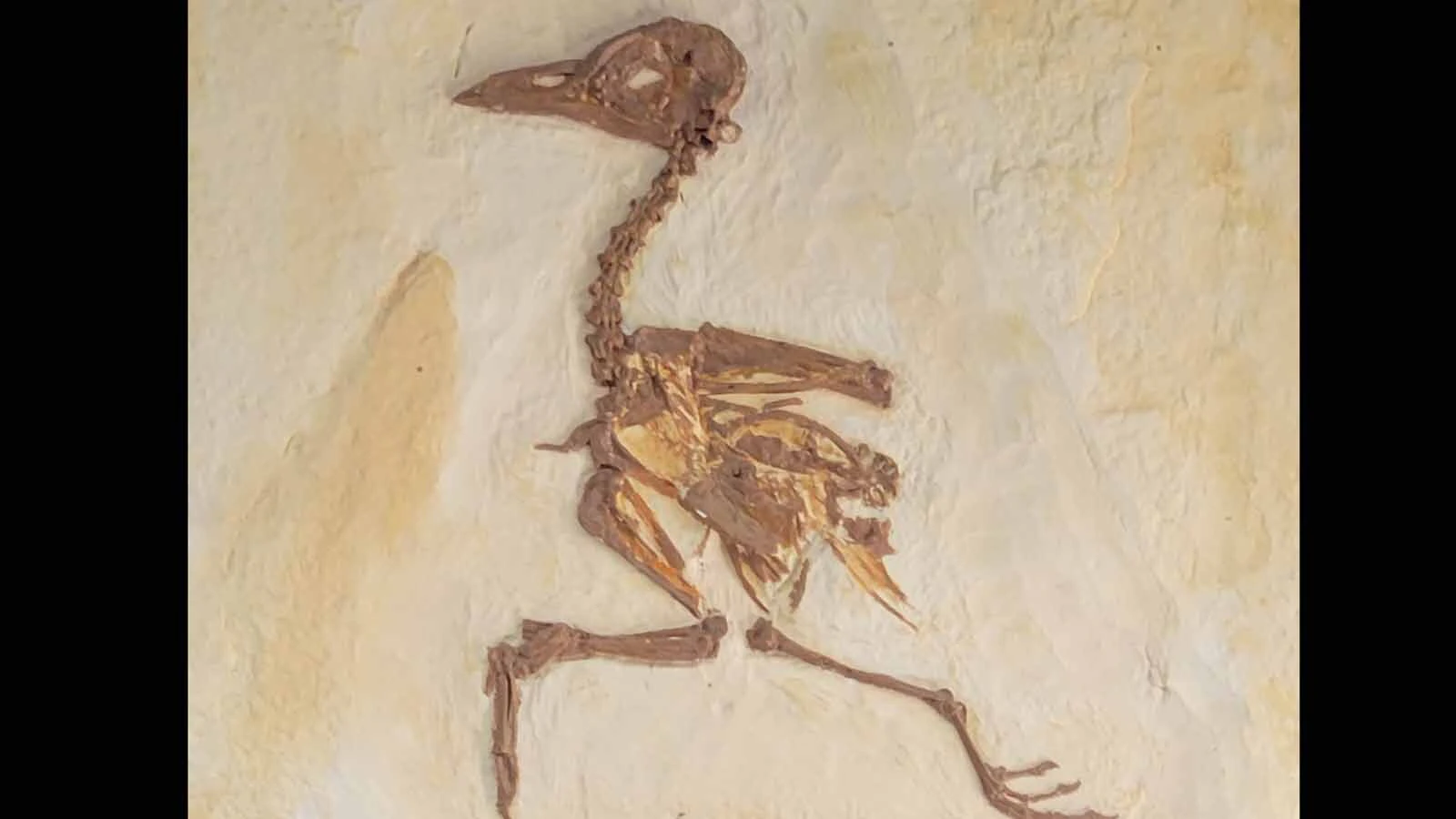
The fossil of a bird take at Fossil Butte shows the type of finds of David Haddenham and his colleagues. (Courtesy National Park Service) 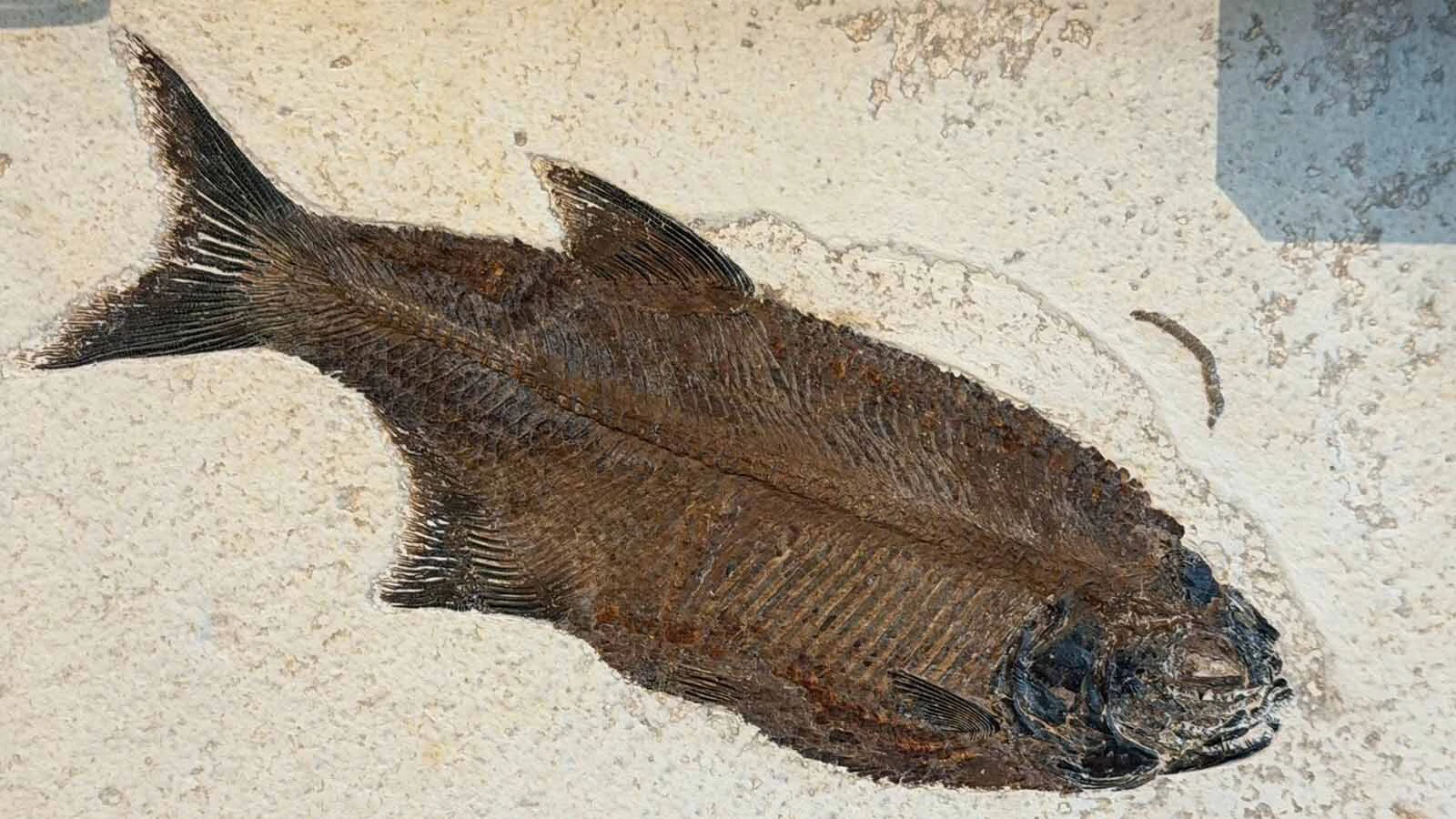
The fossil of a fish recovered at Fossil Butte. (Courtesy National Park Service)
Great-Grandson’s Visit
Mike Haddenham said he visited the A-frame when the National Park Service was moving to protect it with its current cover and dug around the foundation of it for any historical or family items.
At that time he also took a trek with a ranger to the quarry site that his great-grandfather used and where he had long ago carved his initials.
The climb involved going up a 45-degree slope of “sloppy shell stuff.”
“He didn’t take the easy side of the mountain,” Mike Haddenham said. “He was one tough hombre.”
The ranger told him that his grandfather would ride some of his big quarried rock slabs down the mountain like a sled.
The great-grandson said family stories passed down about his great-grandfather that he knew never included the story about the poisoning death of his great-grandfather’s sister-in-law, Anne Richey.
Richey is the only woman in the state’s history to be convicted of cattle rustling.
In July 1919, David Haddenham was listed as among at least five Fossil area ranchers whose cattle showed up in an Omaha, Nebraska stockyard with brands apparently changed to Richey’s OXO brand.
She and two others were initially charged.
As Richey rode her horse to a preliminary hearing on the charges against her, Richey was shot in the left elbow by a rifle after being confronted by a masked man. Newspaper accounts state she was asked who her accomplices were.
Richey said she did not recognize the man or his voice. Haddenham was never sought or connected in any way to the shooting, according to accounts of the incident.
When a new preliminary hearing was scheduled, evidence provided resulted in her and another rancher named Charles King being sent to district court.
During a trial, she confessed to rebranding the cattle and putting them in a rail car to send to the stockyard. Richey said she did it alone. King was acquitted.
Out On Bond
Richey was sentenced to one to six years in prison, but her father funded an appeal which ended up at the Wyoming Supreme Court. During the appeal she was out on bond.
The high court affirmed her sentence. Richey was able to persuade the court to allow her more time to get things in order before serving her sentence in Colorado due to the fact there were no prison facilities for women in Wyoming.
While preparing for her prison term, on May 19, 1922 she was working on her ranch 12 miles out of Kemmerer.
A man wearing corduroy and riding a horse showed up to talk according to later testimony by her hired hand, Otto Palsenberger.
The hired hand could not hear any of the conversation as she stood beside the horse.
Afterward, Palsenberger and Richey went in to eat fresh bread, beans and bacon for lunch.
On returning outside to work, Richey collapsed on the ground. The ranch hand went to help her, saw she was dying and went for his horse to get help, only to collapse himself.
Later that afternoon a man rode into the ranch and found Palsenberger still alive. The next day, Cheyenne’s Wyoming State Tribune carried a banner headline: “Anna Richey Slain; Brother Held.”
Haddenham, who lived five miles from his sister-in-law, on hearing that the sheriff had started a search for him went to town and surrendered, the newspaper reported on May 20, 1922.
Richey’s stomach, liver, and kidneys were removed from her body and sent to a laboratory for analysis as were all the food items at the ranch. Authorities suspected strychnine was used to kill her and poison the ranch hand.
“A bottle of strychnine found by Mrs. Haddenham was dusty and on a top shelf and had not been handled in months,” the Wyoming State Tribune in Cheyenne reported on May 20, 2022. “There is nothing concrete against Haddenham so far. Suspicion was only directed against toward him by reason of the enmity he held for Mrs. Richey.”
Richey’s sister, Mary Haddenham, supported her husband. In the end, Haddenham was released, no charges were filed and no one was ever charged with the crime. The exact poison used was never determined.
A Grandson’s Testimony
While Mike Haddenham said he never heard the poisoning story shared in the family, his uncle, Robert Haddenham, talked about it in a 1989 interview that was included as part of the National Register of Historic Places registration form.
Robert Haddenham told his interviewer that his grandfather had poisoned Richey, the document states.
“According to Robert Haddenham, his grandfather mixed up the poison in a bathtub at the site of the Haddenham Cabin at Fossil Butte,” the registration form states. “The bathtub is no longer at the cabin site, and it is unlikely that more substantial evidence will emerge to corroborate Robert Haddenham’s testimony.”
Following his sister-in-law Richey's death, David Haddenham continued to live a long and productive life.
The Casper Tribune-Herald reported on Oct. 2, 1939 that Haddenham who had been working in the fossil field for the “past 30 years” reported that he had a good year in 1938.
“Practically all of his 1938 specimens were sold, including some now on display at the San Francisco fair and at museums through the country,” the newspaper reported.
The newspaper reported that many people were visiting the diggings and learning how the “ancient specimens” were excavated from the earth.
In 1949, a story on him reprinted in the Monroe Evening News, in Monroe, Michigan, described Haddenham as cutting into a rock ledge at Fossil Butte about 30 feet and then removing 27,000 cubic feet of rock by hand.
“His reward has been some unusual discoveries, for among his hundreds of fossil fish are two stingrays,” according to the April 21, 1949, article. “Occasionally he uncovers an ancient gar pike, whose descendants still live in North and Central America.”
Minnesota Death
David C. Haddenham died on May 9, 1968, in Olmsted County, Minnesota. His great-grandson said he has no idea why he would have been in Minnesota.
He is buried in the Kemmerer City Cemetery next to his wife.
Mike Haddenham was 12 years old at the time of his great-grandfather’s passing. He knew him as a man of “great of character” who also liked to be alone.
He said both he and his father, Richard Haddenham, worked as engineers — likely a trait passed on from great-grandfather the fossil miner and grandfather, the gold miner.
Asked to describe his great-grandfather for someone who did not know him, he does not hesitate.
“A man who loved to go dig up fossils,” Mike Haddenham said. “He was kind of a pioneer on breaking them loose. I don’t know if there were a lot of other people looking for fossils in the country, other than big dinosaurs.”
Dale Killingbeck can be reached at dale@cowboystatedaily.com.