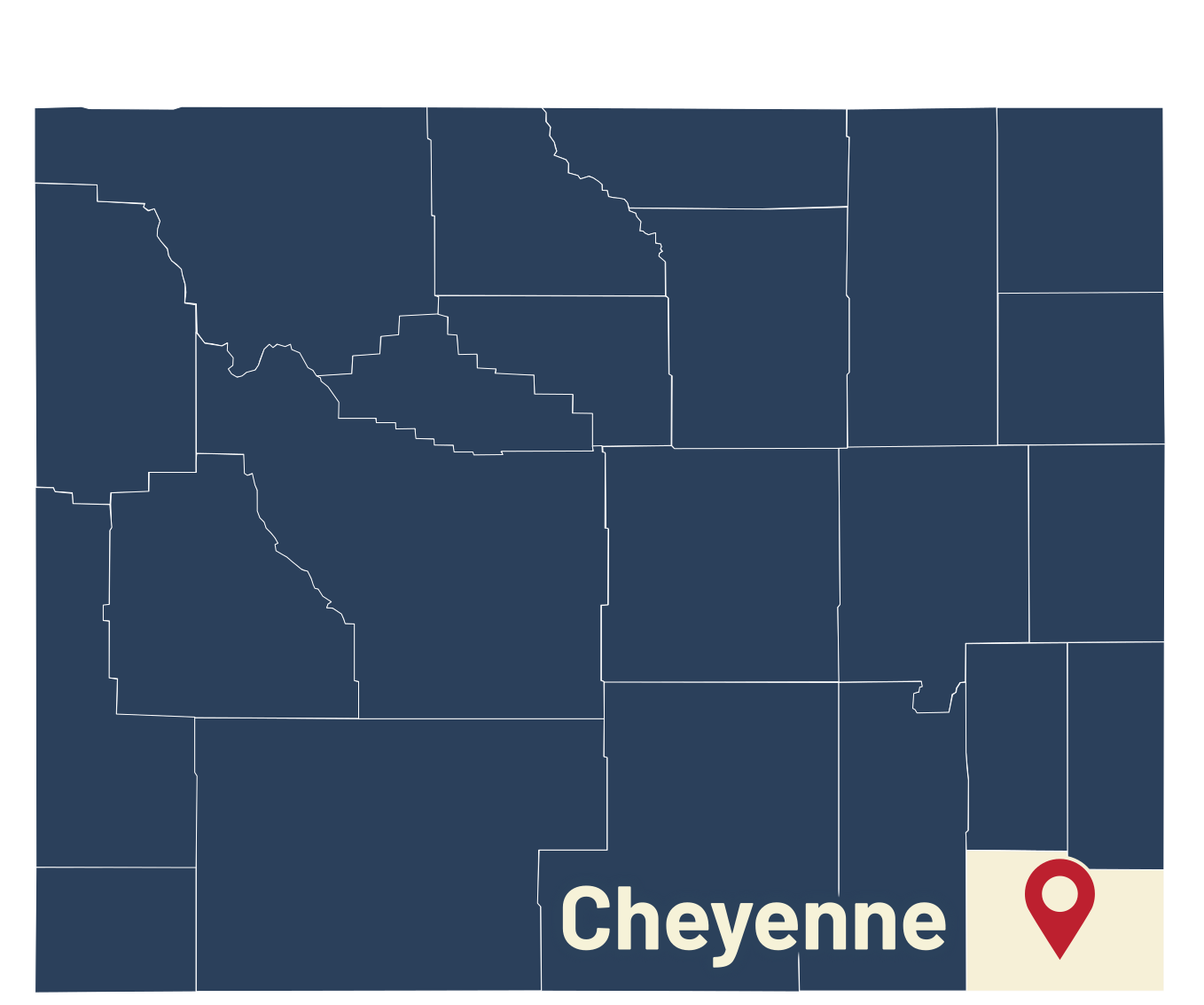
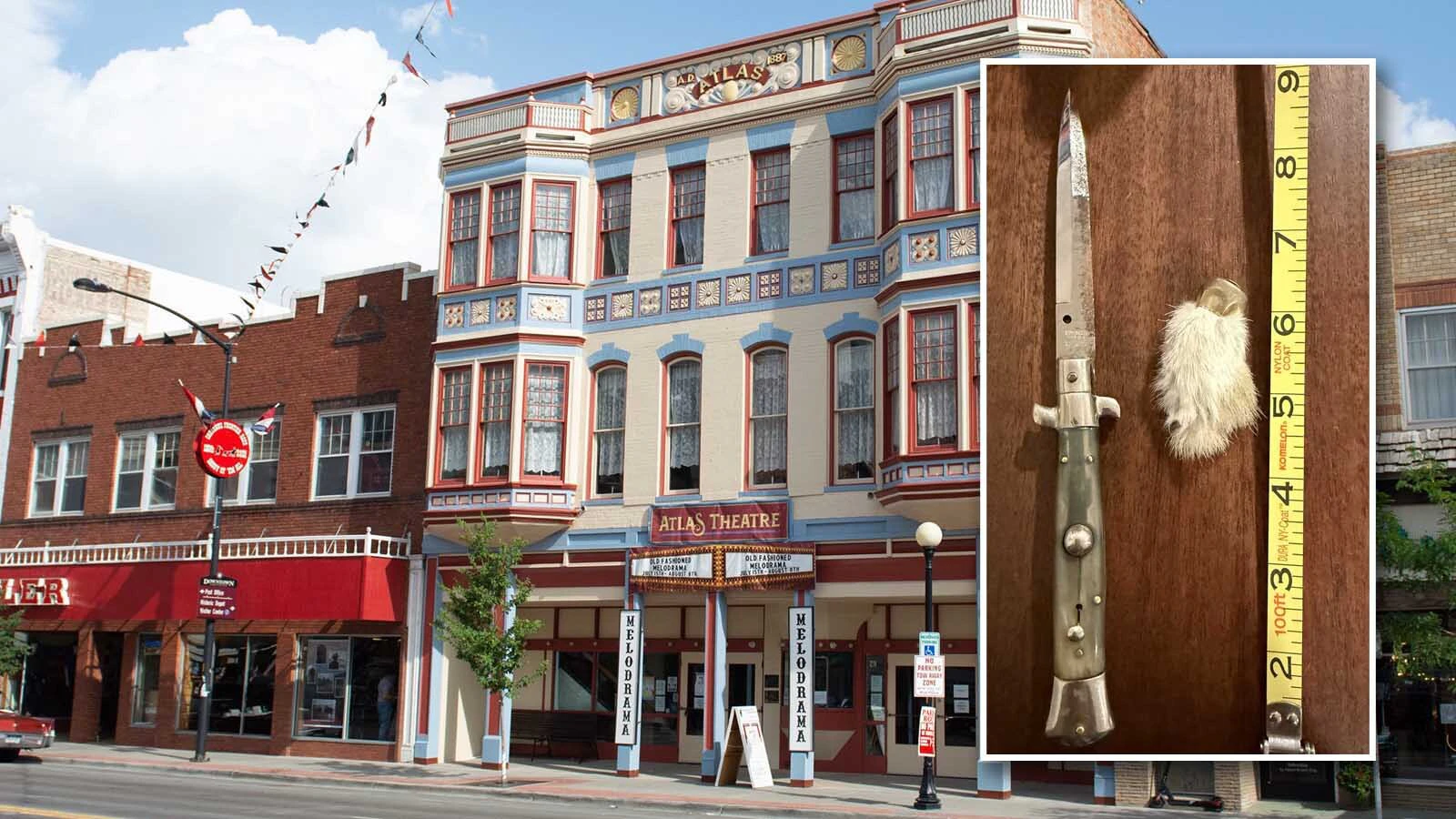
If an imaginative novelist was dreaming up cool props for a haunted theater, they couldn’t beat what a renovation crew found hiding in the ceilings and walls of Cheyenne’s Atlas Theatre.
The discoveries add new historical details about the Atlas Theatre’s early days and are sparking curiosity — and potentially new stories — about the more peculiar items inexplicably left behind.
Like the hand-sewn pair of overalls and a wool jacket with matching pants, stuffed up inside some ceiling tiles on the third floor.
The two items appeared to be the same size, suggesting they were owned by the same person. The overalls included a small emblem for a steam engine, strongly hinting they belonged to someone who worked for the railroad.
The wool suit, meanwhile, was considerably dressier — the kind of clothes one might have worn to a party or other fancy event happening at the Strand Hotel.
But why would one man’s working clothes and his good suit be stuffed into the ceiling like that?
The question already has a few story wheels turning, Cheyenne Little Theatre Players longtime member Brenda Lyttle told Cowboy State Daily.
“One of the stories, which ties in with the legend that the Atlas was at one time a bordello, is that perhaps there was a jealous husband or someone who was coming in, and someone needed to hide their clothes,” Lyttle said. “That’s a fun story.”
Or maybe it’s connected to an existing ghost tale.
“The room where they were found has a ghost story about a murder-suicide,” Lyttle said. “Or perhaps the person who was killed had those clothes and the murderer hid them in the ceiling tile.
"So there’s all kinds of intriguing possibilities why there would be two sets of clothes, basically working clothes and dress clothes, probably belonging to the same person,” she added.
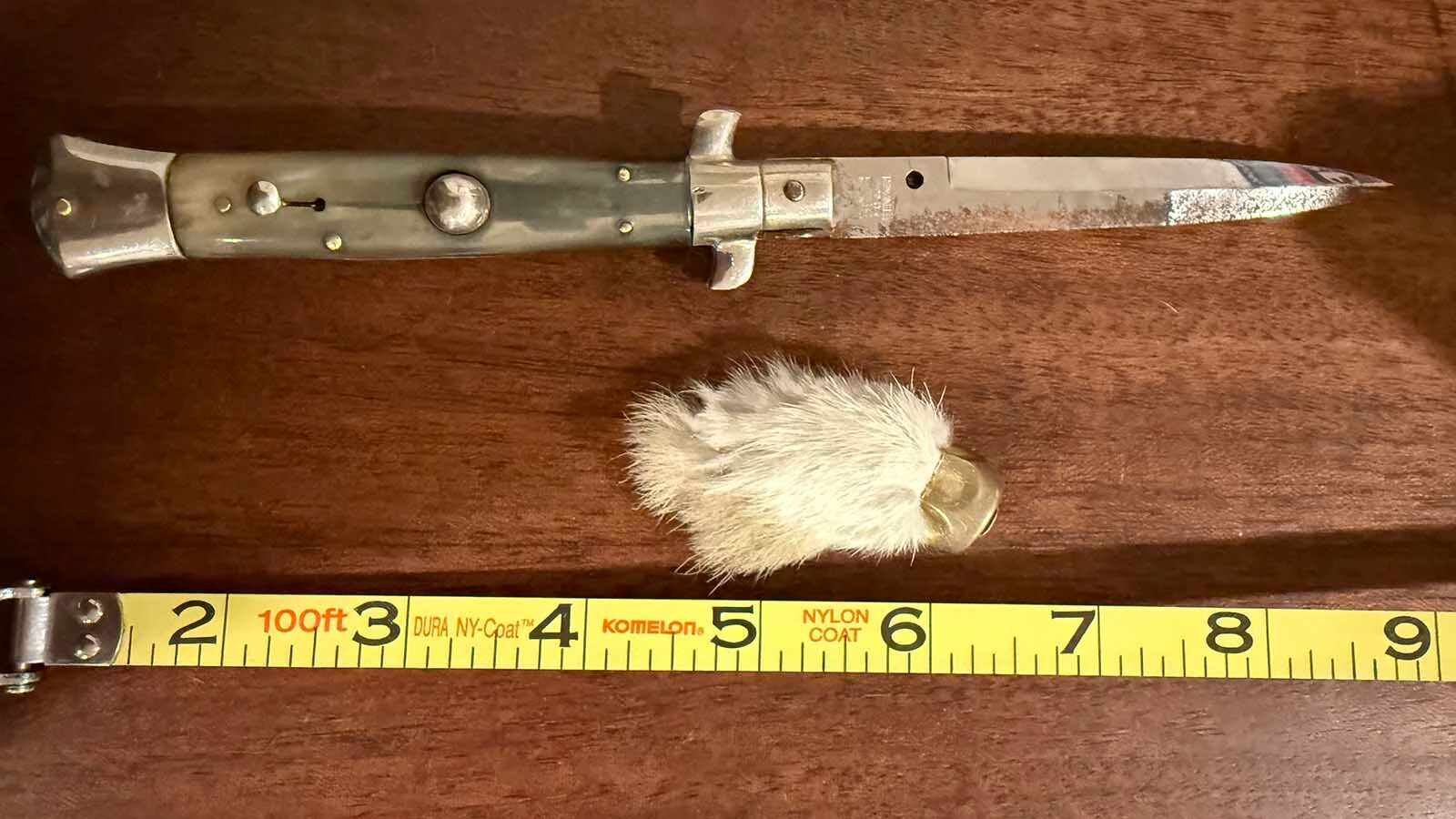
A lucky rabbit's foot and an Italian stiletto knife dating back to around the 1950s were among items found hiding in various nooks and crannies of the Atlas. (Courtesy Friends of the Atlas, Cheyenne Little Theatre) 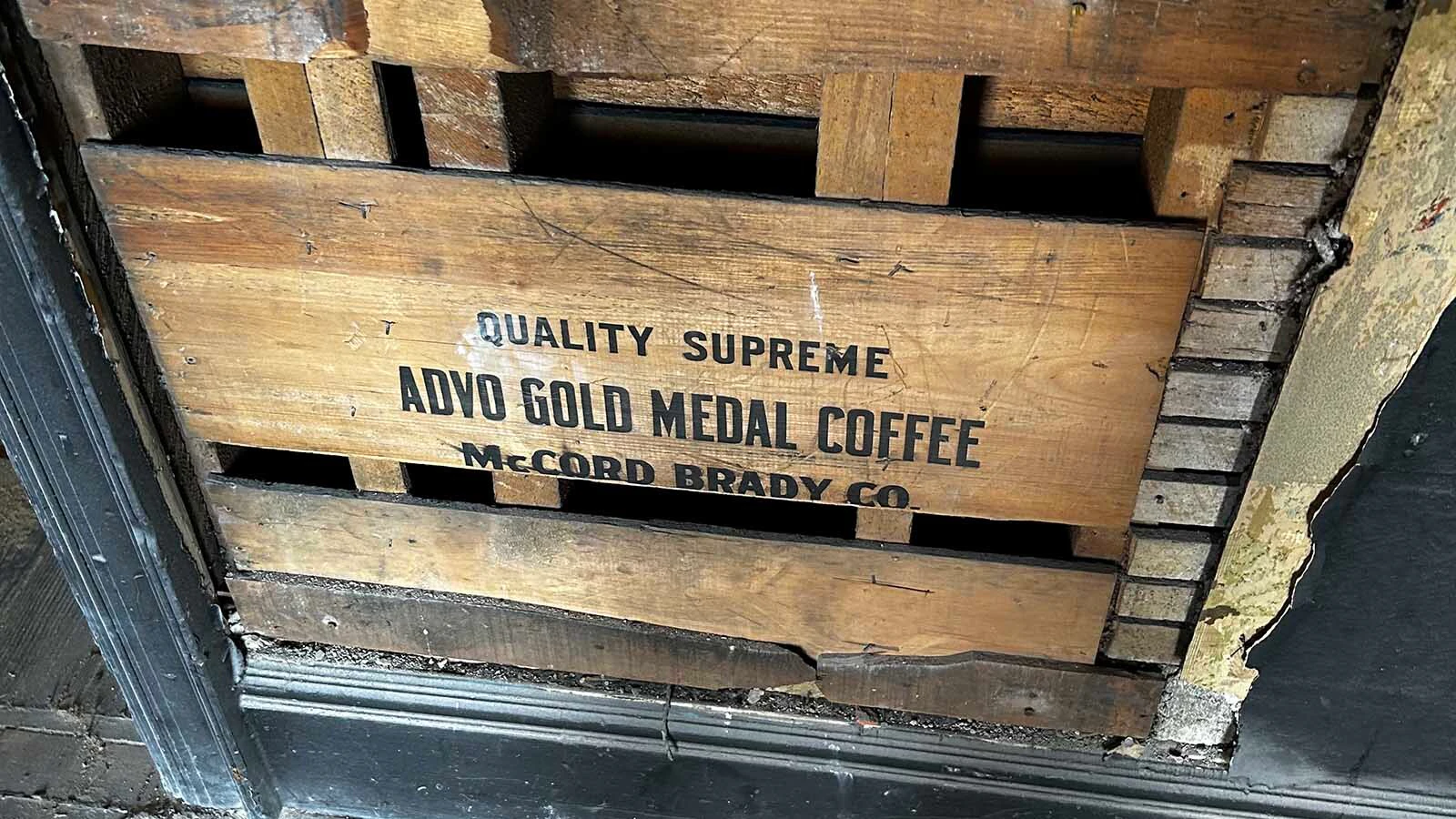
Some of the boards used at the Atlas included these old packing crate boards for Advo Gold Medal Coffee. (Courtesy Friends of the Atlas, Cheyenne Little Theatre) 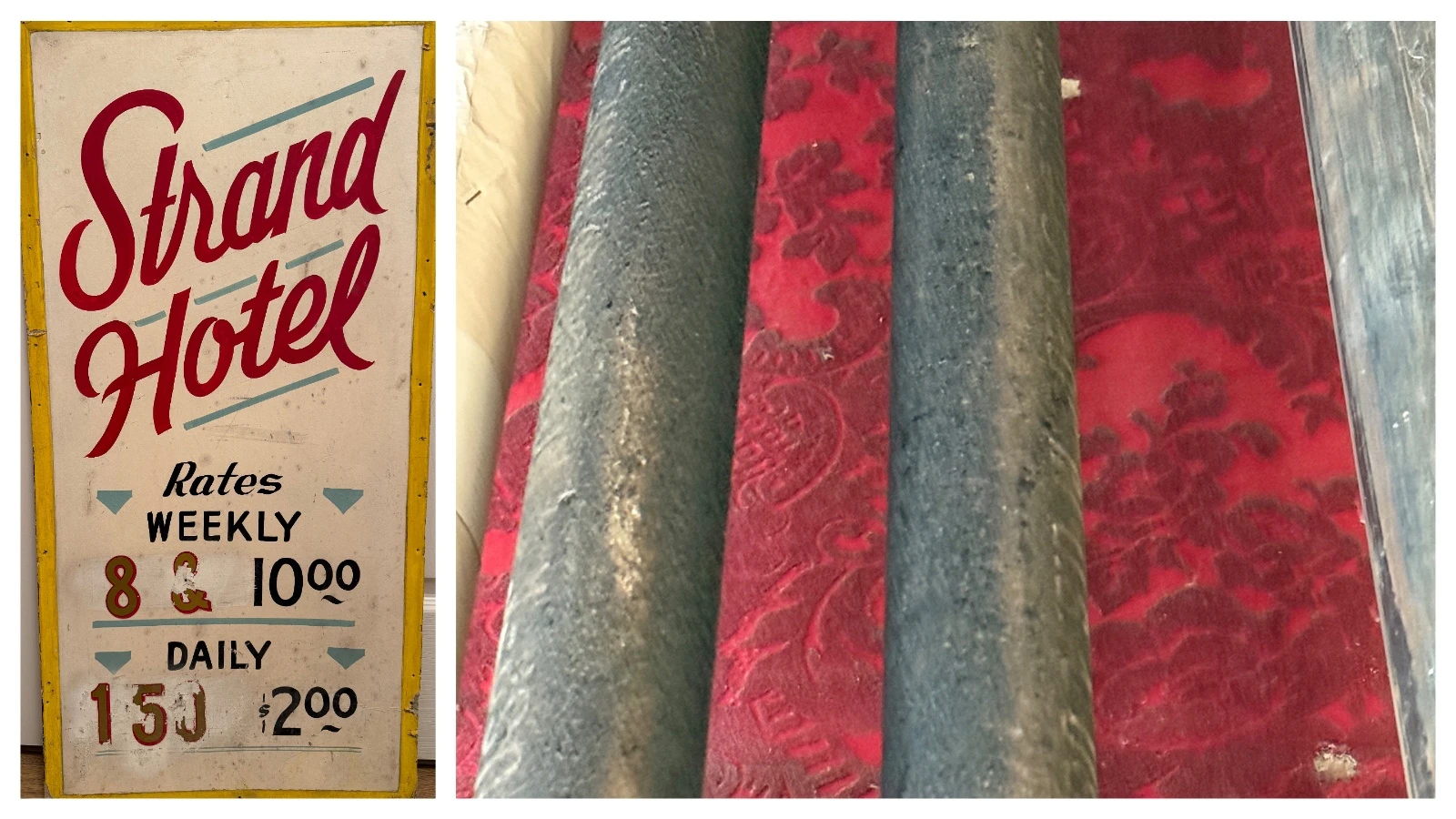
This old Strand Hotel sign, left, shows the room rates of days gone by and was among items found hiding in various nooks and crannies at the Atlas. Right, this red velvet wallpaper was one of the original wallpapers used at the Atlas. (Courtesy Friends of the Atlas, Cheyenne Little Theatre)
Knife, Rabbit’s Foot Add To Atlas Mysteries
An experienced costumer who examined the pieces confirmed that the clothes were hand-sewn, using older construction techniques, suggesting these are not simply forgotten costume pieces.
The clothes are hiding no more. They’ve been mounted on mannequins in the Atlas lobby, so visitors can view them and imagine who once wore them.
Clothes stuffed in the ceiling aren’t the only crime-novel-worthy artifact that was found.
Down in the basement, up high in one of the rafters, workers also discovered a 9-inch stiletto-bladed knife, which one theater insider believes is likely a 1950s Italian piece.
Next to that knife there was also a lucky rabbit’s foot — a classic good-luck charm, but sitting in a very odd place.
No one knows who stashed the knife and lucky rabbit’s foot there or why, but they are mysteries that are inspiring storytelling at the theater, and could become the subject of new plays.
“We have some folks who write melodramas,” Lyttle said. “So who knows when some of these items may show up.”
Legendary History
Architectural Digest chose the Atlas Theatre as Wyoming’s most iconic building in 2018 for its beautiful architecture.
Its history is just as legendary as the building is beautiful.
Built in 1887, three years before Wyoming was even a state, it was part of a wave of construction that included Union Pacific’s train depot, the Wyoming Capitol building, and St. Mark’s Church.
At first, it was a confectionary shop with professional offices on its upper levels. Then, in 1907, architect William Dubois was hired to convert the first floor into a theater with a 550-seat auditorium. That opened in 1908.
It’s had a colorful life ever since. During the days of Vaudeville, trains unloaded directly behind the Atlas, to accommodate troupes touring by rail.
The back of the theater had massive, barn-style doors that opened wide, allowing performers, musicians and all their heavy stage equipment to move straight from train car to theater.
The unusually wide alley still exists today between the Atlas and the neighboring Albany Restaurant, where a remnant remains of where those tracks once ran.
The building, now 139 years old, has been on the National Register of Historic Places since 1973 and has stood the test of time well.
But every old building needs a bit of TLC now and then, and that’s what’s been happening at the Atlas lately.
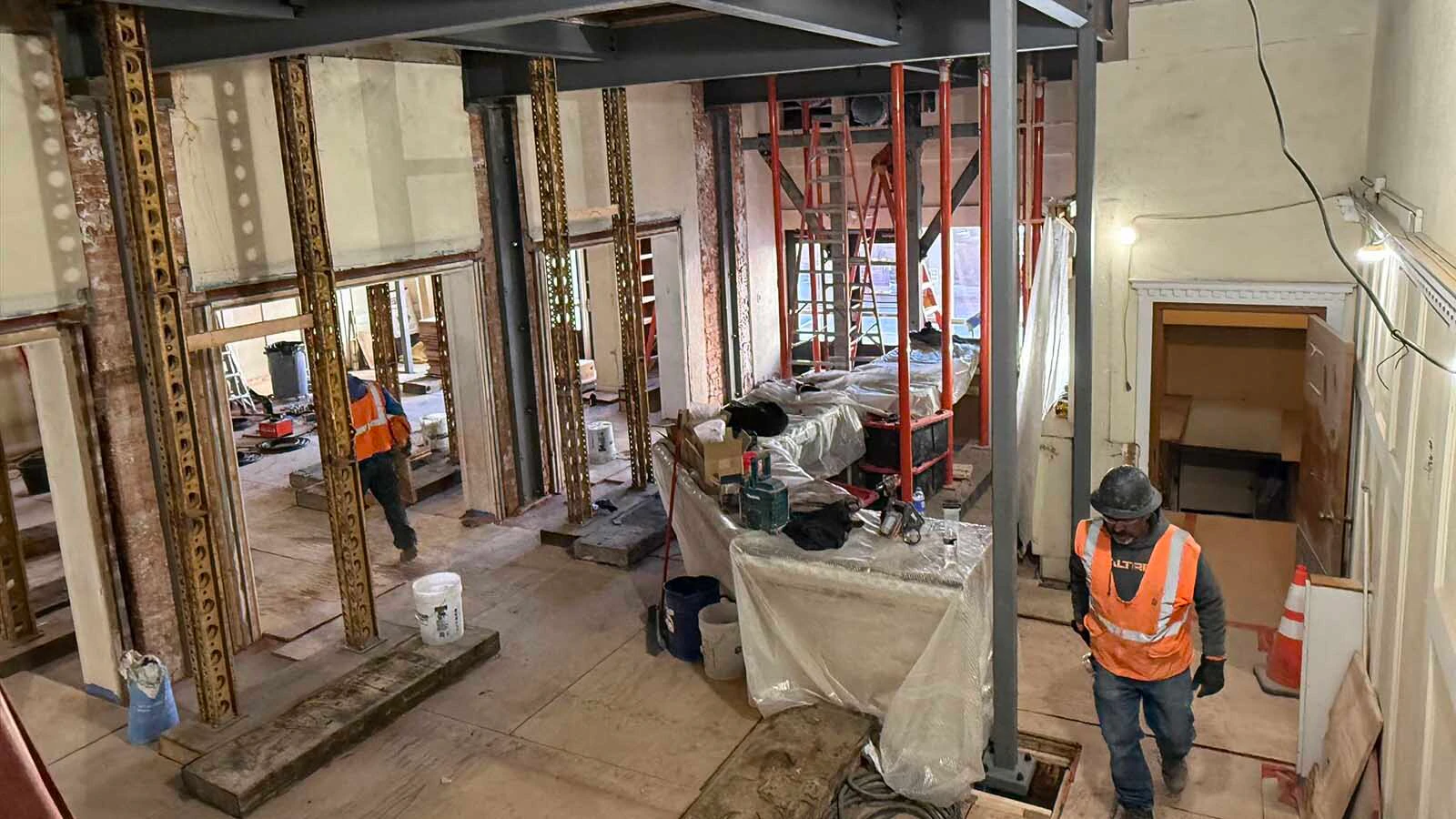
A renovation project was just completed to shore up the building, addressing a major problem that threatened the building’s structural integrity.
The Atlas Theatre had relied on a more old-fashioned method of construction where the ceiling is hanging from the roof for its support, rather than supported from below.
With changes to its structure over the years, that approach was no longer appropriate, and the ceiling was starting to sag.
New support beams have now been added to the structure, ensuring the Atlas can continue to be around for the next 139 years.
Future phases of restoration work will be more visible, including updates to the lobby and tackling upper floors.
Future ideas for the spaces are still being discussed, but one possibility includes immersive experiences that lean into the Atlas’ ghost stories and its cattle-baron-era box seats.
The artifacts found in the walls, meanwhile, are not hurting the imagination when it comes to brainstorming for the future.
Revealing More History
Not all of the artifacts discovered during the renovation were quite so dramatic as the stiletto knife or the hidden clothing, but they still point the way to deeper stories and history for the Atlas Theatre in Wyoming.
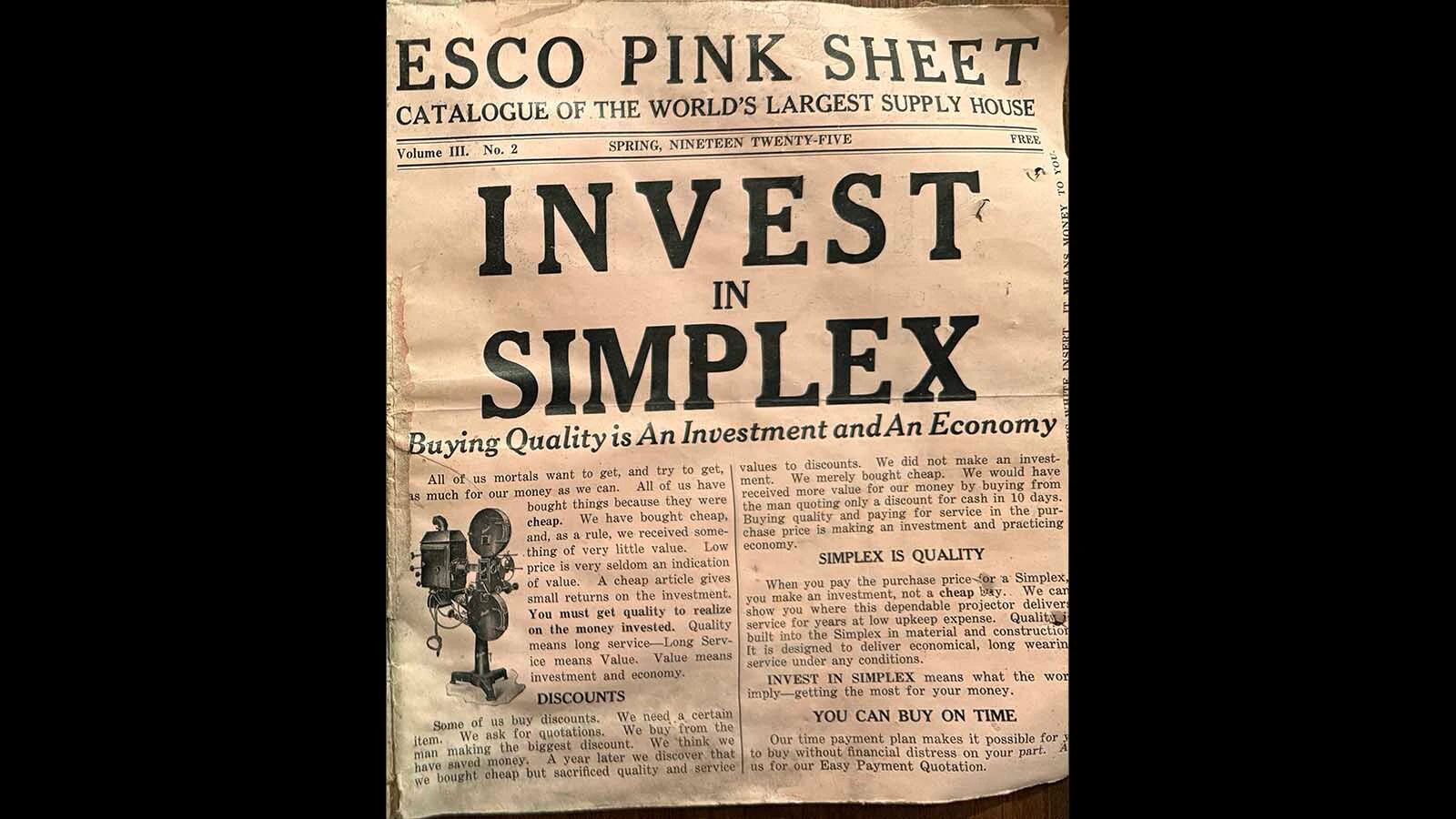
Under the second-floor balcony, for example, workers found a 1925 theater supplies catalog from Simplex, the kind of company that once serviced silent-movie houses.
“This is fascinating for us as theater people,” Lyttle said. “We can look at this and see what kind of technology theaters were using, specifically the Atlas Theatre in 1925.”
The Atlas does have events where silent movies are shown two or three times a year, Lyttle added.
“(Simplex) is selling theater supplies, so you’ll see like cameras and movies, things like that,” she said. “That was really interesting for us to see.”
An old Columbia radio battery was also found, along with a dry cell, which Lyttle said can become part of a bigger story about Atlas history.
“We also found an old sign for the Strand Hotel,” she said. “So that’s really cool, and we can see how much the rates were. They were $8 a week or $10 a week. There were also daily rates.”
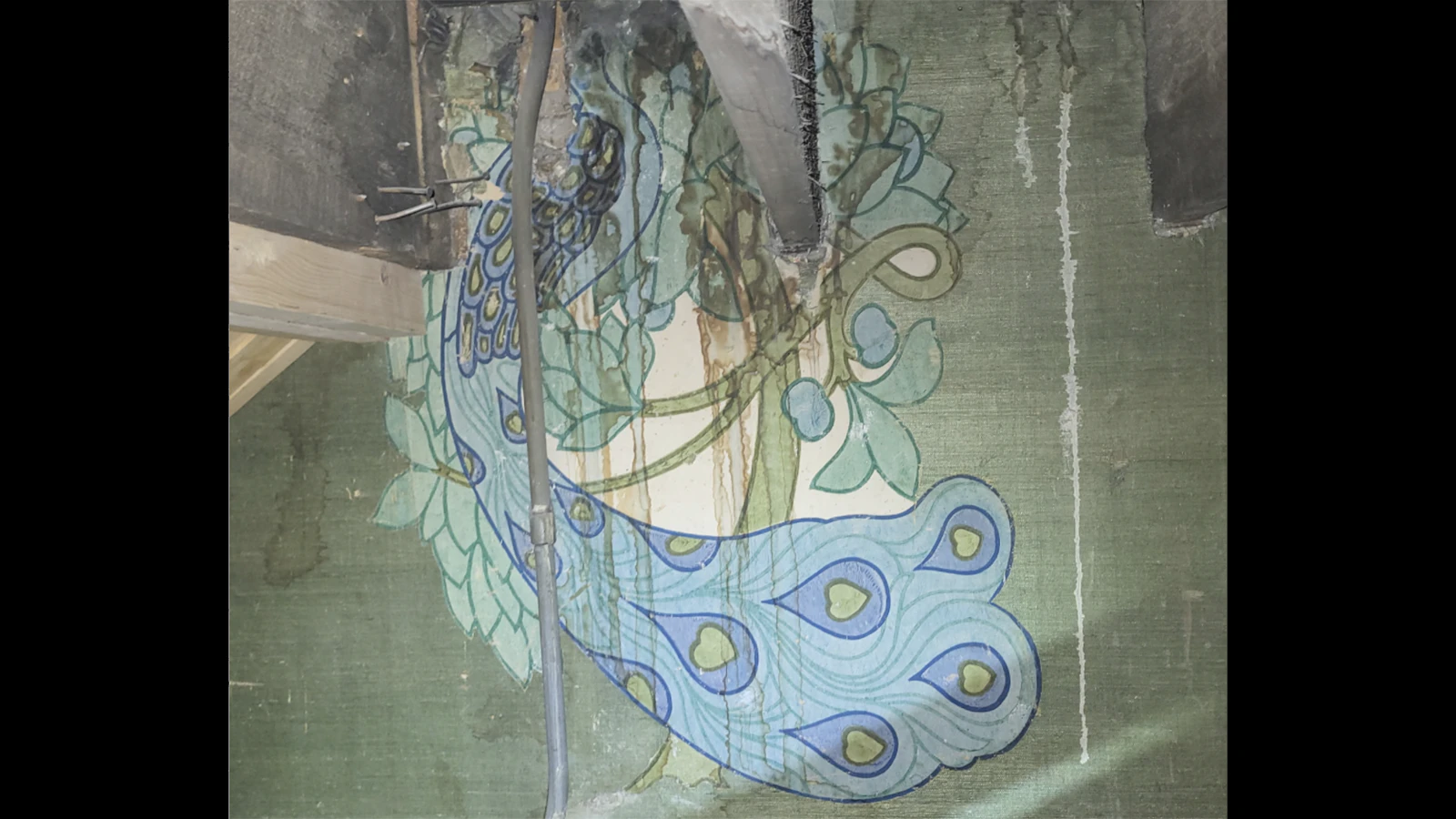
This brilliant peacock is hiding behind the walls at the Atlas Theater Plans are to use the motif as a logo at some point in the future. (Courtesy Friends of the Atlas, Cheyenne Little Theatre) Some of the boards used at the Atlas included these old packing crate boards for Advo Gold Medal Coffee. (Courtesy Friends of the Atlas, Cheyenne Little Theatre) 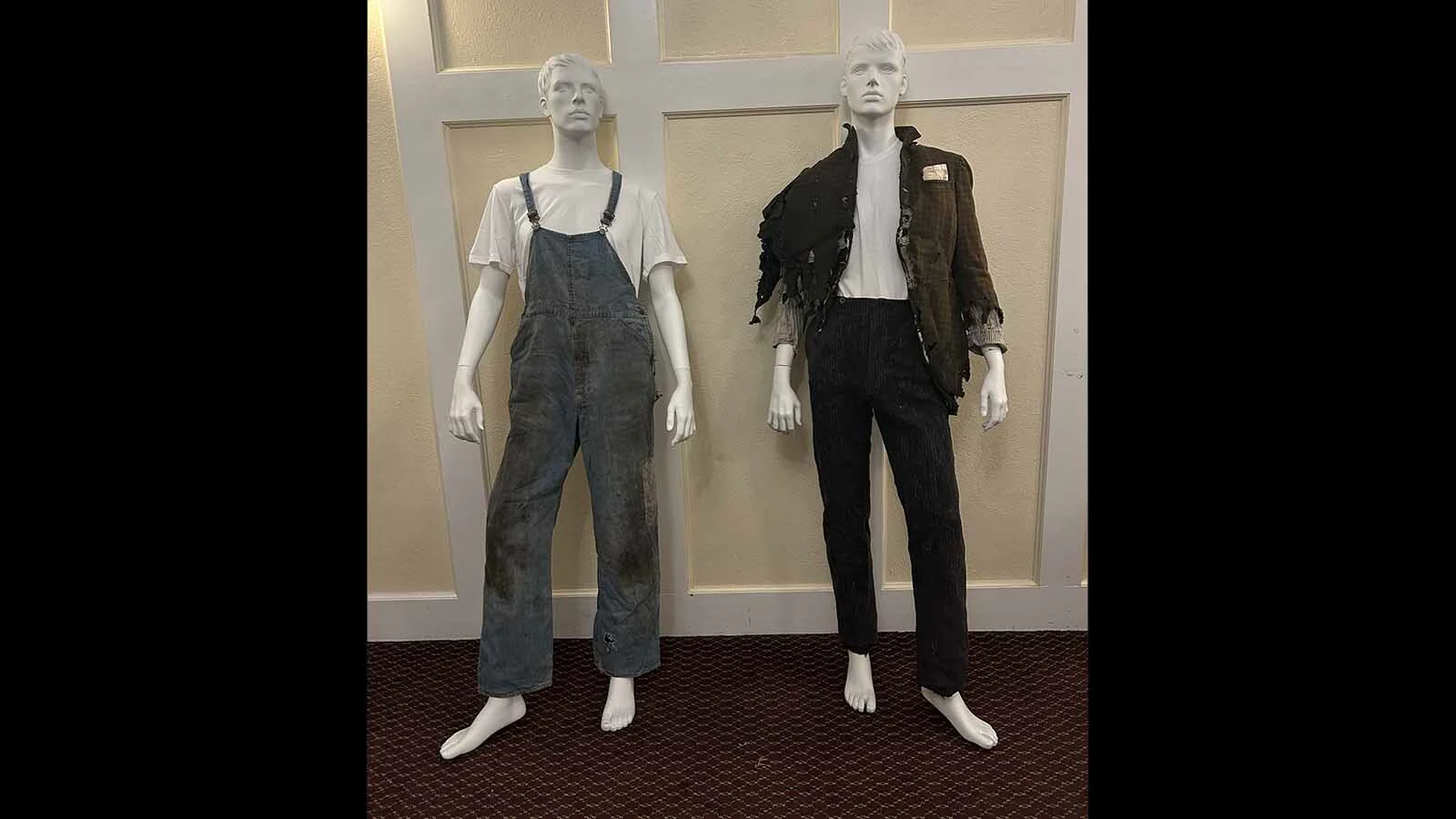
These hand-sewen clothing items were found hidden behind a ceiling tile in the attic at the Atlas. (Courtesy Friends of the Atlas, Cheyenne Little Theatre)
Perfect Peacock
One of the finds Lyttle is most excited about, though, remains hidden. It’s a remnant of the giant peacock wallpaper from when the building opened in 1887.
The pattern shows a brilliantly colored peacock, posed against a lush green background.
“It would have been above the soda fountain, when the Atlas was first opened,” she said. “We found a remnant of that wallpaper in the dropped ceiling under the theater entrance.
“So, it would have been in place before the theater portion was added in 1908. So it was there in 1887, and it was built over in 1908.”
The wallpaper was left in place, but had to be covered back up again to preserve it. It is being seen as treasure, to be unearthed again someday, potentially during future renovation projects.
“We know it’s there, and we and the Friends of the Atlas and Cheyenne Little Theatre are having conversations about what to do with that peacock logo,” Lyttle said. “That’s something we would like to play with in the future, somehow bringing that peacock design back to life.”
A ‘Living' Building With More Stories To Tell
The Atlas is more than just a theater to those who have been involved with it these many decades.
It’s a character in its own right.
Many believe the Atlas is haunted and will talk about its cold spots on certain stairs and the drafts in closed rooms, as well as props that don’t stay put.
Now, with artifacts coming out of its walls, there are even more ghost stories to tell. A knife and a rabbit’s foot tucked away like evidence. Clothing stashed behind an old ceiling tile.
Wallpaper documenting designs of old and theatre catalogs that speak to the silent movie generation.
It’s all adding to the three-dimensional diary of Wyoming’s historic Atlas Theatre and its many interesting tales.
“These items are such treasures, because it shows us that we can’t just buy this building and put melodrama into it,” Lyttle said. “There is a whole history, a whole set of stories, people throughout the century and a half who have been part of this building and who have experienced parts of their lives in this building.”
Telling stories is what the theater is all about, Lyttle added.
“We are so excited that now we have some clues of some past human stories that are intriguing and interesting and contain valuable information for us,” she said. “When we learn about the past, that also helps us make plans and dreams for the future.
"And that building is alive. I’ve been in shows there, I’ve directed shows there,” Lyttle added. "You always get a sense when you are in the building it is alive, and this is more evidence that the building has always been very much alive.”
Renée Jean can be reached at renee@cowboystatedaily.com.