
In 1958, the Wyoming Governor's Mansion in Cheyenne hosted an underground fight club.
The ring was makeshift and all fights were open-weight. It was by invite only, and the club’s promoter was also a frequent contender — he weighed in at 67.5 pounds.
That promoter was Paul Hickey, then 8 years old and the son of Wyoming’s 24th governor, John Joseph Hickey.
Paul and his brother John had been inspired by the Gillette Cavalcade Friday Night Fights. Their fight club was a hit with the neighborhood’s rowdier kids, until the authorities found out and shut it down.
“My mother got a belly full of it and finally she said, ‘That’s the end of this. We’re not going to have fights in the basement,’” said Paul Hickey, now 76. “That’s when the boxing ring had to come down.”
Probably for his own safety.
“When I got in the ring and got beat up by a neighborhood kid, I can’t say I was mimicking Floyd Patterson all that well,” he said, referring to the two-time heavyweight championship fighter after whom he styled his own one-two attack style.
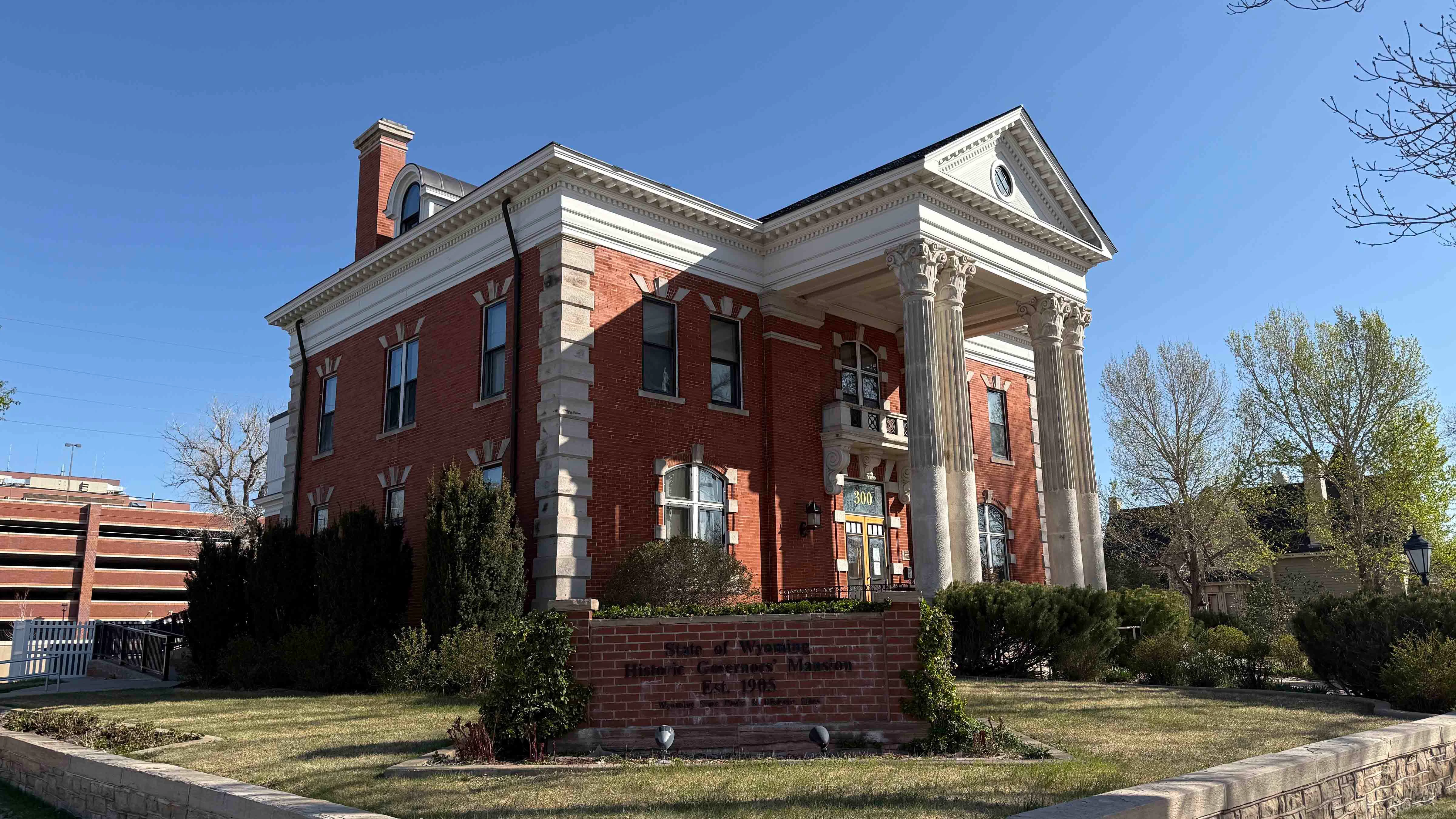
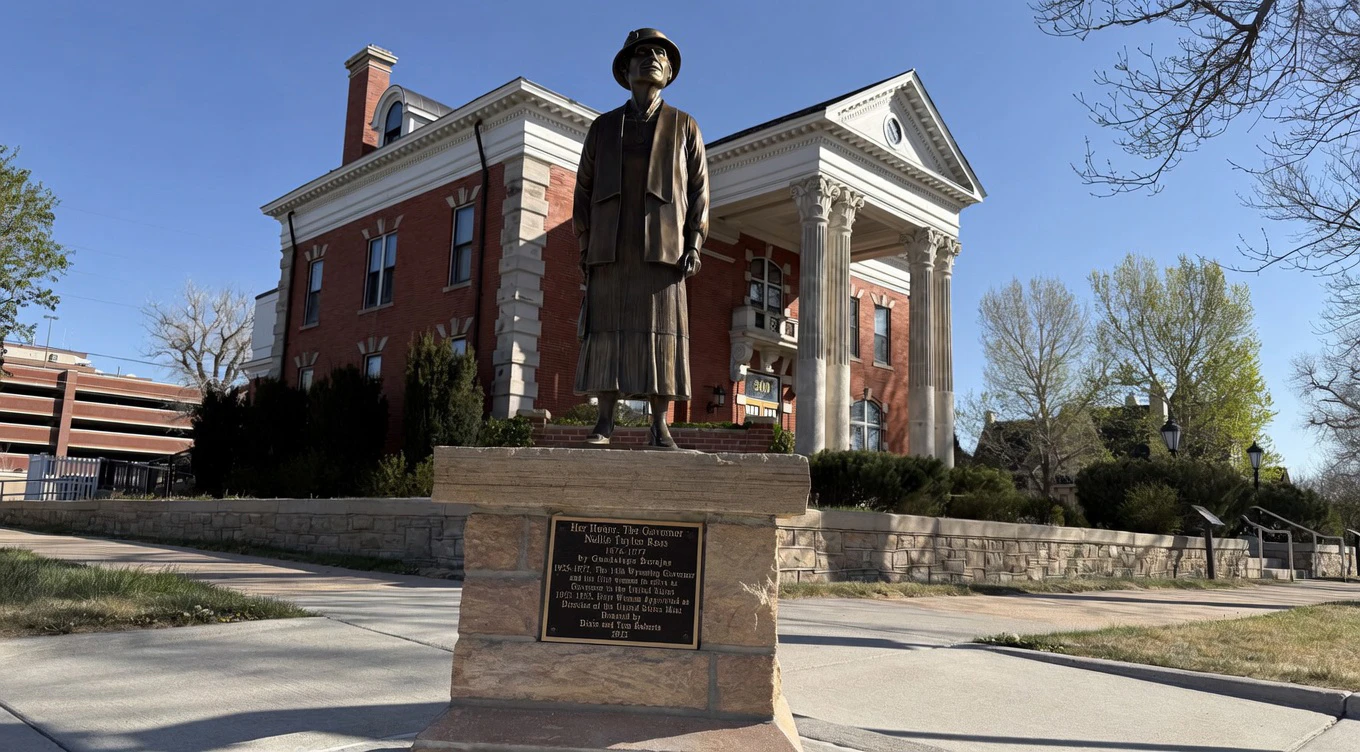
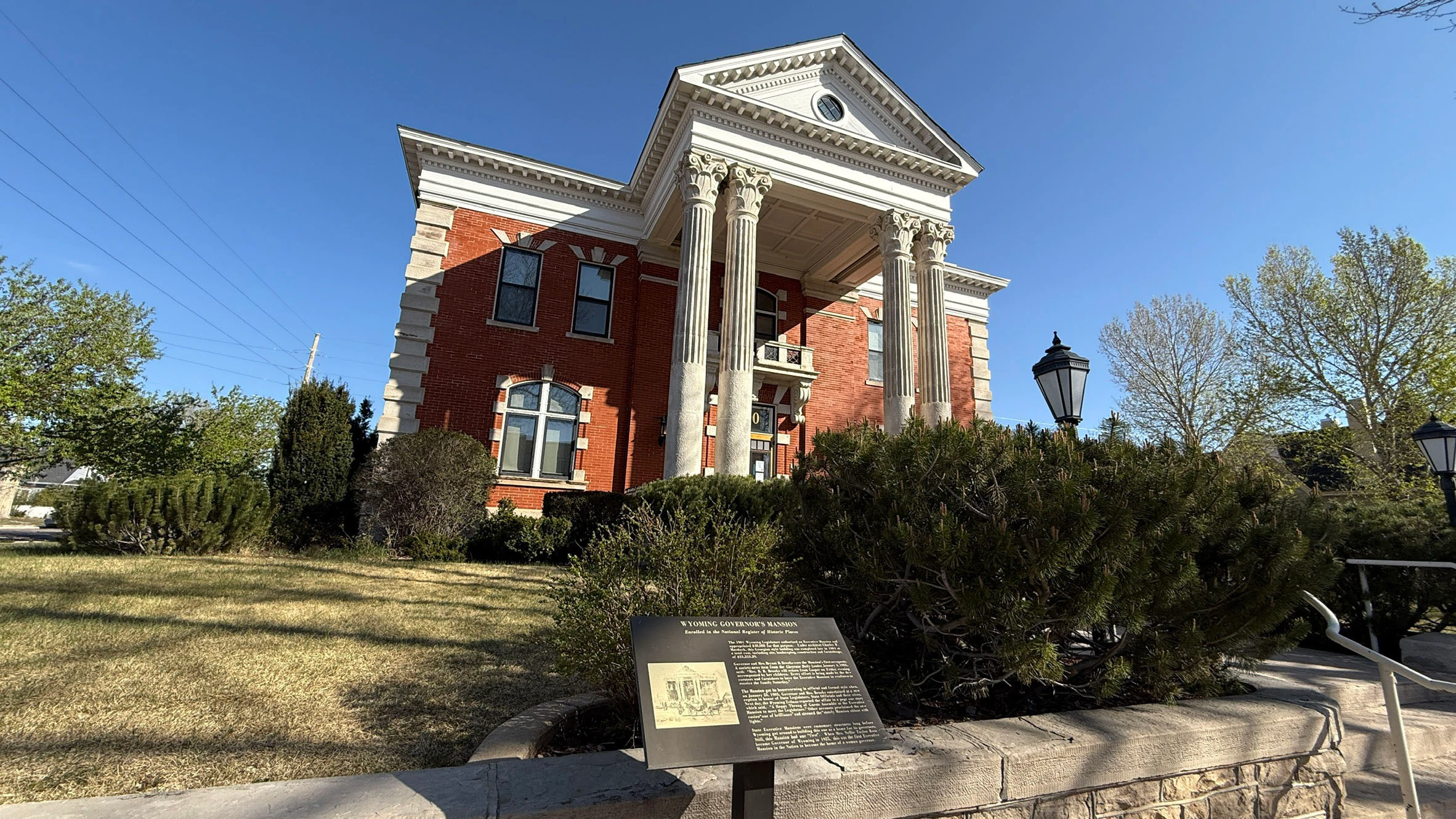
Hickey is one of the few remaining former tenants of the Historic Governor's Mansion at 300 E. 21st St., a Colonial Revival-style home made of molded brick, three story sandstone columns, and barrel windows that reflect the city’s early architectural ambitions.
The life that unfolded inside its walls was governed by the standards of a different time, too.
Hickey and other former residents offer a rare view into what it meant to raise a family inside a public building that was also a private residence.
It was a life that could feel joyously open with banquet dinners, impromptu gatherings, and intimate interactions with staff.
But it was also a place where the line between public and private could be blurred.
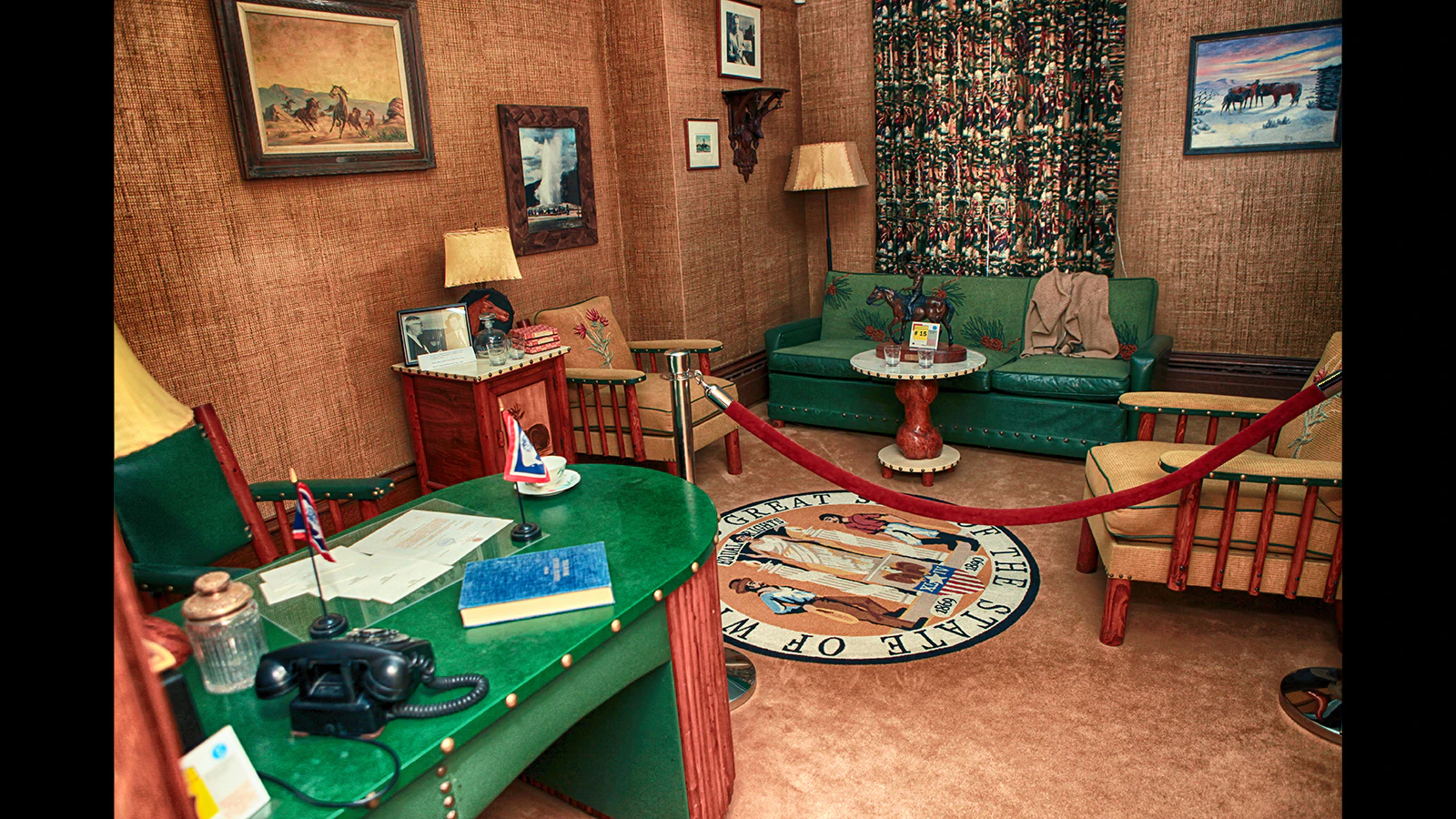
The home office in the historic Wyoming Governor's Mansion, complete with a landline phone and carpet on the walls, an emerald green and mahogany desk, some chairs, a green couch, paintings and a carpet depicting the seal of the state of Wyoming. (Photo by Matt Bilden, U.S. Air Force) 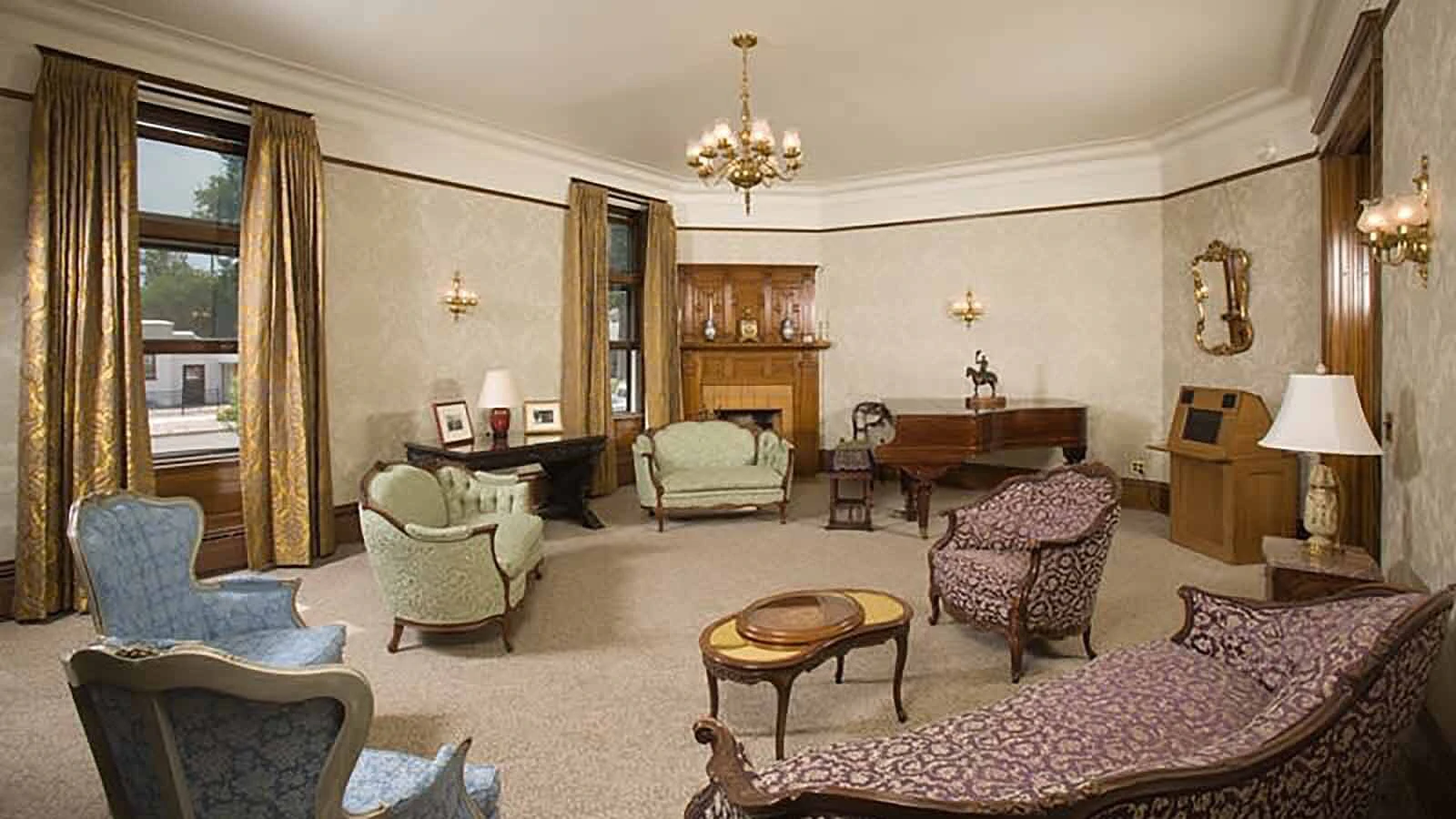
The sitting room at the historic Wyoming Governor's Mansion at 300 E. 21st St. in Cheyenne. (Visit Cheyenne) 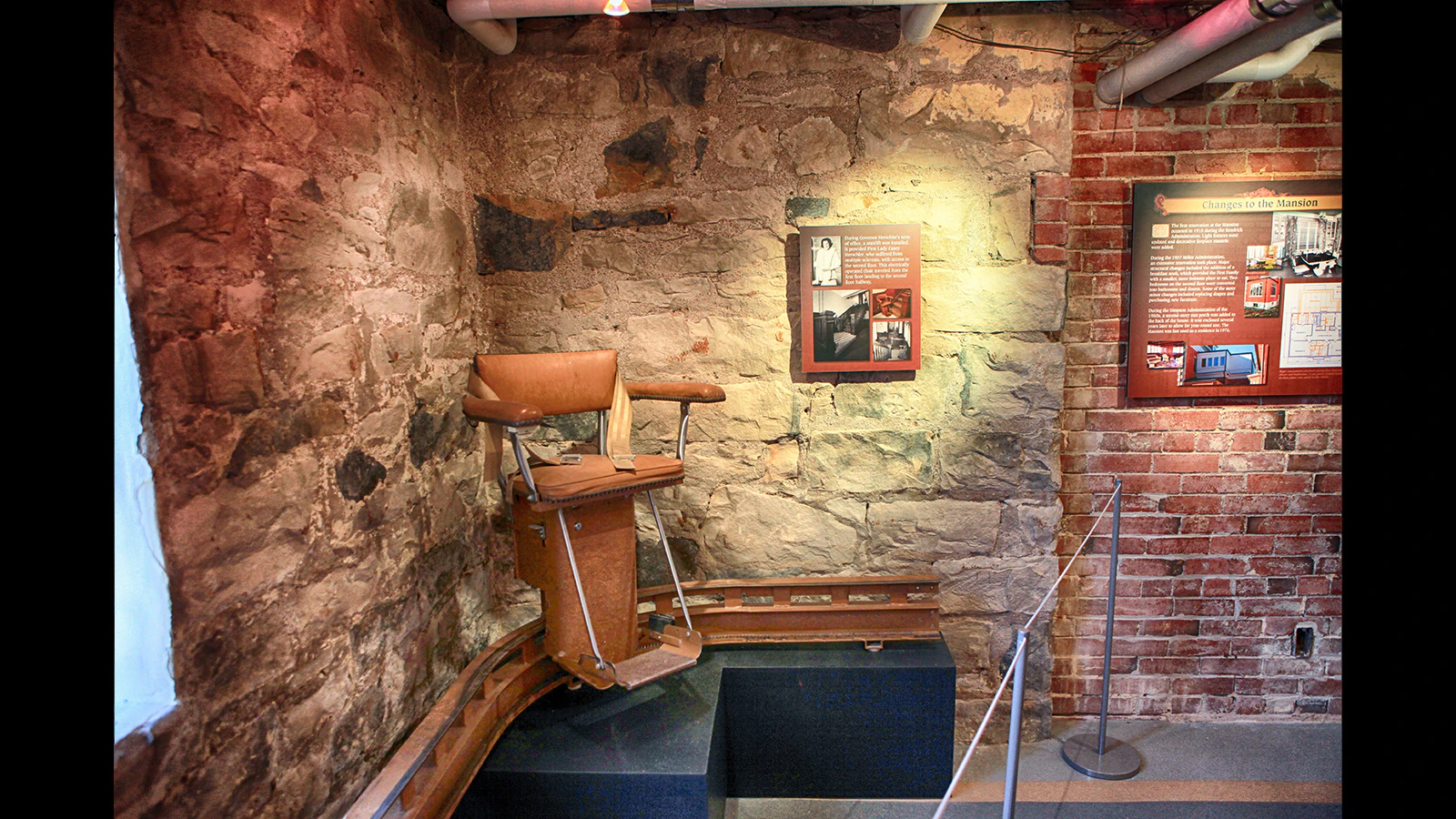
During Wyoming Gov. Ed Herschler’s term of office, a stair-lift was installed. It provided First Lady Casey Herschler, who suffered from multiple sclerosis, with access to the second floor. (Photo by Matt Bilden, U.S. Air Force)
Adolescents
Hickey remembers the Governor’s Mansion not as a symbol of power, but as a place with plenty of room to play.
He unfurled his baseball cards in the library and tucked away with comic books in the den.
He and his brother formed a kids club in the loft above the mansion’s carriage house. They called it the “Hangman’s Hideout,” a name derived from its pulley hay hoist.
He played Little League for the Phillies and traded playing cards at the Merry Jerry memorabilia store just around the block.
“Like a lot of kids at that age, the Little League team and Major League Baseball were the focus of my life,” he said.
Not a lot of kids that age, however, hung around with presidential candidates.
Hickey remembers a warm summer night when he joined his father and then‑presidential contender Lyndon Johnson on the mansion porch. Johnson was in Cheyenne for Frontier Days and stopped by after to visit with the governor.
“My brother and I went out on the patio off the main bedroom, and Lyndon and dad were out there having a drink,” said Hickey. “We just sat around and shared from the sidelines the fact that dad was hanging out with Lyndon Johnson.”
That relationship would soon draw J.J. Hickey to Washington at President John F. Kennedy’s request.
Following the unexpected death of Wyoming’s senator-elect, and after some politically awkward maneuvering, Hickey would leave the governorship to serve in the U.S. Senate in 1960.
But for the 10‑year‑old watching from the porch, what mattered then was how the house felt.
"There wasn't anywhere in the mansion I felt uncomfortable,” he said. "That’s probably to the credit of mom and dad, trying to make that unnatural space into a real home for a real family."
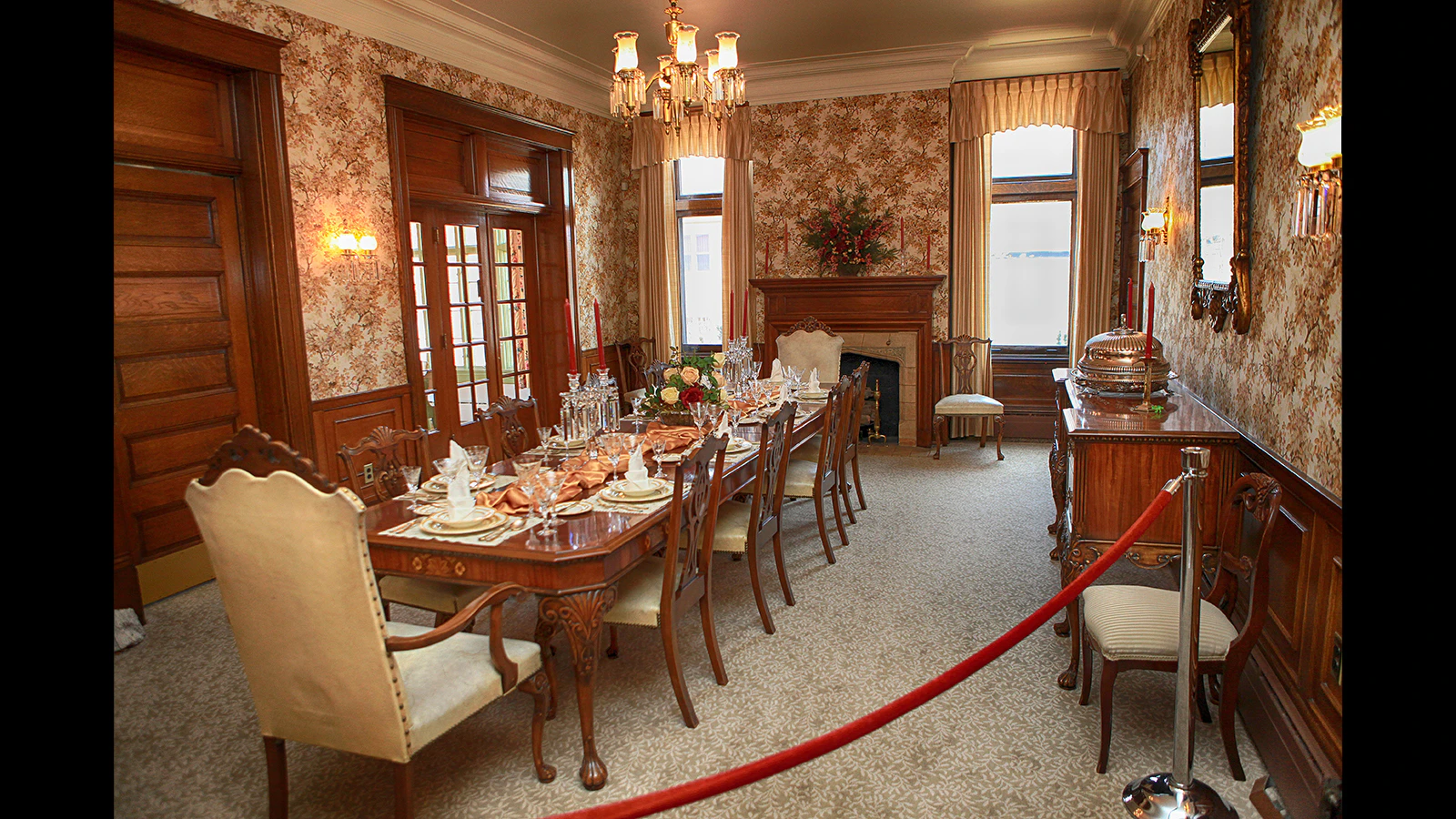
The dining room of the historic Wyoming Governor’s Mansion remains set for a state dinner, complete with original furniture and cutlery. The home has been host to family dinners, formal state events and dignitaries from around the country. (Photo by Matt Bilden, U.S. Air Force) 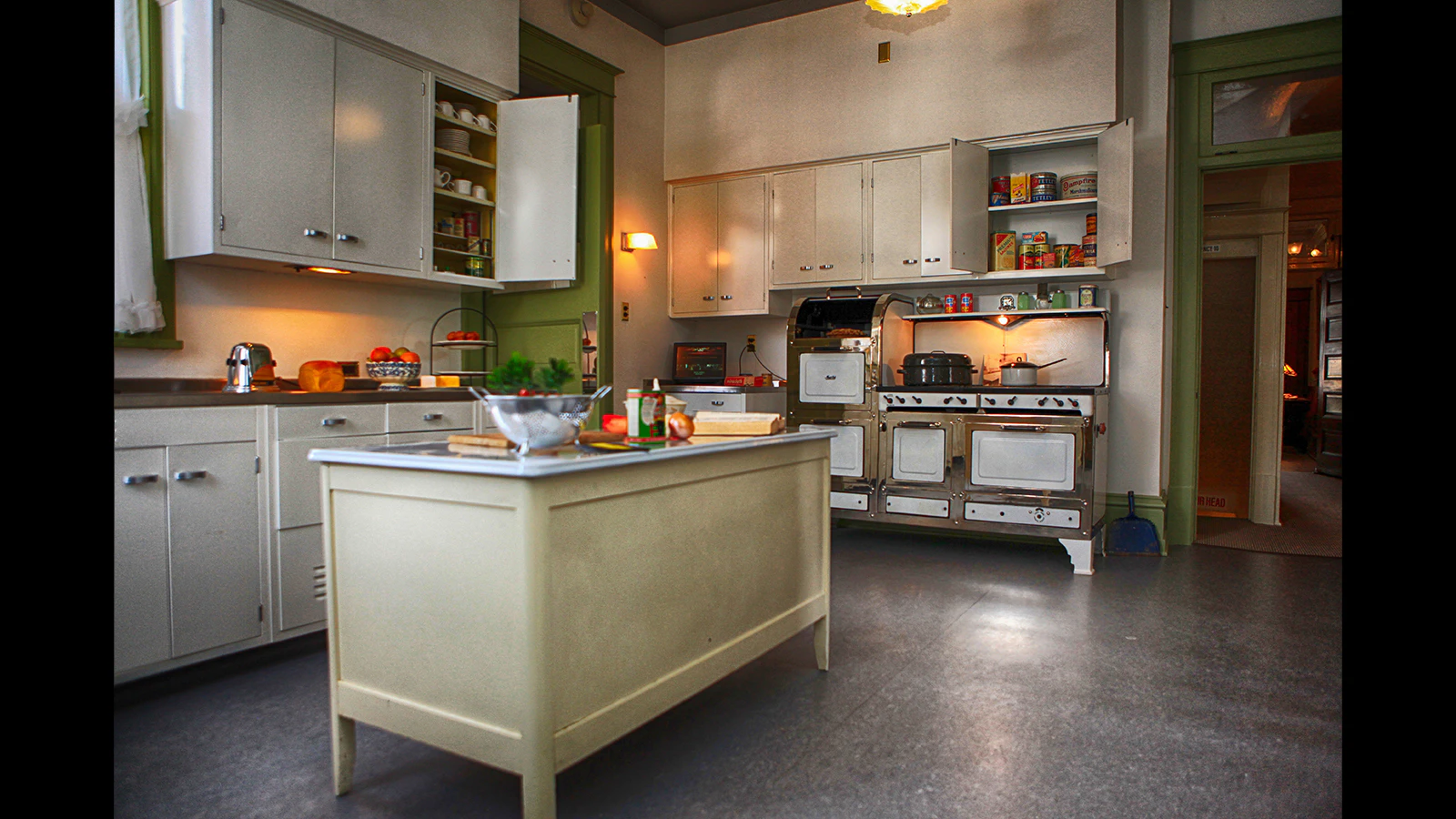
The kitchen of the historic Wyoming Governor’s Mansion gives a detailed look at the “modern kitchen” of the mid 1900s. Many state dinners and dignitaries were served from this room. (Photo by Matt Bilden, U.S. Air Force) 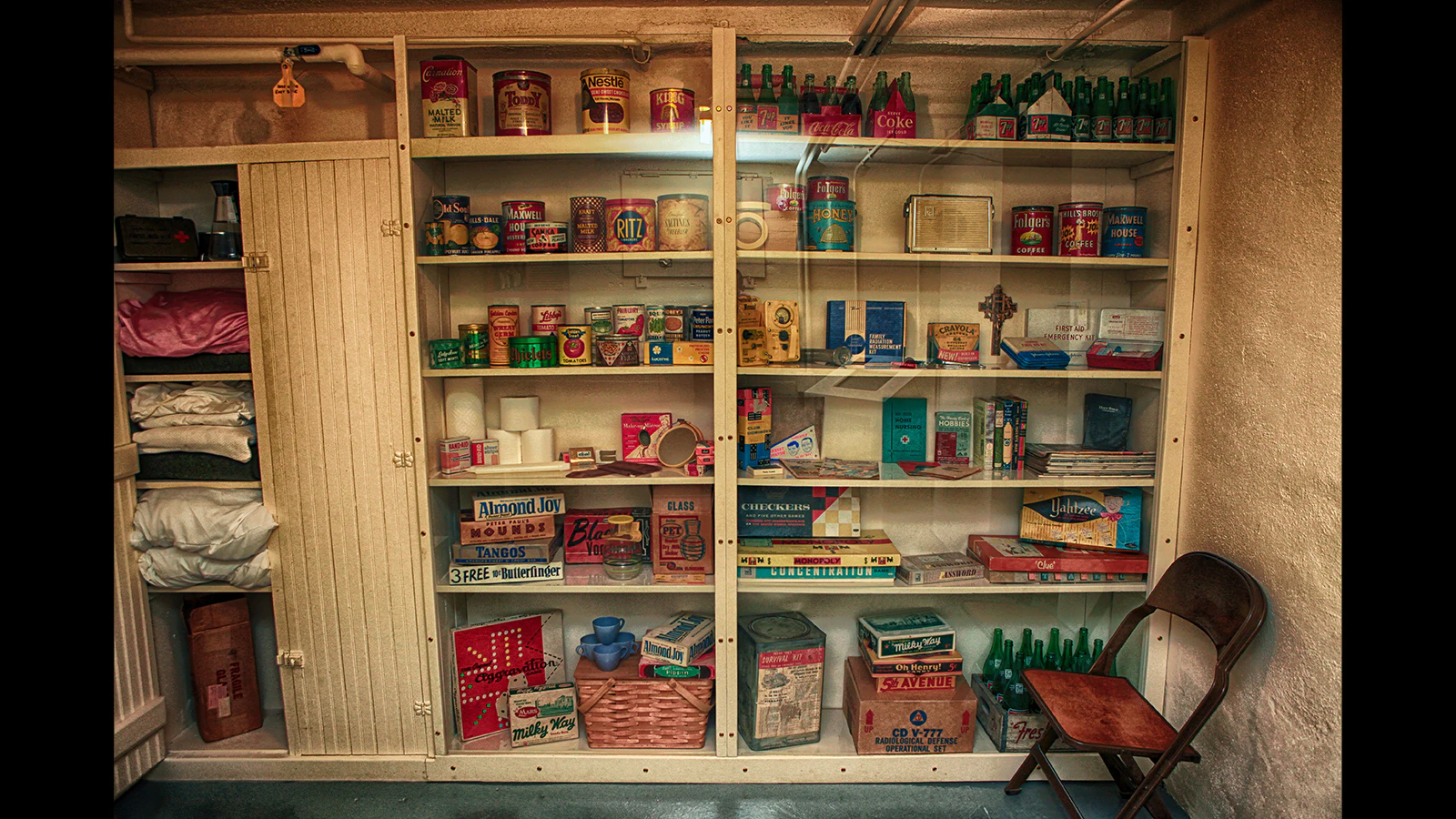
Featured in the basement of the historic Wyoming Governor’s Mansion is a Cold War bomb shelter complete with food, water, toiletries, and bedding. Rooms such as this were commonplace during the Cold War. (Photo by Matt Bilden, U.S. Air Force)
Teenagers
For young boys with room to roam, the public house expanded childhood. For teenage girls, however, the home could feel far more confining.
Susan Garrett, daughter of former Gov. Stanley Hathaway, was 14 when she left behind a quieter life in Torrington for a mansion in Cheyenne that was larger, busier, and more public.
One of the first changes she noticed was the smell.
Coming home from school, Garrett and her younger sister, Sandra, would follow the scent of fresh‑baked cookies into the kitchen, where staff were already gathered. They’d grab a snack and drift into the adjoining sunroom for the daily debrief.
“They probably knew more about our everyday and what was going on at school than anybody else did,” said Garrett, speaking of the staff and singling out her closest confidants, Betsy Pfaff, the cook from Goshen County, and Mary Stevens, the kindly housekeeper.
Garrett and her sister spent long stretches on the floor in front of the record player at the end of the hallway, album sleeves fanned out around them.
Coming of age in the 1960s, that mostly meant The Beatles; whatever the band’s latest record was, that one was her favorite, she said.
Down that same hallway hung portraits of the previous Wyoming first ladies.
“They all looked so different, and it was fun because we’d stand there and try to guess their personalities,” she said.
In these moments, the mansion lent itself to ordinary teenage routines. But teenagers also want privacy, and that was harder to come by at the Governor's Mansion.
As her father was negotiating the creation of Wyoming’s Permanent Mineral Trust Fund — designed to safeguard the state’s financial future — Garrett was negotiating to have her and sister's bedrooms moved to the third floor, away from the prying eyes, foot traffic and guest rooms of the second, and further from the hubbub of the first.
The move brought autonomy, but it came with its own peculiarities, like teeth-chattering drafts — and ghosts.
“There was a rocking chair outside our rooms, and we always swore that it would start rocking on its own!” she said, adding that she was certain about paranormal activity there.
There were suspicious figures among the living as well.
One day, a stranger knocked at the door asking for money for food.
Later, the girls speculated the man had been squatting for a time in the home’s detached garage. Sandra had been keeping tabs as the garage lights turned on and off at mysterious times without an explanation from the staff.
“If you went to the new mansion, people would have done walk-arounds, and they would know if that kind of thing was happening,” said Garrett, underscoring another major change in the times. “We think he’d been staying there for a while.”
Even as Susan and Sandra tried to keep parts of their lives to themselves, stories about the house had a way of circulating.
Those stories weren’t always true.
Years later, Garrett toured her old home after it had been converted into a museum. A volunteer, unaware of who Garrett was, began explaining how the Hathaway girls had belayed from their third-story windows on a rope to sneak off and meet boyfriends in the middle of the night.
That’s when Garrett announced herself as the true authority and corrected the record.
“Neither of us had done that,” she said. "You couldn’t — you would kill yourself if you did."
Looking back, Garrett doesn’t romanticize those years living in the Governor’s Mansion. When her family moved out at the end of her father’s term, she was already focused on college, work and a future family of her own.
The transition from the mansion passed without ceremony.
“We were glad it was over,” she said simply.
Young Adult
The experiences of Paul Hickey and Susan Garrett underscore the difference in how first families might experience the Historic Governor's Mansion.
Age mattered, and so did timing. For some, it was pure possibility; for others, it could be awkward and demanding.
And then there’s Pete Simpson, who slipped easily into the working rhythm of the mansion, much like its custom‑cut sandstone pillars, carved on site to fit the house specifically.
Pete’s temperament fit, at any rate. His body, tall as a colonial pillar itself, was another matter.
“My feet dangled off the beds. They were cold, and I had to get an extra blanket down there,” he said, recalling his bedroom beside the portico on the second floor.
He’s the son of Wyoming’s 23rd governor, Milward Simpson.
Pete moved into the home directly after graduating from the University of Wyoming, where he’d attended on a basketball scholarship.
He lived there less than a year while waiting for his acceptance into Navy Officer Candidate School in Newport, Rhode Island.
Simpson remembers how the mansion doubled as a workplace. Secretaries worked nearby. Guests came and went. State dinners filled the formal rooms.
The boundaries between family life and official business were loose, and Simpson moved instinctively between them.
Sometimes his duty to the household involved entertainment.
“The dinners were formal, but really delightful. And after a very darn one of them, I was asked to sing a couple songs,” he said.
He grabbed a guitar and sang folk favorites like “Venezuela” and “Tennessee Waltz,” though the indulgence went a little too far on occasion.
“I got away with murder singing some of those songs,” he said.
Pete’s experience shows how the Governor’s Mansion was formal but not stiff. There was business, but also pleasure — and romance.
As a 24‑year‑old bachelor, Simpson gravitated toward one of his father’s secretaries, a woman named Amy Davis. They became romantically involved.
“Dad had a very nice secretary. … I dated her. My friend Rob Schroll dated another secretary in the officialdom of Cheyenne,” he said.
It illustrates how life at the Governor’s Mansion could blur boundaries between family, work and social life. It fit Pete Simpson perfectly.
“We’d all attend parties together, and there were a lot of parties. We were bachelors and fancy free,” he said of he and Schroll, who was the brother-in-law of his brother, Alan K. Simpson.
Changed Lives Inside
Pete’s ease as a member of the first family had parallels to his father’s career as governor and later U.S. senator which was defined by institutional steadiness rather than disruption.
Taken together, the experiences of Paul Hickey, Susan Garrett, and Pete Simpson show that the Historic Governor’s Mansion asked different things of the children who lived inside it, depending on age, temperament, and timing.
Over the years, the house changed in small ways through renovations. The lives inside changed in big ways.
“There's a deep sense of appreciation for public service that comes from seeing a mother and a father who really did have distinguished public service careers,” said Paul Hickey. “I have much appreciation for those years, and … a very deep appreciation for what our family’s service and legacy has been."
Zakary Sonntag can be reached at zakary@cowboystatedaily.com.


