In a greenhouse perched a mile or so above sea level, a Wyoming researcher is helping lay the groundwork for a future where astronauts don’t just visit distant worlds but farm them.
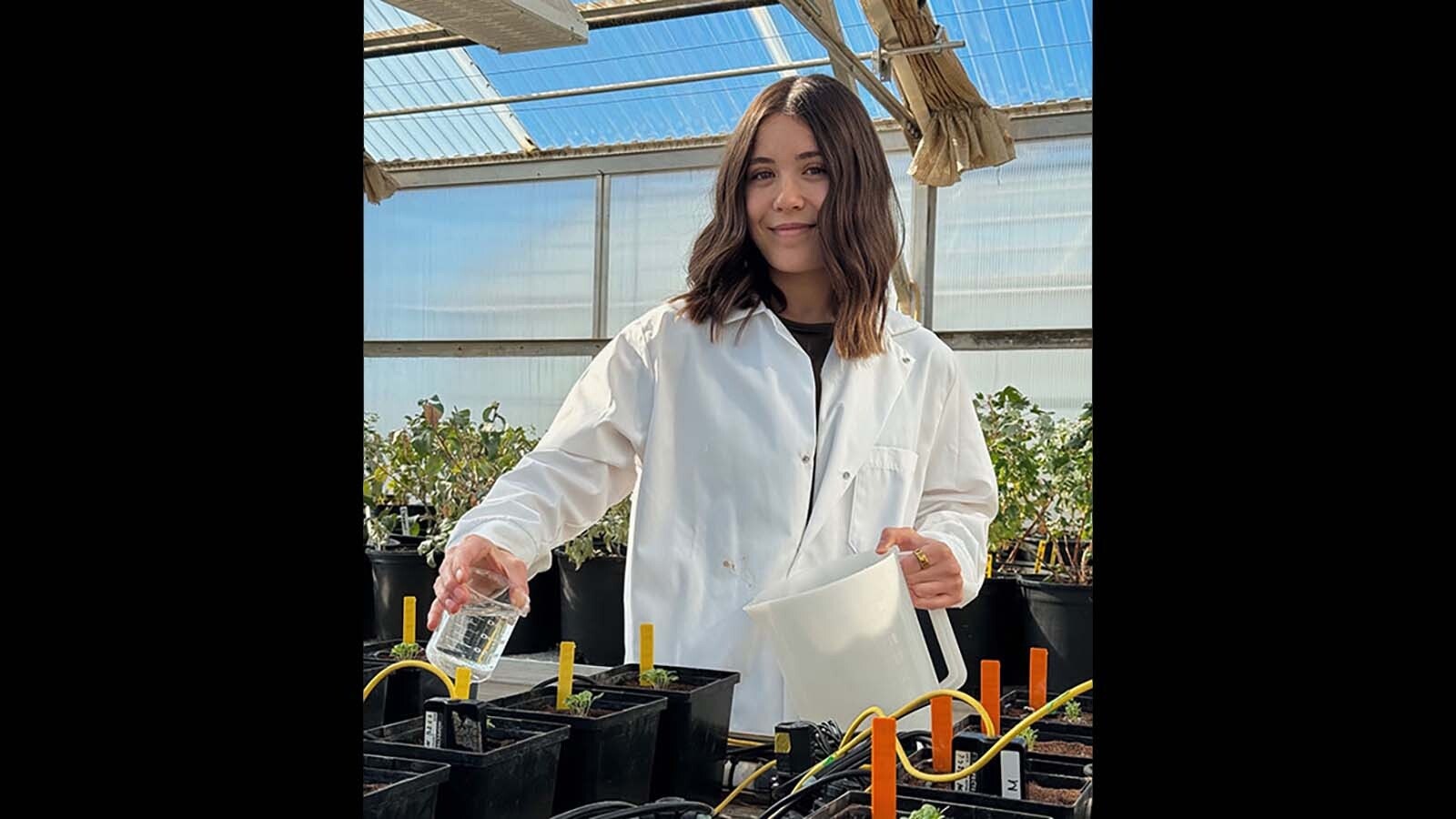
The researcher is Drea Hineman, an avid hockey fan from Gillette who gained a sideways interest in horticulture from her grandfather when her family lived in Douglas.
Her tools aren’t saddles and branding irons, but modern-day fungi with a dash of Wyoming-grown algae mixed in.
Hineman’s experiments in space-based agriculture earned her a top NASA rating, as well as national recognition for tackling one of the toughest problems facing the space farmers of tomorrow.
Lessons From A Harsh Land
The moon, as science fiction author Robert A. Heinlein once wrote, is “a harsh mistress.” It’s beautiful in many ways, but unforgiving, dangerous, and cruel.
So, too, is Wyoming when it comes to anything green and tender. That’s something Hineman learned to appreciate from her grandfather.
“He would show me how to garden, and at that age, you don’t really know how impressive it really is,” she said. “Like, he had this crazy garden, but I didn’t really understand what it takes. I just got to eat the fresh fruit.”
Only later did she understand the ingenuity it had taken to coax such crops from thin soil, fierce wind and short seasons — lessons High Plains pioneers had to master for Wyoming communities to survive.
That appreciation ultimately led her to study horticulture, where she gravitated toward greenhouse work with University of Wyoming environmental horticulture assistant professor J.J. Chen.
Chen liked her work ethic. He noticed how willing she was to do the unglamorous jobs like weeding under benches, hauling stuff, fixing and taping up pots — whatever needed to be done.
Eventually, he proposed a rather bold idea to Hineman: “Would you want to apply for a NASA grant?”
Space farming, he explained, would be the ultimate in a controlled environment.
Hineman isn’t the sort of person with stars in her eyes who always wanted to go to space.
But remembering all the family camping trips where she ate the equivalent of meals ready to eat (MRE), she decided she did love the idea of helping astronauts grow their own salads in space.
Space: The Final Plant Frontier
Space and the other planets in our solar system are rather terrible places to be a plant. The soils are strange and there’s no atmospheric pressure, so water just boils away.
Lack of gravity also means water in an enclosed system doesn’t behave as it does on Earth.
On the moon, scientists also hope to use lunar soil, called regolith, to grow plants. That’s just a practical matter. It’s going to cost too much to haul heavy soils to the moon.
Regolith is a very sandy substance and likely contains heavy metals or other toxins.
In sum, it all poses a dizzying array of puzzles for scientists to solve, far more difficult than is often portrayed in science fiction movies like “The Martian,” where a stranded astronaut played by Matt Damon used Martian soil on the fly to grow potatoes, using his own waste as fertilizer.
Chen’s mentor, as it happens, was a consultant for that 2015 movie.
“My mentor’s name is Bruce Bugbee, and he’s still joking about that movie thing, that they tried to make that more art, so it’s not really scientific,” he said. “But I would say it’s still a good movie, a good story, to inspire a lot of young people to chase their dreams in science.”
What To Do About Salts
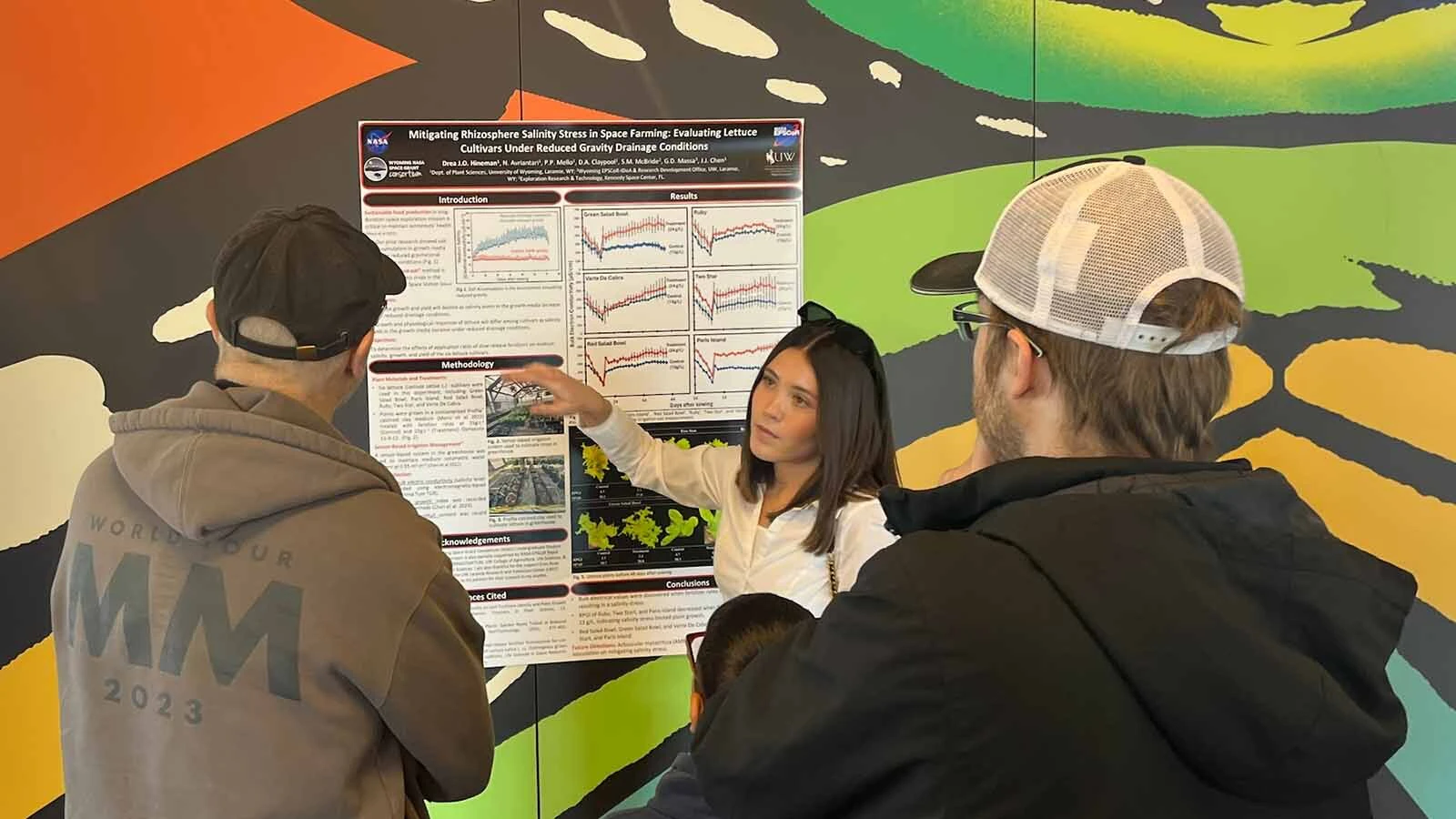
Hineman’s particular study focuses in on one major obstacle to space farming: the buildup of salts in closed-loop systems.
Inside a space or lunar habitat, every drop of water needs to stay contained. Over time, fertilizer salts accumulate, stunting growth and making the plants taste worse than an MRE.
On Earth, flushing such salts out is easy. In space, however, pumping takes too much energy, and disposing of precious water is a nonstarter.
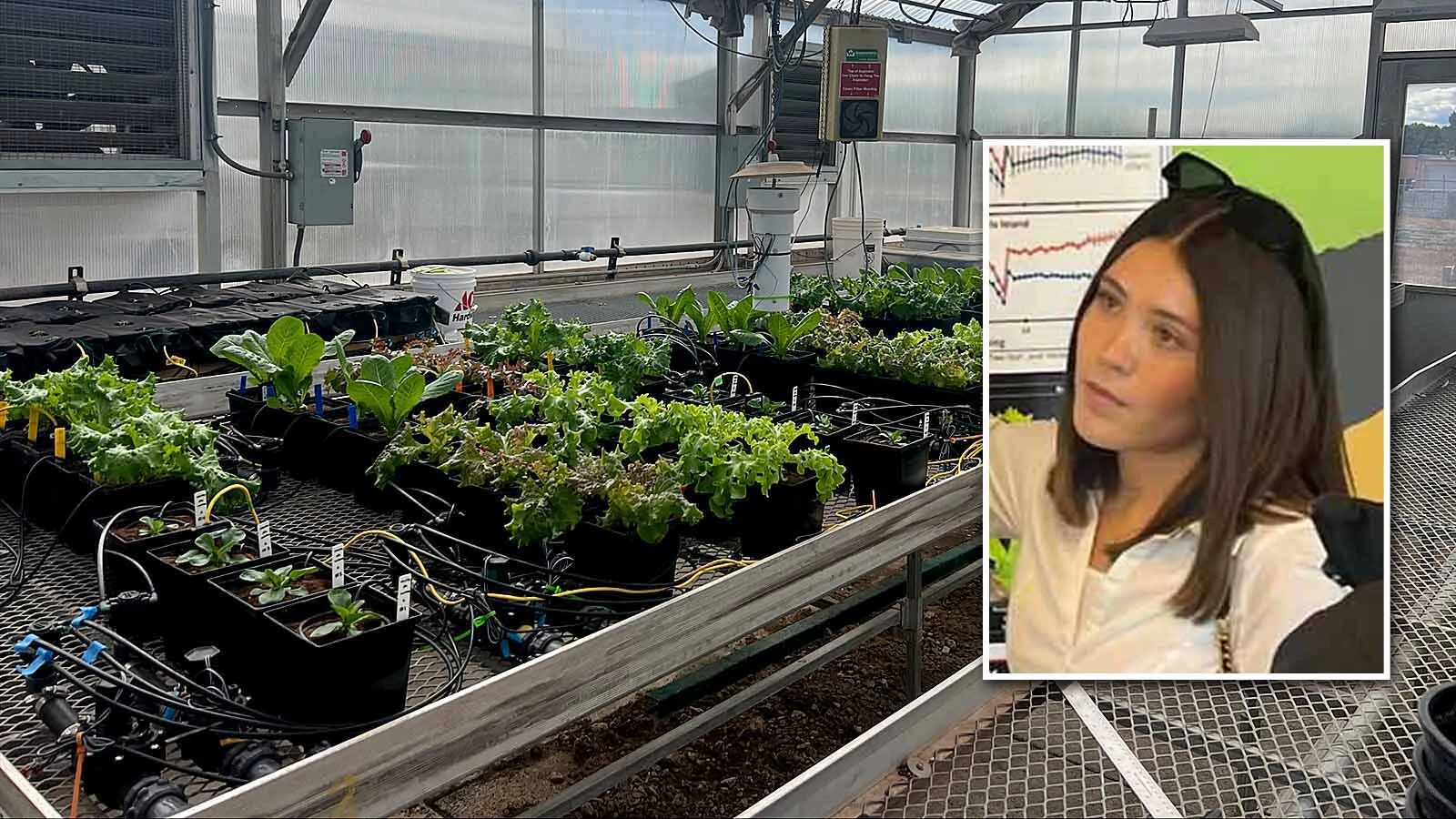
To simulate these challenges, Hineman taped up the bottoms of all 96 of her test pots so that no water could escape.
She also leveraged something called capillary force, which refers to the ability of a liquid to flow against external forces like gravity to simulate a weightless environment.
“That is what makes us unique,” Chen told Cowboy State Daily. “If you imagine putting a piece of paper into water, the water will be taken up on the paper without (being drawn) down by the gravity.
"In our lab, we have a system where they can use a very precise irrigation, together with capillary forces from the soil, to simulate the rules or conditions that are very similar to reduced gravity.”
With the space environment simulated, Hineman was finally ready to try and solve the original space-farming salt problem, and she targeted a novel approach — mycorrhizae fungi.
On Earth, these organisms extend a plant’s root system and have been shown to help increase drought tolerance and nutrient uptake, as well as help fend off pathogens and mitigate salts.
Hineman tested several varieties of lettuce to identify the most salt tolerant, then tested two varieties of mycorrhizae.
Only one of them showed any promise in reducing salt stress.
A next step for the research will look at whether a Wyoming algae can boost fertilizer efficiency, lessening salt buildup and increasing the mycorrhizae’s effectiveness.
Seeds For Space, And For The West
Some patents are already in progress related to the Wyoming research.
Beyond its value to NASA and future space farmers, the work could also help Western farmers fight drought and saline soils right here on Earth.
Chen, meanwhile, hopes that Hineman’s story sends a message to “every cowboy and cowgirl” that their dreams can be as big as the wide-open Wyoming sky.
Nor do they have to leave Wyoming or grow up on a ranch, either. Things can start, as they did for Hineman, in a small-town garden in a tiny town.
Hineman agrees, though she’s content to keep her boots planted on Earth in Wyoming, where water behaves as it should and wind, however punishing, remains familiar.
Thanks to her work and that of her colleagues, future generations of pioneers on a distant frontier in space will one day unzip a greenhouse full of healthy plants.
“I personally like Italian dressing,” she said, musing about which salad dressing future astronauts could prefer. “But I bet most would prefer ranch. Ranch is very common.”
Regardless of which dressing wins an astronaut’s heart, Hineman knows it will just be the latest chapter in a long Wyoming tradition of pioneers who grew things in harsh, unlikely places and somehow made it work anyway.
Renée Jean can be reached at renee@cowboystatedaily.com.