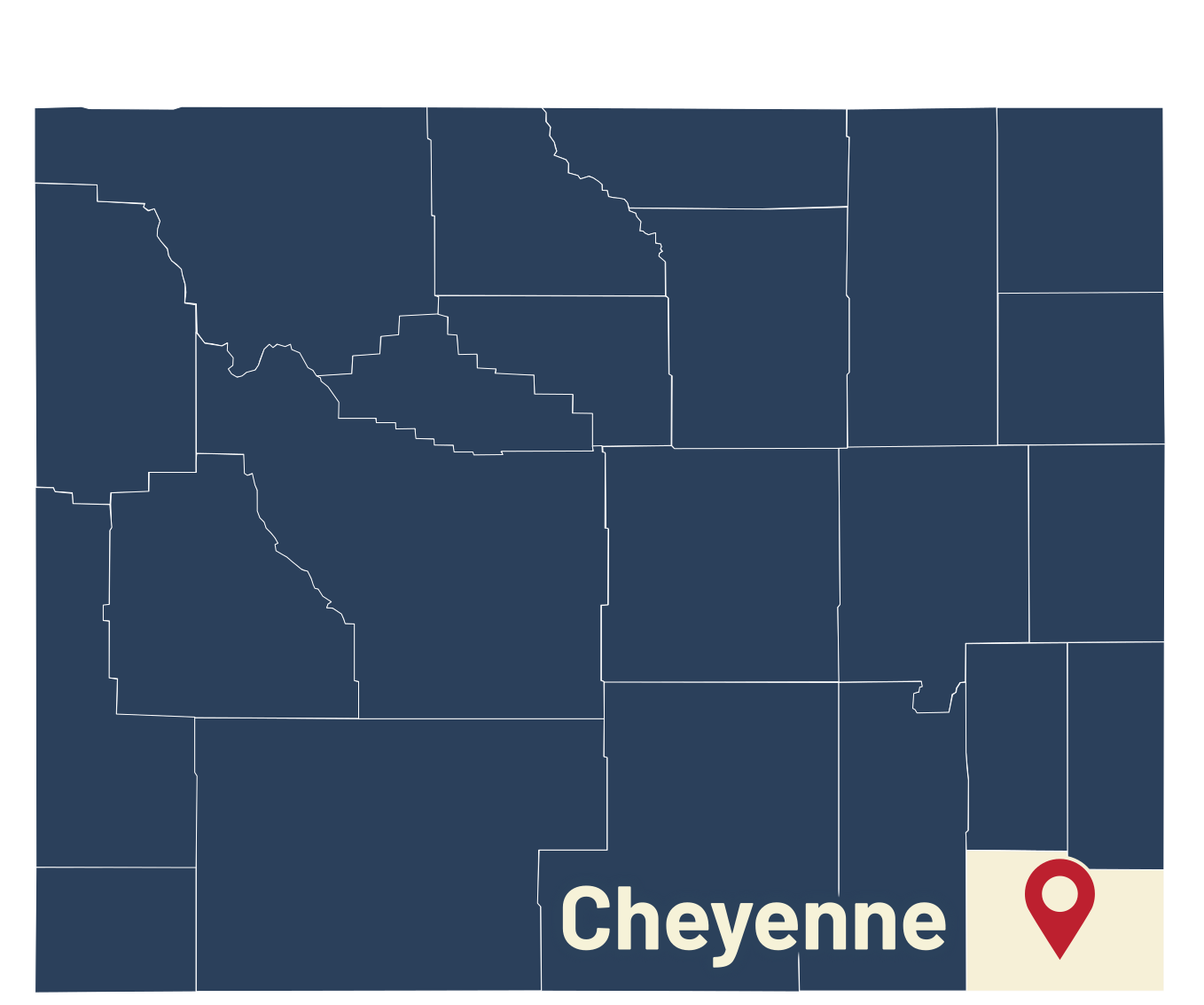
CHEYENNE — The room has been mundanely named “Large Conference Room,” but its purpose is anything but mundane.
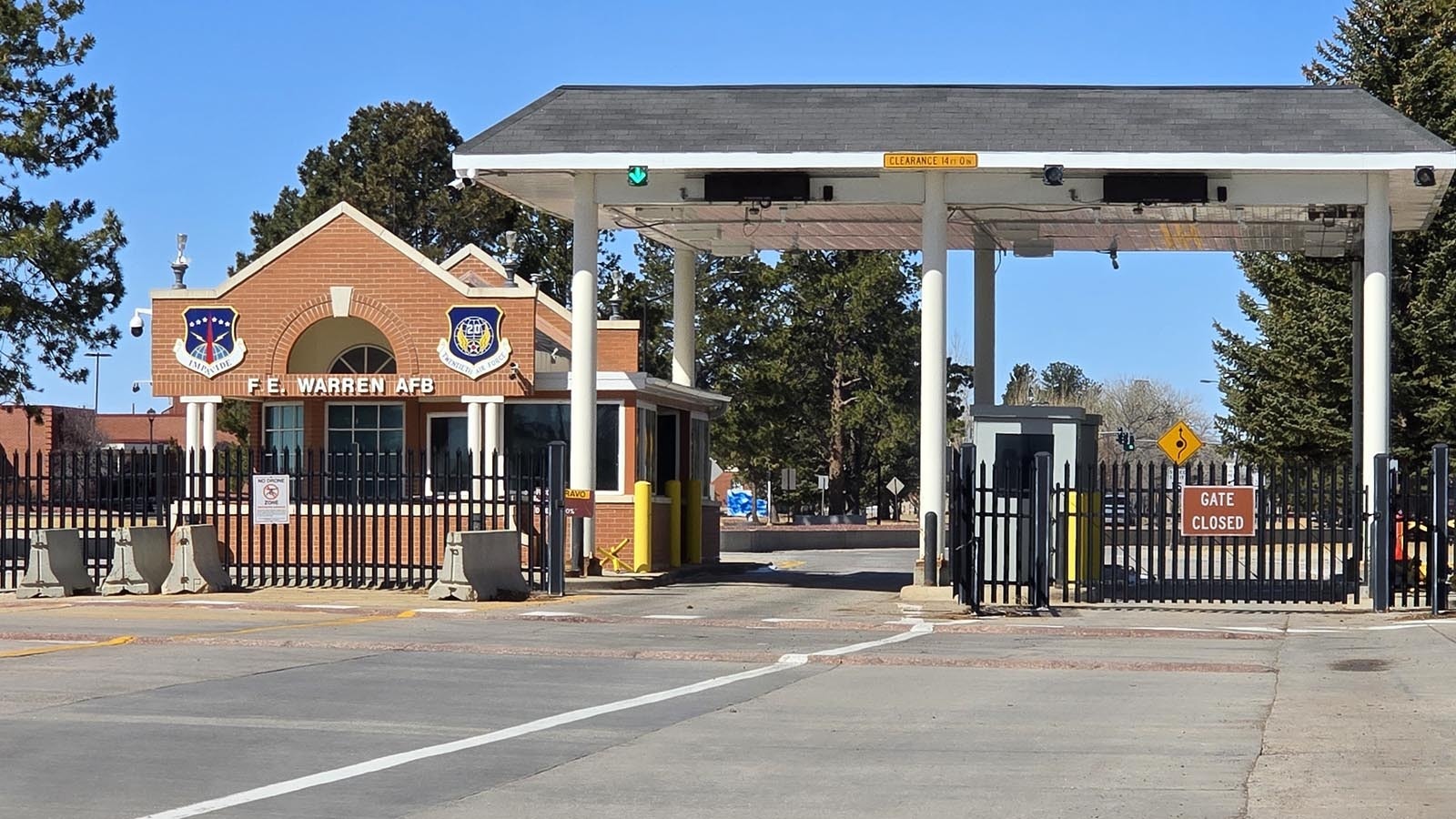
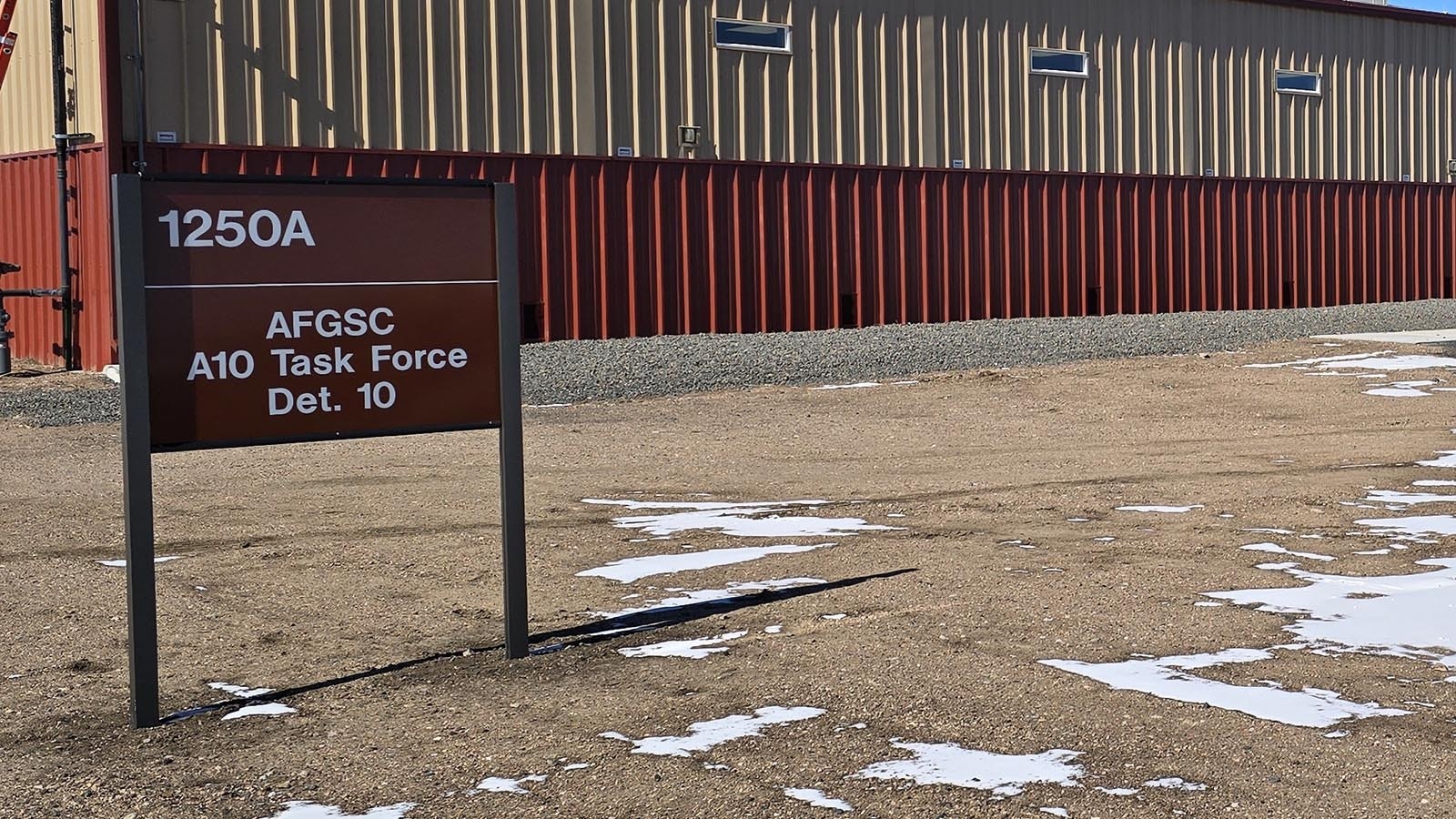
The deceptively named room lives in the Site Activation Task Force (SATAF) headquarters on the F.E. Warren Air Force base, which was completed last week.
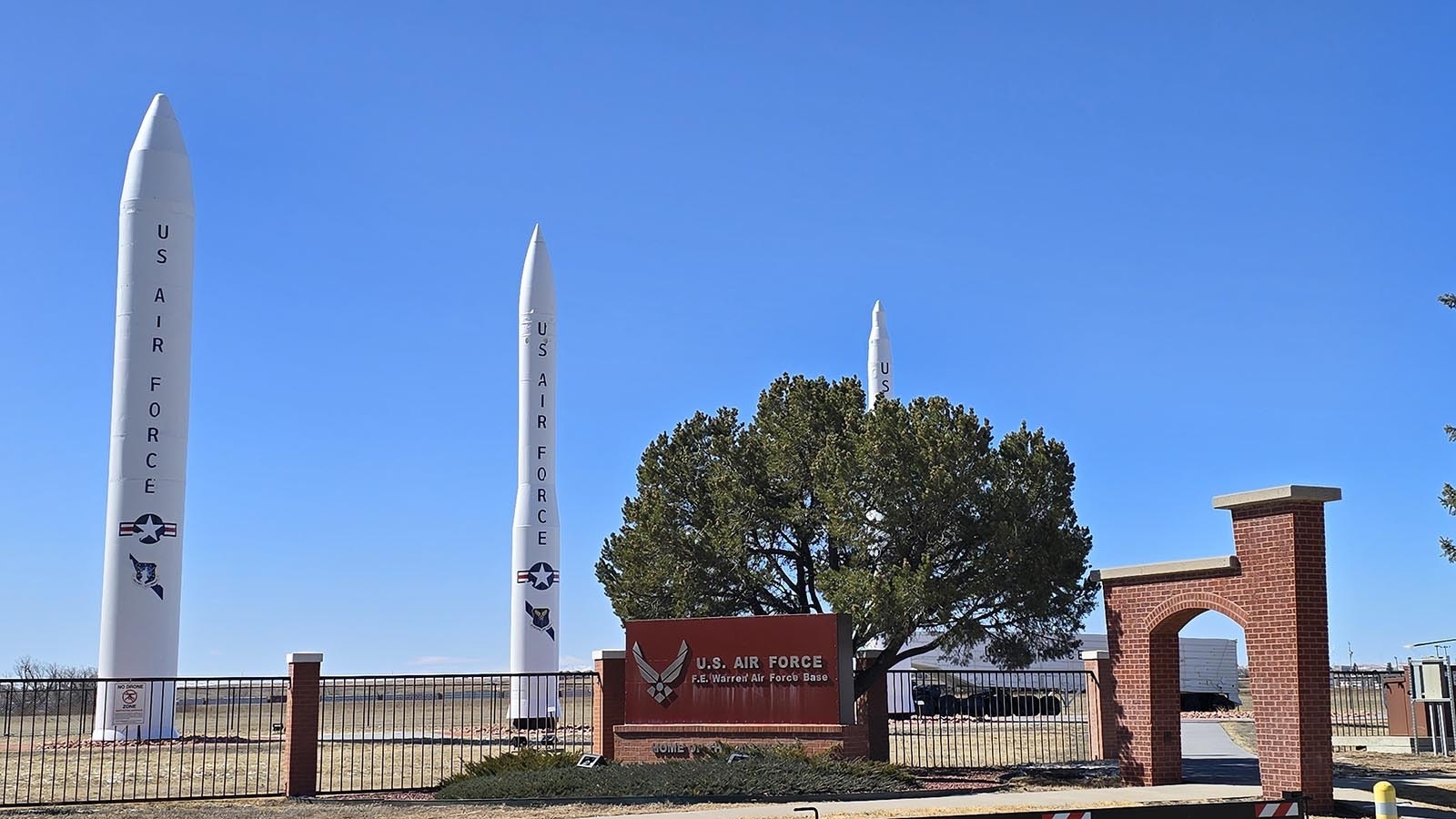
Cheyenne’s SATAF headquarters is the first of several new Sentinel missile facilities under construction at F.E. Warren.
Also underway is a missile-handling complex, which has two buildings, expected to be completed late this summer. Other infrastructure includes an integrated training center, a consolidated maintenance facility, and an operations group facility.
The Large Conference Room, meanwhile, is the first level in an ever-increasing cone of secrecy that’s being built at F.E. Warren as part of a facility that will play a critical role in the incoming Sentinel missile system.
The $141 billion Sentinel system will replace not only the old Minutemen III missiles that are part of the nation’s nuclear deterrence triad, but everything associated with it.
The program has frequently been described by military personnel as the largest ongoing public works program since the Interstate Highway System was built.
“The folks here (in Cheyenne) are going to write the playbook,” said Capt. Stephen Collier, a reservist who also helps handle public affairs for the military. “I think everyone has to understand the true significance of this is that … as the Sentinel program evolves, all the lessons learned of how we’re going to do this more efficiently (will get shared with) Malmstrom Air Force Base in Great Falls, Montana, and Minot Air Force Base in North Dakota, as their SATAF operations ramp up.”
No Cellphones Allowed Zone
Wednesday morning, the Large Conference Room was playing host to all sorts of military and civilian dignitaries, including Nebraska Gov. Jim Pillen.
Nearly all of the guests carried something unthinkable into the room with them — a cellphone.
The Large Conference Room’s true purpose is an operations center, Air Force Nuclear Weapon Center engineer Bobby Redwood told a small group of journalists who were taken on what will, in the future, be an exceedingly rare tour.
“This is where they will be monitoring things, especially in the missile field,” he said. “Not so much here on base, because we know what’s going on, but let’s say weather patterns or some emergency happens out in the field. They will be monitoring that.”
The Local Conference Room will operate around-the-clock, as will construction, to the extent weather allows.
A flashing blue light can be turned on at any time in this room to signal to all military personnel that someone who does not have appropriate security clearances is present and to cease all discussion of any classified information.
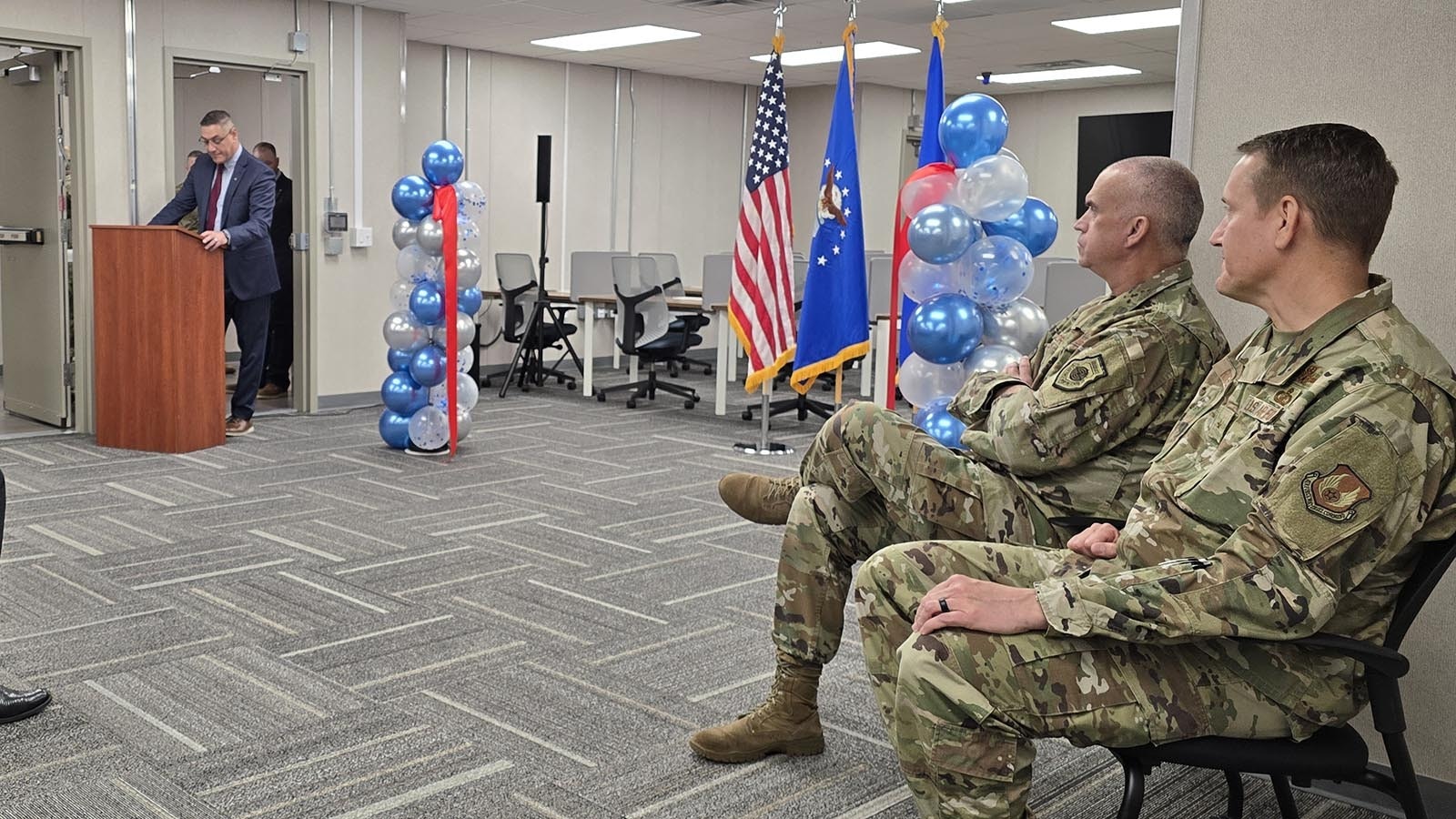
Brig. Gen. William Rogers and Maj. Gen. Colin Connor, far right, listen as they are introduced during a ceremony celebrating the opening of the Site Activation Task Force headquarters. (Renee Jean, Cowboy State Daily) 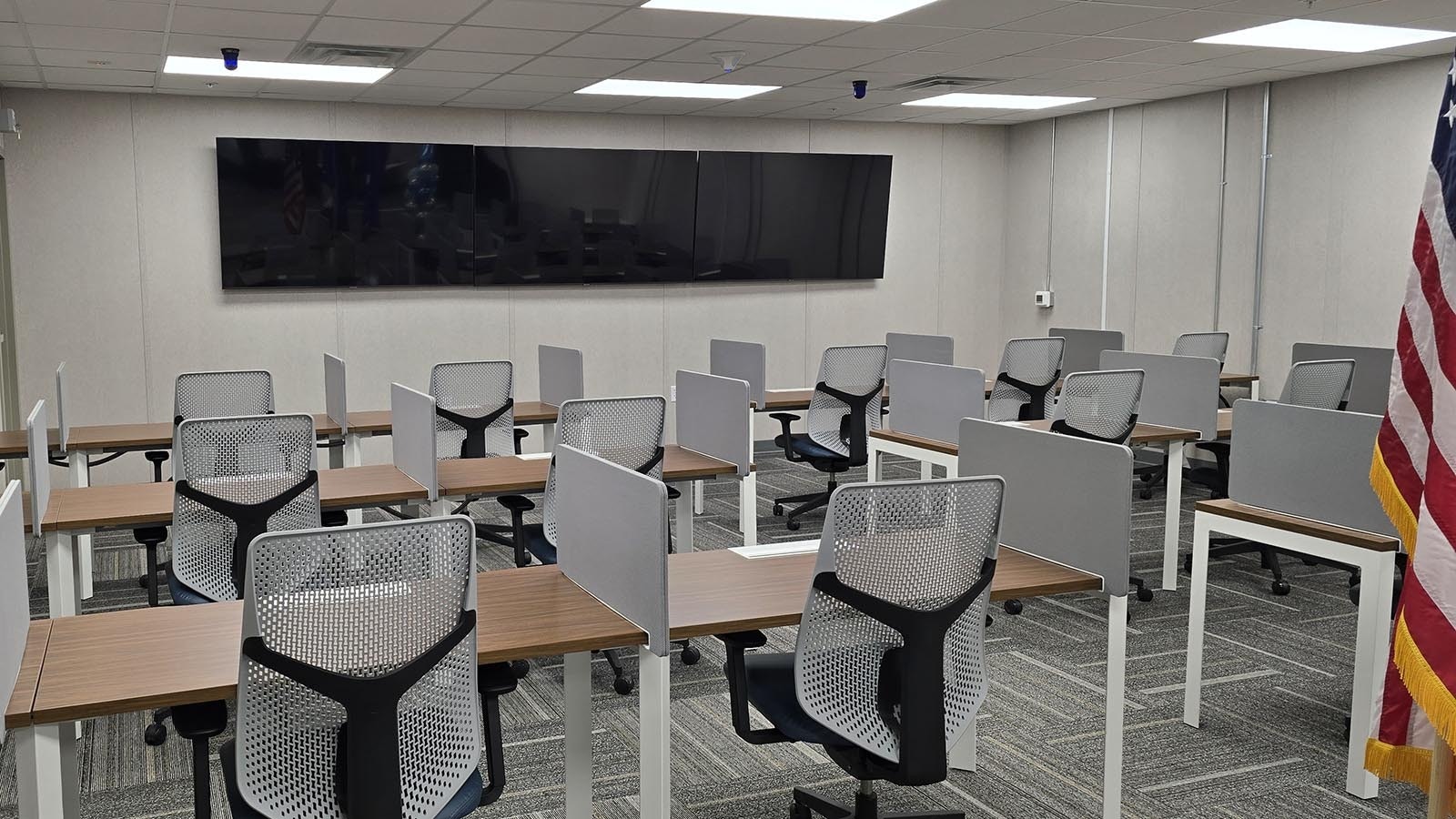
The "Large Conference Room" may have hosted dignitaries with cell phones on Wednesday. But soon, cell phones won't even be allowed in this area, which is the first tier of a cone of silence that's been built at the Site Activation Headquarters. On the back wall is a monitor where the Sentinel construction can be monitored remotely around the clock. (Renee Jean, Cowboy State Daily) 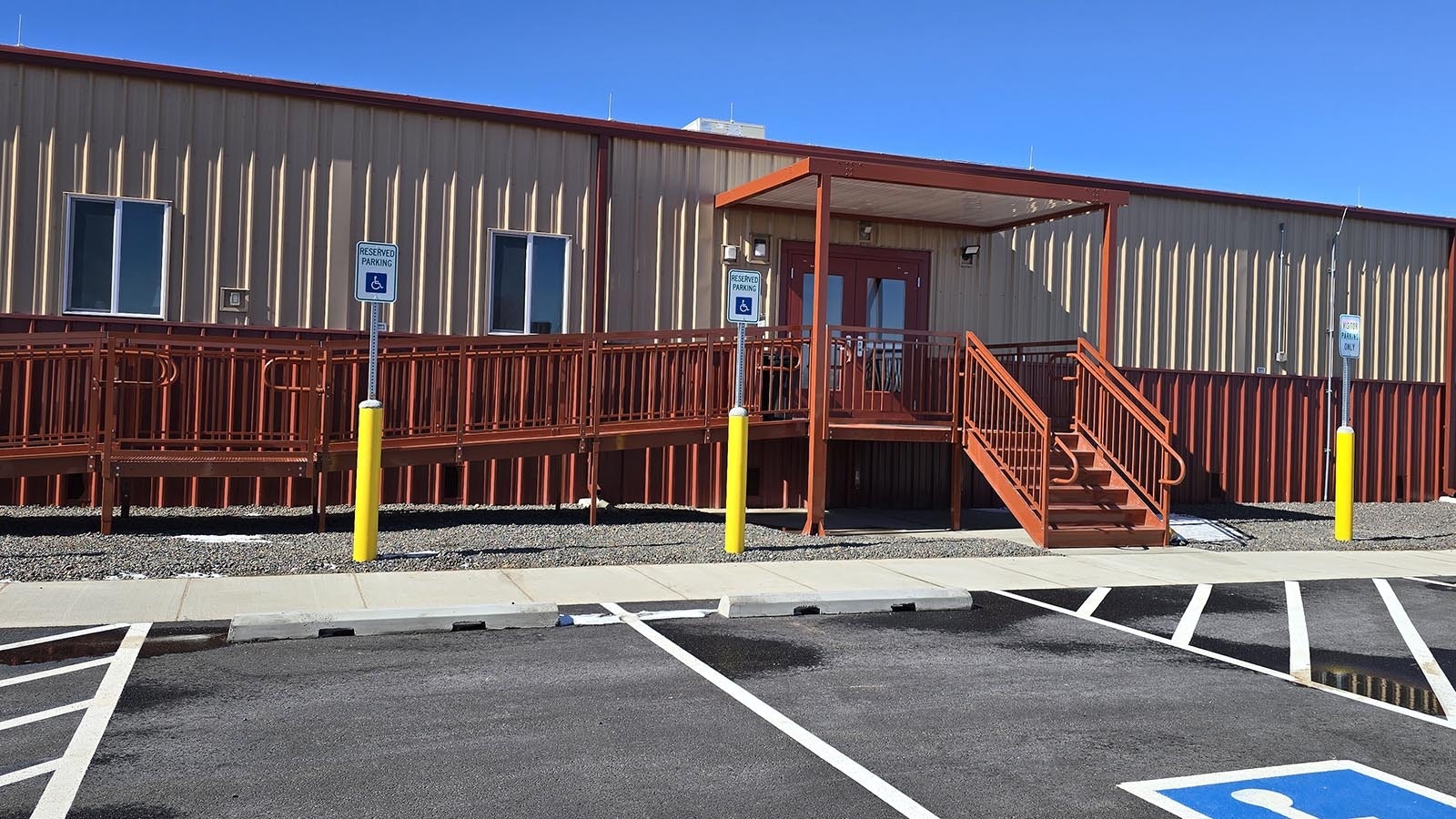
Inside this seemingly nondescript building, a cone of ultra secrecy has been built and soon, some of the world's most high-level discussions will be happening there. (Renee Jean, Cowboy State Daily) 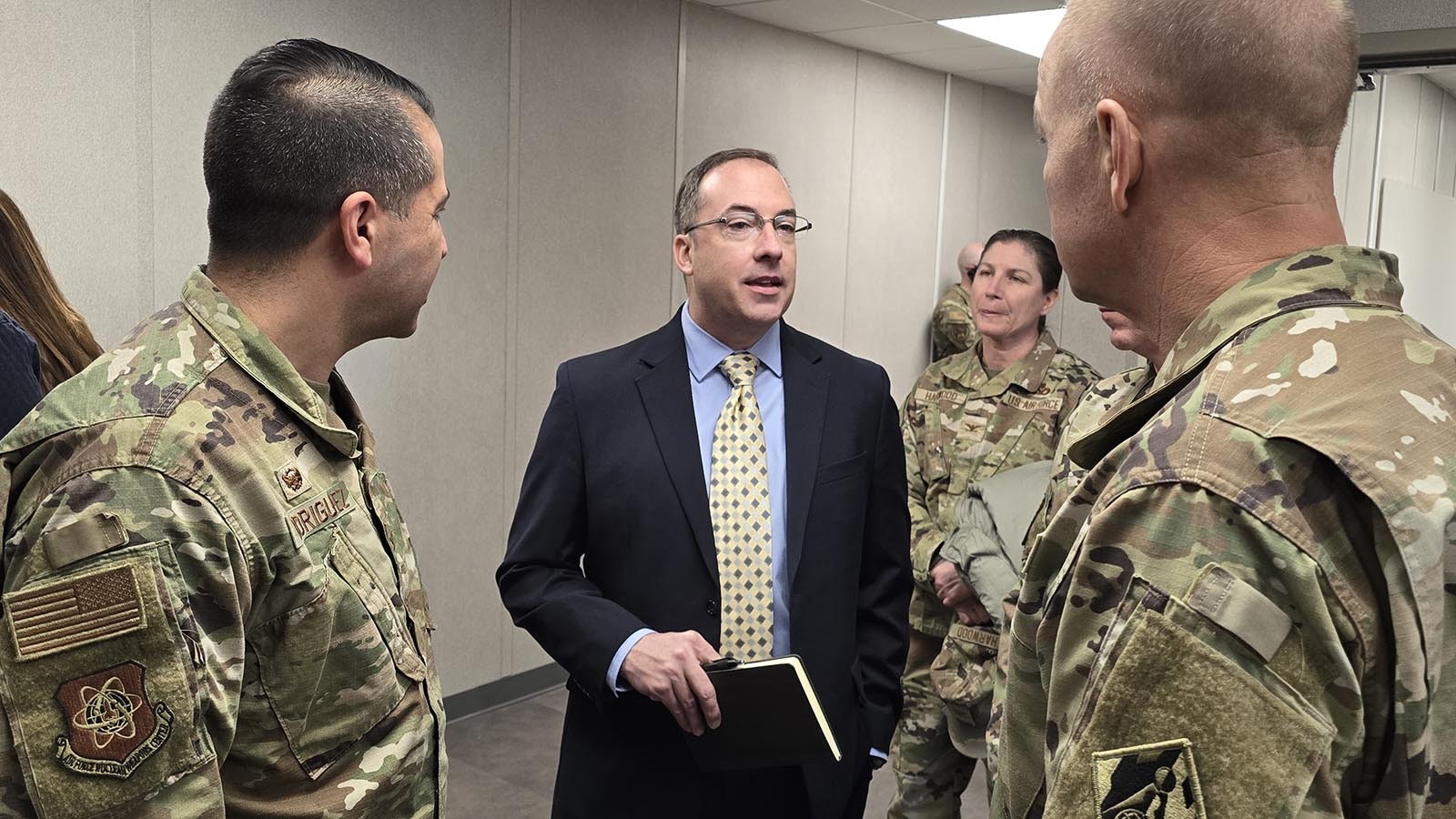
Director of Air Force Global Strike Command, Detachment 10, Site Activation Task Force, Steve Kravitsky, center, speaks with other military officials after a ceremony to celebrate the opening of the Site Activation Task Force headquarters on Wednesday. (Renee Jean, Cowboy State Daily) 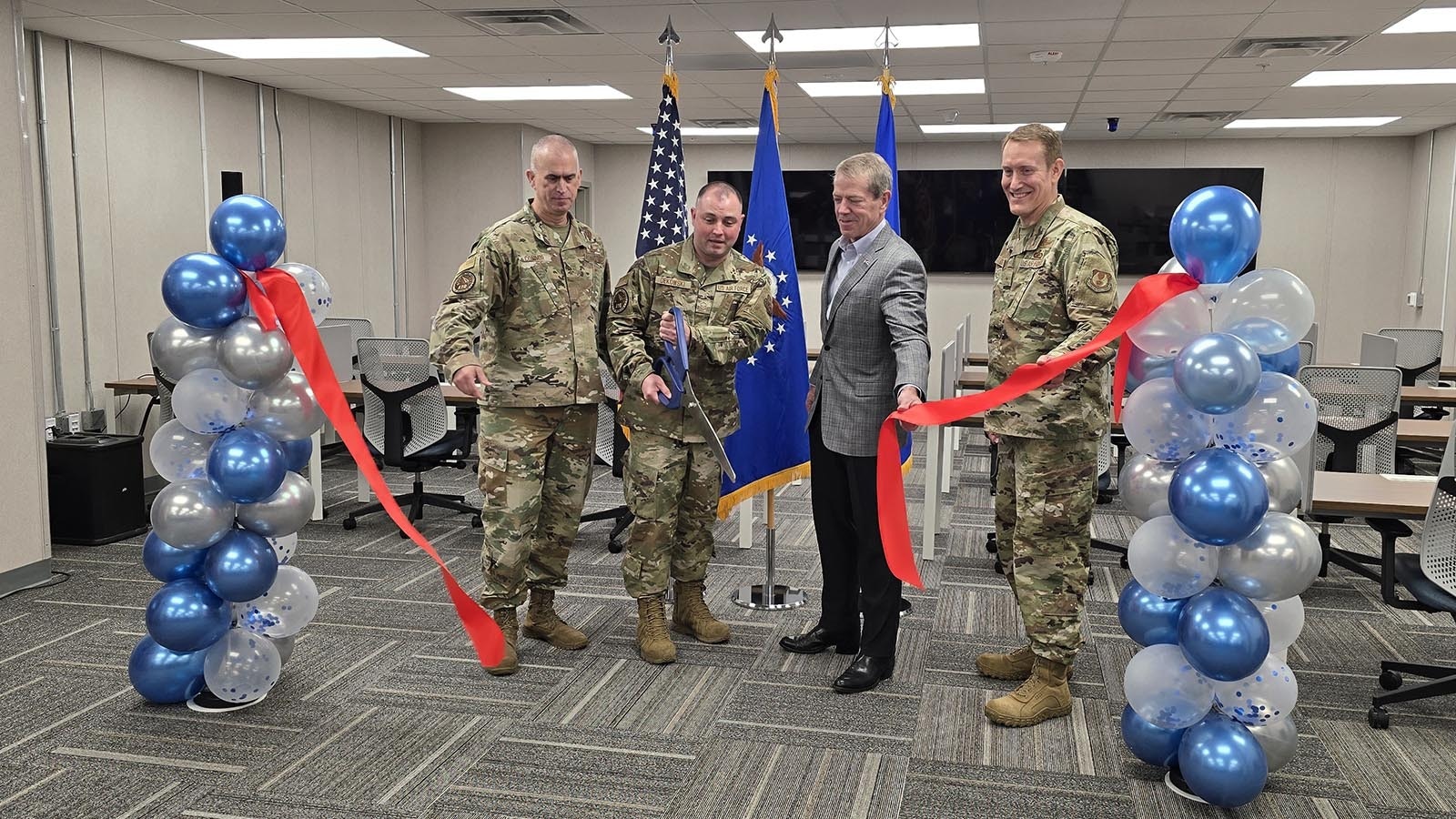
A ribbon was cut for the Site Activation Task Force headquarters. (Renee Jean, Cowboy State Daily)
No RF Waves Allowed
The secrecy protocols in this room, however, are just the beginning.
There are two more levels of secrecy beyond that, each requiring more security measures than the last level.
At the very top of these secrecy levels, walls have an aluminum foil layer built into them, along with other unspecified materials, to ensure they completely block any radio frequencies.
Blocking radio frequencies ensures that no spying or snooping is possible. It also ensures adversaries cannot jam, spoof or intercept any radio signals, and that inadvertent interference from friendly communications or radar systems is also impossible.
The walls aren’t the only places where enhanced security measures are in play.
Thick, vault-like doors have been built with a copper and metal mesh seal that ensures there is no sliver or seam where radio frequencies can leak in.
Power is even filtered before it enters the area so that there’s no entry point there, either.
These measures are necessary to ensure there’s zero chance of radio waves entering or leaving this space, which is soon to host some of the world’s most top-secret discussions.
Three-Part Access Protocol
Getting into these areas requires not just a security card, but two other security measures as well, including a random code that is frequently changed.
If one of the access points remains open for too long as someone is entering and leaving, an intrusion alert is triggered, and necessarily security protocols will inevitably follow.
These areas, too, have a flashing blue light to signal the entire room that any discussion of classified information must immediately cease because someone without the proper security clearance is present.
It’s not just the rooms that are segregated for the sake of security. The people, too, have been compartmentalized as well.
Every person working on the project has specific subject areas that they know about and may discuss only with other authorized individuals.
All of this is to ensure that if one information area is ever compromised, everything else remains secure.
All the security measures taken in the top-secret areas have been documented at every point along the way during construction, down to the tiniest screw.
That’s meant hundreds of photographs, as well as tests to ensure the facility meets all required security specifications.
“There was a guy who had … this big thing, it looked like something he’d bought out of a Pottery Barn,” Redwood said. “It was this huge thing, and it looked like a big flower, a huge metal flower, but it was actually multiple microphones.”
The microphones were set up to test for any sound slipping in through the seams of the door.
“It was really interesting to see that,” Redwood said. “So, they certified the door, the manufacturer did, and they passed. So, it’s mainly a sound thing. You don’t want sound leaving the room.”
The bottom line, Collier said, is taking the protection of Sentinel’s secrets seriously.
“There’s lots of overlap,” he said. “Lots of redundancies, to make sure that Sentinel is protected.”
Recognizing Legacy
The rest of the SATAF headquarters is essentially one long hallway flanked by a series of offices and conference rooms, which will serve the various companies and military personnel who are all coming together to work on Sentinel.
Some areas are meant for visiting professionals, while other areas are dedicated space for specific companies.
Defense technology firm Northrop Grumman, which won the Sentinel contract, has one of the largest available suites, with two offices areas side by side and a space for their own internal secure server.
There’s also a smaller area with soundproofing and secrecy safeguards to provide private offices where sensitive conversations may occur. These lie behind a vaulted door, and they have their own separate server as well.
Marrying the less secure work areas with ultra-secret areas that span all levels of required security clearances will allow all necessary work and conversations to take place in one building.
That ensures there won’t be delays simply because a conversation could not take place until the necessary people could gather in a secure enough area.
Many of the rooms in the less secure work areas sport names from previous missile programs — Atlas, Thor, Matador.
That’s all about recognizing legacy, Collier said.
“There’s not a lot of places to go in the missile world,” he said. “It’s a pretty tight-knit fraternity, so a lot of that history, that legacy is baked into Sentinel.”
Renée Jean can be reached at renee@cowboystatedaily.com.