At Cross Anchor Ranch in northeast Wyoming, an old cabin was said to have held many secrets before time eroded it away.
A skeleton was found beneath the floorboards in hidden tunnels and the sound of shuffled cards and the clink of poker chips could be heard when there was no game.
In the 1930s, it was believed by Crook County locals that the old cabin predated the ranch and was used by a ruthless gang of outlaws known as the Axelby Gang.
George Axelby, also spelled Axelbee, was an early-1880s horse thief and outlaw leader whose network moved stolen herds from the Bighorn Mountains and Black Hills north toward Canada.
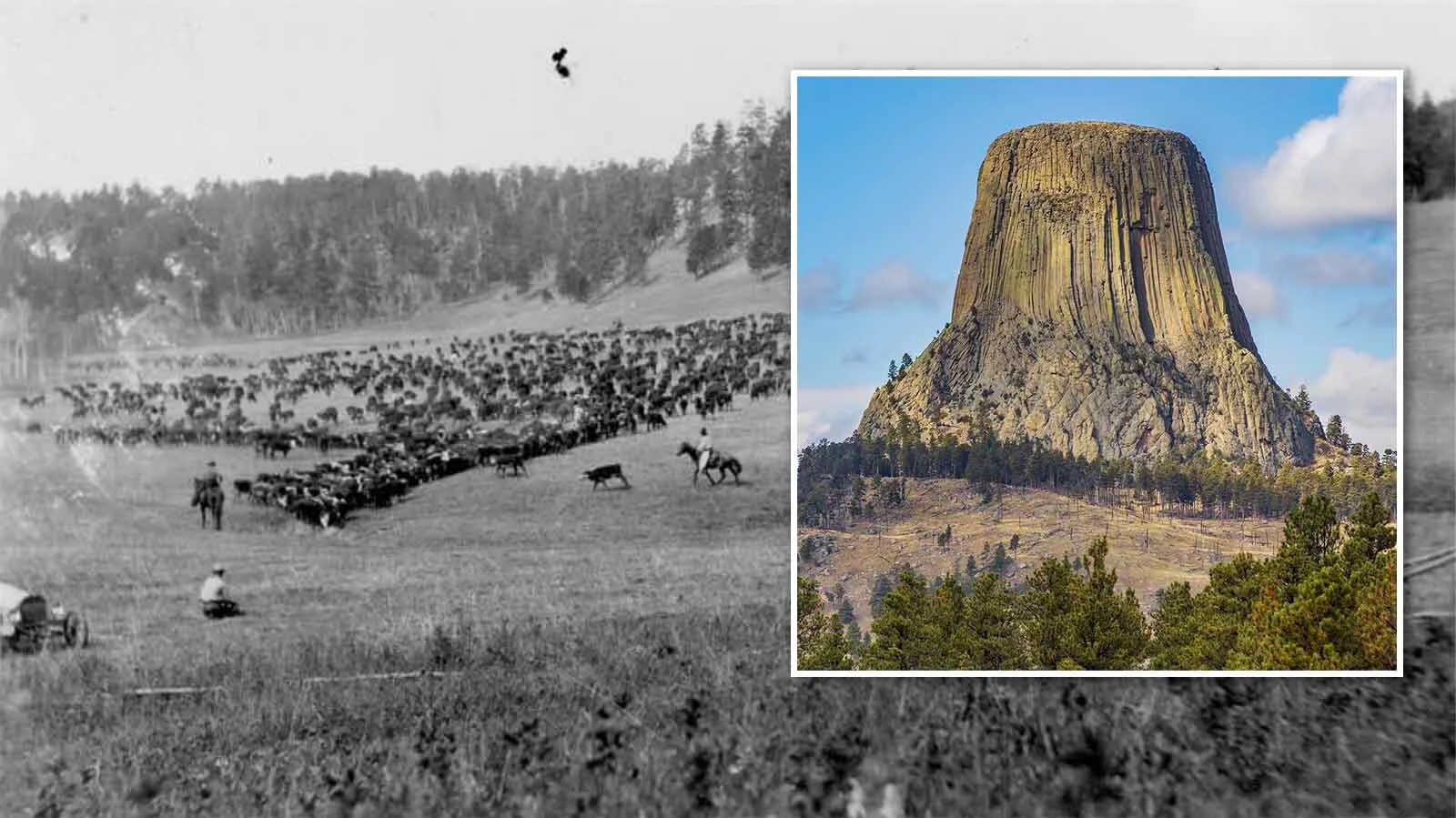
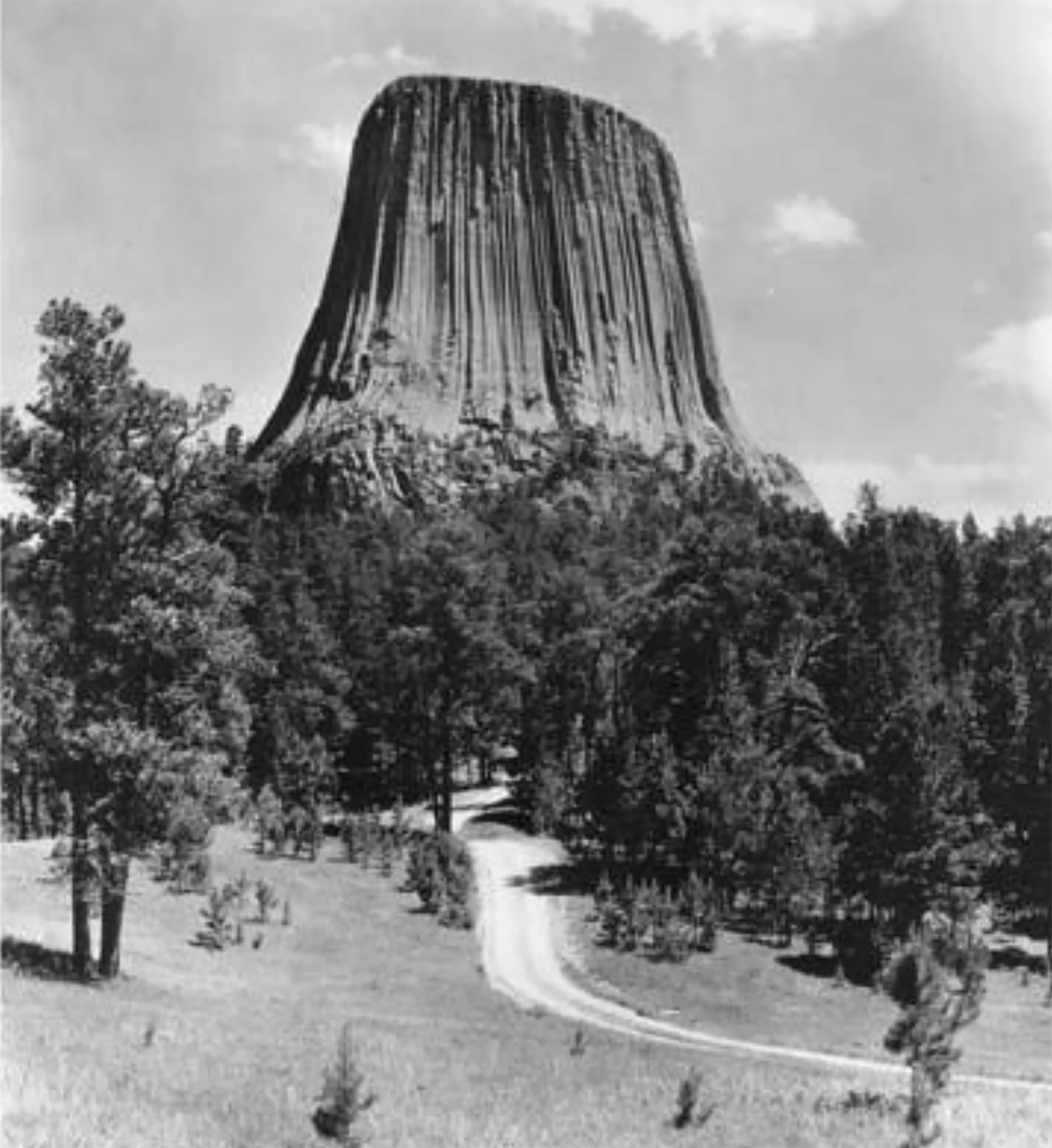
Author Hermann Hagedorn placed Axelby’s activities in the Little Missouri and Powder River country and described a hideout near Devils Tower.
The old cabin on the Cross Anchor Ranch was 22 miles northeast of Devils Tower, placing it right along the Horse Thief Trail.

In Crook County, the remains of old homesteads and cabins lingered for years after their inhabitants had either left the region or passed away. For years on the Cross Anchor Ranch an old cabin stood decaying and was believed to have been used by outlaws on the “Horse Thief Trail.” Sounds of card playing and the clink of glasses were said to be heard late at night until finally, the old cabin collapsed and was no more. (Wyoming State Archives) 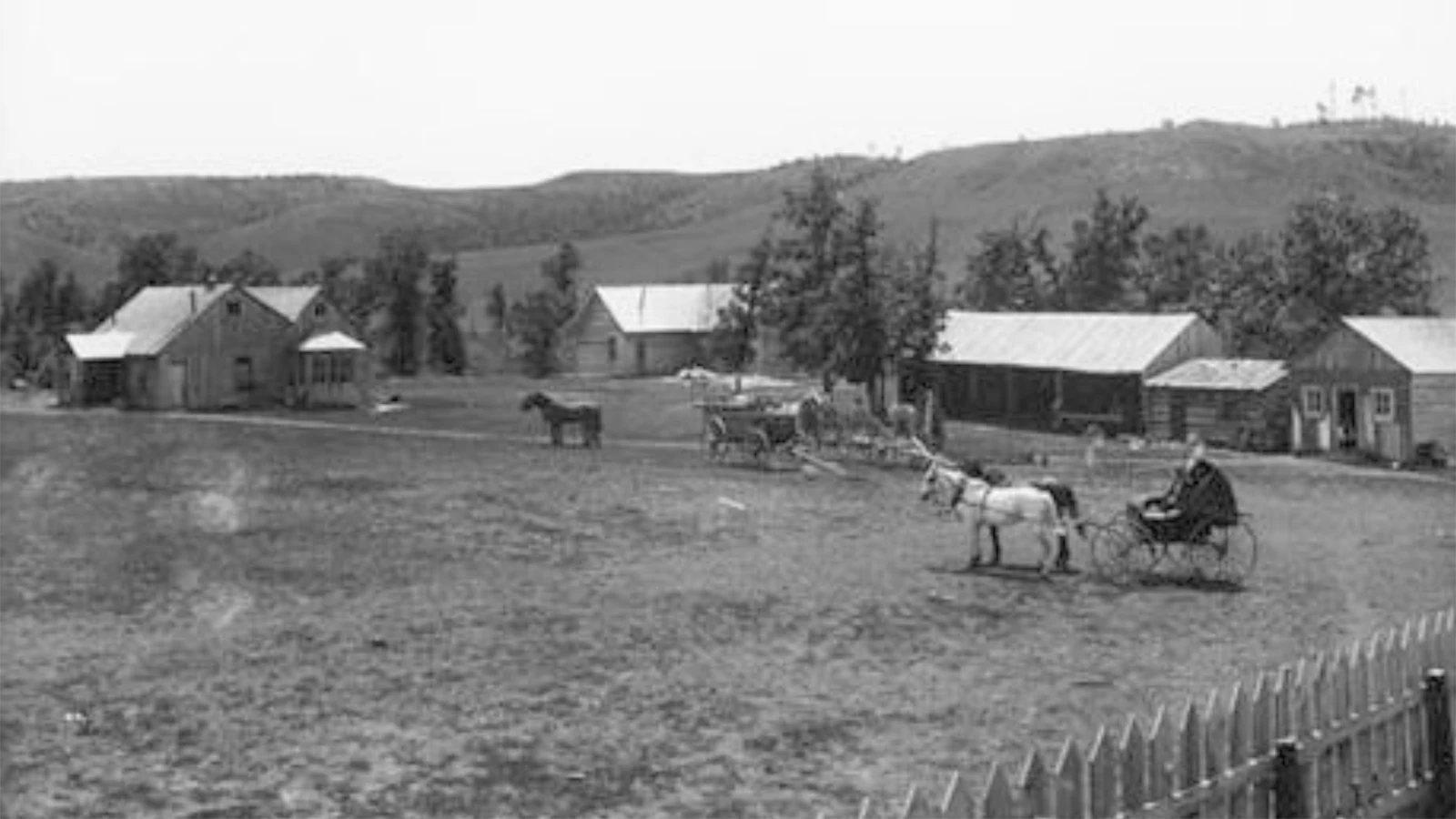
Homesteaders on remote ranches in Crook County were far from any law enforcement and would prudently look the other way when outlaws like the Axelby Gang would trail herds of stolen horses across their land. It was said that a cabin on the Cross Anchor Ranch was one of their hideouts and they had tunneled beneath the cabin, leaving behind secrets that included a skeleton and strange sounds. (Wyoming State Archives) 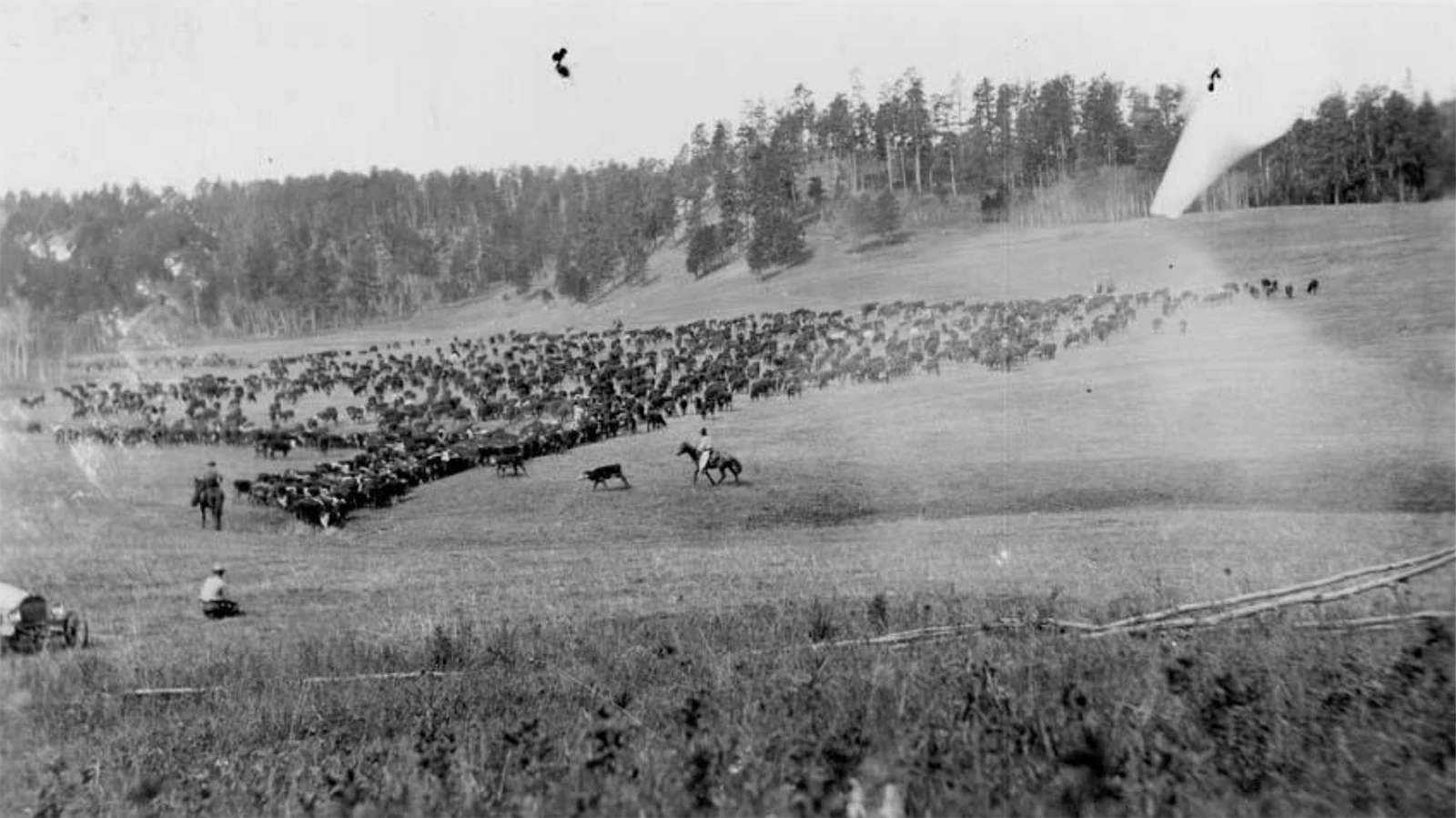
In the late 1800s, Crook County was home to ranchers and a band of thieves known as the Axelby Gang. The outlaws would run herds of stolen horses through the land on what was known as the “Horse Thief Trail” and law-abiding ranchers would look the other way, valuing their lives over reporting the thievery. (Wyoming State Archives)
Horse Thief Trail
In Crook County, Cross Anchor Ranch was just one of many remote ranches in the gang’s path, far from any law enforcement. The thieves would disguise themselves as ordinary cowpunchers.
“The horse thieves were here, there, and everywhere, sinister, intangible shadows, weaving in and out of the bright-colored fabric of frontier life,” Hagedorn wrote in his book “Roosevelt in the Bad Lands: Journey of a President," published in 1921.
Hagedorn claimed these thieves were in every saloon, almost every ranch house and rode on the roundups. Outlaws sat around the campfire with the cowpunchers and some of the most capable ranchers were in league with them. Bankers east and west along the railroad were “hand in glove” with them.
“A man scarcely dared denounce the thieves to his best friend for fear his friend might be one of them,” Hagedorn wrote.
Hagedorn painted a portrait of countless small bands of thieves operating in western Dakota, eastern Montana, and northwest Wyoming. He said these gangs were each loosely organized as a unit, yet all bound together in the tacit fellowship of outlawry.
Hagedorn said the most tangible bond among them was they all bought each other's stolen horses, and were all directors of the same "underground railway."
“As far as the system had a head at all, that head was a man named Axelby,” Hagedorn wrote. “Other men stole a horse here or there, but Axelby stole whole herds of 50 and 100 at one daring sweep.”
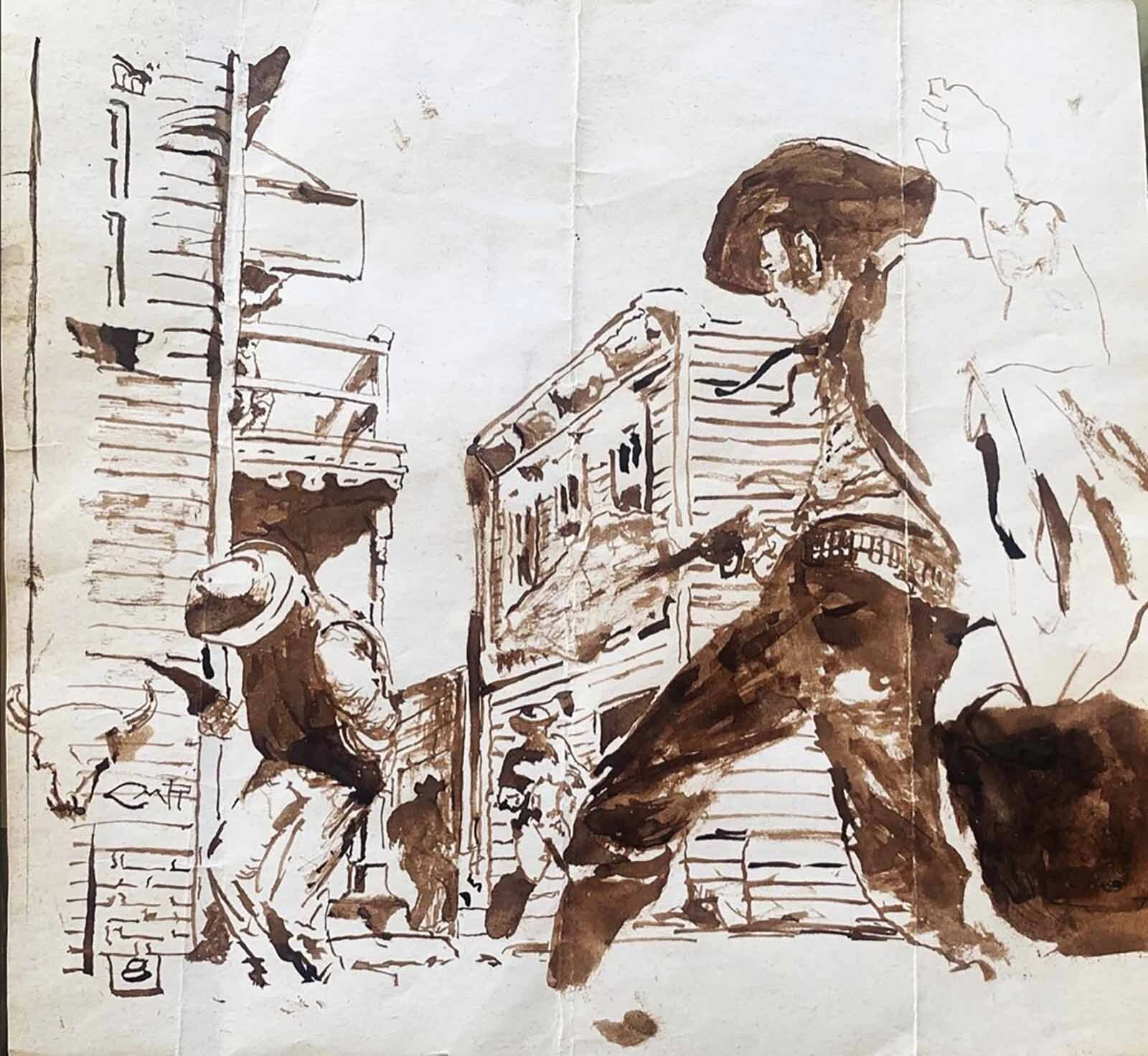
'Typical Robber Chieftain'
Axelby was described as a “typical robber chieftain, a picturesque devil with piercing black eyes and a genius for organization and leadership.” He led his own band but also had men scattered over the Wyoming Territory that were loyal to him.
These men were saloonkeepers, gamblers, and prominent men, including ranchers who were willing to buy horses under the market price. With their help, Axelby created a smooth-running “underground railway” from the Bighorn Mountains and the Black Hills north through Wyoming, Dakota, and Montana.
“His agents in the settlements performed the office of spies, keeping him in touch with opportunities to operate on a large scale,” Hagedorn wrote. “The ranchmen kept open the underground route by means of which he was able to spirit his great herds of horses across the Canadian line.”
By 1884, Axelby's fame had reached the East, and even the New York Sun took note, writing about his escapades.
“Mr. Axelby is said to be at the head of a trusty band as fearless and as lawless as himself. The Little Missouri and Powder River districts are the theater of his operations. An Indian is Mr. Axelby's detestation. He kills him at sight if he can. He considers that Indians have no right to own ponies and he takes their ponies whenever he can. Mr. Axelby has repeatedly announced his determination not to be taken alive. The men of the frontier say he bears a charmed life, and the hairbreadth 'scapes of which they have made him the hero are numerous and of the wildest stamp.”
Then, in February 1884, Axelby disappeared.
Axelby’s associate, a horse thief named Jesse Pruden, had been arrested in Miles City, Montana Territory, and held for transport to Spearfish, South Dakota, to face criminal charges. Axelby “ran his mouth” that he was going to rescue Pruden. His boasting reached the ears of authorities and gave enough warning so that Deputy U.S. Marshal A. M. Willard was able to organize a posse.
On Feb. 14, the lawmen confronted Axelby and five companions at Stoneville, now Alzada, Montana. During the gunfight, Axelby was wounded in the thigh and his horse was shot from beneath him. However, the outlaw leader escaped on foot and eyewitnesses confirmed that he reached the Sheldon ranch, where his wound was dressed.
The posse tracked him to the ranch, but then lost his trail. Axelby’s fate remains unknown and rumors that he died from an infected wound or fled to Mexico have never been confirmed.
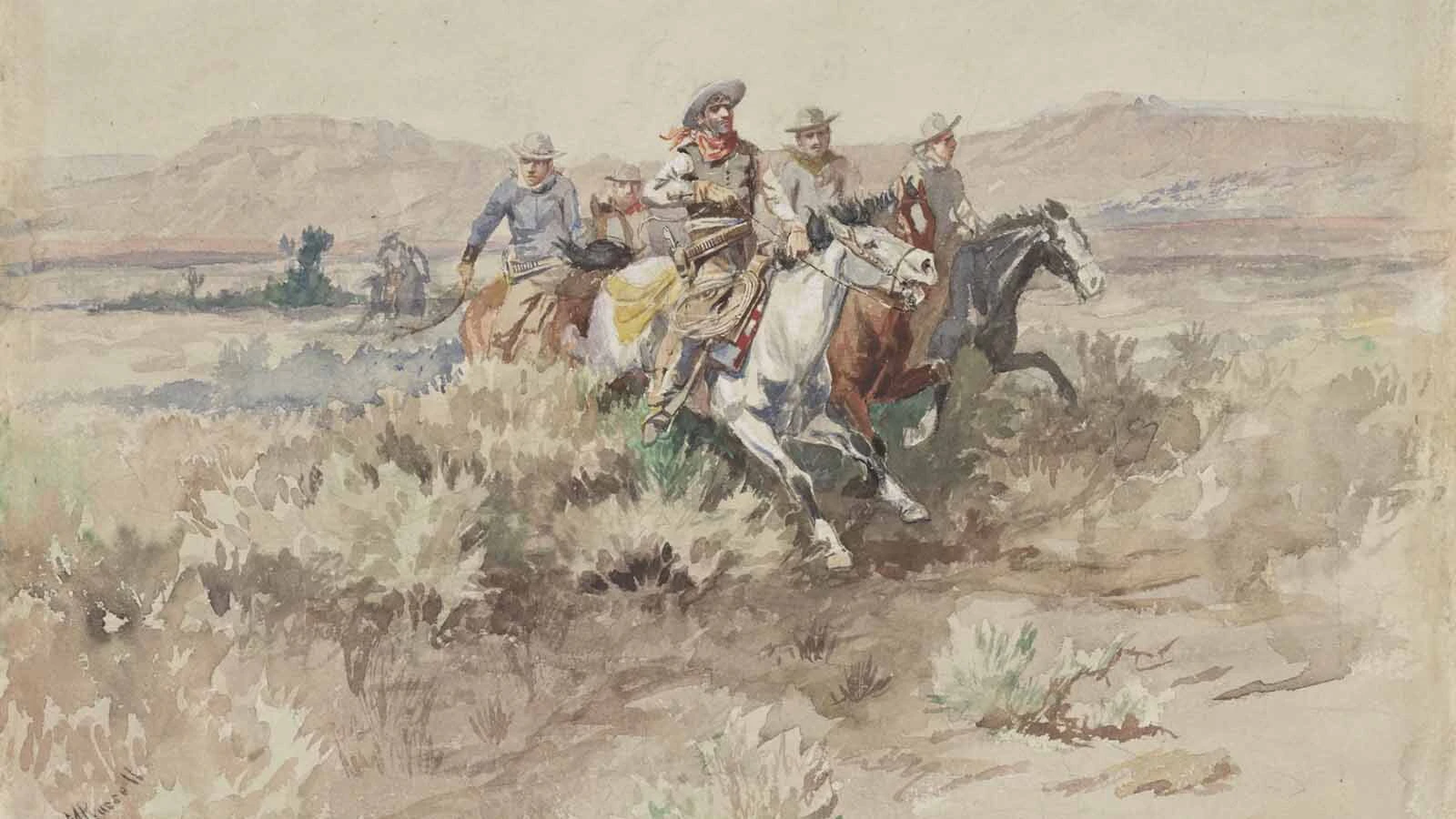
In the late 1800s, artists depicted the outlaws who ranged the lawless western lands. In Crook County, the Axelby Gang trailed herds of horses along the Horse Thief Trail and had a network of hideouts. They were known to be in Devil’s Tower area and a cabin on the Cross Anchor Ranch was believed to be a haunted hideout of the infamous outlaws. 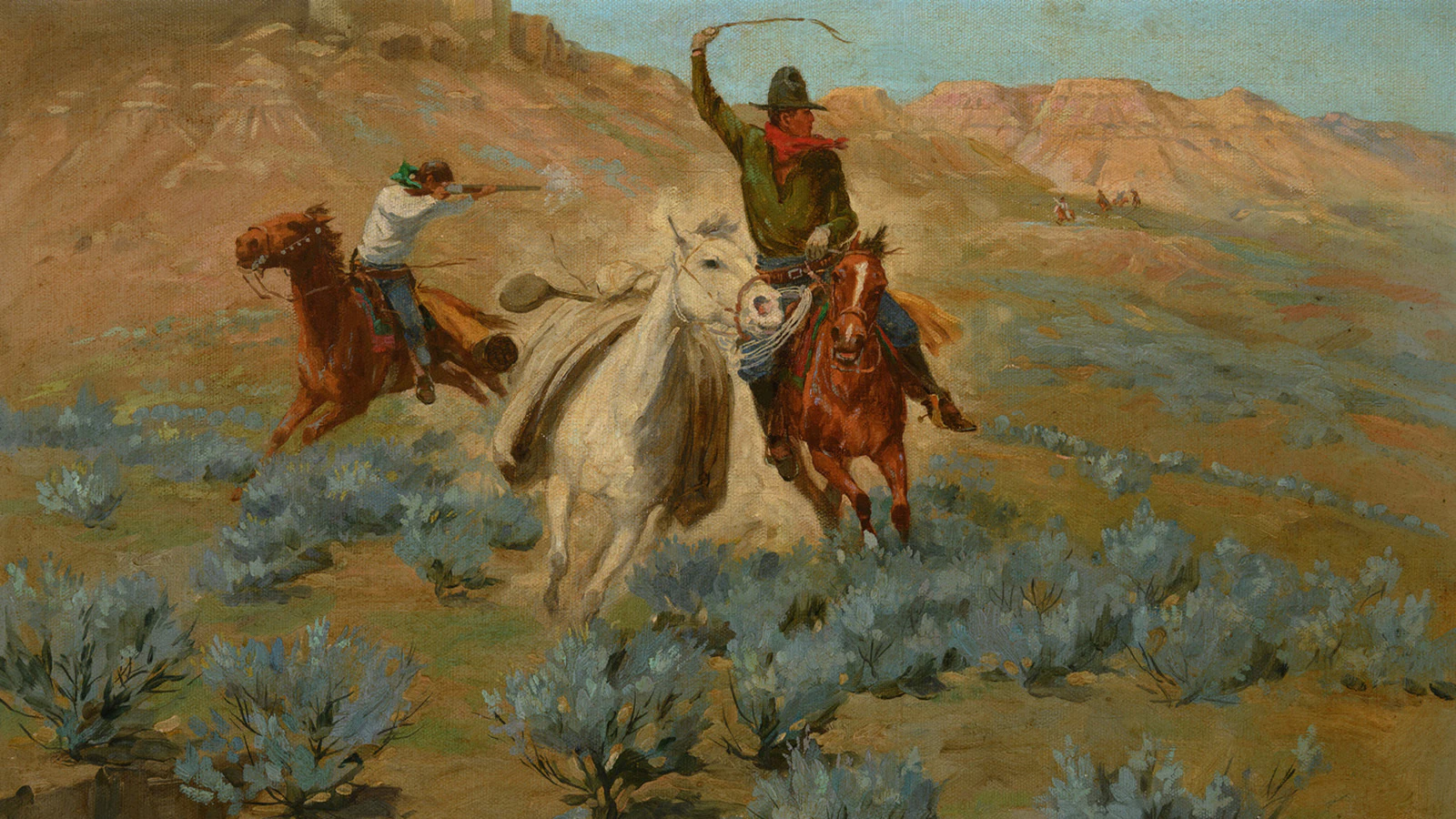
Horse thieves like the Axelby Gang would trail stolen horses through Crook County in the late 1800s along what many locals called the Horse Thief Trail. They had a network of hideouts including around Devil’s Tower and a cabin on the Cross Anchor Ranch. (E. William Gollings painting of Horse Thieves, 1907)
The Tunnels
In the 1930s, writer Myrtle M. Champ traveled to Crook County and was told about an ancient cabin on the Cross Anchor Ranch that old-timers said was cursed. When the ranch was established in the early 1890s, the cabin had already been there for some years.
Locals believed the cabin was one of a chain of hideouts for the Axelby Gang and other outlaws who traveled through the region in the more lawless years.
The ranchers who homesteaded the area in the early 1890s discovered an opening through the floor of the old cabin, which led into a series of underground tunnels. As they explored these tunnels, they stumbled onto the skeleton of a man in a side passage but were never able to learn who he was.
Or if he had ever left.
These men, who wished not to be identified, told Champ that anyone exploring the tunnels would hear moans and groans and low angry voices. Sometimes they would feel a hot breath on their faces or fingers clutching at their throats or clothing.
Champ wrote that only the strong of heart or people who do not believe in ghosts ever ventured into the tunnels where the old cabin once stood, for it is said the spirits of the outlaws still roam through the old haunts along Horse Thief Trail.
She also said that as long as the old cabin stood on the ranch, the sound of shuffled cards and the clink of poker chips could be heard at night.
No one may ever know what happened to Axelby or his gang of horse thieves, but apparently a few of the outlaws still remained in Wyoming, playing cards late into the night.
Contact Jackie Dorothy at jackie@cowboystatedaily.com
Jackie Dorothy can be reached at jackie@cowboystatedaily.com.