

If a doomsday scenario darkens America’s civilian power grid and severs global supply lines, the Pentagon wants its military bases to remain operational for at least three months.
Under a new defense directive called the FORTRESS initiative, domestic installations must prove they can operate without outside electricity, water or supplies for 90 days.
"Power is combat now,” Pentagon chief spokesperson Sean Parnell told Fox News Digital. “Without electricity, you lose communications, water, logistics, assembly lines and just basic military command structures.”
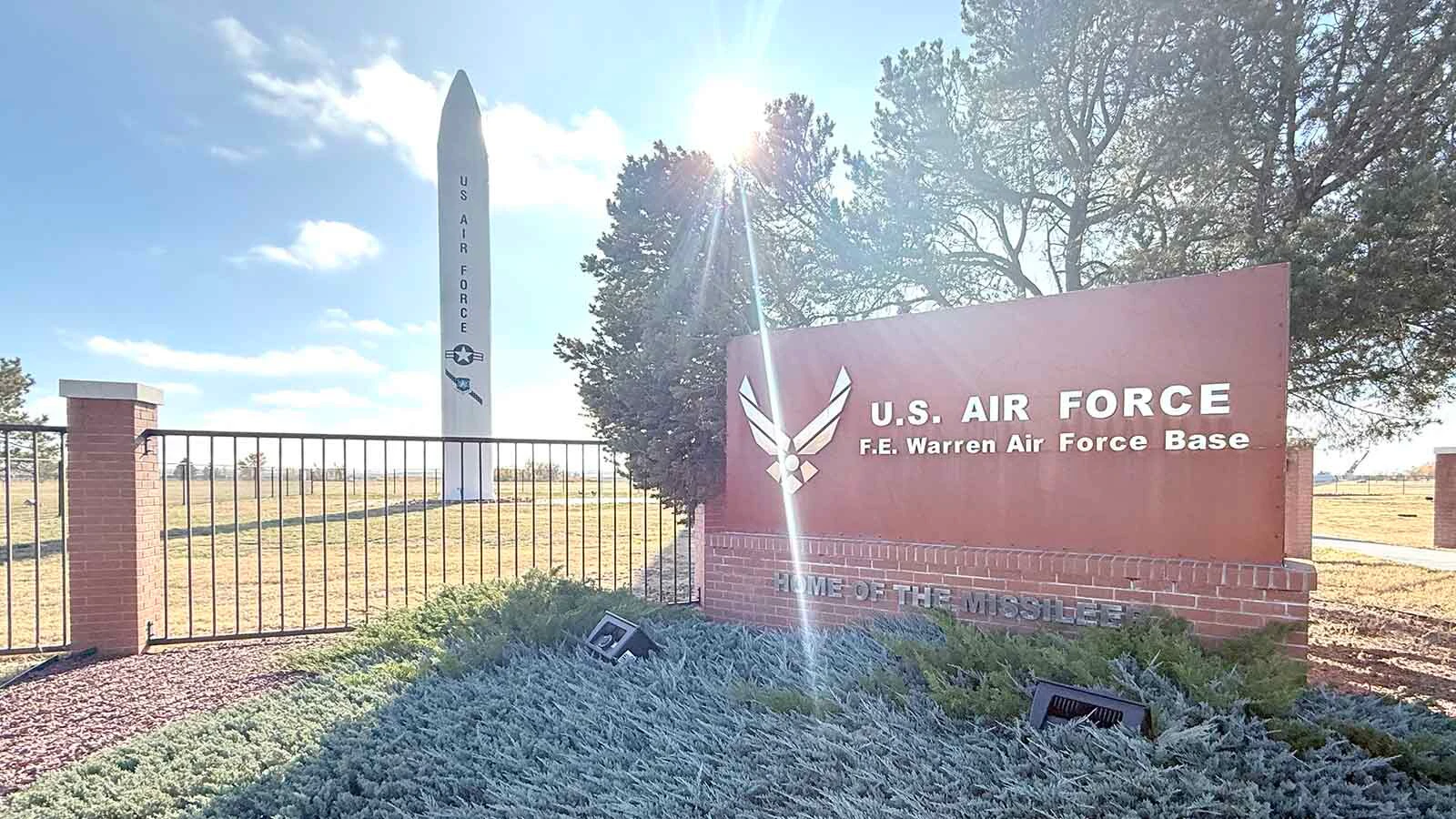
Tucker Fagan, former commander of F.E. Warren Air Force Base in Cheyenne, told Cowboy State Daily the base and the 90th Missile Wing is ready.
"Say F.E. Warren could no longer function,” Fagan said. “Can we still fire a missile? The answer is yes.”
‘How Prudent Military People Think’
F.E. Warren pulls most of its power from the commercial electricity grid. When that goes down, generators take over at the base’s mission-critical facilities, the buildings needed to keep its missile operations running.
Fagan said those generators aren’t the last line of defense, however.
“They have underground diesel tanks, every one of them,” Fagan said. “This was designed into the missile system.”
The 90th Missile Wing at F.E. Warren operates 150 Minuteman III intercontinental ballistic missiles, each housed in an underground silo. They are spread across roughly 9,600 square miles of eastern Wyoming, western Nebraska and northern Colorado.
Fagan said the diesel tanks are also stored underground and are tested every month to make sure that a widespread power outage wouldn’t bring them offline.
“This is how prudent military people think,” Fagan said. “If this doesn't work, what's my backup? If that doesn't work, do I have a backup to the backup?”
Diesel supplies are tight right now.
The U.S. Energy Information Administration expects national distillate fuel inventories, which include diesel, to stay below the five-year low through the end of 2026 and most of 2027.
Fagan said F.E. Warren has a plan for that, too.
“The tanks out there continually fill,” Fagan said. “I'm not going to tell you how big the tank is, but they're big, and they can run a long time on those.”
Fagan said the base itself couldn’t stay powered for 90 days on its own as the directive describes, but that the most important functions of the base could.
“What’s important to the mission of F.E. Warren is the missile sites and the launch-control centers,” Fagan said.
Military’s Nuclear Push
Fox News reports FORTRESS envisions portable nuclear reactors, large-scale battery storage and microgrids that could disconnect military installations from the civilian grid, letting them keep operating through prolonged power disruptions.
The military has already started signing deals.
The Army announced in August that it's awarding up to $2.2 billion to five companies to build and operate microreactors at five bases, with a goal of getting the first one running by September 2028.
The Air Force has its own program, which includes a deal for Radiant to deliver its first microreactors by 2028, and Radiant has since been selected for Buckley Space Force Base in Aurora, Colorado.
Wyoming companies are in the mix too, with Evanston-based Black Mesa landing an Army contract for portable reactors, and Radiant has pitched a manufacturing presence in Natrona County.
Fagan also pointed to Natrium, the sodium-cooled nuclear plant Bill Gates’ TerraPower is building in Kemmerer, which is larger than the microreactors the Army and Air Force have contracted for.
He said he could see the military buying some of those reactors if they prove effective, but that it would be part of a long-term strategic plan.
Still, Fagan said he doesn’t expect Wyoming to be first in line for one of those reactors, because F.E. Warren already has backup plans.
“They’ll go to the places that they think are critical, like up in Alaska where they have the anti-ballistic missile systems,” Fagan said. “You want to make sure that’s protected.”
Glenn Robertson, chief of media operations for F.E. Warren, told Cowboy State Daily that sweeping federal directives like FORTRESS leave the base in a position where it’s either too early to know what they will mean or too sensitive to say.
“We are unable to provide additional comment on Department of War-level policy or planning,” Robertson said.
‘Hair on Fire’
When Fagan saw the headline about the FORTRESS initiative, he said he started the article but quickly set it aside.
"I read maybe the first or second paragraph,” Fagan said. “We already do that in the missile base.”
Without knowing the exact reasoning behind the initiative, Fagan said he can only speculate.
"It could be like a trial balloon,” Fagan said. “Throwing this on the table to see what happens.”
For a man whose career was built around preparing for the worst, Fagan said he isn’t ready to believe the Pentagon’s new directive means the worst is coming.
“I just think people are getting their hair on fire,” Fagan said.
If the doomsday clock does strike midnight, Fagan said the ones most at risk might not be the diesel-backed missiles or the more than 3,300 military personnel stationed at F.E. Warren.
“The most vulnerable are probably the people who live around it,” Fagan said. “(The base) is using the same power as the people who live in the avenues.”
Emma Jane Jackson can be reached at emma@cowboystatedaily.com.


