

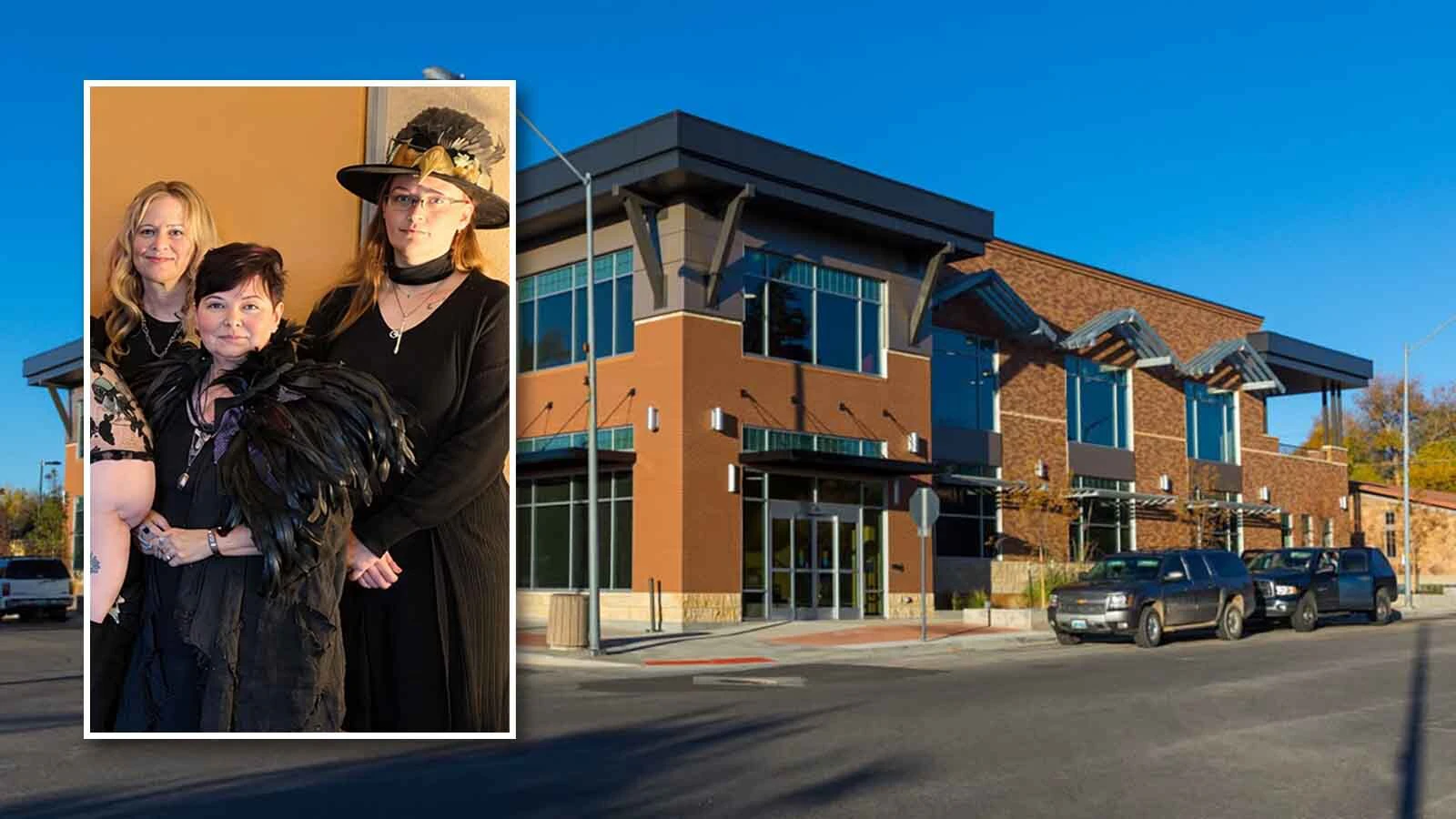
A murder descended on the Converse County Library on Sunday afternoon, but nobody called the cops.
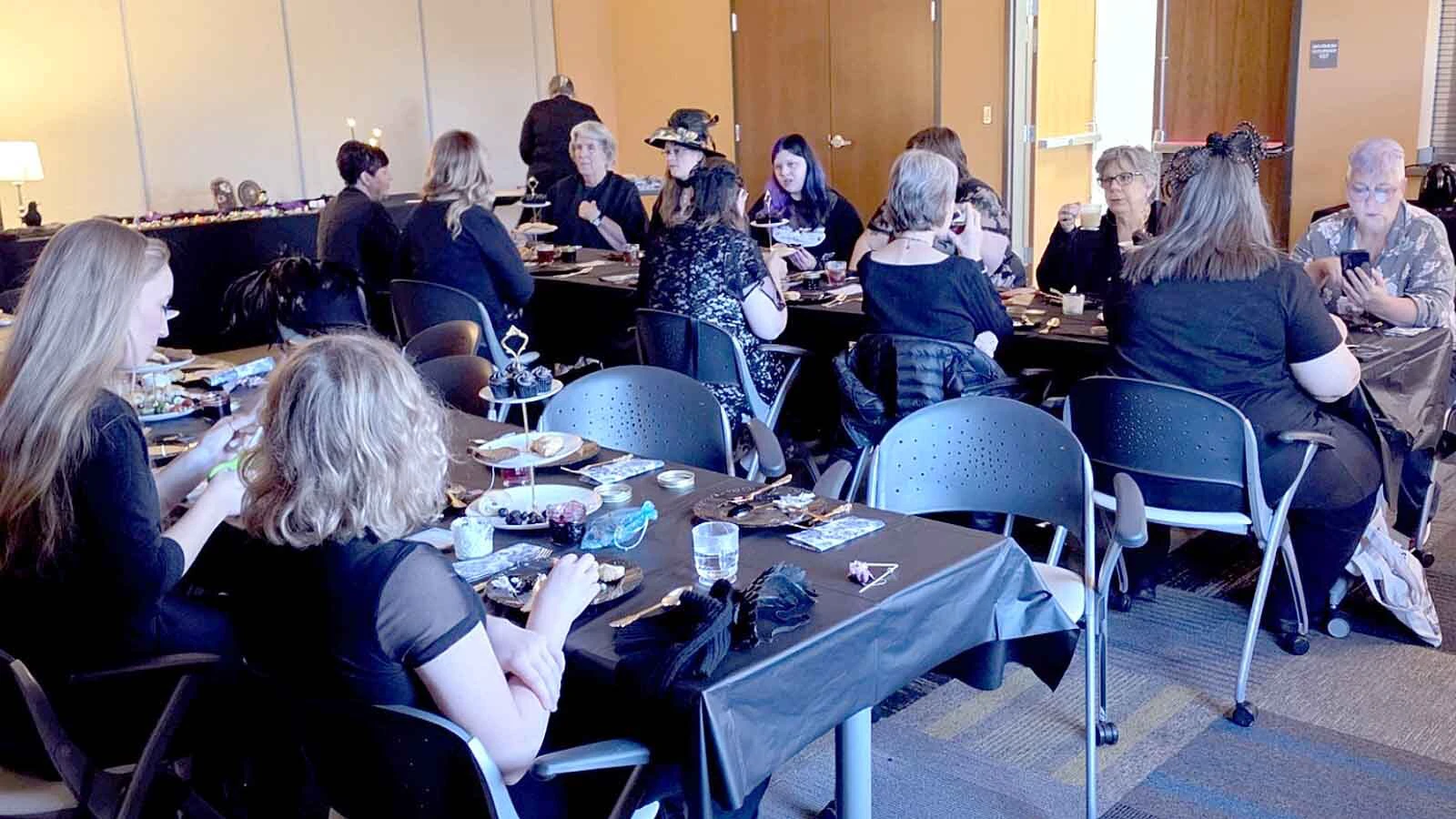
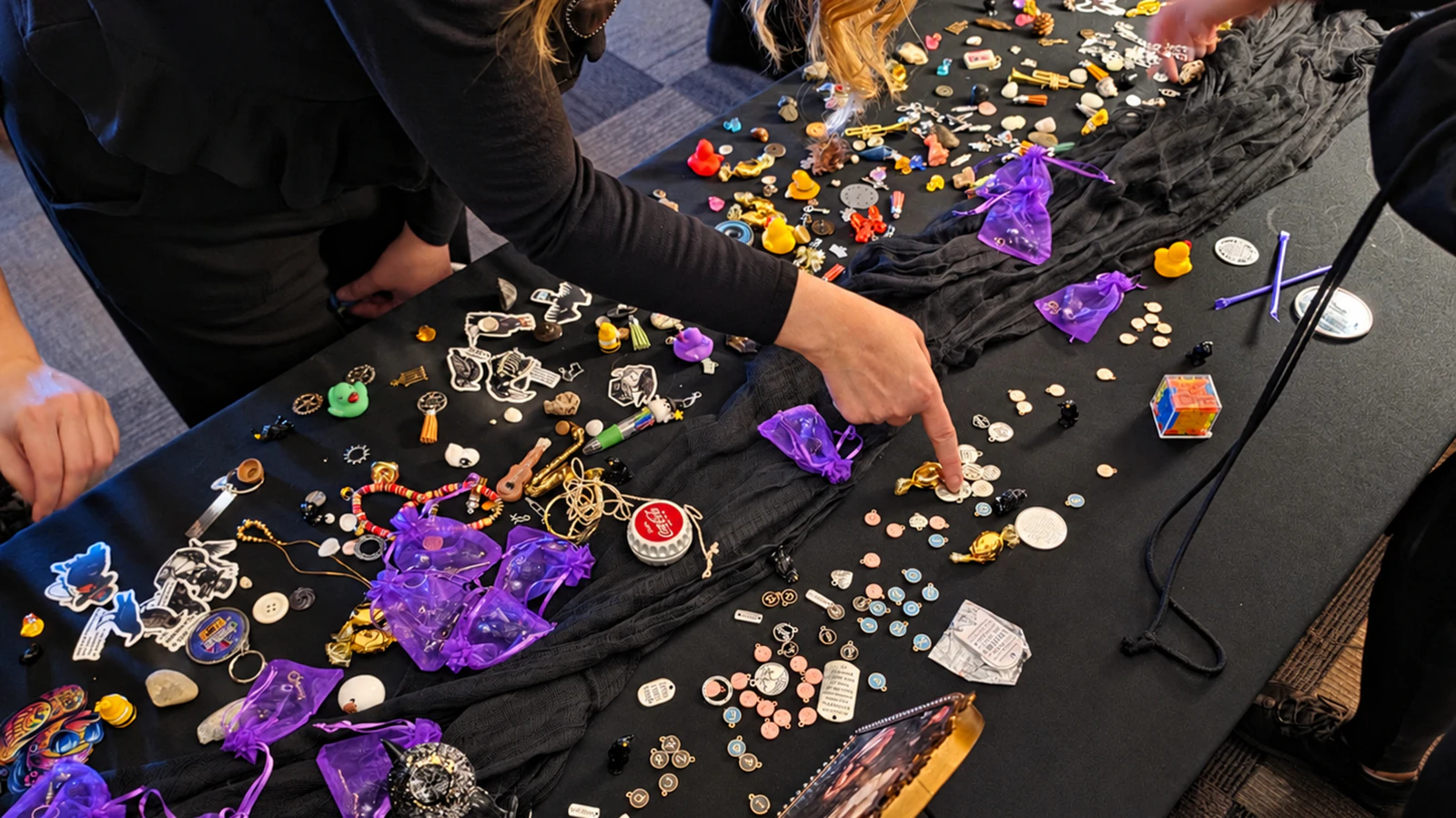
This murder arrived wearing black dresses, feathers, lace and dark hats. They drank tea, ate rye cucumber sandwiches and dark chocolate cupcakes, then crowded around a table littered with buttons and beads, coins, charms, and rocks.
The Adult Crow Tea Party, organized by the Converse County Library, invited people to show up — as a murder of crows — in black, sip tea, and trade shiny trinkets.
Among the loot was an antique miniature Coca-Cola yo-yo brought by 56-year-old Douglas resident Dawn Cecil.
"It went very fast," Cecil told Cowboy State Daily.
The Douglas woman loves thrifting and hunting for little treasures, so it wasn't hard for her to accept a last-minute invitation to the gathering.
The silliness was part of the appeal, but beneath the feathers and shiny baubles was something more basic: an excuse to spend time with old friends and make new ones.
"We just need more whimsy," Cecil said. "We need more gatherings together."
Adults Want Fun, Too
Heather Shumway has been the library's adult program coordinator for about a year and a half, a job that requires budgeting, planning and dreaming up new ways to bring grown-ups together.
Douglas has about 6,500 residents, and Shumway said people regularly walk into the library looking for more than books.
"People looking for things to do in town — in a town the size of Douglas, it's not always a ton available," Shumway said.
At least a couple people every month come to her specifically looking for social opportunities. Some are new to town. Others simply want to meet people or find something that gets them out and around others.
It's a question Douglas itself has been considering: Where do people go to gather, recreate and simply spend time together?
The city's newly adopted 2026 Community Blueprint calls for more indoor recreational amenities, cultural and entertainment spaces and places for people to gather.
The plan grew out of a community process in which residents talked about recreation, activating public spaces and what they wanted Douglas to look like over the next five to 10 years. Douglas is putting concrete — quite literally — behind that idea.
A new 45,000-square-foot Douglas Community Center is under construction north of the middle school, with three multipurpose courts, an indoor running track, community rooms and spaces for arts and events. City officials describe the project as a year-round place for "connection, wellness and engagement."
At the library, Shumway is working on that same basic problem at a considerably smaller — and sometimes stranger — scale.
Earlier this year, the library held a Tolkien tea. Before Shumway had even encouraged costumes, adults began asking if they could dress up.
Then they arrived in "Lord of the Rings" cosplay.
"I love it when people get into it and really try to have fun with a theme," she said.
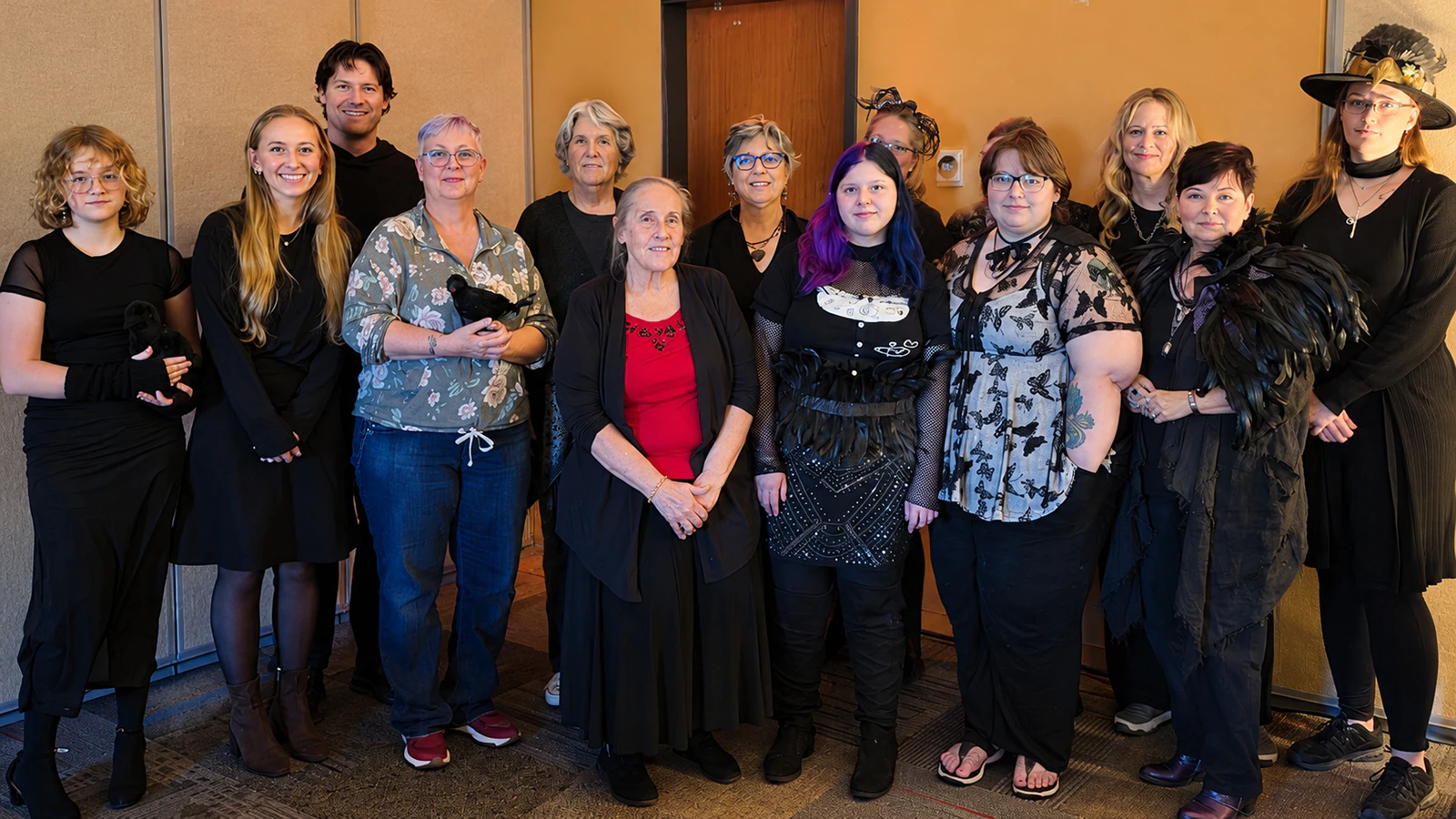
That enthusiasm helped lead to Sunday's Crow Tea, where about 20 people signed up to wear black — or, as Shumway puts it, go "full crow."
She said a big part of the job is understanding that adults really want to have fun, too.
Her goal, she said, is to give people "a chance to get out, be together, socialize and have fun," and "be a little bit whimsical."
Leaving The House
Cecil works in home health care and had already discovered the library's adult programming after a friend invited her to a broom-making event.
When the Crow Tea came around, she had just worked a 12-hour shift and slept for only about two hours, but she went anyway.
"You have to learn who's in your community," Cecil said, "and know that there's people out there."
She said gatherings can be especially helpful for newcomers, introverts and people who might otherwise have trouble finding their way into a social circle.
She sees that need through her work with older people, too.
As people age, Cecil said, spouses die. Families may live elsewhere. Driving can become difficult. The little interactions that once happened automatically can become less frequent.
"It is very important for the elderly to get up and out of the house because they need that interaction," she said.
Without it, she said, people can become withdrawn and quiet.
Sometimes, she added, "people don't — I hate to say it — remember that they're there."
An outing doesn't have to be grand to matter.
"It gives them that oomph to get up out of bed, shower, and go do something," Cecil said, "even if it is just to go have coffee with somebody or a book club."
Somewhere To Go
University of Wyoming researchers have studied what can happen on the other side of that equation, when older Wyoming residents lose a place that once regularly brought them together.
Wyoming's only Program of All-Inclusive Care for the Elderly, or PACE, closed in 2021 after state budget cuts eliminated critical Medicaid funding. All 139 participants were discharged.
PACE was designed to help older adults with significant health needs continue living in the community, providing medical and behavioral health services.
It also provided something much simpler: somewhere to go.
Participants had a day center, transportation and a routine that included games, exercise, arts and crafts, volunteer work and community outings — activities that put them in regular contact with other people.
A year after PACE closed, five of the 12 former participants who took part in the study said they had no friends to talk with. Three said they had no relatives to talk with, and 11 reported no participation in a church, club or other organization. Researchers found particularly low levels of support from friends.
Participants repeatedly described losing more than a health program.
They lost friends, activities, routines, transportation, and a reason to get out.
Some described PACE as their primary or only social outlet.
Researchers found that many weren't able to simply replace those relationships by making new connections elsewhere in the community. About three-quarters also said losing PACE transportation contributed to feelings of isolation, loneliness and disconnection.
That's one role a small-town library can fill, said Shumway.
It doesn't take a formal program aimed at loneliness.
A book club, craft night or even a tea party for people dressed like crows can give older residents a place to be expected, a reason to leave the house and a chance to keep building relationships as their social circles change with age.
The Library Was There
Cecil knows what it's like to arrive in Douglas without a community already waiting for her.
She moved to Wyoming from Illinois in 2010.
She didn't know anybody, and she didn't have cable or Wi-Fi, so she went to the library.
She used its computers to look for jobs and check her email. She checked out DVDs to take home. When technology stumped her, library employees helped.
"I depended on the library for a lot when I first moved here to Wyoming," she said.
Cecil left Wyoming for Florida in 2017 with her youngest daughter, but soon found her way back.
"This is where I feel at home," she said. "I love the community."
Sixteen years after the library helped Cecil find her footing in a new town, it's still doing something similar.
She's showing up to see people she knows, meet people she doesn't and participate in activities.
That's the part Cecil thinks can be easy to underestimate.
"We need more gatherings together," Cecil said, so when someone is struggling, "you have someone to lean on."
Crows Get It
The library chose an appropriate Wyoming bird for an afternoon devoted to gathering — and even a little play.
American crows are well established in Wyoming, particularly around towns and agricultural areas, according to the Wyoming Game and Fish Department, which notes that the familiar "caw, caw" is one way to distinguish them from their larger raven cousins.
Longtime southeast Wyoming birder and writer Barb Gorges has documented their growing presence in the state, particularly around Cheyenne, where she said crows became noticeably more abundant beginning in the 1990s.
Gorges has also pointed out a behavior particularly fitting for Douglas' human flock: Crows play.
Young crows have been observed playing with objects, she wrote, while adults will play in the wind. Crows are also highly social birds, gathering together and maintaining close family relationships.
The popular image of a crow obsessively hoarding shiny baubles may be more folklore than established crow science, but gathering, socializing and playing?
On Sunday, they gathered. They drank tea, they ate, they talked, and they played at the Converse County Library. They sifted through piles of shiny objects and went home with something new.
"Apparently," said Cecil, "I'm a crow."
Kolby Fedore can be reached at kolby@cowboystatedaily.com.


