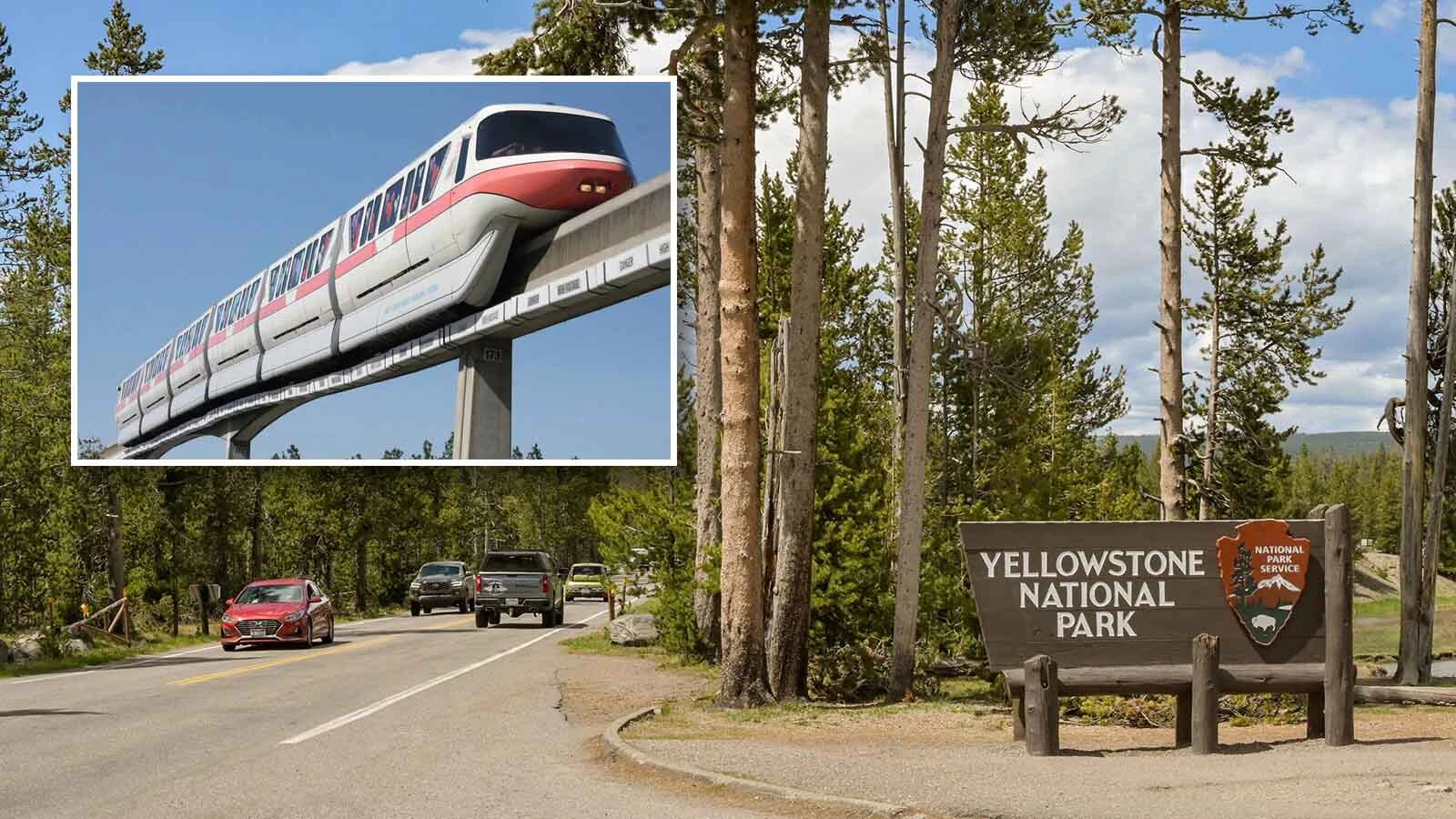
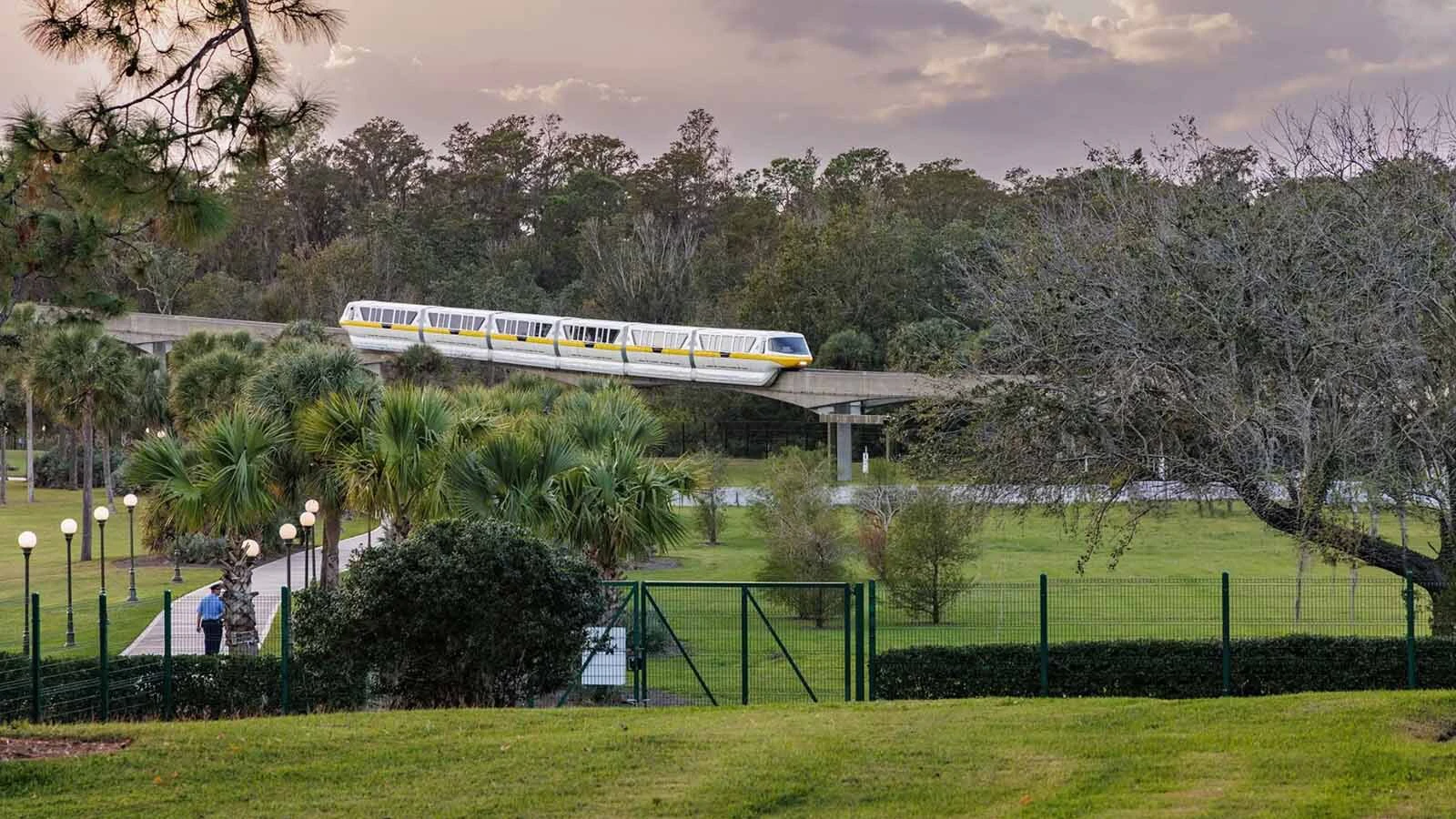
It’s been 35 years since former U.S. Sen. Malcolm Wallop wondered if a Disney World-like monorail could be a solution to the increasing crowds of tourists flocking to Yellowstone National Park.
It never got past the study stage, largely because National Park Service officials didn't like the idea.
It's an example that Major League Baseball’s recent idea to build a ballpark in Grand Teton National Park — which was also withdrawn — hasn't been the only controversial change that's been proposed in Wyoming's national parks.
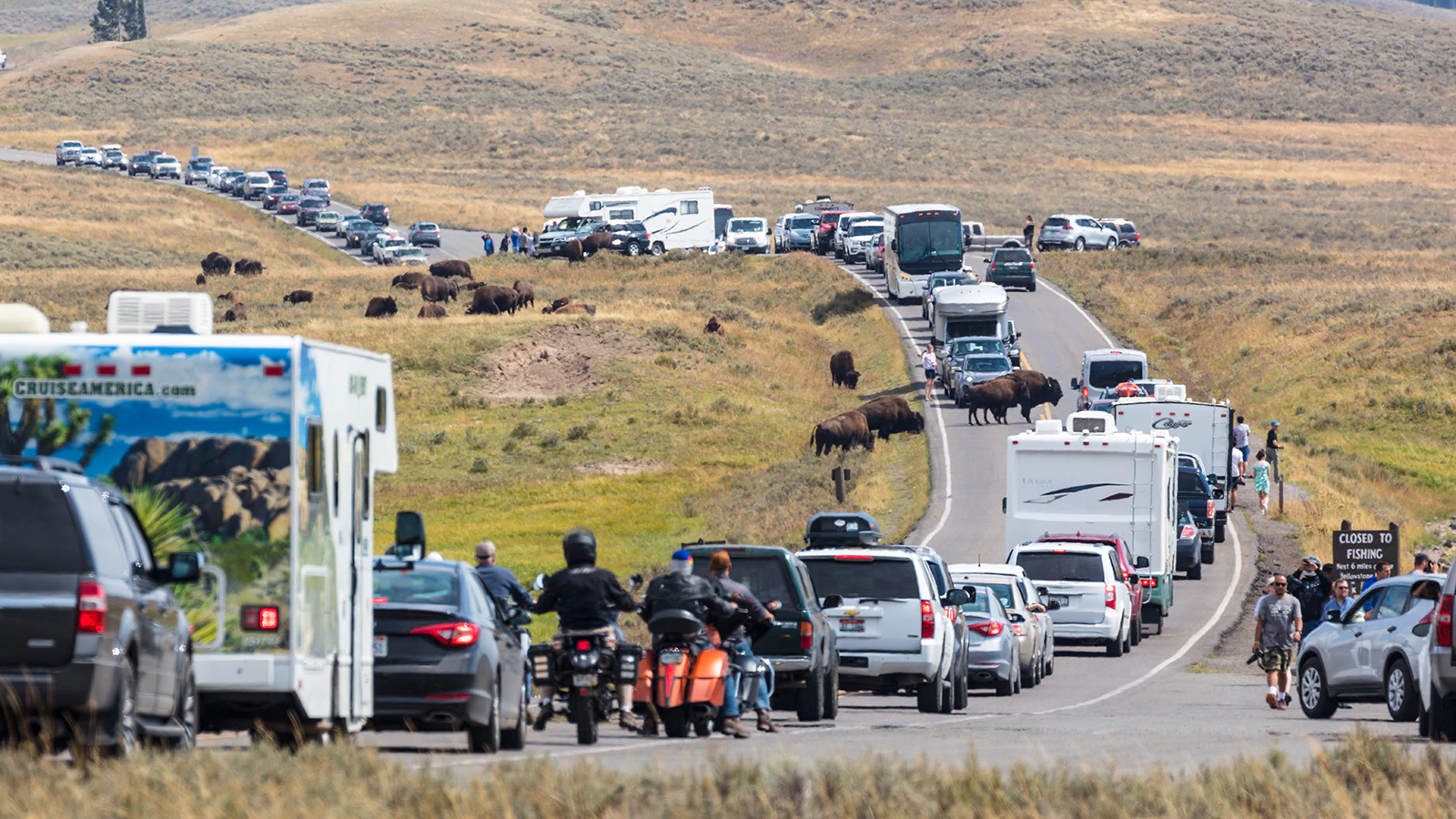
The idea’s origin came when Wallop and friends drove through Yellowstone in the summer of 1991, and were stuck in a major traffic jam. Roads were clogged due to construction and many “wildlife jams.”
Look At Disney World
“We should look at how Disney World moves vast numbers of people,” Wallop told Distinctly Montana magazine at the time. “One thing Disney has been able to do that national parks haven’t is separate Americans from their cars and make them enjoy it.”
With that aim in mind, Wallop went back to the U.S. Senate to try to get $300,000 in federal money so the NPS could study the feasibility of building a monorail or other alternative ways to move people fluidly and safely through the park.
Wallop’s bill called for “air trains, magnetic levitation transportation, and other environmentally cautious ways” to accomplish his goal: take as many vehicles off the park’s roads as possible.
U.S. Sen. Alan Simpson, the Cody Republican, joined Wallop in successfully asking the Senate Environment and Public Works Committee to authorize $300,000 to study alternative, futuristic methods of travel in Yellowstone.
No one could argue that the heavy amount of traffic wasn’t a thorn in park officials’ side.
Yellowstone had 2.92 million visitors in 1991 and would surpass 3 million for the first time a year later.
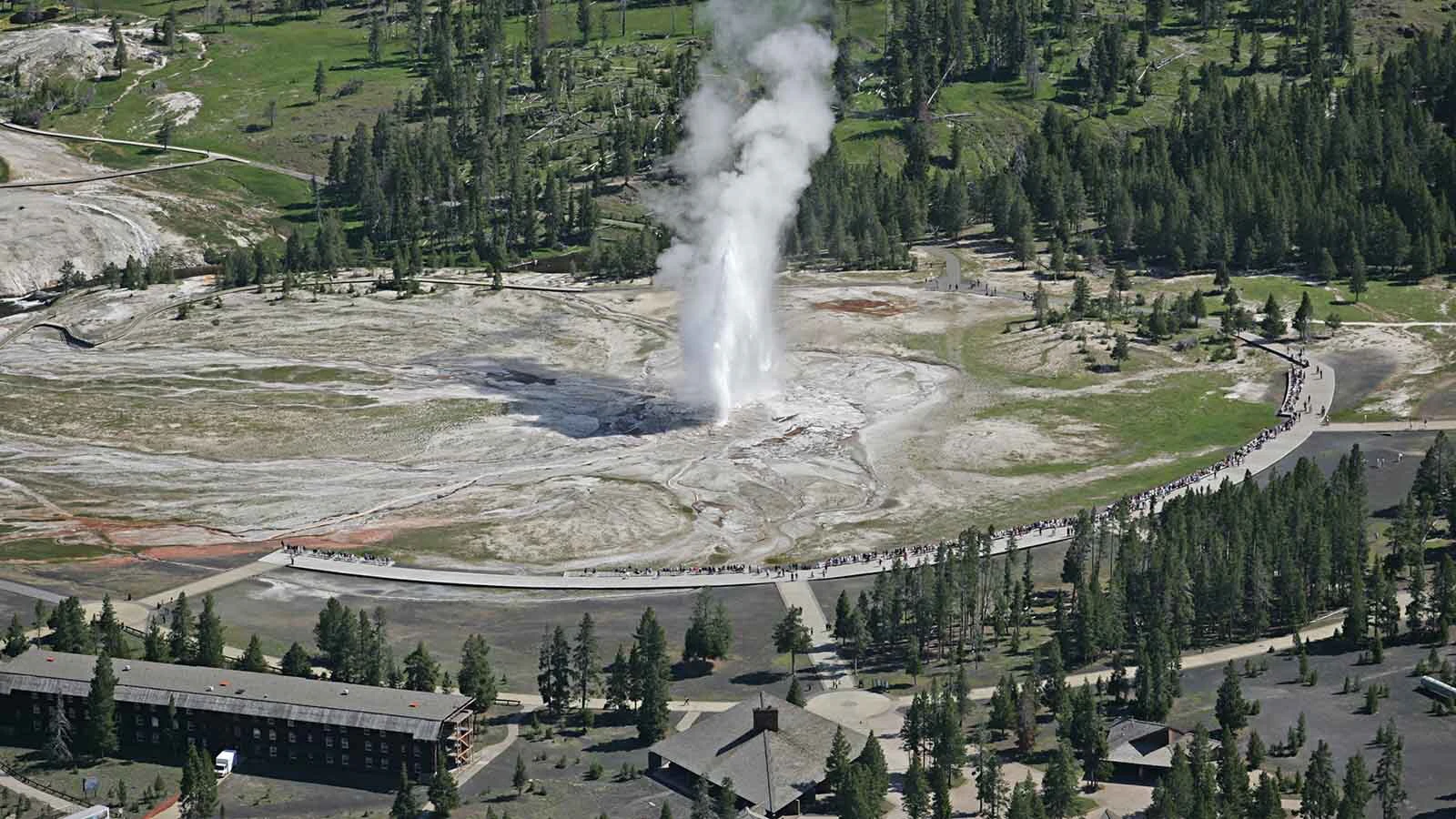
While NPS officials agreed with doing a traffic assessment 35 years ago, they were highly concerned about the impact of a monorail on wildlife and geothermal features like Old Faithful.
Patty McDonald, Wallop’s chief of staff in 1991, said his concern was shared by many people: Yellowstone gridlock. Now 35 years later, that still has not been solved, and traffic has greatly increased since then.
McDonald told Cowboy State Daily she’s sure Wallop was disappointed in the NPS’s assessment that a monorail system was too expensive, but also noted that, “He was a fiscal conservative, too.”
Wallop ‘Prescient’
Rob Wallace, another former chief of staff for Wallop, said he had left to become the staff director for the U.S. Senate Energy Committee by the time the monorail project was considered.
“Transportation solutions seem to be elusive,” Wallace said. “Timed entry is controversial. I think Malcolm’s monorail idea was prescient back in ‘91. Now the park’s (visitor) population has grown 40 or 50%.”
Wallace went on to oversee the National Park Service as the Assistant Secretary of the Interior for Fish and Wildlife and Parks in the first Trump administration.
Looking back, Wallace said he agrees with the NPS that the cost of the monorail system would have been prohibitive, especially with a short season for tourists.
“The fact that Malcolm threw it out there was a pretty provocative idea,” Wallace said. “I don’t know if he thought it would work, but by pushing (the monorail idea) it forced people to think hard about how do you solve the problem.”
McDonald agrees.
“He was always looking out for funding for Yellowstone’s roads to repair them," she said. "He was chairman of the Public Lands and National Parks Subcommittee, then chairman of the entire Senate Energy and Public Lands Committee.”
Gene Reetz, former senior water resource scientist at the Environmental Protection Agency, told Cowboy State Daily that the concerns the NPS had about the monorail project in 1991 are the same he would have today.
First, he said, is the size of the project’s footprint itself, and also determining where it would go and how it would impact geothermal features and wetlands.
“If the monorail would go over any of those things, it would be a first-class engineering challenge, and very disruptive,” Reetz said.
Another issue, he said, is that the impact of a monorail could be similar to roads, which he said could be a major barrier to wildlife migration.
“A monorail can end up with more habitat fragmentation, which is a significant problem throughout the West,” Reetz said.
Habitat fragmentation is the breaking apart of large, continuous natural areas into smaller, isolated patches separated by human-altered land. It is one of the primary drivers of species loss worldwide.
High Cost Dooms Monorail
The expense of building a monorail was also considered by NPS as cost prohibitive.
Jim Straughan, chief of transportation at the NPS’s Denver office at the time, said estimates to build a monorail network ranged from $15 million to $50 million per mile, compared to the $1 million per mile cost of reconstructing roads in 1992.
That cost has skyrocketed. In 2024, Yellowstone received a $22 million grant from the Federal Highway Administration to modernize and reconstruct a 0.7-mile stretch of the Norris to Golden Gate roadway.
Straughan told The Associated Press that there were several other factors that led to NPS’s negative reaction to Wallop’s idea. He said steep grades would likely limit a monorail network, and it would never pay for itself because it wouldn’t run year-round.
His final assessment? Straughan told the Casper Star-Tribune in 1992 that developing a monorail system wasn’t in the cards.
"I don't see us developing a (monorail) system extensive enough to replace the roads in Yellowstone," Straughan said. "The monorail works well in Disney World because it's fairly compact. But when you get into larger areas it becomes a tougher question."
Fleet Of Buses
A better solution, Straughan suggested, was a fleet of buses that would reduce congestion and pollution.
Based on his comments to the media, Wallop didn’t care for the bus idea and remained committed to his brainchild.
“I just hope we’re not hooked on traditional means of transportation and not open to others,” Wallop said. “But if the study determines that buses are the only way to go, they need to justify it.”
No large fleet of buses ever materialized, so personal vehicles are still the primary way people see Yellowstone’s wonders. The park has eight historic touring buses of the 1936 Model 706, which are used for guided tours.
The Orlando Sentinel, which covers Disney World extensively as the closest media to the Florida attraction, looked at the monorail idea and concluded that it would back Wallop all the way.
First, it noted that “America’s national parks have become so overloaded and polluted with people and cars and campers and trash that they’re a frightful mess.”
How do park officials clean it up? The Sentinel’s editorial writer went all-in on Wallop’s effort to get the federal funds for the study and endorsed his Wyoming version of Disney World’s monorail.
“Let’s hope it gets built,” the editorial concluded. But it didn’t.
The Sentinel, like several periodicals, mentioned that while Wallop did not have a good relationship with environmentalists, many were on his side on the monorail issue because they also wanted to see fewer vehicles on park roads.
The Greater Yellowstone Coalition said it didn’t support a monorail because the organization prioritizes conservation and the protection of natural landscapes over infrastructure projects that could disrupt ecosystems.
Similar to existing highways, GYC said, a monorail could lead to higher rates of wildlife-human collisions.