


When a doctor told Kelley Boltin she had about six months to live, the 61-year-old Gillette woman remembers answering with four words.
“We’ll see about that.”
Inside, her bravado collapsed.
“You’re dead. You’re dying,” her brain whispered.
Six months came and went.
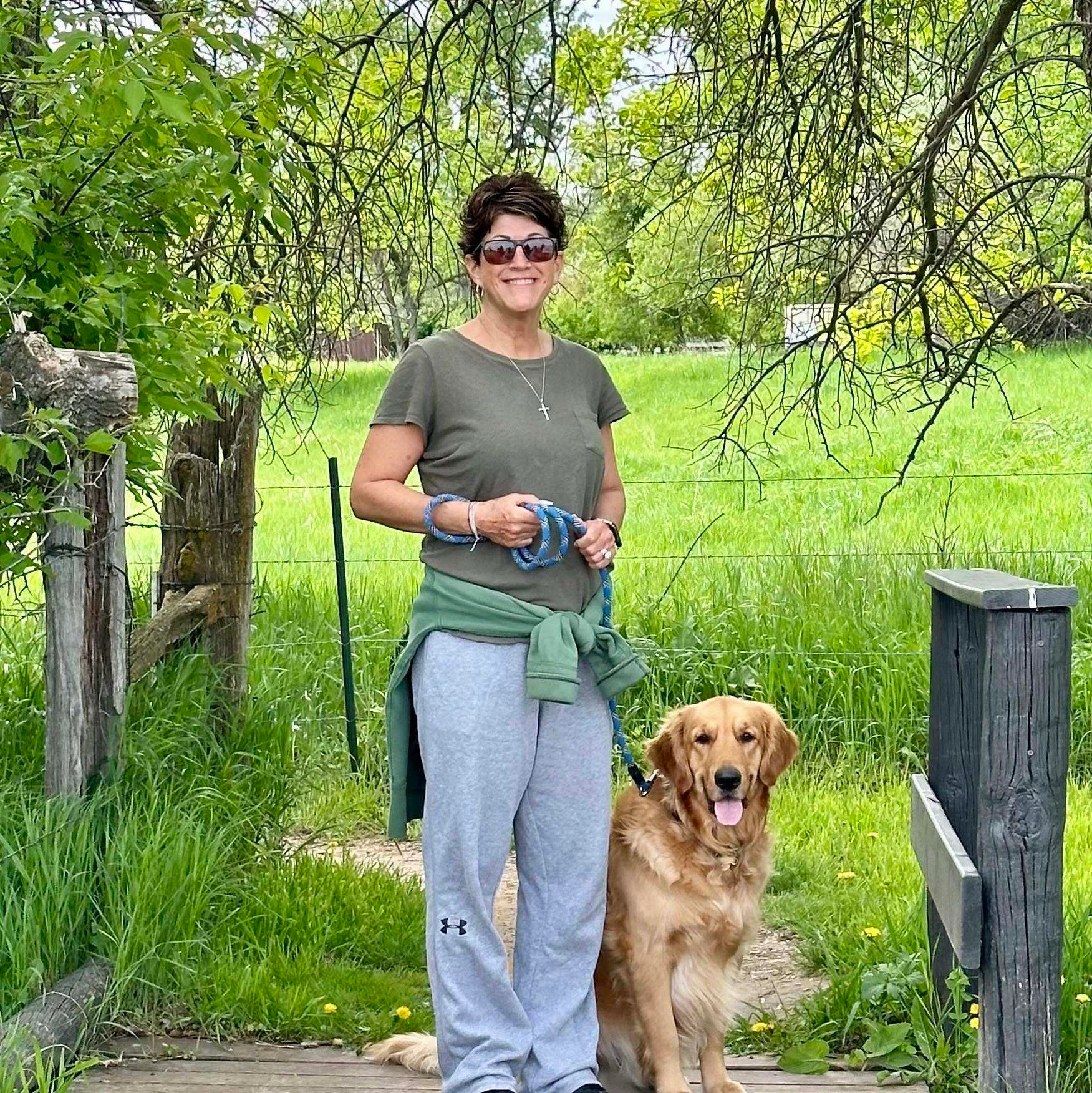
Now, three months beyond her date with death, Boltin is still here — still undergoing treatment for Stage 4 colon cancer and refusing to treat a doctor's prognosis like an expiration date.
Her latest scans, she said, have given her hope.
Getting here, however, has been anything but a straight line.
Boltin's cancer journey has taken her through conventional oncology, alternative treatment and repurposed drugs. It has also forced her to reconsider some of her own deeply held beliefs about cancer treatment.
“There is a place for western medicine,” Boltin told Cowboy State Daily, describing it as one of the biggest changes in her thinking since she was diagnosed. “It’s not the boogeyman that I made it out to be.”
Something Was Wrong
Before doctors ever mentioned the six-letter word — cancer — there were signs something wasn't right.
It started with blood in her stool, and eventually a tumor grew large enough to create a blockage.
“I think it was during that year I was having a lot of medical conditions that I just kind of shoved to the side,” she said.
Her father had dementia, and as his health deteriorated, she made caring for him the priority. He died in December 2023.
By October 2024, her symptoms could no longer be ignored. She was diagnosed with colon cancer.
At first, she was wary of chemotherapy and deeply concerned about what conventional treatment would do to her body. Instead, she began searching for other ways to fight the disease.
She ended up at the Hoxsey Biomedical Center in Tijuana, Mexico, where she pursued an alternative treatment program.
There, Boltin’s days revolved around a rigid regimen of supplements and a highly restrictive diet — no sugar, pork, vinegar, tomatoes, carbonated drinks or alcohol — as she tried to make her body as inhospitable to cancer as possible.
It was an expensive, out-of-pocket phase of her treatment, requiring her to fly back and forth between the United States and Mexico, and the cancer did not disappear.
It progressed.
By February, her disease had advanced to Stage 4. A doctor told her she had about six months to live.
Grim Prognosis
The alternative route she hoped would stop her cancer hadn't done so.
Faced with metastatic disease and a prognosis measured in months, Boltin reconsidered the treatment she once feared.
She began chemotherapy.
She remembers how she once viewed it.
“I looked at it as the last alternative, and that it did more damage than helping people. And I’ve read so many stories of people that had chemo that, you know, they never got their life back. So many people died. It’s mustard gas, you know, in a human form,” she said.
“So many fear-mongering tactics out there that dissuade people from even talking about it, and I was one of them. I got stuck in that garbage talk and just did not want a thing to do with it.”
Today, she doesn't describe her experience as proof that conventional medicine was right or alternative medicine was wrong. Instead, she has landed somewhere in the middle.
Boltin continues to use complementary approaches while receiving conventional cancer treatment.
She has researched supplements and repurposed drugs — medications developed or used for other conditions that some researchers are investigating for possible anti-cancer effects. She is far from alone in exploring these approaches.
National studies found about one-third of Americans with cancer use some form of complementary or alternative medicine, although far fewer report using those approaches specifically to treat their cancer.
No Exact Clock
Dr. Christopher Lieu has spent his career treating and studying colorectal cancer.
Lieu, a professor of medicine and medical oncology at the University of Colorado Anschutz Medical Campus and a colorectal cancer specialist, told Cowboy State Daily that one of the problems with giving a patient a number like “six months” is how easily an estimate can become something much more absolute in the patient's mind.
Cancer doctors can talk reasonably about whether a person's prognosis is likely measured in days, weeks, months or years, he said. Predicting precisely how long one particular person will live is much harder.
Lieu is cautious about putting an exact number on it.
“The reason why I want you to forget that number as soon as you leave this office is because … what if they don’t make it that long?” he said.
The reverse is just as consequential.
What happens to the patient who is told six months — and then lives seven? Or nine? Or far longer?
“Sometimes patients that you think are not going to do very well have these remarkable kinds of turnarounds,” Lieu said.
Physician and medical sociologist Nicholas Christakis addressed that problem nearly two decades ago in a New York Times essay titled “The Bad News First.”
Christakis cited research involving nearly 5,000 hospitalized adults believed to have roughly six months left to live. Only 15% were given clear prognoses.
He also pointed to research showing that when doctors did predict remaining lifespan, they frequently overestimated it.
In other words, a prognosis can tell a patient something enormously important about the seriousness of an illness.
It cannot put a date on death.
Searching Everywhere
In addition to chemotherapy, Boltin began exploring repurposed drugs.
That idea itself isn't fringe science.
Dr. Alfonso Dueñas-González, a researcher affiliated with Mexico's National Cancer Institute and National Autonomous University of Mexico, has published extensively on the subject.
In a review of cancer drug repurposing, Dueñas-González and fellow researcher Aurora Gonzalez-Fierro wrote that one advantage is that scientists aren't starting from scratch. They're working with drugs whose characteristics are already known.
Their review also underscored the enormous distance between an intriguing existing drug and a proven cancer treatment. At the time of their review, they identified only three repurposed drugs included in widely recognized cancer-treatment guidelines, despite a much larger number being investigated.
Dueñas-González has also studied ivermectin, an antiparasitic medication, as a possible candidate for repurposing in cancer. His research has found anti-cancer effects in laboratory and animal models and argued that the findings justified moving the drug into clinical trials in cancer patients.
That is not the same as demonstrating that it cures cancer in people.
The distinction matters enormously when desperately ill patients are searching for something — anything — that might give them more time.
Lieu said anecdotes about patients improving after taking a repurposed medication cannot establish that the medication caused the improvement, particularly when a patient is receiving multiple treatments simultaneously.
He specifically discussed drugs such as ivermectin and fenbendazole, which have attracted attention among cancer patients looking outside conventional treatment.
“I’ve had tons of patients try these drugs,” Lieu said. “I have yet to have a patient with a good result.”
That doesn't mean researchers shouldn't investigate promising compounds, he said. It means evidence has to come before doctors can responsibly tell patients they work.
Dueñas-González has made a similar distinction in the scientific literature. In a review titled “Drug repurposing for cancer therapy, easier said than done,” he and Gonzalez-Fierro wrote that although repurposing existing medications sounds faster, safer and cheaper than developing entirely new drugs, turning that promise into accepted cancer treatment has proved difficult.
Researcher In Spain
Part of Boltin's search led her to a man named Beniamin Shaginyan in Spain.
“Who in Gillette, Wyoming, meets a guy from Alicante, Spain, who happens to be a cancer researcher?” Boltin said. “That wasn’t coincidence in my book.”
She said Shaginyan helped her research repurposed drugs and other approaches she could incorporate into her fight against cancer.
“I’m grateful for Beniamin. God has saved my life, and he’s saved a lot of people, and we will be traveling to Spain to meet him in February or March of 2027. So I’m very excited for that day,” Boltin said.
Cowboy State Daily attempted to contact Shaginyan to learn more about his professional background, research and the recommendations he made to Boltin, but he did not respond to a request for an interview.
CSD also could not independently verify his research credentials or find published cancer research, an academic or medical affiliation or another public professional record connecting him to cancer research.
Whatever Shaginyan's background, however, the broader idea Boltin became interested in — repurposing existing drugs to fight cancer — is being studied by thousands of scientists around the world.
A 2025 analysis of cancer drug-repurposing research identified more than 1,000 scientific papers involving more than 6,300 authors between 2008 and 2024, with research in the field growing rapidly.
More than 800 clinical trials across 41 countries have tested existing drugs for new uses against cancer. About a quarter of those trials focused on gastrointestinal cancers.
Unlike creating a drug from scratch, researchers already know a lot about an existing drug's safety, dosing and behavior in humans. That potentially makes repurposing faster and cheaper, and could eventually make some cancer treatments more affordable.
A British Journal of Cancer review puts numbers on that difference: Developing an entirely new drug has been estimated to take 13 to 15 years and cost $2 billion to $3 billion, compared with about 6.5 years and $300 million for repurposing an existing drug.
But faster and cheaper doesn't mean proven.
A repurposed drug still has to demonstrate that it is safe and effective for its new use before doctors can responsibly recommend it as a cancer treatment.
Still Here
Life looks different to Boltin now.
Waking up each morning is no longer routine. It is another day she once thought she might never get.
Boltin said her latest results show no signs of cancer in her lungs or peritoneum, while the mass on her colon continues to shrink. She described the tumors on her liver as “dead” and said she is now “1/10 of a number away from remission.”
She isn't declaring herself cured. She is continuing treatment, watching her scans and allowing herself to hope as she makes plans for the future.
She wants people to pay attention to their bodies and get checked rather than assuming serious disease only happens to somebody else.
She also wants people facing terrifying diagnoses to know that a prognosis isn't permission to surrender.
Lieu offers a different perspective, grounded in decades of treating colorectal cancer.
“Every single patient is unique,” he said.
Statistics and averages matter. They help doctors understand disease, choose treatments and have difficult conversations with patients about what may lie ahead, but an average cannot tell one person exactly how long he or she has.
“That’s a moving target,” Lieu said, “and never as simple as you have this many months to live.”
Kolby Fedore can be reached at kolby@cowboystatedaily.com.


