

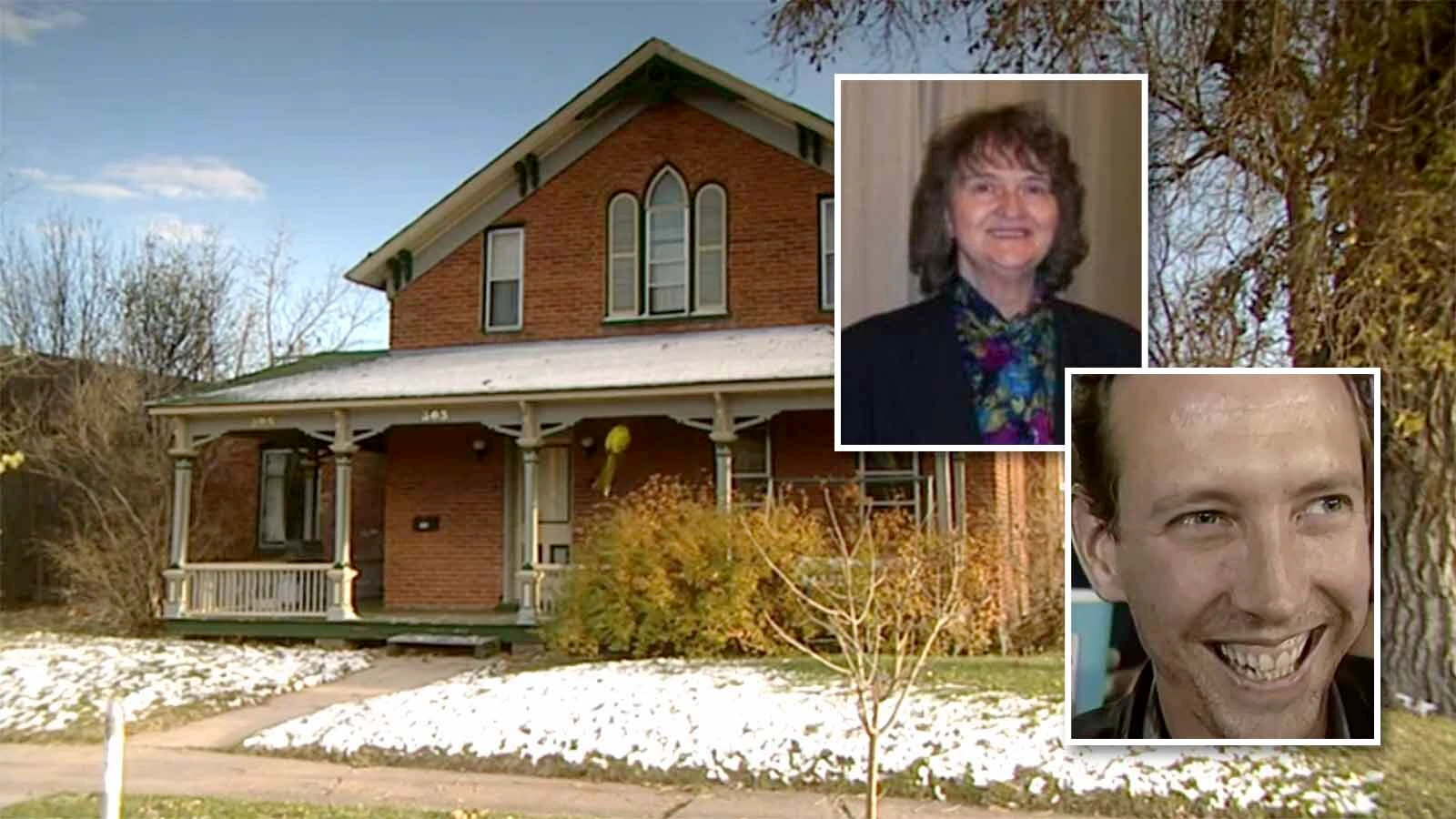
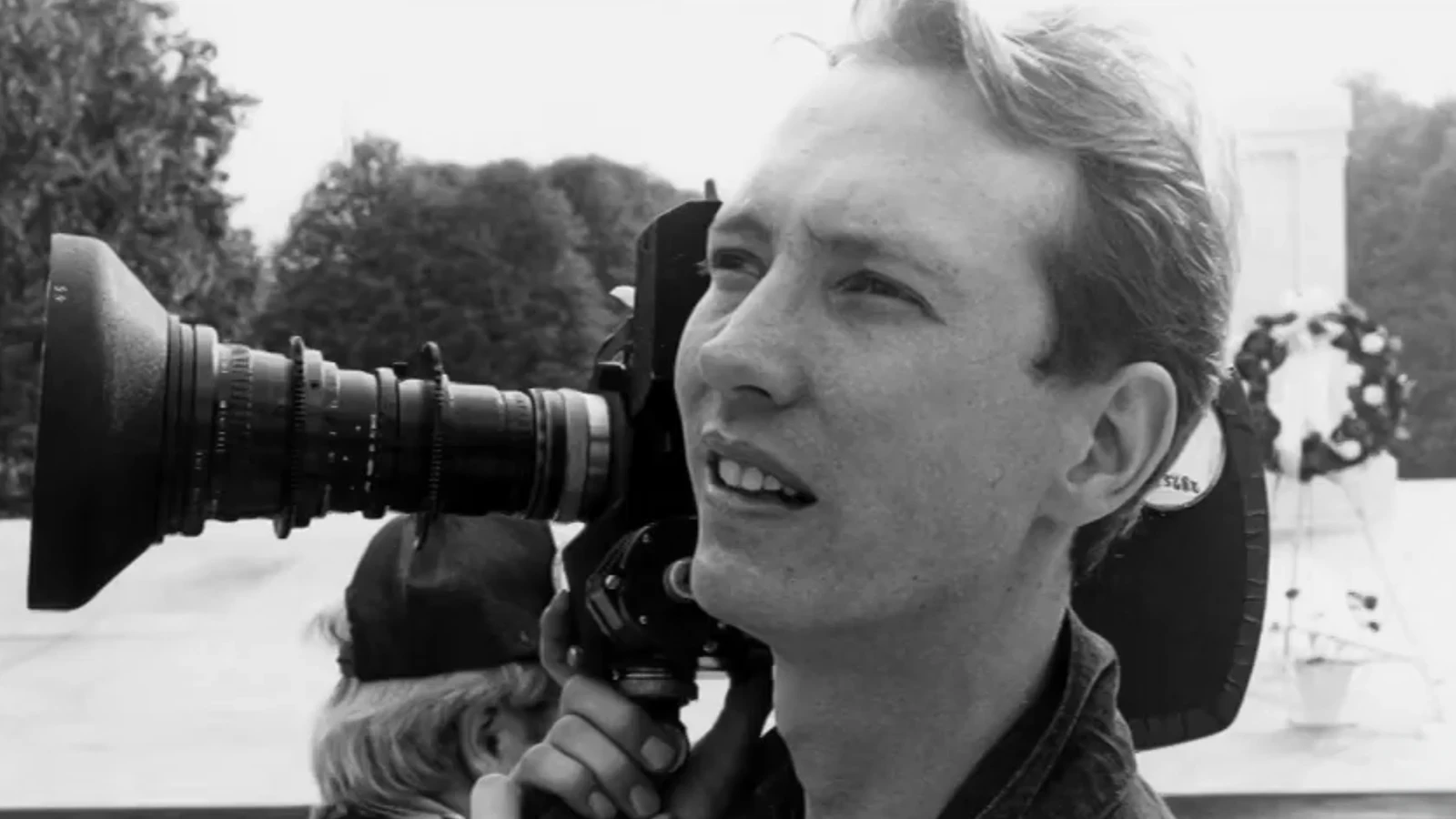
Colorado resident Markie Gregorio had an unusual vantage point on the murder of independent filmmaker Allen Ross, whose body was found in the crawl space of a Cheyenne home in 2000.
Gregorio’s was one of three year-round households in Colorado’s remote Laurence Canyon when the Ross murder mystery was unfolding in Cheyenne.
That gave him and the canyon’s unofficial “snooping” mayor, Helen Edwards, a front-row seat to the comings and goings of one Julia Williams, who bought land for a cabin there around the same time she bought a Cheyenne home in mid-1995.
That Cheyenne home is where Ross was shot in the back of the head and killed on or about Nov. 22, 1995.
Later convicted as an accessory after the fact to Ross' killing, Williams visited the canyon around Laurence Creek a few days after the killing with Linda Greene, a spiritual leader whose followers included Williams and Ross.
How do police know that?
They know because Edwards noted that visit in her journals, along with all the other comings and goings of Williams, Linda Greene and Greene’s ex, Denis, down to the minute.
“With Helen, everybody’s business was Helen’s business,” Gregorio told Cowboy State Daily with a chuckle. “That was the thing about her. It was kind of her occupation, I guess. She was bored or that was her purpose in life — keeping track of everything.”
Colorado’s Hole In The Wall
Laurence Canyon is northern Colorado’s “Hole in the Wall,” Gregorio said, referring to the infamous Hole-in-the-Wall near Kaycee, where Butch Cassidy and other outlaws were known to hide out after robbing stagecoaches and trains.
“There were so many shady people who would come and hide out up there,” Gregorio said. “I swear, people would move up there and think they’re in Alaska and they can do whatever they want. Which, to a certain extent, you could.”
The shady sorts included meth cookers, for one, as well as people who dumped raw sewage into the creek. Then there was the teenage ne’er-do-well whose family had kicked him out.
“He was 19 or so,” Gregorio said. “And he didn’t have a place to live, so he just parked his pickup on his grandfather’s property right next door to Helen and slept in his truck and everything.”
Edwards confronted the young man about leaving trash blowing around. That touched off a little neighborhood war.
“He put an old vehicle there, blocking the road so she couldn’t get into her cabin,” Gregorio said. “So there was that kind of stuff.”
Gregorio said he believes those kinds of incidents were the main reason Edwards got in the habit of recording all the comings and goings of people entering and leaving Laurence Canyon.
“There were so many problems over the years,” he said.
To ensure Edwards didn’t miss even one entry or exit from the canyon, she installed a motion sensor on the gate.
“The alarm would go off in her cabin, and it would beep real loud,” Gregorio said. “She’d go get her binoculars that are right on the table next to the windows and she’d be looking at whoever is coming at the gate.”
She would record the make, model, and license plate number of every vehicle, as well as the exact time they passed through the gate in a spiral notebook she kept by the binoculars.
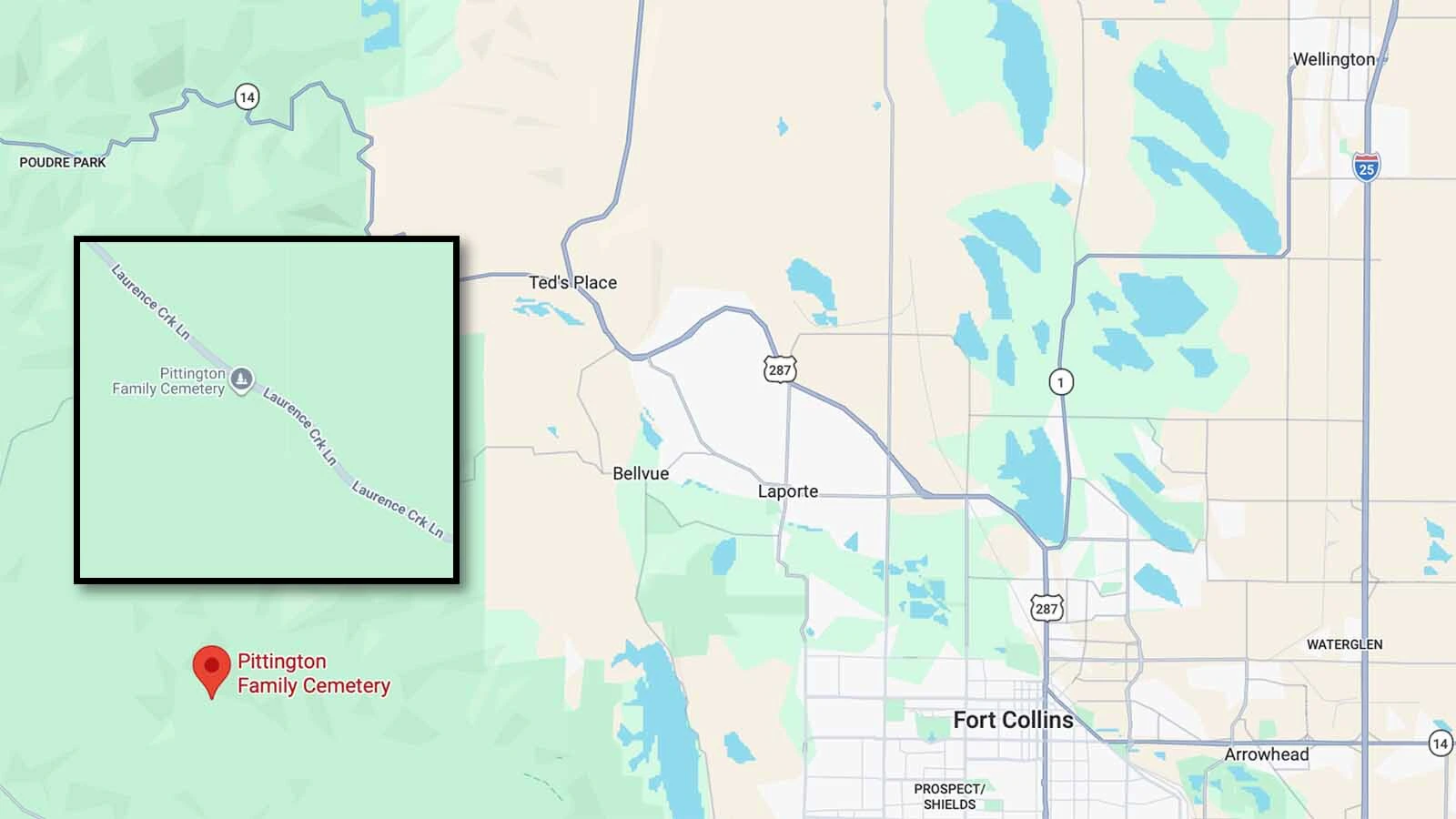
Helen Edwards was known by her neighbors as the unofficial "mayor" of Laurence Canyon, a rural community in the foothills outside Fort Collins, Colorado. A dispute over pioneer graves there connected her notes to the 1995 murder of filmmaker Allen Ross in Cheyenne, ultimately helping undermine a coverup. (Google) 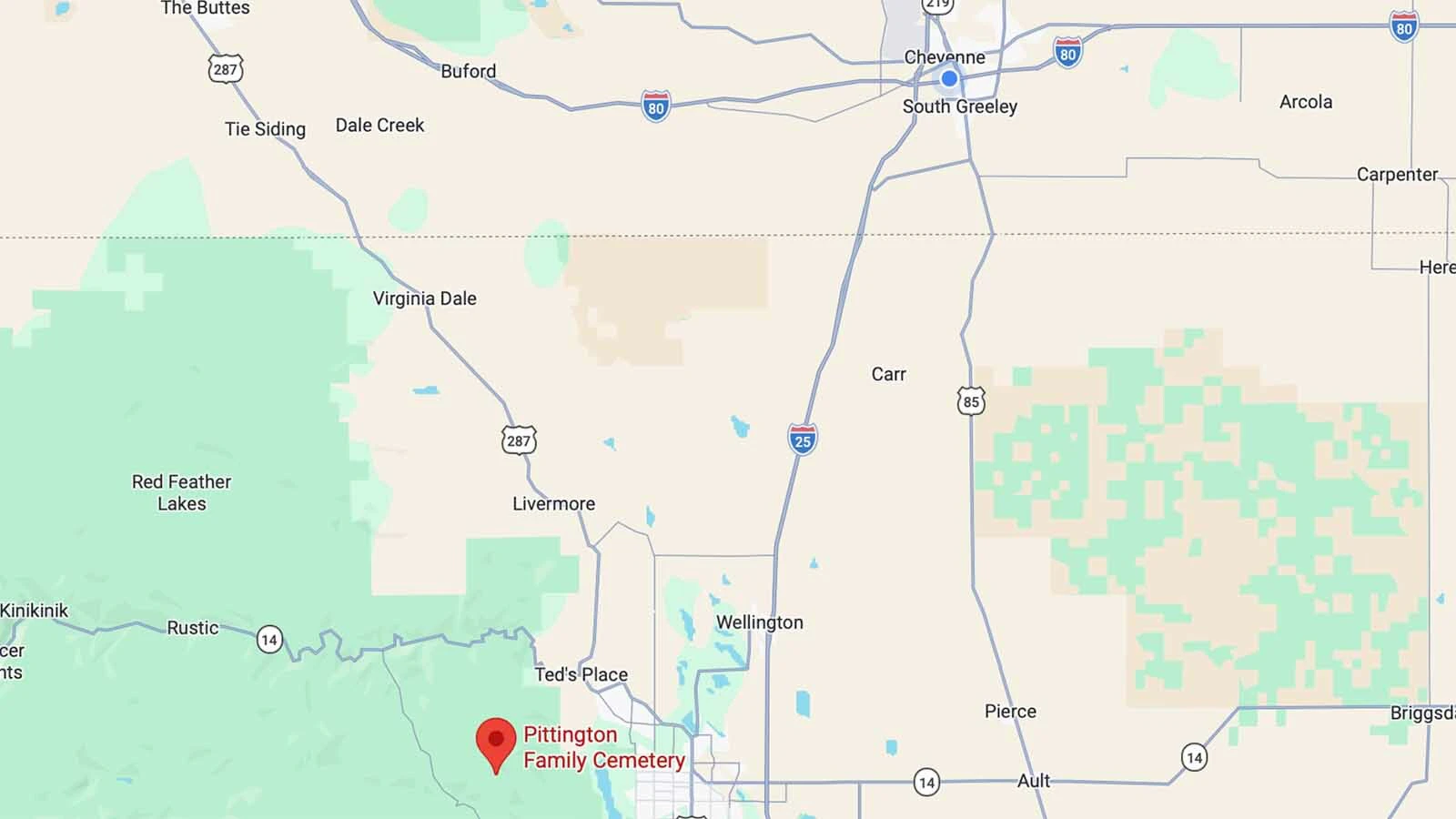
Helen Edwards was known by her neighbors as the unofficial "mayor" of Laurence Canyon, a rural community in the foothills outside Fort Collins, Colorado. A dispute over pioneer graves there connected her notes to the 1995 murder of filmmaker Allen Ross in Cheyenne, ultimately helping undermine a coverup. (Google)
Meeting Julia Williams
Edwards didn’t just keep track of everyone’s comings and goings to Laurence Canyon.
She was a self-appointed HOA president for an area that didn’t actually have an HOA. If money was needed for road repairs in and out of the canyon, it was Edwards who made the rounds, collecting the money for that task and seeing that the job got done.
Edwards also, as the unofficial mayor of the community, made a point of introducing herself to anyone who was new to the canyon, whether a year-round or fair-weather resident. She would let them know the law of the land, such as it was.
“When Julia Williams purchased the property, Helen started noticing a vehicle with Wyoming tags going in and out,” Gregorio said. “One time, when Julia was in, Helen followed her up to Julia’s property to do the neighborly thing of introducing herself, and covertly interrogating Julia in her pleased-as-punch manner.”
The fruit of that conversation included the news that Williams actually lived in Cheyenne, where Edwards’ sister also lived.
Trouble At The Pioneer Graves
Edwards had also put herself in charge of maintaining the Pittington family cemetery, which included the graves of pioneer children.
“A lot of pioneer families, the little kids died of diphtheria and whatever when they were toddlers or infants,” Gregorio said. “And so, Helen was so meticulous about keeping up their graves.”
It was those graves where things ultimately went sour between Edwards and Williams within a couple of years.
“She would go up there whenever she was out on her walks and if it needed it, she would tidy up the graves, put flowers up there, like she’d put wildflowers on the graves,” Gregorio said. “She would paint the little lambs that were the gravestones. She would paint the picket fence and everything. She took care of that as part of her duties as mayor up there.”
Denis Greene built a cinderblock cabin on the property — without a permit, which had captured Edwards’ sharp attention — and a young couple eventually came to live in the cabin.
“That cinder block house looked like a 12-year-old built it,” Gregorio said. “I mean, it certainly didn’t look professionally done.”
The cabin was 100% off-the-grid.
“There’s no electricity or anything up there, and they didn’t have a regular, big propane tank like the rest of us,” Gregorio said. “They just had a barbecue-sized propane tank for their little kitchen stove or whatever, and they had lanterns up there. Just regular Coleman lanterns.”
Graves Were Inviting Evil Spirits
One day, when Edwards went up there, she discovered the gravesites she’d been tending had been scraped away by a backhoe. Edwards later told Gregorio the young couple removed the graves because they believed they were inviting “evil spirits.”
“Helen was just livid,” Gregorio recalled.
Edwards confronted both the young couple and Williams. When that produced no satisfaction, she started looking into Williams through her Colorado tax records. Those pointed toward Williams’ Cheyenne address — the home where Ross was murdered.
“Helen was mad at Julia for a whole different reason and she didn’t really care about the murder in Cheyenne,” Gregorio said. “She started snooping around, doing her own detective work.”
Edwards’ sister in Cheyenne happened to know one of the detectives who would become involved in investigating Ross’ murder.
“When Helen met the cop, she wanted to know if there was a way to get Julia prosecuted for grave desecration,” Gregorio said. “When she brought up Julia Williams’ name, the cop perked right up.”
Dinner Still On The Table
After the meeting with the Cheyenne officer, Edwards told Gregorio to report any strange events concerning Williams and her property.
“There was a young couple who had been living in the cinder block house for a year or two by the late '90s,” Gregorio said. “And one day when I was walking up the canyon below my place, I heard a revved engine and looked up and saw a red Toyota hauling ass toward me in a very narrow place.”
The car was being driven by the young mother whose eyes were “bugged open,” Gregorio said.
“She was expressionless and her hands white-knuckled on the wheel as I jumped out of the way,” he said. “She roared past. I doubt she even saw me.”
After that, Edwards and Gregorio went up to the cabin to confront the woman over the incident.
“The door was wide open,” Gregorio said. “Both vehicles were gone. There were plates and dinner still on the table.”
Most of their stuff was still there, too, including kids' toys out in the yard.
“But they were gone, and Helen never saw them come back,” Gregorio said. “This would have been just around the time Allen Ross’ body was found in the basement of Julia’s house.”
Journal Entry That Mattered Most
Not long after the Toyota fly-by, Edwards’ notebooks chronicling all the visitors of Laurence Canyon were subpoenaed going back several years.
Of particular importance, according to the court record, was an entry in the journal showing that Denis Greene had returned to the cabin in Laurence Canyon at 6:06 p.m. on Nov. 22, 1995 — just as he’d told police.
The detail corroborated Denis Greene’s testimony that he’d left Cheyenne between 2 and 4 p.m. while Ross was still alive, the Wyoming Supreme Court said in its decision upholding Williams’ conviction. More important, the timeframe undermined Williams’ contention that Denis had forced her to help him bury the body that night.
Williams was sentenced to two years in prison for the crime in March 2005, along with a $2,500 fine. She was 51 at the time.
She appealed the case, but the verdict was upheld.
The murder weapon, meanwhile, was never found, and no one was ever convicted of Ross' killing.
Linda Greene had died of liver disease in 2002 before she could be charged with the crime. The family told reporters she was drinking excessively to quiet the “voices” in her head.
The Mayor And The Meth Bus
Edwards was interviewed in a 2005 Dateline segment about the murder not long after Williams was sentenced, Gregorio said.
Williams continued to own the canyon property after she was released from prison, although, due to Edwards’ snitching, Gregorio said the county condemned the cinderblock house and it was torn down.
Williams eventually sold the land to a young woman and her boyfriend, Gregorio said.
“They put an old hippy-painted school bus on the property,” he said. “It was purple with all psychedelic painting on it. Then they started to cook meth and sell meth out of it.”
Edwards, during the course of her snooping around that bus, found a glass vial that contained some white powder.
“She showed it to me and I told her to turn it in,” Gregorio said. “By then she was still besties with the detective up in Cheyenne, who field tested it for her and, of course, it was meth.”
The Northern Front Range Drug Task Force became involved, Gregorio said, turning it into a much bigger investigation.
“The resulting undercover investigation eventually resulted in one of the largest meth ring busts of the 2000s,” he said. “It was all thanks to the snooping mayor of Laurence Creek Canyon.”
Edwards eventually developed dementia and has since died. Gregorio’s cabin burned to the ground in 2012 and he moved away from Laurence Canyon.
He still owns property there, though, and he’ll never forget how his nosy neighbor once helped “blow the case open” that ultimately led to Williams’ conviction as an accessory after the fact to Ross' killing.
Contact Renee Jean at renee@cowboystatedaily.com
Renée Jean can be reached at renee@cowboystatedaily.com.


