

The U.S. Air Force lettering is fading, its nose cone missing, and its propeller blades don’t match — the right side has four, the left three.
But the C-119’s owner, a Colorado-based United Airlines 737 pilot, remains hopeful that his newly purchased “Flying Boxcar” that sits among other aviation relics at Greybull’s airport will fly again.
“It’s a more raw form of aviation. It’s just cool,” said Dominic "D.J." Hernandez, who has a personal Cessna 195 built in 1954, the same year as the C-119. “It’s like driving an old car. It vibrates and shakes, and you get the smell of exhaust, it leaks oil and all that stuff. It’s just characteristic of where we came from.”
Hernandez said he has always been interested in vintage and antique planes. He was training a friend in an aircraft a couple of years ago when they happened to stop at the Greybull airport.
The C-119s sitting among other old warbirds on the field next to the runway intrigued him.
He has flown DC-3s, World War I biplanes, and other antique aircraft.
In a conversation with the airport manager he learned that they were going to be auctioned off. He waited for the auction last year, bid on the plane and won, but his bid didn’t meet the airport’s reserve price.
The airplane was pulled from the auction.
Hernandez said he then pursued a purchase through the airport’s board and has been able to negotiate a deal, driving up to see it for the first time last month. Initially he was interested in using the aircraft as a “static display” outside his home at an airpark just north of Denver International Airport.
“I went up there to look at my new purchase and I was crawling all over that thing and it was like, ‘Man, this thing is way more complete than I thought it was initially,” he said. “I was talking to another one of my buddies and he talked me into (trying to) get that thing flying.”
The C-119L is the same model that was used in the 2004 remake of the “Flight of the Phoenix” movie starring Dennis Quaid. Hernandez said the first movie that featured Jimmy Stewart used a C-82, the “little brother” of the C-119.
During a recent visit to the aircraft with Cowboy State Daily, Hernandez pointed to how solid the airframe remains.
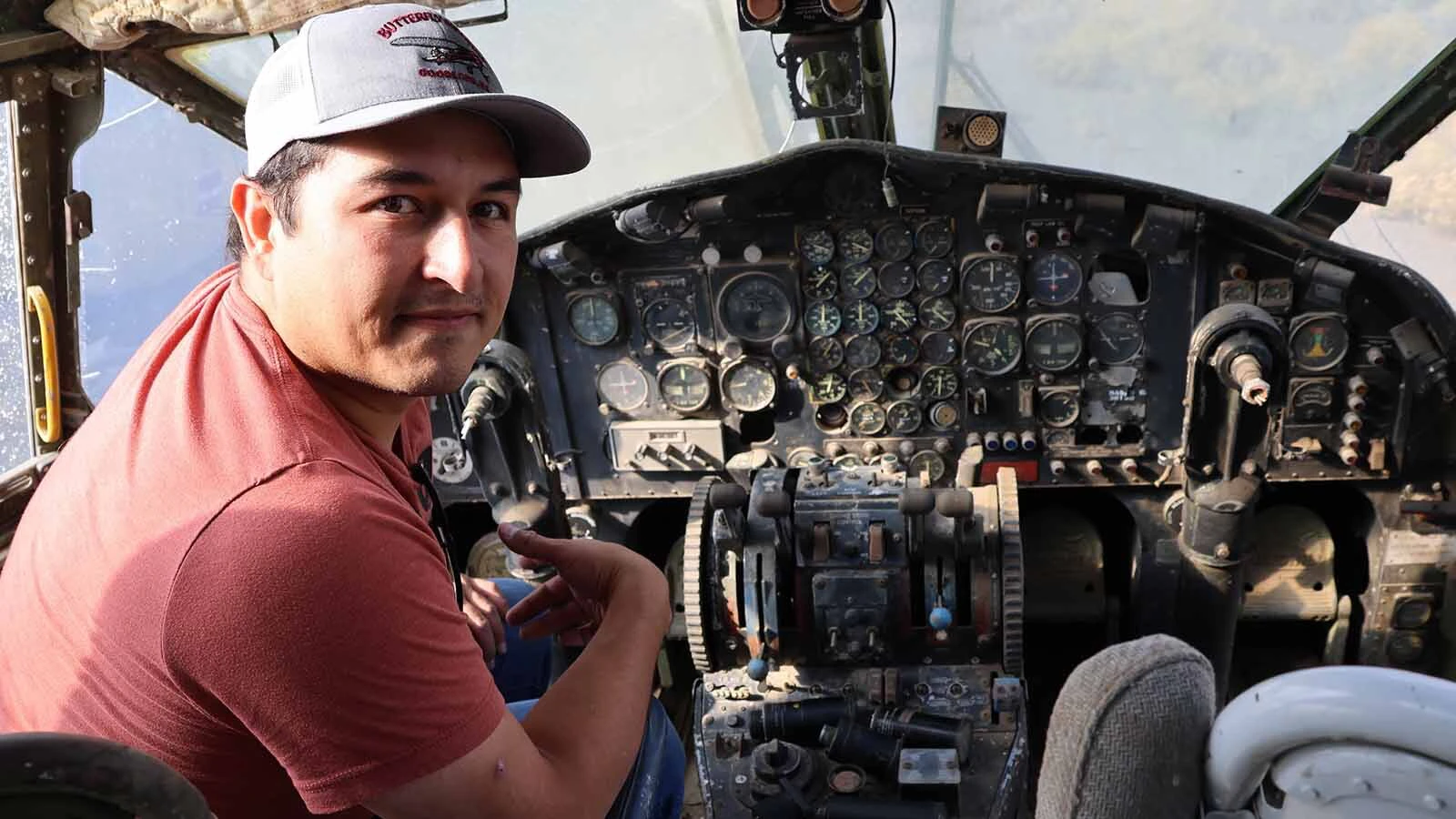
D.J. Hernandez hopes to fly the C-119 out of the airport in Greybull one day. (Dale Killingbeck, Cowboy State Daily) 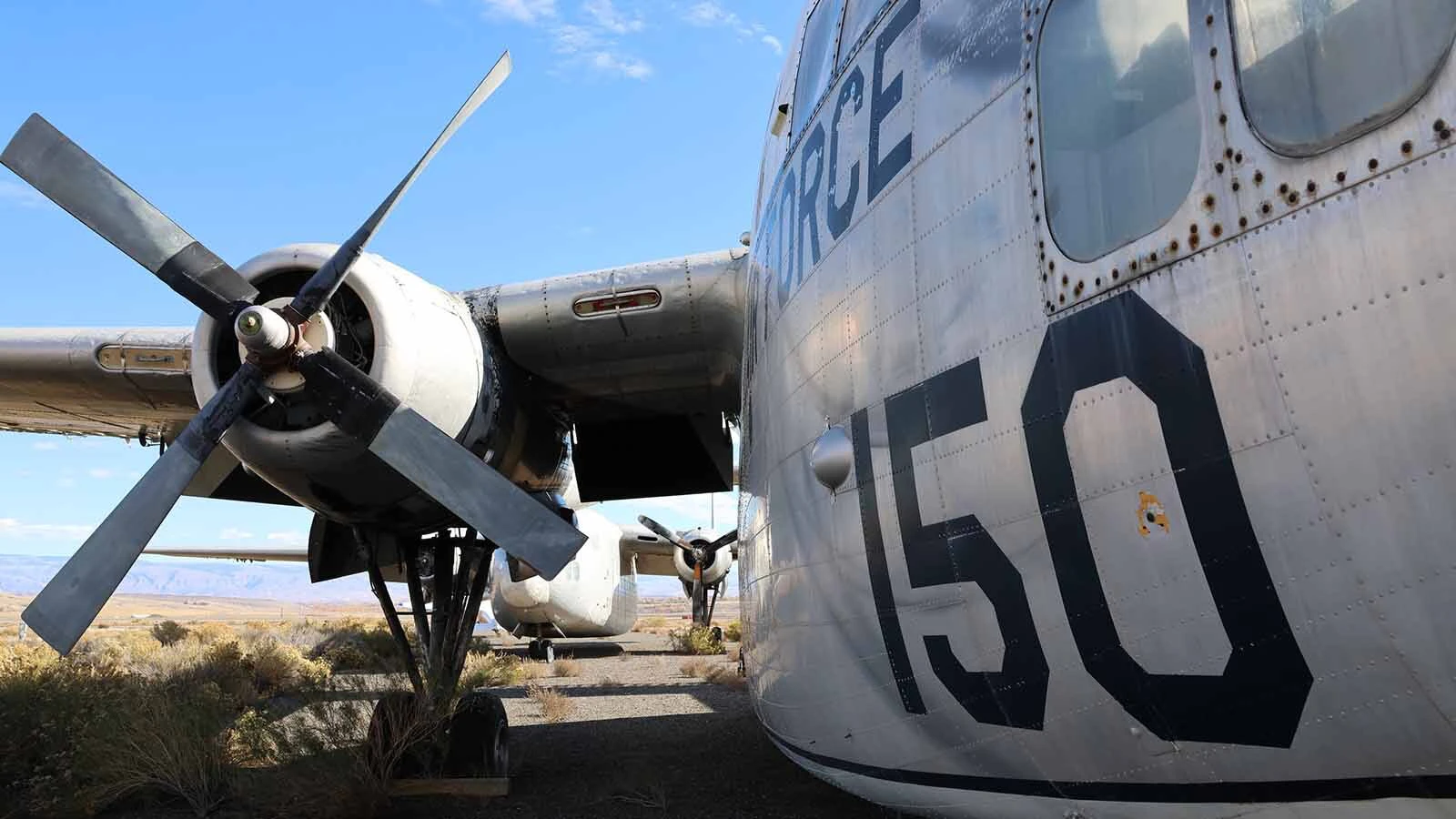
The C-119’s exterior remains in good condition. (Dale Killingbeck, Cowboy State Daily) 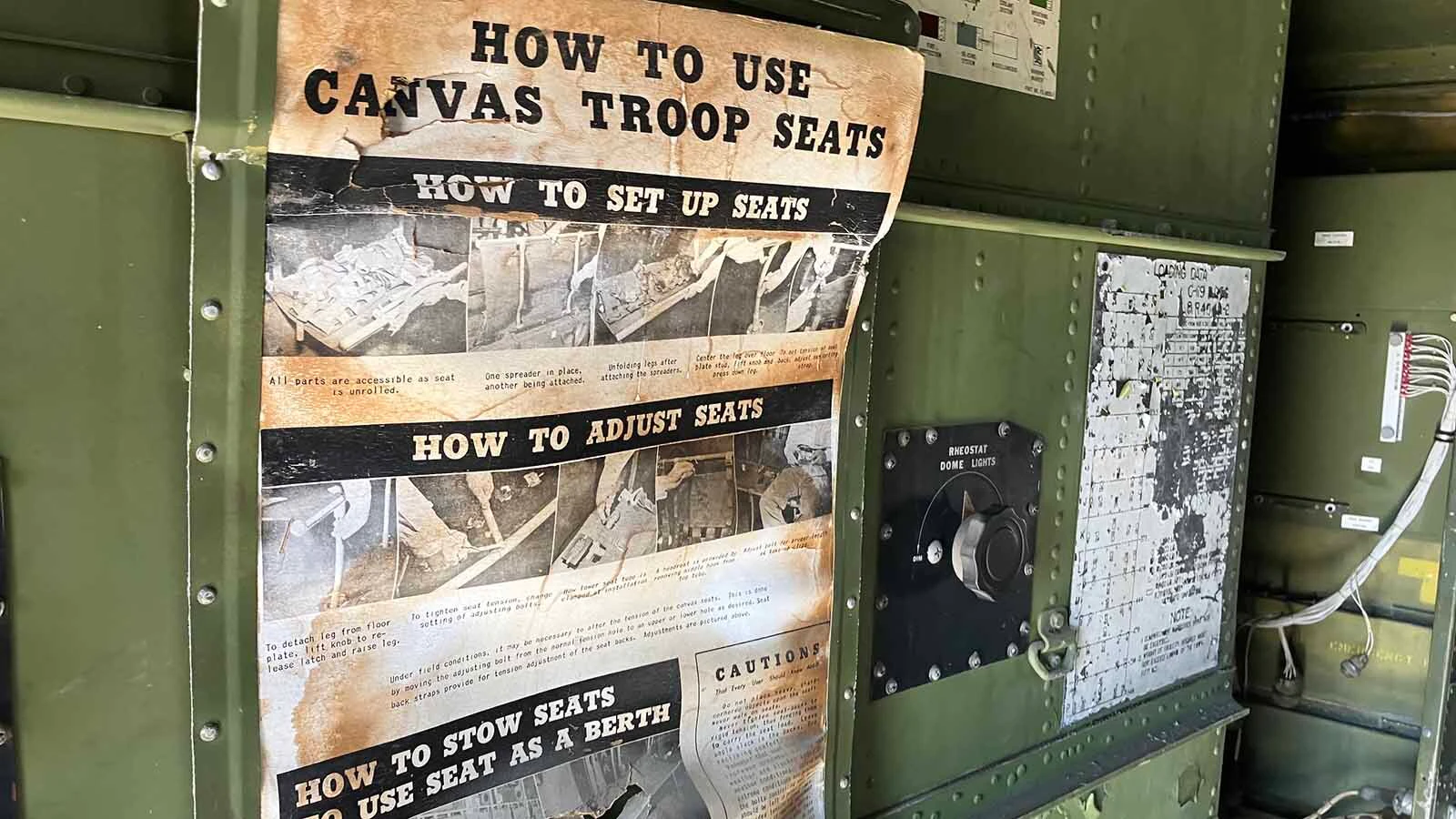
Original instructions for the canvas troop seats that remain in the plane are on the wall of the cargo bay. (Dale Killingbeck, Cowboy State Daily) 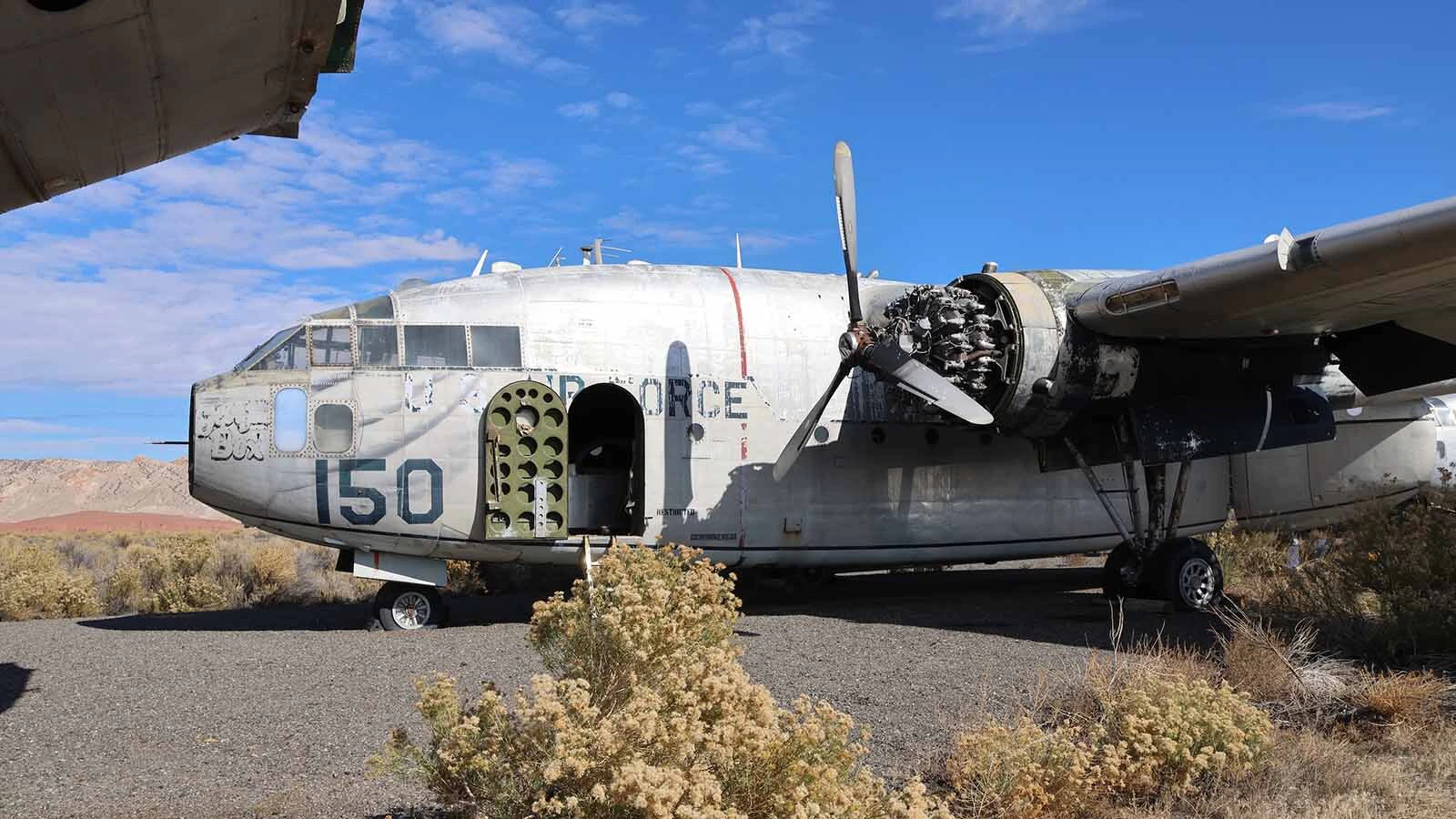
D.J. Hernandez hopes to find a new nose cover for the aircraft. (Dale Killingbeck, Cowboy State Daily) 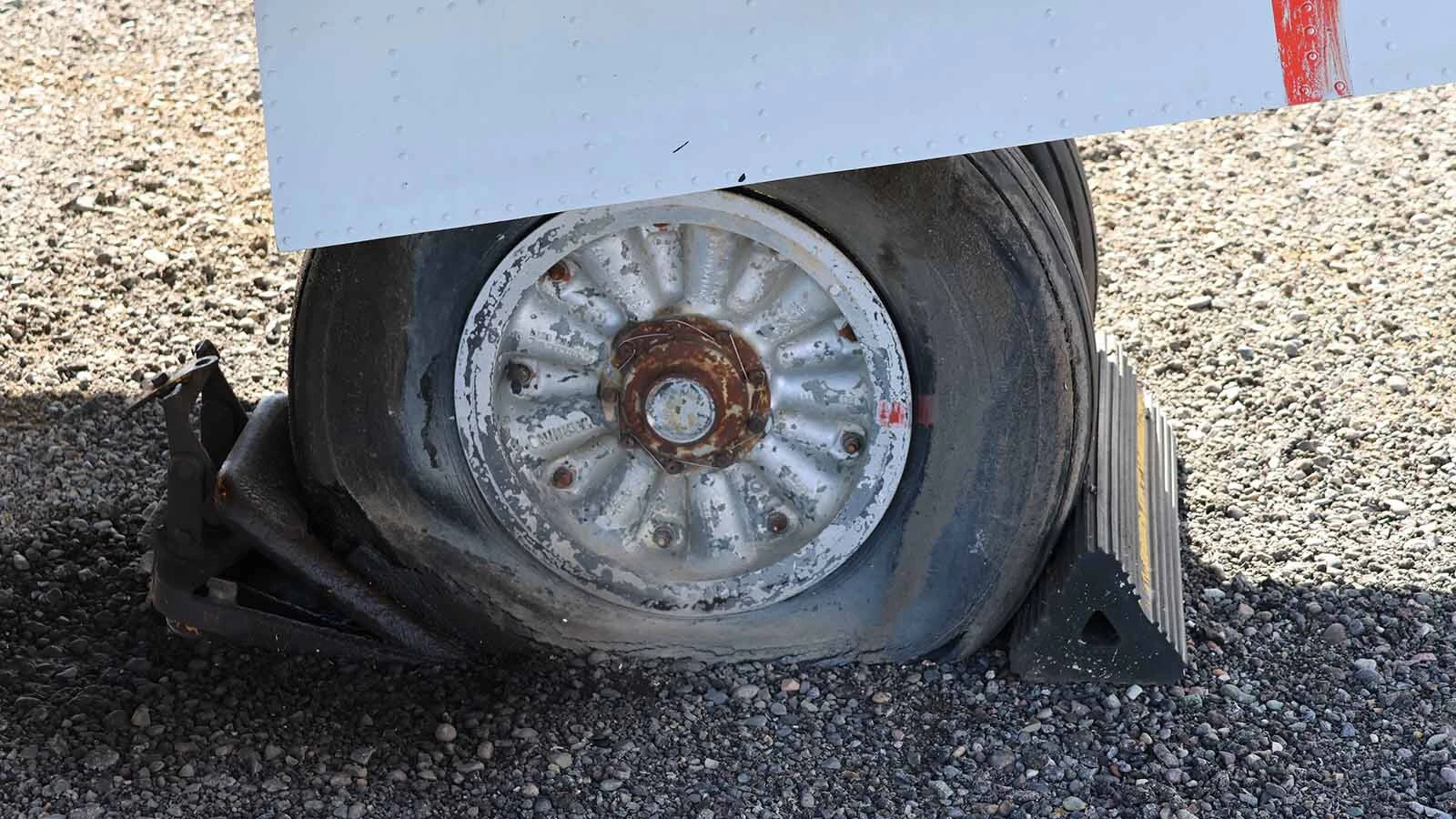
New tires are on the “needed” list for the C-119. (Dale Killingbeck, Cowboy State Daily) 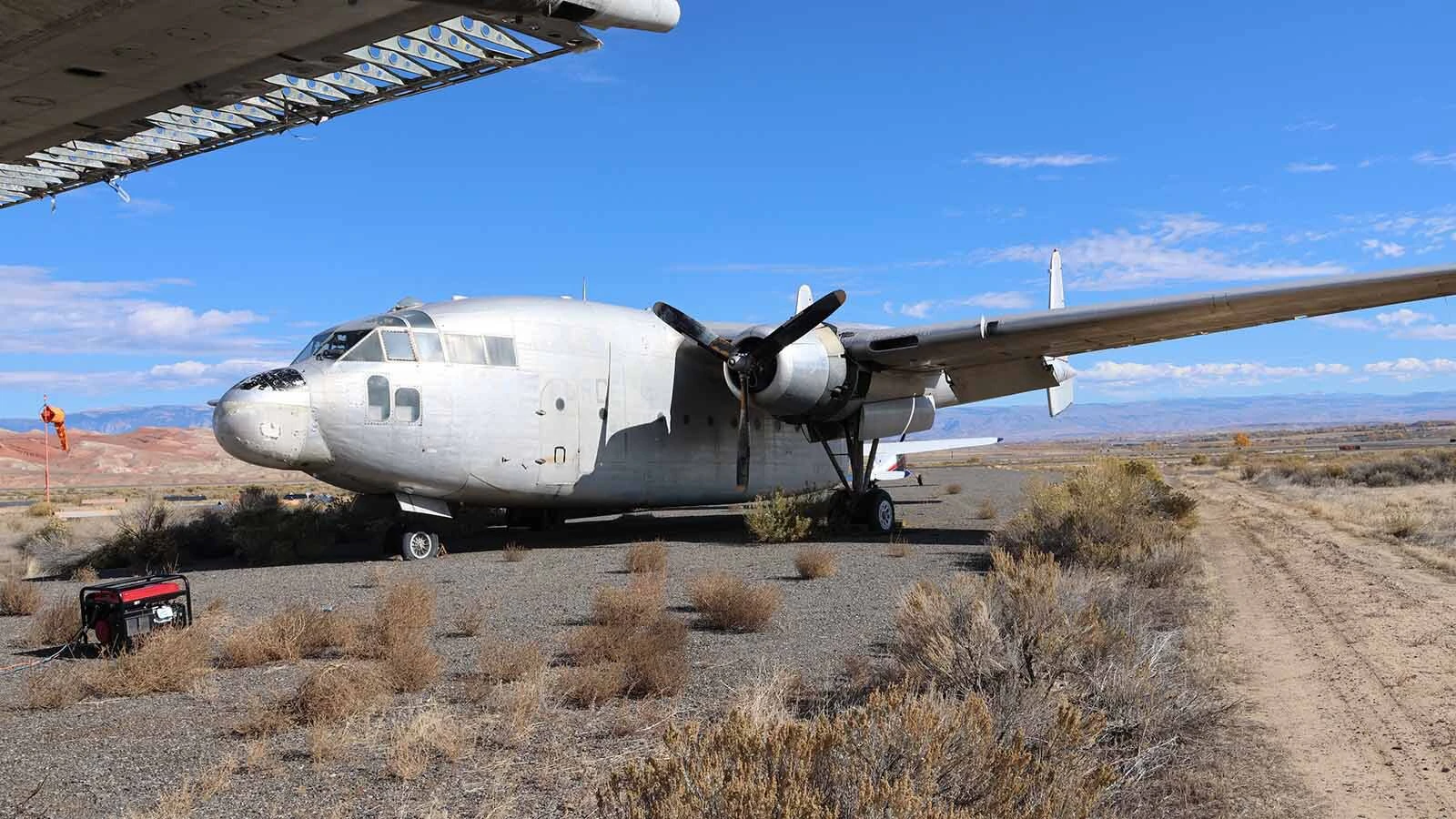
The C-119 that sits behind D.J. Hernandez’s plane may have his plane’s three-blade propeller. (Dale Killingbeck, Cowboy State Daily) 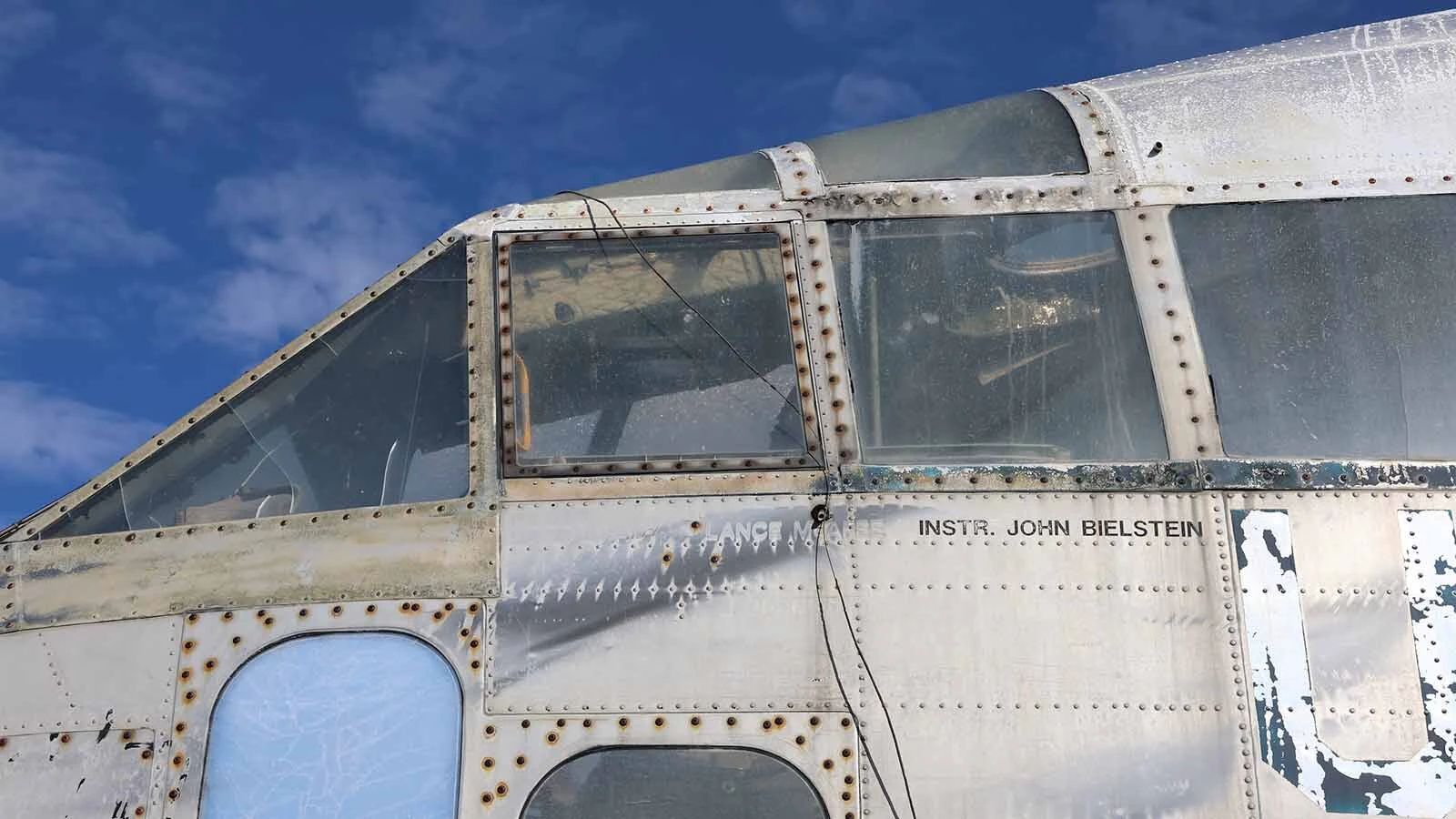
Faded pilot names can be seen on the pilot’s side of the aircraft. (Dale Killingbeck, Cowboy State Daily) 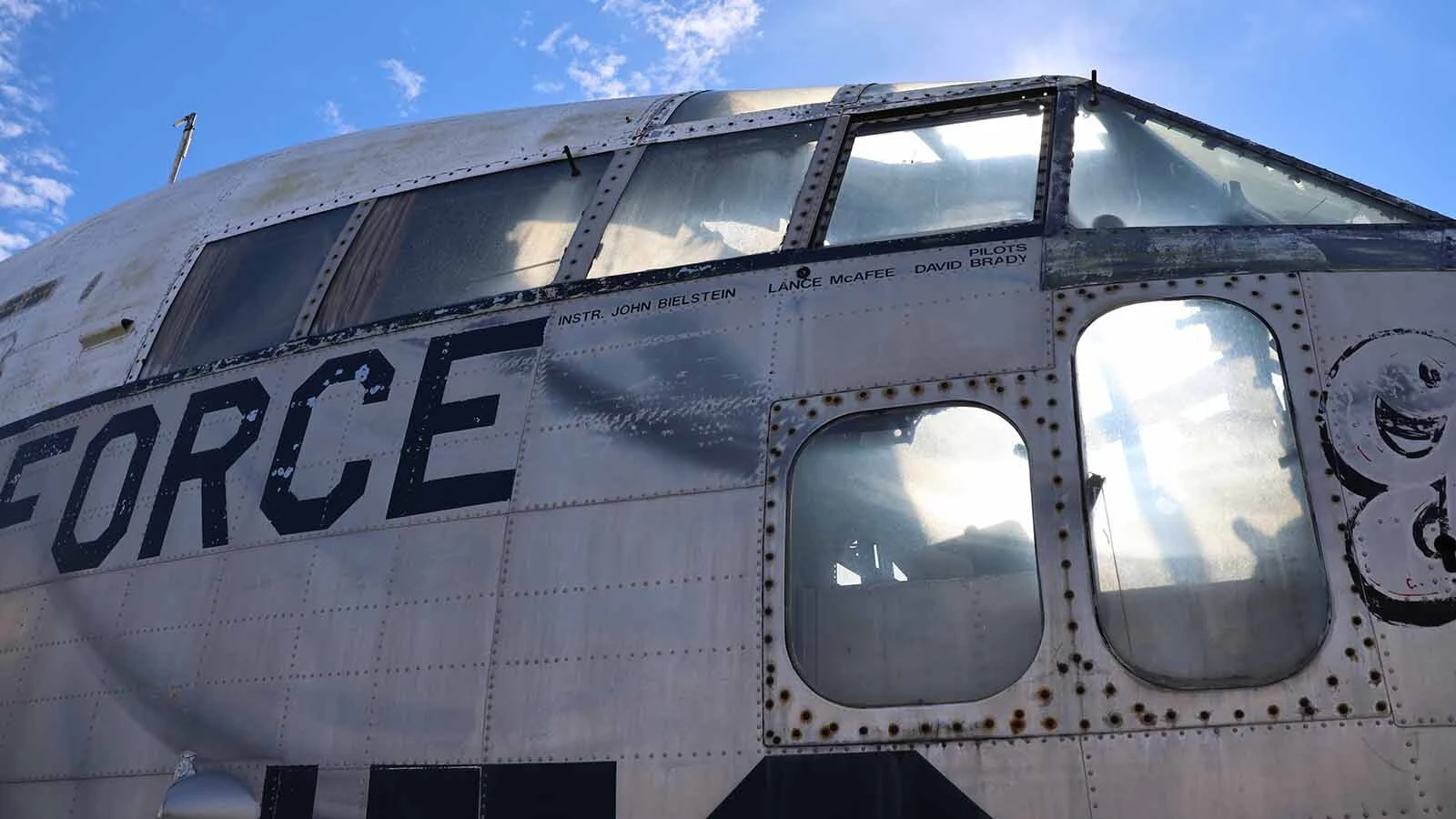
Former pilot names can still be seen on the co-pilot side of the aircraft. (Dale Killingbeck, Cowboy State Daily)
No Yokes
Climbing a ladder into the cockpit, Hernandez pointed out that the plane is missing the yoke controls for the pilots, which will need to be replaced. Other warbirds at the field also are missing yokes, he said.
Next to the pilot seat is an autopilot control that came as an original part and a radio that likely dates to the 1980s.
Behind the pilot and co-pilot are seats for a navigator and loadmaster and a lot of shelf space where original radio and navigational equipment would have sat.
In the cargo bay, some parts for the aircraft are stored and there is a tattered poster instructing troops how to use the original canvas seats that remain attached to the bay’s frame.
During a previous visit and test of the plane’s electrical system, Hernandez found to his satisfaction that it still has potential after 30 years in limbo.
“I was able to hardwire everything and as soon as I hooked the jumper cables up to the battery, everything came to life,” he said. “It’s just like it had been sleeping for a little bit and wanted to wake up.”
If the plane required extensive wiring work, he would have gone back to a “static display” concept outside his home.
The plane still has hydraulic fluid for its landing gear and oil in the engines. There are three original urinals in strategic spots in the cargo area.
Hernandez said he has been working on airplanes since he was 11 years old. He enjoys doing mechanical work on aircraft but the electrical side of things is much more complicated.
Plans now call for soaking the Wright R-3350 engines in oil and the carburetors in gas for a few months “just to give the old girl some vitamins and minerals before we try turning on over,” he said.
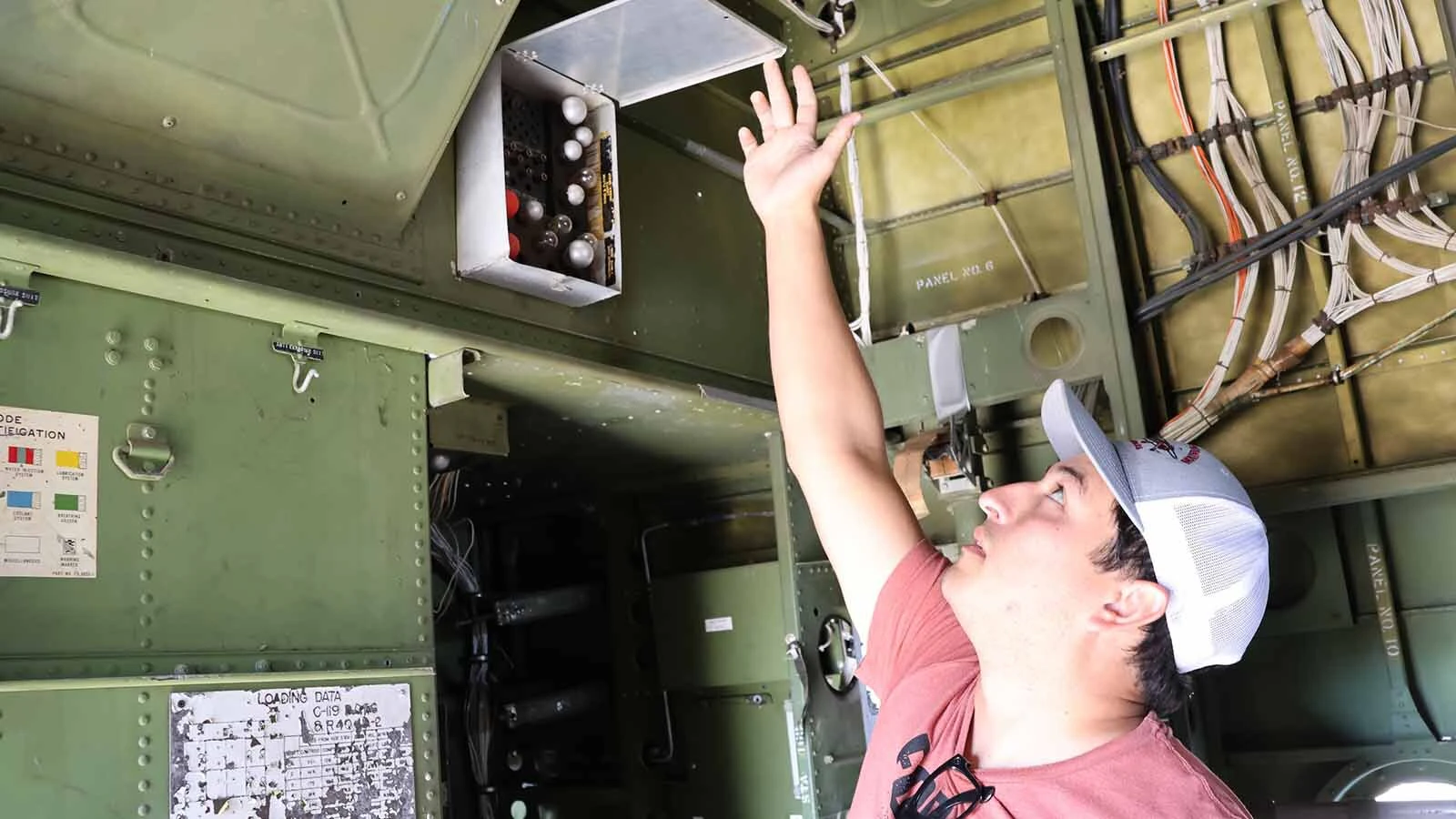
D.J. Hernandez finds original replacement bulbs for the aircraft. (Dale Killingbeck, Cowboy State Daily) 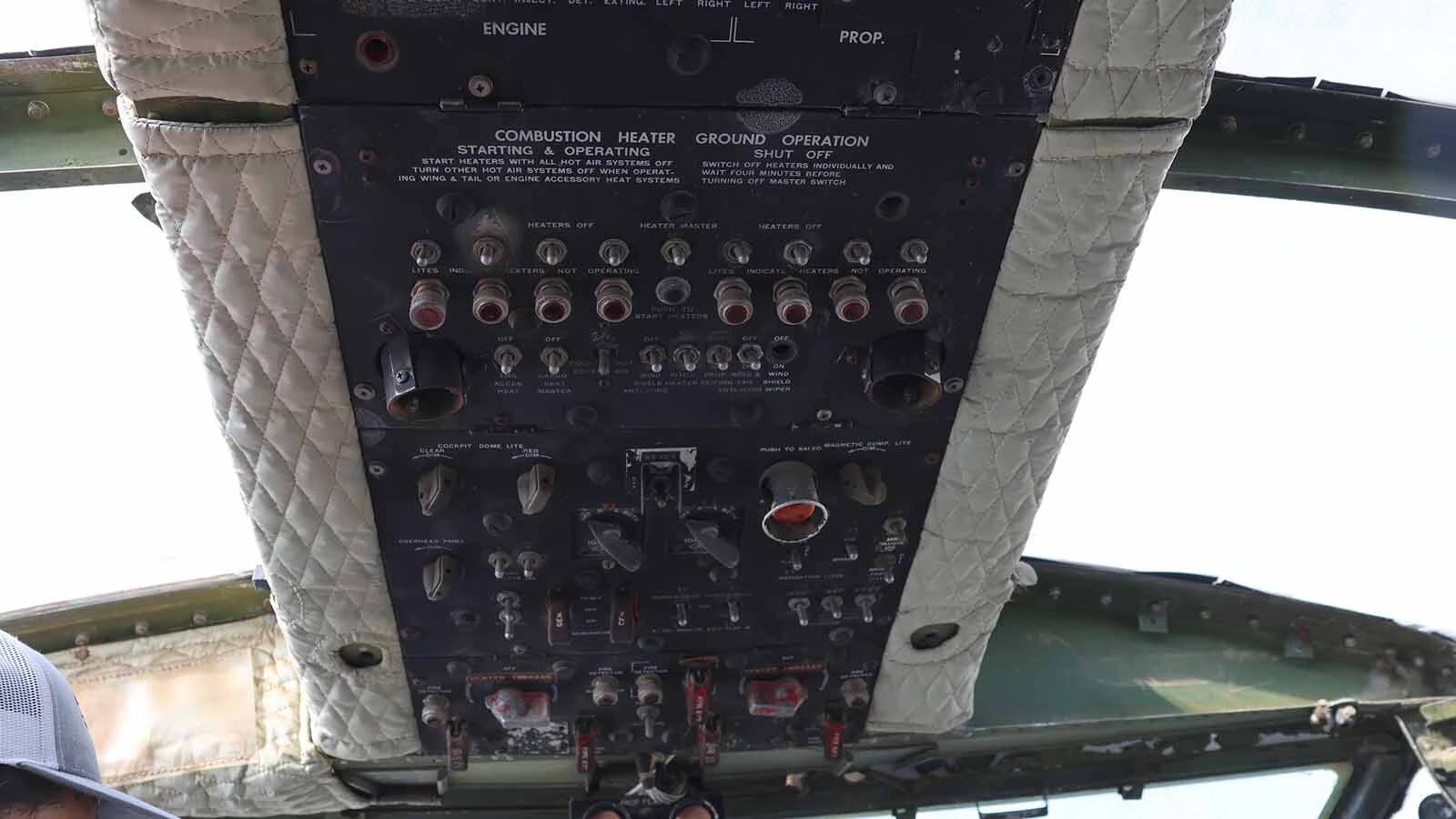
The C-119’s overhead panel of switches and indicators in the cockpit. (Dale Killingbeck, Cowboy State Daily) 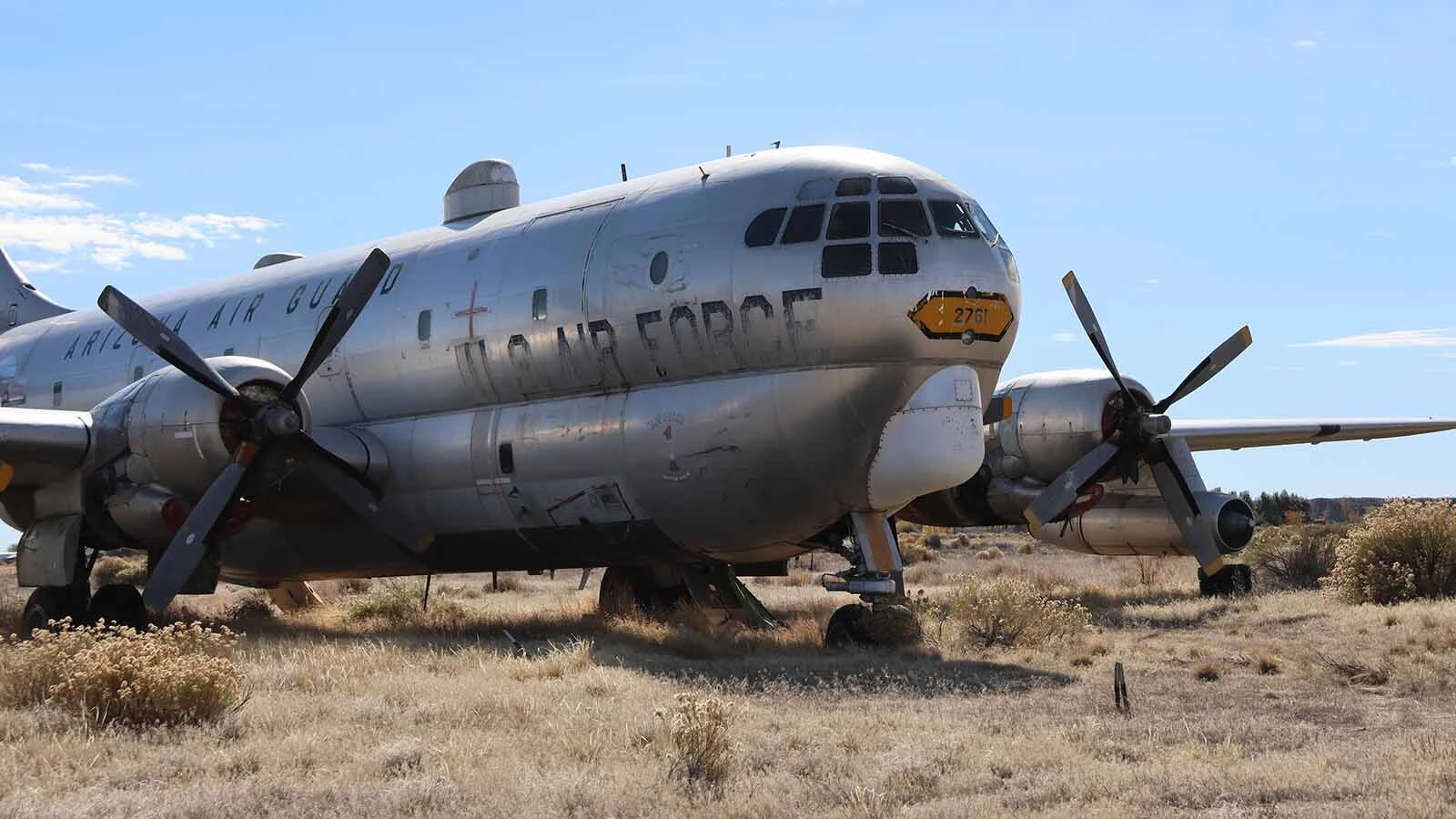
A former refueling aircraft sits at Greybull’s South Big Horn County Airport. (Dale Killingbeck, Cowboy State Daily) 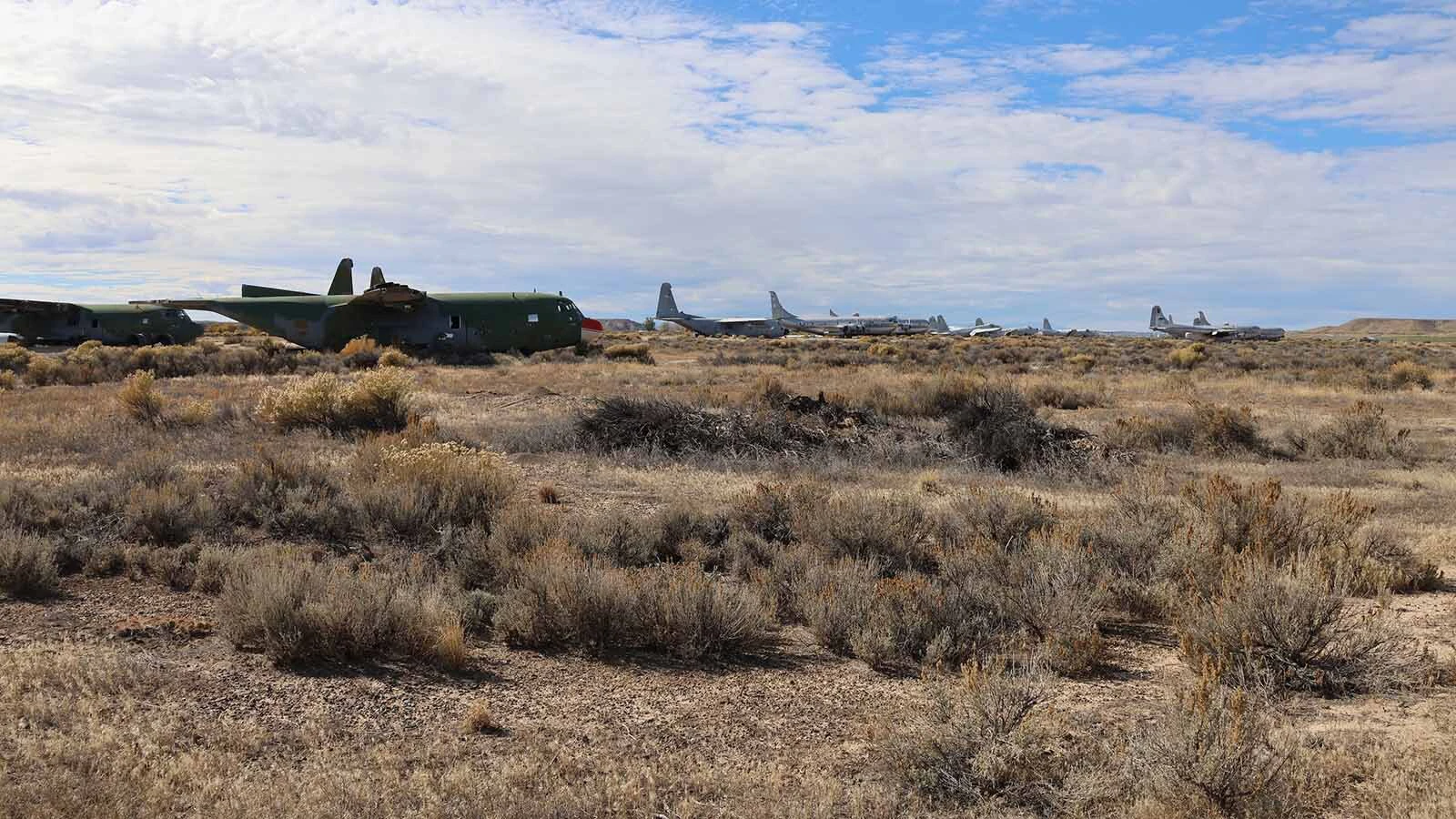
The C-119 sits among other old war birds at Greybull’s South Big Horn County Airport. (Dale Killingbeck, Cowboy State Daily) 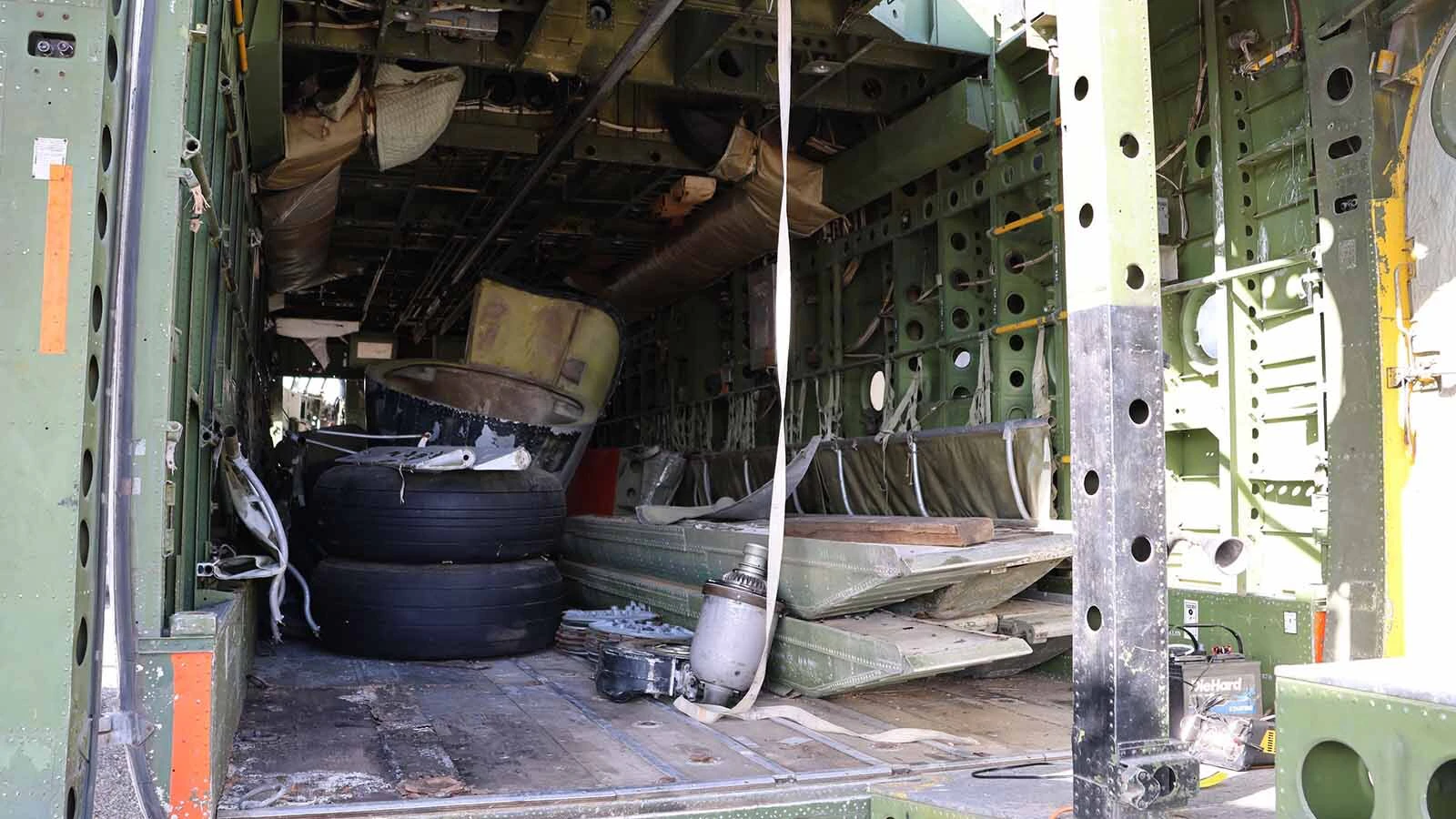
The interior from the back of the C-119 reveals why it was called the “Flying Boxcar.” (Dale Killingbeck, Cowboy State Daily) 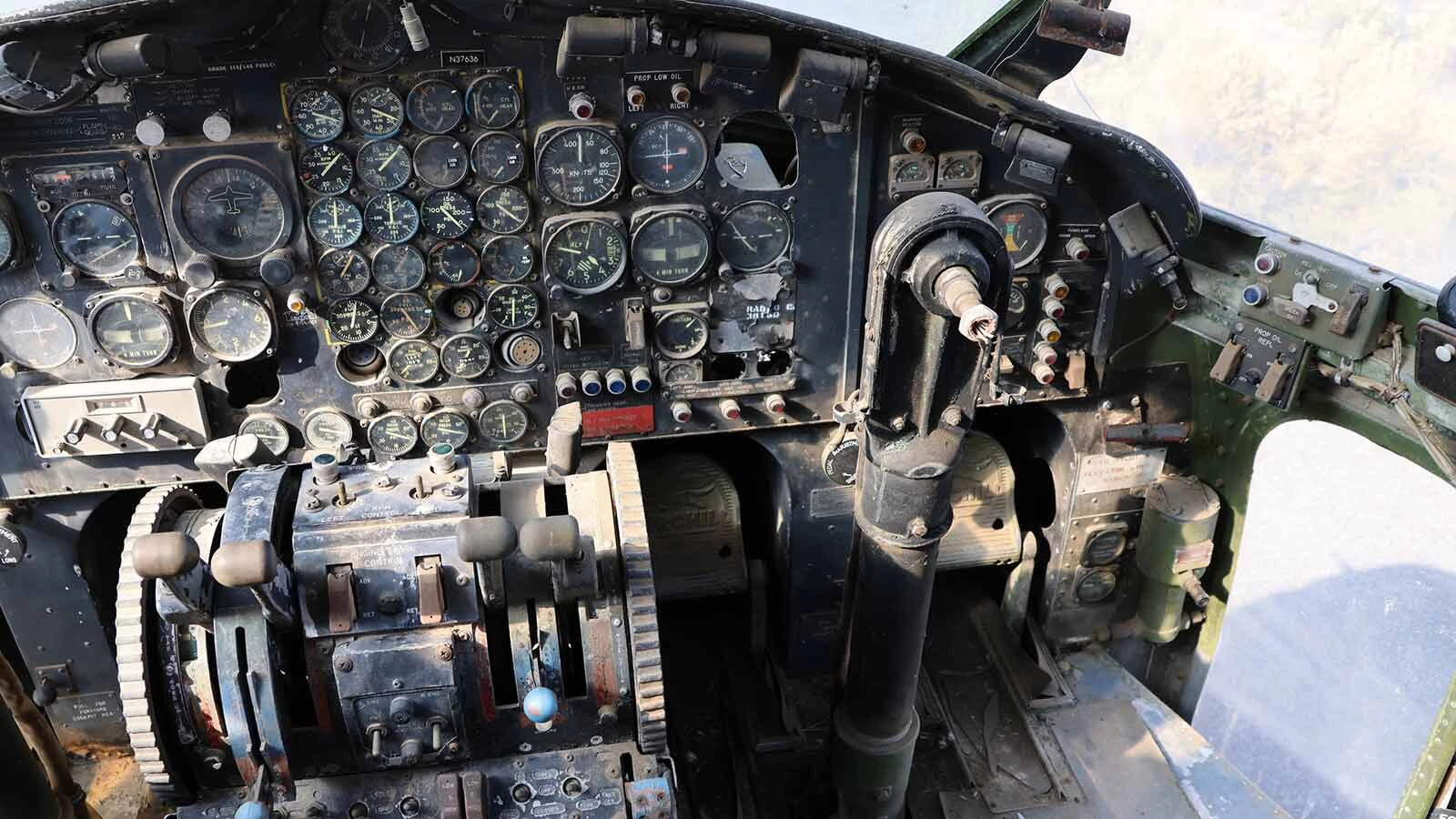
The instrument panel on the C-119 lit up when D.J. Hernandez connected the plane to a battery. (Dale Killingbeck, Cowboy State Daily) 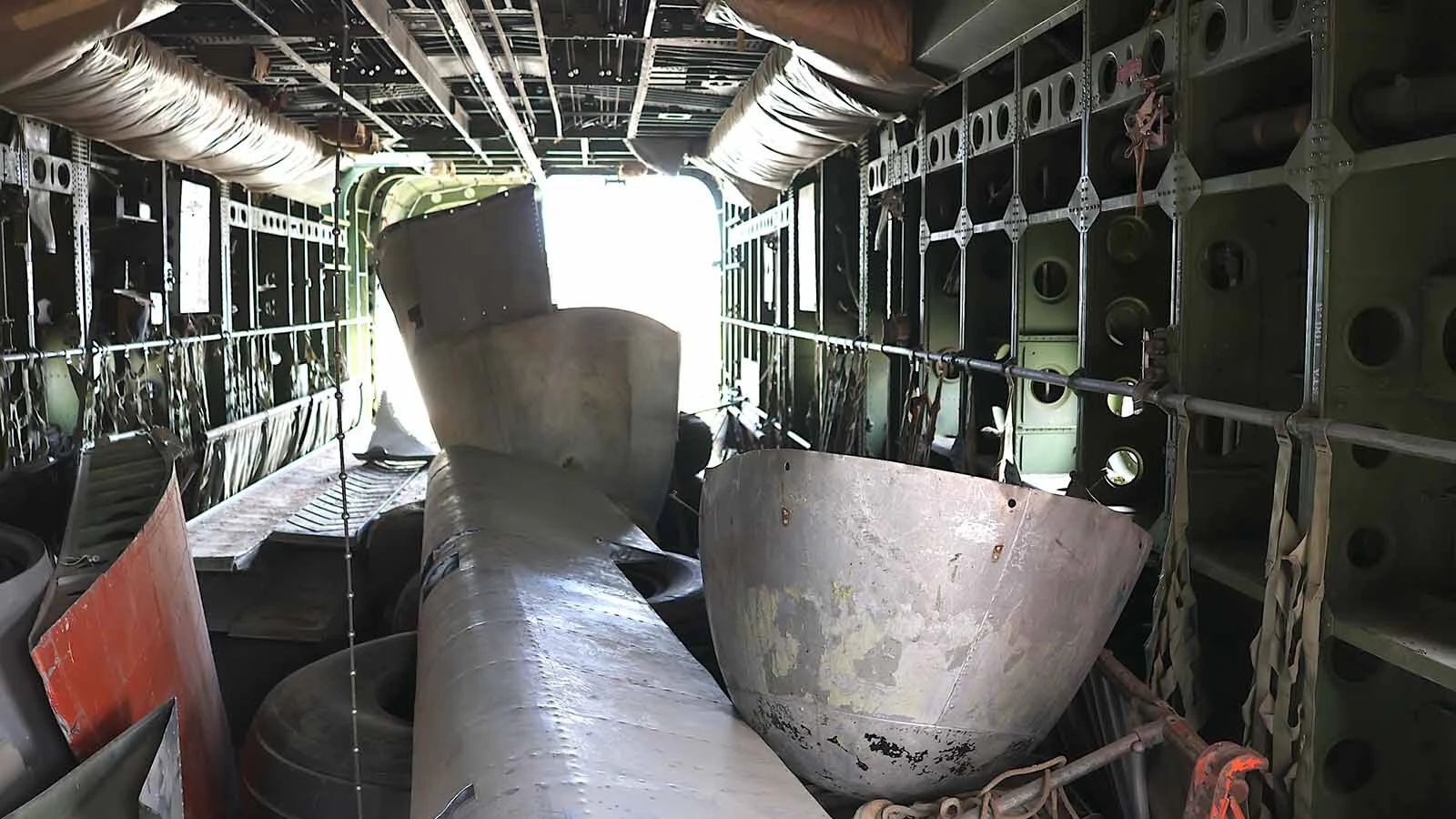
The interior of the cargo bay looking from the front to back. The plane is filled with some parts that belong to the C-119 and other parts that don’t. (Dale Killingbeck, Cowboy State Daily)
Movie Role
Hernandez said the airframe is only one of a couple dozen airplanes converted to the “L” version and it might have had a role in the 1985 film “Spies Like Us” starring Chevy Chase and Dan Aykroyd.
The “Internet Movie Plane Database” at impdb.org has still shots from the film showing the plane’s tail number. As the plane flies, a crate is dropped out of it.
During its military years, a photo of the plane was taken by Canadian aviation consultant Neil Aird on May 28, 1960, at Glasgow/Prestwick Airport in Scotland. It was assigned to the 322nd Air Division and was a C-119G before the airframe was upgraded to an “L.”
The 322nd Air Division operated out of Wiesbaden, Germany, and Ramstein Air Base, carrying combat cargo from 1954 through the mid-1960s.
Aird said he also took a photo of the plane at Kirtland Air Force Base in New Mexico in 1966 and during a visit to Greybull Airport in 1998.
Hernandez said the plane had been part of a museum in Georgia before it was sold to Hawkins & Powers Aviation in the early 1990s to be used for parts for the company’s firefighting operations.
“It’s been sitting since ’91,” he said.
Unlike some of the other planes dotting the field at the airport, it apparently never came to the place of being parted out before the company closed in 2002.
The biggest cost for the resurrection project might involve finding new propellers for the aircraft. An owner of a second C-119 at the airport has agreed to potentially allow Hernandez to obtain parts from that aircraft since he only plans to use the plane as a static display.
Hernandez said he believes the plane parked behind his actually has the three-blade prop that was initially on his plane. He said the “L” models went from four-blade props to three blades.
He also needs to find a nose cone and set of rudders.
Hernandez has tracked down two other C-119s in Alaska and, from his understanding, neither have flown since 2020. If the Greybull plane takes off again, it might be the only model still in the skies.
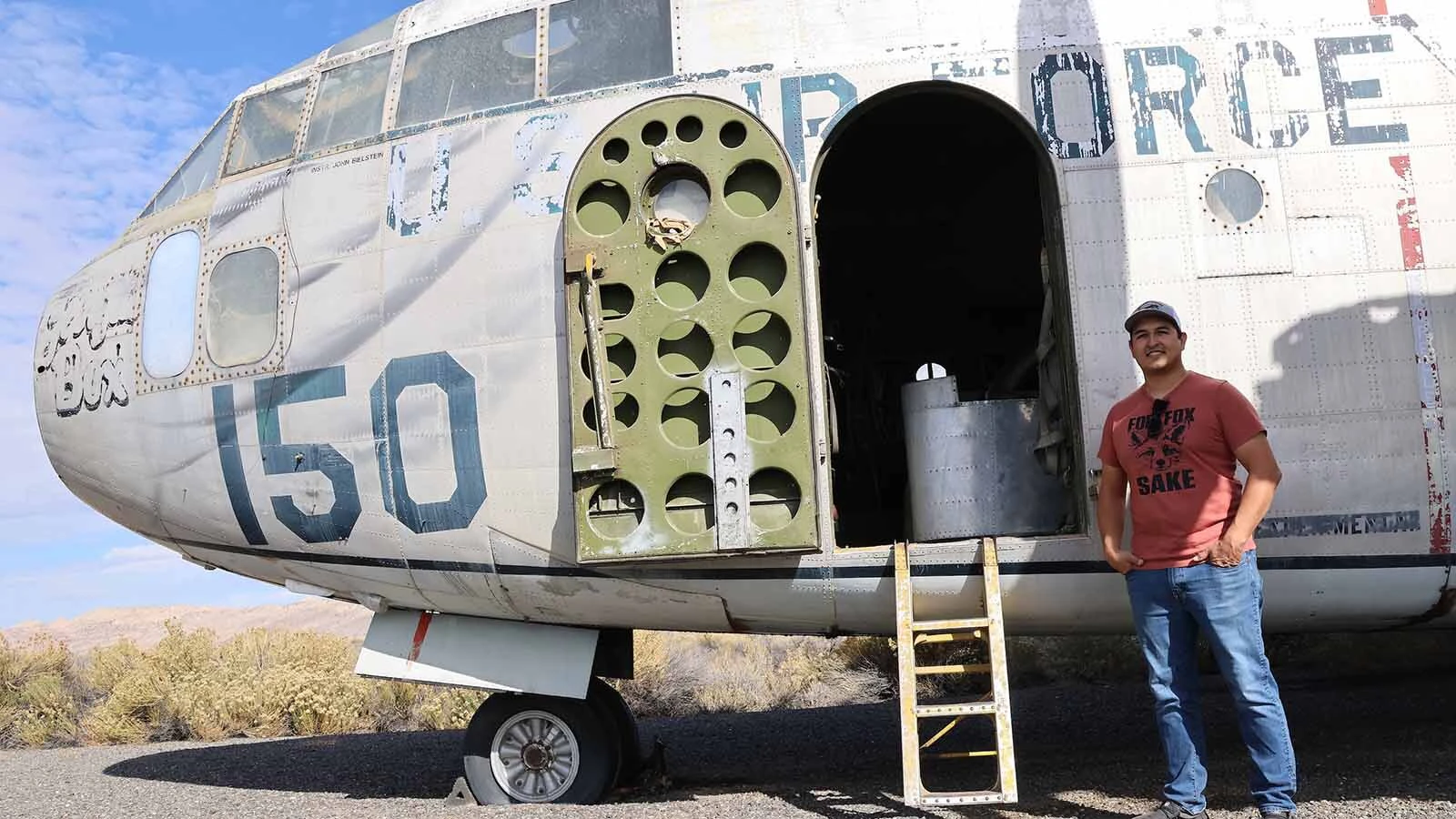
D.J. Hernandez stands outside his newly purchased C-119 “Flying Boxcar” that he hopes to restore to flying condition. (Dale Killingbeck, Cowboy State Daily) 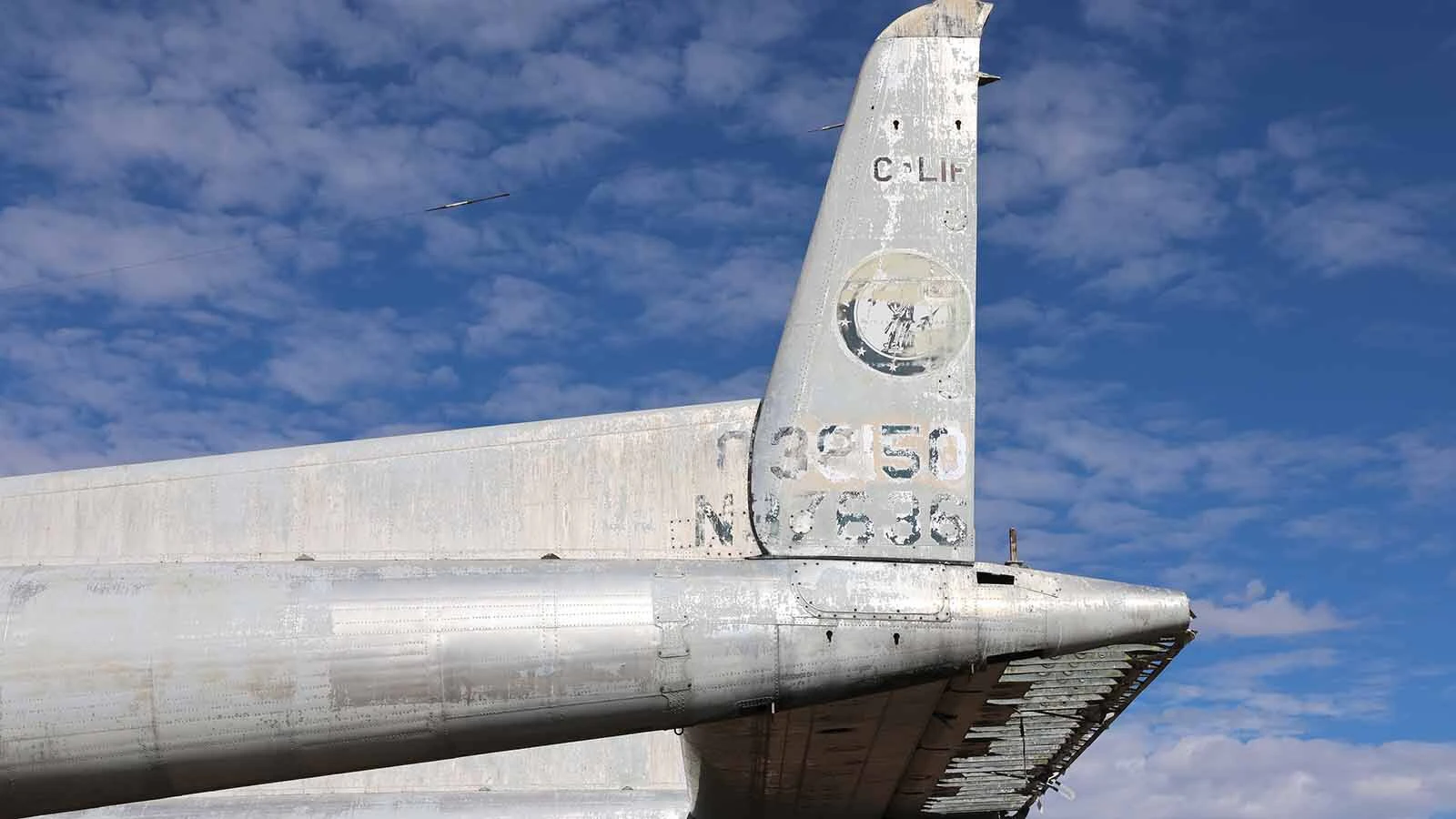
Tail numbers for the C-119 are faded but still can be made out. (Dale Killingbeck, Cowboy State Daily) 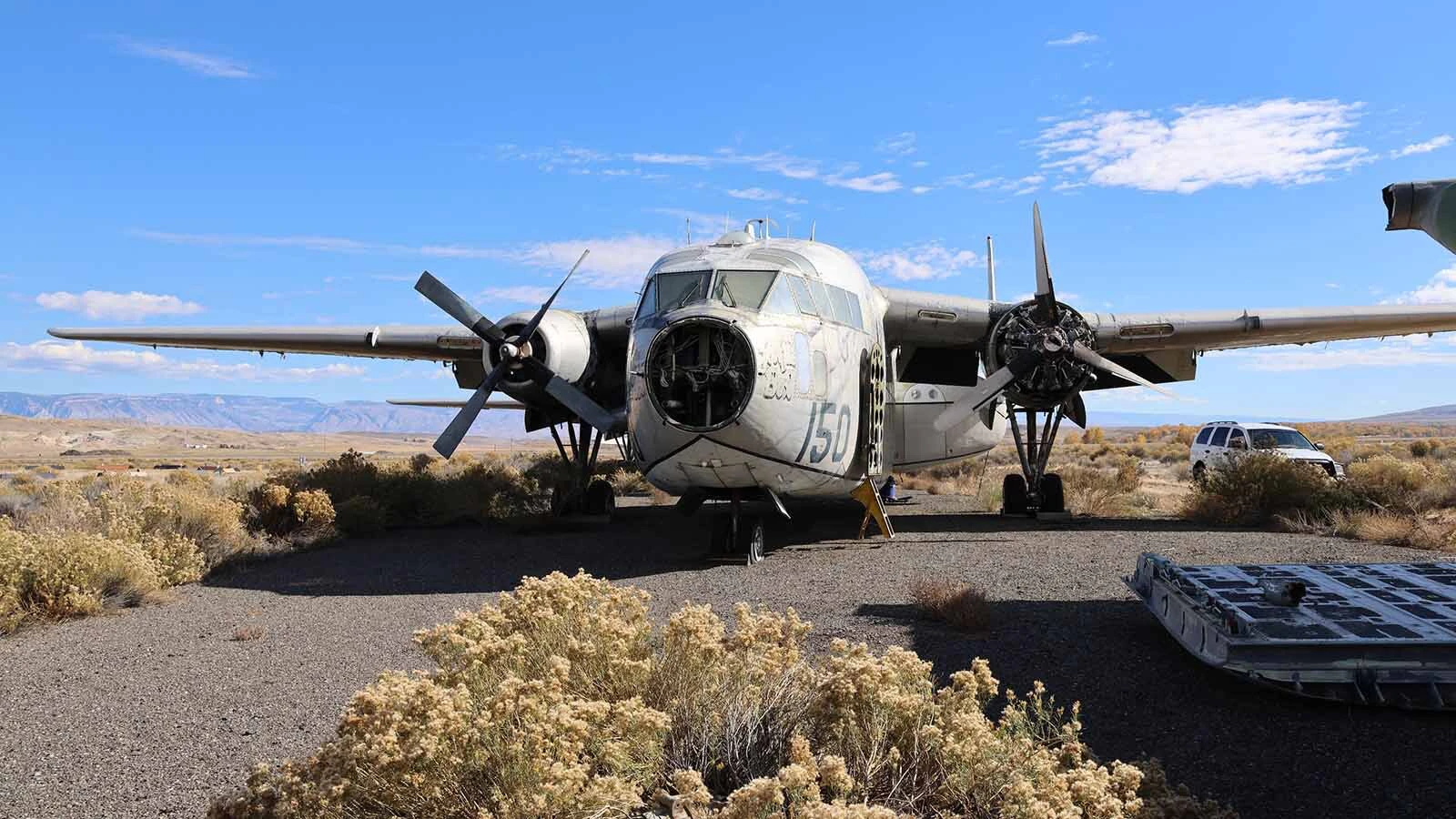
The C-119 currently has propellers that don’t match — a three-blade version and four-blade version. (Dale Killingbeck, Cowboy State Daily) 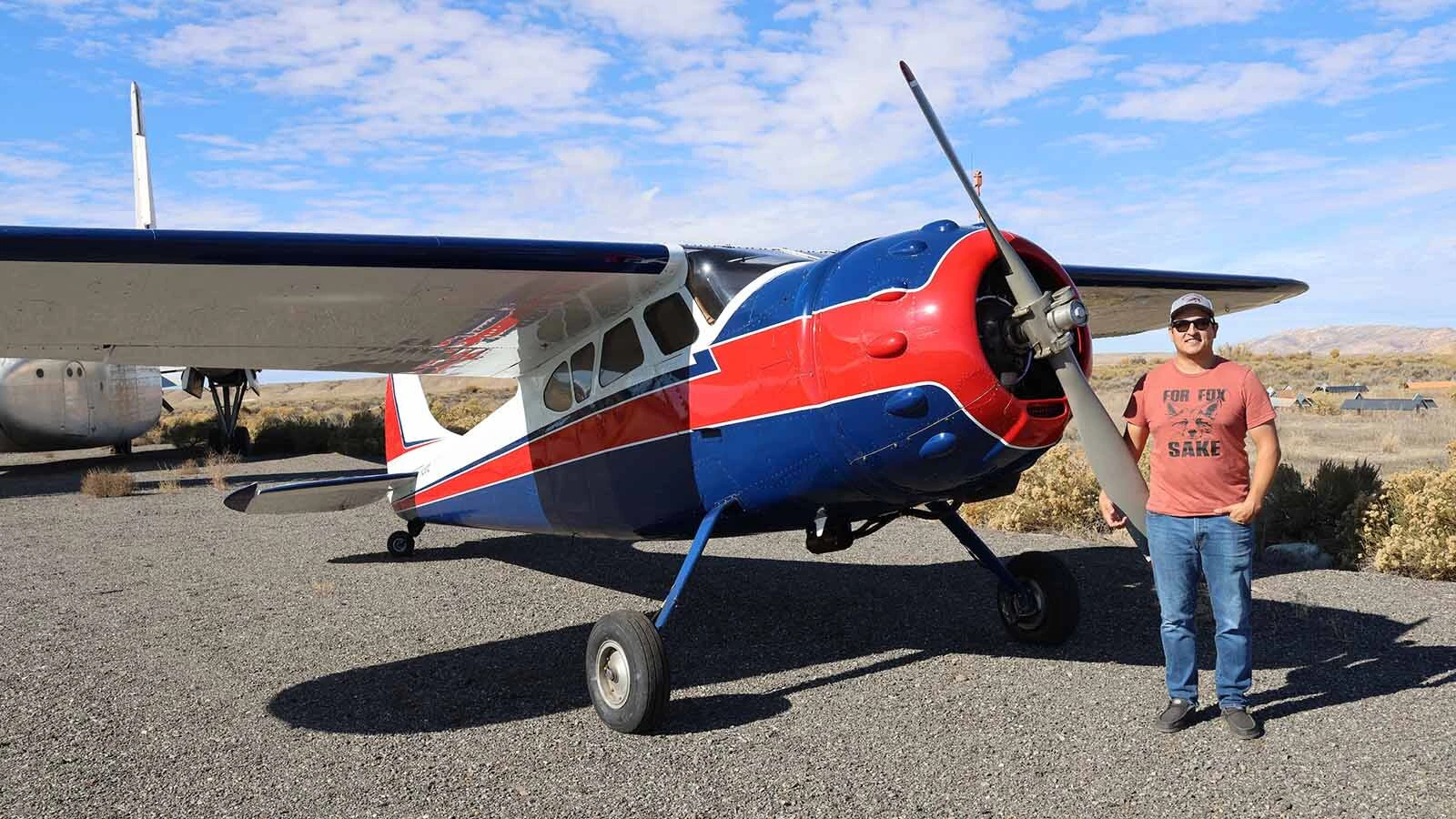
D.J. Hernandez said his 1954 Cessna 195 is the same age as the C-119. (Dale Killingbeck, Cowboy State Daily) 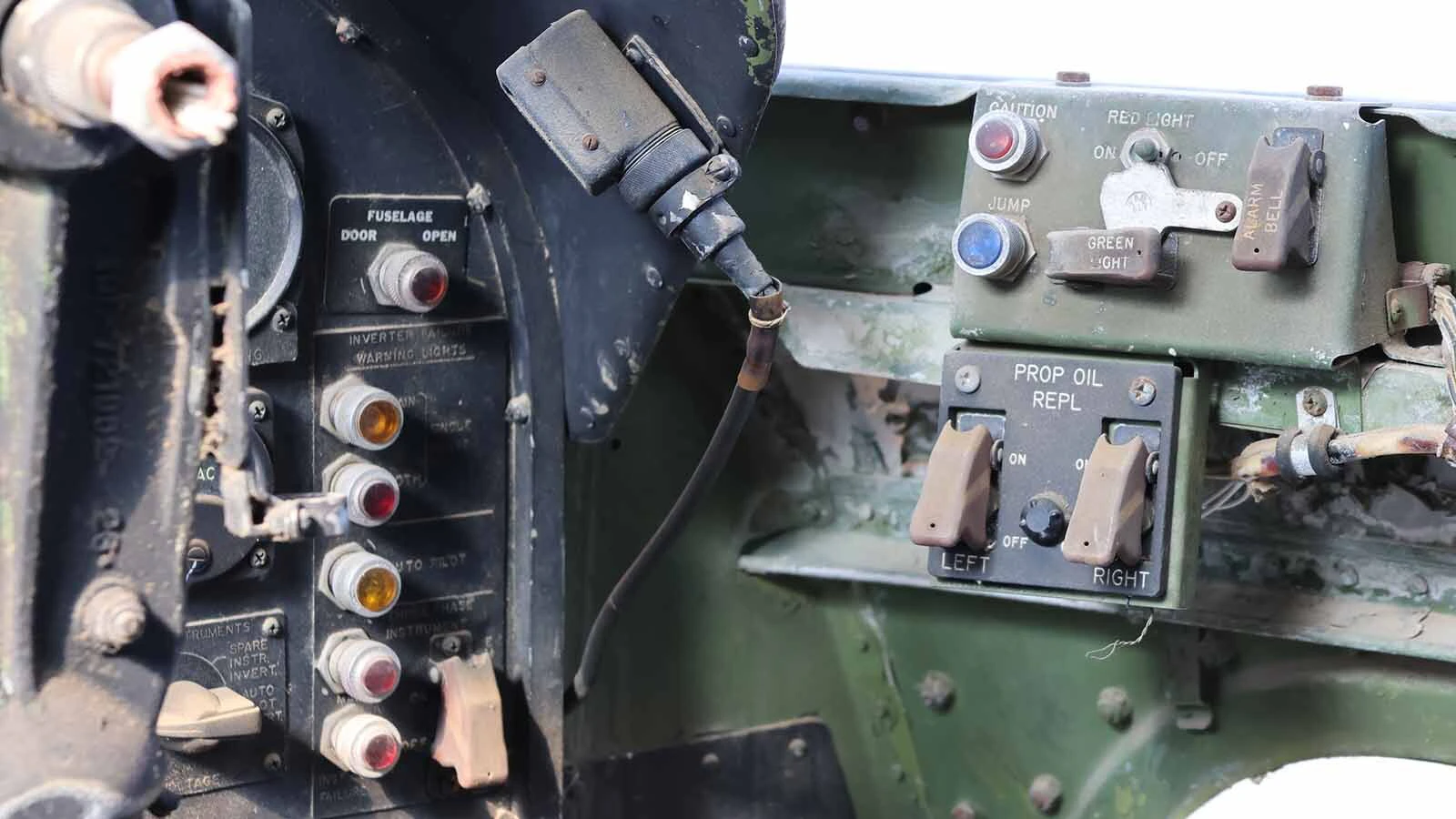
Controls and lights on the co-pilot side of the cockpit. (Dale Killingbeck, Cowboy State Daily) 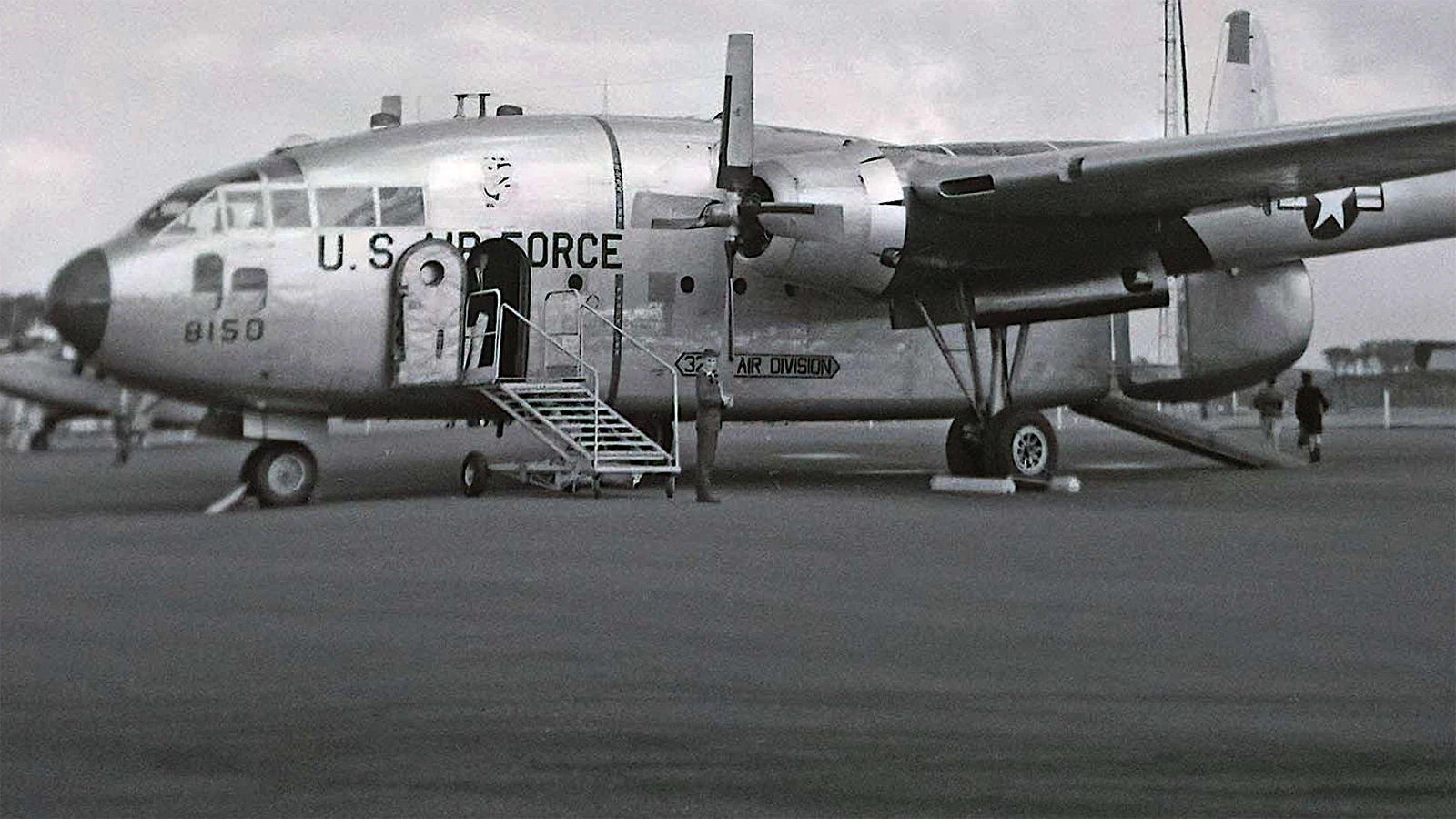
The C-119 in its glory days at Prestwick, Scotland, on Oct. 29, 1961. (With Permission, Neil Aird) 
The C-119 in 1998 as it sat more complete in Greybull. (With Permission, Neil Aird)
Educational Tool
Flying a 70-year-old aircraft is much different from flying the Boeing 737. His goal is to take the aircraft to airshows and help educate people about the days when pilots did not have GPS or computers to actually fly the craft.
“It’s very rewarding just to even start the motor up because you are in there flipping switches and pulling on levers and cranking things,” Hernandez said. “If you do it right, it finally starts and you feel good about it. Whereas, with the jets we fly now, we just flip one lever and we sit there and wait and the computer does it for us.”
Hernandez is starting a nonprofit around the airplane and with a friend has launched a GoFundMe project to help with costs. He said he has been approached by people who want to help bring the plane back to life. He is not soliciting funds, just providing an opportunity and a means for people to contribute.
As a nonprofit, if someone donates they will be able to offer a cash value for tax purposes, he said.
The goal is to have the aircraft airworthy in the next 18 months or so. Hernandez’s contract with the airport states that the plane must be moved by then.
Should he discover something that requires major investment and repair to get it running, it will likely revert to his static display concept.
Hernandez is collecting all the operations and maintenance manuals for the aircraft that he can find. He plans to use those to create a pilot training program the FAA can approve to allow the aircraft to soar once more.
“They don’t make simulators for these old airplanes like they do for jets,” he said. “So, all the training we do, we’re going to have to do it in the airplane.”
Dale Killingbeck can be reached at dale@cowboystatedaily.com.


