
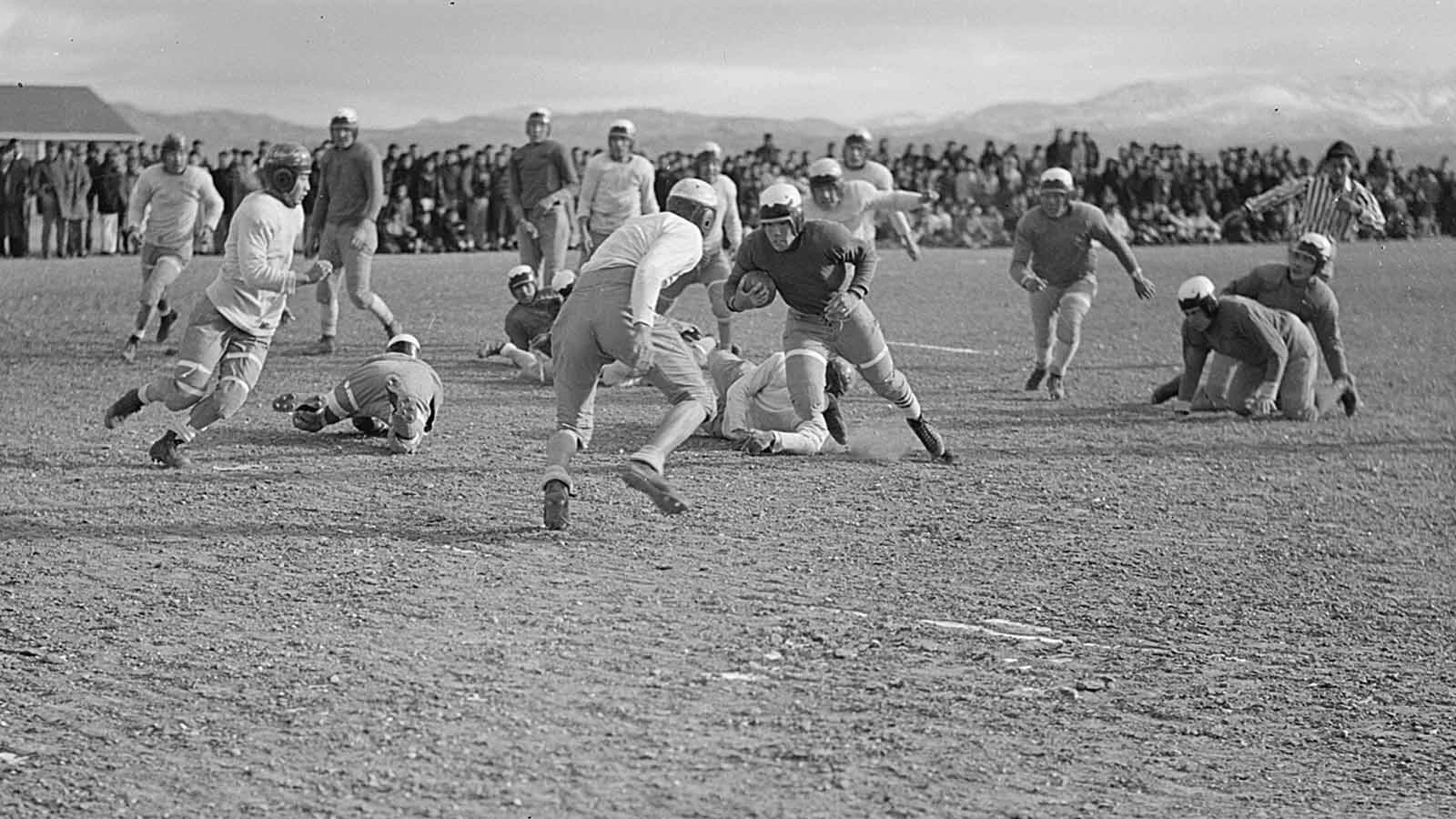
Few people are aware that along with interning thousands of Japanese Americans during World War II, the Heart Mountain Relocation Center also fielded a high school football team.
Even fewer remember more than 80 years later that the Heart Mountain Eagles remain — statistically — the best high school football program in Wyoming history.
Although they only played seven games in two short seasons from 1943-1944, what the Eagles accomplished on the field is a testament to what a group of people can do in the face of adversity.
According to Wyoming-Football.com records, the Eagles earned a .857 winning percentage over their two seasons, winning six of their seven total games.
The closest of Wyoming’s more established and long-running high school programs was Byron, which compiled an 80.5% winning percentage, going 262-62-4 before the program had its final season in 1982.
“The adversity that these guys had to face, the fact they had everything removed from them,” Pearson told Cowboy State Daily. “That’s the kind of stuff that builds resilience, but it also creates an environment where the accomplishments of these kids shouldn’t be forgotten.”
Pearson is the author of the 2021 book “The Eagles of Heart Mountain: A True Story of Football, Incarceration, and Resistance in World War II America,” an in-depth historical account of the football team.
Pearson, a Philadelphia resident, spent about eight years researching the Eagles before publishing his book, poringthrough old camp newspapers, National Archives records, and conducting countless interviews with living relatives of family members of the team, and one former player.
Why Were They There?
The Heart Mountain Relocation Center, named for nearby Heart Mountain and located between Cody and Powell, housed 13,997 Japanese Americans from the West Coast between 1942-1945.
At peak population, nearly 11,000 people lived on the grounds, making the center the third largest “town” in Wyoming at the time.
Across America, 120,000 Japanese Americans were forcibly removed from their homes during World War II and sent to internment camps like Heart Mountain out of fears of disloyalty during wartime, particularly in response to the Pearl Harbor attack.
Most of these people were born in America, a group of second-generation Japanese Americans known as Nisei.
The incarcerees lived in drafty wooden barracks, featuring cracks so large wind and dust would slice through the walls during the harsh winter months.
Each unit had one light, a coal-burning stove, an army cot and two blankets for each member of the family.
Inmates had to walk outside to use the communal bathrooms. Surrounding the camp was a barbed-wire fence and dozens of guards.
One resident summarized the first winter at Heart Mountain with the following poem:
Snow upon the rooftop
Snow upon the coal;
Winter in Wyoming —
Winter in my soul.
Distraction Through Athletics
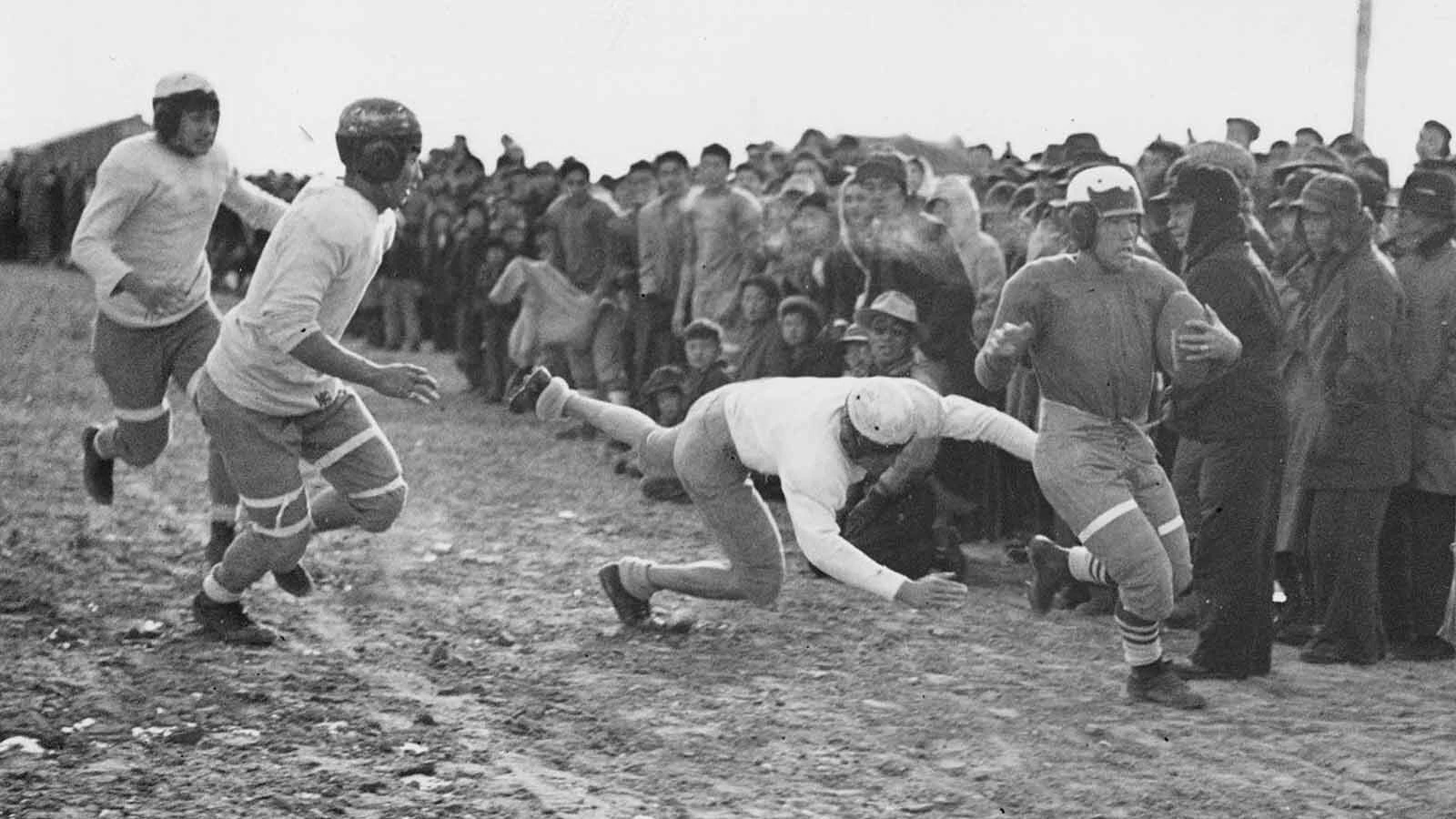
Heart Mountain opened in the fall of 1942, and intramural sports like basketball and softball began shortly after, along with six-man football being played on the grounds.
In many ways, sport gave the Heart Mountain residents a needed distraction.
The people of Heart Mountain received unusually thorough coverage of their sporting events from the Heart Mountain Sentinel, a camp newspaper staffed by incarcerees boasting impressive journalism resumes, such as a former editor of the Seattle Times.
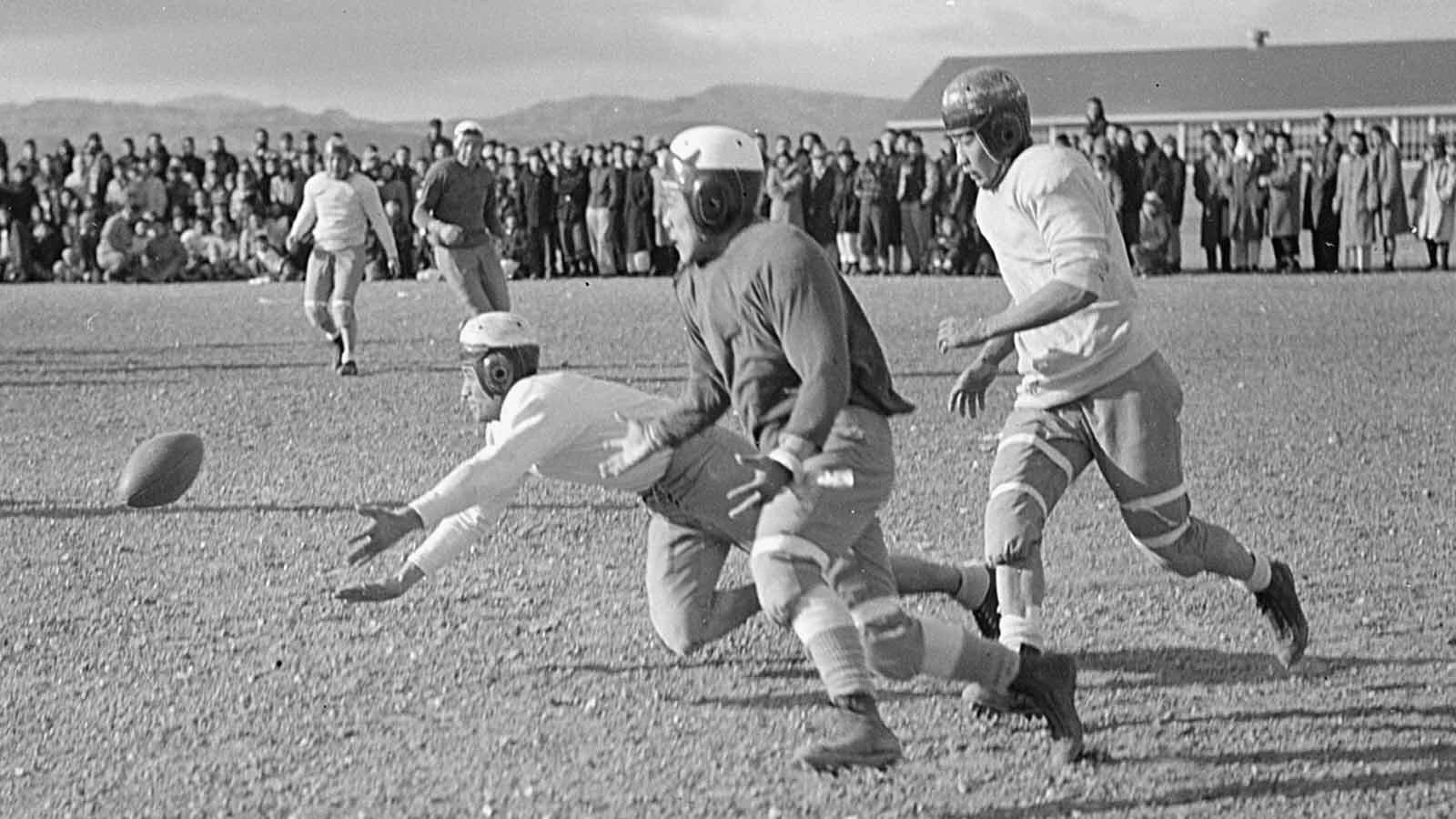
Inmates were only allowed to leave the relocation center for work purposes, so every high school football game the Eagles played was at the camp.
Thousands of camp spectators showed up to watch the games, as there was very little other entertainment available.
Two top athletes quickly emerged that Pearson featured heavily throughout his book:
Tamotsu “Babe” Nomura and Tosh Asano.
Nomura, from Hollywood, California, Pearson described as “a kick-blocking-running-passing Swiss Army knife that scored seemingly at will.”
Babe was the Eagles’ quarterback for the 1943 season, leading them to a 7-0 victory over Worland in their first interscholastic game.
Asano was a 160-pound ball of tightly wound muscle and the lightweight pole vault champion of Southern California in 1940.
He was too old to play for the Eagles, but squared off against Babe in inter-camp games, often held around Thanksgiving, drawing thousands of people to watch.
The two first became acquainted with each other on the football field as opponents in a Thanksgiving 1942 intramural game.
As Pearson wrote, the pair’s athletic rivalry “gave the two men, stripped of their futures, something to fight for.”
Another key player was George “Horse” Yoshinaga. He and Babe would become lifelong friends.
Instant Success
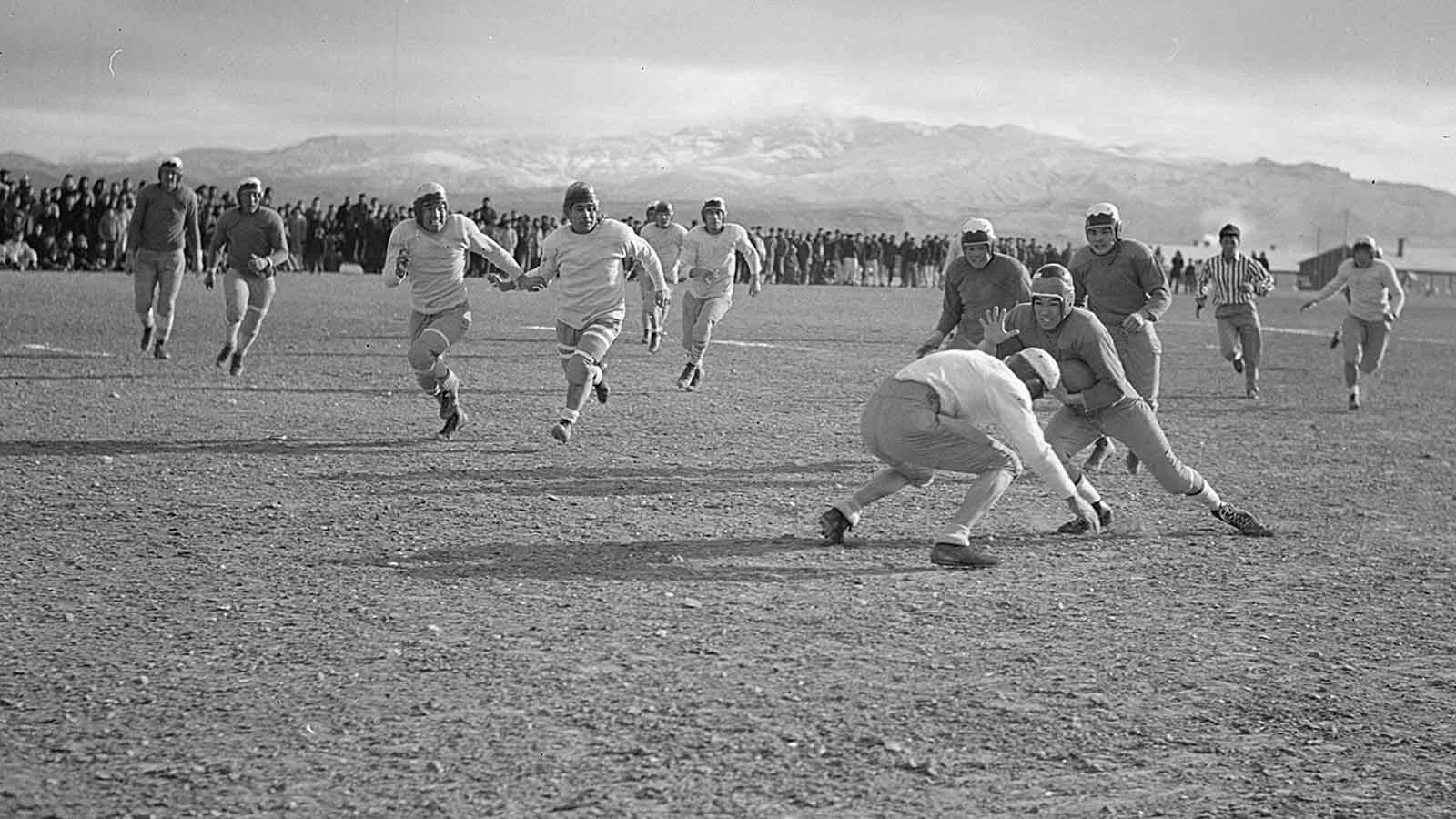
That the Eagles won their first game was considered an incredible feat, as only three team members had played varsity football before.
They had little for football gear, stuffing cardboard into their pants to serve as pads.
Former inmate Hal Keimi said the win was a huge point of pride for the whole Heart Mountain population in the 2024 NFL Films documentary “Fear, Football and the Theft of Freedom.”
After beating Worland, the Eagles took on a team from Red Lodge, Montana, still recovering from the Smith Mine disaster that killed 74 miners and one rescue worker Feb. 27, 1943, along with losing a substantial number of players to the military draft.
During this game, the Eagles’ spread offense playing style started to take form, featuring quick darting runs and many lateral passes, an approach that took advantage of their small stature and speed.
The Eagles beat the Cougars 25-0.
Heart Mountain would only play one more interscholastic game in 1943, grinding out a hard-fought 6-0 win over Lovell.
During the week leading up to the game, an oil worker drove his truck directly at five Heart Mountain teenagers walking along a road to perform seasonal farm work, sending them jumping for their lives into a borrow pit as he threatened to kill them.
The driver and a friend quickly returned with a gun, a drained bottle of whiskey, and a friend.
Fortunately for the teens, a nearby farmer intervened and knocked both attacking men unconscious. The truck driver was charged with felonious assault with intent to kill.
Pearson reported that although local farmers were happy to use Heart Mountain inmates for their labor, they were much less friendly to accepting their business, with Cody business owners openly displaying “No Japs Allowed” signs in their establishments.
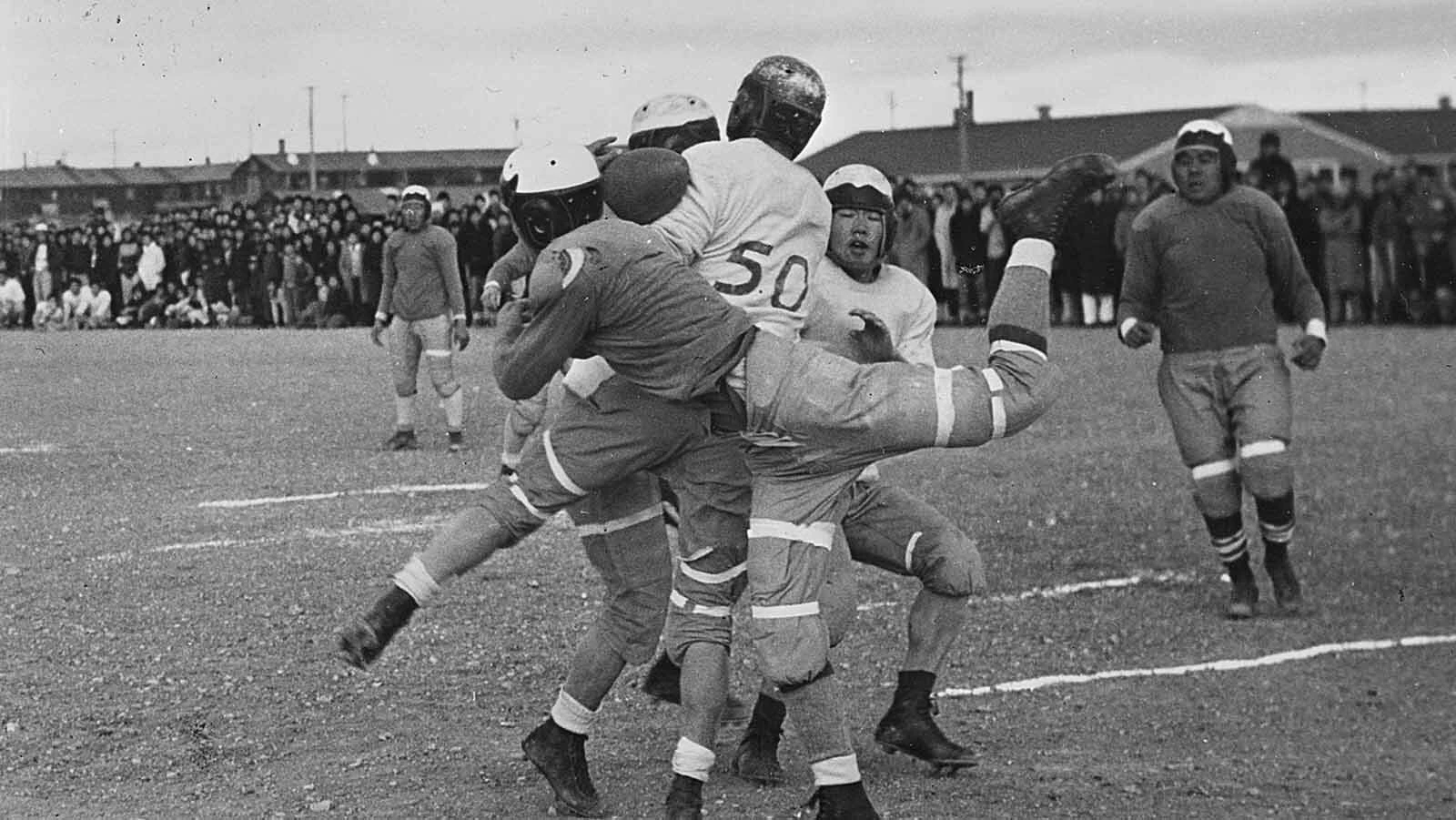
Political Protest
Pearson spent the intervening time between seasons discussing the different forms of political protest the incarcerees undertook.
Many members of the Heart Mountain community reacted with outrage in early 1944 when the U.S. government determined Japanese Americans would be eligible for the draft, yet refused to clarify their status as U.S. citizens or release them from the internment camps for any other purpose but to fight in the war.
As a result, a number of people in the camp were sent to prison after refusing to serve or fill out a loyalty questionnaire.
One of the men who went to prison was Tayzo Matsumoto, an Eagles player who also starred for the camp baseball team.
During the summer of 1944, 63 Japanese American draft resisters from the camp were tried and found guilty in Wyoming’s largest-ever mass trial.
Horse ended up serving in the war. He went to Japan for the first time aboard a U.S. military ship in the aftermath of the atomic bombs over Hiroshima and Nagasaki.
A diagnosis of flat feet kept Babe from serving.
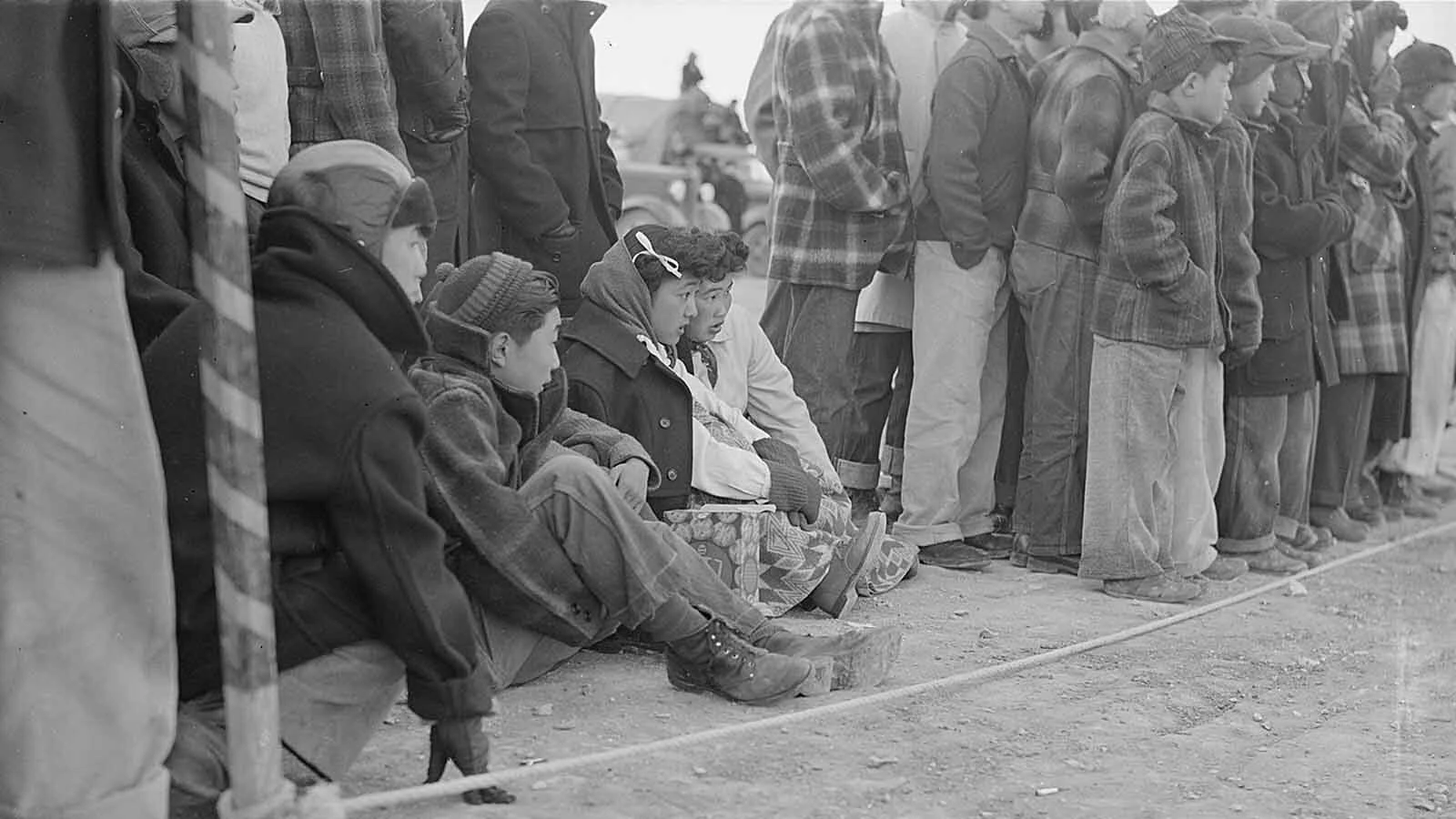
Even More Success
The 1944 Eagles were even more dominant on the gridiron despite losing most of their stars from the previous season.
Babe became a coach on the team and Horse started covering them for the Sentinel. They started the season with a 48-0 drubbing of Cody in a preseason scrimmage.
The team was even faster than before, but one of its biggest obstacles existed off the field with many Wyoming schools reluctant to play them.
Despite committing to a regular season game against the Eagles later that fall, Cody declined to play them again after getting blown out.
The players of the nearby Powell Panthers, who went undefeated during the 1944 season, voted against playing the Eagles, despite multiple invites.
Pearson described this challenge as not only convincing teams to play in a concentration camp, but also a fight against the fact that, “no one wanted to lose to a team from a concentration camp.”
The Eagles started the regular season with another win over Worland.
They played an undermanned Red Lodge squad in their next game, spanking their Montana neighbors 60-0, the most points scored by a Wyoming team in years at the time.
In their third game of the season, Heart Mountain faced Lovell.
Despite a hard-fought effort by the Lovell defense, the Bulldogs were no match for the Eagles, falling to Heart Mountain 32-0.
Through two seasons up to that point, Heart Mountain played six games, collected six wins, and allowed 0 points.
In what would become the last game they ever played, the Eagles squared off against Natrona County High School, by far their toughest opponent yet.
Playing for the Mustangs was future University of Wyoming starting tailback LeRoy Pearce, considered by many one of the best athletes in Wyoming history.
An estimated 4,000 spectators turned out to watch the heavyweight battle.
The Mustangs jumped out to an early 12-0 lead behind two touchdowns from Pearce, the first points scored on the Heart Mountain team.
In the second quarter, the Eagles woke up and scored a touchdown of their own.
After allowing another Mustang touchdown, Rabbit Shiraki nabbed a last second pass and returned it all the way to the house to bring the Eagles within six points heading into halftime.
A second-half pass that would’ve tied the game for the Eagles was dropped in the end zone, and that was it, Natrona won 19-13.
Despite the loss, the Sentinel declared the Eagles the “Big Horn Basin Champions” across its front page, since Powell refused to play them.
About six weeks later, the Department of War announced that all of the Japanese American incarcerees could go home.
But to what home?
For most, their former homes and other previously owned property was gone and personal savings almost completely drained.
The camp closed permanently on Nov. 15, 1945.
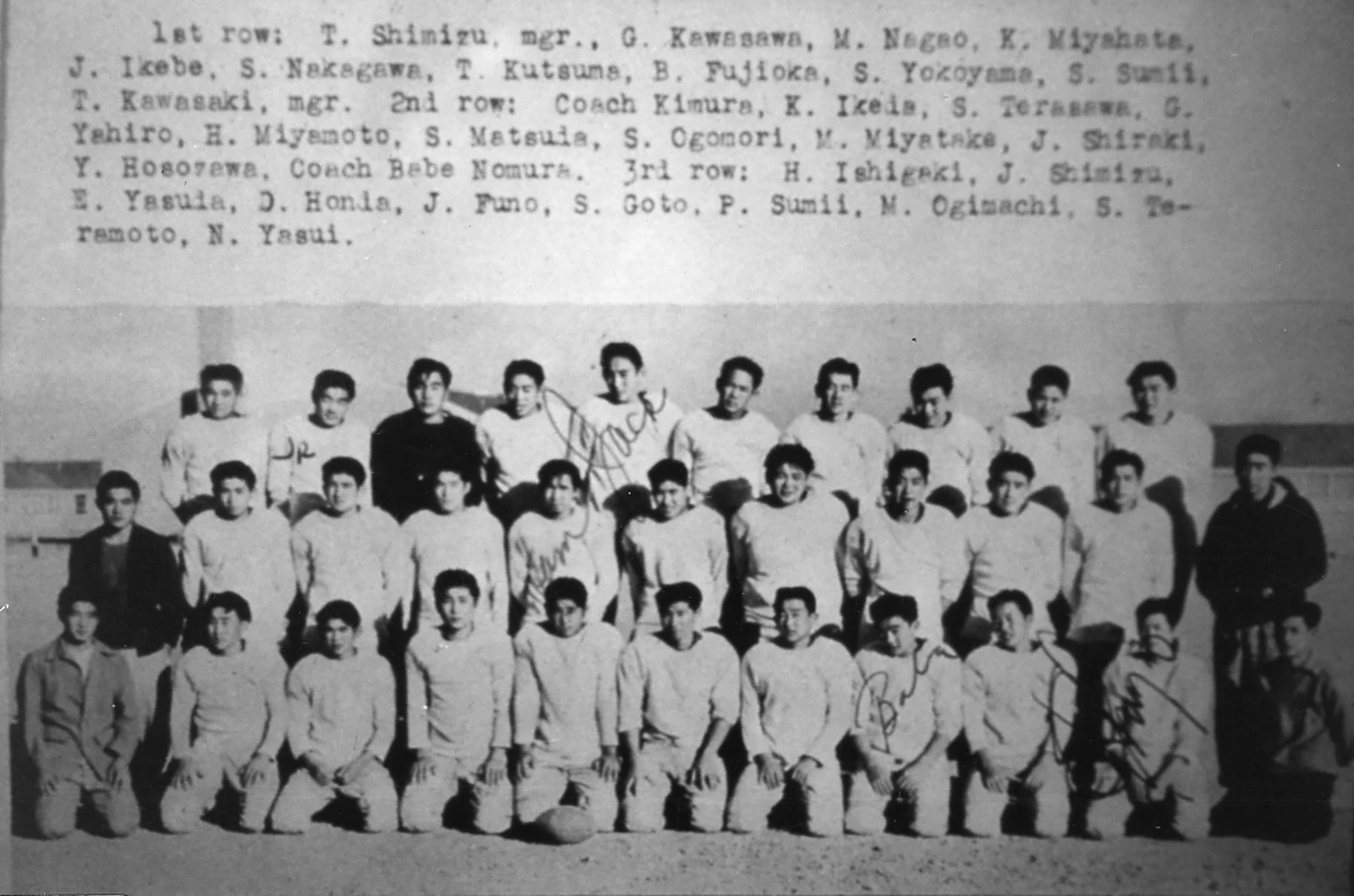
Lasting Legacy
The passage of the Civil Liberties Act of 1988 provided a national apology and payments of $20,000 to surviving incarcerees.
Pearson has since pointed out how the comparisons people have drawn between the internment camps and modern events has consistently evolved since his book’s release.
“History is moving, history is evolving and we need to look at these stories from our past to learn from them,” Pearson said. “Why are we repeating these histories?
Why are these things coming up again now when we have such clear evidence they’ve done nothing but tear this country apart?”
One thing Pearson also noticed in his interviews was that many of the former camp internees spoke little of the camp the rest of their lives because they had to so quickly return to work and figure out how to survive, rather than dwell on what they went through.
He was also struck by how little resentment some expressed about the experience.
Afterwards, some went to fight in the war, while others entered the work force.
A significant number of Eagles ended up living in a boardinghouse owned by Babe’s family in the Los Angeles area.
Many of the internees met their future spouses and started families because of the camp. Former Eagle George Yoshinaga credited the experience in Pearson’s book for helping him escape the farm life and start a sports entertainment business.
Babe would go on to play football at San Jose State, earning a spot on the 1946 Associated Press All-West Coast team.
After that season, Babe was invited to tryout for the NFL’s New York Giants.
It was a significant invitation as no Asian American had played professional football at that point. He also received an offer for a tryout with Major League Baseball’s Boston Red Sox, but declined both opportunities.
He went on to have a successful professional career and coached his children in his spare time. Babe died on Nov. 11, 2011.
Horse, who worked as a journalist across seven decades, summed up their friendship as a bond that survived two concentration camps and 69 years.
“This past week was a tough one,” Horse wrote about his lifelong friend’s death. “On Sunday I lost my best friend.”
One part of their legacy remains in the Eagles’ 6-1 record forever recorded in the Wyoming high school football record books.


