
A new roof can be priced. So can replacement windows.
But what is an insurance company supposed to do with a cabin covered in fossils that town officials describe as the only one of its kind in the world?
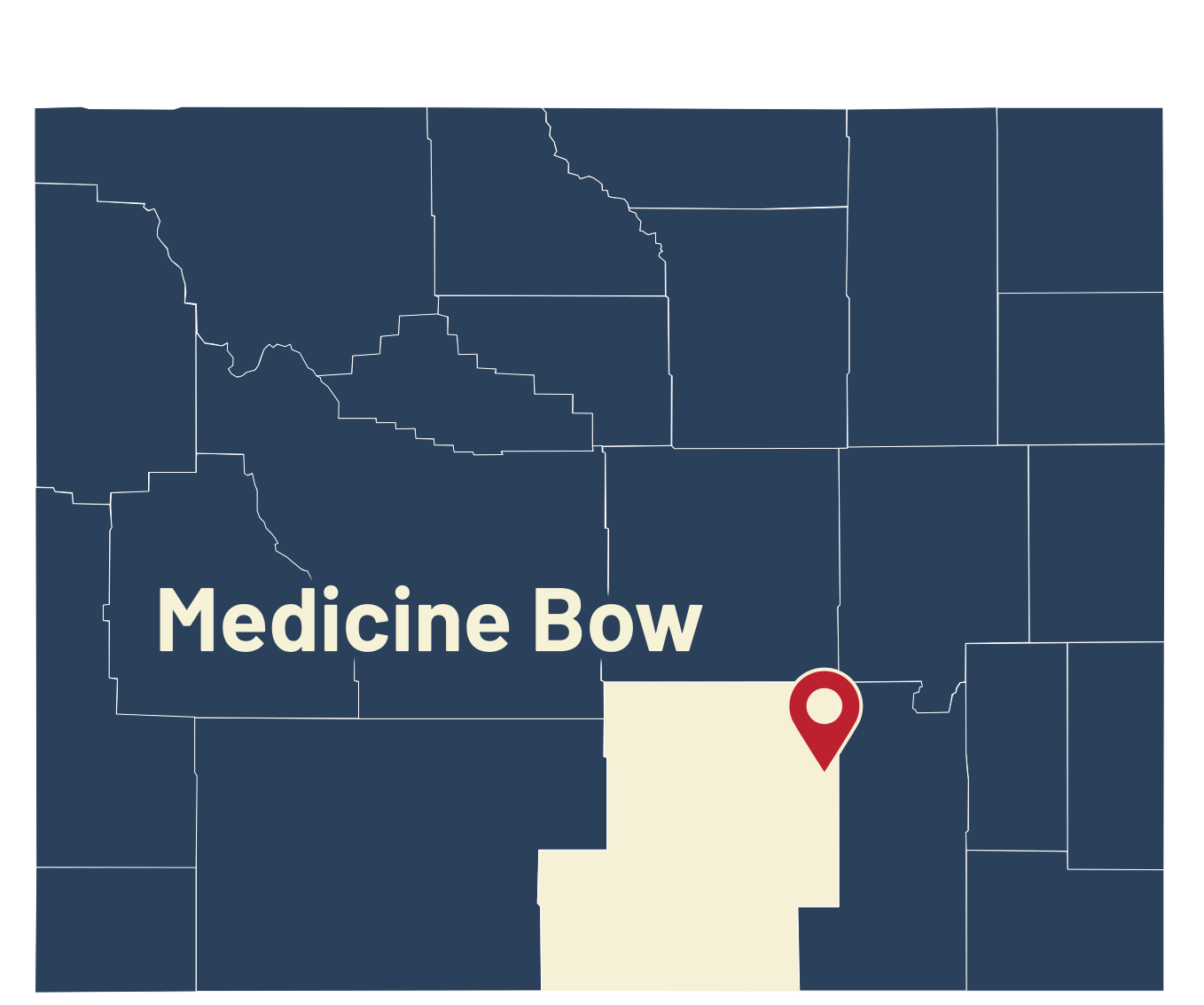
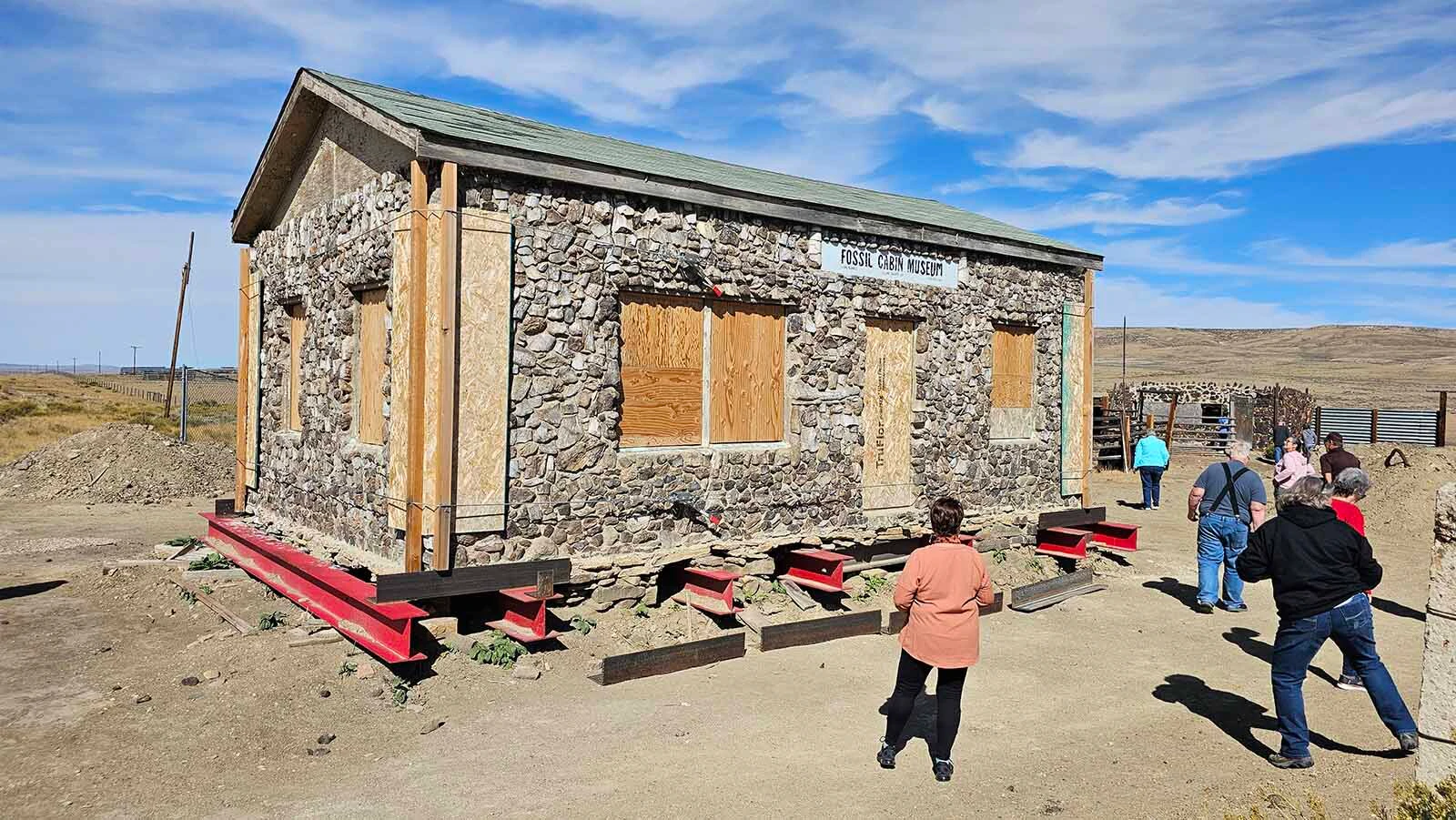
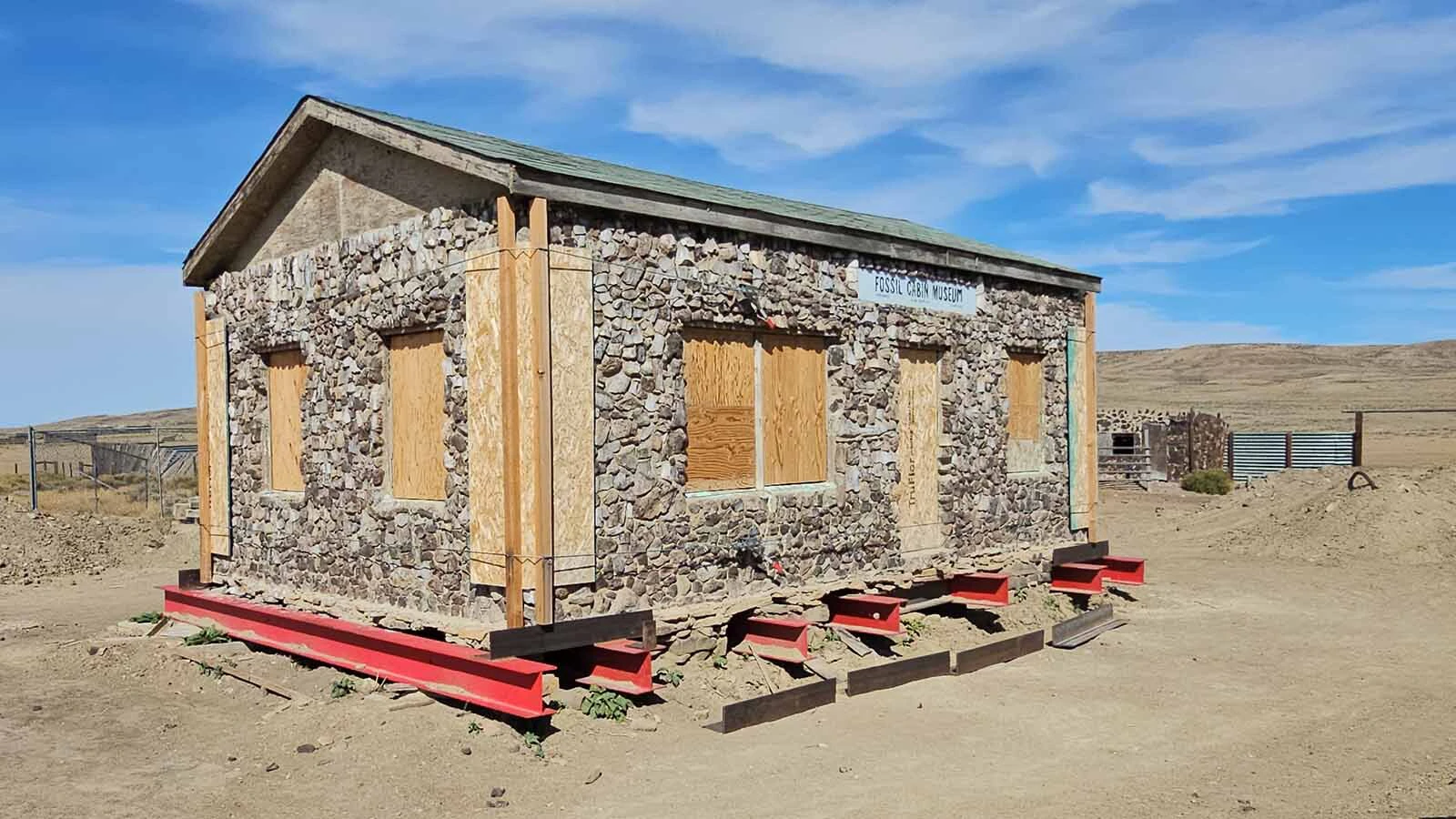
That question is complicating efforts to reopen Medicine Bow’s Fossil Cabin, which was relocated to the museum grounds earlier this year but remains behind a fence while repairs, public-access work, and insurance questions are sorted out.
Saving the unusual attraction took roughly eight years. Making it ready for visitors is proving to be another challenge that could take some time.
Mayor Justin George told Cowboy State Daily the town’s insurance provider can address familiar building components such as the roof and its windows. But the fossil-covered exterior is a much less familiar problem.
“There’s no way to put a price on it,” he said. “I mean, what do you write? What’s the underwriter write it for?”
The museum board hopes to have the cabin ready for guests next spring, but unresolved insurance questions mean there’s no firm reopening date.
Repairs and questions about safely accommodating visitors have to be resolved first, George said, before people can be allowed inside, or even close up to the fossil-covered walls.
Winterizing Work In Progress
For now, visitors can only see the cabin from behind the fence. That’s not the public opening the museum board had in mind for its new, one-of-a-kind historic cabin.
“That’s what our plan was and still is,” Museum Board President Robert Howard told Cowboy State Daily. “But there’s a lot of work to be done on the cabin. And until all that work is done, I don’t think the insurance will even touch it. And that’s what the holdup is.”
Howard said the museum is replacing the roof and sealing cracks to winterize it.
“The windows and the door and stuff are on order for it,” Howard said. “We don’t know how long that’s going to take to get, because they’ve got to rebuild all of the windows. It could be a couple of months or longer even before they get the windows rebuilt.”
The inside of the structure, for now, is empty, Howard added.
“We’ve got a couple of companies that are digging dinosaur bones and stuff around this area,” he said. “We’re hoping — one of them talked to some of the museum people and said that he would give us some stuff.”
All of the showcases that were inside the building are in storage, and Howard said he believes some of the display cases are salvageable. Most of their fossils were stolen long ago, however.
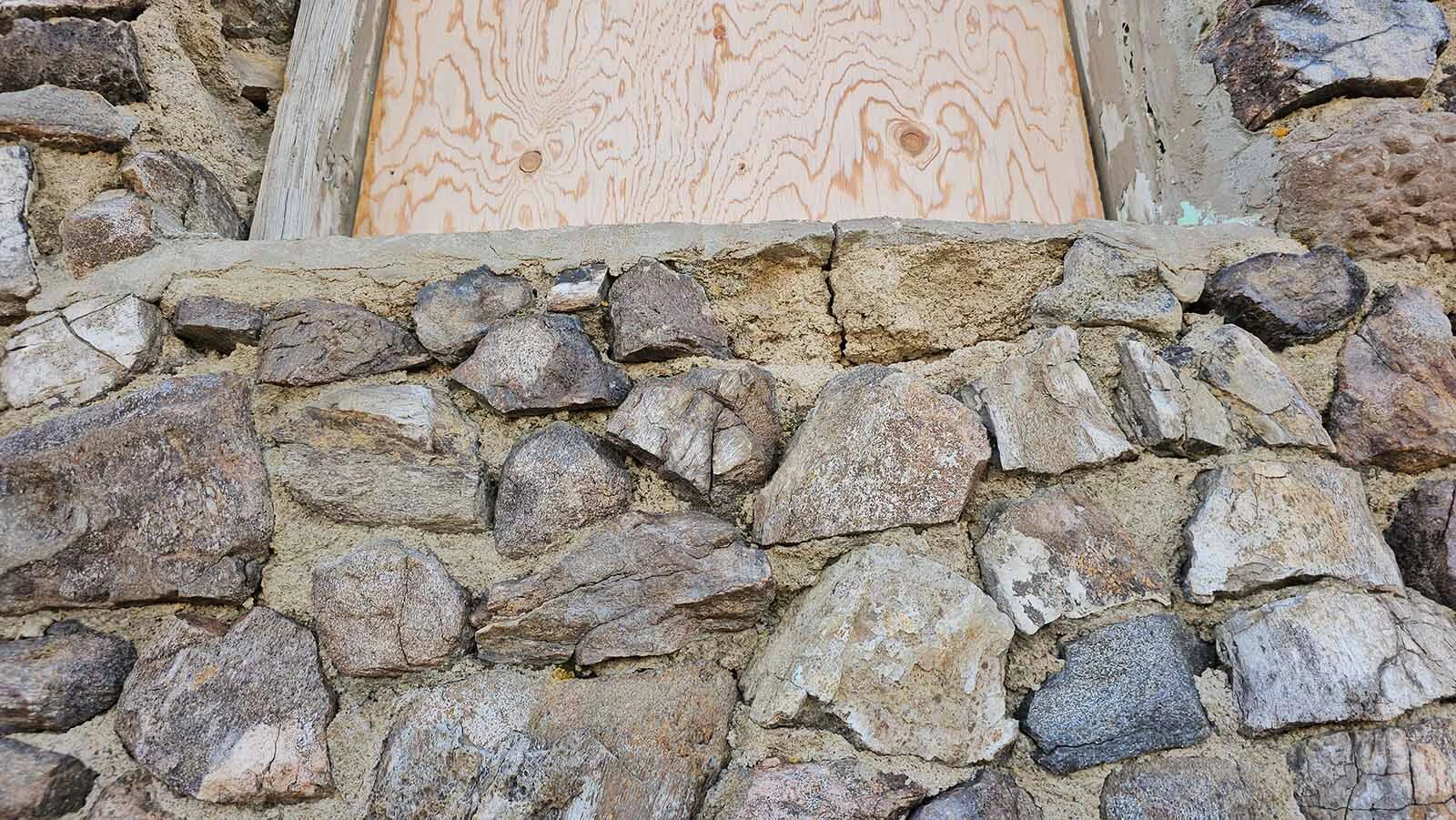
Cracks in the mortar, as well as missing fossils are among problems that must be resolved before Wyoming's Fossil Cabin can reopen. Windows have also been broken out of the facility, which has recently been moved to Medicine Bow. (Renee Jean, Cowboy State Daily) 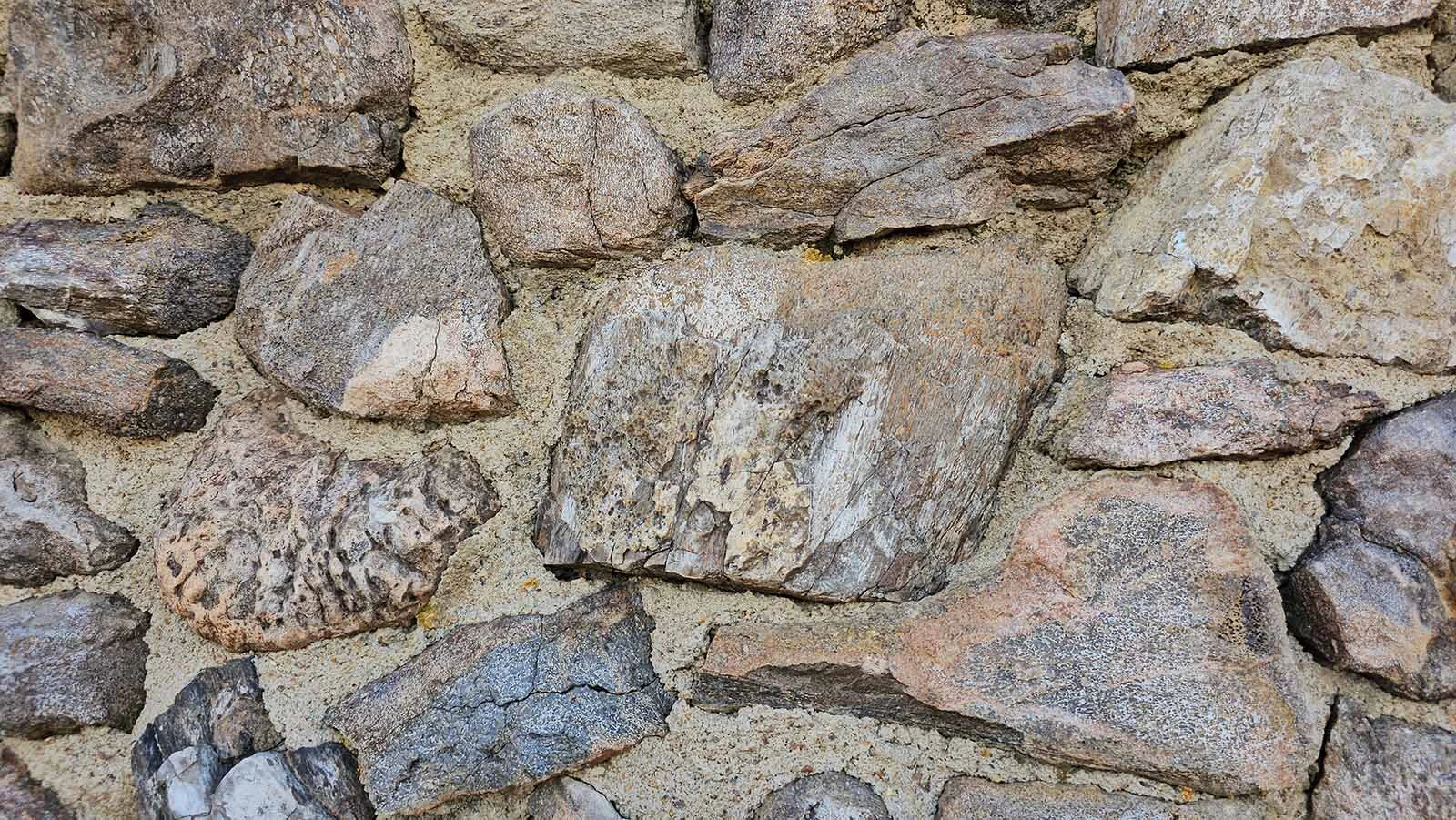
More than 6,000 dinsoaur bones were used to build the Fossil Cabin that's 5 miles from Medicine Bow. The building weighs more than 100,000 pounds. (Renee Jean, Cowboy State Daily) 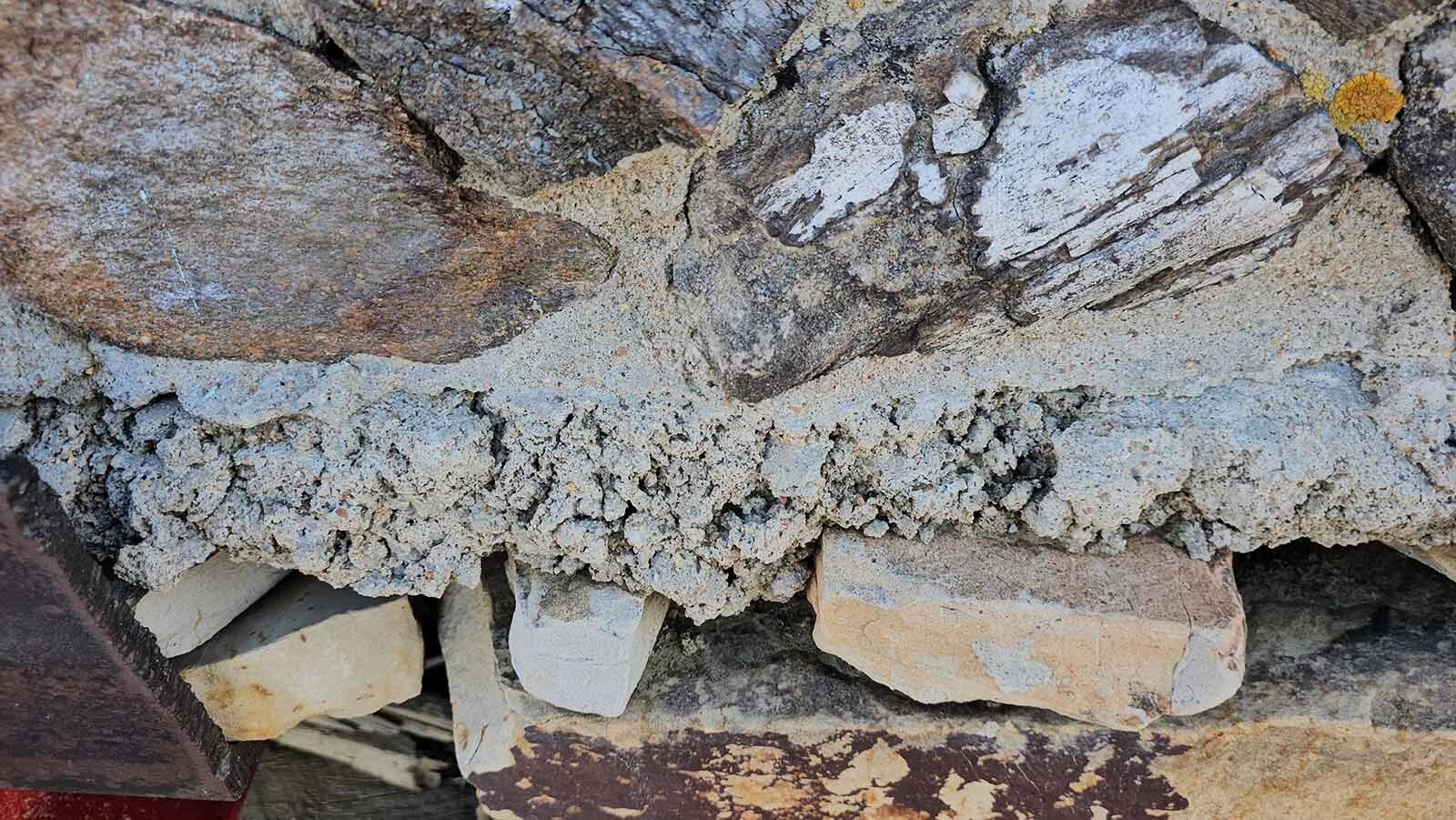
Deteroriating mortar is just one of the structural problems that must be resolved to reopen the Fossil Cabin, relocated in May to Medicine Bow's museum. (Renee Jean, Cowboy State Daily) 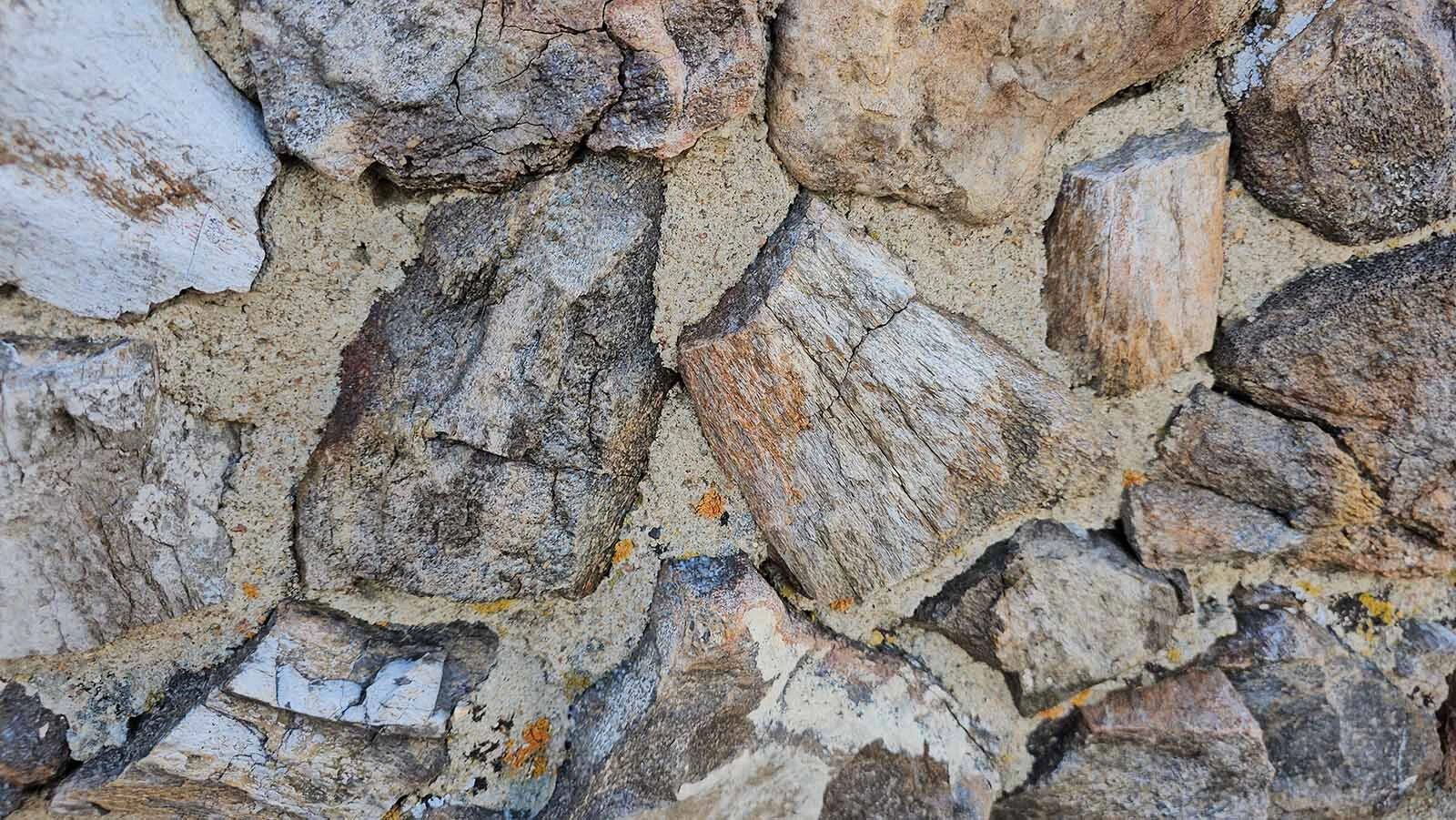
More than 6,000 dinsoaur bones were used to build the Fossil Cabin that's 5 miles from Medicine Bow. The building weighs more than 100,000 pounds. (Renee Jean, Cowboy State Daily)
From Bone Wars To Tourist Trap
Wyoming’s Fossil Cabin was once featured by Ripley’s Believe It Or Not as the “World’s Oldest Cabin” because of its unique building materials — 6,000-some dinosaur bones, weighing more than 100,000 pounds.
The bones were collected by a homesteader named Thomas Boylan from the famed Como Bluff Ridge, which was the epicenter of the late 19th-century Bone Wars between rival paleontologists Othniel Charles Marsh and Edward Drinker Cope.
Boylan’s original idea was to assemble a complete dinosaur skeleton as a roadside attraction for his Lincoln Highway gas station. But 5,000-some bones later, archaeologists told him he was nowhere near a complete skeleton.
So, he and his wife, Grace, thought of a clever alternative. They used local sand and mortar to build a cabin covered in fossils, which opened to the public in 1933 as a roadside museum at the filling station.
The 1938 Ripley’s column called it the oldest cabin around because its building materials dated back roughly 150 million years to the Jurassic period.
The cabin was a highly effective tourist trap until Interstate 80 opened in 1970, bypassing the section of U.S. Highway 30 where the cabin sat.
Grace Boylan operated it for many years after Thomas died, but sold it in 1974. It was added to the National Register of Historic Places in 1982, but low visitor turnout eventually led to its closure in 1992.
Vandals Were Targeting Cabin
Pilfered fossils were just one of the many problems the 105,116-pound fossil cabin faced in its remote home near Como Bluff.
There was no dedicated caretaker for the cabin, which sat along a desolate, unmonitored stretch of U.S. 30.
It was an easy target for vandals, who regularly broke its windows out and chiseled fossils straight out of its walls, in addition to stealing most of the artifacts inside.
“The door was where you couldn’t keep it locked,” Howard added.
Decades of hard Wyoming winters and elemental exposure were taking a toll, too, and its mortar was decaying.
These problems prompted moving the cabin to Medicine Bow’s museum, where more people can watch over it.
George’s own gas station is across the street from it, as is The Virginian Hotel.
“There are a lot of eyeballs on you where it’s sitting now,” George said.
Both men discussed adding security cameras to cover the cabin after hours.
One Bite At A Time
The cabin is not built as some might think, Howard said. It’s actually a wooden structure, slathered in mortar, to which fossils were affixed.
“I think once people find out how it’s built, they’ll have a different opinion on it, the structural integrity of it,” he said. “Because it’s not built out of dinosaur bones. The dinosaur bones were put on it like you would do a brick house.”
George said the underlying wooden structure seems stable, but cracks and deteriorating material between the fossils raise concerns about allowing visitors close to its walls.
The insurance issue is twofold, the men added. There’s protecting an irreplaceable cabin and then there’s protecting those who come to see it.
Choosing a treatment to repair cracks will require care, George said. He wants advice from those familiar with historic mortar, as well as guidance from a fossil specialist about whether a proposed sealant could damage the fossils.
“A lot of cracks need to be filled,” he said. “A lot of stuff is going to have to happen before this is a usable display, not just a display.”
Future work will also include building a ramp so that it’s accessible to visitors with disabilities. It’s possible its doorway may also need to be widened for that purpose.
After the construction items are cleared, it will also take time to rebuild displays inside the cabin.
“It’s like eating an elephant,” George said. “You’ve got to do it one bite at a time.”
Renée Jean can be reached at renee@cowboystatedaily.com.


