CHEYENNE — Gene Stillahn came to the Wyoming Hereford Ranch in 1964 when he was 11 years old.
That same year, John Wayne bought an Arizona cattle operation that would become the 26 Bar Hereford Ranch.
A few years later, the Western movie star turned up at one of the cattle sales at the Wyoming Hereford Ranch, where a 15-year-old Stillahn was working behind the scenes, helping to keep the bulls in the back moving in the right direction.
Stillahn saw Wayne out there among the crowd, sitting in what he was told was the movie star’s favorite spot.
To the cowboys working the ranch at the time, Wayne’s appearance didn’t cause a great stir.
Wyoming Hereford Ranch was a must for any rancher looking to buy its top-rated bulls, and the sale routinely drew the biggest buyers.
“Wayne came to the sale several years, and he had a spot right over there,” Stillahn told a tour group on a recent Saturday, gesturing toward the back of the room. “That was his spot right over there.”
But what is now the “back” of the room was once more like the front of the house.
“There used to be an auction block there between the two doors,” Stillahn said, gesturing toward the back area where there are two large, sliding doors. “The owner or the manager would be up there on the auction block, and the auctioneer would have a microphone.”
Each bull came through one door into a roomy pen in front of the auction block, where buyers could get a good look at the merchandise.
The owner or manager would comment on selected animals before bidding proceeded.
Stillahn doesn’t know if Wayne ever bought cattle at the sale, but he remembers it as one of the country’s premier sales.
The ranch’s bulls won 20 Denver carlot grand championships in a 29-year span, according to its published history. Stillahn says that championship record has never been broken.
“These were the top end of the bull crop,” Stillahn said. “For the fall sale, it was usually 80 to 90 bulls and they’d sell a handful of bred heifers.”
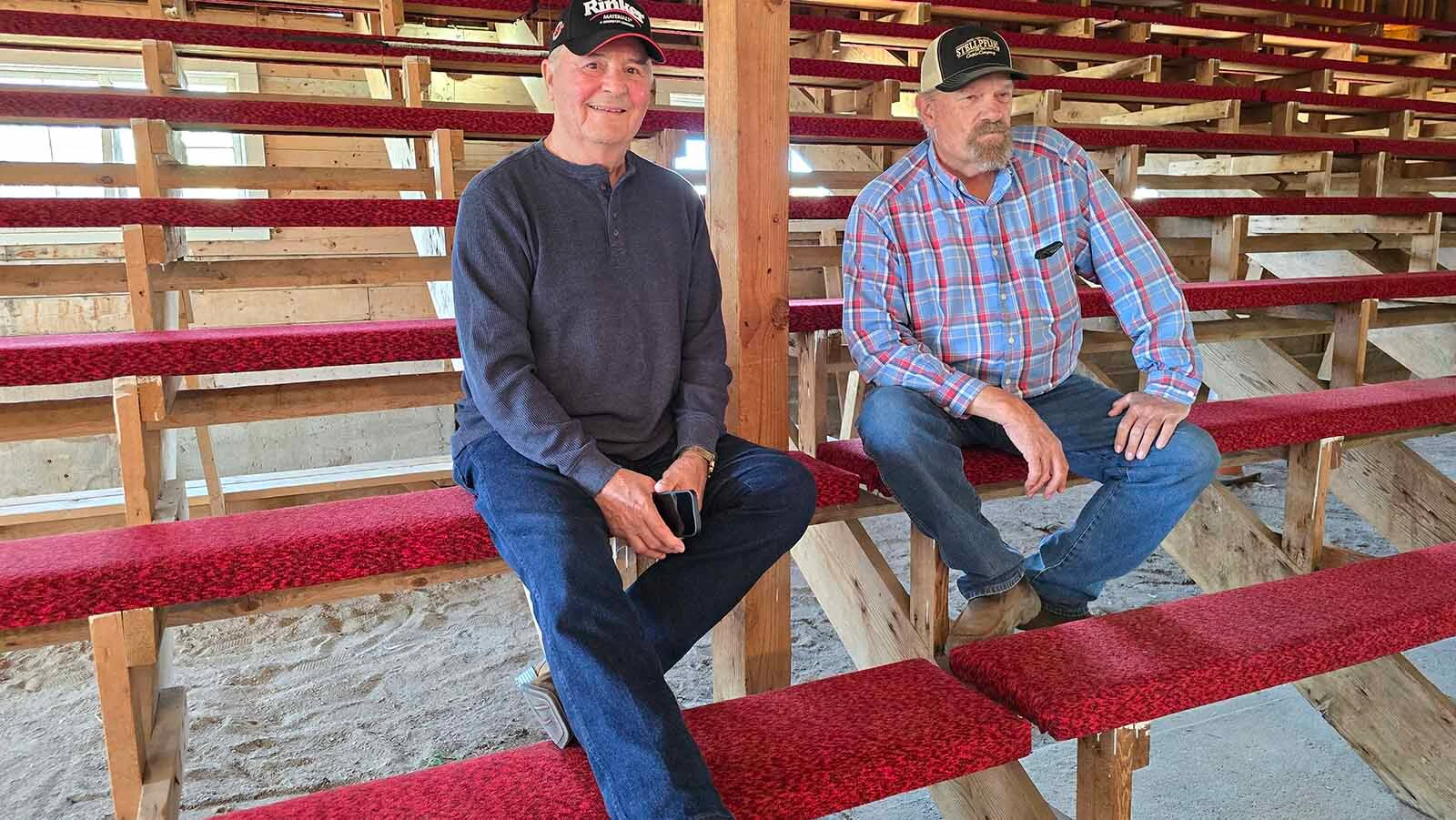
Dennis Spatz, left, sits where John Wayne used to sit while Gene Stillahn looks on. (Renee Jean, Cowboy State Daily) 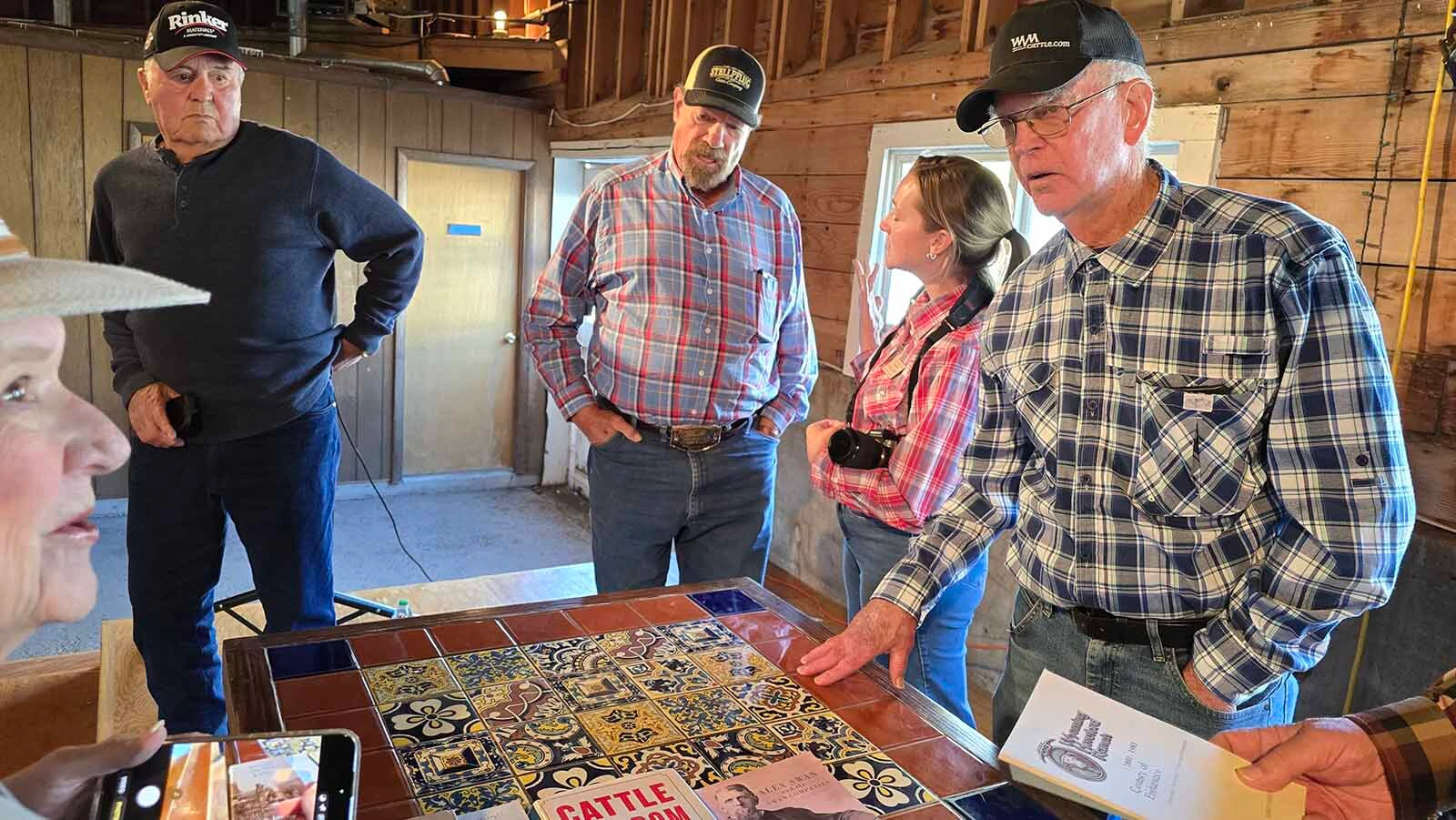
Phil Sharp talks about the history of the Hereford Ranch, which is the nation’s oldest continuously registered livestock operation. (Renee Jean, Cowboy State Daily) 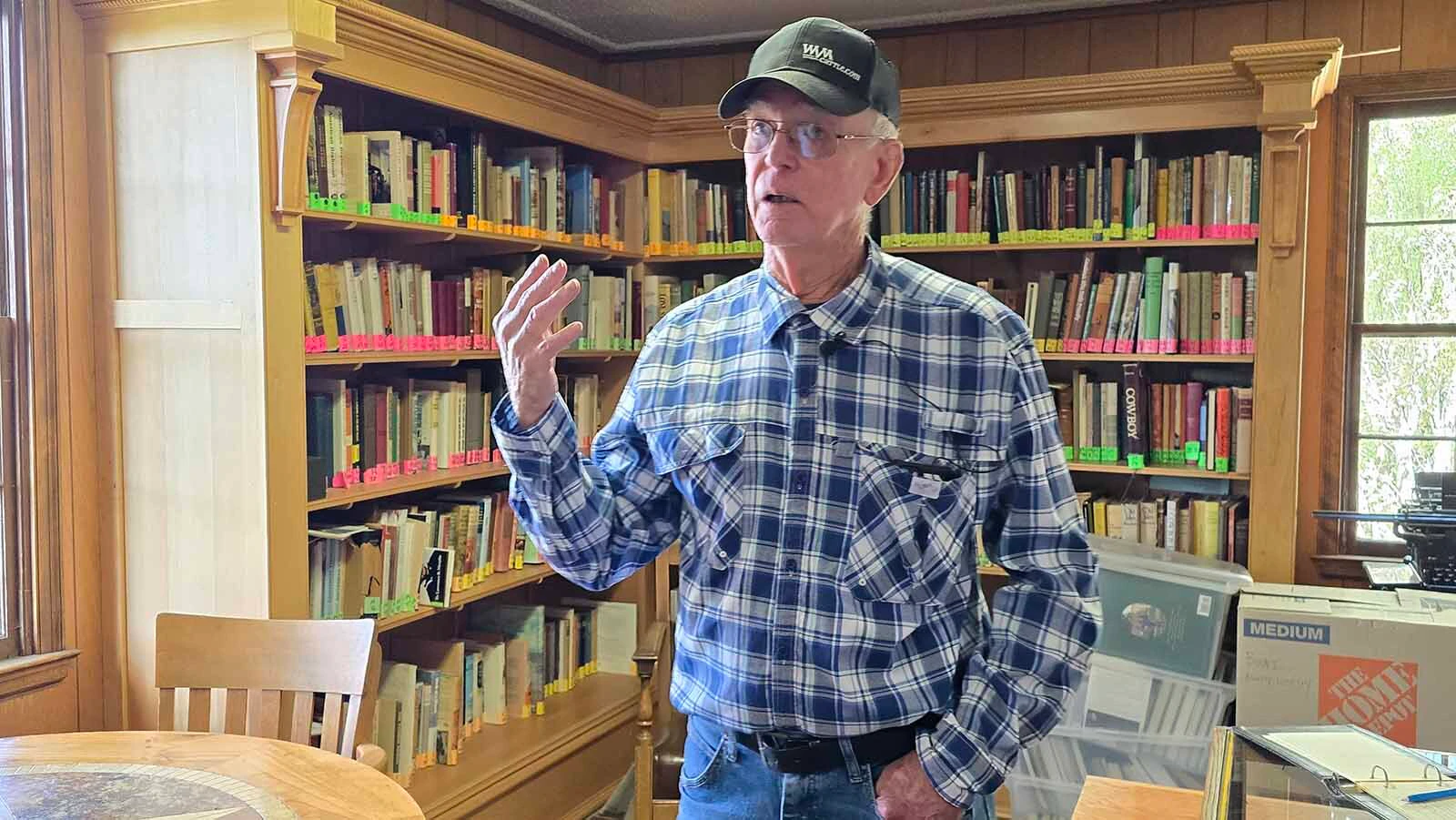
Phil Sharp talks about the history of the Wyoming Hereford Ranch. (Renee Jean, Cowboy State Daily) 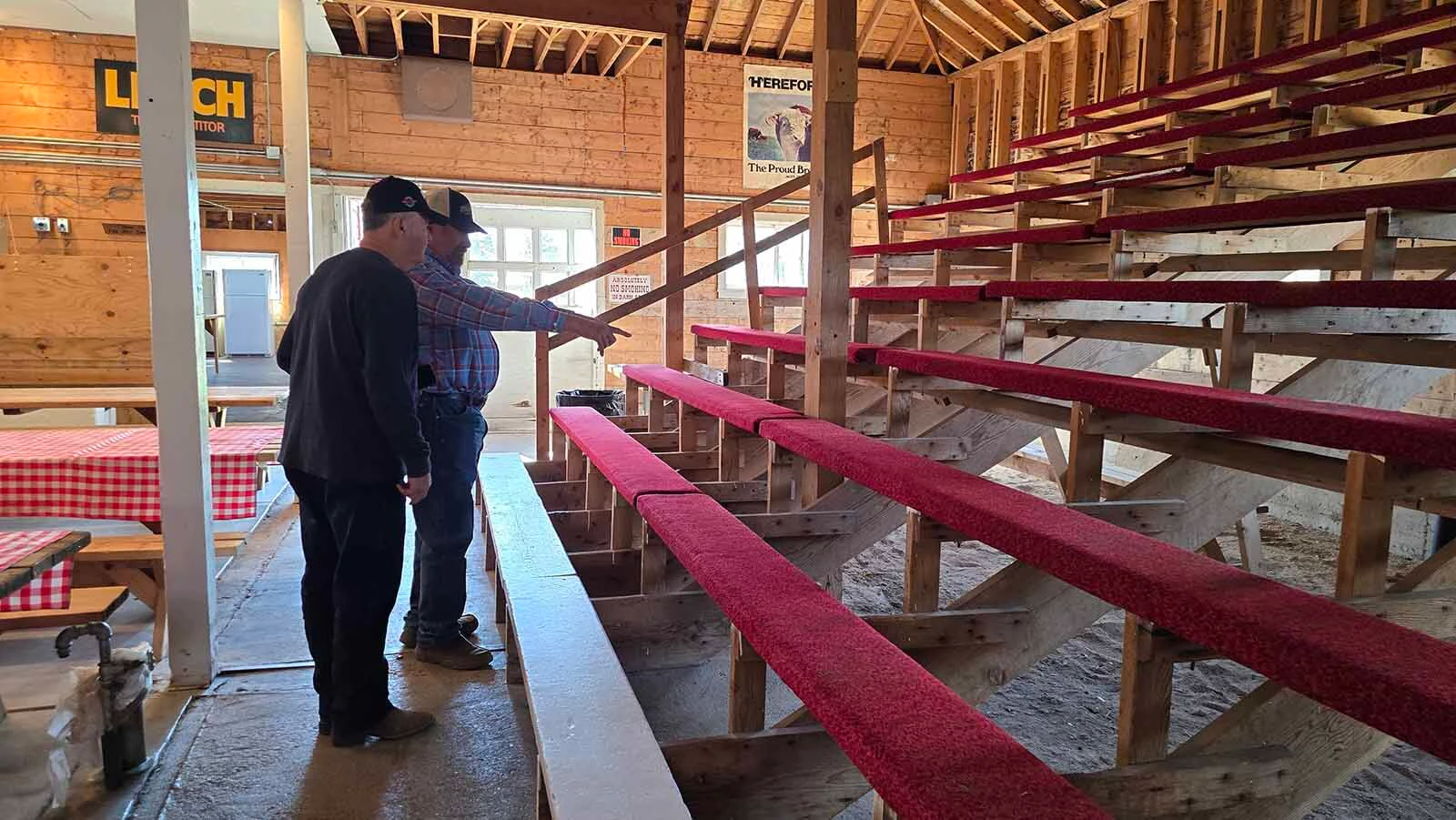
Gene Stillahn points to the spot where John Wayne used to sit when he came to the Wyoming Hereford Ranch sale barn not long after buying a ranch in Arizona. (Renee Jean, Cowboy State Daily) 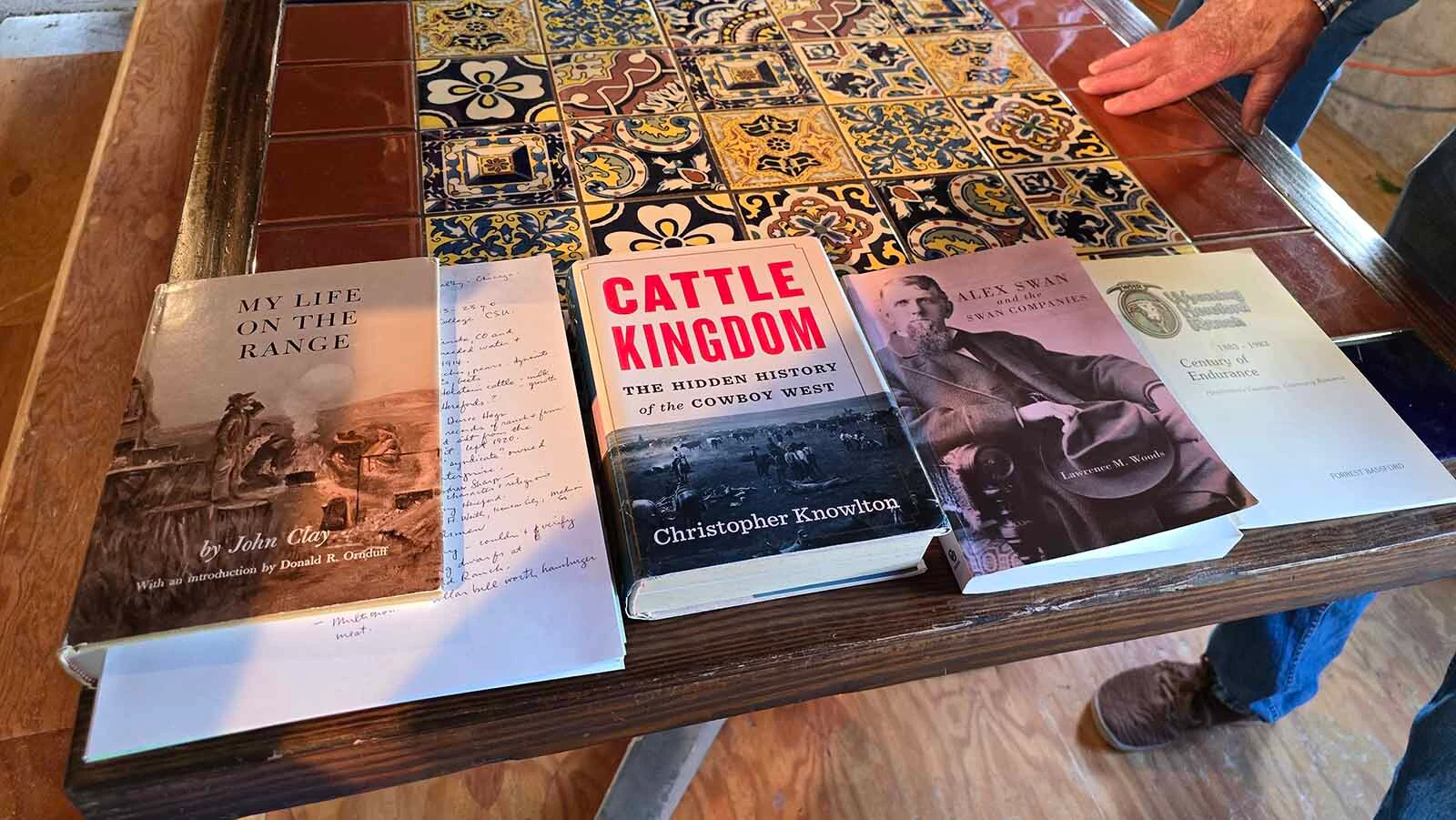
Books with history tied to Wyoming Hereford Ranch. (Renee Jean, Cowboy State Daily)
A Legacy Beyond The Silver Screen
Wyoming Hereford Ranch’s story reaches far beyond one movie star’s seat, though.
The Cheyenne-area ranch is the oldest continuously registered livestock operation in the United States.
Its legendary bulls, Prince Domino (acquired in 1921) and BLR CL1 Domino 5109 (nicknamed Lerch) are a through line for much of the nation’s Hereford cattle today, according to Forrest Bassford’s book “Wyoming Hereford Ranch, Century of Endurance 1883-1983.”
Prince Domino’s influence was so important and extensive that his descendants filled 79 of 100 pages in the American Hereford Association’s 1981 listing of sires, according to Bassford’s account.
Lerch, acquired in 1980 for $261,000, became another dominant sire at the operation.
Both of the bulls have prominent burial monuments at the ranch headquarters.
Wyoming Hereford Ranch was established along Crow Creek in 1883 by cattle baron Alexander Hamilton Swan.
Its first registered calf arrived on Jan. 2 of that year. She was named Lady Clara 2D No. 25638 in what was then the 18-month-old registry of the American Hereford Cattle Breeders Association.
That same year, Swan also formed the Swan Land and Cattle Co., a separate operation headquartered in present-day Chugwater.
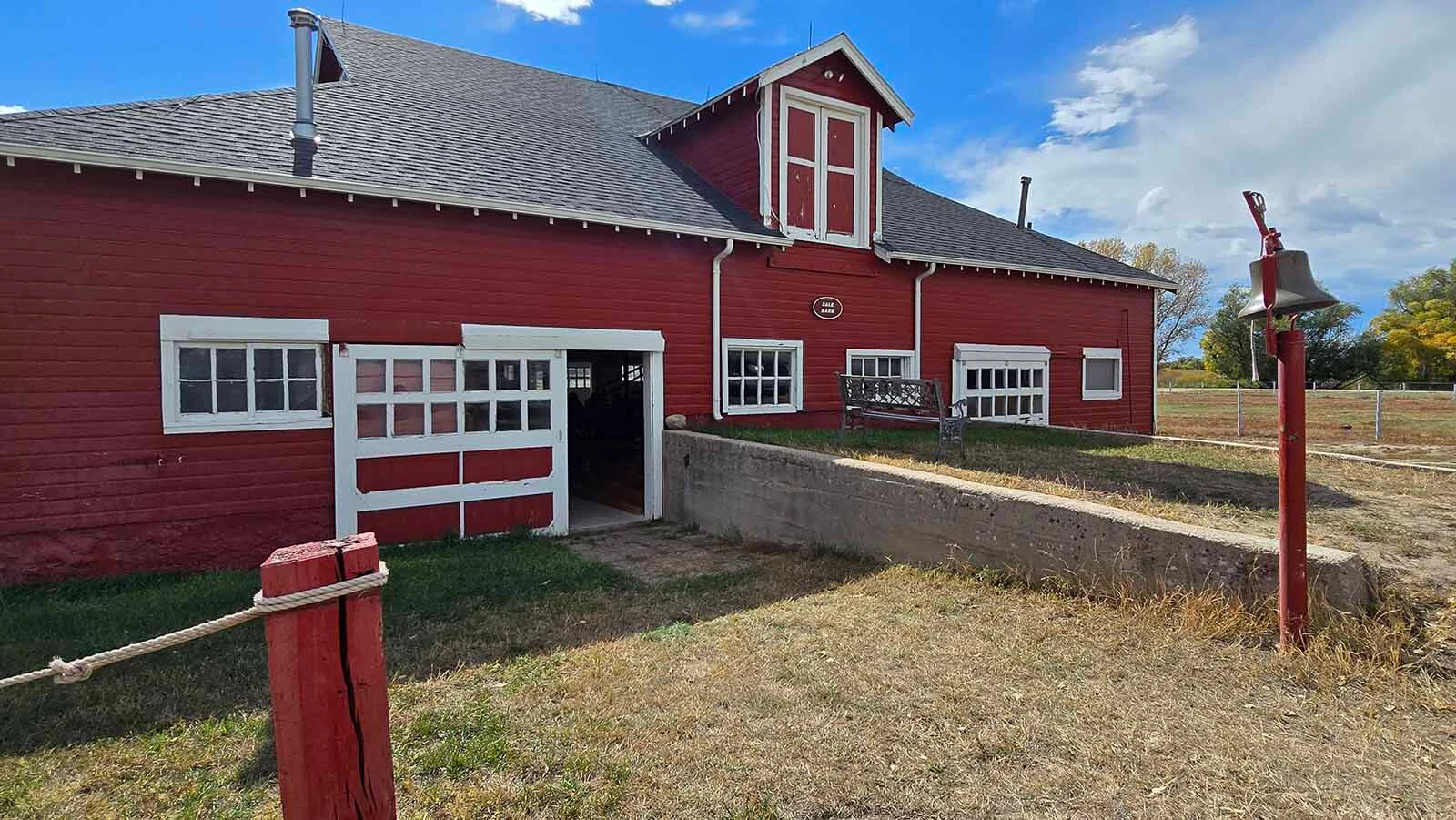
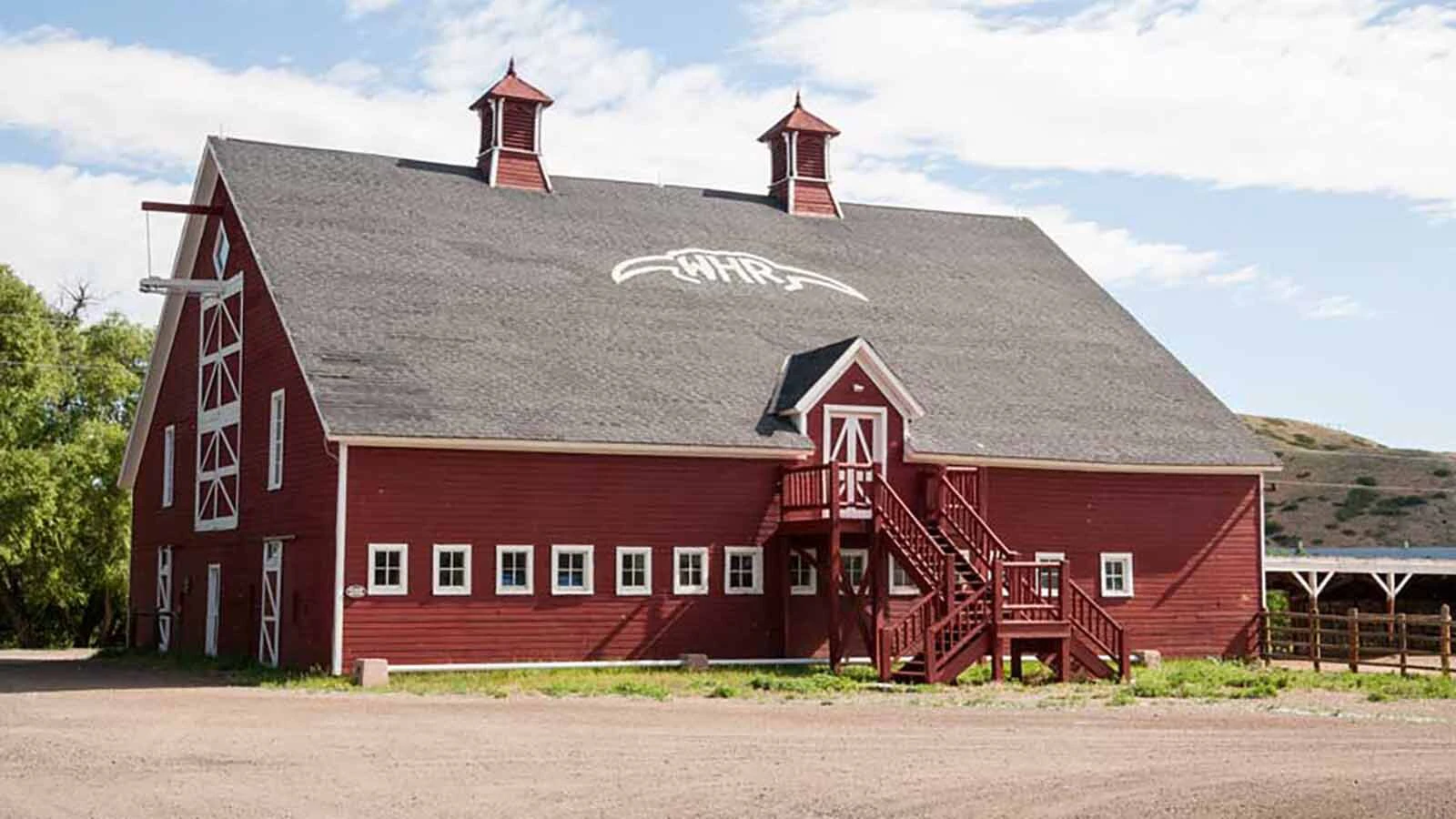
The Sale Barn at Wyoming Hereford Ranch, which is the nation’s oldest continuously registered livestock operation. (Renee Jean, Cowboy State Daily) 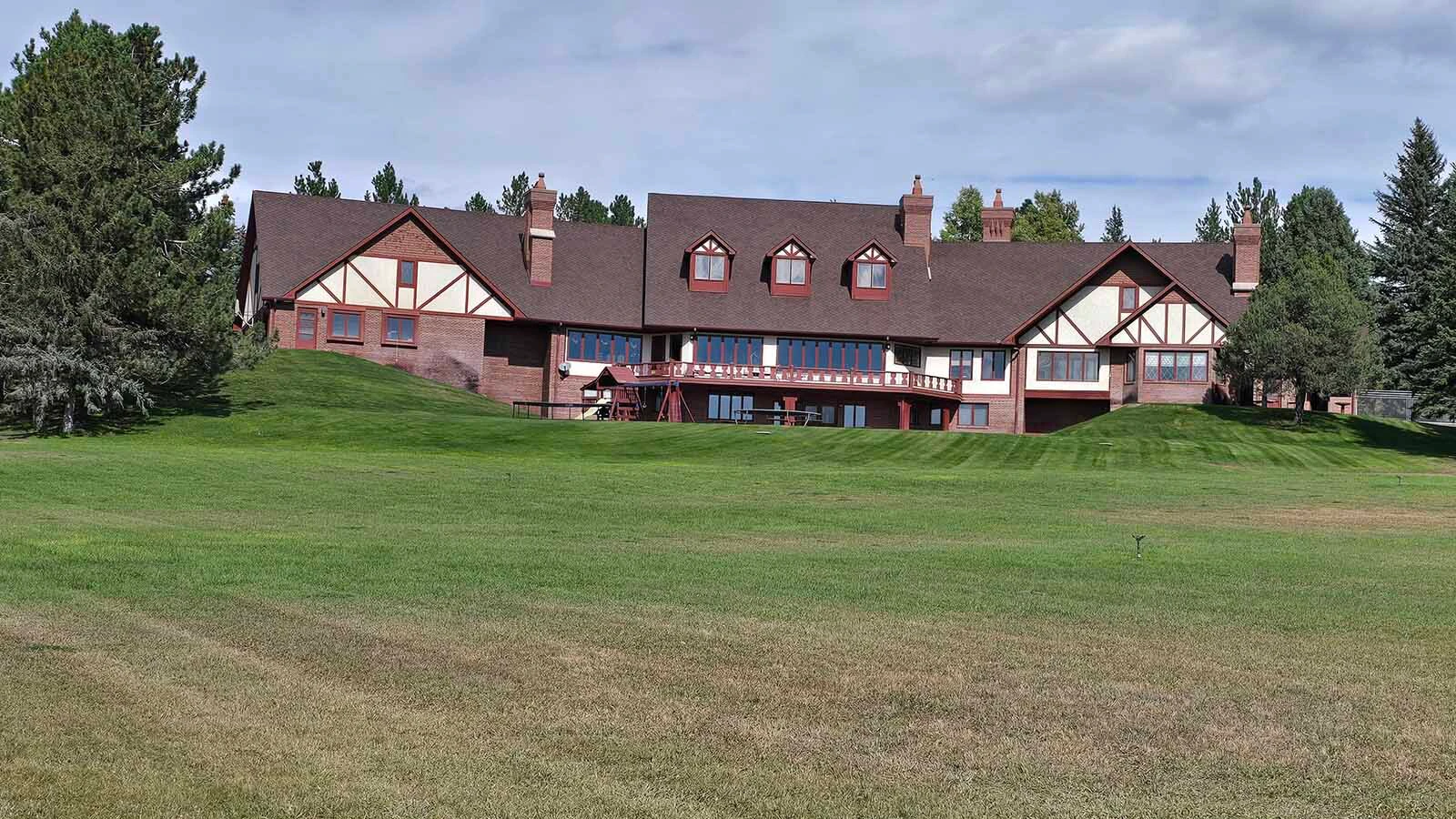
The main house at Wyoming Hereford Ranch, which is the nation’s oldest continuously registered livestock operation. (Renee Jean, Cowboy State Daily) 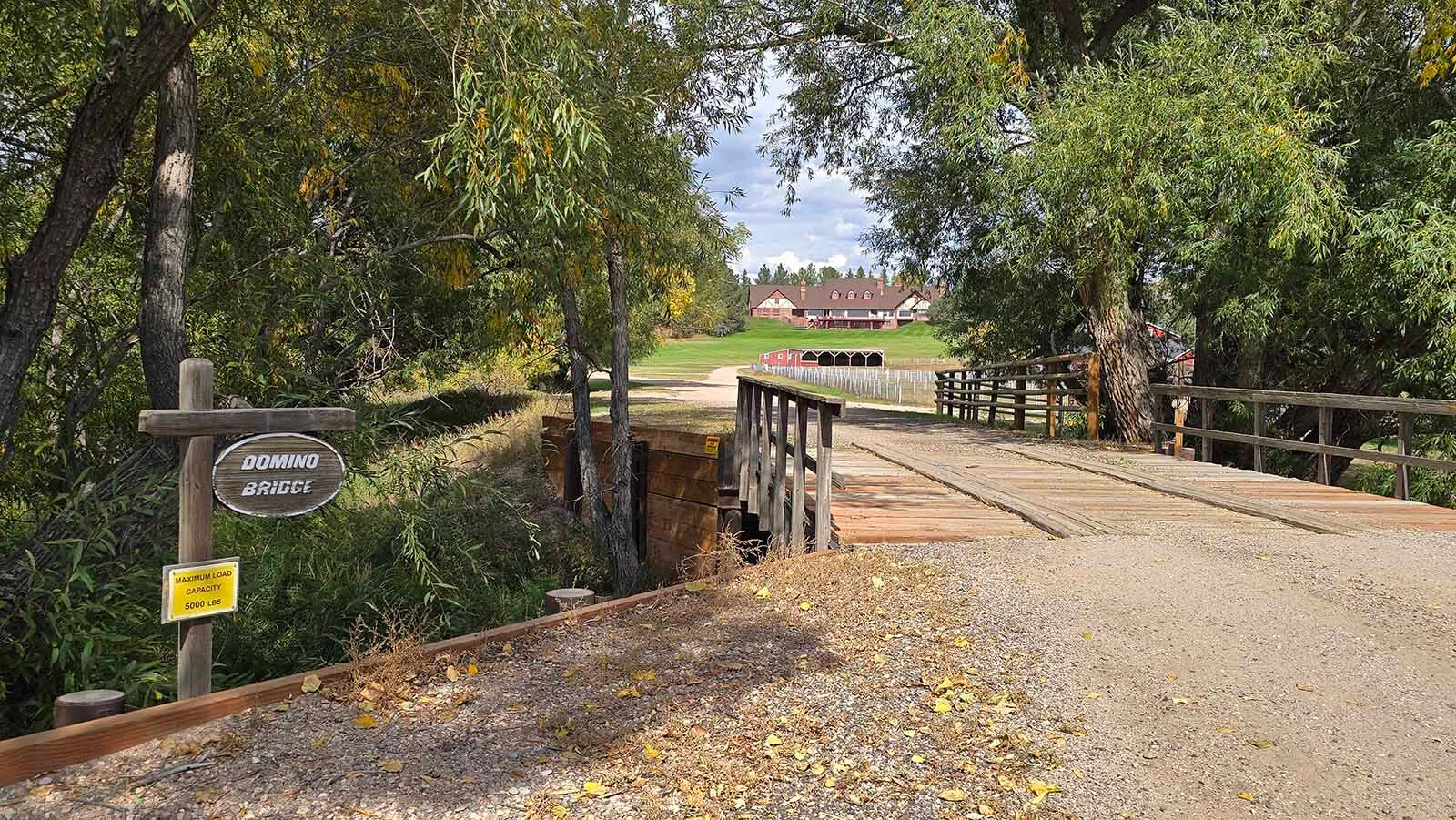
The Domino Bridge at Wyoming Hereford Ranch, which is the nation’s oldest continuously registered livestock operation. (Renee Jean, Cowboy State Daily) 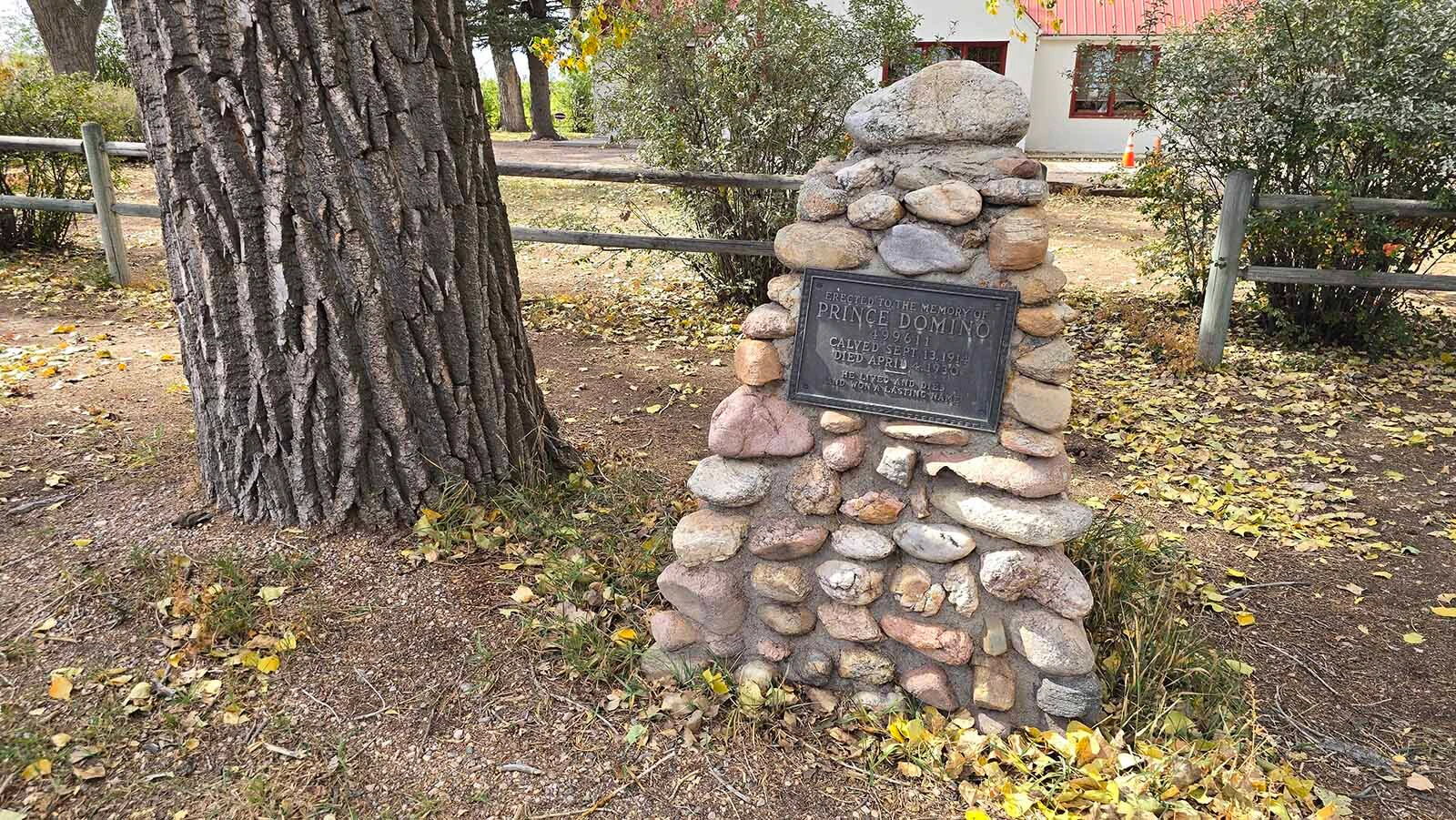
One of two monuments to important bulls who lived at the Wyoming Hereford Ranch, which is the nation’s oldest continuously registered livestock operation. (Renee Jean, Cowboy State Daily) 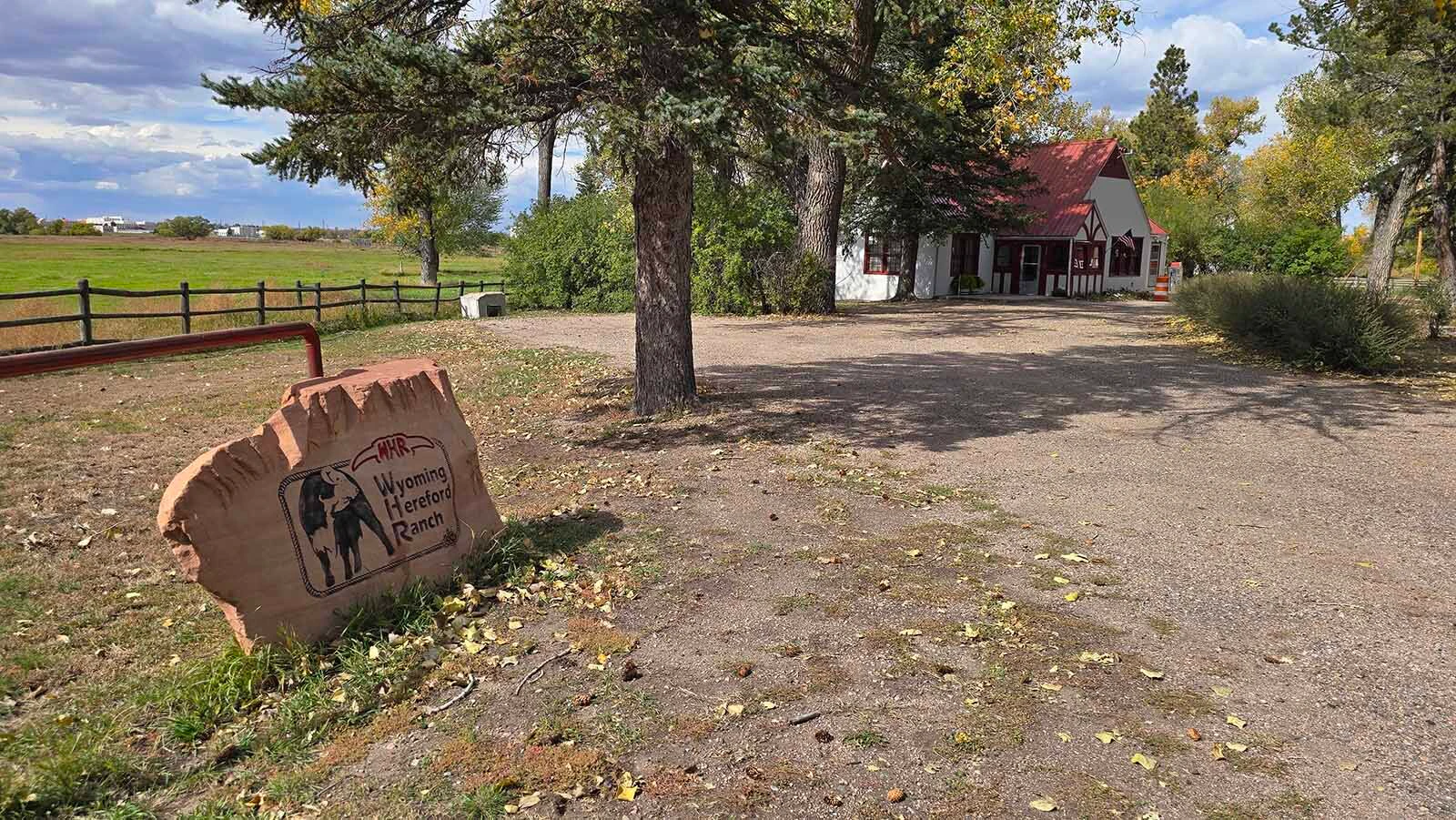
Wyoming Hereford Ranch is the nation’s oldest continuously registered livestock operation. (Renee Jean, Cowboy State Daily)
The Luxury Of The Cheyenne Club
The famously opulent Cheyenne Club had just been built by affluent cattle barons three years before the Wyoming Hereford Ranch was established.
The club was a three-story Victorian brick building featuring a Mansard roof, French windows and a wrap-around veranda, as well as two grand staircases and an elevator.
Its chef was European-trained and served food on gold-edged white china engraved with the “CC” monogram. Its luxuries rivaled those of elite social clubs in London and the Eastern United States.
Its members were among the most prominent in Wyoming and included Swan, whose herd would one day exceed 100,000 head of cattle running on roughly 1 million acres.
It was Swan’s British-born ranch manager George Morgan who convinced Swan to beef up his gaunt-looking cattle herds by bringing in Herefords from England.
Ultimately, Swan liked the idea well enough to establish a large registered Wyoming herd of Herefords in 1882 under the name Wyoming Hereford Cattle and Land Association.
That was followed in 1883 with 146 head of cattle from eight of the leading English herds, brought to Wyoming by ship and by rail.
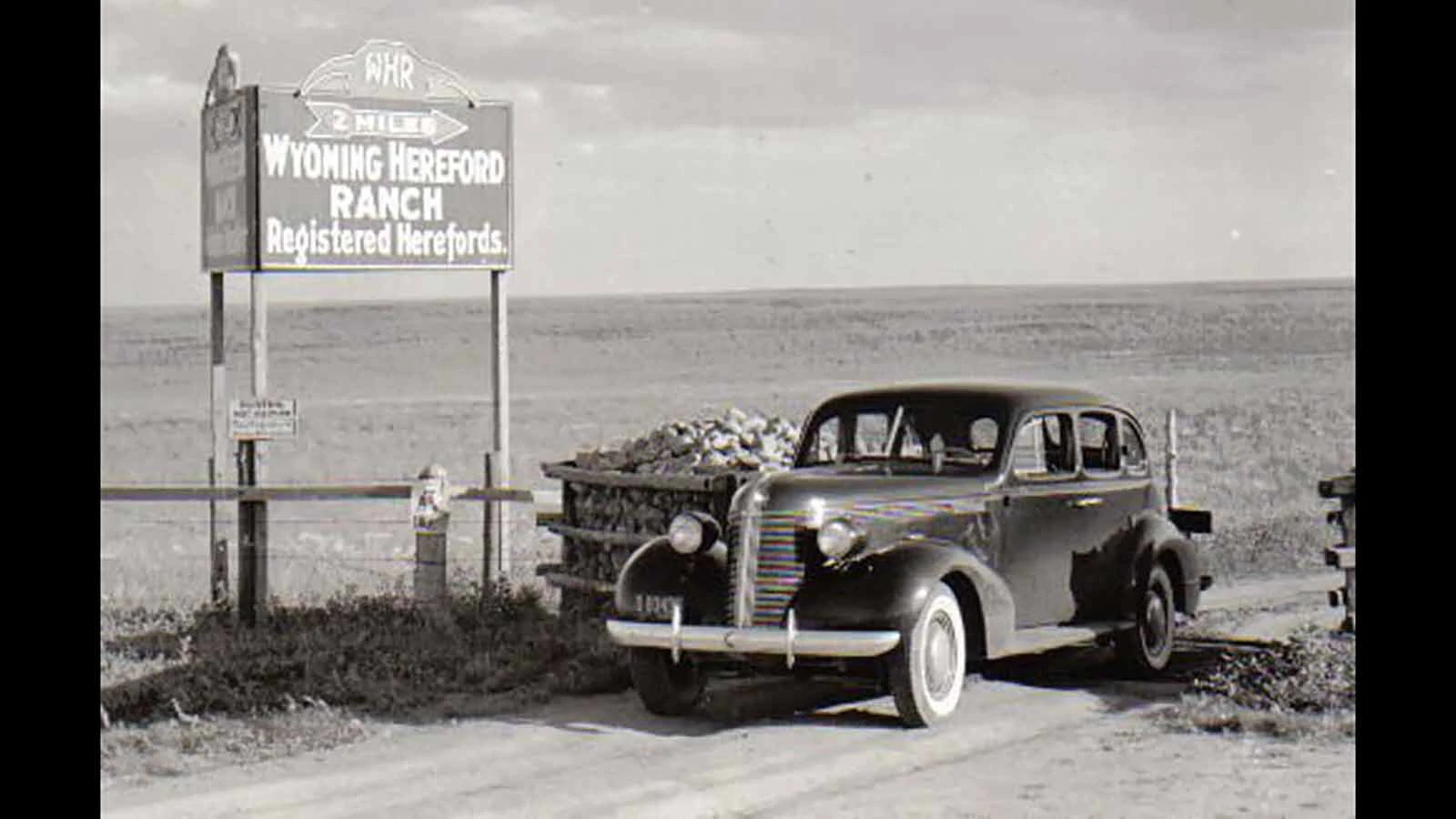
Wyoming Hereford Ranch is the nation’s oldest continuously registered livestock operation. (Wyoming Hereford Ranch) 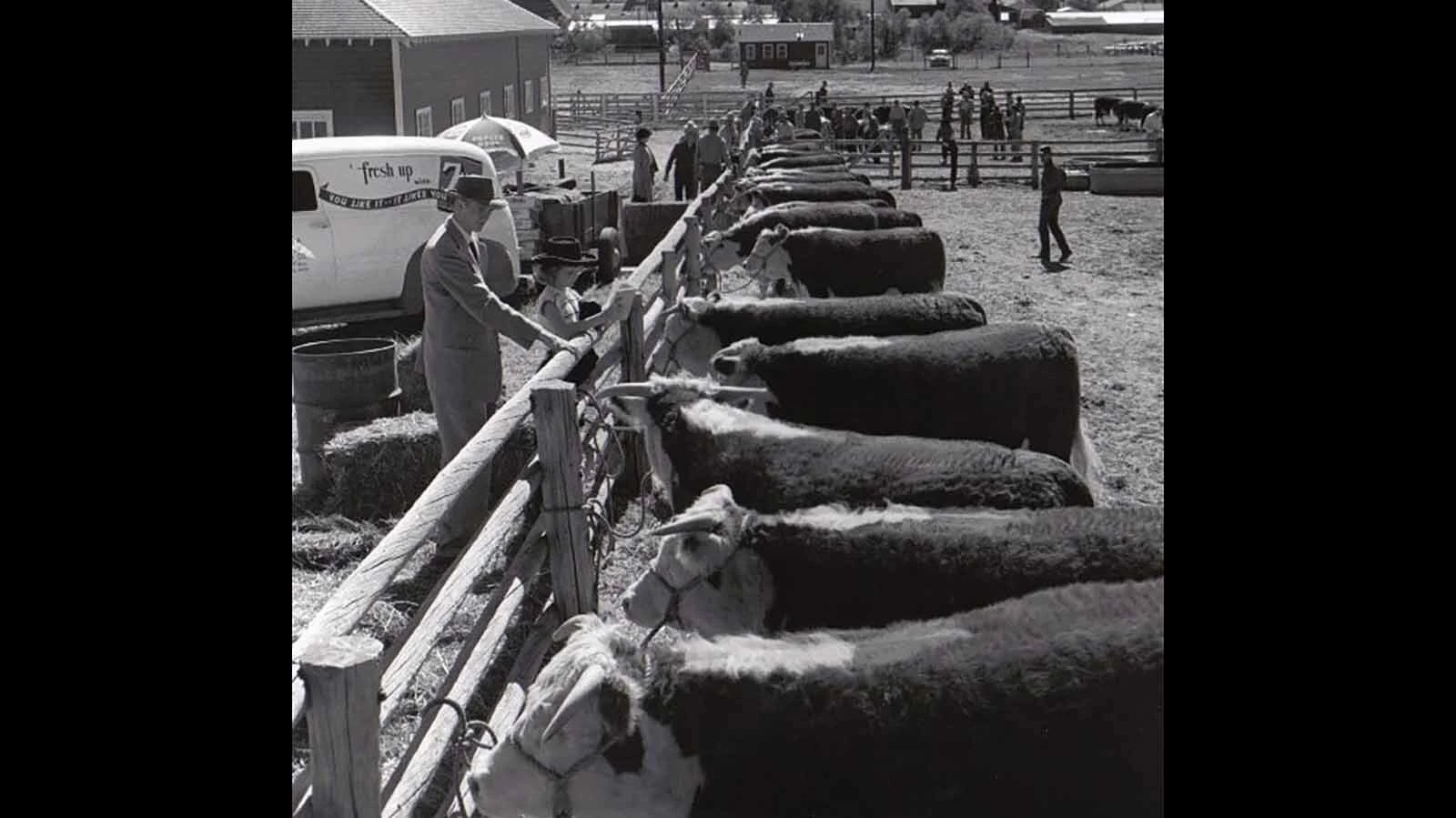
Wyoming Hereford Ranch is the nation’s oldest continuously registered livestock operation. (Wyoming Hereford Ranch) 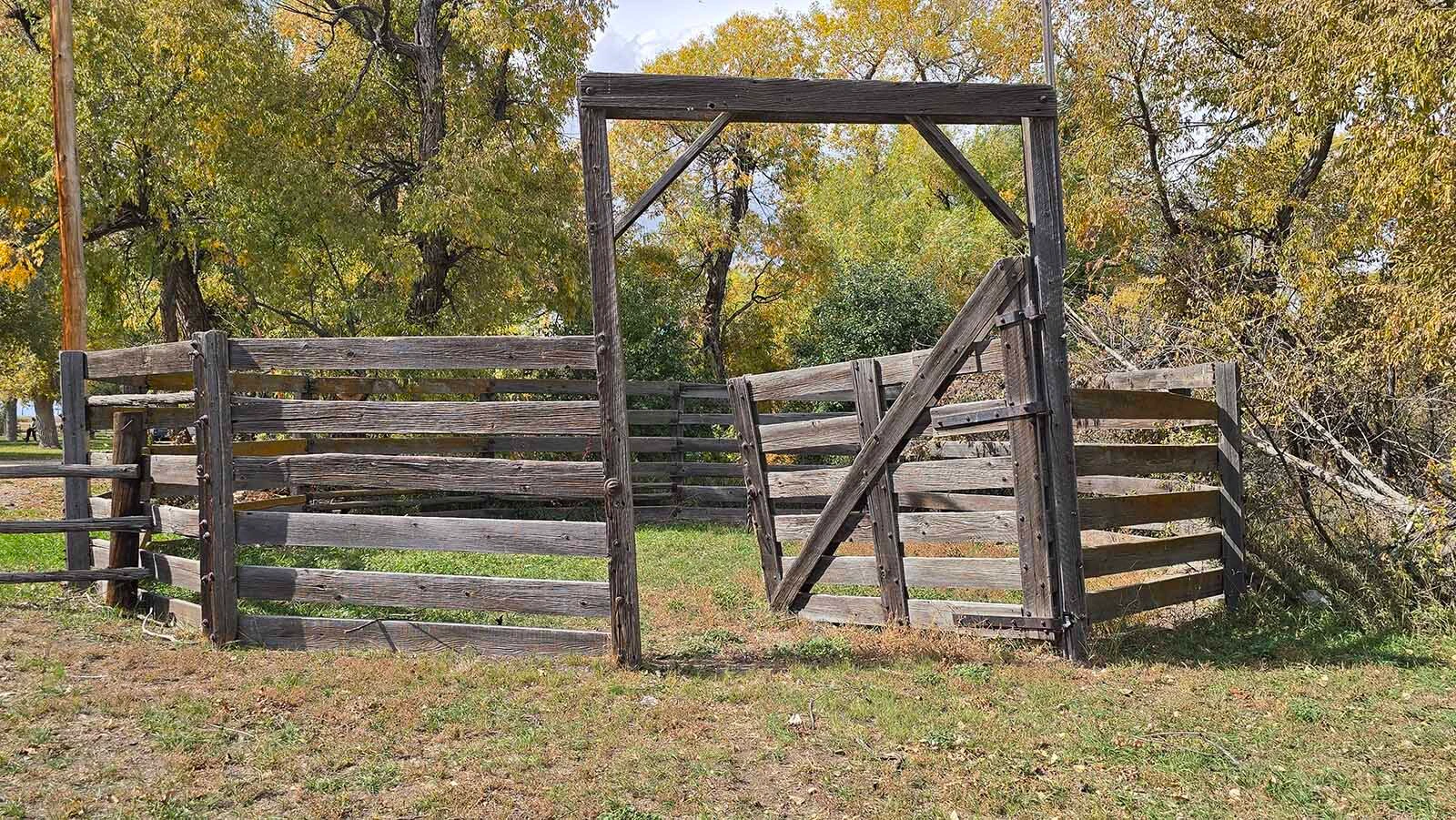
A horse corral at the Wyoming Hereford Ranch, which is the nation’s oldest continuously registered livestock operation. (Renee Jean, Cowboy State Daily) 
Wyoming Hereford Ranch is the nation’s oldest continuously registered livestock operation. (Renee Jean, Cowboy State Daily) 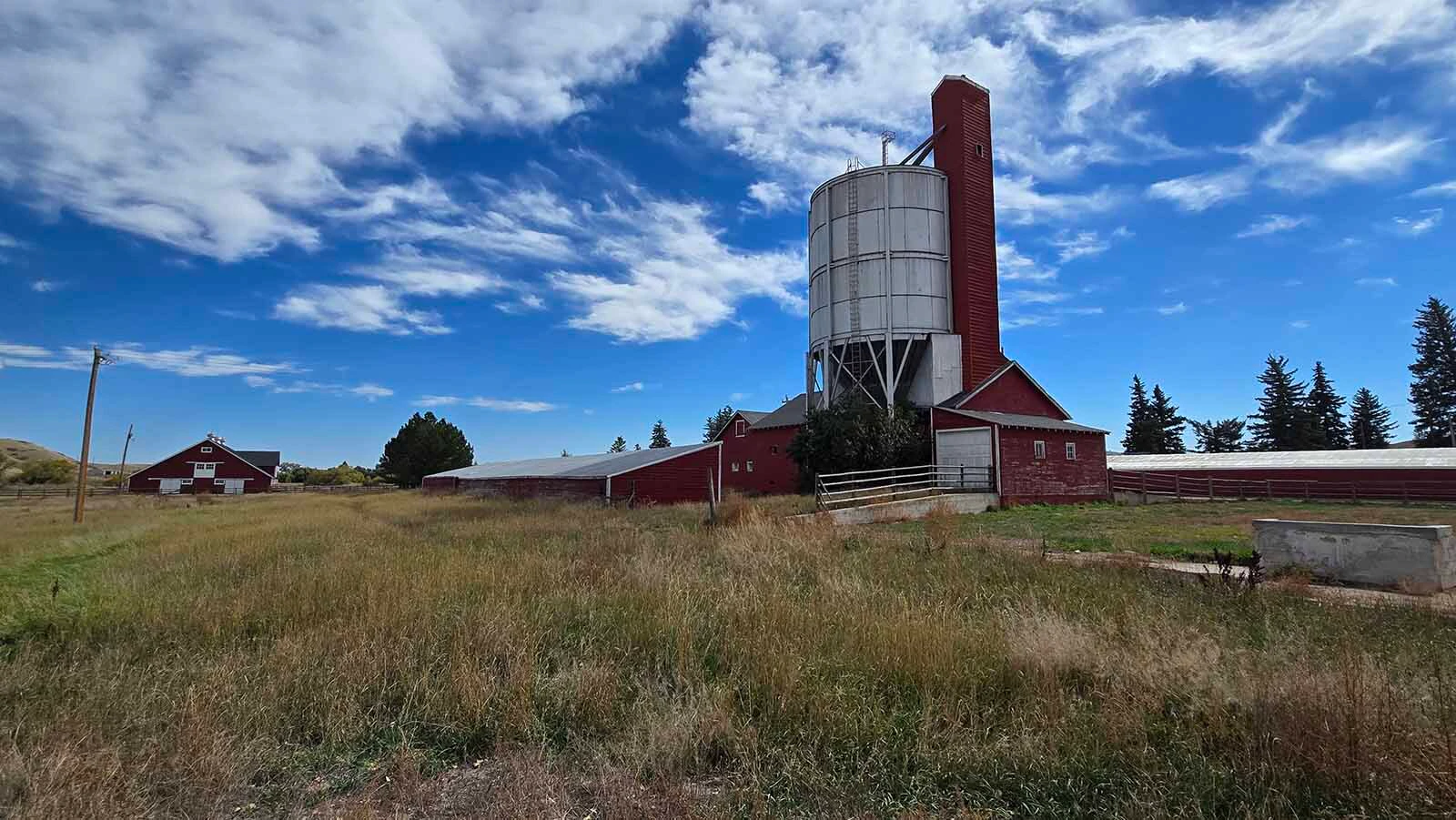
Wyoming Hereford Ranch is the nation’s oldest continuously registered livestock operation. (Renee Jean, Cowboy State Daily)
Paper Millions And The ‘Big Die-Up’
Swan’s dominance was to be short-lived.
The cracks in his operation were already starting to show in 1884, according to retired Cheyenne physician Dr. Phil Sharp, who has long made a hobby of researching area history.
“Swan reported 11,508 steers that he had, but was only able to gather 6,400 to sell to market,” Sharp said. “In 1885, profits were down.
"They had a 6% dividend for investors in Swan Land and Cattle, but many were promised 10% or better.”
Part of the problem was that Swan, like many other cattlemen of the day, wasn’t physically counting any of the cattle he owned.
They were bought and sold by “book count.”
“They would bring these herds up, but nobody’d go out on the open range and count these cattle,” Sharp said. “So there were a lot of them that had death losses and such.
"The only counts were the calves branded each year and the cattle sold.”
Prudent cattlemen estimated losses from storms, predators and other causes and deducted them from their book counts.
But not all the cattlemen were prudent, and even that method, honestly applied, still left lots of room for error.
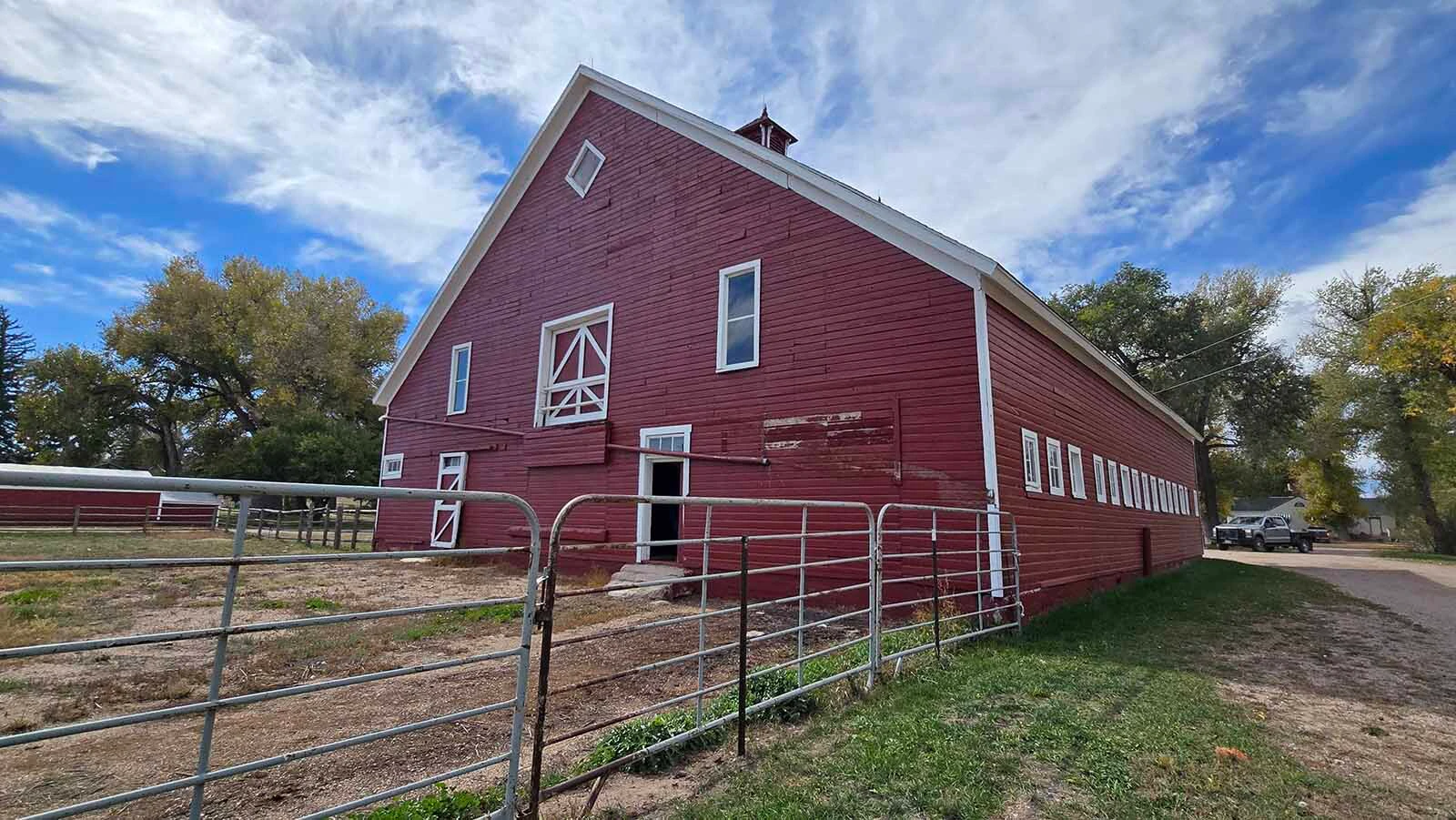
The horse barn at the historic Wyoming Hereford Ranch. (Renee Jean, Cowboy State Daily) 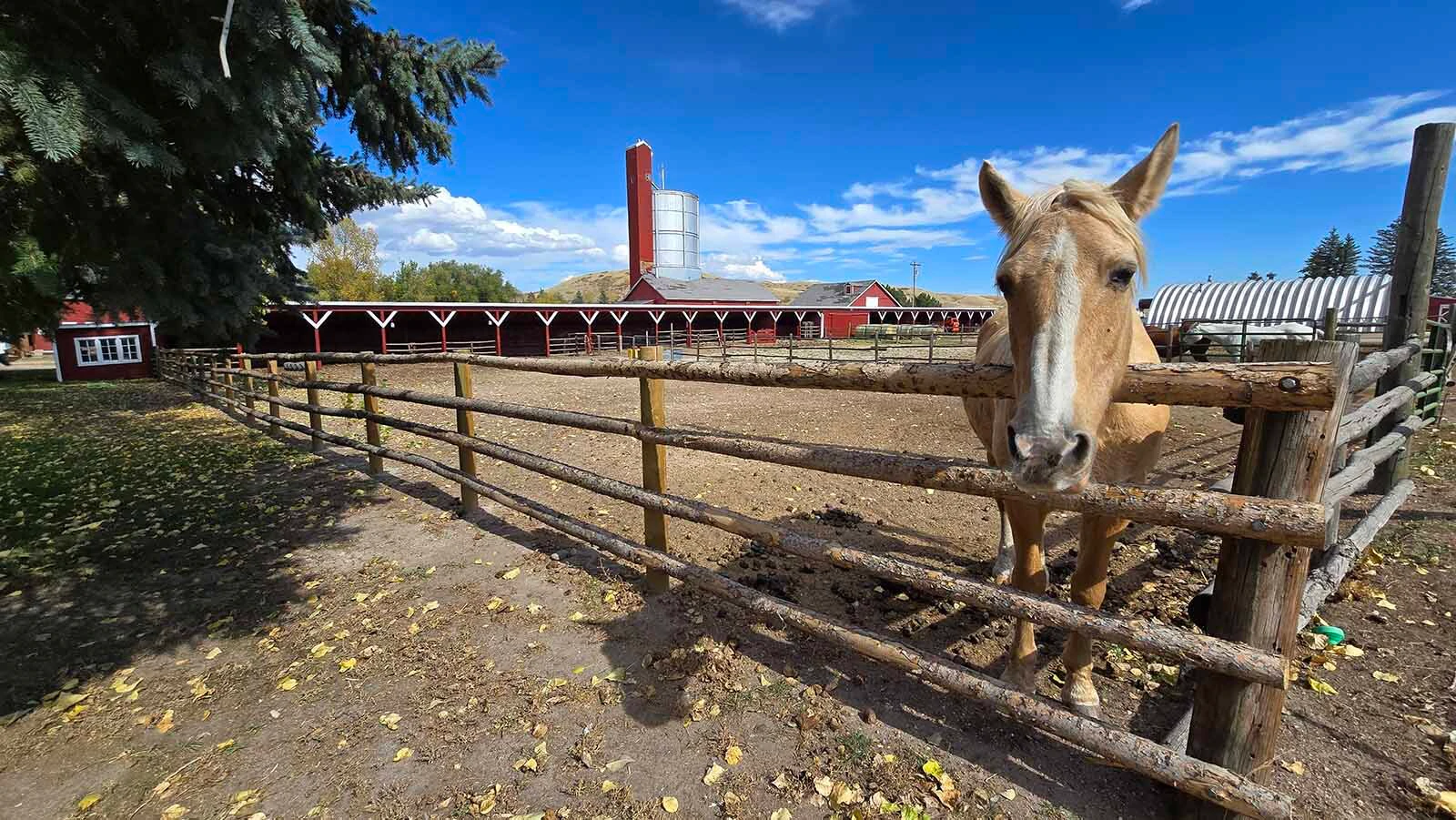
A horse at the Wyoming Hereford Ranch. (Renee Jean, Cowboy State Daily) 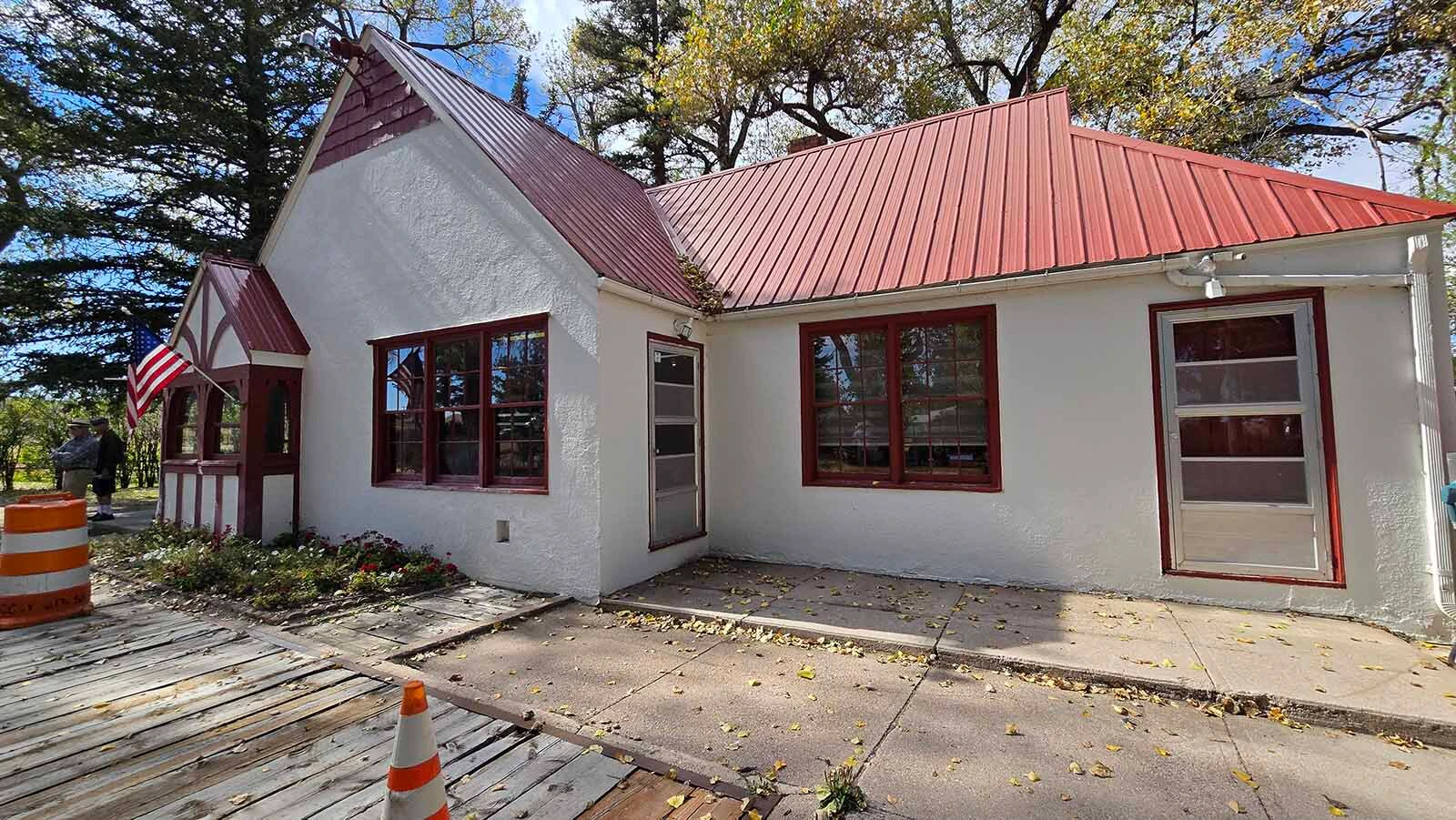
The headquarters at the Wyoming Hereford Ranch. (Renee Jean, Cowboy State Daily) 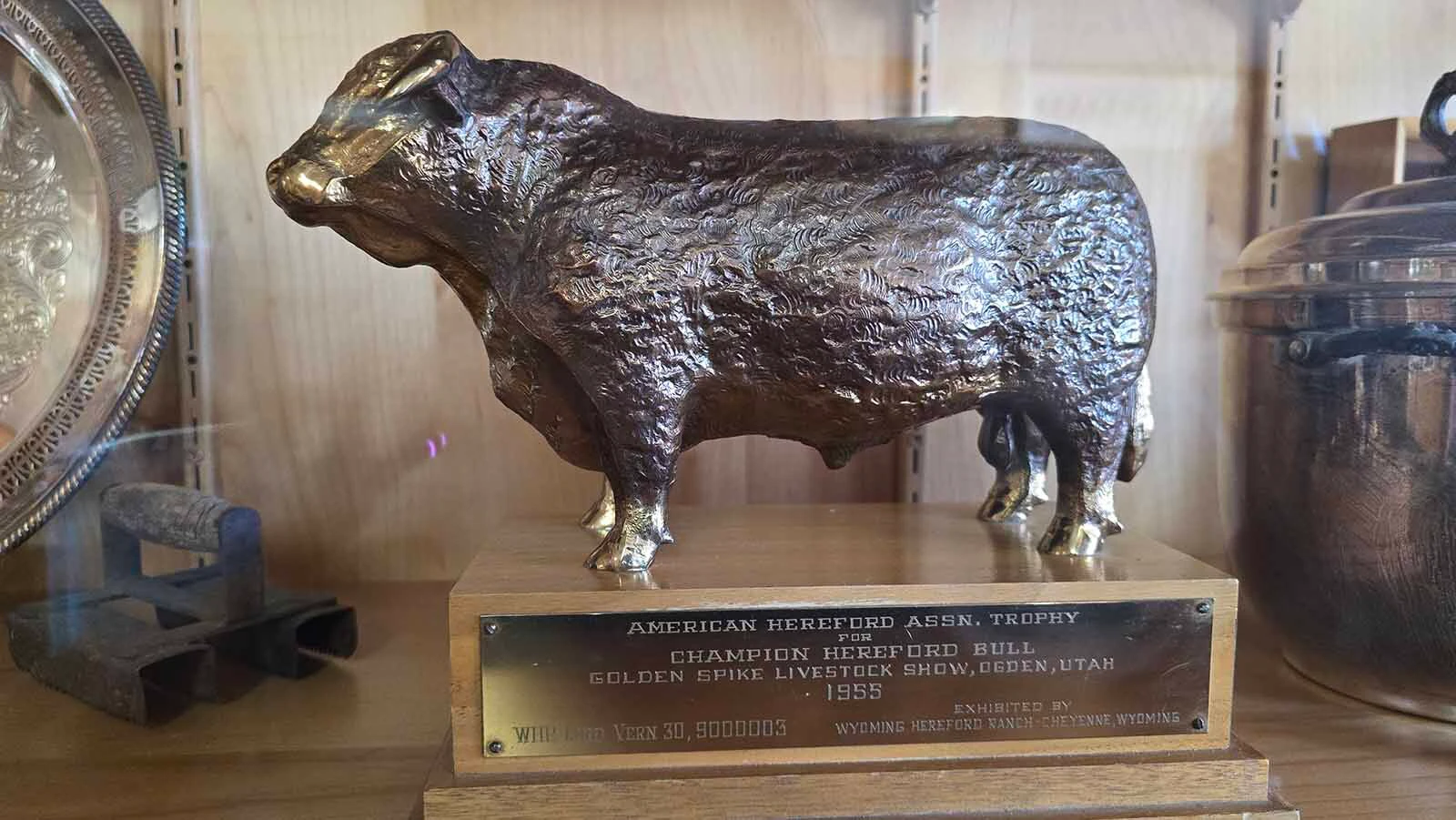
One of the many trophies won by livestock at the Wyoming Hereford Ranch. (Renee Jean, Cowboy State Daily) 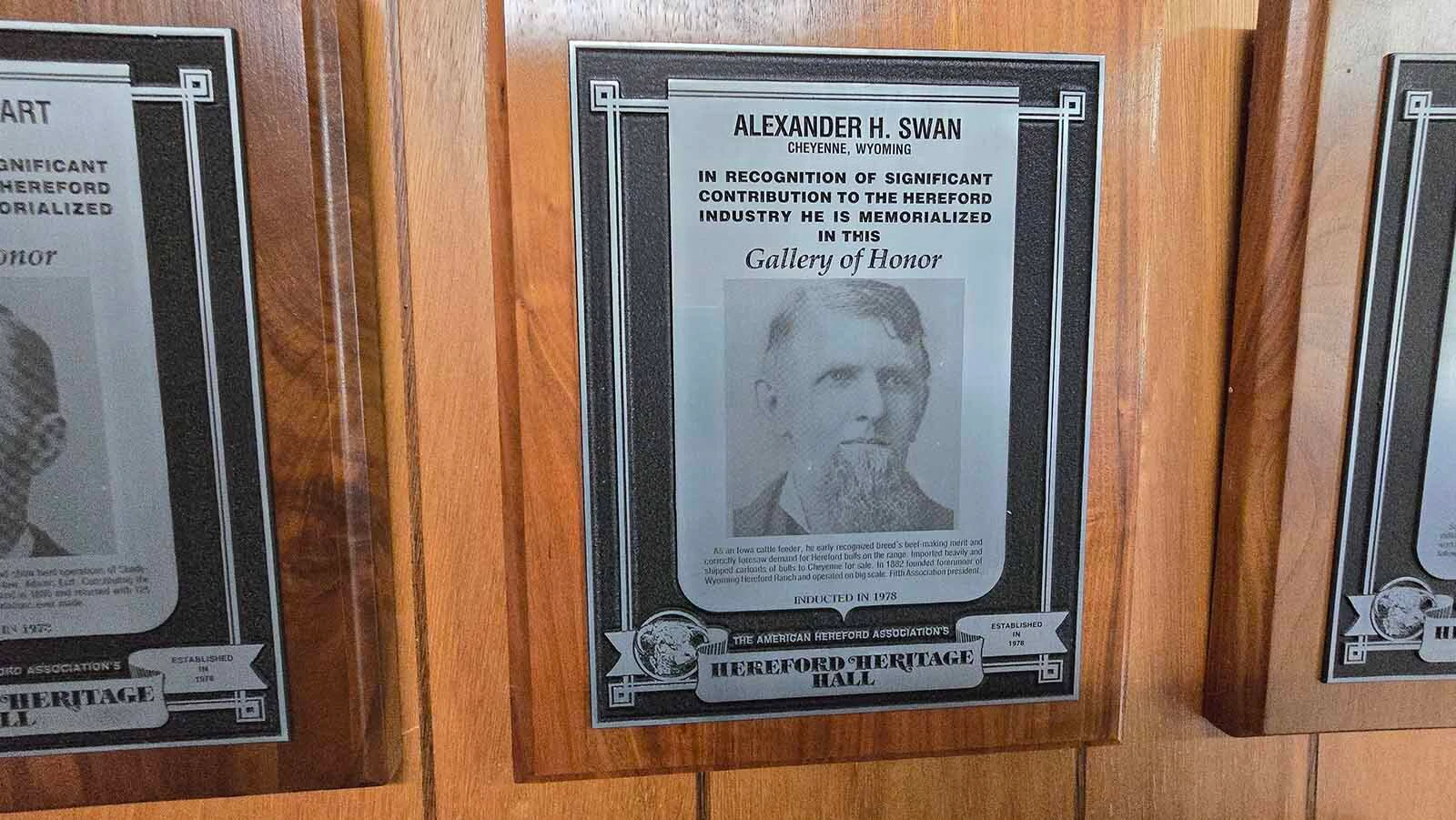
Alexander Swan's portrait hangs at the Wyoming Hereford Ranch's library. (Renee Jean, Cowboy State Daily)
‘Huge Herds From Texas'
Another problem was the growing population of cattle out on the open range. It was overwhelming what the prairie had to offer.
“They’d been bringing these huge herds from Texas, and everybody was crowding onto the same guarded ranges,” Sharp said. “There was a drought and then a blizzard in 1886-87 that wiped out a lot of the cattle.”
John Clay Jr., a Scottish investor, saw the approaching catastrophe during a summer 1886 inspection of Wyoming’s range.
He rode along the old Pony Express route, passing through Lost Soldier and Crook’s Gap, which is in the Red Desert near present-day Muddy Gap.
He later wrote, “There was scarce a spear of grass by the wayside. We rode many miles over the range. Cattle were thin. Green grass was an unknown quantity, except in some bog hole or where a stream had overflowed in the spring. It was a painful sort of trip.”
That following winter a blizzard came and wiped out many of the cattle that had been suffering through the summer.
“It was called the 'Big Die-Up,'” Sharp said. “Fifty to 80% of the northern cattle herd were lost — near a million head. Alex Swan fell out of favor. A lot of his corporations went under. And his book counts couldn’t be accounted for.”
Clay was ultimately brought in to manage the remains of the Swan Land and Cattle Co.
“He cut expenses drastically for eight years, and it survived from 1888 to 1896,” Sharp said. “He was the manager and was brought in again from 1912 to 1934. When he died, they were a large sheep operation.”
Wyoming Hereford Ranch was also mortally wounded by the big blizzard and went into receivership in December 1887.
Some of its prized herd were sold off for $30 a head at the Laramie County Fairgrounds, while 380 of the best animals were retained as $25,000 in collateral for the ranch.
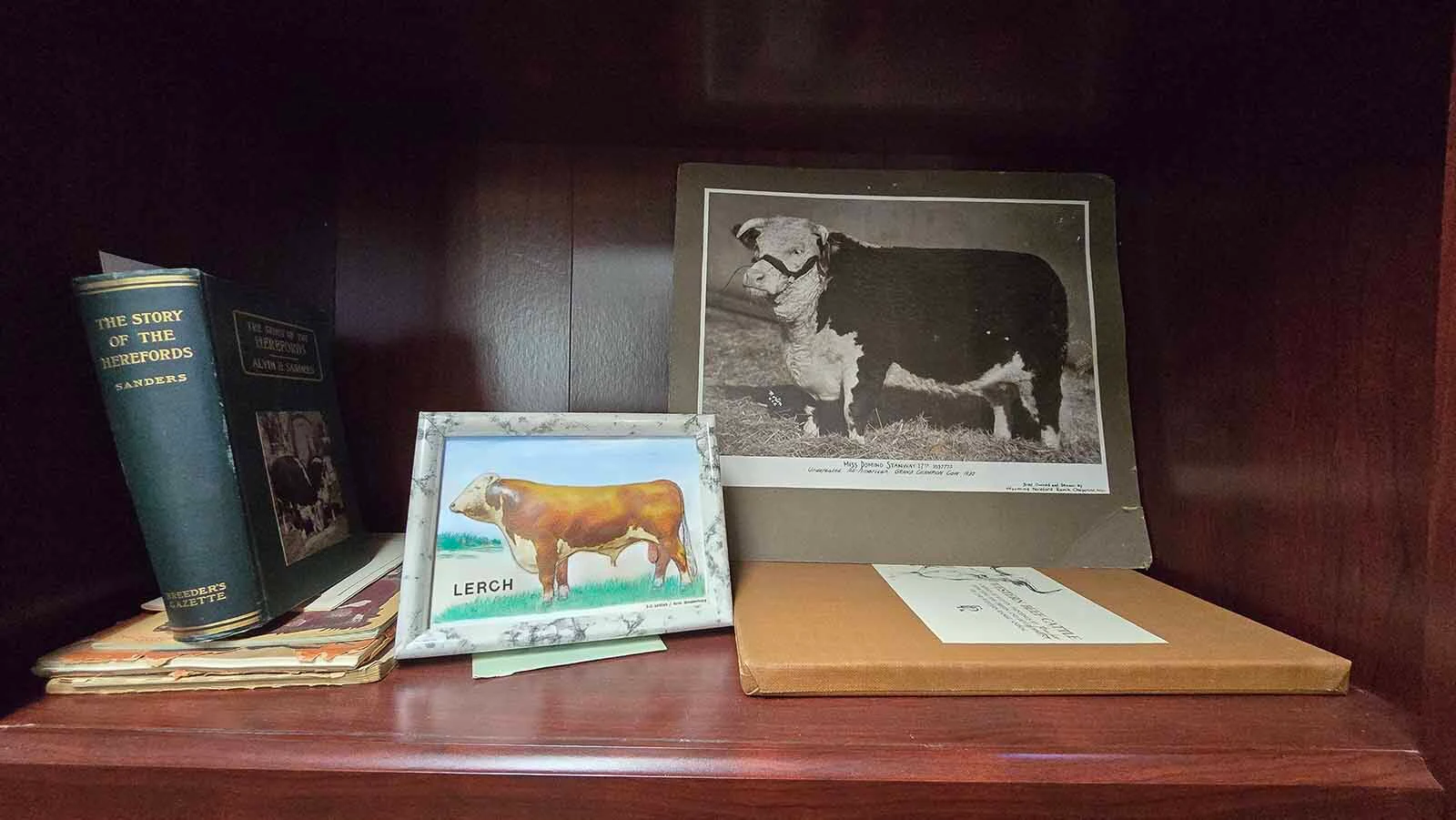
Some of the cattle that lived at Wyoming Hereford Ranch. (Renee Jean, Cowboy State Daily) 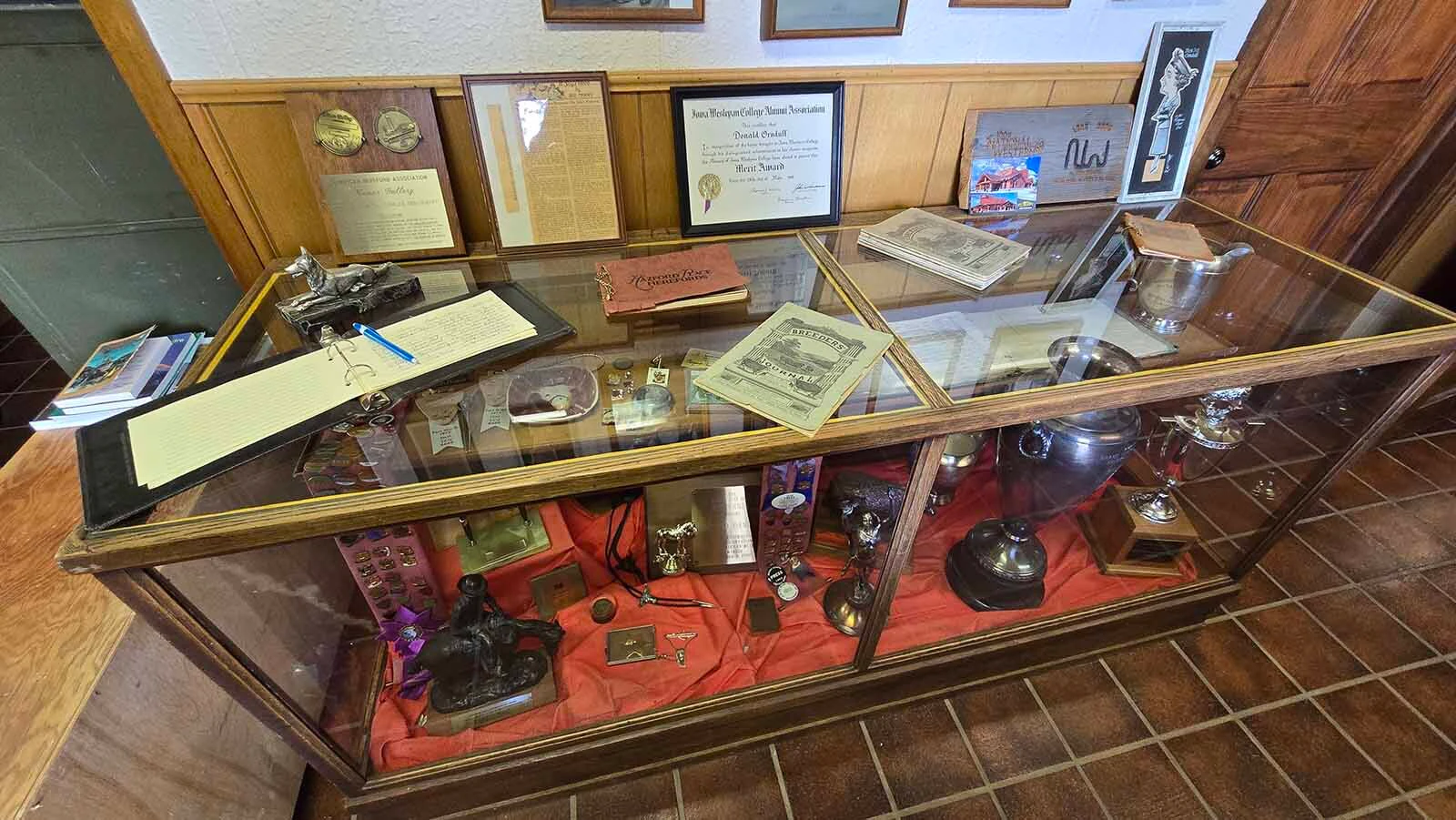
Artifacts inside the library at Wyoming Hereford Ranch. (Renee Jean, Cowboy State Daily) 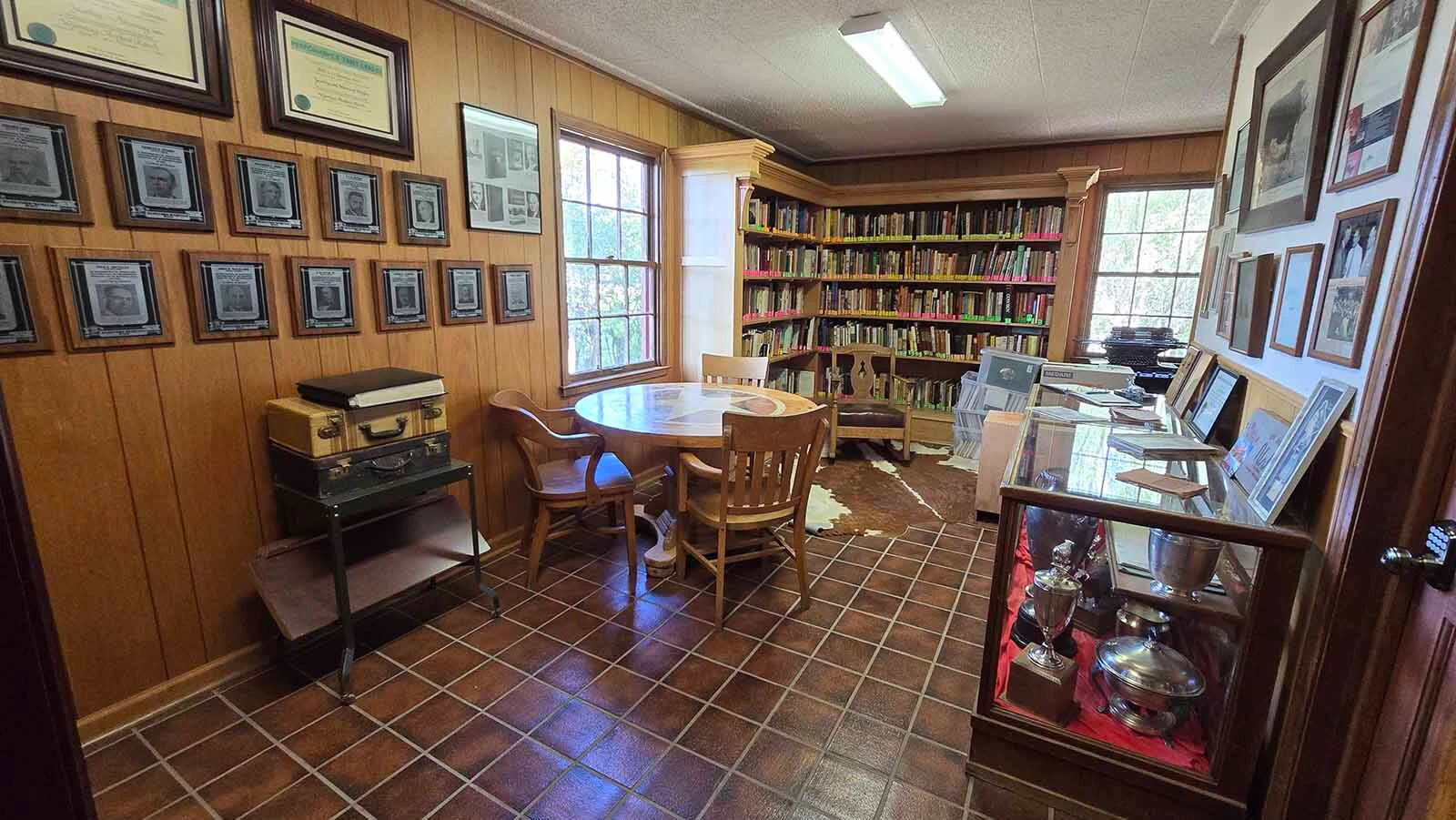
The library at Wyoming Hereford Ranch has many historic artifacts as well as books. (Renee Jean, Cowboy State Daily) 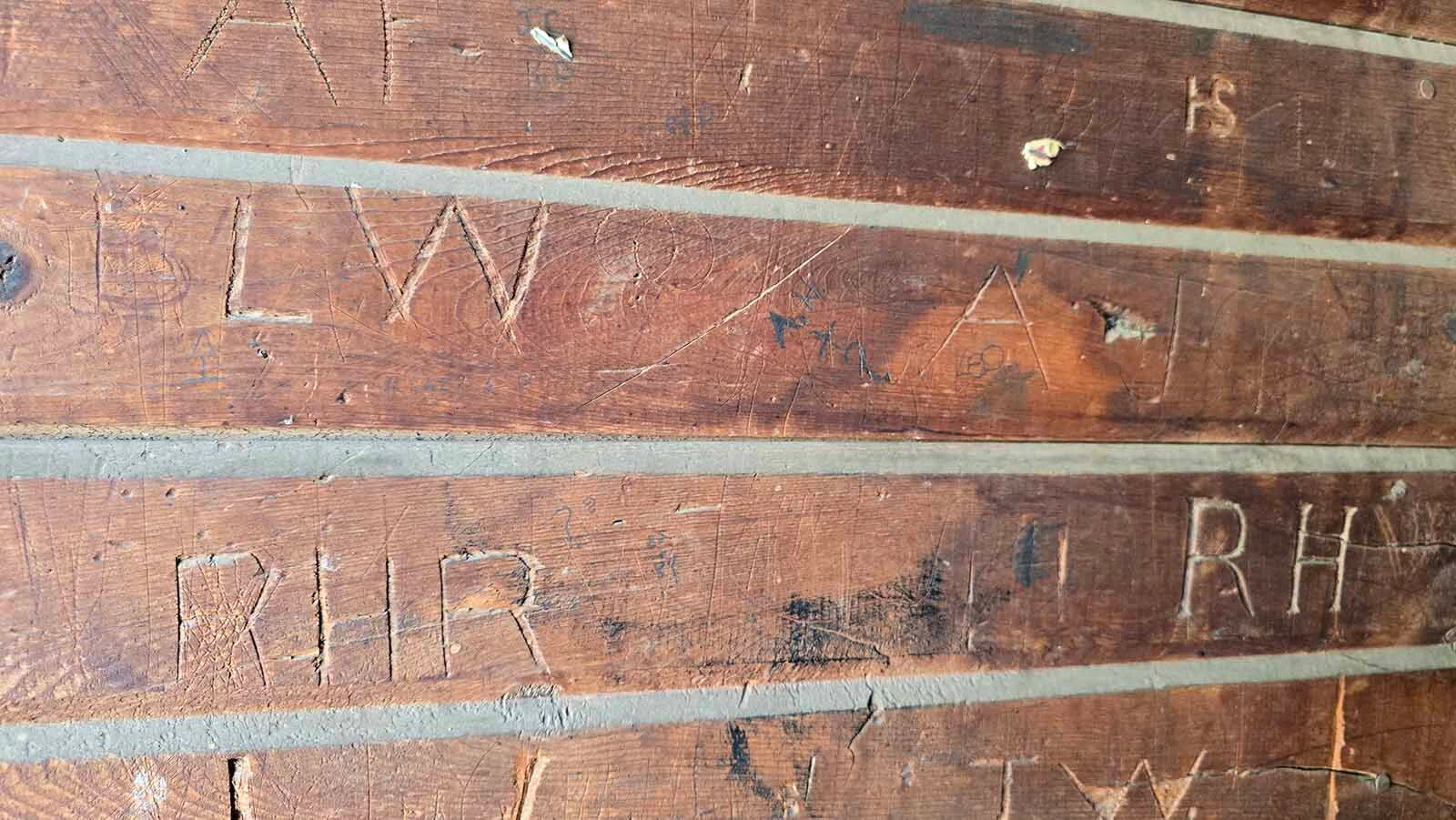
Initials carved into the walls at Wyoming Hereford Ranch. (Renee Jean, Cowboy State Daily) 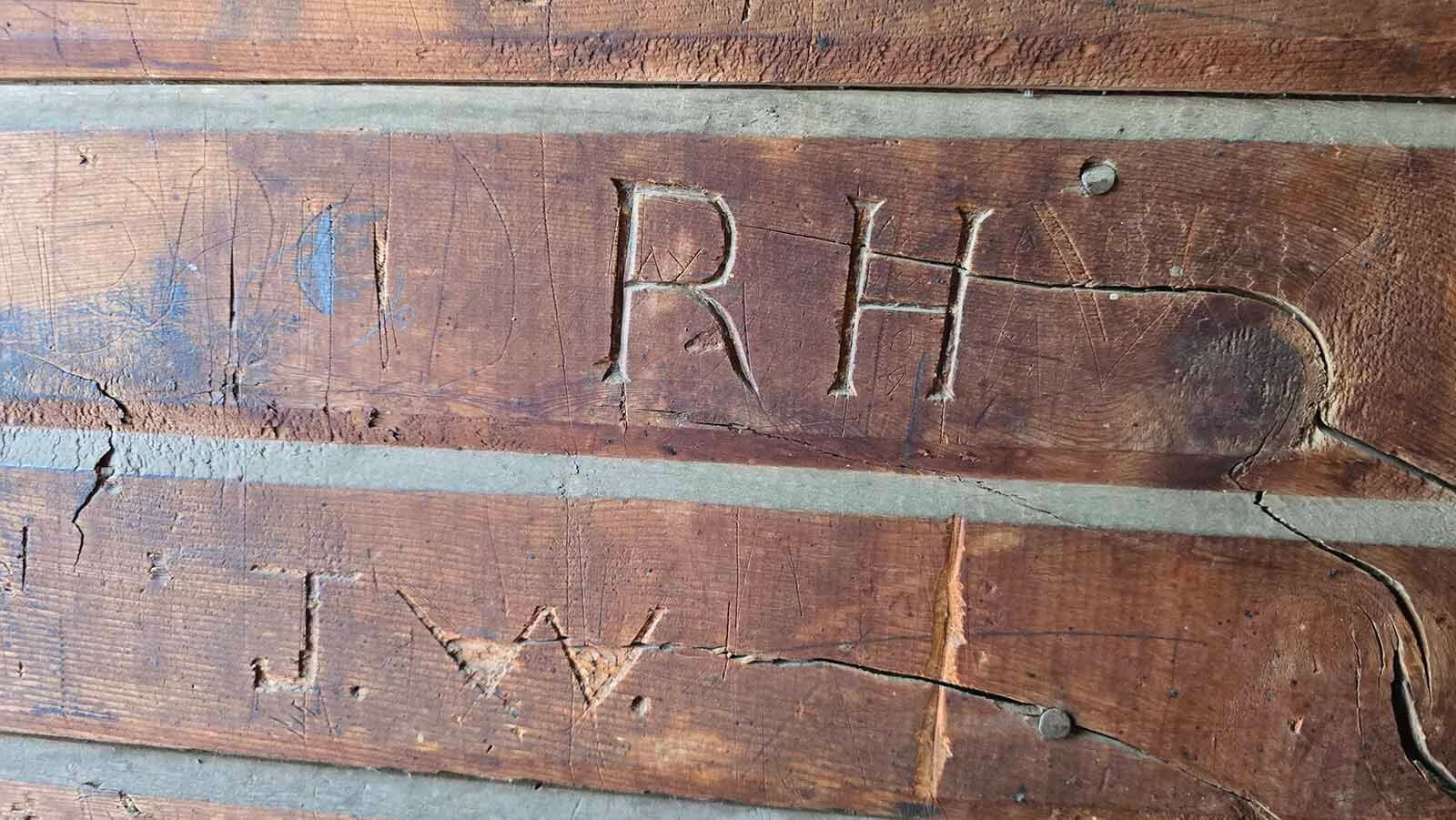
Initials carved into the walls at Wyoming Hereford Ranch. (Renee Jean, Cowboy State Daily)
Dwarfism Emerges
In 1890, Henry Altman and Dan McAllen bought the ranch and would eventually bring on a huge problem for the ranch, a bull named St. Louis Lad.
It was this bull who introduced the dreaded dwarfism gene to the storied ranch, which would plague the operation throughout the 1950s, long after Altman and McAllen had sold out.
Letters from the early 1960s assured buyers that all the cattle in the ranch’s sale have clean pedigrees by virtue of exhaustive progeny testing.
But a great deal of trust had been lost by the time Stillahn and his parents arrived, and the ranch was in decline.
Stillahn’s dad was the marketing manager, and it was his job to help the ranch make a successful comeback.
“The dwarfism was a big deal,” Stillahn said. “It decimated a lot of cow herds and this was one of them. They did maintain and got rid of those cows later on, but the trust was gone. It took a long time to get that back.”
Stillahn credits manager Ted Thomas with helping restore the ranch’s reputation by bringing in popular genetics.
“They went on the show circuit with some of the cattle and did some very good winning,” Stillahn added. “I was part of that.”
The ranch continued to lean into progeny testing and trusted, dominant bloodlines like those descended from Prince Domino to reclaim its throne as a premier destination for buying top-quality, purebred Herefords.
When John Wayne sat in his favorite spot in the sale barn, he wasn’t looking at a broken operation. The ranch was making a comeback.
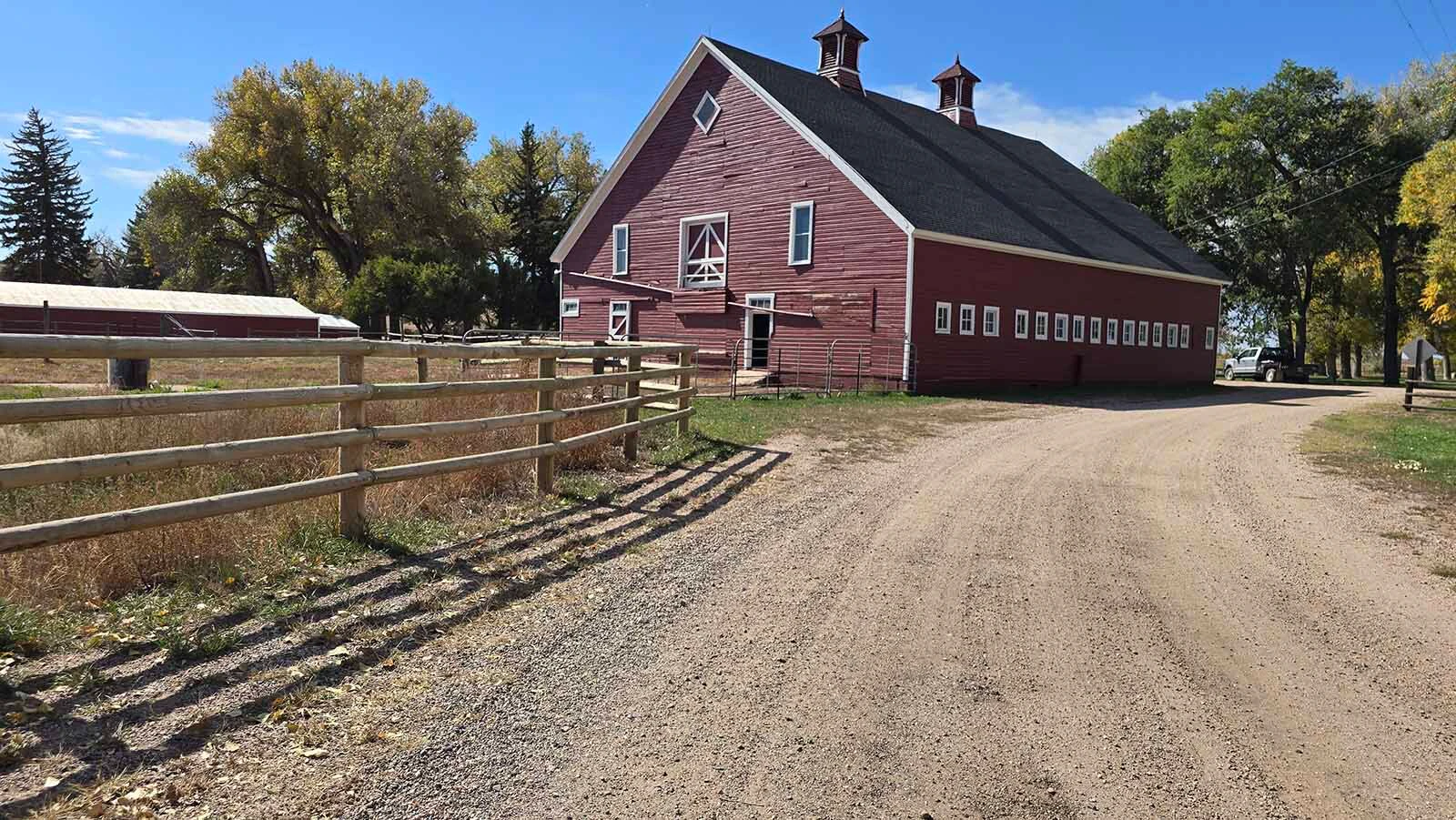
The horse barn at the historic Wyoming Hereford Ranch. (Renee Jean, Cowboy State Daily) 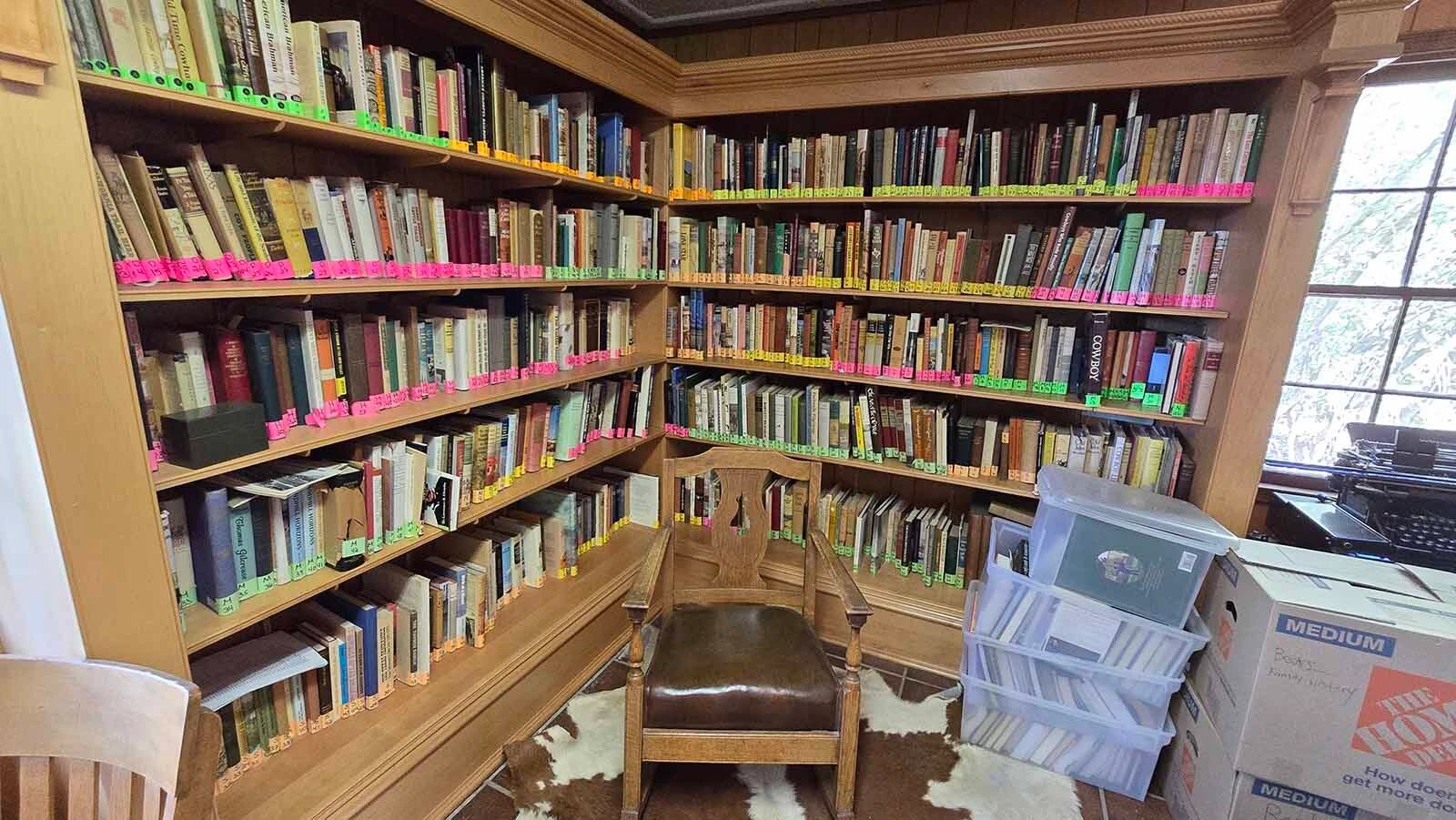
Books in the library at the Wyoming Hereford Ranch. (Renee Jean, Cowboy State Daily) 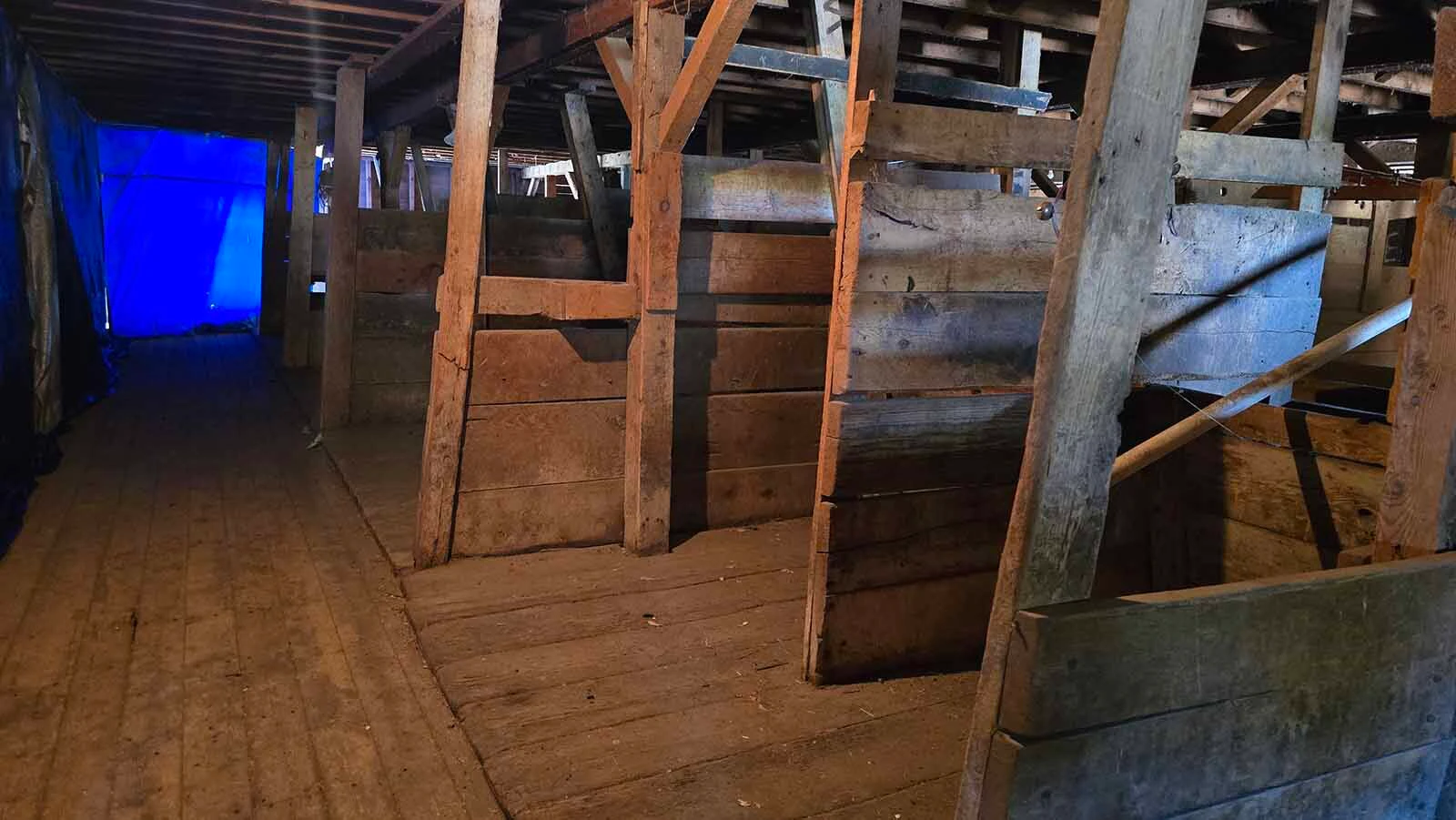
Inside the horse barn at the historic Wyoming Hereford Ranch. (Renee Jean, Cowboy State Daily) 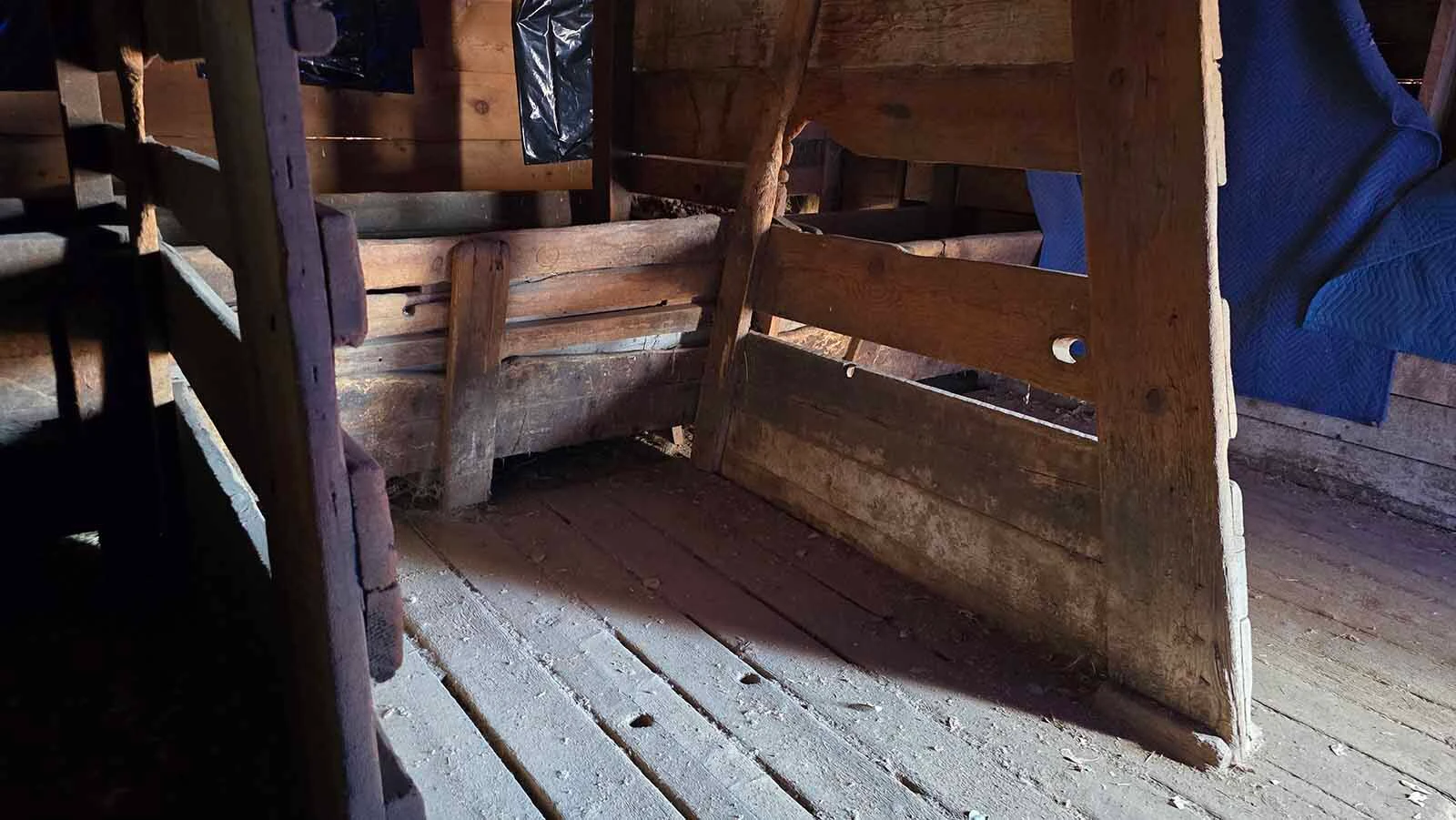
Inside the historic horse barn at Wyoming Hereford Ranch. (Renee Jean, Cowboy State Daily)
Big Plans For The Future
Today, the historic white stucco buildings and distinctive red roofs of the Wyoming Hereford Ranch feel as though they’re frozen in time, but the operation itself is looking to the future.
The Hales family bought the operation in 1978, and has worked diligently over the past decades to preserve the ranch’s sprawling legacy, opening it up to the public.
“Michael Genho, the son-in-law, who is married to Trish Hales, is managing the ranch now and he’s bound and determined to bring this thing back,” Stillahn said.
Sharp added that Genho attended the Wharton School of Business and grew up on a big cattle ranch in Florida. His family owns Genho Cattle Co. of Florida.
“He’s got big plans for the ranch,” Sharp said. “He’s been putting money into it to repaint the barns, do the roofs, fix up things everywhere.
"So he’s not planning to let it go. He wants to continue the legacy and the Hereford breed.”
For Stillahn, who arrived as an 11-year-old boy and once helped move bulls through the sale barn, that future matters.
“A piece of me is always going to be here,” he said.
Renée Jean can be reached at renee@cowboystatedaily.com.