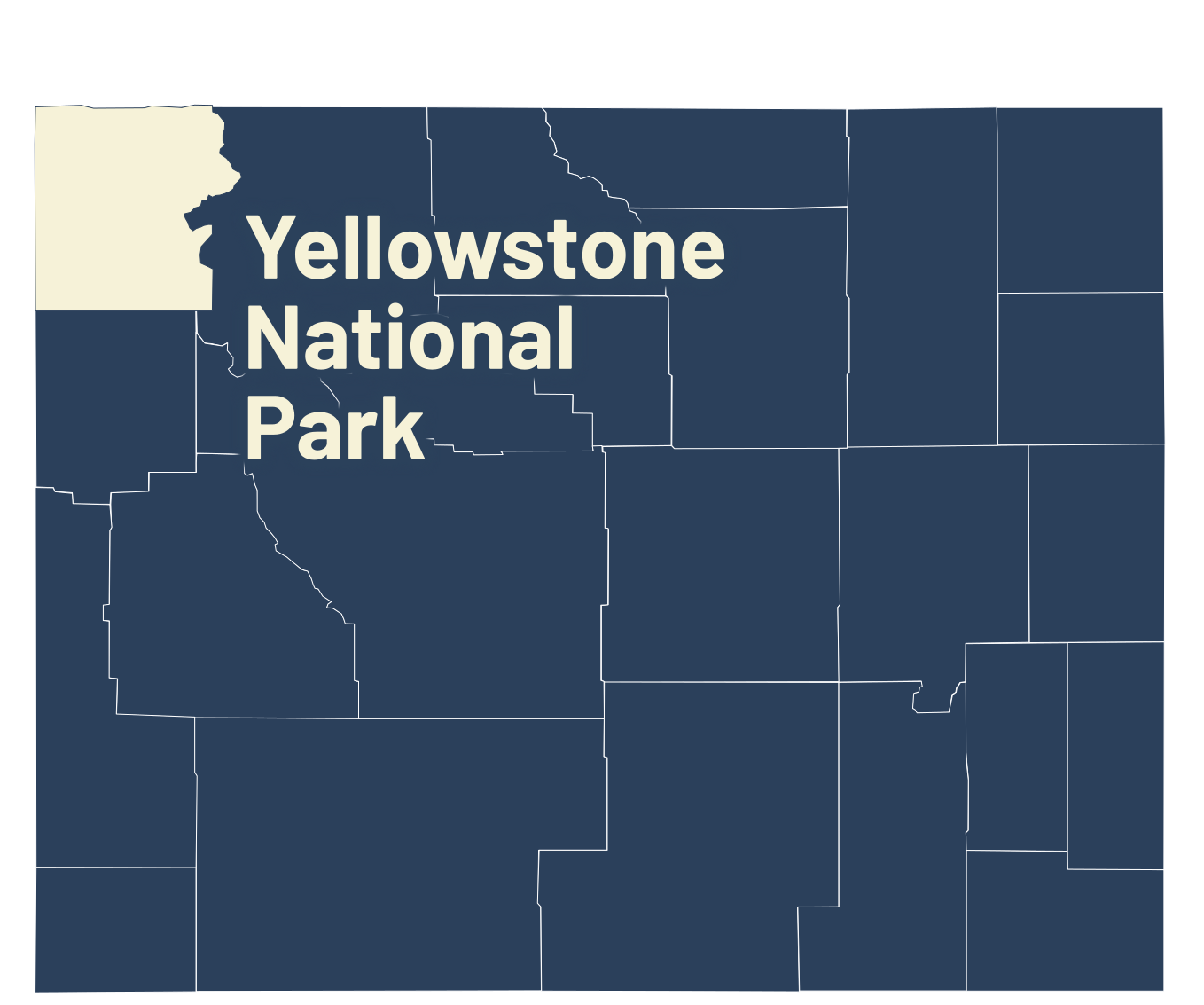

Scientists studied 15,000 years of Yellowstone National Park’s history to determine how it will look and act in the future.
A new scientific paper, “Postglacial ecosystem development of a hydrothermal landscape in Yellowstone National Park,” used evidence preserved in the park's freshwater lakes to interpret how the landscape has changed over the last 15,000 years.
The results show how Yellowstone’s geothermal features and forests are susceptible to change in some ways but resilient in others.
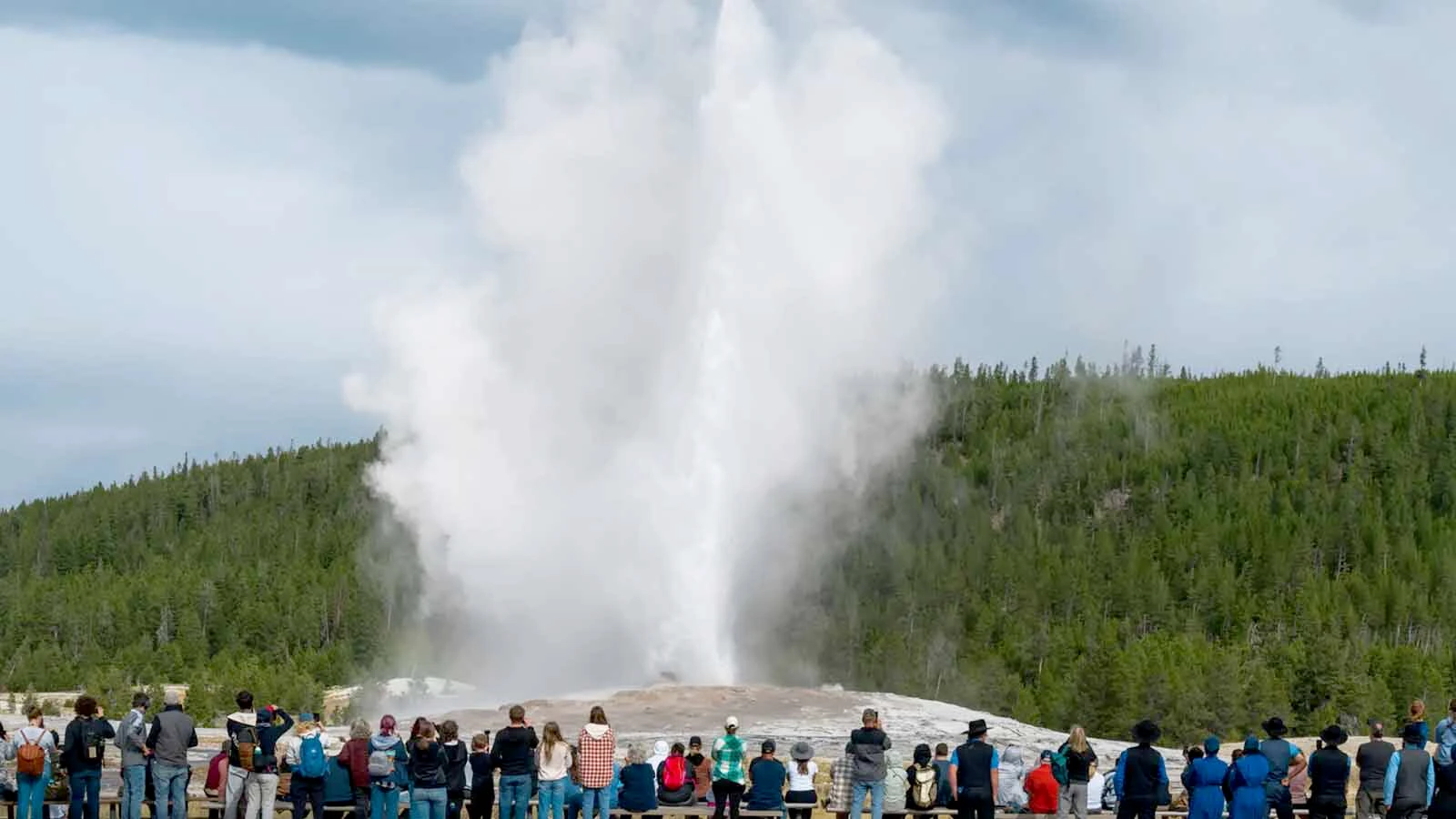
The scientists said they believe this could guide understanding of how the park's iconic geysers might change, go dormant, or disappear in the future.
“We're trying to understand the sensitivity of the Greater Yellowstone Ecosystem to past climate change, so that we can better understand what's going to happen in the future,” said Cathy Whitlock, regents professor emerita at Montana State University and lead author of the new paper.
“It’s a puzzle that can take us into the future," she said.
Mudding Up History
How did scientists collect 15,000 years of data on Yellowstone? From lake bottoms, of course.
The crux of Whitlock’s research, which included scientists from multiple universities in the Western U.S., was the analysis of sediment cores collected from the bottom of small lakes in the Lower Geyser Basin and on the Yellowstone Plateau.
These freshwater lakes formed after the retreat of Yellowstone’s last glaciers, between 14,000 and 15,000 years ago.
“Lakes are great collectors of environmental information,” Whitlock said. “Anything that lands on the surface of the lake can get buried in the mud, so we go to lakes and get vertical sediment cores to study what's in those layers from top to bottom.”
The sediment cores preserve everything from pollen grains and charcoal fragments to diatoms, also known as microalgae. These are crucial clues to determine when and how the environment has changed.
Sediment cores were taken from several lakes and ponds in Yellowstone, including Yellowstone Lake, Goose Lake, and Blacktail Pond. Then, radiocarbon dating was used to date the layers and the fragments of history therein.
Whitlock said this research was different because many of the bodies of water exist in the park’s geothermal basins, which she’d avoided previously.
“I honestly didn't think there'd be good lakes in the geyser basins, but it turns out that there are,” she said. “There are some really lovely small freshwater lakes that preserve the history of what's happening there.”
Water, Earth, Fire
After studying the sediment cores, Whitlock and her colleagues found a surprisingly cohesive history of how Yellowstone has changed since the end of the last Ice Age.
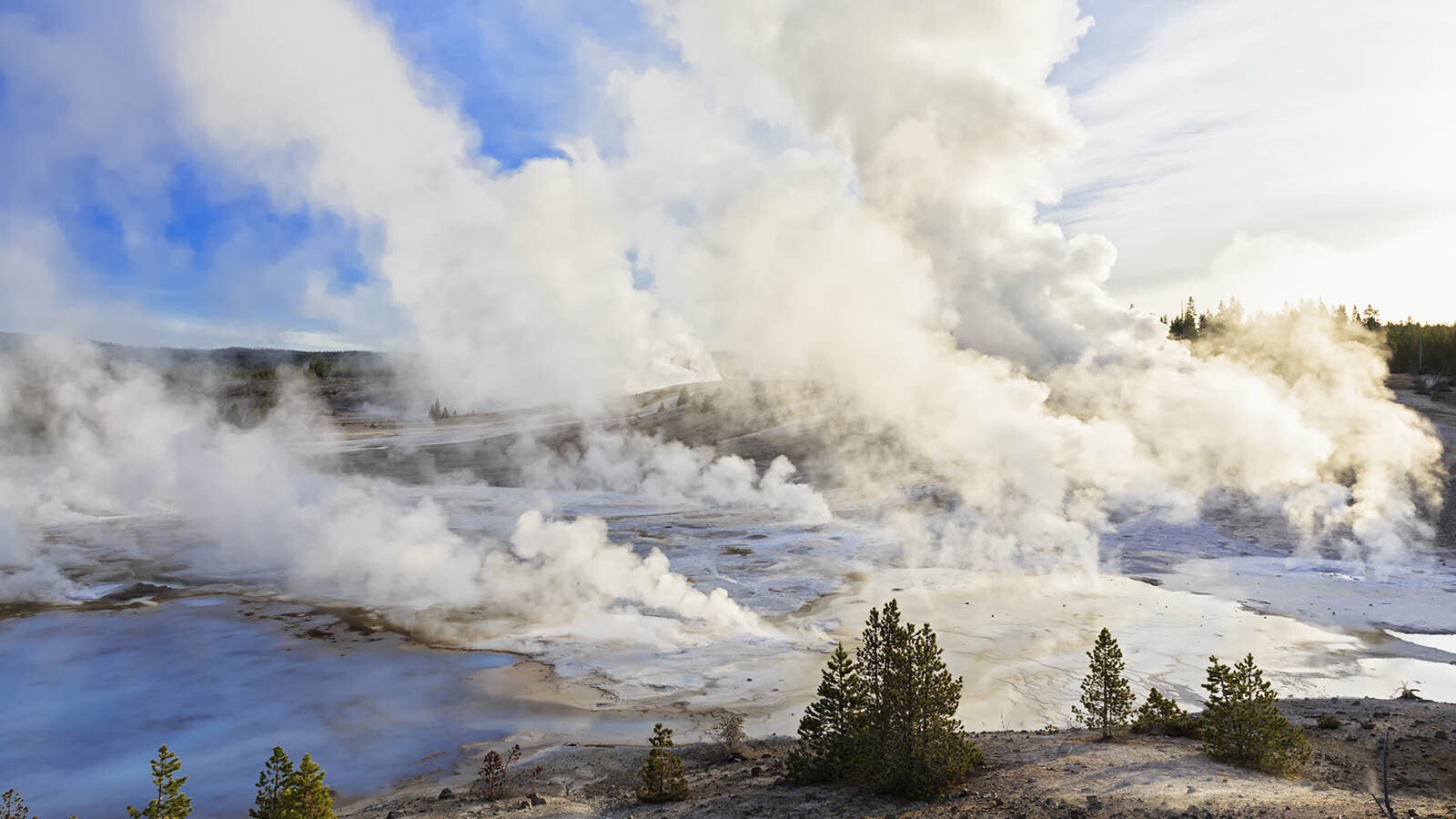
For one thing, they reaffirmed existing research showing that Yellowstone’s geothermal activity depends heavily on the quantity and availability of water.
“We found that the origin of the lakes is related to hydrothermal activity,” Whitlock said. “Most of the small lakes seem to have formed from hydrothermal explosions, which occurred during wet periods when there was a lot of water in the geyser basin.”
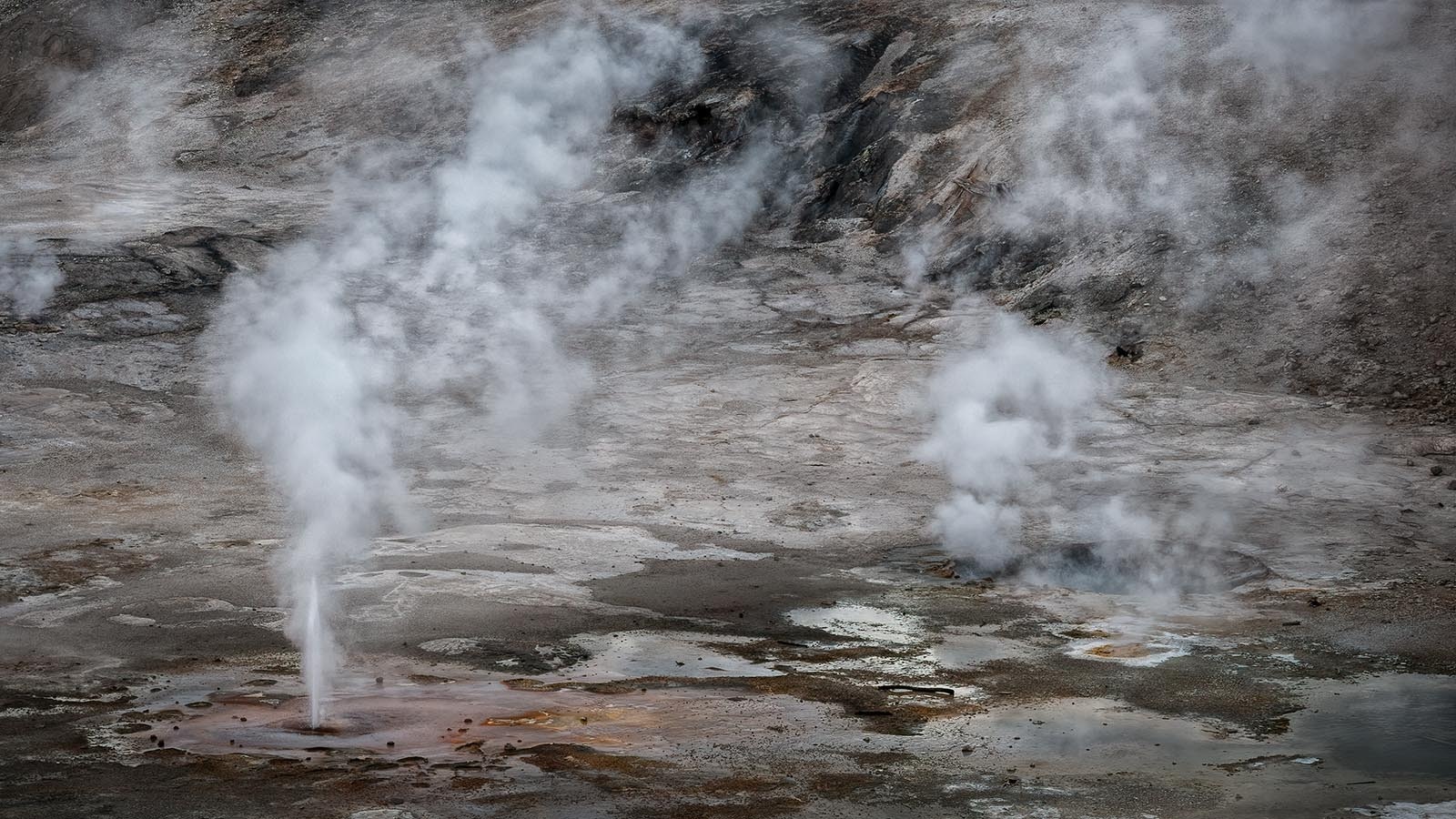
Hydrothermal explosions occur when water rapidly changes to steam, releasing a large amount of energy. The July 2024 explosion at Black Diamond Pool is a recent example of these events' transformative power.
Mary Bay, on the northern edge of Yellowstone Lake, is a mile-and-a-half-wide crater created by a hydrothermal explosion 14,000 years ago. It's currently the largest-known hydrothermal explosion crater in the world.
More water means more hydrothermal explosions, or at least the potential for more.
The sediment cores also preserved evidence of extended dry periods. When the atmosphere was warmer, the snowpack was lower, and less water fed into Yellowstone’s hydrothermal systems.
The sediment-core analysis aligns with other research that found long periods of dormancy at the Old Faithful and Steamboat geysers due to decades-long droughts.
“Our geysers, hot springs, and hydrothermal explosions are strongly dependent on the input of water, which is dependent on snowpack,” Whitlock said. “If you reduce snowpack, you'll in turn reduce geyser activity.”
Shaul Hurwitz, a research hydrologist with the U.S. Geological Survey, discovered a period of severe drought when Old Faithful didn’t erupt for over a century. The evidence came from mineralized wood preserved in the silica around the geyser.
“There was a severe regional drought across the entire western U.S. from 1233 to 1362 CE,” he told Cowboy State Daily in April. “Old Faithful probably wasn’t erupting for 100 years because of that extended drought. We know that less water means probably less frequent eruptions, or certainly less water to erupt.”
Whitlock also found lots of charcoal in the layers that correlate with drier periods. That indicated that the landscape was much more prone to wildfires during these extended droughts.
“The fire history is very strongly governed by past climate change,” she said. “At times when it was warmer and effectively drier, we got a lot more fires in Yellowstone.”
A Geo-Ecosystem
Temperature, water flow, and hydrothermal activity in Yellowstone seem to have changed at many points over the last 15,000 years. One thing that remained largely unchanged was the vegetation.
Today, thick forests of lodgepole pine surround Yellowstone's hydrothermal basins. According to Whitlock, that’s been constant for several millennia.
“It's been lodgepole pine forest for about 11,000 years,” she said. “Once lodgepole pine came into the park at the end of the last glaciation, it’s been lodgepole pine forest with little change.”
This is a natural result of Yellowstone's soil composition. Much of the park is covered with rhyolitic soil formed by the erosion of volcanic rocks, which is expected in the caldera of one of the world’s largest volcanoes.
Yellowstone’s rhyolitic soils are very infertile and nutrient-poor. These soils continue to shape the park’s forest composition, as they are inhospitable to most tree species.
Lodgepole pines are drought-tolerant, have shallow roots, and can thrive even in the nutrient-poor soils where other trees can’t. That’s made them the dominant tree in Yellowstone for thousands of years.
This makes Yellowstone a “geo-ecosystem,” according to Whitlock.
“The geology of Yellowstone has a big control on the vegetation in creating the ecosystem, and it has for a long time,” she said.

Past As Prologue
The goal of studying 15,000 years of Yellowstone's climate, hydrothermal, and vegetation history was to see whether past trends can inform the future. After studying the sediment cores, Whitlock says yes.
Building on previous studies of Yellowstone’s climate and hydrothermal activity, Whitlock and her peers concluded that warmer temperatures would decrease snowpack, which would in turn “dampen” hydrothermal recharge and geyser activity, just as it has in the past.
“There's a lot of evidence that we get more geyser activity when the climate is wetter,” she said. “Going into the future, you could imagine that there'll be less activity as the climate gets drier.”
How vegetation would change, if at all, is more speculative.
A drier landscape led to more frequent wildfires in the past, but Yellowstone’s rhyolite soil limits the changes that could result. Lodgepole pines have endured 11,000 years of forest fires and other environmental changes, so they’re likely to endure.
“They’re a remarkable example of ecological resilience to climate change,” Whitlock said. “Even though the forests burned frequently, they still came back as lodgepole pine.”
What’s “unprecedented,” according to Whitlock, is the current rate of climate change. It could accelerate environmental changes that took thousands, if not millions, of years to play out.
“Climate change is happening so fast that it’s putting the whole ecosystem into a massive reorganization, trying to stay in equilibrium with climate,” she said. “That's quite new, and if you were to ask me, you'd have to go back thousands of years to find conditions this dry or warm in Yellowstone.”
To know how Yellowstone will adapt to future climate change, you’d have to study it over time, Whitlock said. That will be the fodder of future studies by up-and-coming scientists.
Whitlock said she believes she and her colleagues have presented a compelling blueprint of the future by discerning what they can from the preserved past.
“I don't have a crystal ball," she said. "I'm only telling you how I understand the past, and using that as a guide for the future.
"There is going to be change, and it could be really dramatic change, but it’s going to vary from place to place.”
Andrew Rossi can be reached at arossi@cowboystatedaily.com.