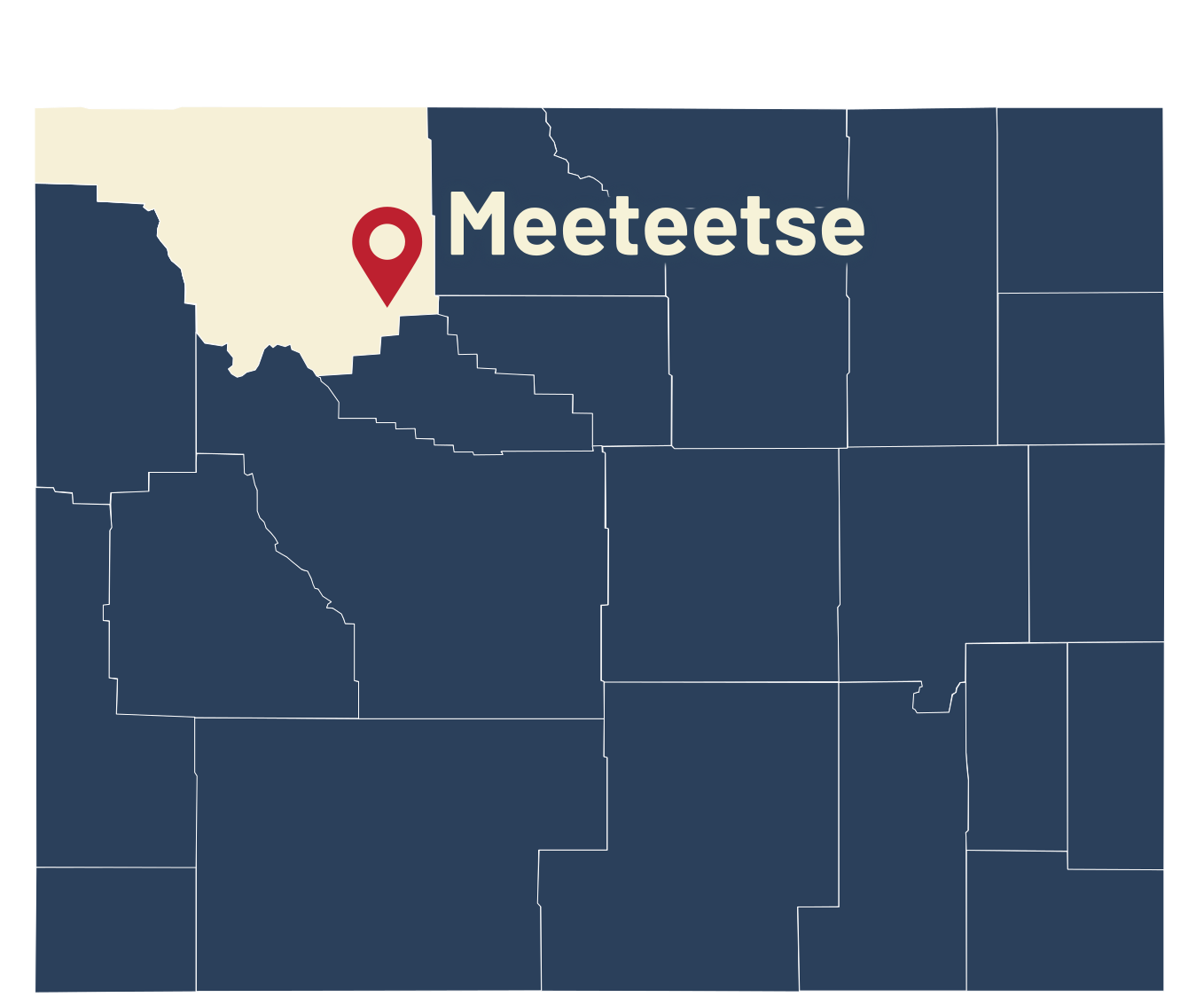
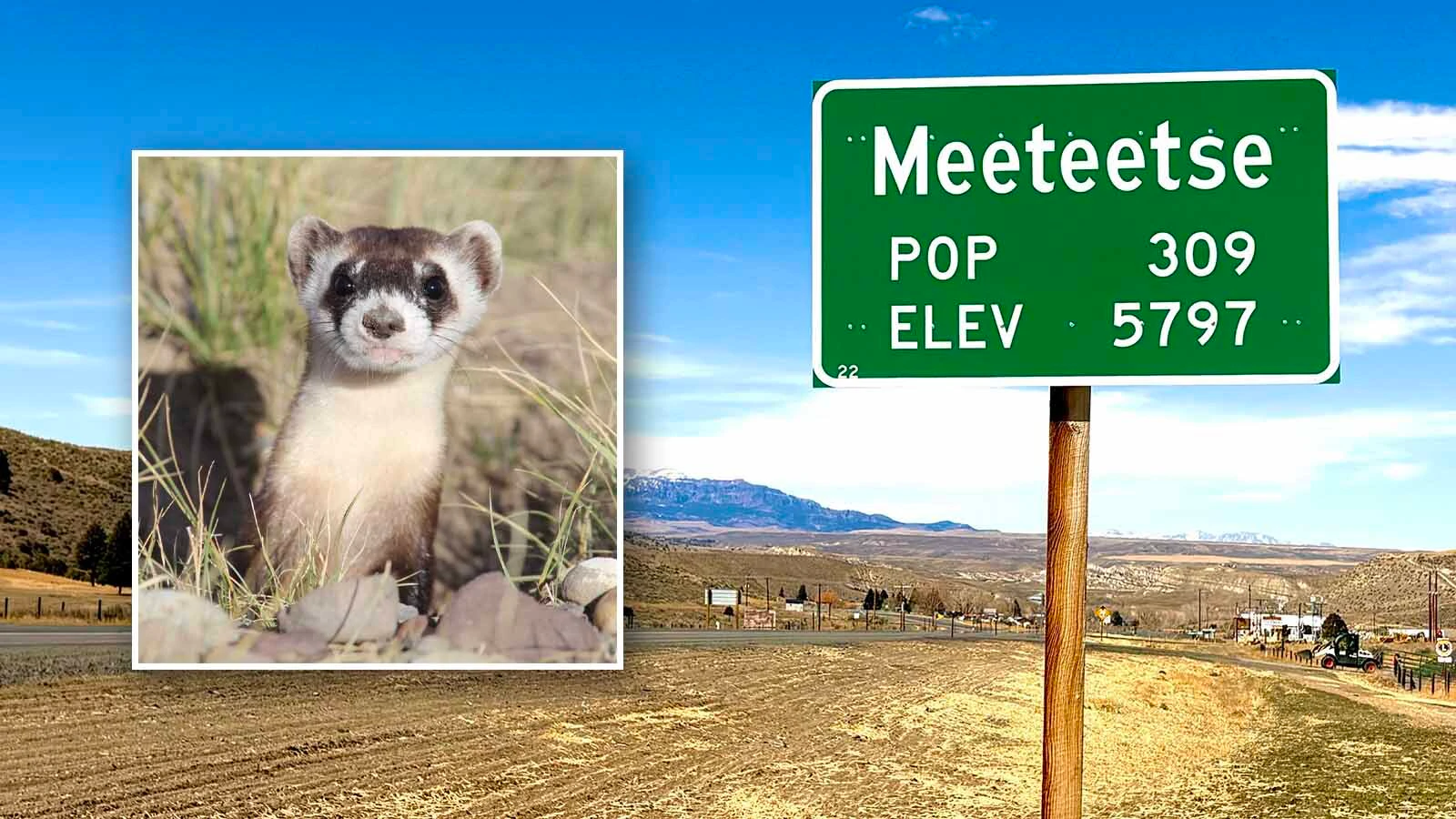
Forty-five years after black-footed ferrets thought to be extinct were surprisingly rediscovered near Meeteetse, the population is struggling again.
None were spotted during the latest population survey there, which wrapped up last month.
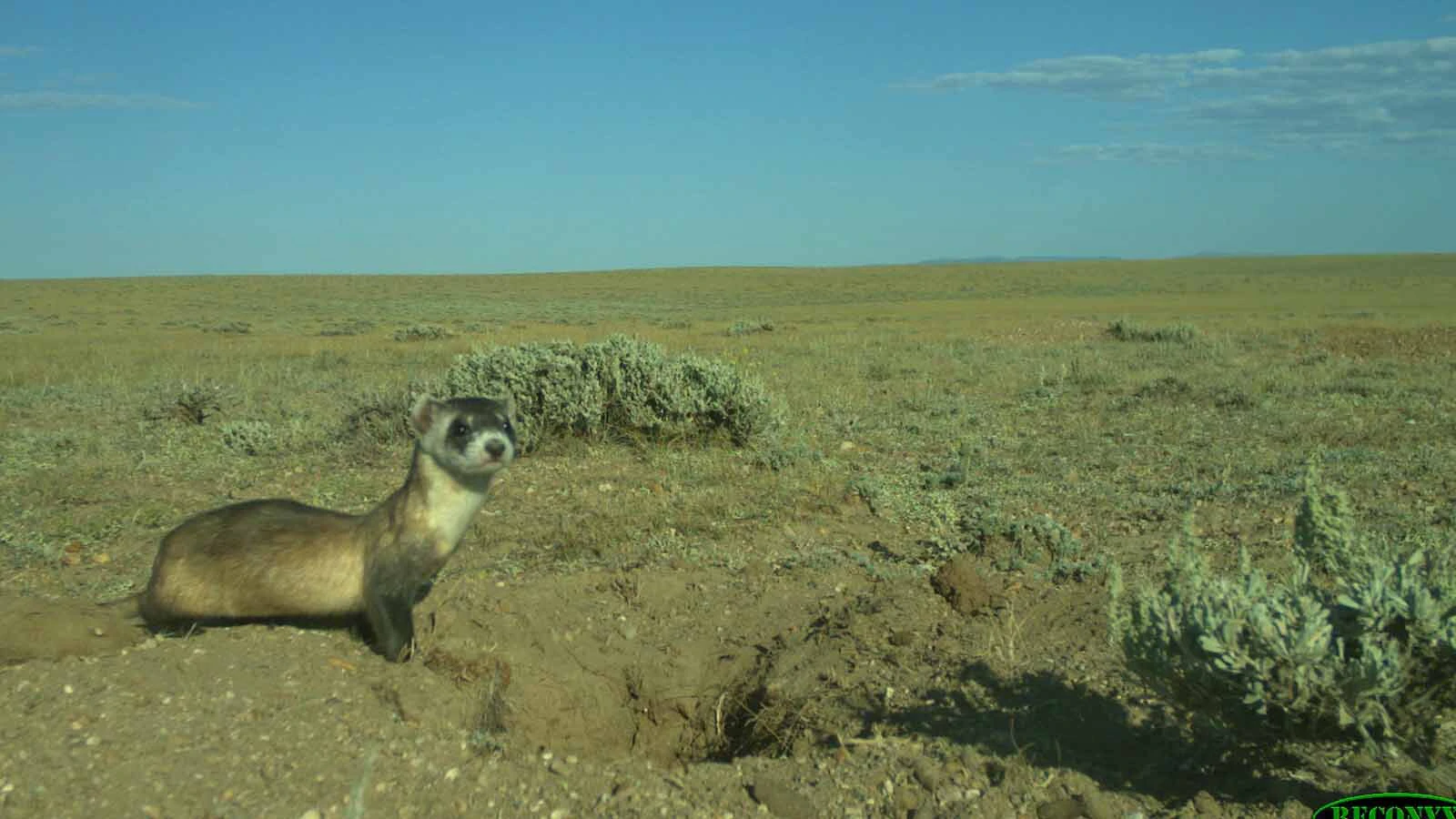
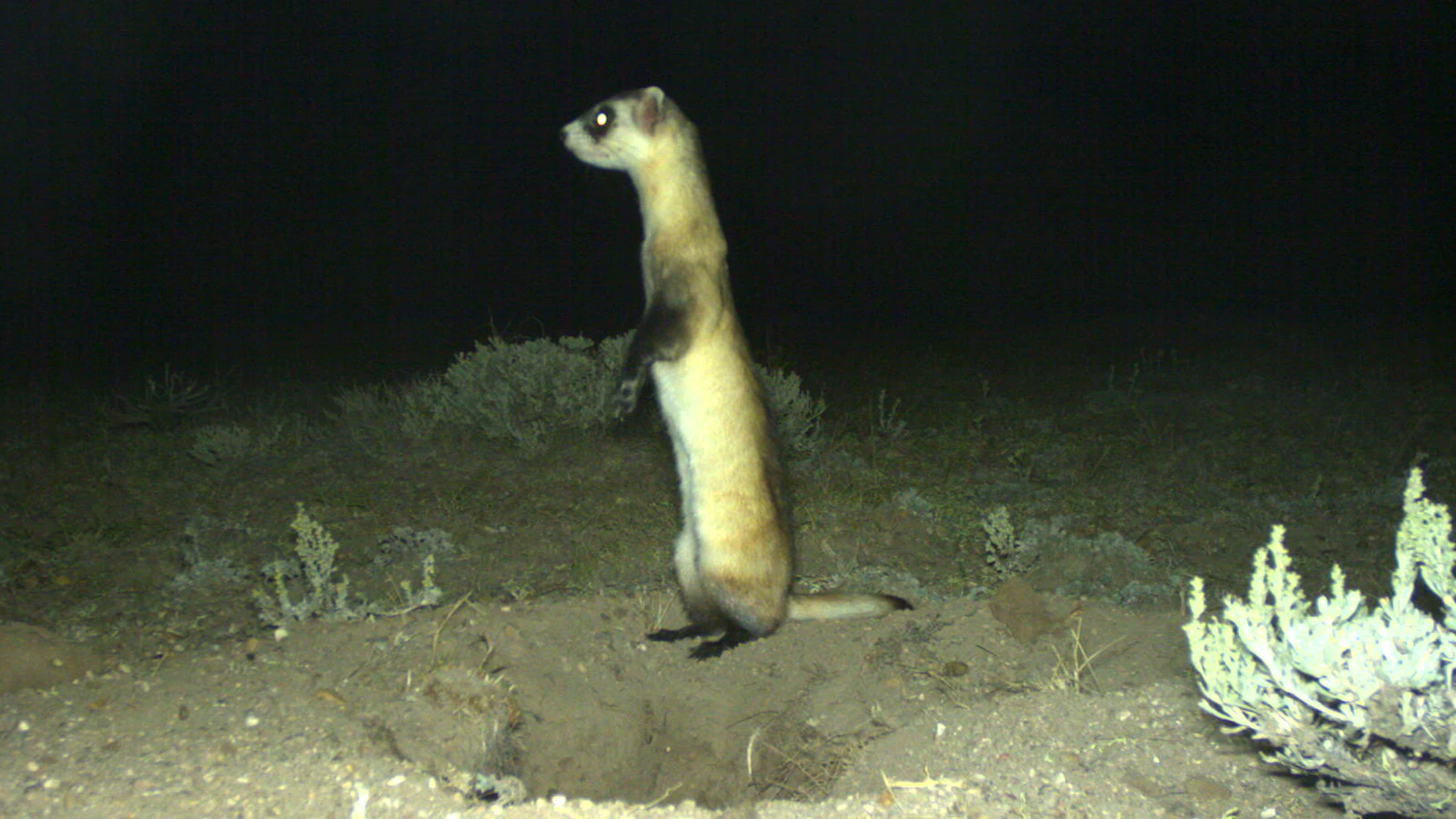
That doesn’t necessarily mean they’re all gone. Ferrets are mostly nocturnal and spend much of their time underground.
And that makes them notoriously difficult to spot, Andrew Gygli, a small carnivore biologist with the Wyoming Game and Fish Department, told Cowboy State Daily.
He and others recently spent weeks sitting up at night with spotlights, hoping to catch glimpses of ferrets near Meeteetse and in the state’s other key population center, the Shirley Basin in south-central Wyoming.
Asked if a lack of sightings in the Meeteetse area means the ferrets are gone or just scarce, “one looks quite like the other,” Gygli said.
Plague And Dry Grass
Conditions aren’t the greatest in the Meeteetse area. An outbreak of plague decimated white-tailed prairie dogs. And persistent dry conditions left scant grass for the prairie dogs that survived the disease.
“You can’t have black-footed ferrets without functioning prairie dog colonies," Gygli said.
Roughly 90% of ferrets’ diet is prairie dogs, and ferrets den in vacant prairie dog burrows, he said.
Bubonic plague outbreaks are fairly common in prairie dog colonies. The disease is transmitted through flea bites. So, medical experts advise against handling prairie dogs or prairie dog carcasses.
In humans, the disease is treatable if caught in time, but almost always fatal if it isn’t.
Game and Fish will continue to monitor the situation and decide if and when more ferrets might be brought in from the National Black-Footed Ferret Conservation Centre in Colorado and released near Meeteetse, Gygli said.
The center is run by the U.S. Fish and Wildlife Service and breeds ferrets for release into the wild.
If plague continues to linger in prairie dogs and conditions stay dry, it could be a game of diminishing returns to release more ferrets near Meeteetse, Gygli said.
But when things turn around, they’ll do so quickly, he noted.
Prairie dogs are prolific breeders, so once disease recedes and abundant grass is available, their population should rebound, he said.
Looking Up In The Shirley Basin
Meanwhile, ferrets seem to be faring well in Shirley Basin, a remote region in Carbon and Natrona counties. It’s about 40 miles south of Casper and roughly 30 to 40 miles north of Medicine Bow.
Gygli wouldn’t venture a guess as to what the ferret population of the Shirley Basin is. It’s a vast area, and researchers canvassed only a small fraction of it.
He said he was “encouraged” by what he saw there. The grass is healthier there, and hence the prairie dogs are doing much better than at Meeteetse.
Ferrets’ primary role in nature is keeping the prairie dog population in check.
During the warmer months, ferrets prefer to hunt prairie dog young, called pups.
A full-grown prairie dog is roughly the same size as a ferret and has sharp teeth, Gygli said.
That’s not a fight the ferret can win, at least not without the risk of injury,” he said.
During the winter white-tailed prairie dogs hibernate, but ferrets don’t.
So, ferrets will go into the prairie dogs’ burrows and attack those lethargic rodents, he said.
Black-footed ferrets are thought to have “one of the longest, if not the longest” canine teeth relative to the body size of any living predator, Gygli said.
A bite to the neck, resulting in asphyxiation, is their preferred method of killing prey.
“Preferably, one bite on a prey animal that didn’t know it was coming,” he said.
Thought To Be Extinct Twice
Even if the black-footed ferret population around Meeteetse is gone for now, that’s no reason to fear a complete loss of the species in Wyoming and the West.
People twice thought ferrets were completely gone and were wrong both times.
Native to Wyoming and the surrounding region, black-footed ferrets were first thought to be extinct by the late 1950s.
In 1964, a small, declining population of black-footed ferrets was found in South Dakota. Nine were captured in hopes they could be bred in captivity.
But those efforts failed. The wild population in South Dakota vanished in 1974, and the last ferret in captivity died in 1979.
Then, two years later, a dog named Shep showed up with a dead black-footed ferret in his mouth on the Pitchfork Ranch west of Meeteetse.
‘Agencies Working Against Each Other’
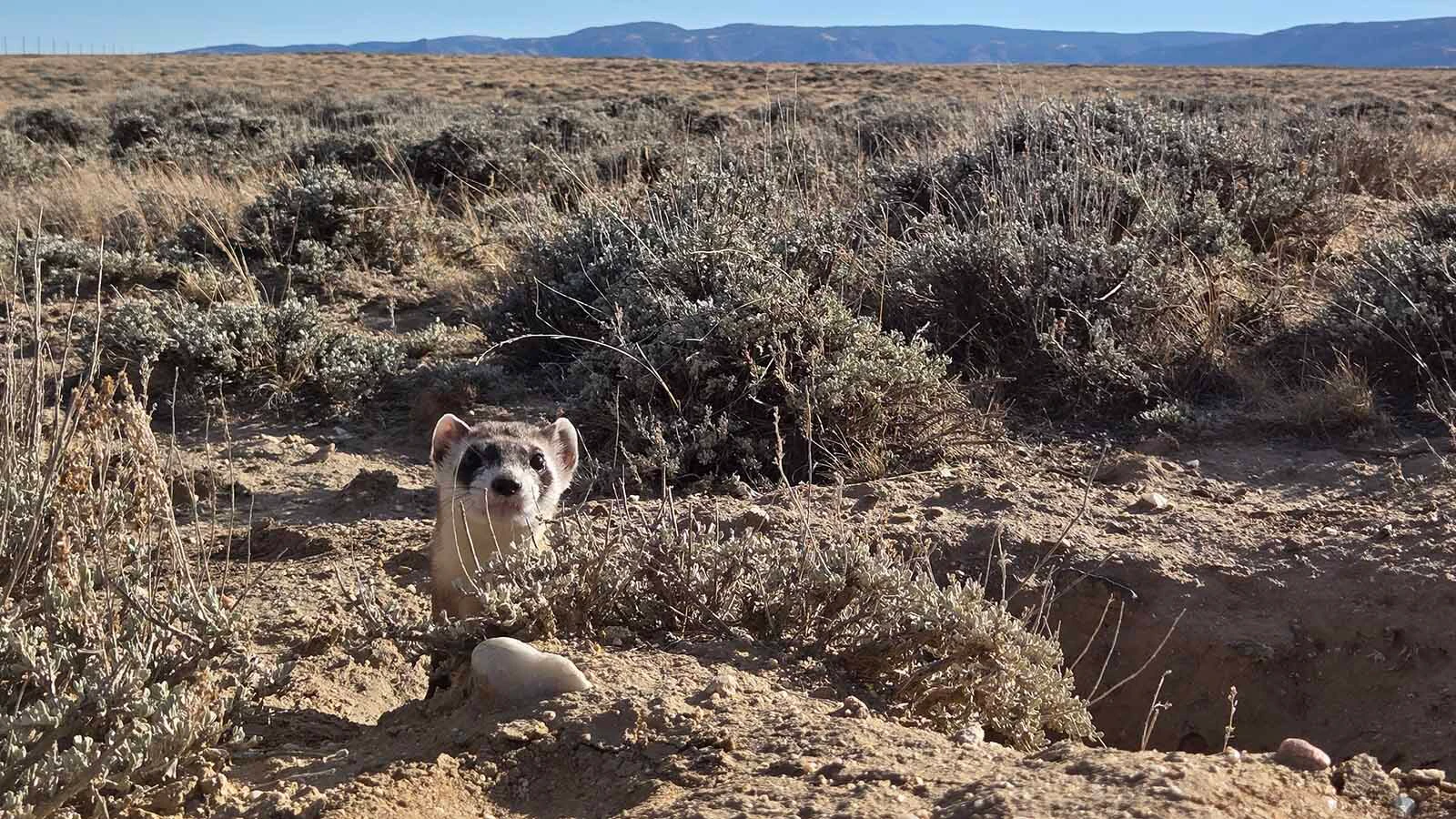
Retired biologist Franz Camenzind of Jackson observed and photographed the initial Meeteetse black-footed ferret recovery efforts in 1981.
Black-footed ferrets once ranged “from New Mexico to Montana,” he said.
However, their habitat has been fragmented, mostly because humans are frequently intolerant of prairie dogs.
Humans, including government agencies, shoot and poison prairie dogs, regarding them as vermin, he said.
That’s resulted in a tug-of-war with those people and agencies trying to restore ferrets, he said.
“We have agencies fighting against each other, interests trying to fight each other, and the ferrets are caught in the middle, trying to make a living,” he said.
And so, ferret recovery often comes down to managing isolated populations, such as those around Meeteetse, in the Shirley Basin and in the North Dakota Badlands, he said.
“Isolation is rarely a good strategy for bringing these species back,” Camenzind said. “It’s labor-intensive. You almost have to manage every individual within those populations."
Are There More Out There?
The Meeteetse and Shirley Basin ferret populations are about 150 to 200 miles apart, Gygli said.
The hope, though not in the short term, is connecting those populations, he said.
However, ferrets might be expanding their range on their own.
Gygli noted that a road-killed ferret was found about 27 miles from the nearest known occupied area in the Shirley Basin.
That’s quite a trek for a ferret, but does it indicate the existence of a new, separate population?
“We just don’t know,” Gygli said.
Game and Fish has invested considerable time, effort and expense into ferret conservation and has no plans to quit anytime soon, he said.
“Wyoming will have ferrets,” he said.
Mark Heinz can be reached at mark@cowboystatedaily.com.