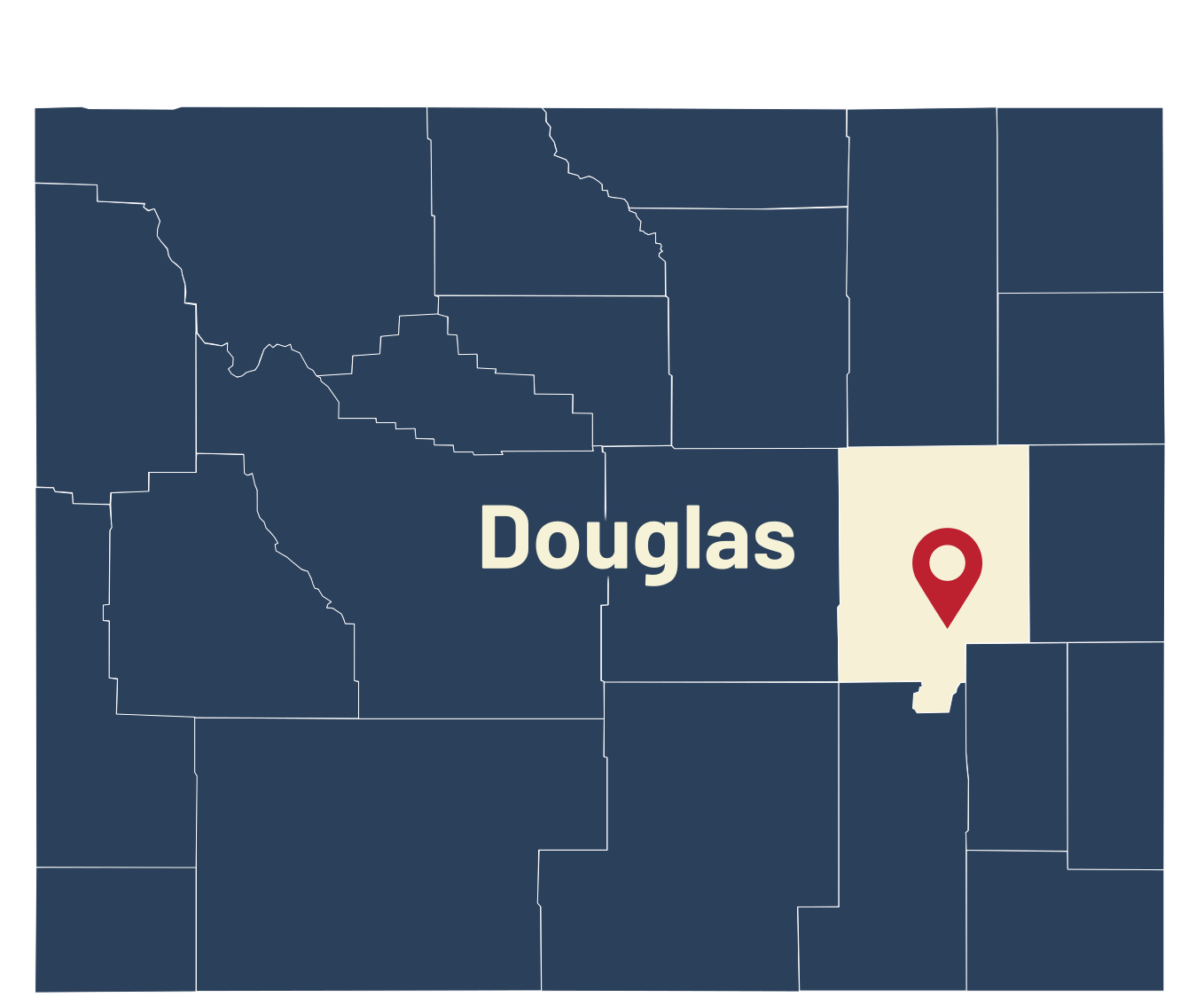
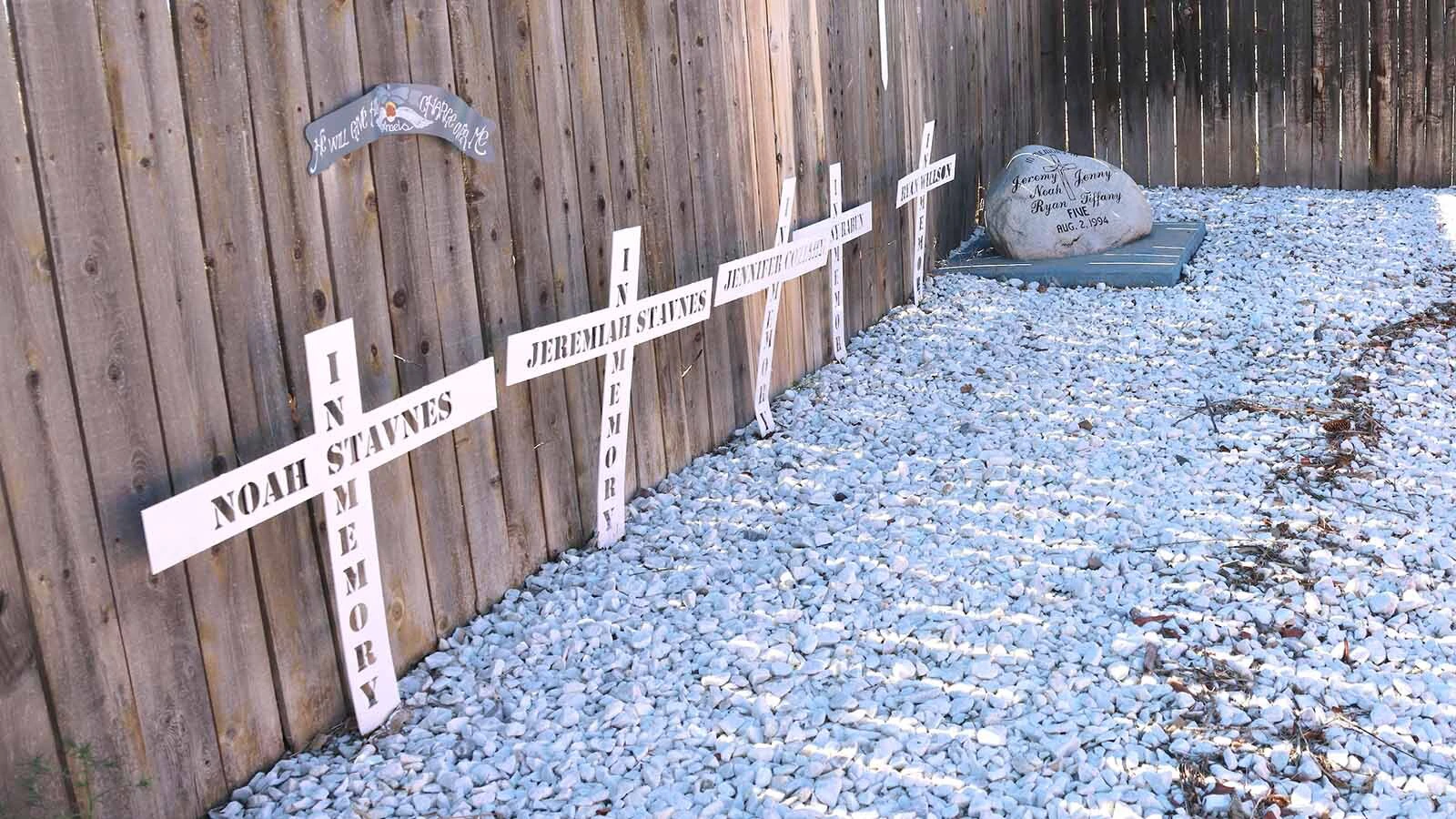
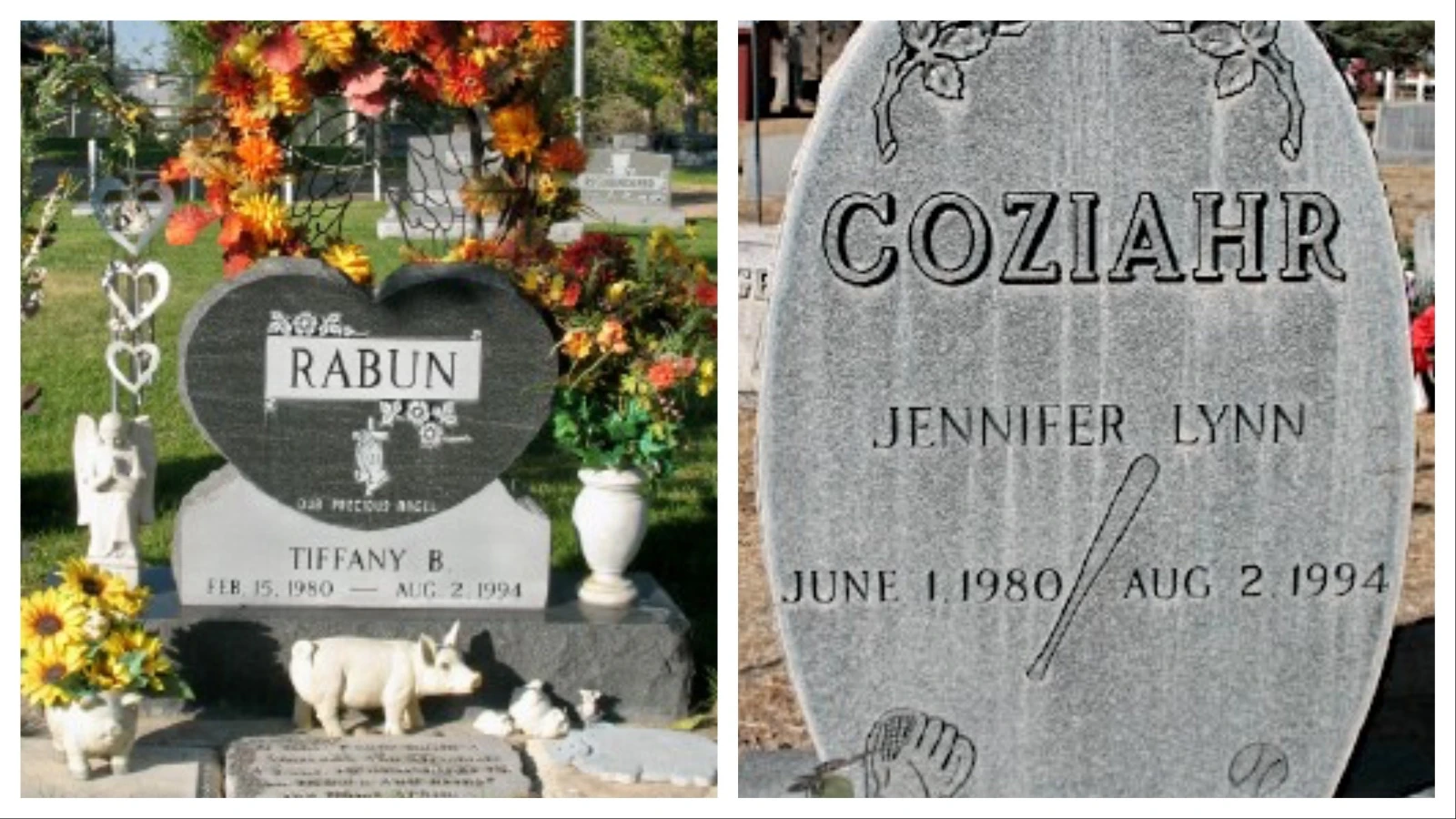
The five crosses and stone with the names of five teens and the date Aug. 2, 1994, sits at the end of a dead-end street next to the railroad tracks in Douglas.
It is a reminder of the horror that happened when Oak Street was not a dead end and cars could cross the tracks to a feed store parking lot.
That lot and an adjacent entry lane allowed drivers to avoid a Center Street light a block to the north.
For four families and a Burlington Northern train crew headed eastbound at 45 mph through Douglas, the bright summer Tuesday evening became a sunset that inflicted pain on their hearts and left scarred memories that for the living still remain tender.
Noah Stavnes, 18, and Jeremiah “Jeremy” Stavnes, 15, were in Noah’s car headed down Oak Street with Ryan Willson, 15, Jennifer Coziahr, 14, and Tiffany Rabun, 14. Their destination was McDonald’s.
They never made it.
“Train-car crash kills 5 Douglas teens,” the Casper Star-Tribune reported on its front page Aug. 4. “Douglas churches held ‘open sessions’ Wednesday for community residents left grieving by the deaths of five local teenagers.”
Noah and Jeremy’s mother, Arlene Dyer, said that night brought “total devastation.”
“I have two lives, one before Noah and Jeremy died and the one after,” Dyer told Cowboy State Daily. “I mean it changed everything. … I couldn’t go down the street, walk into a store without somebody looking at me and start crying.
"I know that sounds really selfish, but it’s not that way. It’s just everybody was affected by it.”
Edward Willson, whose son Ryan was Jeremy’s best friend, said there are still days when “every once in a while” his emotions return and break through.
Each Aug. 2 he takes time to reflect, especially as 8 p.m. approaches — the time the 38-car freight train rumbled through the city.
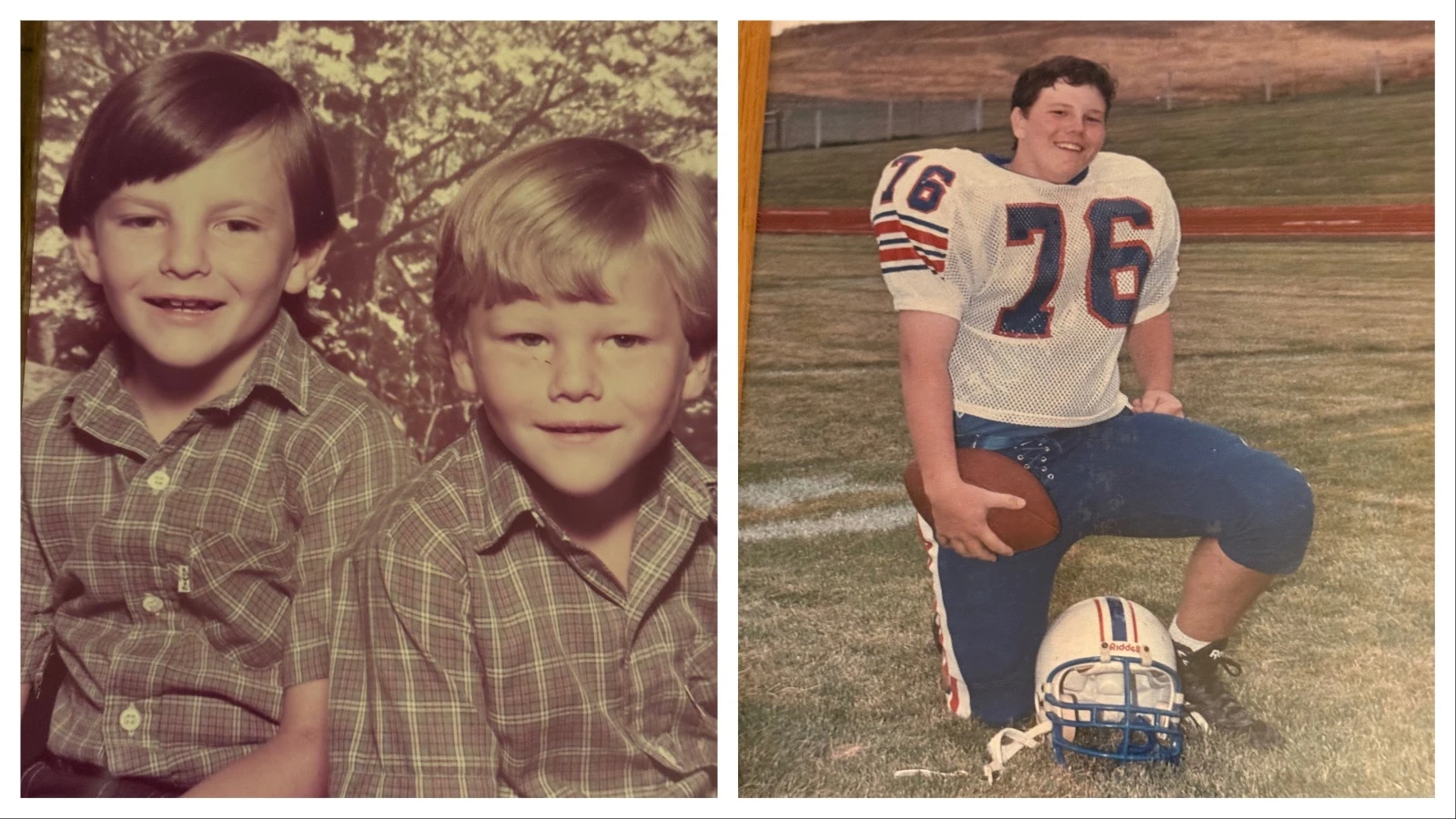
Noah and Jeremy Stavnes were “inseparable,” their mom said. Right, Jeremy in his football uniform as a freshman. (Arlene Dyer) 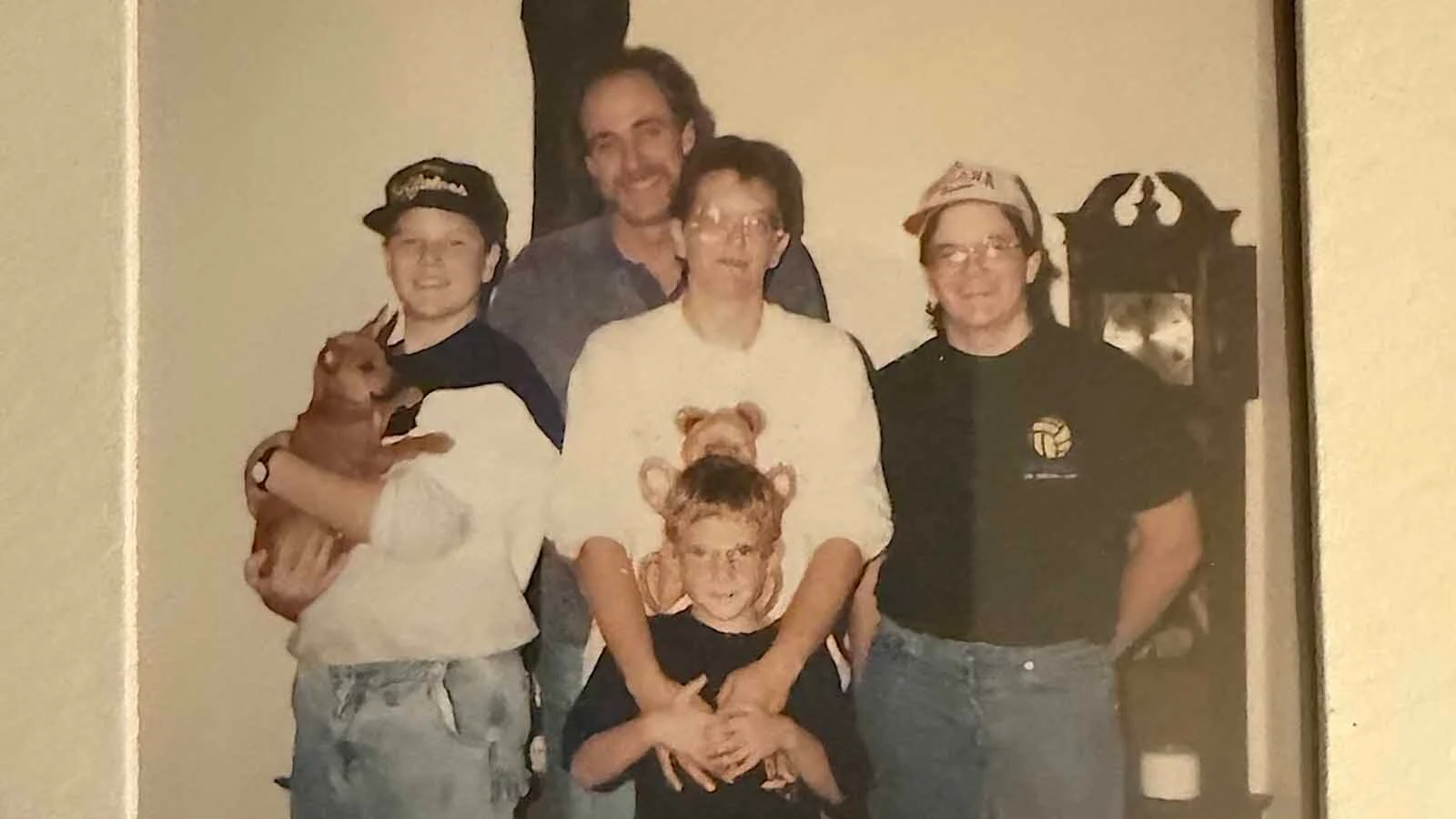
Arlene Dyer and her sons in a family photo. Jeremy is at her left and Noah on her right. (Arlene Dyer)
Football Ahead
Willson said the night of the crash, Ryan and Jeremy Stavnes had gotten their sports’ physicals along with other athletes for the upcoming football and fall sports season. The school scheduled them for the recreation center and many stayed after to play basketball and other activities.
Noah Stavnes was a manager for the high school football team and worked with Coziahr at McDonald’s. Coziahr was a cheerleader, baseball fan, and was heading into her freshman year. Rabun was her friend and an athlete who played several sports.
Dyer characterizes both of her sons as “really caring people.”
In addition to working for McDonald’s, Noah was president of the Students Against Drunk Driving society. Jeremy was focused on athletics and, with Ryan, had worked hard during the summer preparing for the football season.
Dyer said she and the boys’ father divorced, and he raised the children for a few years. She remarried and they came to live with her and had been in her custody for a year before their deaths.
The brothers were close and supported one another, she said.
Noah had thoughts about becoming a teacher and had a circle of friends that were a big part of his life, Dyer said.
“He was really good with people. He had a way with just listening, not so much talking,” she said. “He’s the kid that would get out of bed at 2 in the morning to go pick up his friends who had been drinking too much at a party.”
Dyer said Jeremy was the “goofball” of the pair who enjoyed cracking jokes and doing “silly things.”
Jeremy and Ryan hung out together and had spent the summer working out.
The Stavnes brothers were “like inseparable” due to their life circumstances, their mom said.
“They were brothers - really tight,” Dyer said.
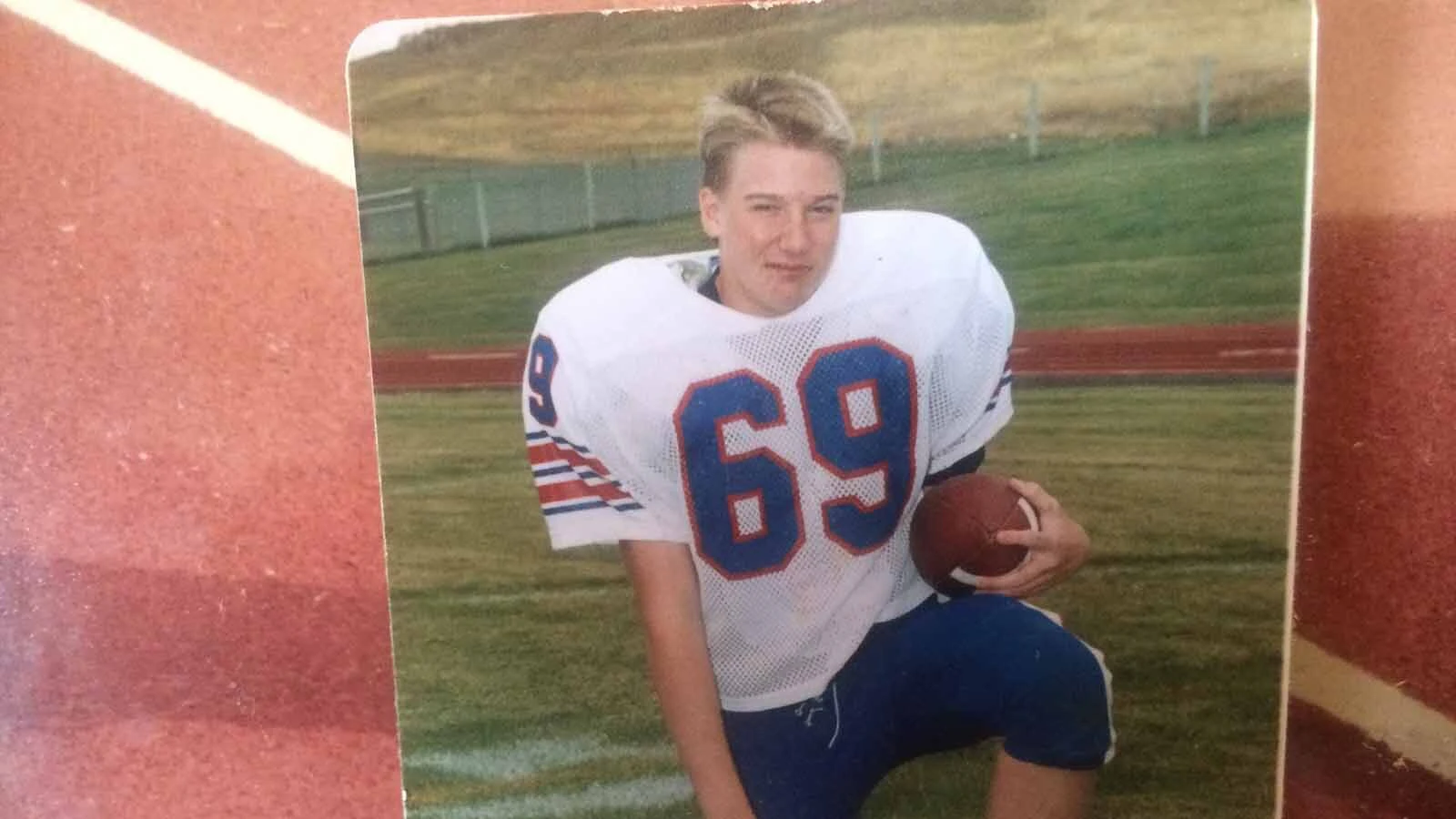
Ryan Willson as a freshman football player in 1993. (Edward Willson) 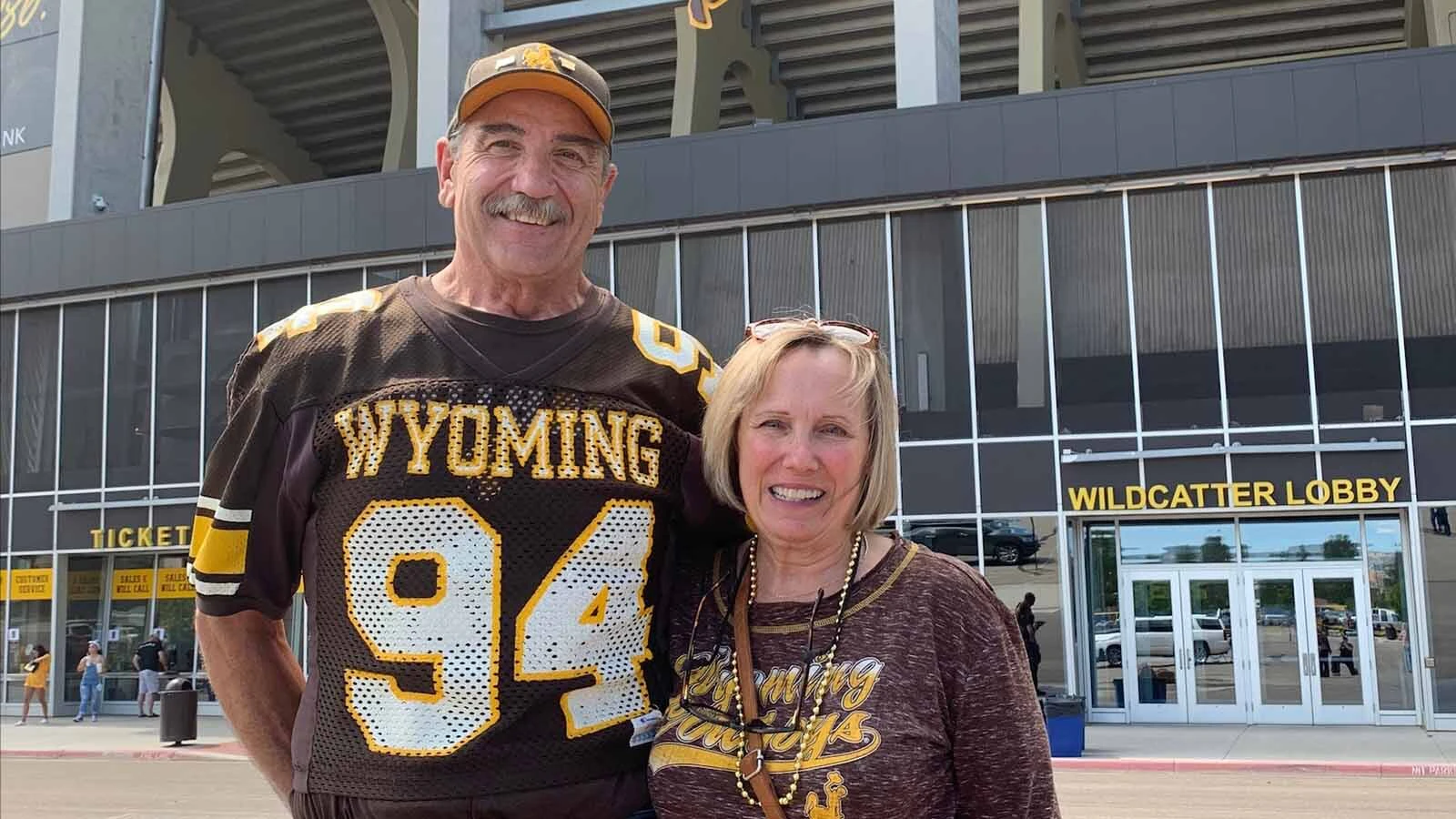
Edward and Susan Willson at the Cowboy’s stadium in Laramie. The Willsons started a scholarship for football players at the University of Wyoming. (Edward Willson)
A Son With 'Want To'
Edward Willson, who now lives in Cody, said the day before the crash he had taken Ryan, and Jeremy Stavnes to Casper for their game-day outfits that included shirts, slacks and ties. He said Ryan picked out an outfit that came to more than $100 and asked him if he could have it.
Willson agreed to buy the clothes for him.
“On the way home home, he’s sitting behind me and reached out to me and said, ‘Well, thanks Dad,’” Willson recalled. “ And I said, ‘You earned it. You showed me your ‘want to.’”
Willson said there were times when Ryan was younger that he would get frustrated because of his performance on the basketball court, baseball or football field. As dad, he always reminded his son there was a basketball hoop outside, or if he wanted to play catch with a football or baseball he was available to help.
Then he would share these words: “You have to have your ‘want to.’ If you want to do it, you’ll do it.”
The evening of the crash, Noah’s car was among a few carloads of teens headed to McDonald’s, Willson said. Another friend of Ryan’s and Jeremy’s was in a car behind them and witnessed the incident.
“If you ever go to that crossing on those dates, those few days around that time … if you try to look down the track you are blinded by the sun,” Willson said. “I think that’s exactly what happened. They never saw the train coming.”
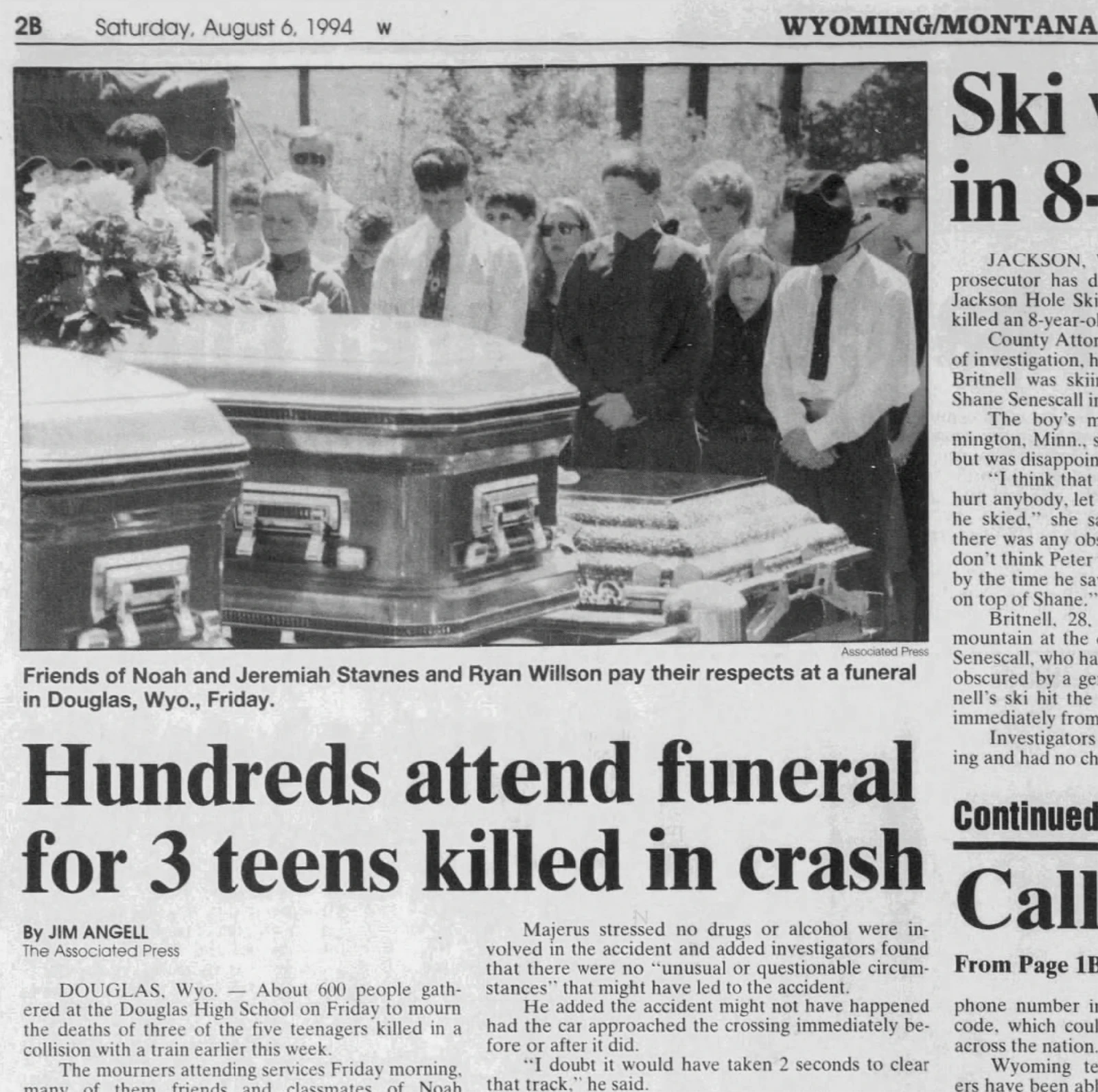
The Douglas Police Department reported that the train pushed the car 70 yards down the track before it separated and rolled over one-quarter of a turn. Its investigation showed no alcohol, drugs, or “unusual or questionable” circumstances led to the incident.
“What caused the accident was two physical bodies occupying the same space at the same time,” Police Chief Larry Majerus told reporters on Friday, Aug. 5, after an initial investigation. His remarks were quoted in the Aug. 6 edition of The Billings Gazette and other newspapers.
Funeral Draws 600
A funeral for the three boys at Douglas High School drew more than 600 people. Funerals for the girls were held the following day.
Willson said the crossing did not meet standards for the railroad.
After the incident, the railroad held hearings in Douglas and the crossing was boarded up.
Dyer said the crew showed up to block the crossing on the day of the high school prom. She had gone there to think about Noah.
“I’m just glad that I was there and not the other mothers,” she said.
In 2008, Willson lost his wife, Michelle, to complications of multiple sclerosis. He has since remarried.
As a former University of Wyoming Cowboy who had a football scholarship offer, he started a scholarship to honor Ryan and called it the “Want To” scholarship for UW athletes from Wyoming, South Dakota, Nebraska, or Colorado who have demonstrated a strong work ethic and represent “cowboy toughness.”
Since 1996, many football players have benefited from the money including current UW assistant coach Brian Hendricks.
Over the years, Willson has met many of the recipients and told them the story about Ryan coming home disgusted about his performance and his words to his son in the “want-to” speech.
“And they have always been awesome young men, I’ve been so impressed over the years,” he said.
Willson said when he had the opportunity he would share with the the scholarship recipients that they they’ve earned the right to be where they are at, but also tells them that “the sun doesn’t always shine and there’s not always a tomorrow.”
“So, enjoy it, because you don’t know what day might be your last day,” he said.
Dyer said after the loss of her sons, her husband went through a health issue, and she sought counseling to deal with the loss of the boys. They eventually moved out of the Douglas and now live in Glenrock.
Living through her loss has prompted others from time to time to write or call Dyer when they are experiencing their own crisis.
“I would love to ignore all those, but you know, those people need answers, just like I did,” she said. “So, the first thing I tell them is just breathe, take a breath and breathe, and then do it over and over until you can get to a spot where you can start doing something else.”
On the 25th anniversary of the crash, new crosses were put up at the memorial in front of the fence at the end of Oak Street, Dyer said.
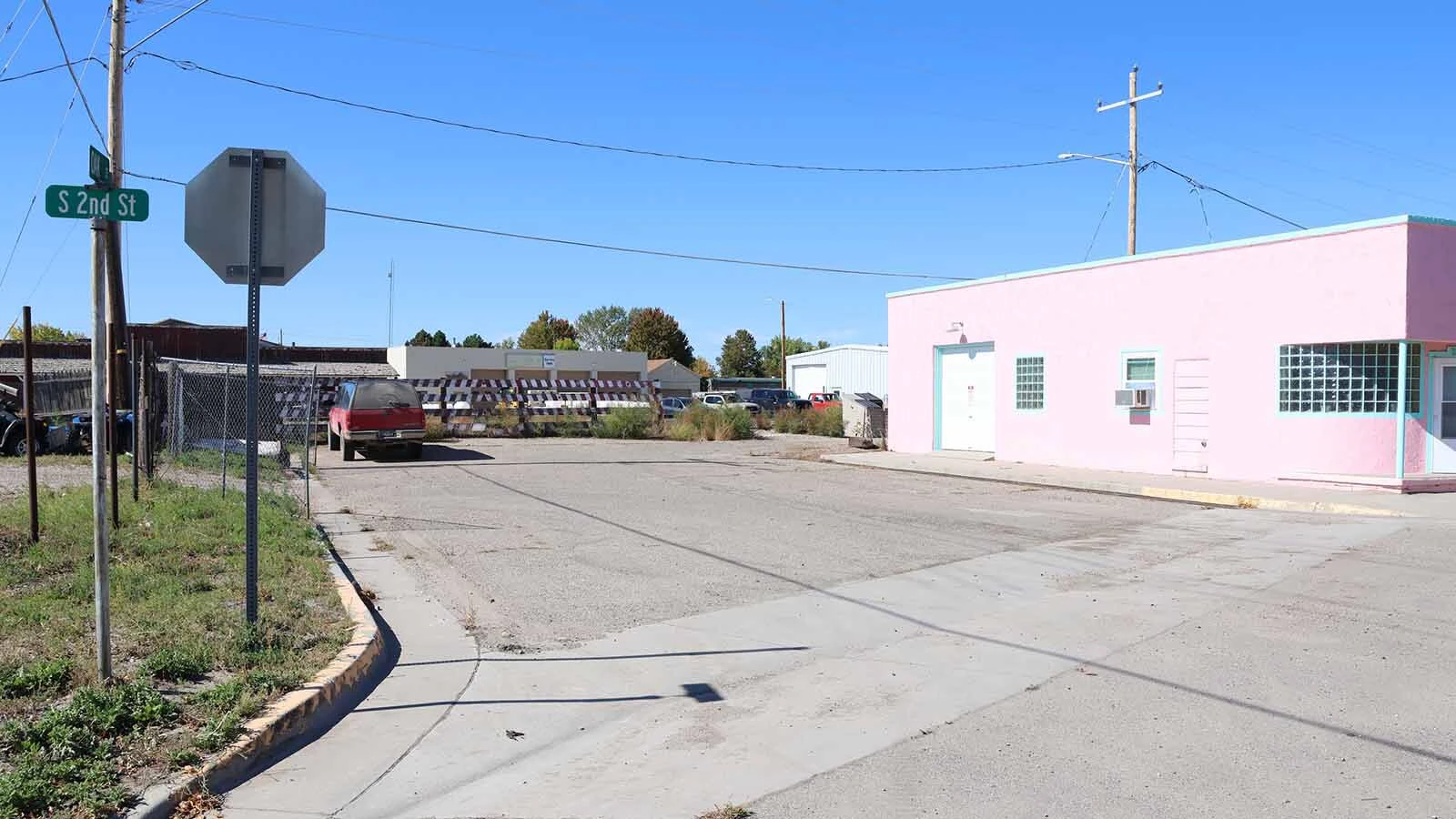
Barricades at the end of Oak Street went up after the accident that claimed five teens. They remain today. (Dale Killingbeck, Cowboy State Daily) 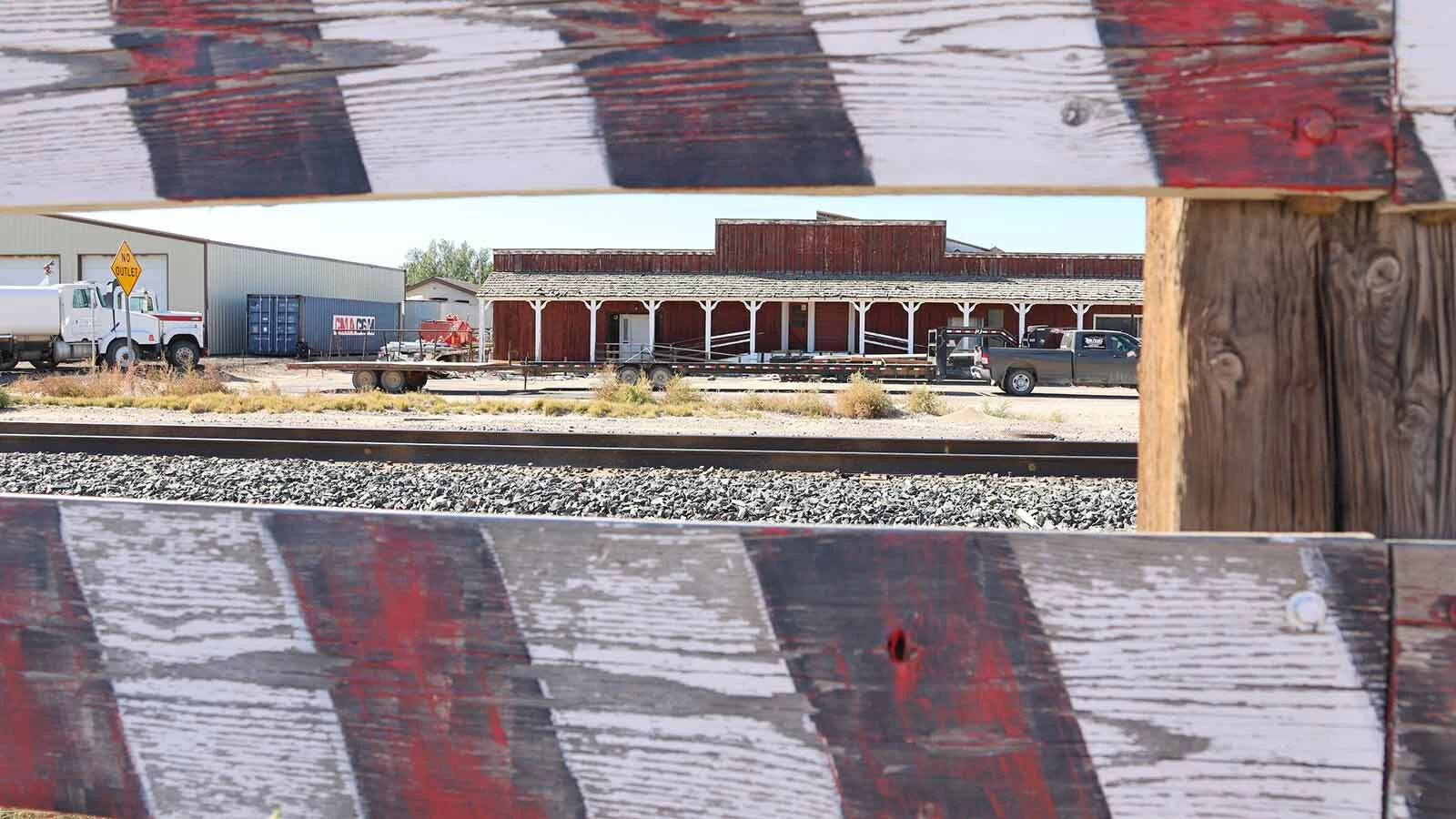
The former feed store and tracks where the five teens lost their lives just after 8 p.m. on Aug. 2, 1994. (Dale Killingbeck, Cowboy State Daily)
Rail Perspective
Longtime retired Burlington Northern conductor Chuck Eckerson of Casper said the victims’ families aren’t alone in living with those memories of loss.
Eckerson said his own experience on passenger trains that struck vehicles remains in his mind. He was involved in an incident that killed a man whose car was struck and flipped over the top of the locomotive cab train in Casper.
He was sent to find the car.
After the investigation, the crew had to finish their shift and take the train on down the tracks.
That night in his crew quarters before working another train back to Casper, he could not sleep.
“All I could do is see that man’s face and the rain coming down on it,” he said.
Eckerson was not on the freight that struck the teens’ car but knew the brakeman who was sitting in the cab during the incident. That brakeman is no longer alive, but told him about the incident.
“It took them until the end of town to get the train stopped,” Eckerson said.
He said the brakeman told him he saw the faces of the teens in the instant before the engine struck the car.
“It really screws up railroad men when we hit someone,” Eckerson said.
Contact Dale Killingbeck at dale@cowboystatedaily.com
Dale Killingbeck can be reached at dale@cowboystatedaily.com.