
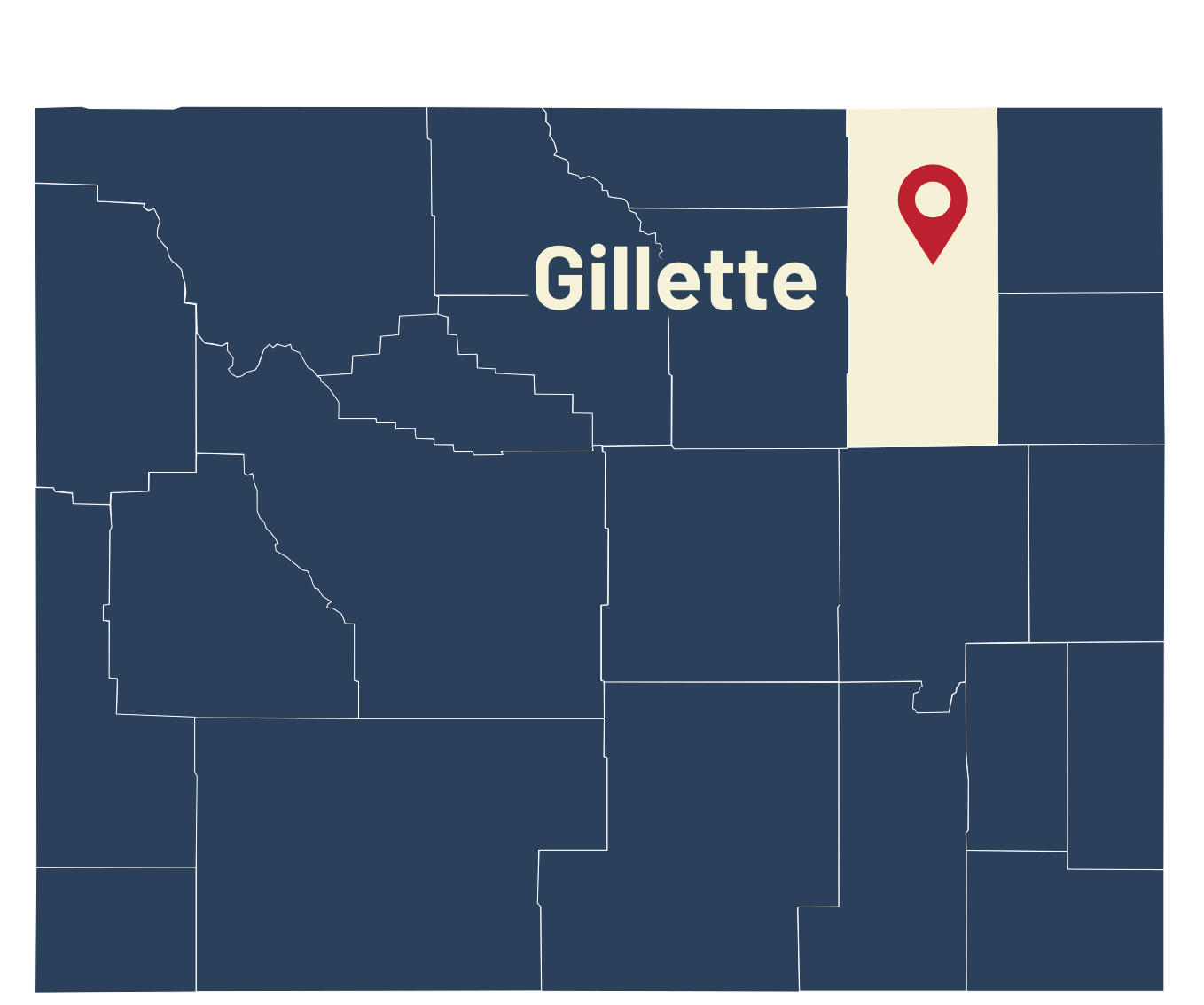
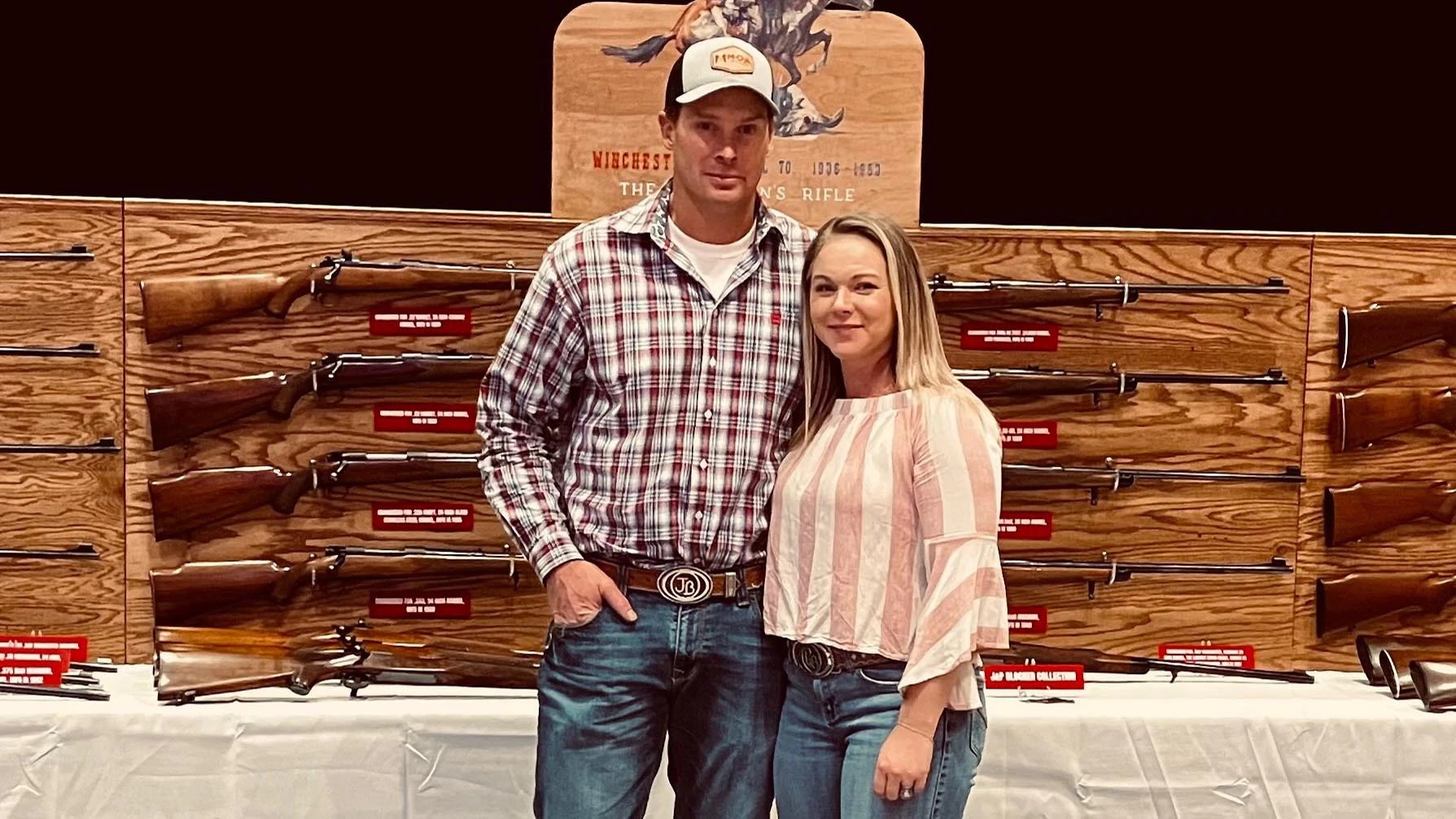
While they’re hardly kids, Patience and Jarod Blocker of Gillette are well outside the typical demographic for accomplished gun collectors.
She’s 34, and he’s about to turn 40.
“When we go to gun shows, we’re like, the babies,” Patience jokingly told Cowboy State Daily.
A Winchester Family
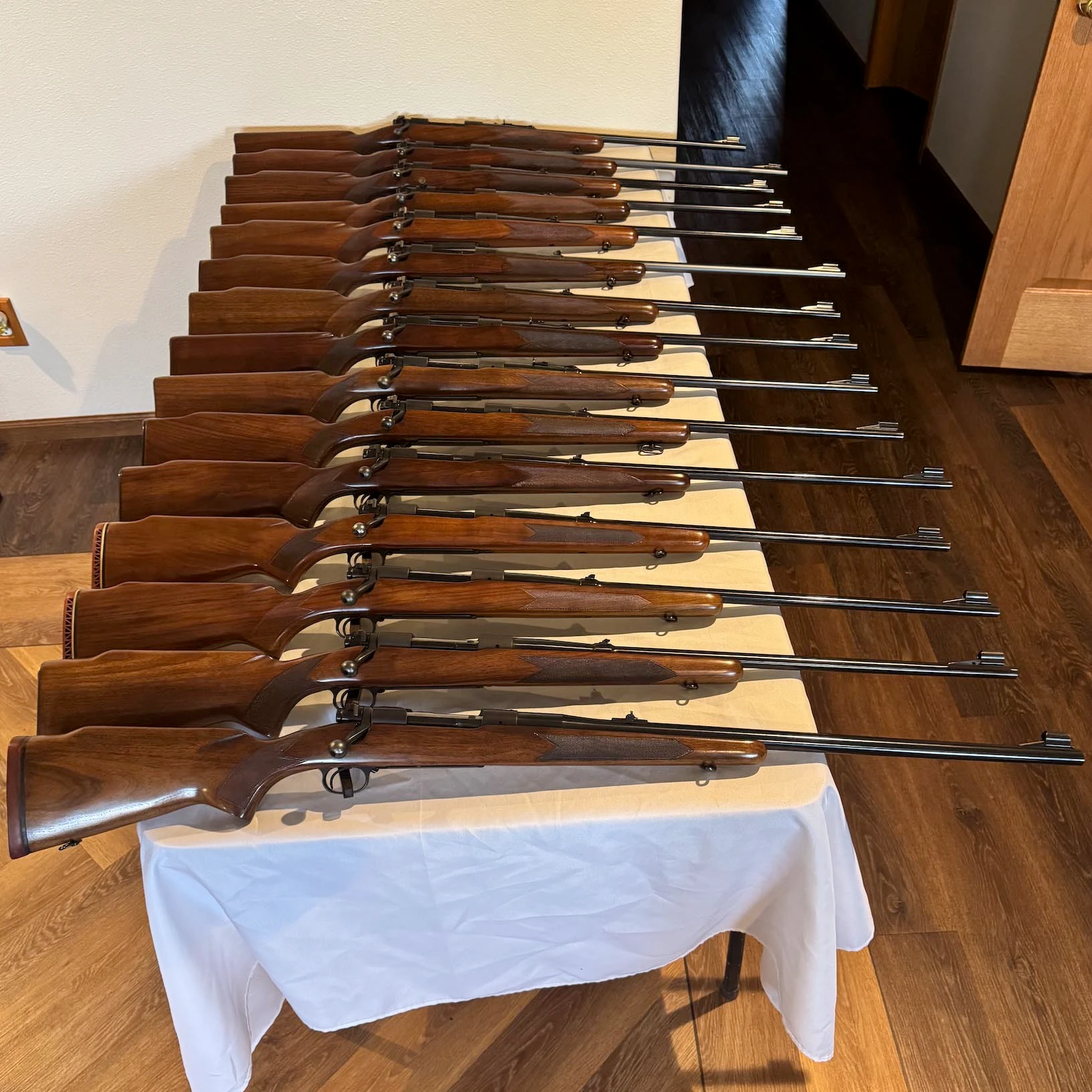
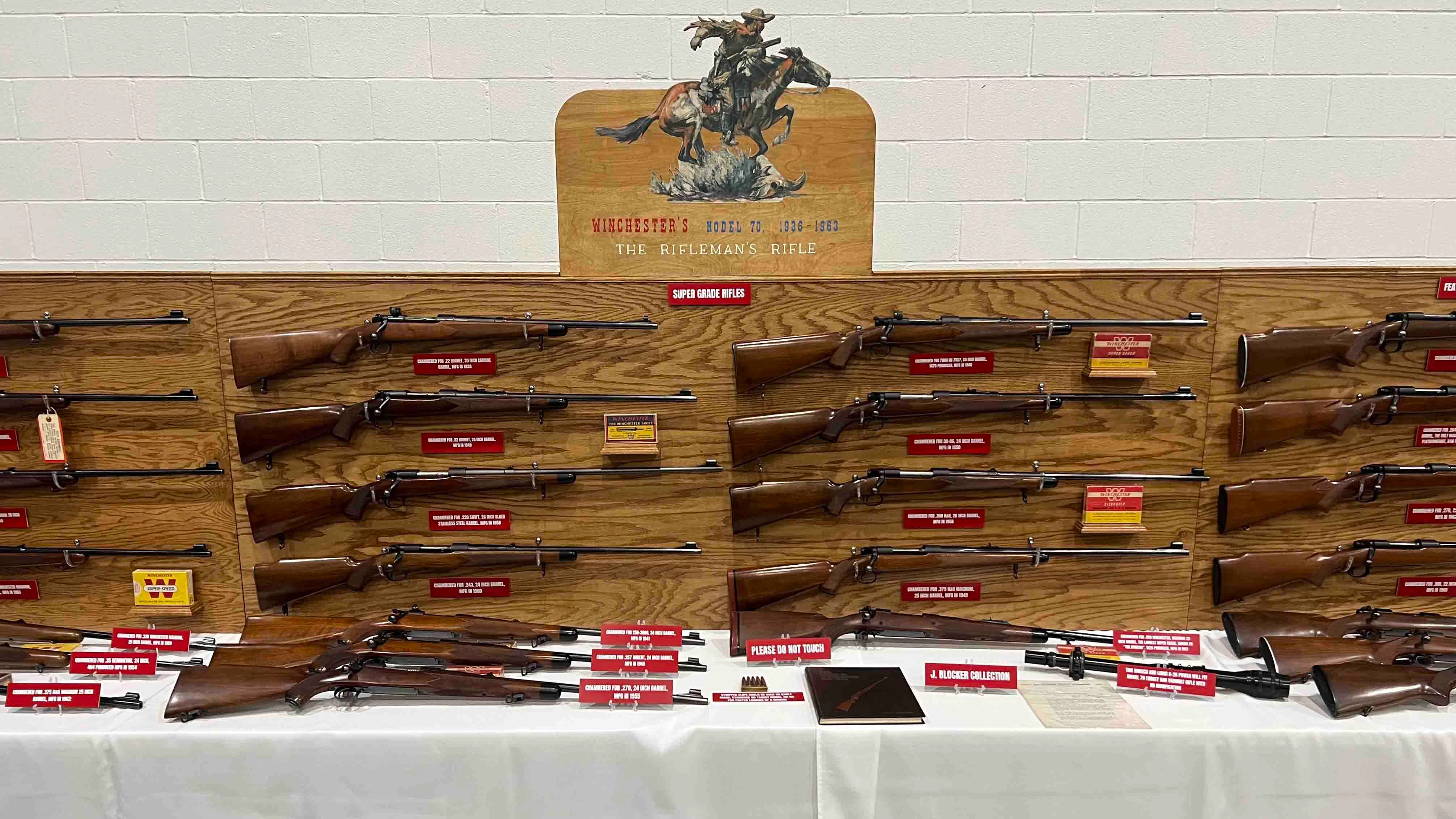
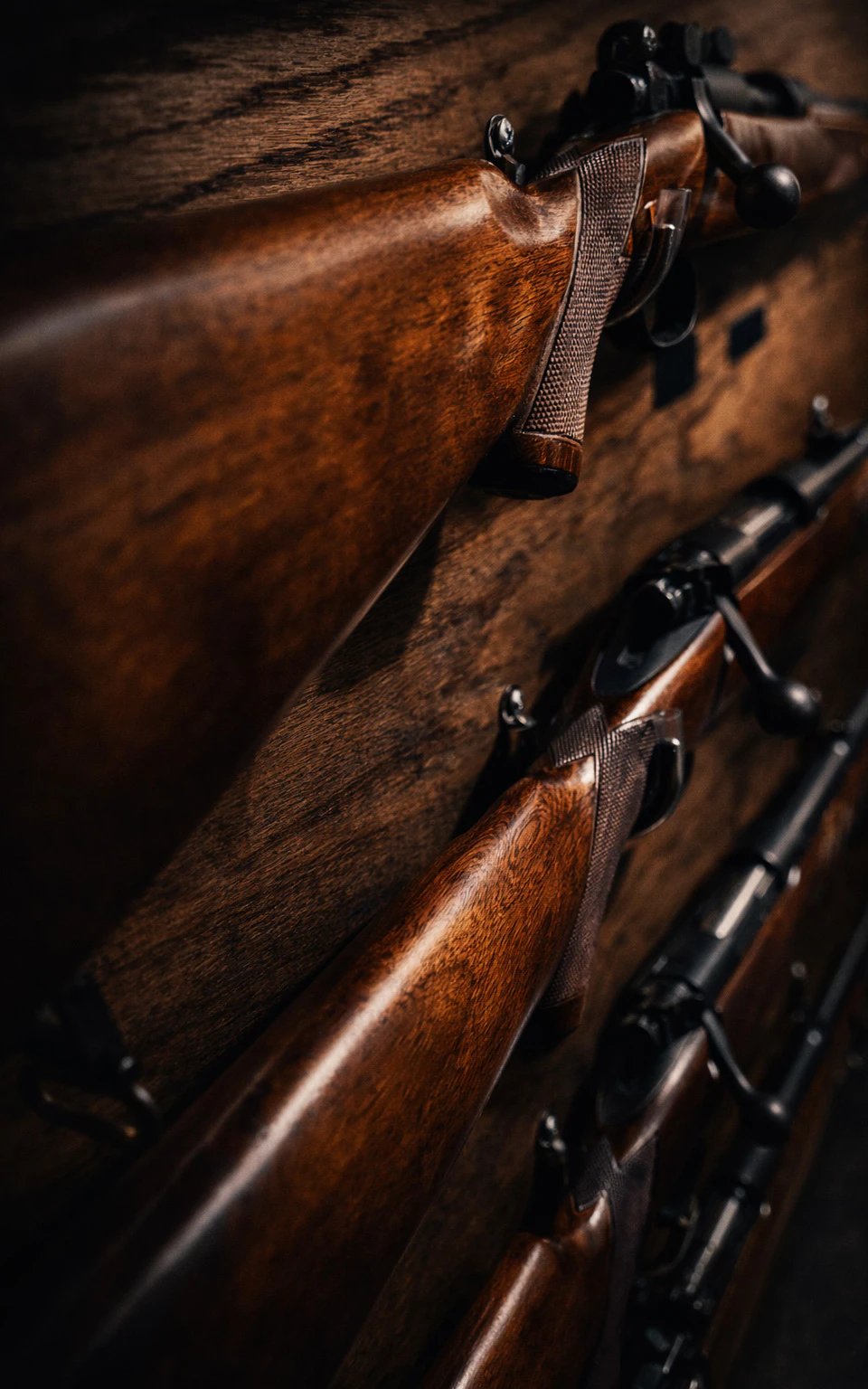
Jarod has a collection of 47 highly prized pre-64 Winchester Model 70 rifles. It represents the full range of standard production rifles from the Model 70’s golden era, 1936 to 1963. And it includes rifles chambered in all 18 of the standard calibers Winchester offered during those years.
That’s a goal many pre-64 fanatics might not reach until they’re well into their senior years. Jarod started his collection when he was 21.
“Back then, you could find pre-64 Winchesters at prices that even a 20-something could reasonably afford,” he said.
Nowadays, standard grade pre-64s in good condition might go for $1,500 to $2,000 each. And for rare super-grade models, sellers could “name their price,” he said.
Gun collecting runs in the family.
His grandfather, Rick Starbuck, specialized in U.S. Marshal-marked service pistols. His father, Kelvin Blocker, loves vintage Winchester slide action (pump action). 22 rifles.
“We’ve always been a Winchester family,” Jarod said.
Patience said she wasn’t “bitten by the pre-64 bug”. She was more of a fan of the “wheel guns” (revolvers) and Winchester lever-action rifles.
But she appreciates the history wrapped up in Jarod’s pre-64 collection. And she hopes to inspire people in their generation, and younger, to the value of serious gun collecting.
“My goal is to try to get the younger generation to realize the importance of the history that you can hold in your hand,” Patience said.
The Blockers had an award-winning display of pre-64 Model 70s at the 2023 Winchester Arms Collectors Association show in Cody.
They plan to take it to another level at next year’s show, although Patience, who does the couple’s promotional work, wasn’t willing to give away any details.
“It’s going to be badass,” she said.
What Makes Pre-64s So Cool?
To appreciate the significance of Jarod’s collection, a bit of history is in order.
Pre-64 Winchester Model 70s are a hot item for firearms aficionados nowadays, but they had humble beginnings as basic hunting rifles for the everyman.
Winchester introduced the Model 70 in 1936 during The Great Depression.
It’s a bolt-action sporting rifle based off the company’s earlier Model 54, which in turn borrowed heavily from the legendary German Mauser 98 design.
The original Model 70s sold for about $49, about two months’ wages at the time.
So, it was certainly no small investment for working folks struggling to make ends meet. However, the rifles gained a reputation for paying for themselves many times over because of the food they brought to average Americans’ tables.
Before World War II, Winchester Model 70s came equipped with peep sights, not magnified-power rifle scopes. After the war, the rifles came from the factory drilled and tapped to accept mounts for scopes and at that time sold for about $125.
Overwhelmingly, the most popular calibers for Model 70s were .30-06 Springfield and .270 Winchester.
Numerous gunmakers offer rifles in those chamberings today. They remain popular for big-game hunting, particularly in the West, where hunters frequently must make long shots to take down larger animals, such as elk.
Winchester also began offering the Model 70 in an array of designs and calibers. Ranging from varmint rounds such as the .22 Hornet all the way up to African safari powerhouse cartridges such as the .458 Winchester Magnum.
For the most discriminating customers, Winchester offered the “Super Grade,” with extra care going into the design of the hardwood stock and other amenities.
Winchester still makes Model 70 rifles, but what makes pre-64 rifles so special?
It’s not so much a matter of function and accuracy as it is craftsmanship, Jarod said.
In late 1963 and early 1964, Winchester, like many companies at the time, started to trade elegance for manufacturing efficiency.
The company went to stamped checkering on the gun stocks instead of hand checkering.
Plastic replaced metal in some components, and a lesser grade of bluing (protective coating) was used on rifles’ actions and barrels.
That’s why pre-64 rifles are considered a cut above and are prized by collectors.
Collecting vs. Gathering
Jarod said he fell in love with pre-64s when he was a youngster, and his grandfather passed one down to him to use as a hunting rifle.
It was a standard grade, chambered in .30-06, and Jarod came to appreciate its accuracy, reliability, and the craftsmanship.
While his grandfather had a few pre-64s, they weren’t his chief passion, Jarod noted. He was all about those U.S. Marshal pistols.
His grandfather also inspired him to become a gun collector.
And to be clear, that’s not just somebody who buys a lot of guns.
“As my grandfather put it, a lot of people are ‘gun gatherers,’ but only a select few are serious gun collectors,” he said.
“Gun gatherers just buy whatever they like. Gun collectors specialize in one particular thing.”
His experiences with his grandpa's hand-me-down pre-64 cast the mold.
Asked if he still hunts with pre-64 Model 70s, he replied, "Sadly, no.”
It’s a matter of practicality, he said.
Several years ago, he bought a newer Model 70, with a wooden stock. After he had it out in severe rain and snow, the stock warped.
“It really opened my eyes to why everybody these days likes the carbon fiber or composite material hunting rifle stocks,” he said.
And it drove home the point of taking any of his beloved pre-64 rifles out in the field wasn’t worth the risk.
So, he had a hunting rifle custom built, with a weatherproof composite stock. That’s what he packs out into the field, while the pre-64s remain safely at home.
‘What If Wood Could Talk?’
For Jarod, pre-64s represent a different and perhaps better time for hunters and rifle enthusiasts.
“That was back when you could walk into your local hardware store or go to your gun store and put in an order to get that level of accuracy and craftsmanship right out of the box,” he said.
With his collection of standard production pre-64s complete, Jarod has his sights on rarities and oddities.
A few custom-made pre-64s came with special features, or in odd chamberings, such as the 9mm Parabellum, which is generally a pistol cartridge.
Such rifles are considered novelties, he said.
“There are guys who will argue whether those are ‘real’ pre-64s, because they deviated from the Model 70s original intent as a basic big-game hunting rifle," he said.
Patience said she’s not sure she’ll ever be as enthralled with pre-64s as her husband, but she remains fascinated by the history the rifles represent.
“What if wood could talk? What are the stories it could tell? This rifle was made in 1936. Imagine everywhere it’s been, who has had it, and the game that was shot with it,” she said.
Mark Heinz can be reached at mark@cowboystatedaily.com.


