
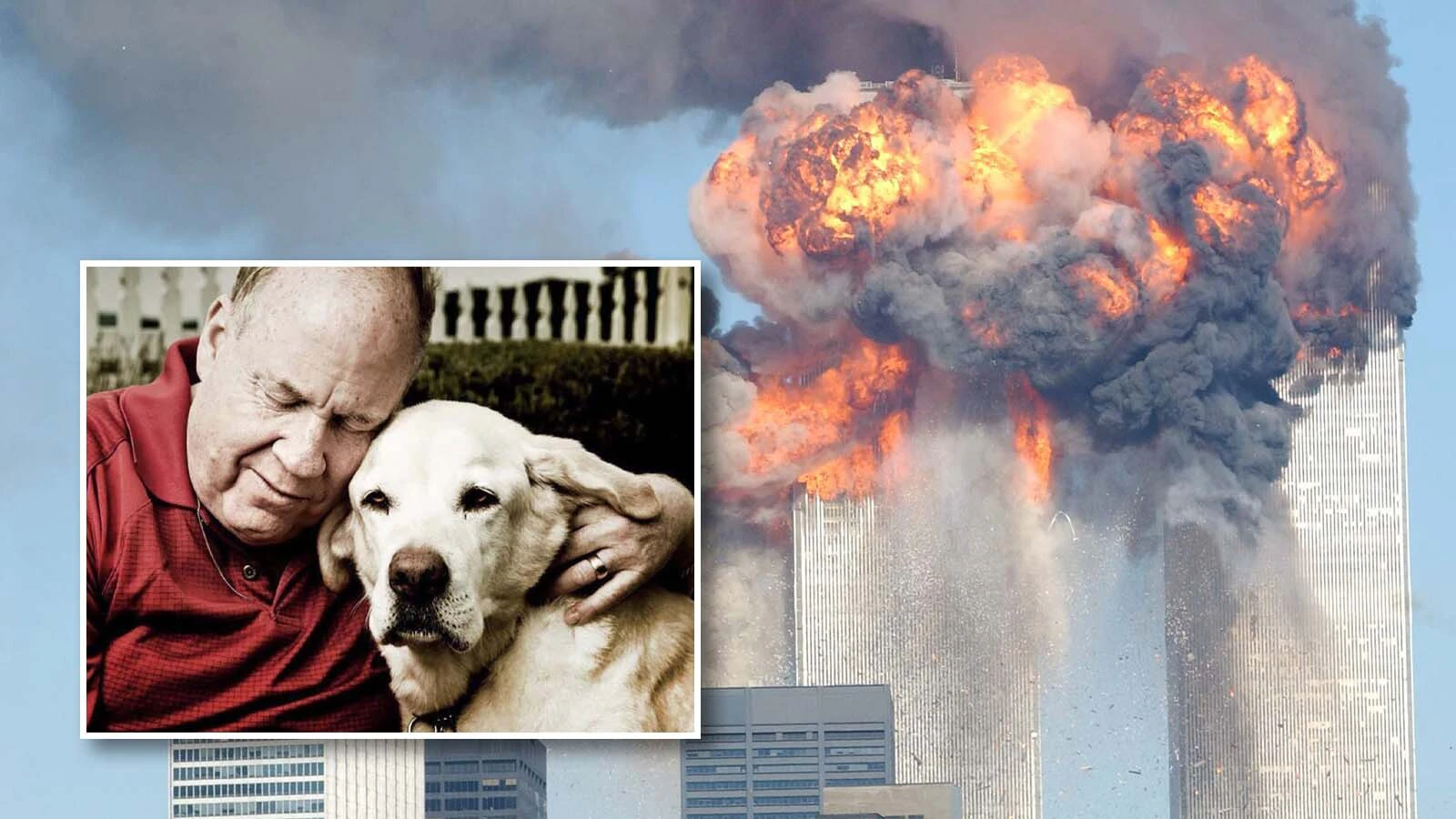
CASPER — Five hours before a hijacked jetliner slammed into the World Trade Center on Sept. 11, 2001, Michael Hingson's guide dog Roselle was afraid.
Roselle, a yellow Labrador, hated thunderstorms. Hingson, who has been blind since infancy, has recalled getting up with her in the middle of the night as a storm passed through.
A few hours later, Roselle was asleep beneath Hingson's desk on the 78th floor of the World Trade Center's North Tower, he said in a recorded account for the National September 11 Memorial & Museum.
American Airlines Flight 11 struck the tower at 8:46 a.m., ripping through floors above Hingson's office. He heard a muffled explosion. The building lurched violently and began to tilt.
Hingson and a colleague, David Frank, thought for a moment the skyscraper might fall over.
Roselle waited beneath the desk.
What happened over the next hour — Hingson, Frank and Roselle descending 78 floors and 1,463 stairs as jet fuel burned above them — became one of the better-known survival stories to emerge from the Sept. 11 terrorist attacks.
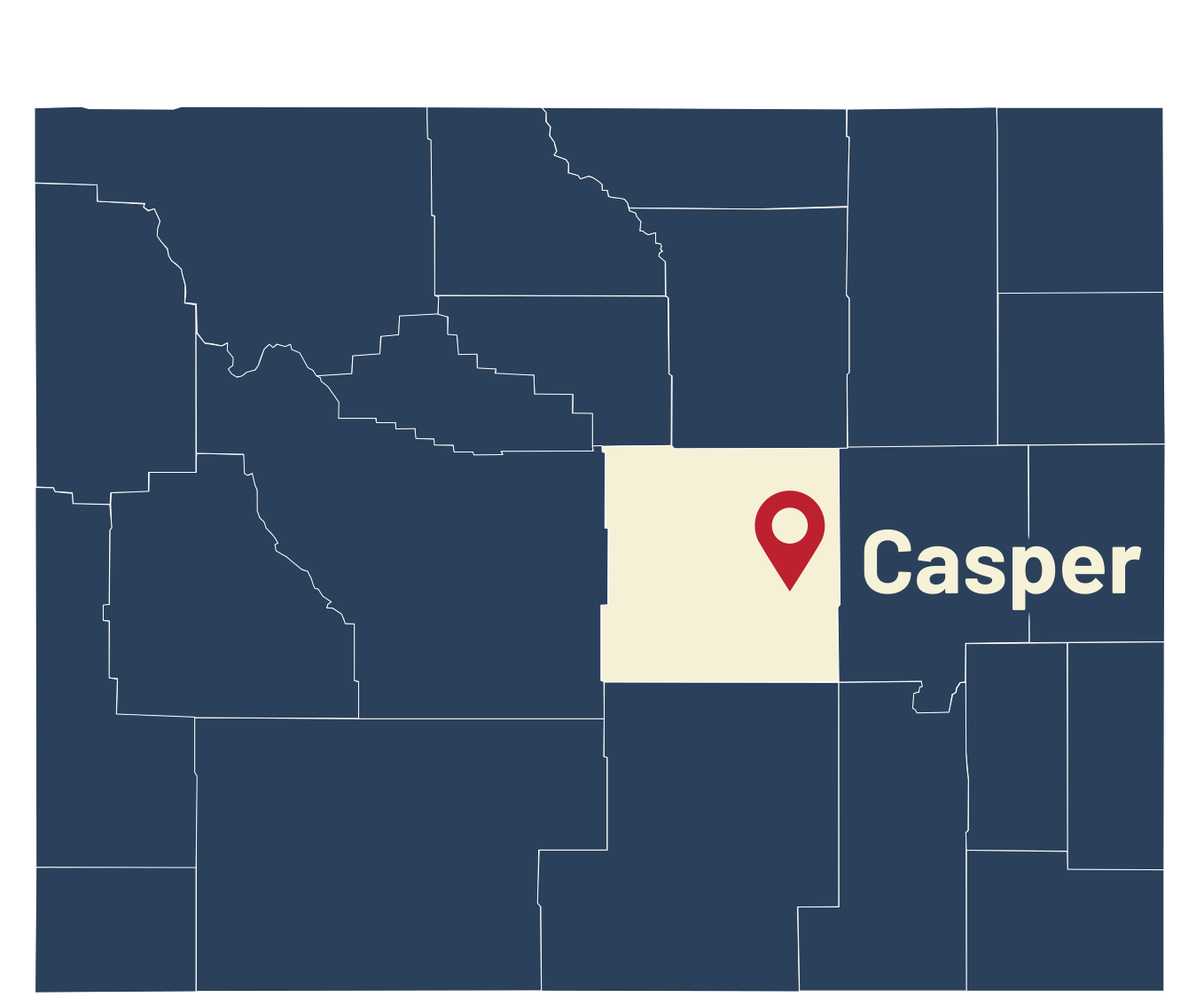
Twenty-five years later, the Wyoming Council of the Blind is bringing the author and international speaker to Casper for three appearances Oct. 23-25, beginning with Wyoming students who are blind or visually impaired and culminating in a free public presentation at Casper College.
The council describes Hingson's message as lessons on how to “live better lives when we focus and don't panic,” even amid extraordinary circumstances.
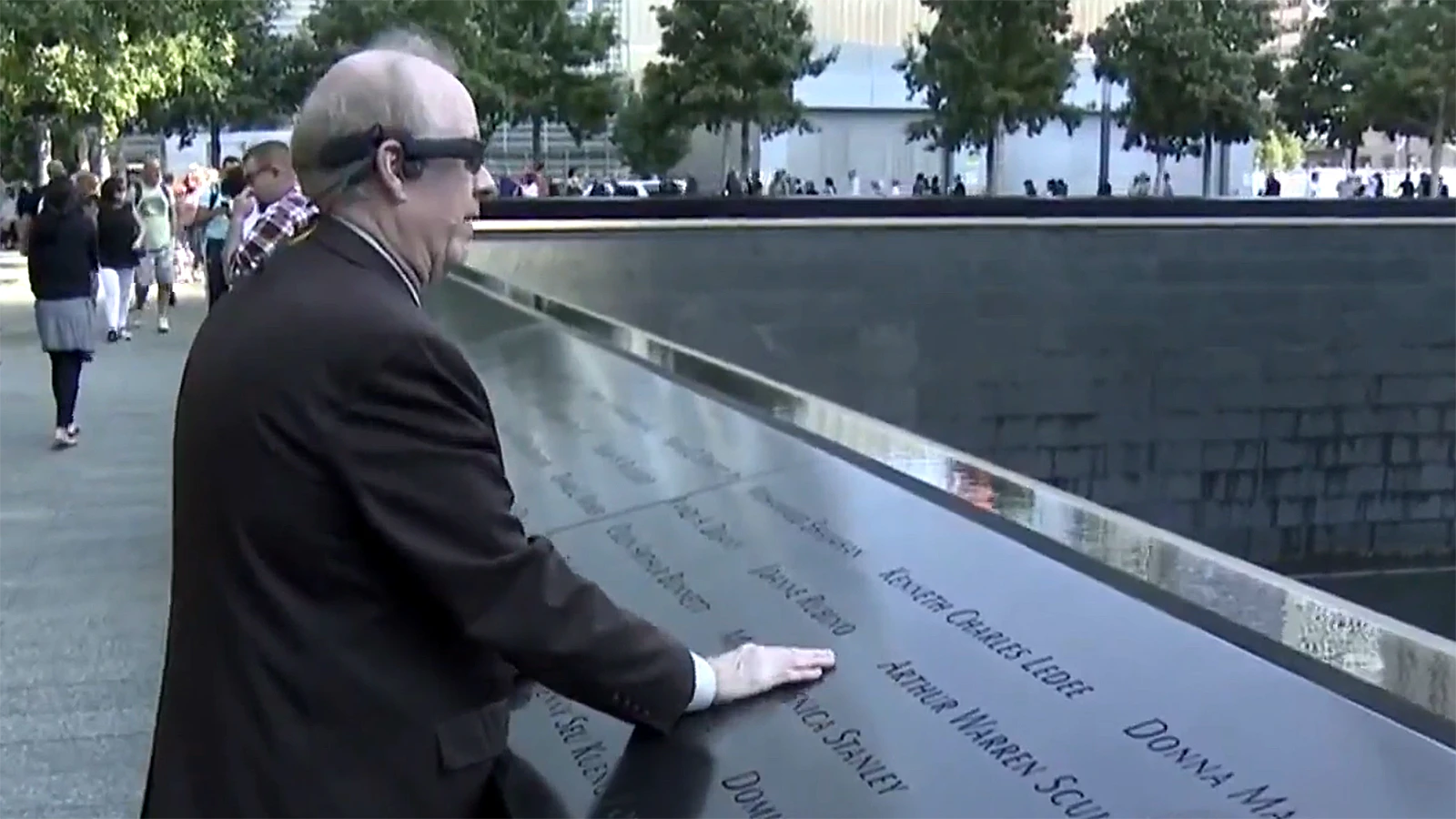
Michael Hingson at the 9/11 Memorial in New York City in 2017, his first visit to the place where once stood the Twin Towers, where he was working 78 floors up with the terrorist planes took them down. (Michael Hingson via YouTube) 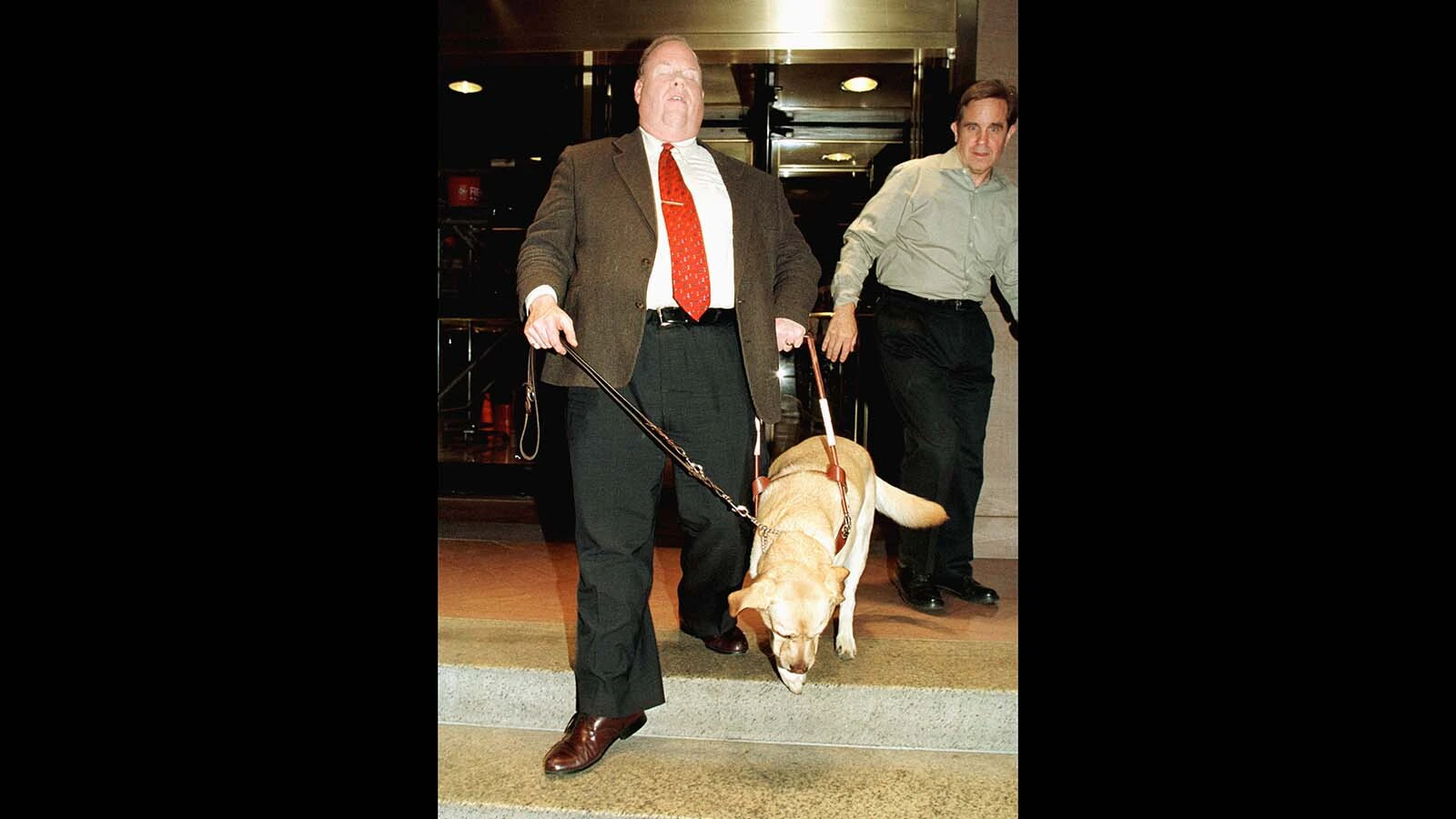
Michael Hingson and guide dog Rossele leave CNN Studios after appearing on a special Larry King Live Show titled, "America's New War" less than a month after the Sept. 11, 2001, terrorist attacks. Hingson, who is blind, survived the attack on the World Trade Center thanks to Rossele, who led him down 78 floors to safety. (Photo by Diane L. Cohen, Getty Images) 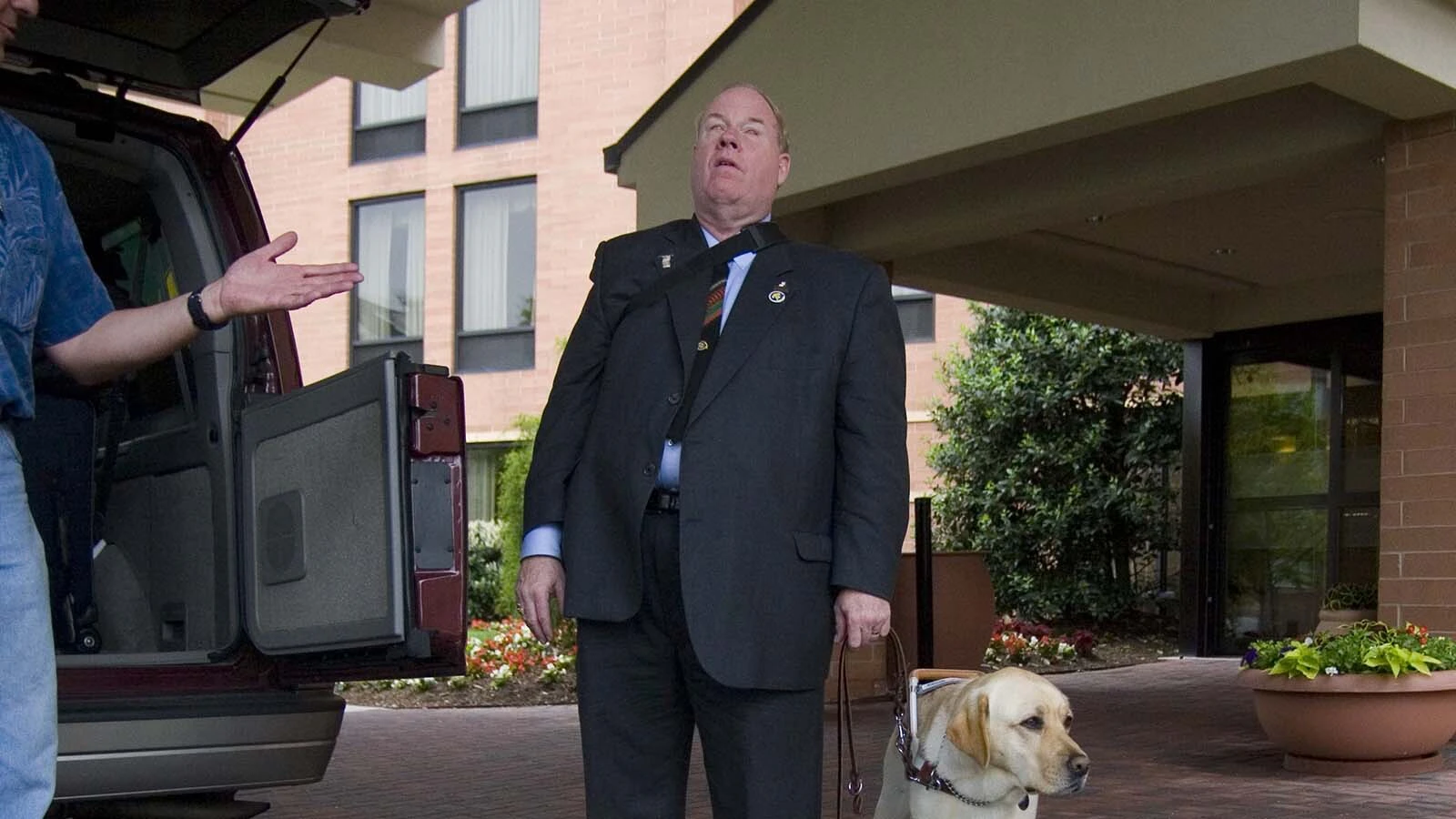
Michael Hingson, who is blind, is open about sharing his story of survival after escaping from the World Trace Center North Tower on Sept. 11, 2001. He was on the 78th floor and helped down to safety by his guide dog, Rosalie. (Getty Images)
78 Floors
Sept. 11 was supposed to be a workday. Hingson was a regional sales manager who helped open an office for a computer data-protection company in the World Trade Center. He arrived around 7:40 that morning to prepare for a sales seminar, he said.
About 50 people were invited.
Frank traveled from the company's California office to help.
Hingson was setting up the conference room and getting equipment ready. Roselle took her customary place beneath his desk.
Then came the impact.
In the recorded account, Hingson recalled the explosion and the sensation of the building moving.
The North Tower eventually stopped swaying, and he, Frank and Roselle made their way to Stairwell B.
Within a few floors, Hingson noticed a familiar smell from kerosine lanterns at Boy Scout camp — it was burning jet fuel.
“I remember the muffled explosion and the feeling of the building tipping,” Hingson later recalled in an interview published by the Texas Governor's Committee on People with Disabilities. “I remember walking into the stairwell and smelling jet fuel. That's a stark memory.”
There were 78 floors between Hingson and the street. He calculated roughly 1,463 stairs, and they started walking.
'We're Going To Die'
The evacuation was not a story of a dog simply dragging its helpless owner to safety.
Hingson has spent years correcting that perception.
Guide dogs and their handlers work as teams. The person gives directions and makes decisions, and the dog helps navigate obstacles and determines when following a command would be unsafe.
As hundreds of people descended, Roselle couldn't always walk in front of Hingson. Sometimes she stayed beside him while he used the railing.
Other people were frightened.
At one point, a woman on the stairs became overwhelmed and said she couldn't continue.
Hingson has recalled a group gathering around her, along with Roselle, to encourage her to keep moving. Roselle licked her.
Around the 50th floor, he recalled Frank telling him, “Mike, we're going to die."
Hingson wasn't having it.
“If Roselle and I can go down these stairs, so can you,” he told him.
Frank began moving a little ahead of Hingson and describing what he could see.
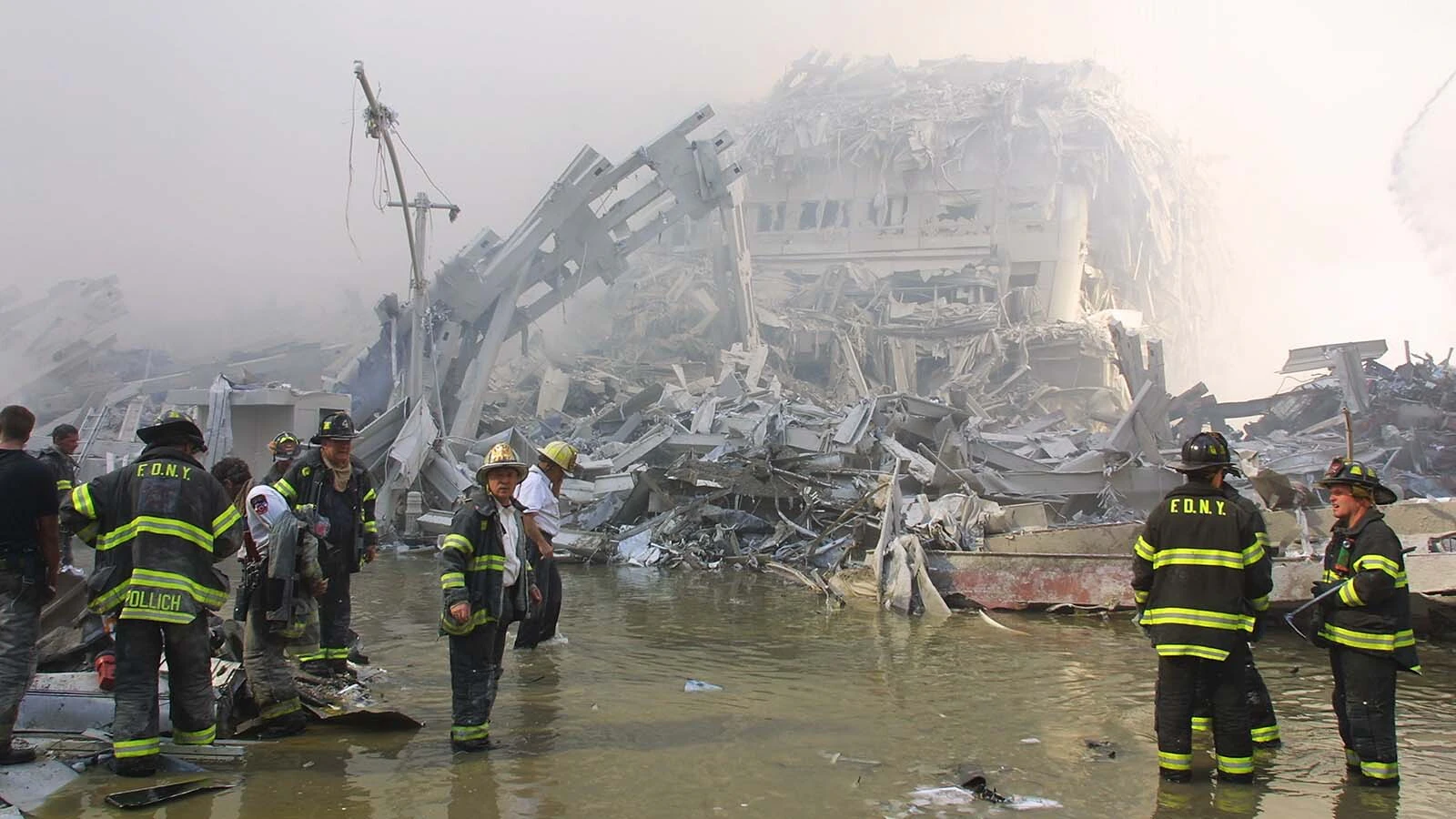
New York City firefighters work at the World Trade Center after two hijacked planes crashed into the Twin Towers on Sept. 11, 2001, in New York. Michael Hingson, who is blind, and his guide dog Rosalie survived. (Photo by Ron Agam, Getty Images) 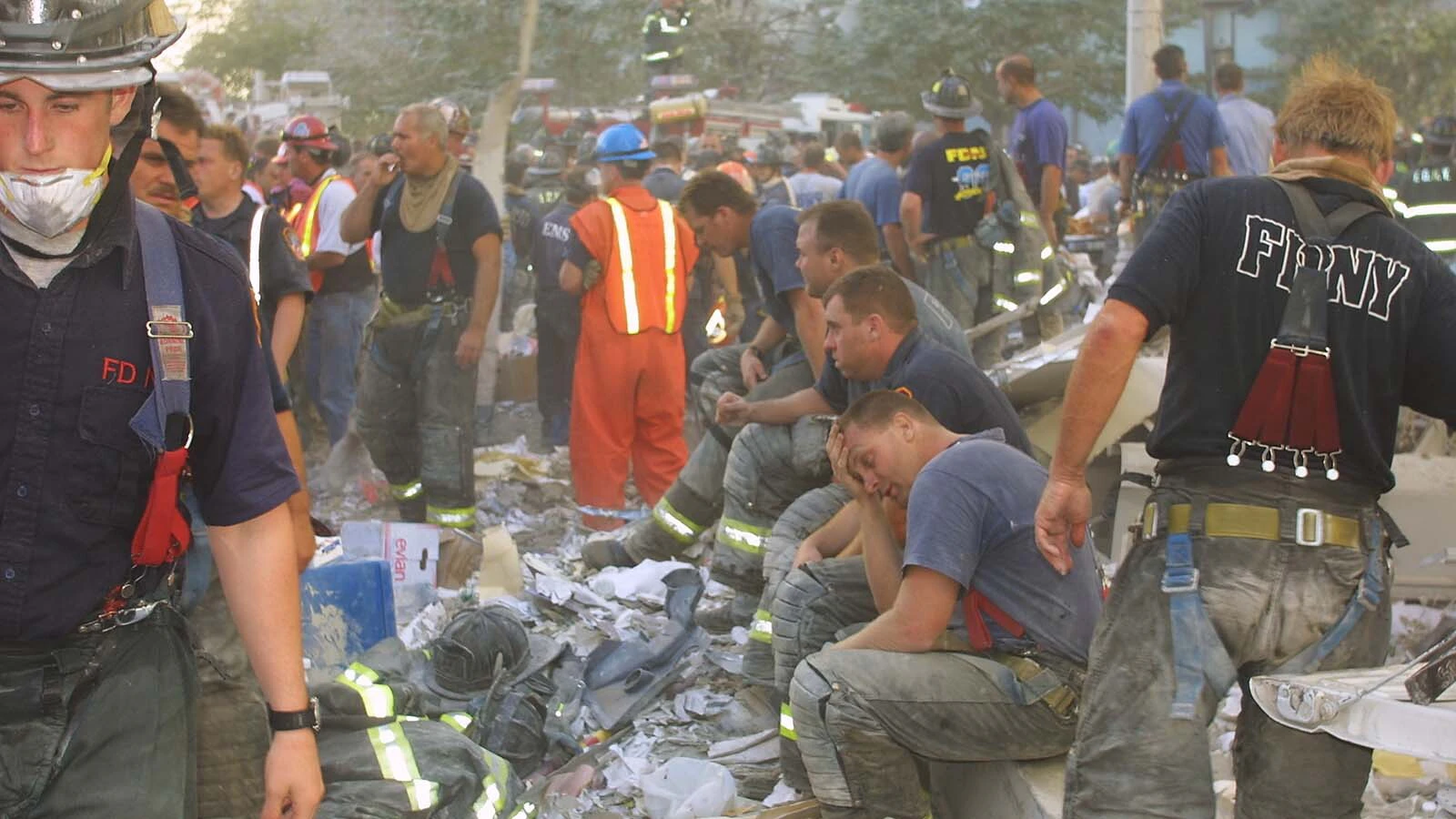
New York City firefighters and other rescue personnel work at the World Trade Center after two hijacked planes crashed into the Twin Towers on Sept. 11, 2001, in New York. Michael Hingson, who is blind, and his guide dog Rosalie survived. (Ron Agam, Getty Images) 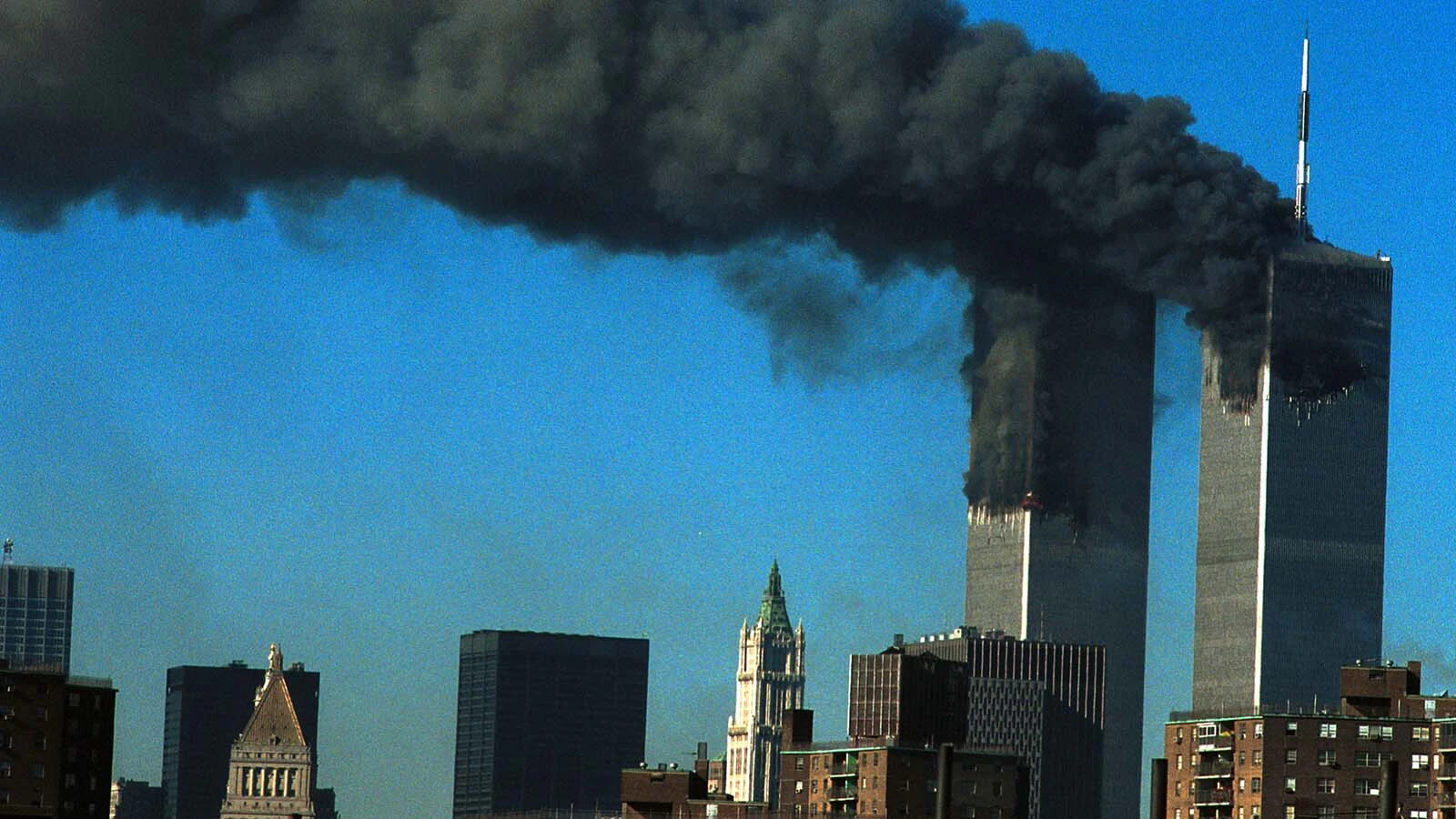
moke pours from the World Trade Center after being hit by two planes Sept. 11, 2001, in New York City. (Photo by Carolyn Schaefer, Getty Images) 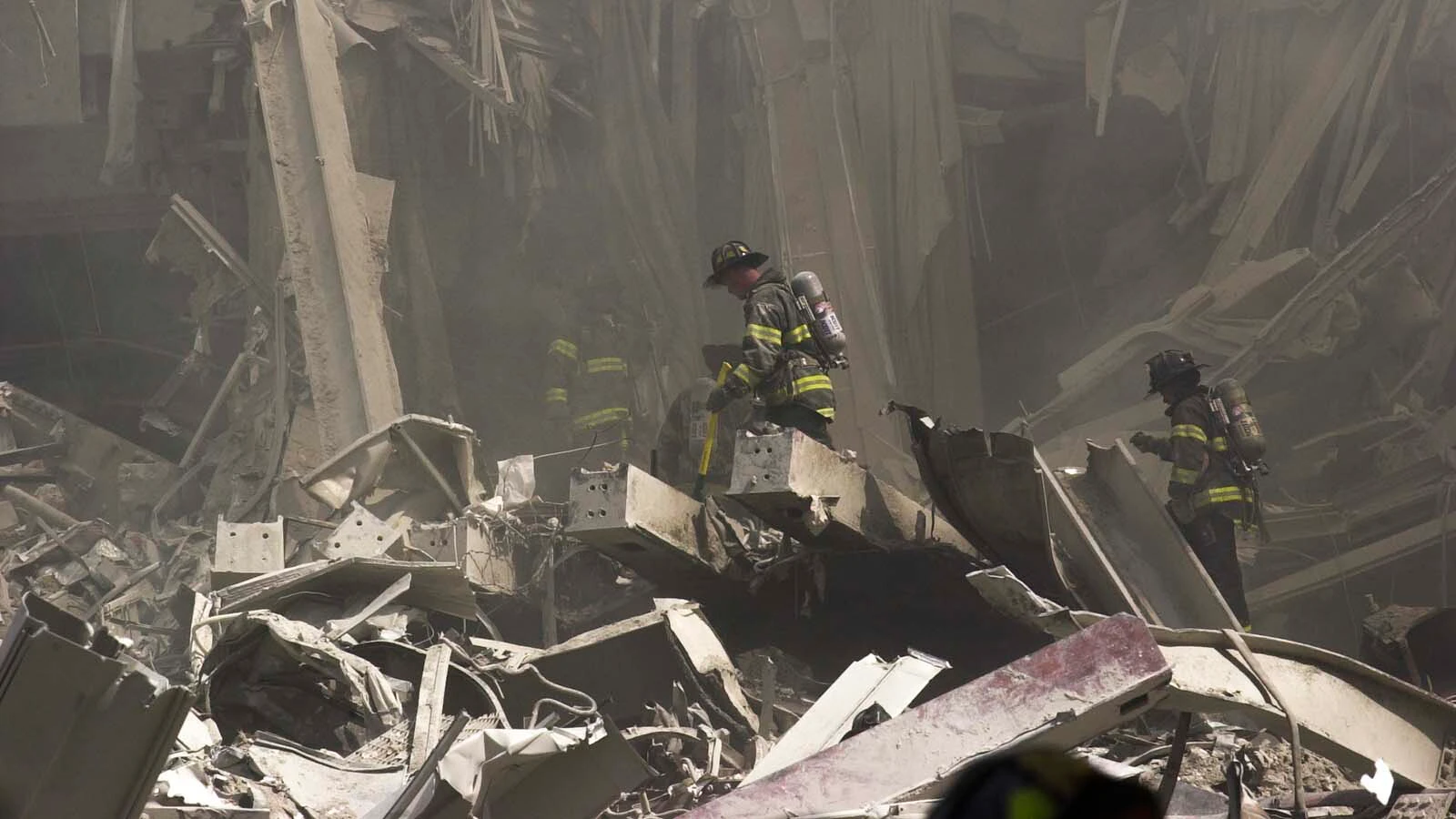
New York City firefighters look for survivors after the collapse of the World Trade Center on Sept. 11, 2001, in New York. Michael Hingson, who is blind, and his guide dog Rosalie survived.
Blind Leading The Blind
After an hour of descending, Hingson and Roselle made it out of the North Tower.
The National September 11 Memorial & Museum says they escaped about 30 minutes before the tower collapsed.
When the South Tower collapsed first, Hingson heard what he described as a roar as people around him began running.
Roselle and Hingson ran, too.
The collapse pushed a massive cloud of dust and debris through Lower Manhattan, reducing visibility so dramatically that suddenly the distinction between the blind man and the sighted people around him wasn't quite so obvious.
People who had been able to see minutes earlier could no longer rely on their eyes.
Hingson could still rely on Roselle.
He commanded her to turn right as they searched for shelter. Eventually, Roselle stopped.
Hingson urged her forward.
She wouldn't go.
They were at the top of stairs leading into the Fulton Street subway station.
Hingson has recounted encountering a woman there who was frightened because she couldn't see through the dust and feared falling down the stairs.
She asked for help.
The man who had been blind essentially his entire life helped her.
Survival
Hingson and Roselle became national figures in the years after the attacks.
Their story became the 2011 book, “Thunder Dog: The True Story of a Blind Man, His Guide Dog, and the Triumph of Trust at Ground Zero.”
Roselle continued working as Hingson's guide dog for years after Sept. 11. She died in 2011 at age 13.
Part of her remains connected to the history of that morning.
Roselle's metal chain collar, complete with six tags, is now part of the National September 11 Memorial & Museum's collection.
The museum describes the pair's escape as one built on calm and trust.
“As others began to panic, Roselle stayed composed,” the museum says in its collection description. “Hingson chose to trust her judgment, and he stayed calm as well.”
Hingson has continued that theme in the decades since.
He has written and spoken about the idea that surviving the North Tower wasn't the work of one extraordinary person — or even one extraordinary dog.
“I didn't survive because I was the strongest person on the 78th floor,” Hingson wrote this year. “I survived because I was part of a team.”
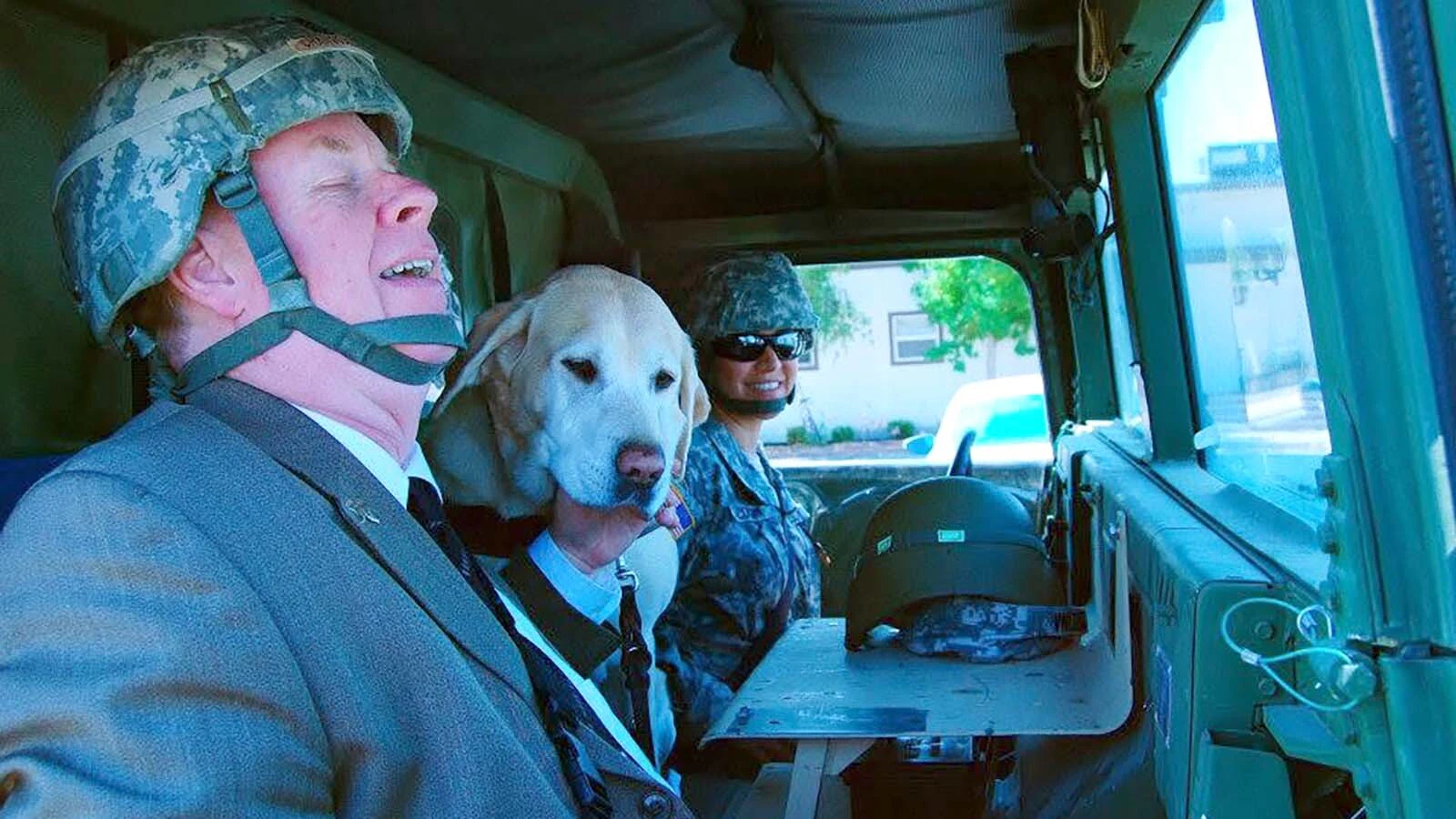
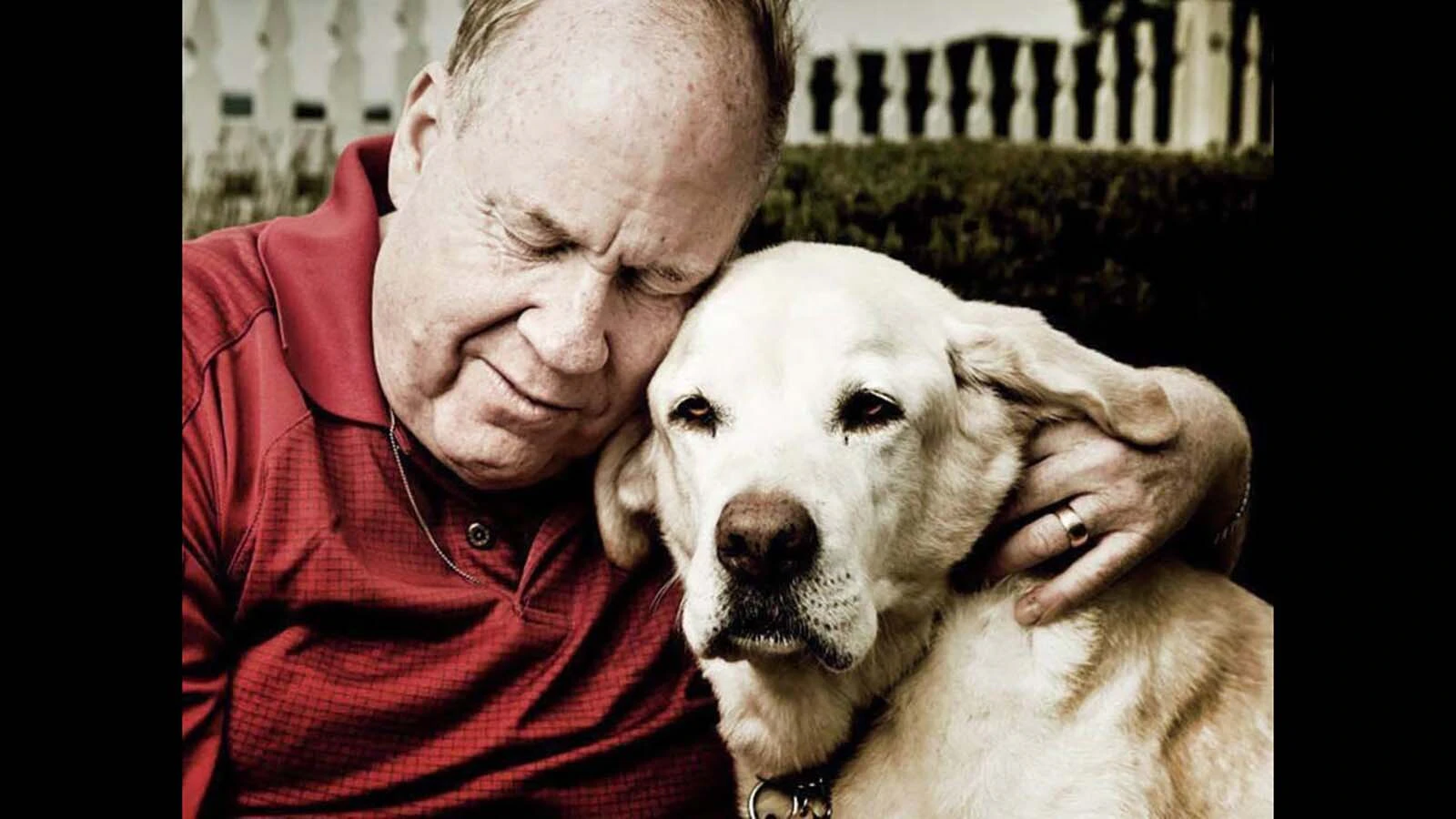
Michael Hingson with his former guide dog Rosalie, who helped him navigate the stairs down 78 floors of a crumbling World Trade Center North Tower on Sept. 11, 2001. (Michael Hingson via Facebook) 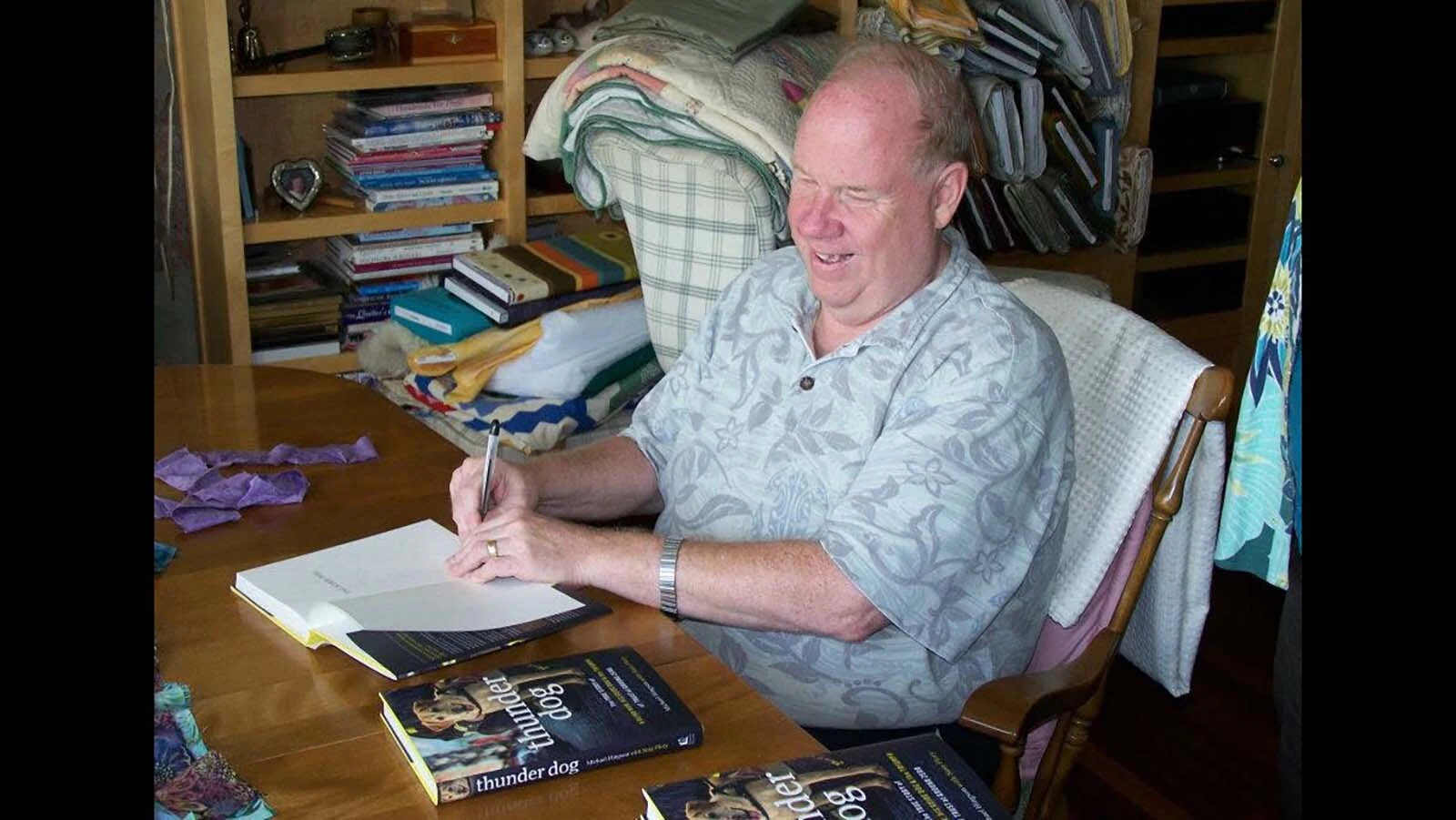
Michael Hingson signs copies of his book "Thunder Dog," about his former guide dog Rosalie, who helped him navigate the stairs down 78 floors of a crumbling World Trade Center North Tower on Sept. 11, 2001. (Michael Hingson via Facebook) 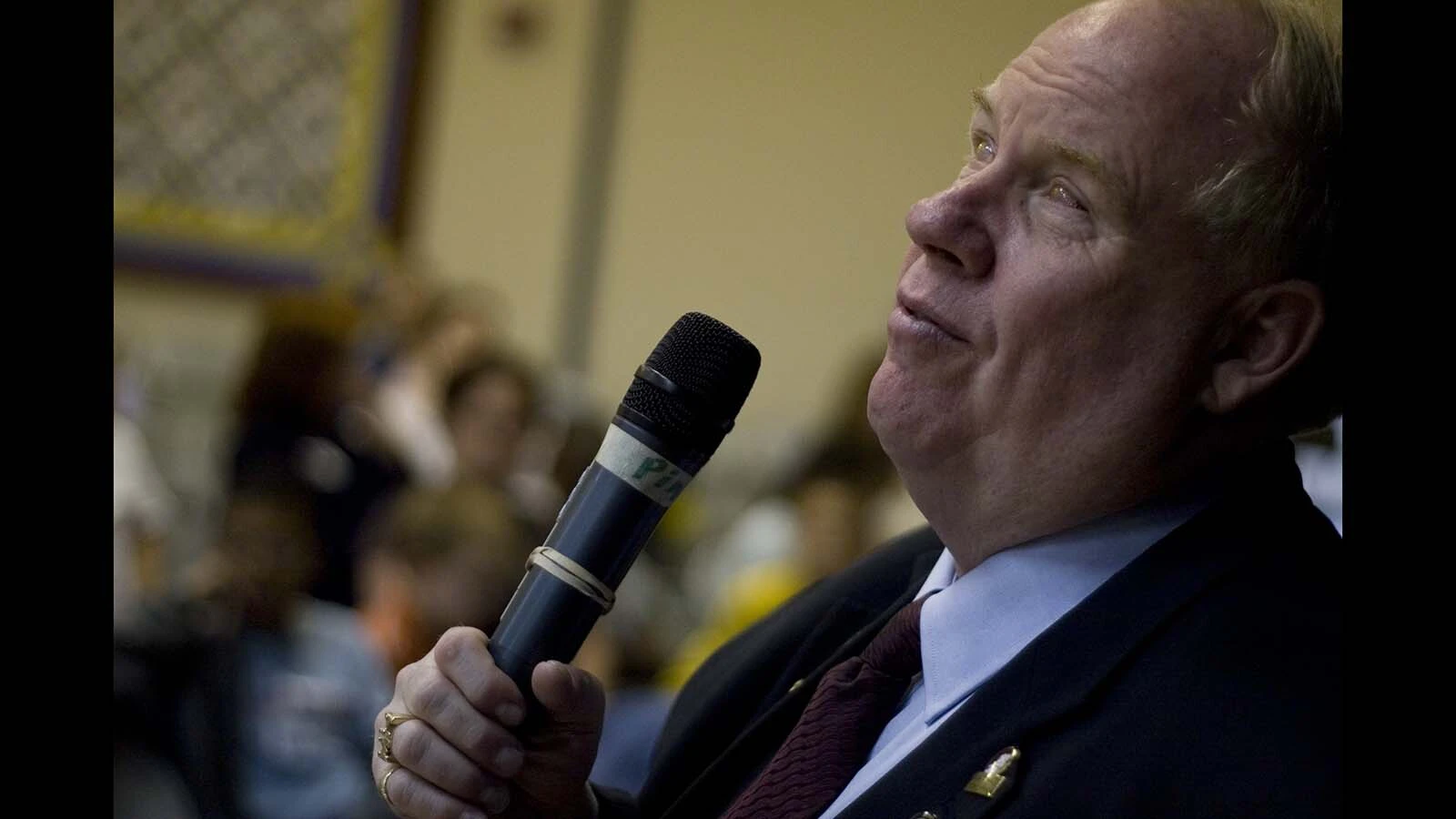
Michael Hingson, who is blind, is open about sharing his story of survival after escaping from the World Trace Center North Tower on Sept. 11, 2001. He was on the 78th floor and helped down to safety by his guide dog, Rosalie. (Getty Images)
Wyoming Remembers
Hingson's visit comes during a year when Wyoming has been looking back at its own connection to a day that happened thousands of miles away but changed life across the country.
In Lander, one of those connections has lasted all 25 years.
A month after the attacks, a handful of local bagpipers gathered as part of a nationwide remembrance and played together.
It was supposed to be a one-time tribute. Instead, it became the Lander Pipe Band.
The group has played at local Sept. 11 memorial services ever since and has grown into a fixture in the central Wyoming community.
“We can't bring those people back, but we can surely honor them,” founder Melissa Bautz told Cowboy State Daily in September.
A quarter-century later, she said the memory hasn't faded.
“I remember that feeling like it was yesterday.”
Now Wyoming will hear from someone who was inside one of the towers when that day began.
Coming To Casper
Hingson's Wyoming visit begins Oct. 23 with perhaps his most important audience of the weekend.
He will meet at Casper College with Wyoming students who are blind or visually impaired.
The Wyoming Council of the Blind says one of the central lessons of the student program is simple: “Disability does NOT mean a lack of ability.”
Students will also hear about adaptability, independence and what the council calls “Trust and Teamwork from canines.”
The following afternoon, Hingson will speak to Wyoming Council of the Blind members, their families and other Wyoming residents who are blind or visually impaired.
Then the doors open to everyone.
Hingson will present “Turning the Tails on Terror in Our Uncertain and Scary World” at 1:30 p.m. Oct. 25 at Wheeler Concert Hall in the Casper College Music Building.
The Wyoming Council of the Blind says Hingson will discuss not only Sept. 11, but his life with blindness, his partnerships with eight guide dogs and what those relationships taught him about fear, trust and perseverance.
The event is free and open to the public.
Kolby Fedore can be reached at kolby@cowboystatedaily.com.


