
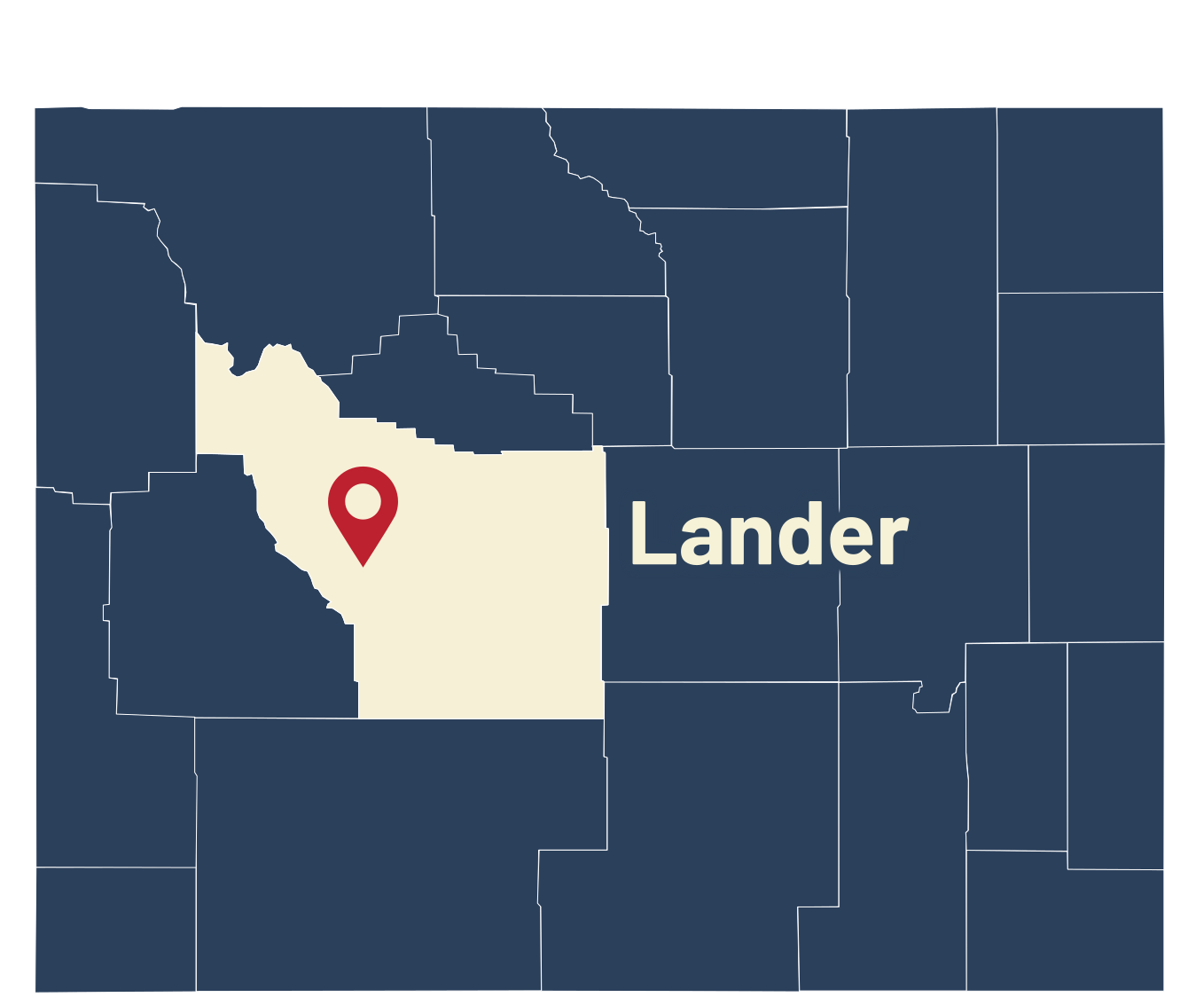

When the United States was attacked 25 years ago on 9/11, Melissa Bautz of Lander said the aftermath was so heartbreaking she needed to do something.
“We can't bring those people back, but we can surely honor them,” Bautz said. “I remember that feeling like it was yesterday.”
Bautz had been teaching three students separately in the art of bagpipes. They all decided to join a continent-wide effort to honor the fallen.
Bagpipe bands across North America — from Canada to Mexico — were gathering to play at the same moment.
One month later, on Oct. 11, 2001, at 3 p.m. MT, Bautz and her students came together for the first time and played Amazing Grace. Then Bautz played a solo of “Green Hills of Tyrol.”
“It was pretty intense just thinking about it,” Bautz said. “It's a hard story to tell without me tearing up.”
For Bautz and her students, it was also the beginning of a new journey. She said they looked at each other on that day and realized that they were now a band, no longer working on their own as solo performers.
“It was amazing. It was utterly overwhelming,” Bautz told Cowboy State Daily. “It was a big deal and since then we play at the 9/11 memorials each year in Lander.”
Playing At Memorial Services
That first performance cemented the band’s mission to serve the fallen, especially their veterans and other public servants.
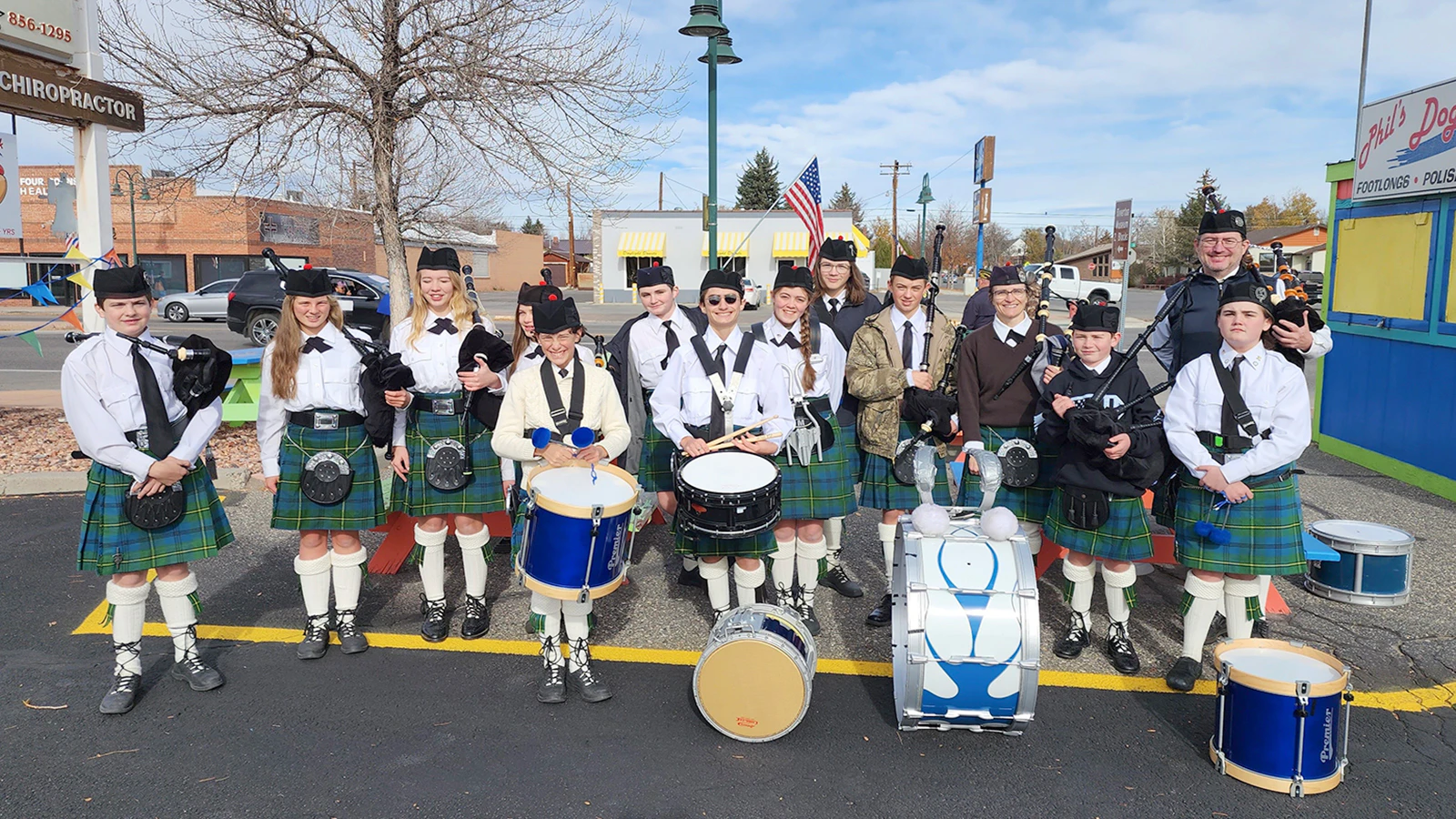
“We still play at public events when asked, and fun events, too,” Bautz said. “But anytime a veteran passes away, we go play for their memorial if the family requests it, which they almost always do.”
Among Bautz’s first students were two firefighters, Bobby Johnston and war veteran Mac Nelson, so playing was especially meaningful for them. Now there are 50 members of the Lander Pipe Band carrying on the legacy, including Bautz’s son.
Twenty are students who started within the last year.
“We dedicated the band mission to honor veterans, first responders, law enforcement and active military,” Bautz said. “We are here to honor those folks.”
At the first 9/11 memorial performance, Bautz said she played “The Green Hills Tyrol” because it is a mournful tune that captured the moment beautifully.
She explained that it is a Scottish song written by a soldier who was in Germany in World War II. He was looking at a battle and his fellow soldiers, and realized he was never going to make it home.
In the poem, he talked about missing the hills of home while he was in the green hills of Tyrol in Germany.
"Bagpipes is a very ironic kind of music,” Bautz said. “It stirs you and is usually surrounded by something tragic.”
Wyoming Bagpipes
Bautz said the Scottish folk music and bagpipes capture the tragedies that followed their people through history. She said they were oppressed by the English for centuries and the Highlanders were evicted from their homeland.
“They had raised sheep and led their lives out on these islands, and then England took over and said, ‘Nope, you don't get to have this land anymore,'” Bautz said. “They had nowhere to go, so they moved to America and the mass migration was really severe.”
Many of these displaced Highlanders ended up settling in Wyoming and brought their traditions. They found a home where they were welcomed by most.
These Scottish sheepherders brought their instruments and built enclaves of bagpiping and drumming in places such as Gillette and Casper.
“Over by Dubois, there was a community called Duncan,” Bautz said. “There was a whole lot of sheepherders that were pipers back in Scotland who brought their instruments with them, and they had come down to Lander to play at performances.”
Over the years those that knew how to play “thinned out.” Bautz said when she arrived in Lander in 1999, people were still around who carried on the traditions from the original settlers two generations later.
“Ray Pike and others were still playing the pipes but they were definitely starting to hang up the saddle, so to speak, because this is a hard instrument to play when you're starting to get up there in age,” Bautz said. “It's just tricky and physically challenging.”
Building A Bagpipe Band
Starting with the three students, Bautz has seen the passion of bagpipes continue to grow in Lander. She began playing in early 1986 and competed across the United States and in Canada and Scotland before coming to Lander to pursue her geology career and start a family.
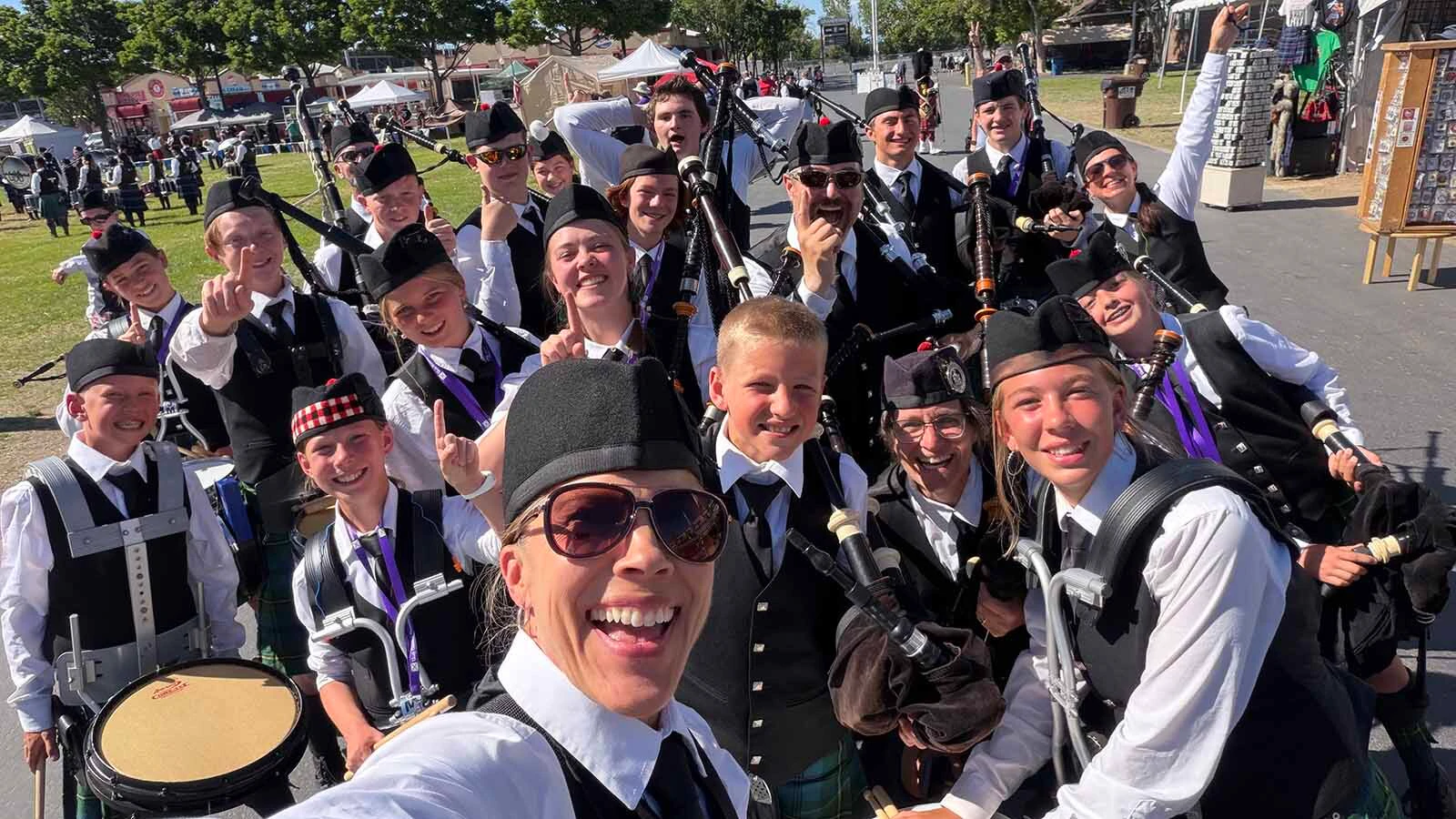
“When I moved to Wyoming there weren't very many bagpipers in Lander at that time,” Bautz said. “But now we have 50 piping and drumming students from a few adult advanced players to kids just beginning.”
The students play at funerals and are trained in the proper protocol for veteran memorials.
“They would first come with me and stand near the graveside over with the 21-gun salute fellows, off to the side in a safe place,” Bautz said. “This is how we teach the kids how to wait for the cue to play Amazing Grace after taps.”
Until recently, Bautz would set up each student with their full pipe sets, which included customizing the pressure of the reeds to an individual player. It is a time-consuming and complicated process that Bautz is now teaching to two teenage students through the Wyoming Arts Council Folk & Traditional Arts Mentoring Grant.
“The girls will learn everything from making sure that the pressure of the reed is appropriate for the student, to making sure the bag is airtight, to making sure that the various fittings on the different parts of the bagpipe are not too loose, but not too tight,” Bautz said.
“If the instrument's uncomfortable, nobody's having fun and nobody's learning.”
Bautz said that it is important to pass on this knowledge alongside how to play the instrument so that the band will continue to play on, especially in honor of Wyoming’s veterans and fallen.
Jackie Dorothy can be reached at jackie@cowboystatedaily.com.


