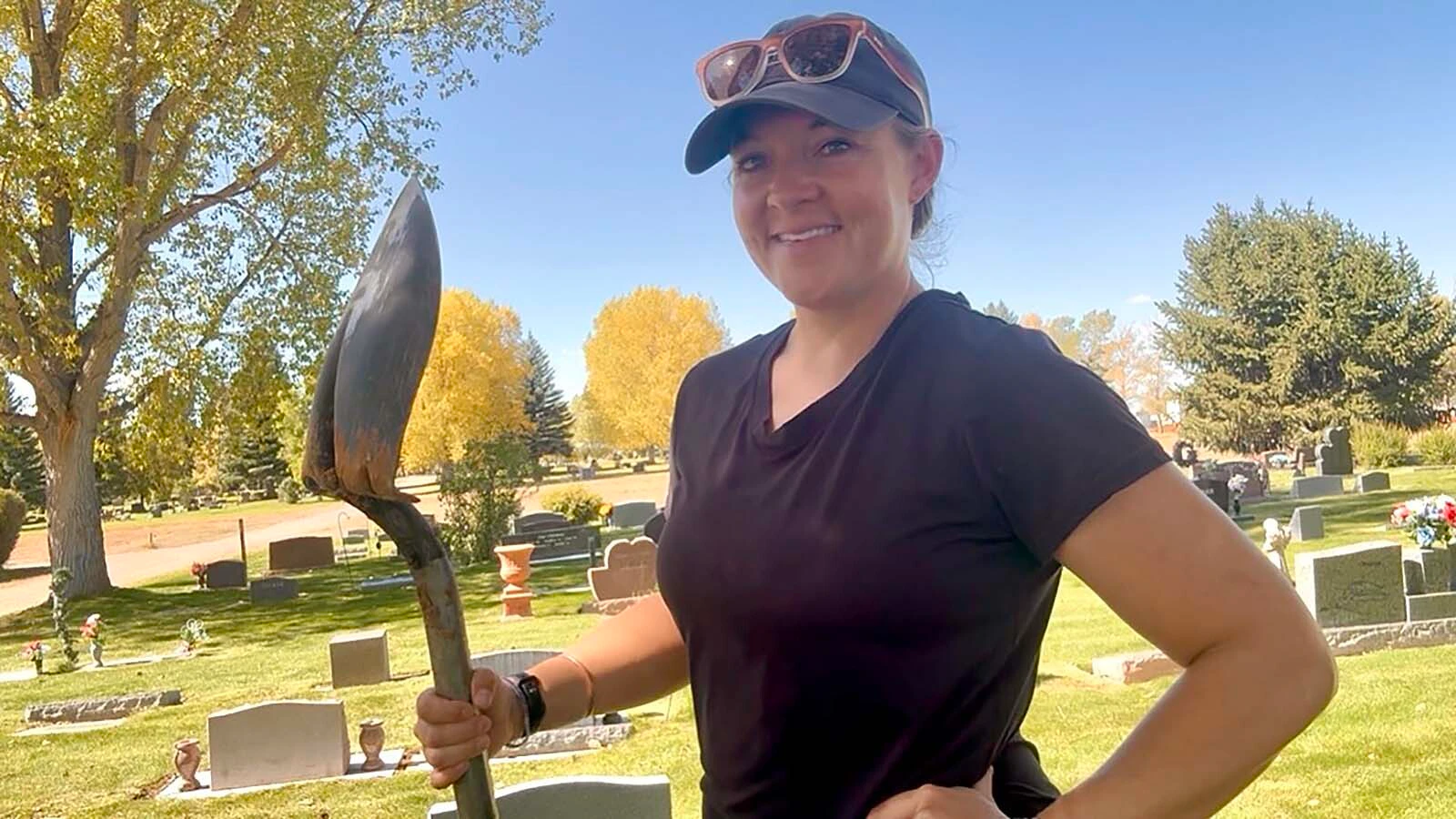
Loni Wilson is in the business of bodies, but most days, the bodies aren't what keep her busy.
It's the grass.
“The grass never, never stops growing,” Wilson said.
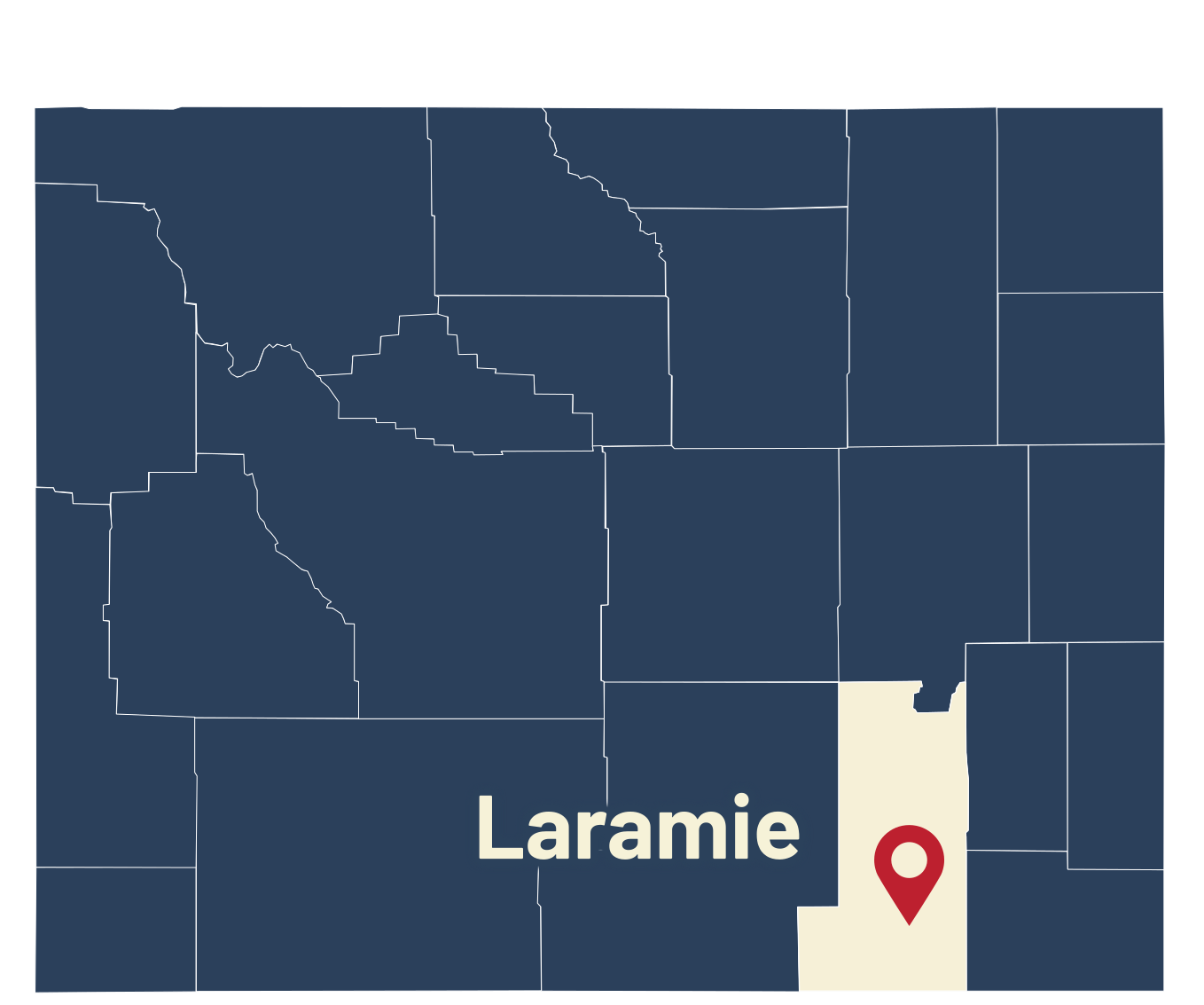
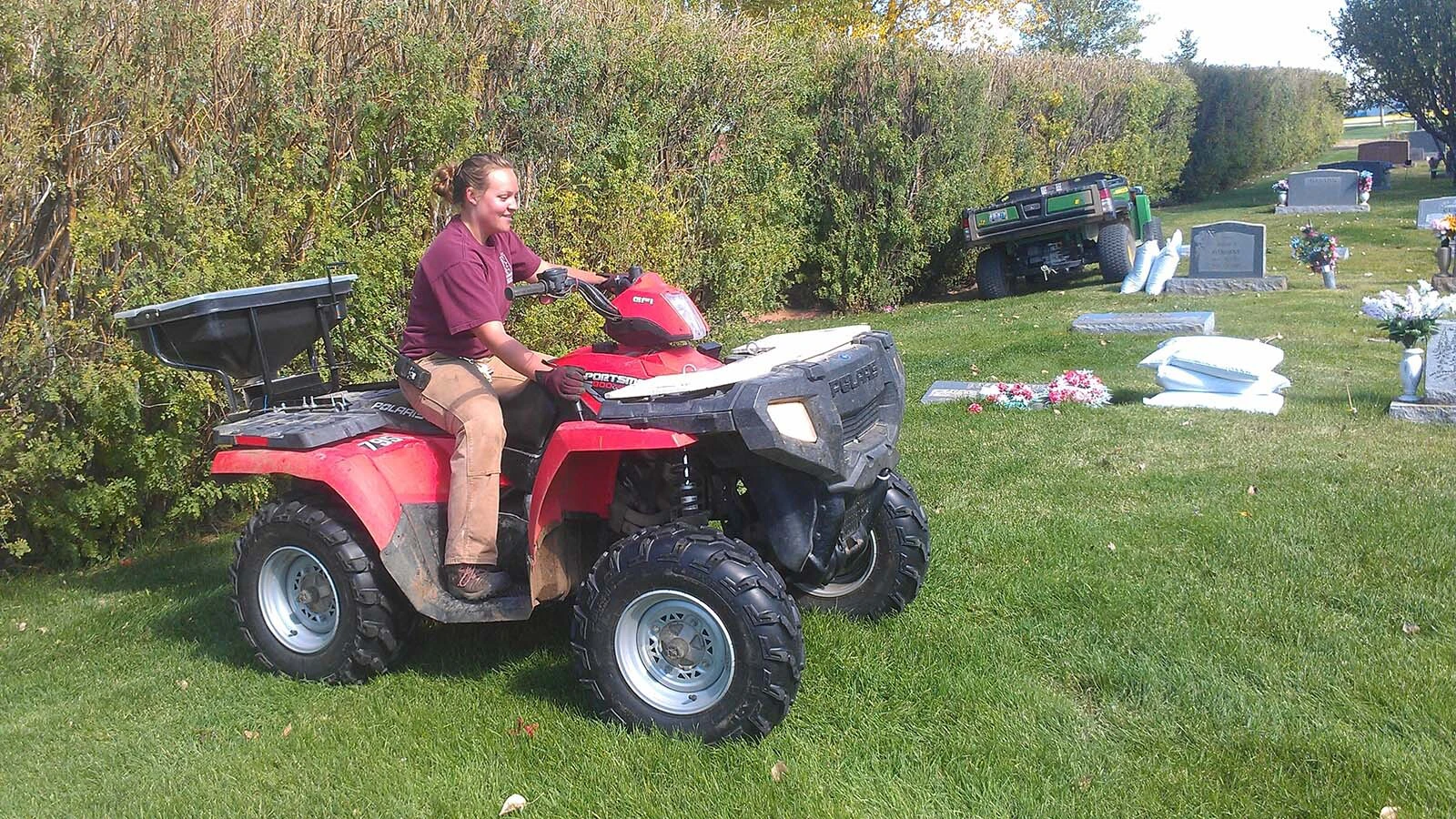
In the summer, two riding mowers run 40 hours a week at Greenhill Cemetery in Laramie, circling headstones beneath a canopy of old cottonwoods so thick that from above it's difficult to see the ground.
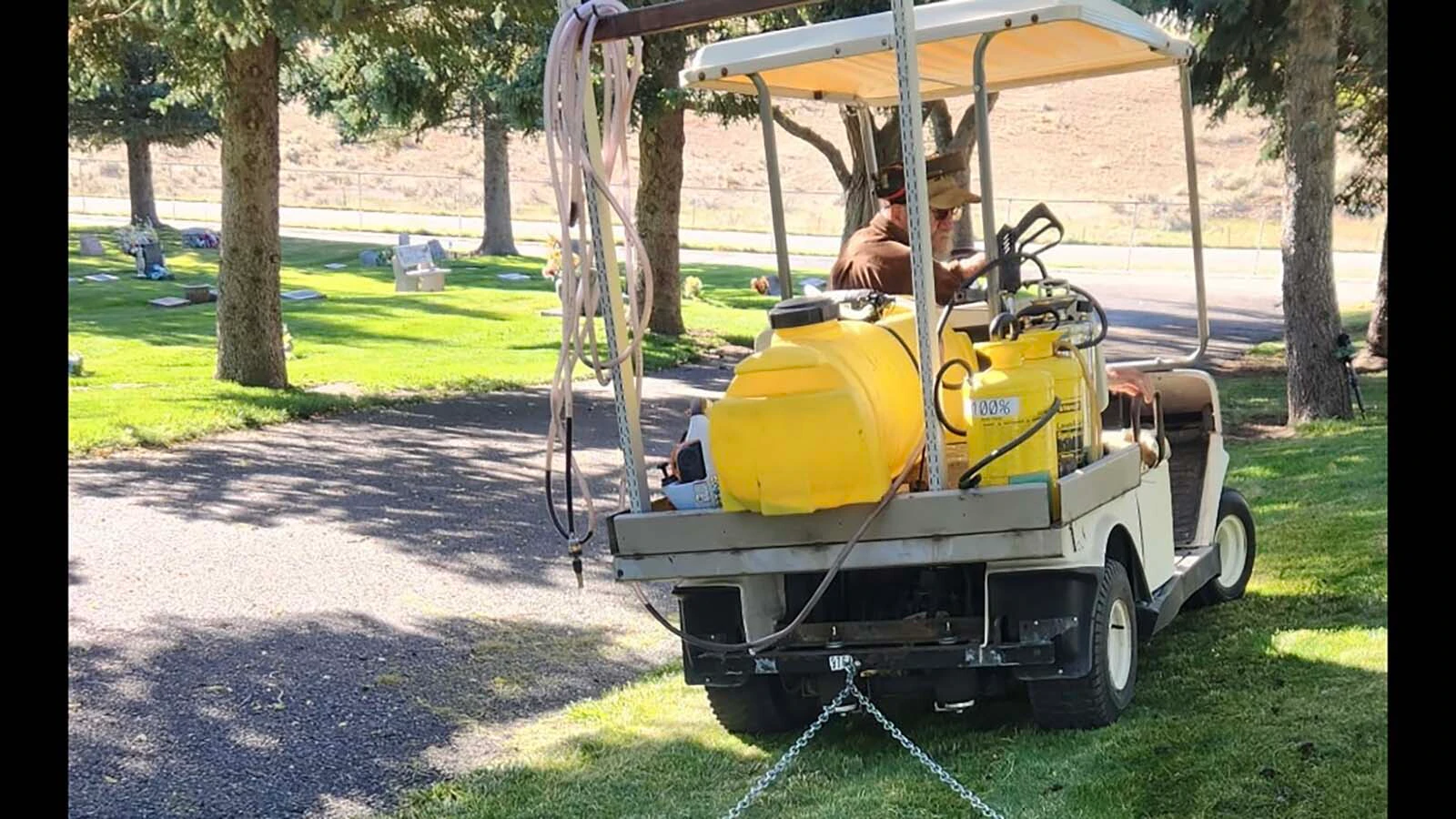
There are shrubs to prune, roads to maintain, irrigation to fix, headstones to straighten and graves that have slowly sunk into the earth to raise back up.
Then somebody dies.
“Funerals are always a priority,” Wilson said.
Greenhill has been burying Laramie's dead since 1881, when the city established the cemetery after years of land and deed wrangling that began with the Odd Fellows seeking a burial ground in the mid-1870s. The city ultimately acquired 40 acres.
Nearly a century and a half later, the cemetery is an island of old trees in the middle of Laramie, surrounded by the University of Wyoming. Mule deer wander its dirt paths. Runners and walkers pass beneath the pines.
Wilson has spent 15 years as the groundskeeper.
She has a degree in graphic design, but it turns out she would rather dig graves.
Dark Winter Nights
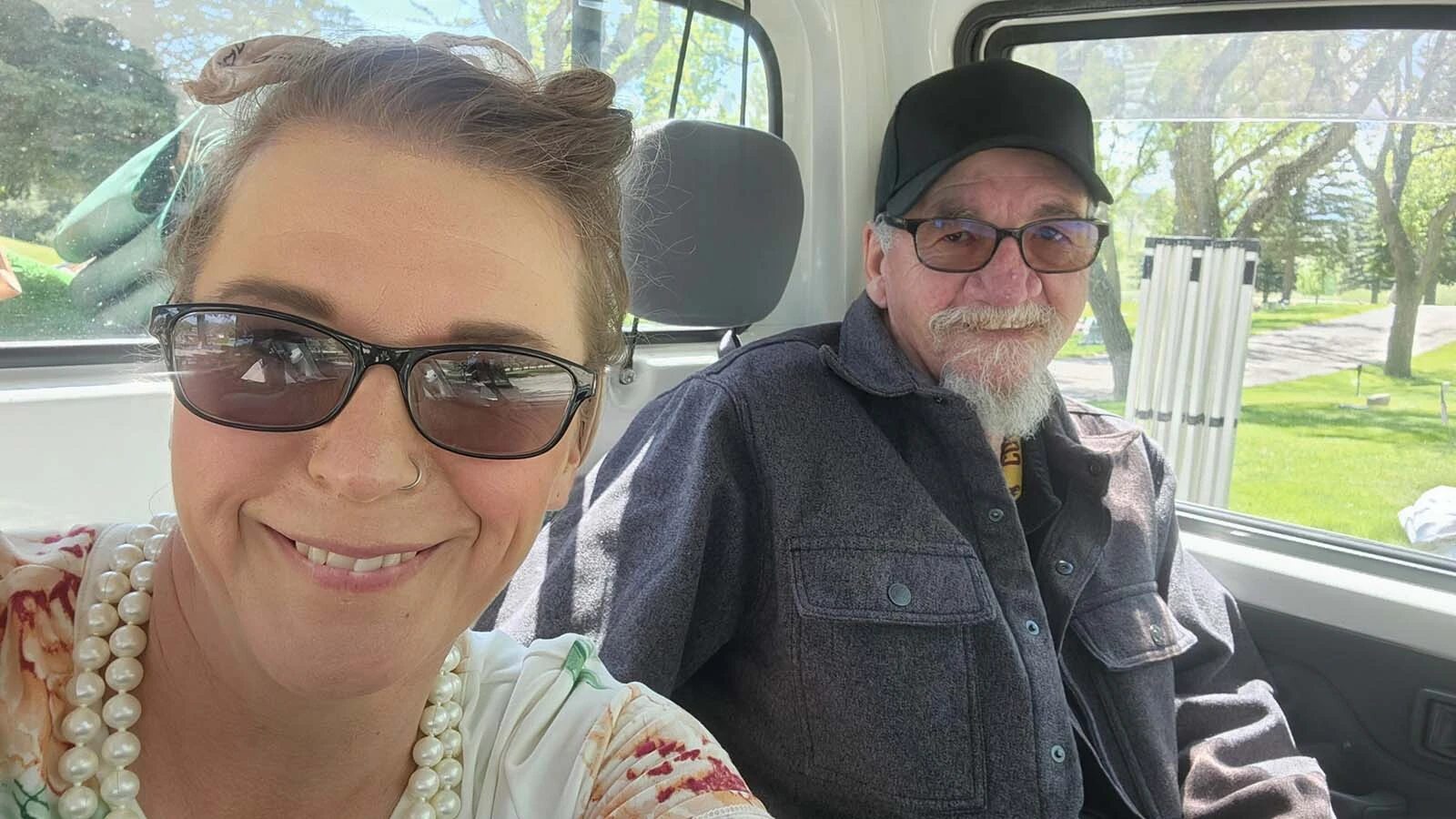
Neil Harper took a job at the Glenrock cemetery because he liked working outdoors, too.
After more than two decades, he finally retired this spring at 65.
“It was a wonderful place to work, and 20-some years actually went by pretty quick,” Harper said.
The oldest known headstone at Glenrock Cemetery has stood there since 1894.
For all the time Harper spent among headstones, he never understood why people thought cemeteries were creepy.
There were dark winter nights when Harper had to be at the cemetery alone, but he never gave it much thought.
“The cemetery is not a spooky place, and it shouldn't be considered a spooky place,” he said. “It is a very sacred religious spot. It's probably the last place in town that's going to be haunted."
There was, he admitted, "that one gal from Riverton" who came to him convinced she was being haunted by a woman who had died while traveling through the area with a wagon train and was buried somewhere along Deer Creek.
The woman claimed she had studied old maps and believed she knew where to find her. Worse, she feared the creek was washing away the grave.
Then she asked Harper what she should do if she went looking, started digging, and actually found the body.
“Lady, if you're out there and you dig something up — a body — you don't move it,” Harper told her. “You don't do nothing. You get the police, the sheriff, somebody.”
Six Feet Deep
Try digging six feet down when the first five are frozen solid.
Summer softens a cemetery, but winter hardens everything.
The grass disappears beneath snow. Roads vanish. Temperatures sink below zero and frost drives 4 or 5 feet into the earth.
At Greenhill, Wilson and another full-time maintenance worker are largely on their own after the summer crew leaves.
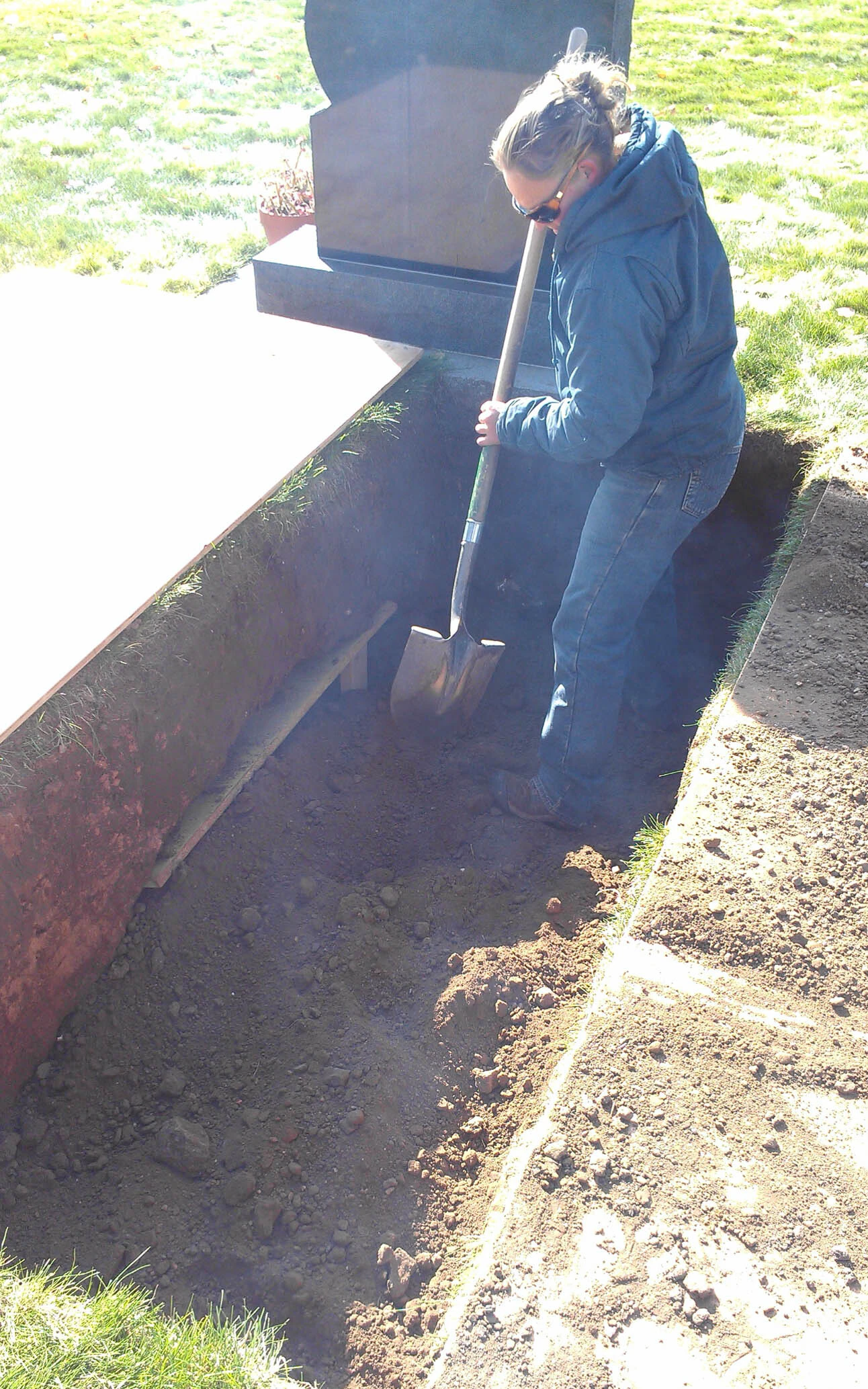
When the ground freezes, Wilson uses a defroster to thaw the frost, burning through a foot an hour when conditions are bad.
Everything below that frozen surface is another matter.
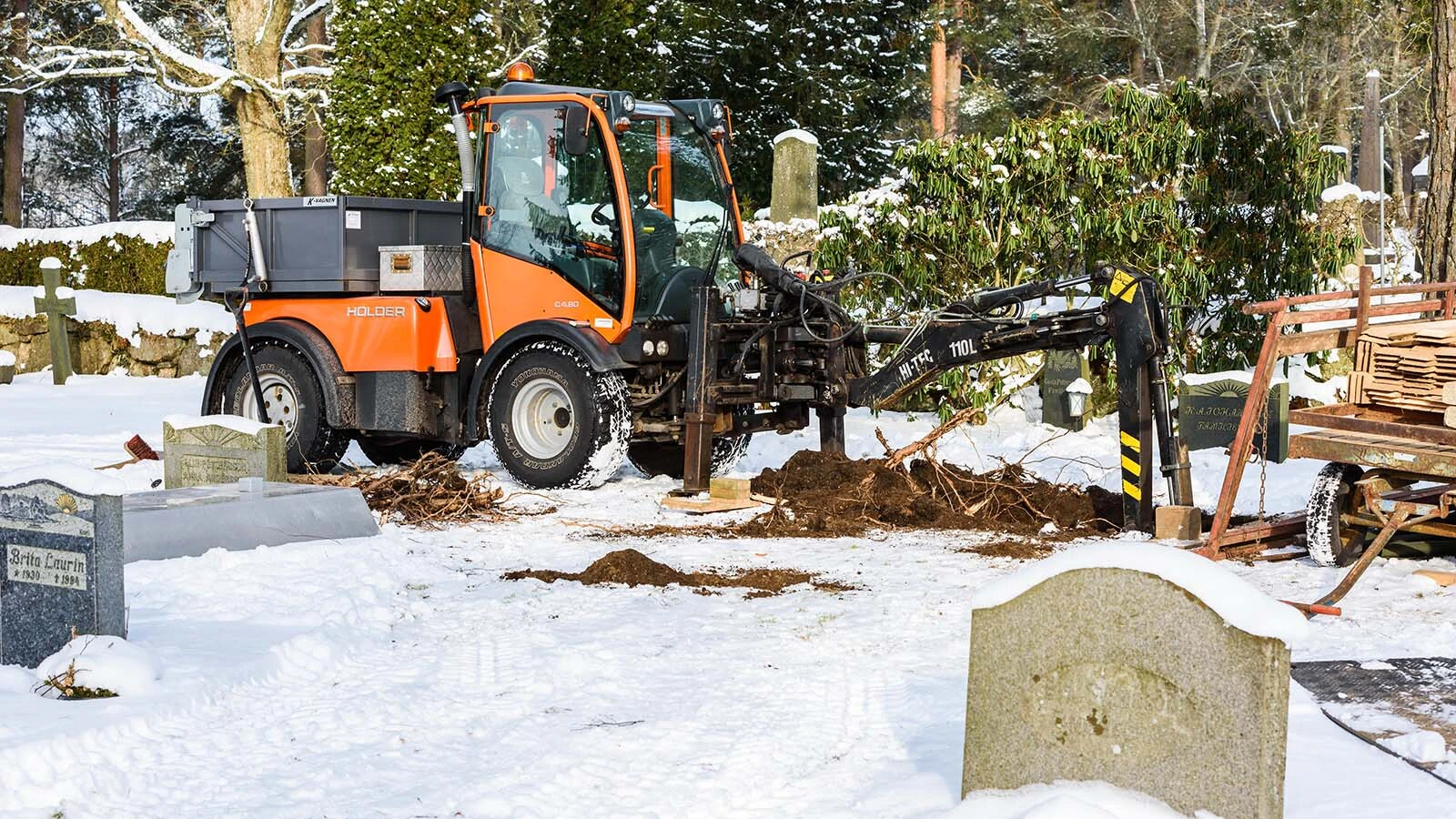
A backhoe does most of the excavation, but cemetery graves don't come with much margin for error.
“There's only so much room between grave spaces,” Wilson said.
The walls have to be straight. The corners have to be tight. Large rocks have to come out. The hole cannot simply wander sideways because a backhoe operator had a bad angle.
“You just really can't make it any bigger or any smaller, either direction,” Wilson said. Sometimes that means an hour of hammering rocks out of a frozen wall by hand.
Greenhill even keeps shovels with handles about 12 feet long so workers standing safely at the top can reach the bottom.
“It's hard,” she said. “It is really hard.
Twelve Feet Off
In Glenrock, workers have done away with the heaters. Nowadays, Harper said crews have had better luck just cutting a perimeter of the grave and using an excavator.
The cut keeps frozen earth from breaking away beyond the intended dimensions of the grave and preserves enough solid ground around it to support the equipment used to lower a casket.
Even with machinery, Harper said, somebody occasionally has to finish a corner by hand.
Measurements matter. Cemetery rows at Glenrock have pins, Harper said, and workers measure from those established points to determine precisely where each burial belongs.
The stones aboveground might make a cemetery look peaceful and orderly, but underground the margins can get a little off kilter.
Harper recalls a time crews were digging a hole in a spot their records showed was clear when the excavator struck a coffin.
“There wasn't supposed to be nobody buried anywhere near that,” Harper said.
Everybody stopped.
The man had been buried around 1943.
His headstone was about 12 feet away.
Harper contacted his administrator, and workers carefully recovered what had been disturbed, checked the excavated dirt and dug a new hole immediately beside the man's actual burial place.
They didn't move him 12 feet to match the stone.
“We'll move the headstone to where the body is,” Harper recalled. “It'll be marked perfectly because he's there.”
Death Doesn't Wait
Wilson has worked funerals at 20 below, and she says she has never postponed one.
There have been days when she has looked at the forecast, saw better weather coming and wondered whether the family would rather wait.
“If they are insistent on doing this funeral, then we will basically do everything that we have to to keep it going,” Wilson said.
That includes plowing a funeral procession into Greenhill through a snowstorm, conducting the burial, then plowing everyone back out.
Winter is a conveyor belt. Wilson says she notices an uptick in funerals around the holidays, particularly among the older crowd.
One winter week brought four full-size funerals, plus several burials of cremated remains — and inevitably, Wilson said, that's when Wyoming decides to contribute a 40-below wind chill or 3 feet of snow.
Harper made it more than 20 years before Wyoming weather finally won.
The grave had already been dug a day before the scheduled funeral, as was customary in Glenrock so workers had time to handle any problems.
By the next day, the temperature was about 10 below, Harper said, and the wind was screaming at 70 mph. Still, the family wanted to proceed.
Harper and the cemetery administrator went outside and tried to set up the lowering device over the grave.
“I don't think we could have did it with 10 people,” Harper said.
Eventually, they surrendered.
“We said, ‘It's too nasty. The weather is terrible. We're going to have to cancel the service.’”
They buried the person a couple days later.
Dust To Dust
After 15 years of digging, burying and occasionally disinterring the dead, Wilson knows something about the expensive boxes people put underground.
Nature finds a way inside. People tend to imagine a casket as sealed away from the elements, Wilson said.
It isn't.
She has seen old caskets penetrated by roots, dirt and water. Wooden ones eventually collapse and disappear.
“We're all going to end up as dust anyways,” she said.
A traditional casket does, however, provide Wilson with a little psychological distance while she's working.
“Normally, it's easier because I'm like, ‘Oh, we're just burying a box,’” she said.
Green burials remove some of that separation. Usually for religious reasons, this is when a body is placed directly into the earth without embalming or a traditional casket.
“A lot of times they're just wrapped in a shroud … you could see skin through some of them. Like you can see the body, it's very obvious,” Wilson said.
“We've kind of learned that the family needs to come up with a plan of how to get them into the grave space,” she added. “We allow it as long as the family has some way of getting it into the ground, and we don't have to touch it.”

'Just Throw Me In The Dumpster'
Harper knows the job of cemetery groundskeeper is "not for everybody." He enjoyed the peaceful quiet and working with his hands. He's also not afraid of death.
"I've always been fairly comfortable with that. I come from a large family, and they've been scattered out in ages, and it seems like we deal with death every three or four years. So I've never really had a problem with it," he said.
He says being a groundskeeper did make him look at in a lot of different ways, hearing how others felt.
"Everybody handles it in their own way,” he said. "Sometimes it's bad. Sometimes it's good. Sometimes, and people are just like, 'Oh my goodness, I can't deal with this.' But you do, you get through it.
"It ain't no big deal, no problem. You know, sooner or later you get old and you die. You pass on."
Wilson herself is fairly unsentimental about what happens to her own body. “Like, you're gone,” she said.
She doesn't want her family worrying about elaborate arrangements or being saddled with decisions after she dies.
“I want to make it easy on them, and not make them do anything,” she said. “It's not about me anymore.”
As far as her own wishes, Wilson tells people the same thing: “Oh, just throw me in a dumpster."
Kolby Fedore can be reached at kolby@cowboystatedaily.com.