
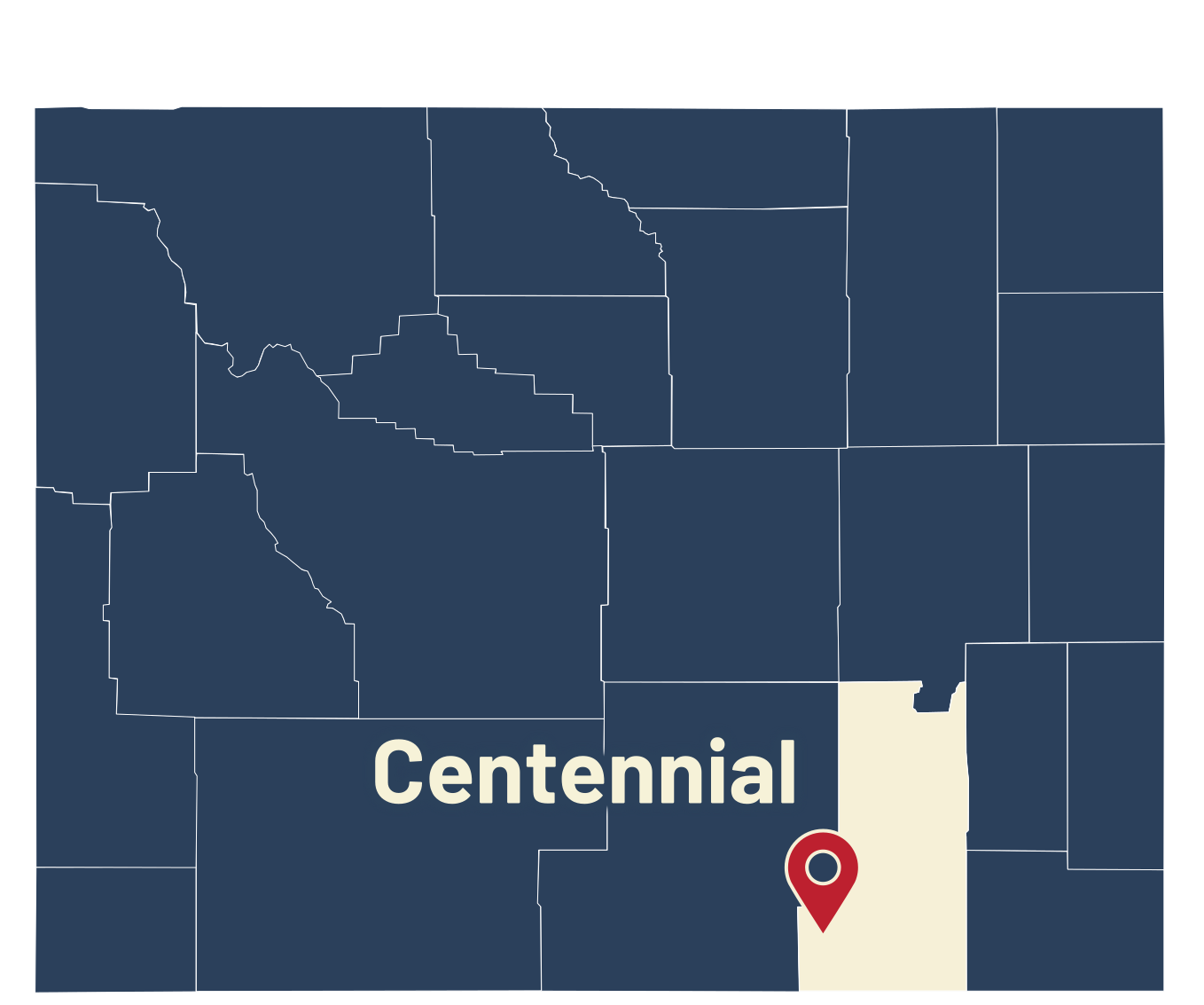
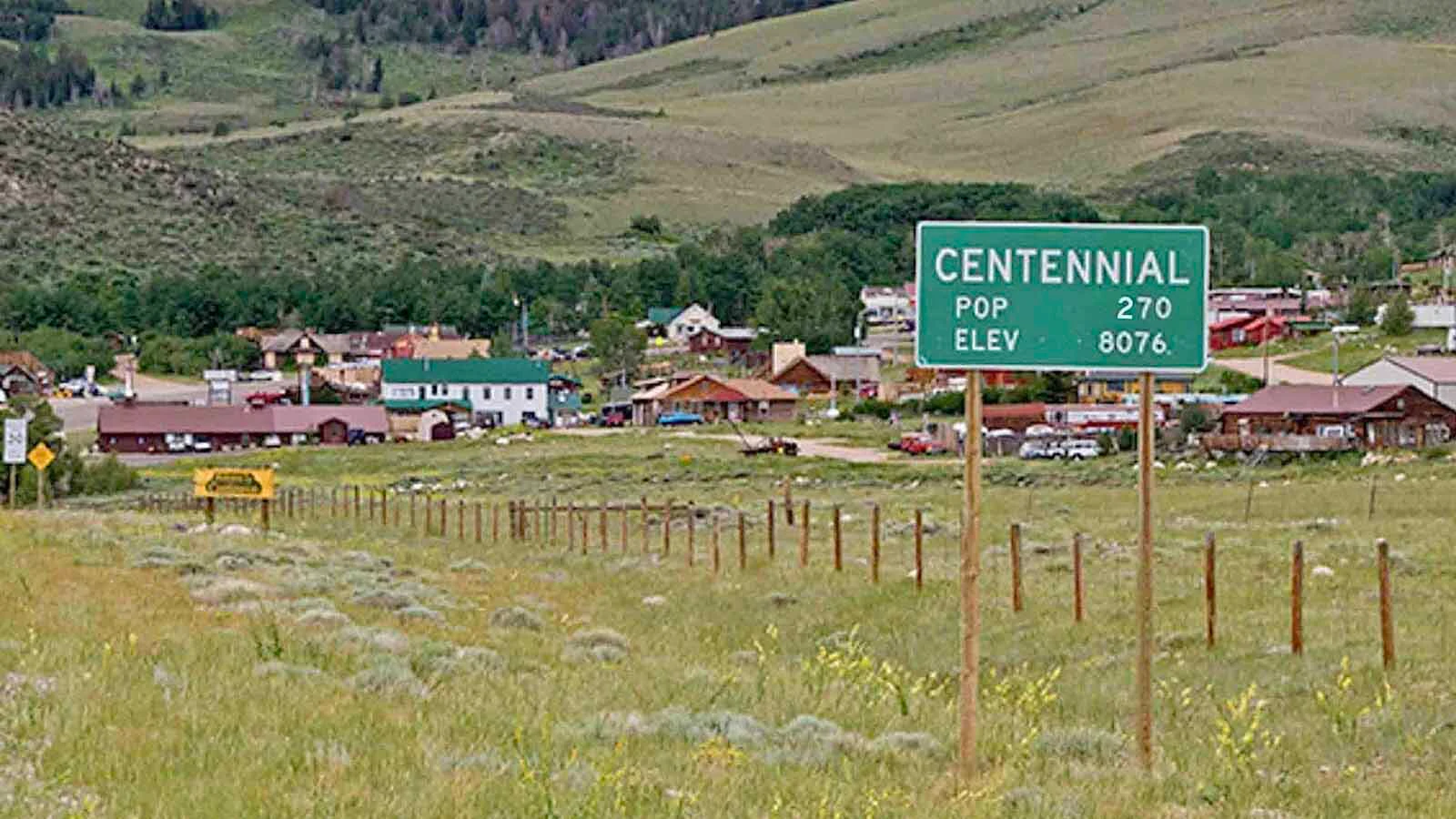
CENTENNIAL—Alicia Brown is something rare in Centennial — a new resident.
Most of the time, when a home comes up for sale, locals told Cowboy State Daily, it goes to someone looking for a vacation home or an Airbnb. Rarely, they said, is it bought by someone who plans to live there and become part of the community.
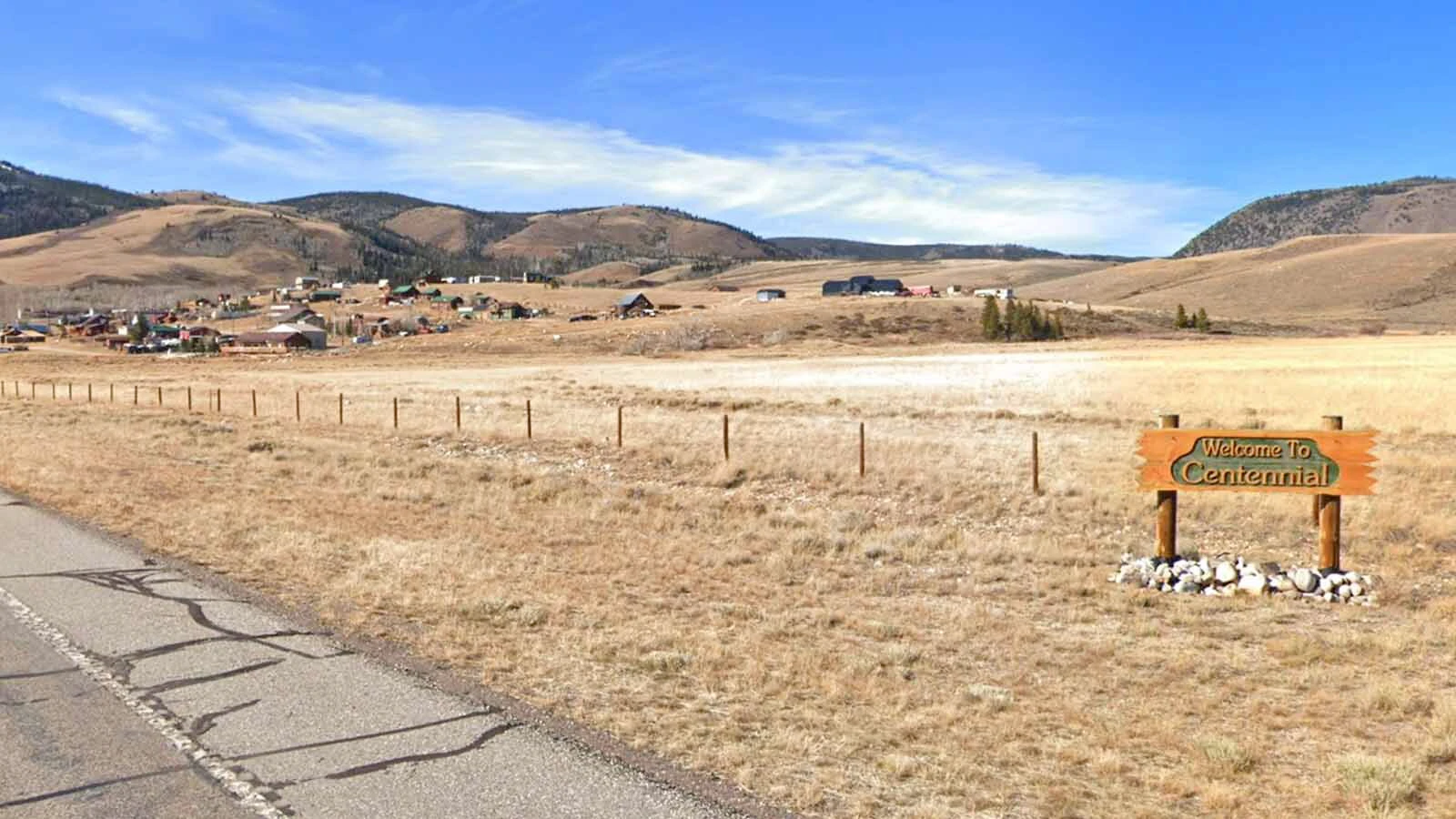
But Brown has decided she wants to spend most of her time in the unincorporated community of 270 residents west of Laramie, which celebrates its 150th anniversary this year.
Brown had a few must-haves for her new home before buying in.
“I came up and looked around to make sure there weren’t any data centers that were being planned, wind turbines being planned,” she said. “You can’t even see the windmills from here. Maybe eventually at night you catch a glimpse of the red lights, but that’s it.”
Her view is smack on Sheep Mountain. It’s framed by green pines and her rustic porch, which has a swing facing the mountain.
The only sound most of the time is the wind and the soft, gurgling melody of a nearby creek.
The best part, Brown added, is that there are no rock trucks waking her up at 6 a.m. anymore — unlike her place in Cheyenne, on Horse Creek. There, incoming developments include a rock quarry expansion, the Laramie Range Wind Project, and a Black Hills energy project.
They’re keeping her awake at night, and waking her up early in the morning.
“It’s so simple up here,” she said, beaming at her view of Sheep Mountain. “It’s just gorgeous.”
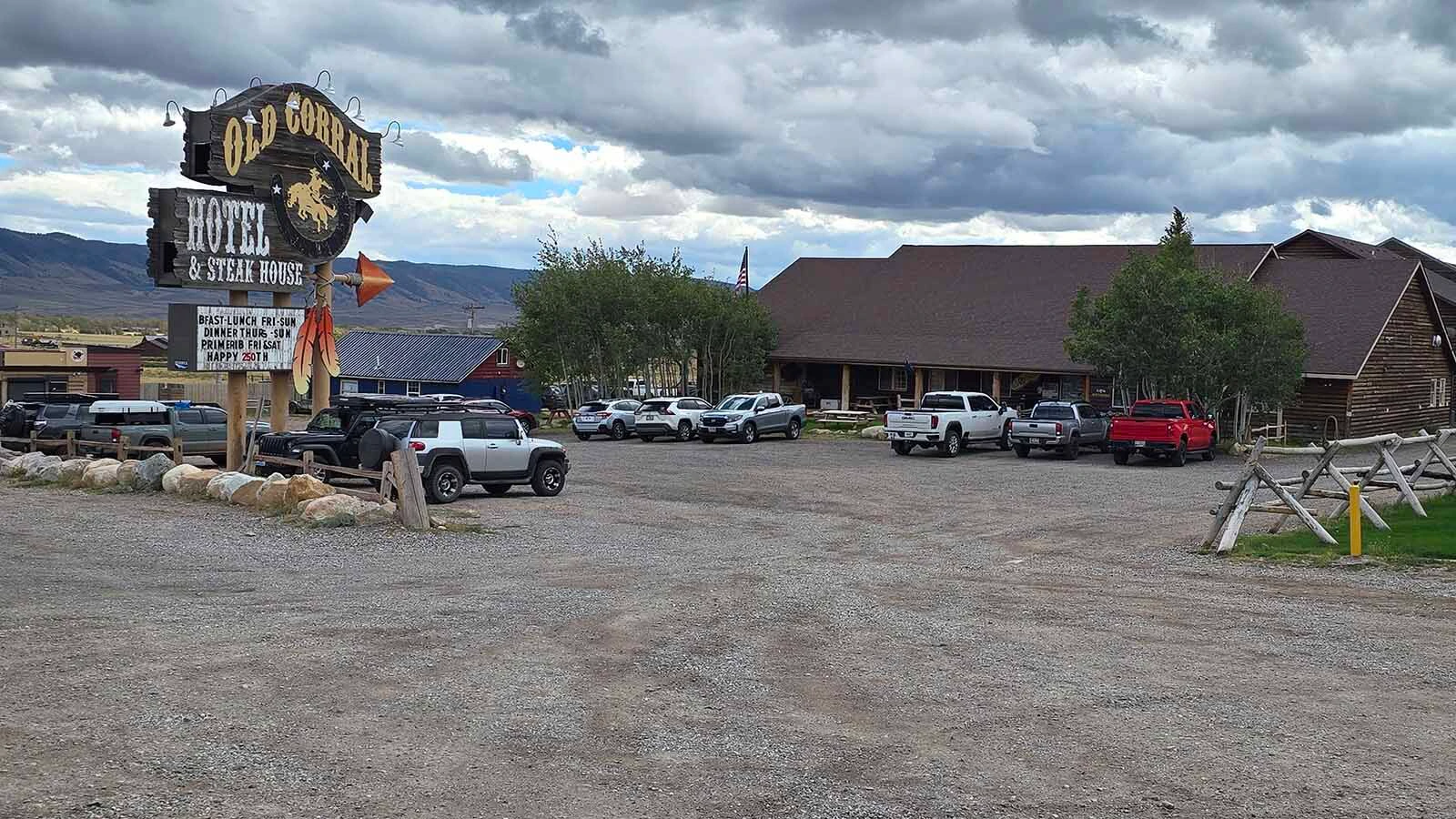
The Old Corral offers places to stay as well as fancy steak dinners in Centennial, celebrating its 150th year. (Renee Jean, Cowboy State Daily) 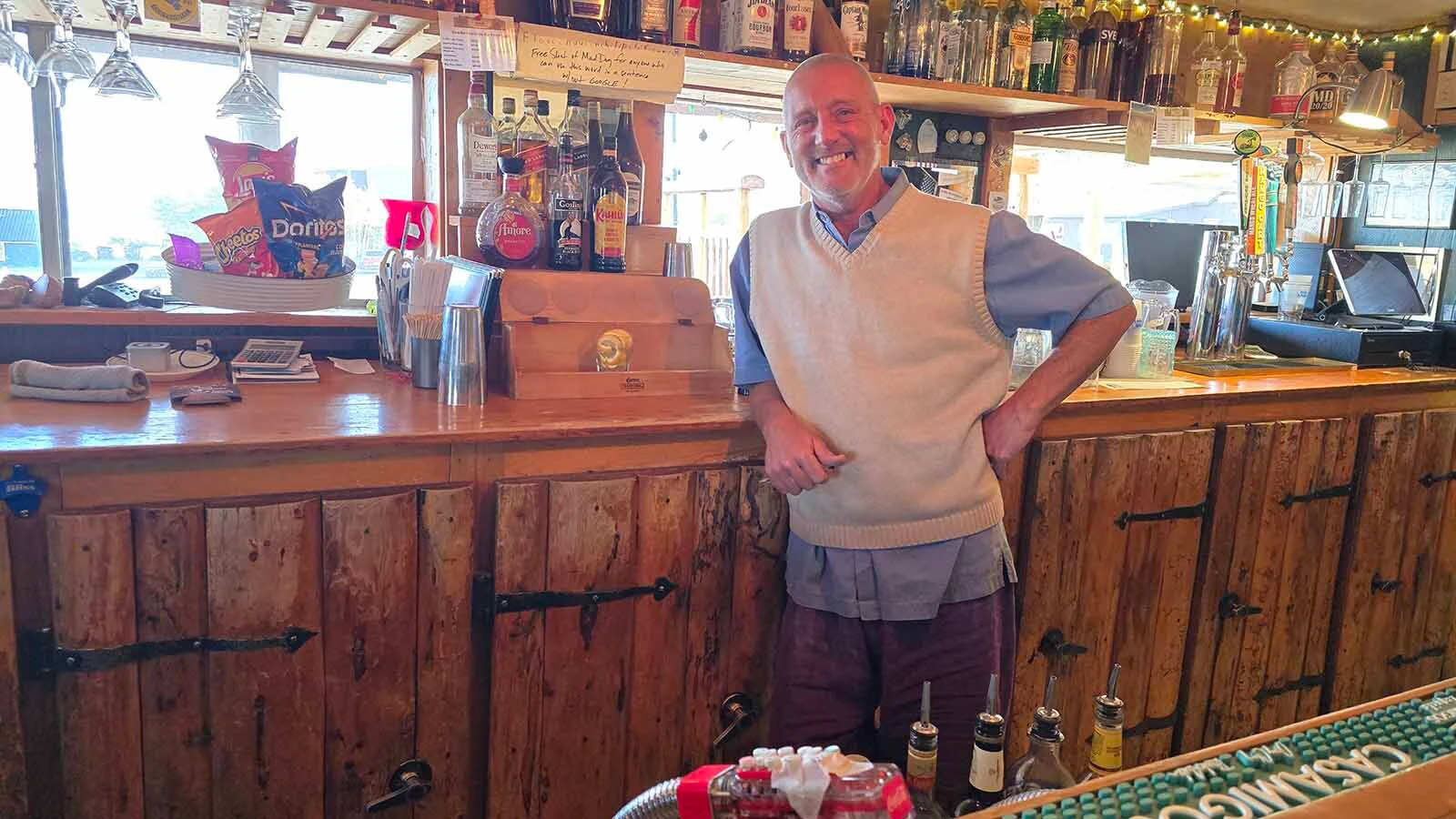
A bartender everyone knows as "Brownie" is among the seasonal residents of Centennial. He heads back to the East Coast at the end of the season. During the season, he lives out of his truck. Housing in Centennial isn't affordable for the service workers who keep it running. (Renee Jean, Cowboy State Daily) 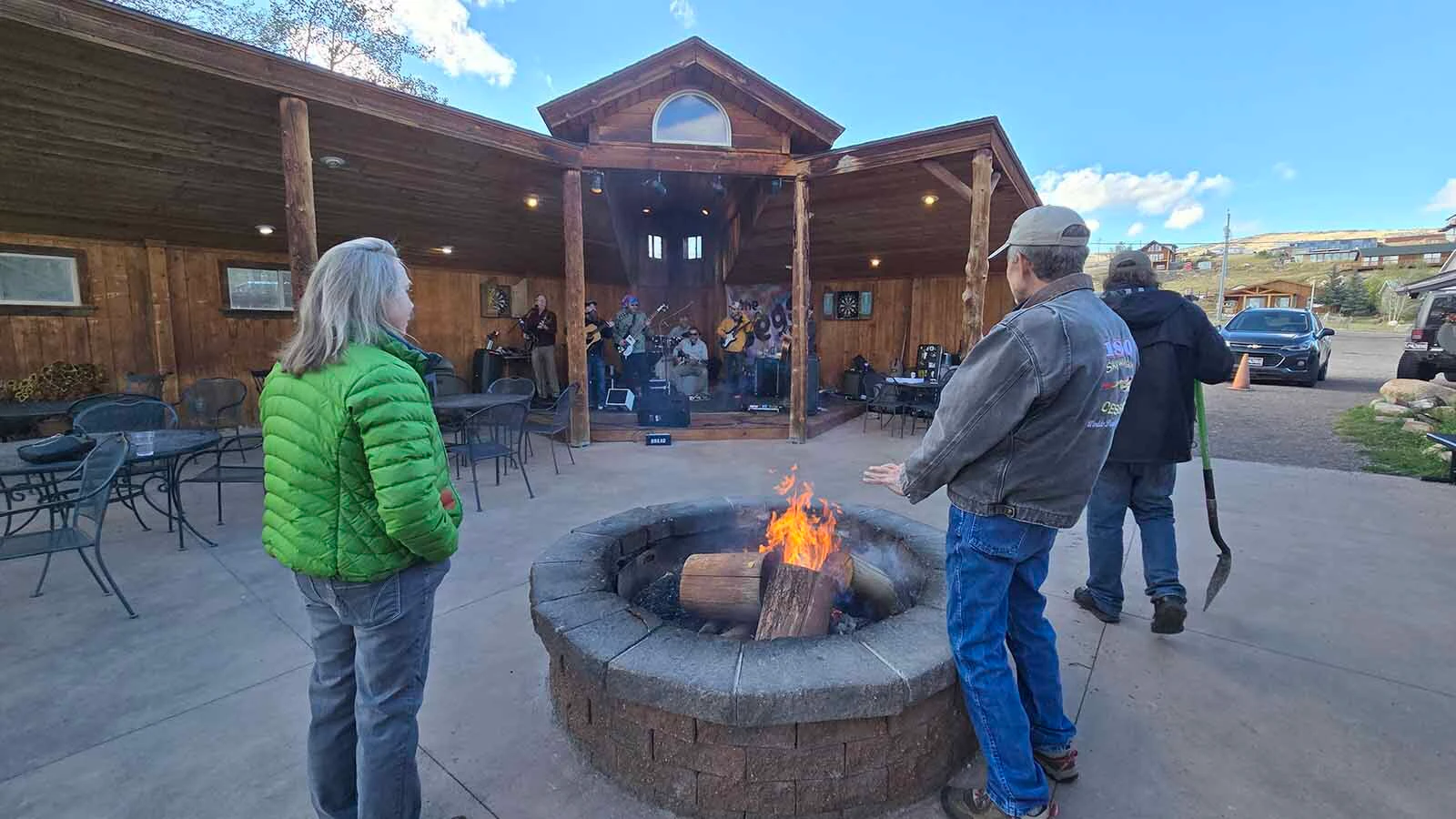
A small group of people gather to hear one of the season's last outdoor, live music concerts at Beat Bottom Grill. (Renee Jean, Cowboy State Daily) 
Centennial's restaurants offer good dining options, ranging from pizza and a beer to prime rib with wine. (Renee Jean, Cowboy State Daily)
Free Ski Lessons For Youths
Brown might be new, but her hopes for Centennial echo those of residents who have lived in the community and surrounding Centennial Valley for decades: Keep its character intact.
“Centennial is just like kind of the old West,” Deerwood Ranch’s Jana Wilson told Cowboy State Daily. “It’s just a free-spirited town with not a bunch of rules and regulations and all that.”
Her hope is that Centennial just “stays wild, and not too regulated, and just free-spirited.”
“Nobody wants it to grow too fast,” her husband, Rich Wilson, agreed.
In a town without a city hall, residents have long filled the gaps themselves. Neighbors have informal snow-removal efforts to help older residents get the mail or their paper or a six-pack of beer.
A service club pays for ski lessons for Centennial students. After all, that’s an essential skill for those living in this mountain community.
“Most people ski or cross-country ski and snowmobile,” Rich Wilson said. “They’re all sports people, so you’ll see lots of people cross-country skiing around town.”
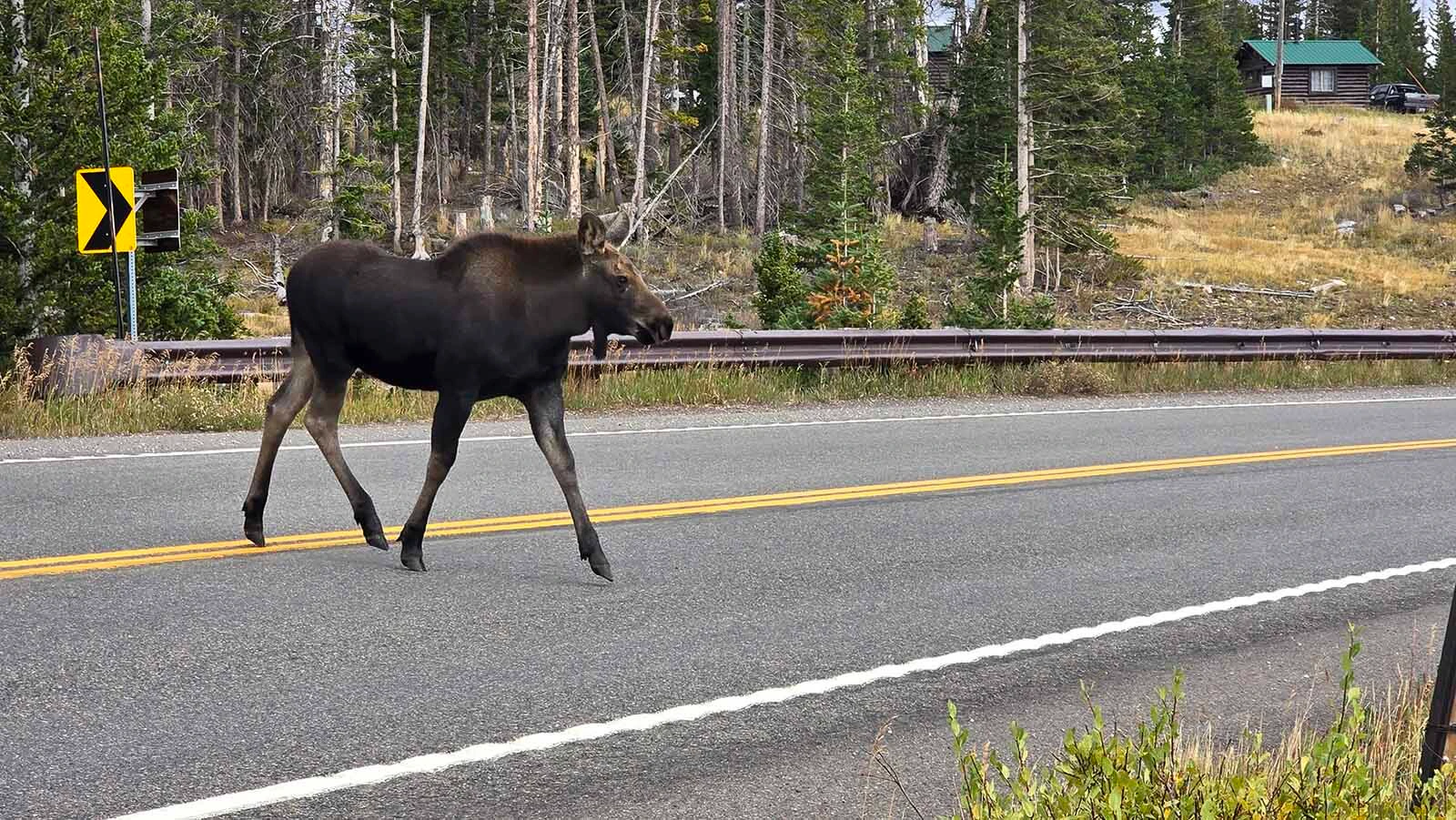
A moose crosses the highway, ignoring all the cars who have pulled off on the side of the road to watch. (Renee Jean, Cowboy State Daily) 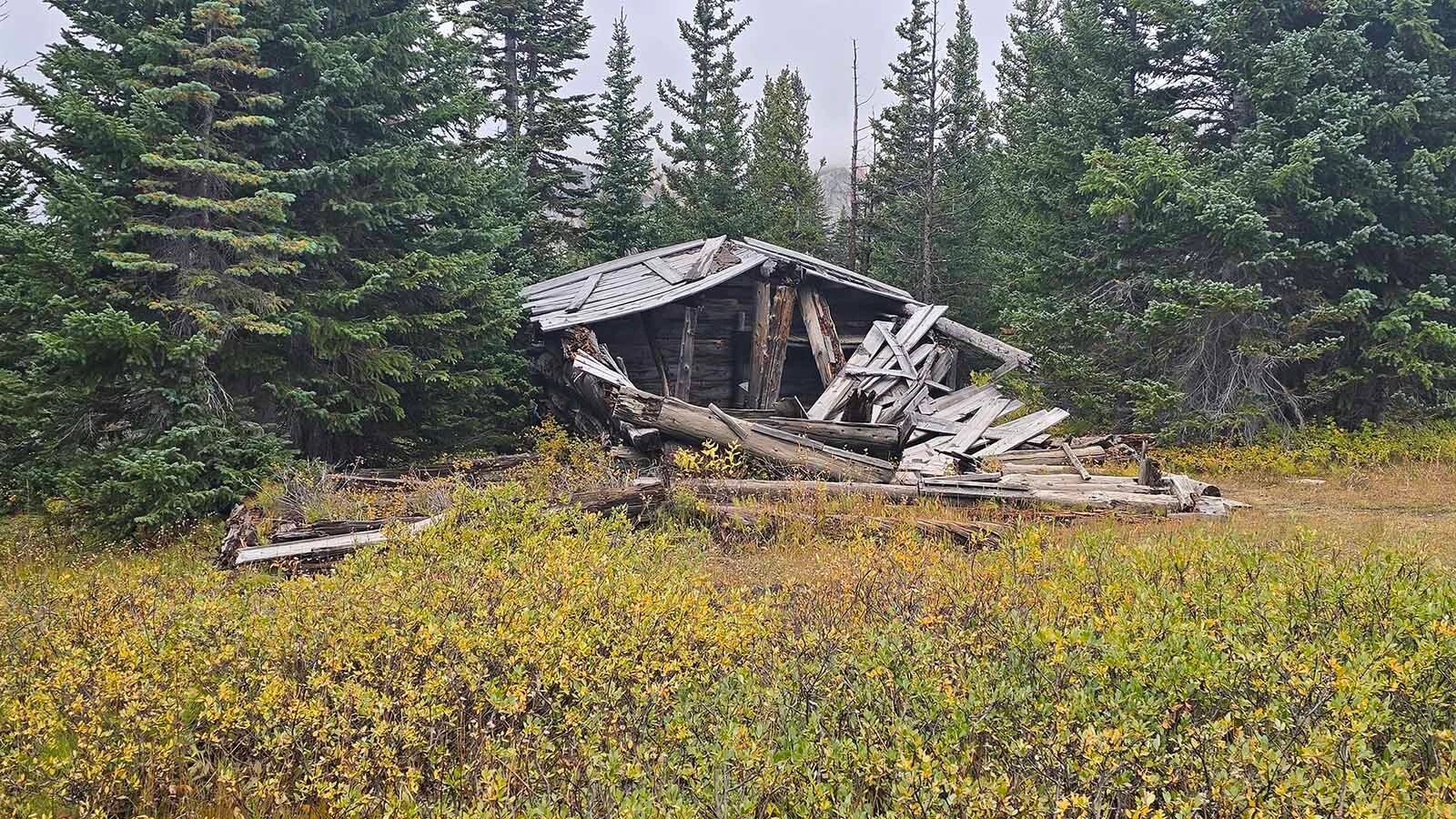
A cabin from Centennial's gold mining era quietly falls apart in the Medicine Bow Forest. A gold rush helped establish the small, unincorporated mountain community in 1876, which is now celebrating 150 years. (Renee Jean, Cowboy State Daily) 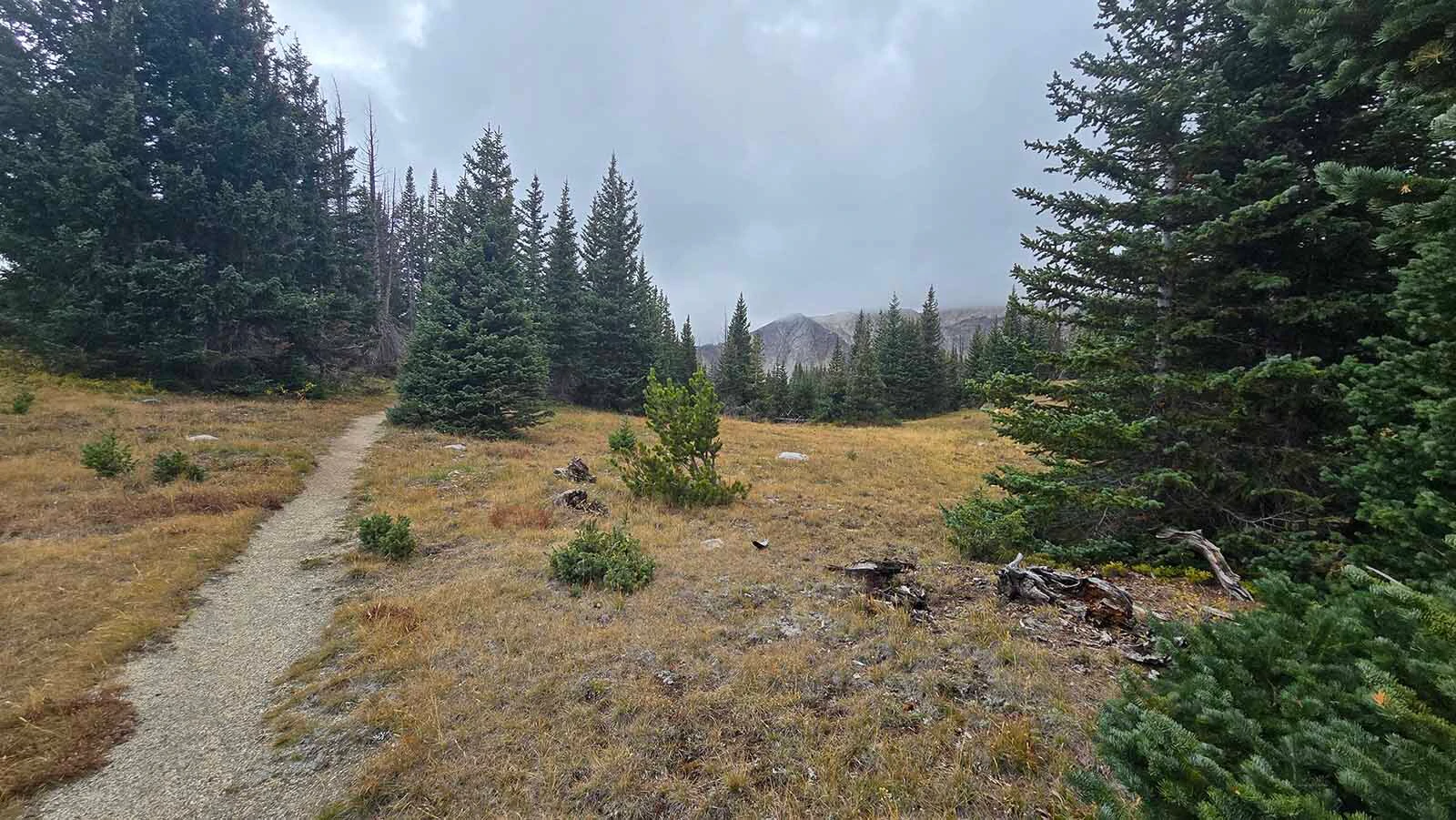
Centennnial is a gateway to adventures in the Medicine Bow Forst. (Renee Jean, Cowboy State Daily) 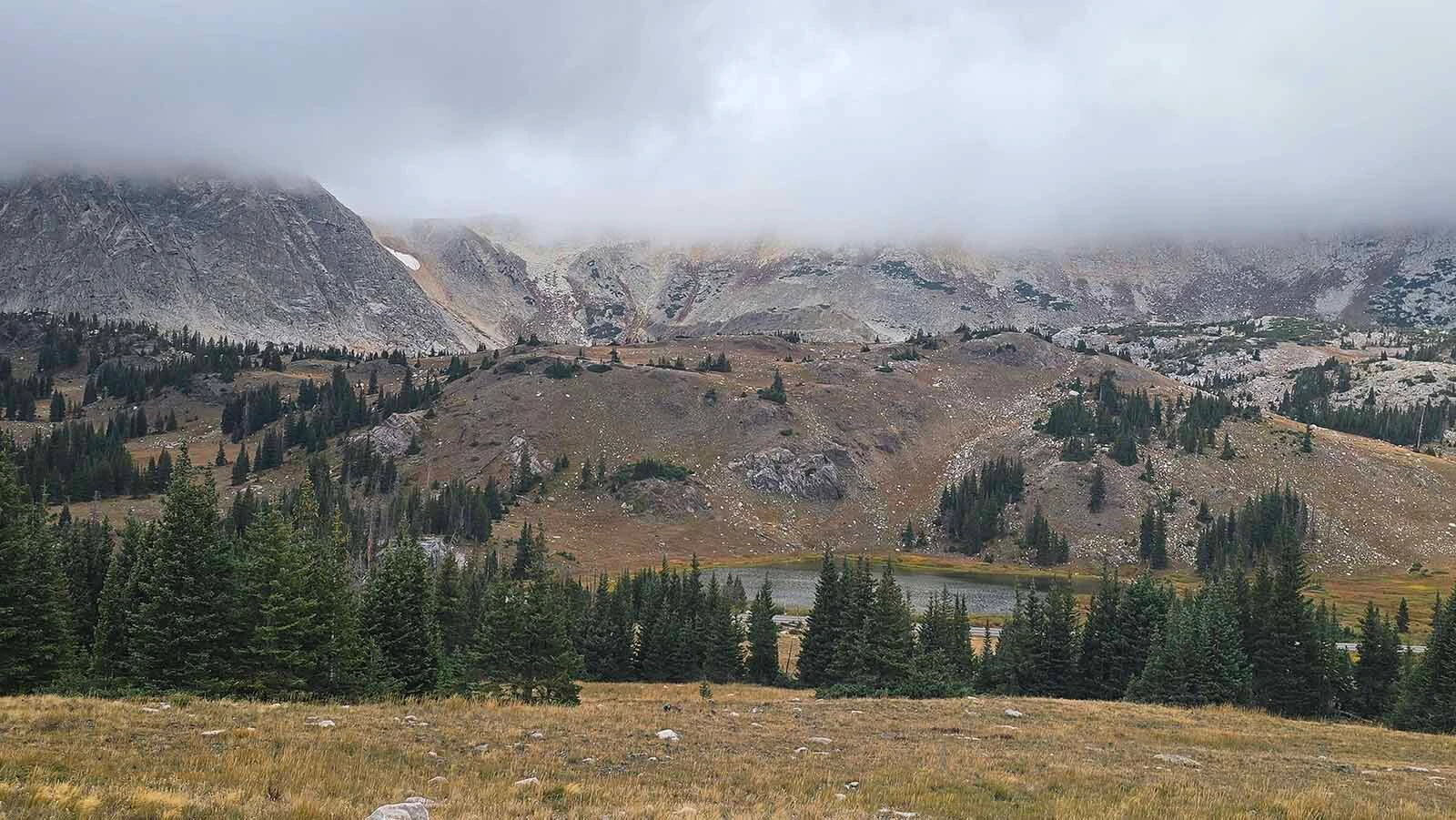
Clouds descend on Medicine Bow Peak as winter prepares to move in. Nearby Centennial is battening down the hatches, getting ready for winter. The small mountain community is celebrating its 150th. (Renee Jean, Cowboy State Daily)
Self-Reliance Has Its Limits
Self-reliance does have its limits, though, long-time resident Bill Haley told Cowboy State Daily.
“The biggest drawback is there’s no money from anybody,” Bill Haley told Cowboy State Daily. “No city, county, or state money. When I was in the legislature, I was able to get a few things done just by calling the right people and saying, ‘Please.’ So we got a few things improved around town, but since I’m not in the legislature, nothing’s happened.”
His wife Vicky Haley belongs to Centennial’s Social Club — 106 going on 107 this year — while Bill belongs to the Snowy Range Men’s Service Club, which used to be the Lions Club.
“Somebody got mad at somebody,” Bill Haley said.
“Billy Balthrop says, ‘Why are we paying national dues?’” the Haleys’ friend, Dick Clifton, said.
The local social club and the men’s service club each contributed $5,000 for flashing speed signs at both entrances to town, Vicky Haley said. When the signs’ batteries fail, those groups will pay to replace them, too.
“If we need something, if you see need, we respond to that need,” Vicky Haley said proudly. “We are self-helpers. Because of necessity.”
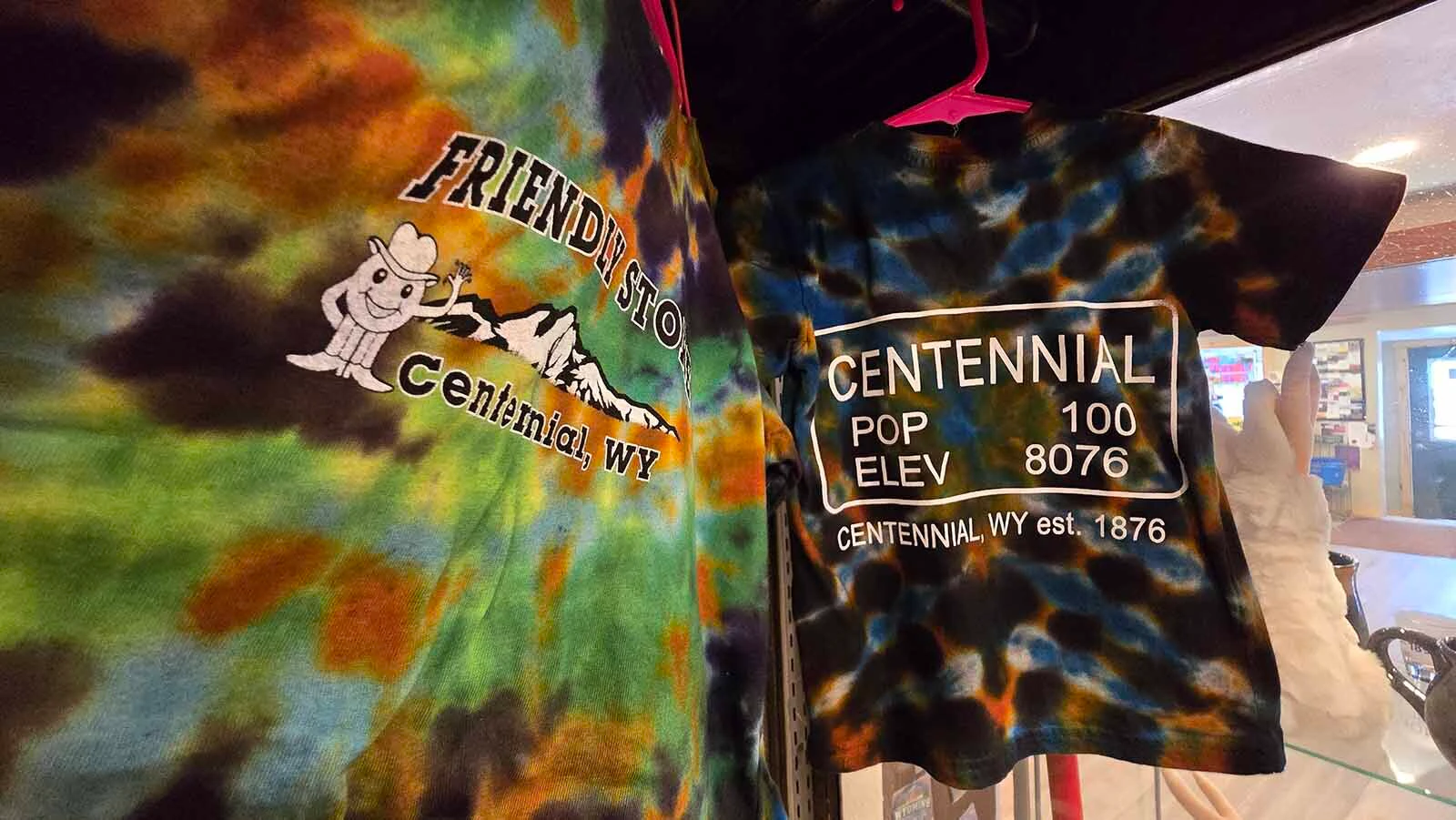
Inside The Friendly Store, a T-shirt that captures Centennial all in one breath: Elevation that exceeds population on a mountain where people aren't afraid to show their colors. (These shirts were not tie-dyed by Kevin Otstot, who calls himself the man who tie-dyed Centennial, but by a former partner.) (Renee Jean, Cowboy State Daily) 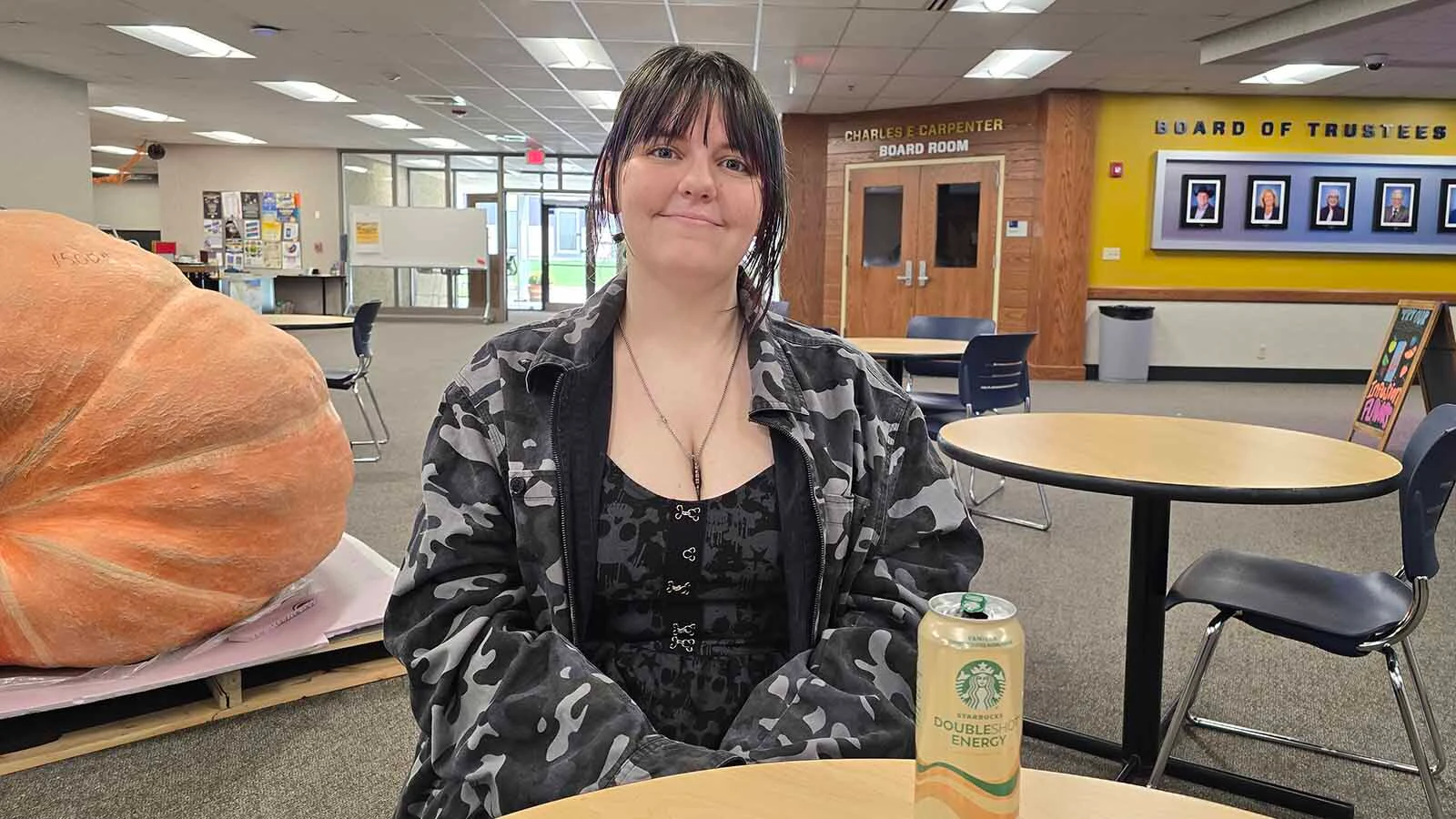
Abigail Campbell was headed to meet with one of her professors at Laramie County Community College with a Doubleshot Energy drink in hand. She's never taken one on a job interview, but said she didn't see much difference between that and taking a water bottle along. (Renee Jean, Cowboy State Daily) 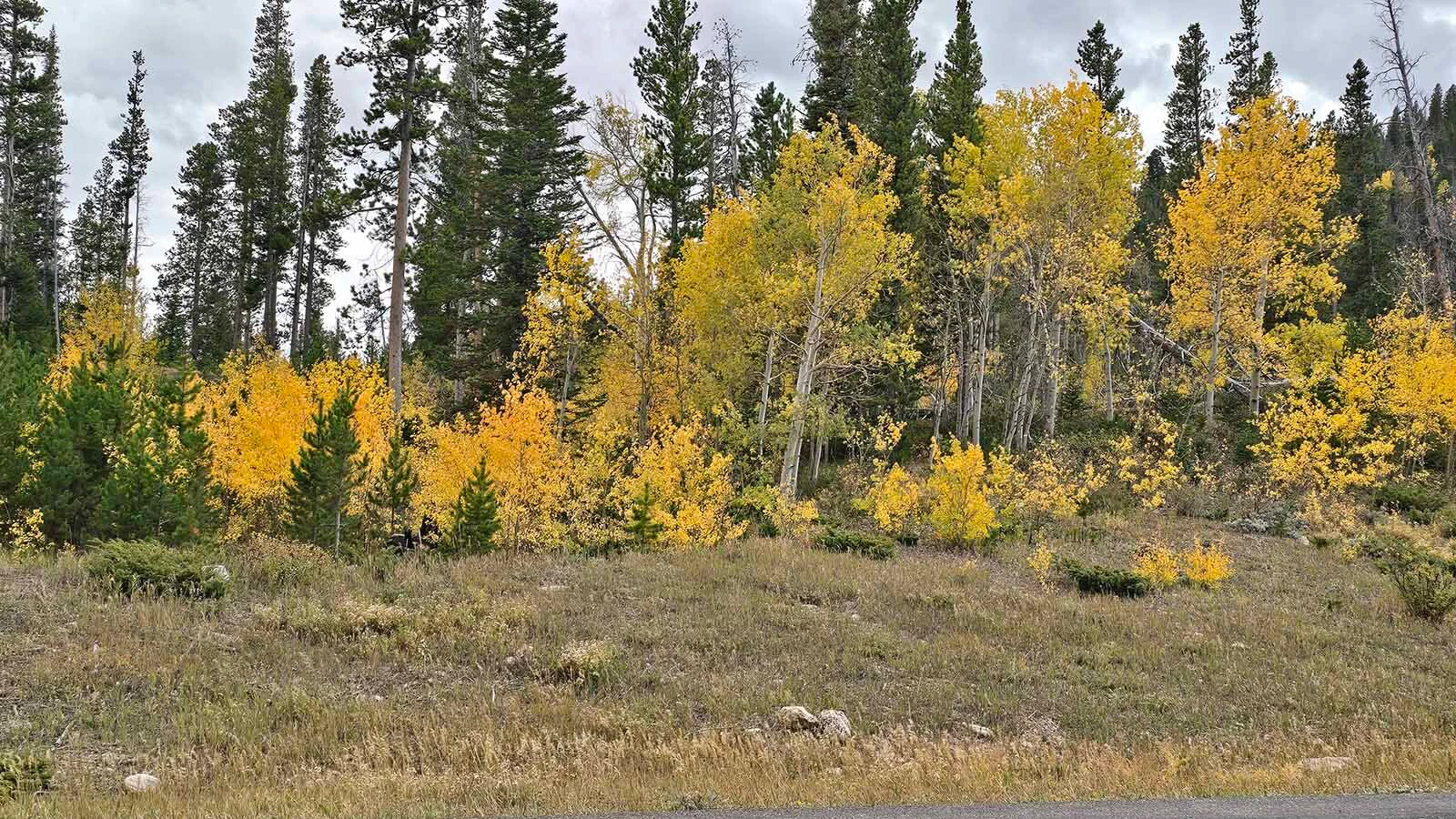
In the fall, the Medicine Bow forest starts putting on a cloak of gold. Centennial, celebrating its 150th year, is its gateway community. (Renee Jean, Cowboy State Daily) 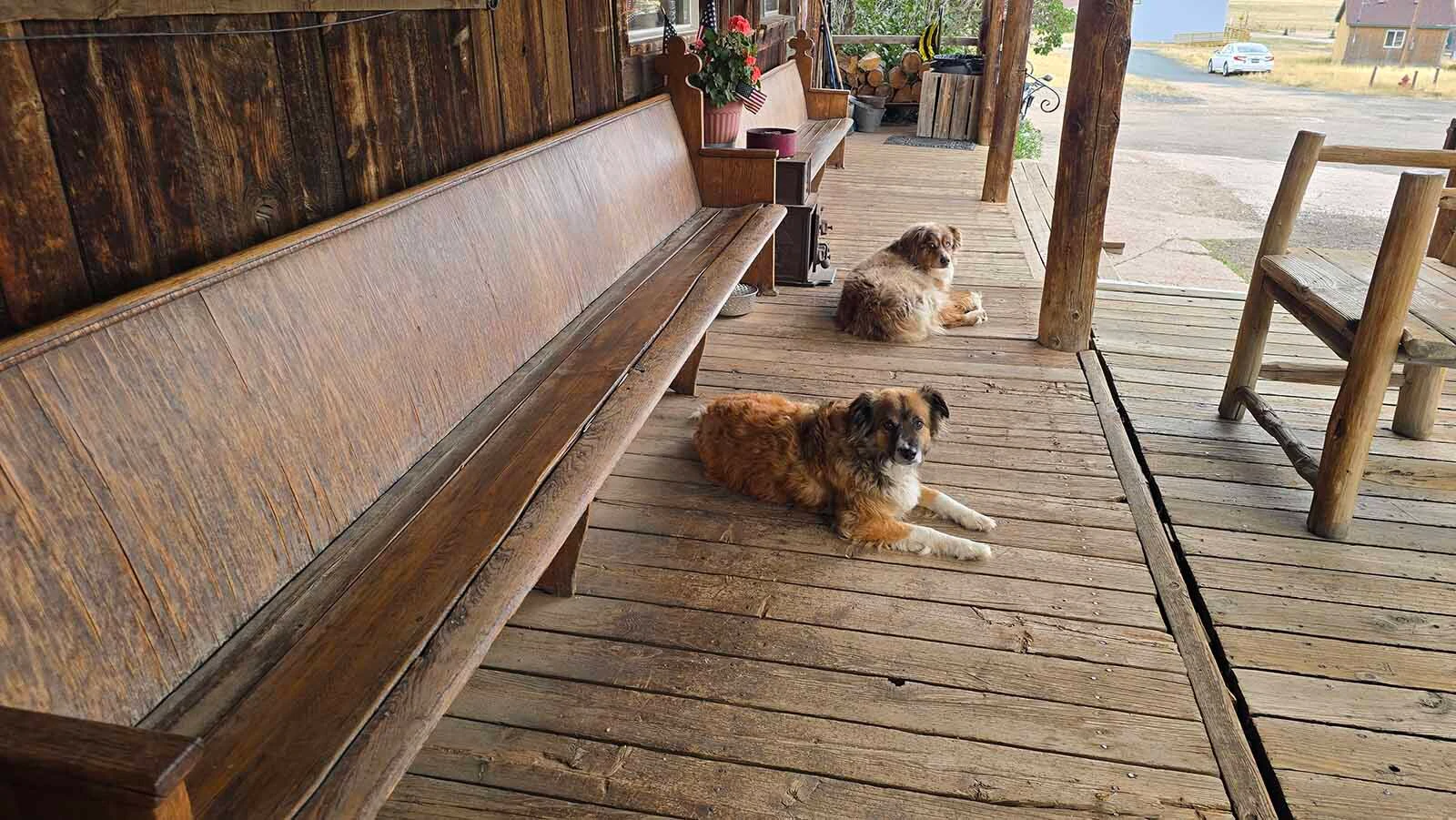
A couple of dogs hang out on the Trading Posts' front porch, watching the world go by. (Renee Jean, Cowboy State Daily)
Short-Term Rental Squeeze
While both the Haleys and Clifton hope Centennial stays small and rural, both of them do see changes on the horizon. Changes the community cannot control so long as it remains unincorporated.
“There’s a building boom up here on the ridge if you just stand there and look at it,” Vicky Haley said. “And about a third of the houses you’re looking at are short-term rentals.”
Many residents, including the Haleys, feel the influx of VRBOs and Airbnbs is changing the character of Centennial’s community. They're making it harder for businesses to hire help because workers can’t find housing they can afford anymore.
“I have been petitioning the county to do something about it,” Vicky Haley said. “Every property that comes on the market, with maybe two exceptions that I can think of, somebody will buy it and turn it into a short-term rental.”
The Haleys said that was a contributing factor in why the Trading Post closed down its restaurant and kept only its bar open.
“They couldn’t find employees because the employees couldn’t find housing,” Vicky Haley said. “Because those short-term rentals, they turn them into these properties and rent them for $200, $300 a night.”
Those rentals put their owners in direct competition with the Old Corral and the Friendly Store’s motel rooms, Vicky Haley added.
“They’re not being held to the same standards for safety and reporting,” she said. “And they argue that they pay taxes when they book these short terms, but a lot of these people are returnees and when they come back a second time, they rent directly from the owner and don’t pay the taxes.”
A secondary issue with all the short-term rentals is that because families are no longer living in the homes, fewer children are in the community. That’s putting pressure on the school system.
“The school is down to, like, six,” Vicky Haley said, adding that the low enrollment has put the school under pressure from the district to close.
So even as many locals hope Centennial won’t change, they also recognize change is inevitable.
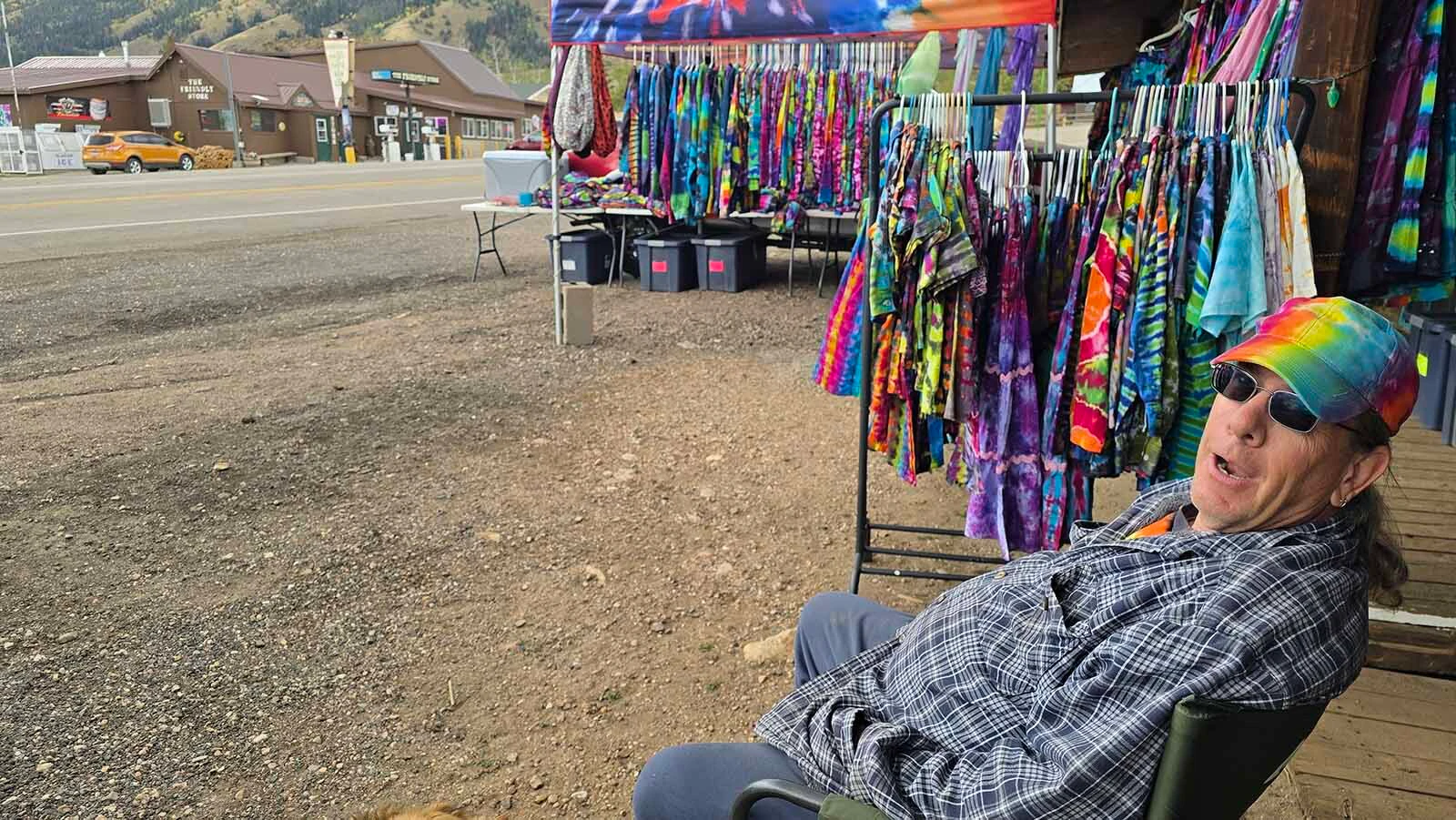
Kevin Otstot calls himself the man who tie-dyed Centennial. It's a technique he brought to the mountain in 1993, and is one of the ways he makes ends meet in the small mountain community that's celebrating its 150th anniversary. (Renee Jean, Cowboy State Daily) 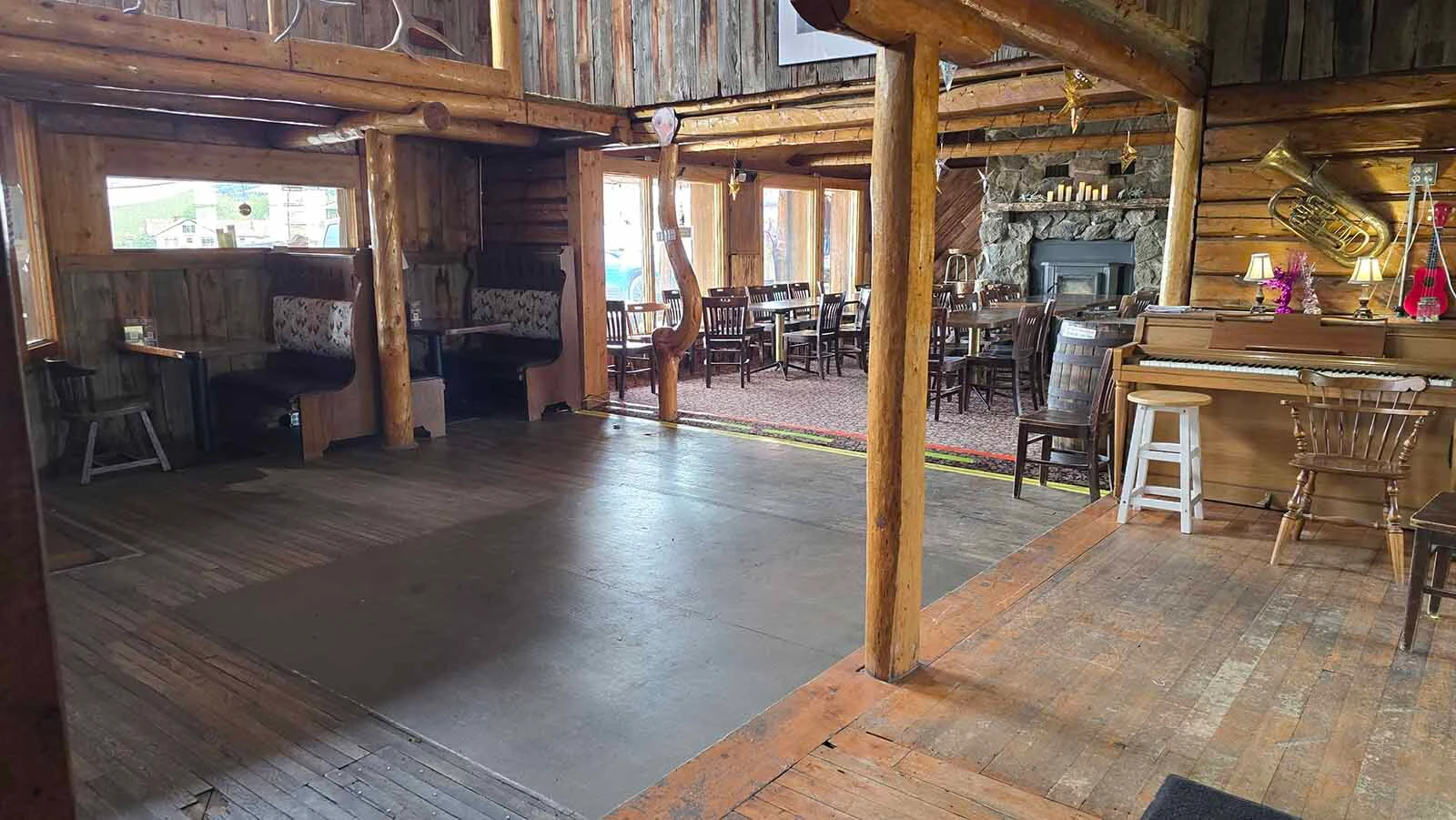
Inside the Trading Post, one of two places offering live music most summer weekends in Centennial. It is closing for the winter. (Renee Jean, Cowboy State Daily) 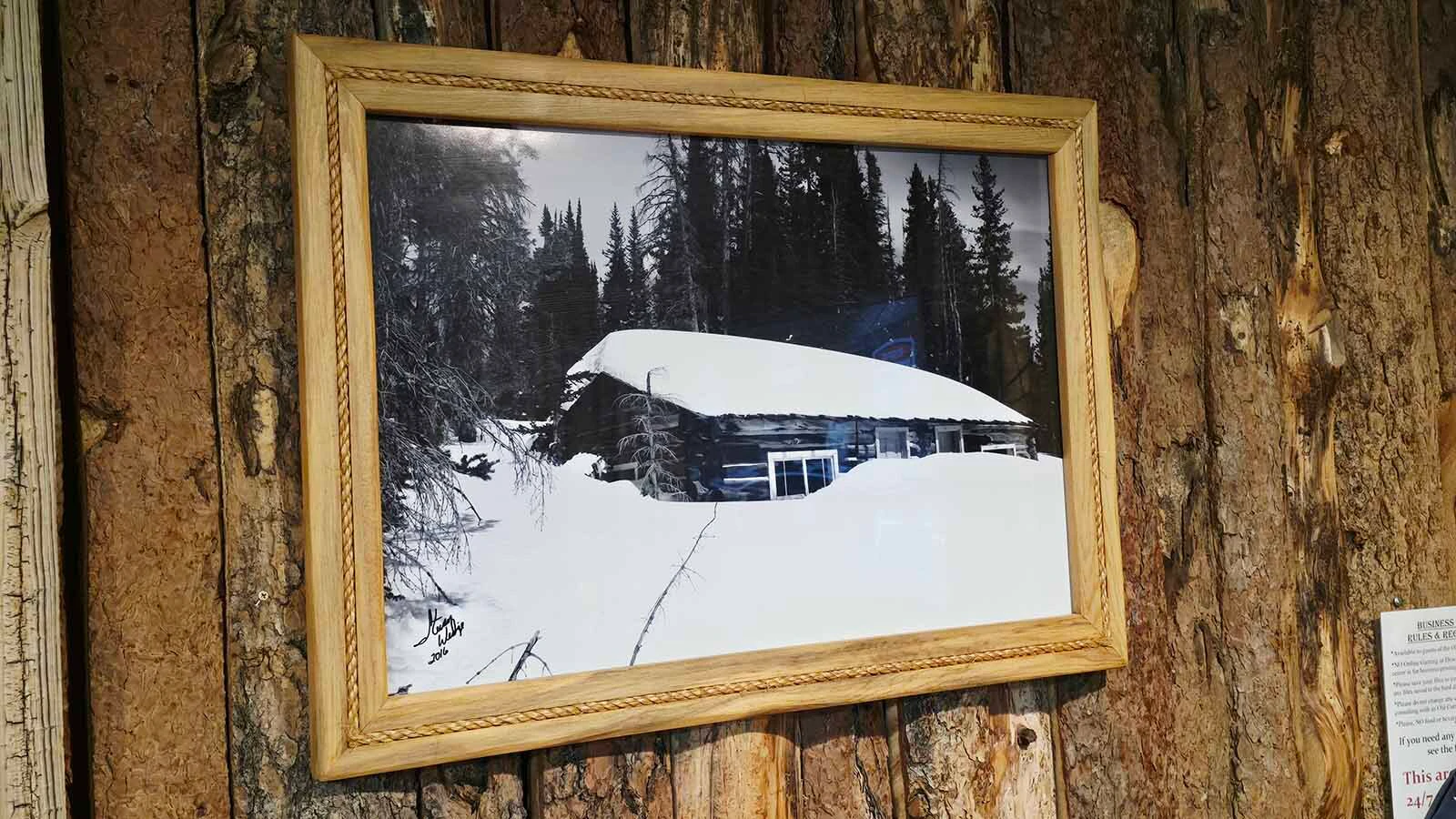
A photo showing what winter can look like in Centennial. The town has an unofficial crew of the willing who help shovel senior citizens out of snow like this, so they can get the mail or maybe even a six-pack of beer. (Renee Jean, Cowboy State Daily) 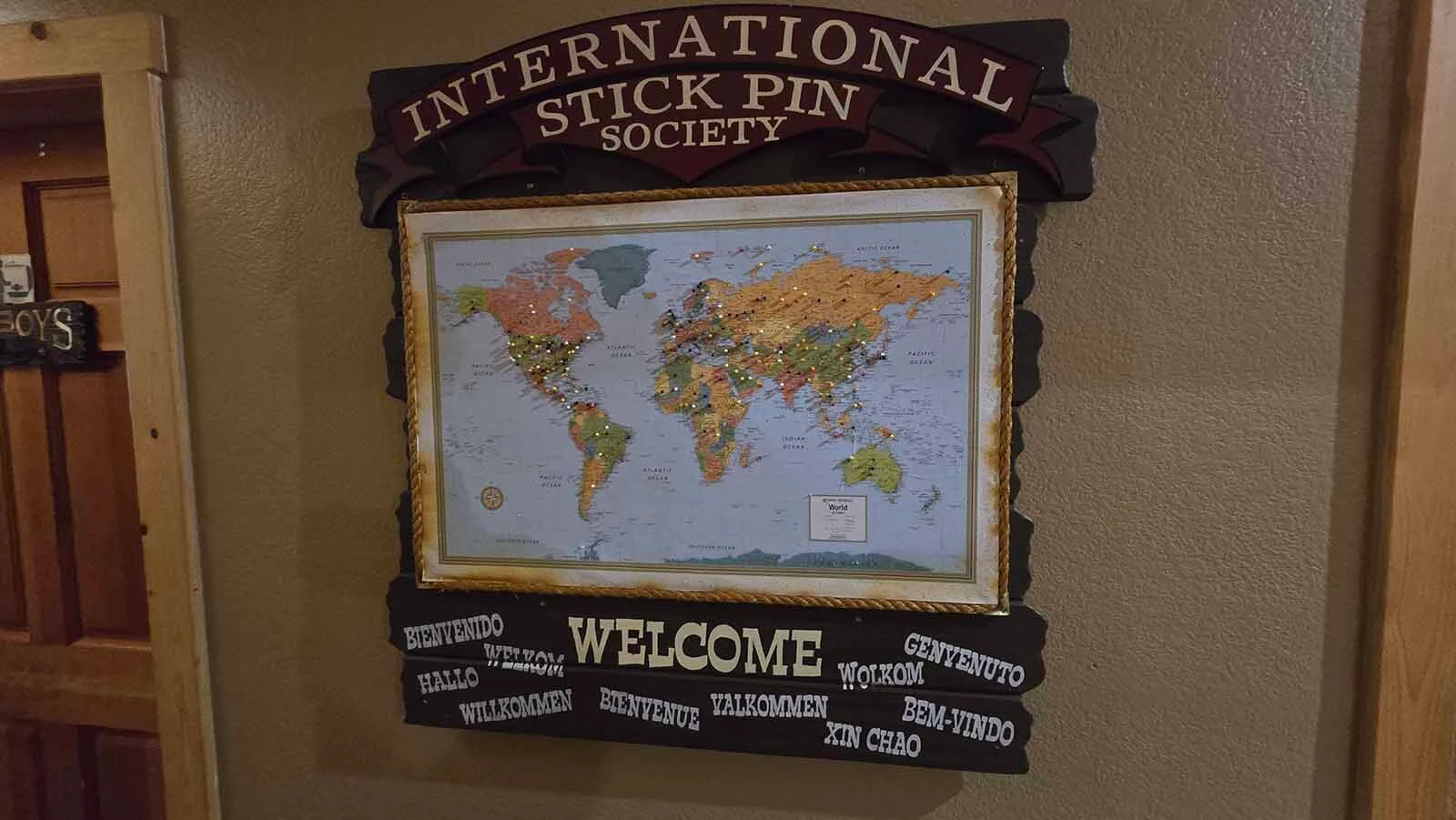
Centennial is the Gateway to the Snowy Range. Its visitors have come from all over the world. (Renee Jean, Cowboy State Daily)
Timber And Gold Built Town
Centennial has survived change. In fact, change is what created it.
The first people to establish a lasting foothold in the valley came for its timber. In 1868, railroad tie hacks cut down plentiful lodgepole pine for the Union Pacific’s transcontinental line, shaping the logs by hand, and stacking them by frozen waterways to send to Laramie when the spring thaw arrived.
Then came gold.
A rich discovery on nearby Centennial Ridge in 1875 triggered a rush of prospectors into the Medicine Bow Mountains. The following year, the growing settlement named itself Centennial, honoring the nation’s 100th anniversary.
Local history identifies the town as the first community in the nation to bear that name.
The mining boom didn’t last. Centennial’s gold lay in narrow veins and pockets, rather than a broad, easily worked deposit. The early excitement soon gave way to a more uncertain future, and later efforts to mine other metals proved short-lived as well.
But people didn’t abandon the valley.
Its grasslands drew cattle ranchers and homesteaders. The merchants who had once sold mining supplies pivoted to stocking hay, barbed wire and equipment for settlers.
It was these resourceful homesteaders, lumbermen and entrepreneurs who built the town’s true and lasting foundation. Among them was Gustav Sundby, who leased the Mountain View Hotel in 1912 and eventually bought it with is wife, Anna.
The Sundbys ran it for decades as a mountain getaway for travelers. They were part of a shift to tourism that established a new motto for Centennial — Gateway to the Snowy Range.
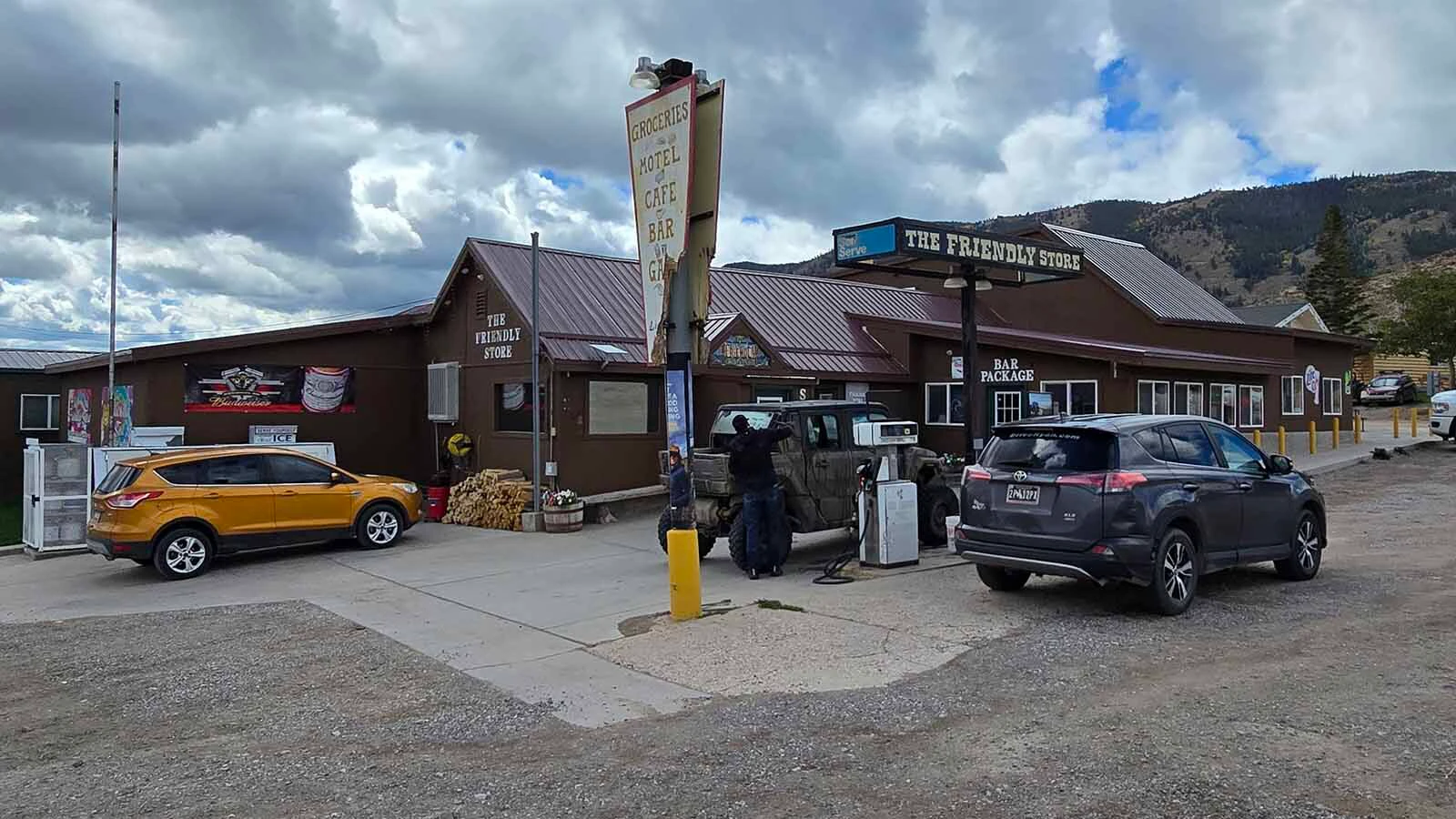
The Friendy Store, offering gas, groceries, camping equipment and souvenirs, is one of Centennial's nerve centers. (Renee Jean, Cowboy State Daily) 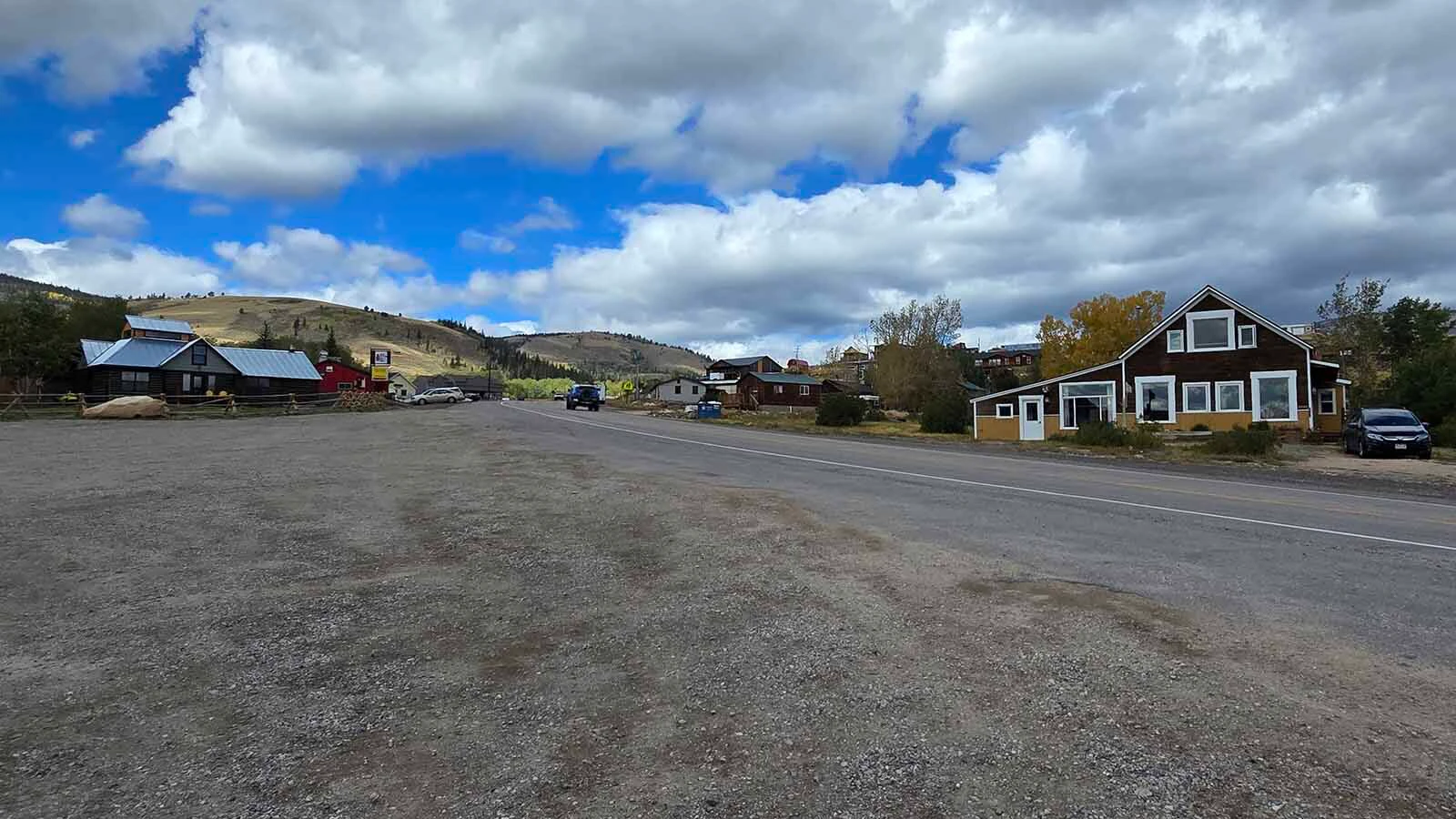
Centennial may look like the proverbial "wide spot in the road," but it is a community with rich history. Its fulltime residents tend to be independent-minded in this unincorporated mountain community that is celebrating its 150th year. (Renee Jean, Cowboy State Daily) 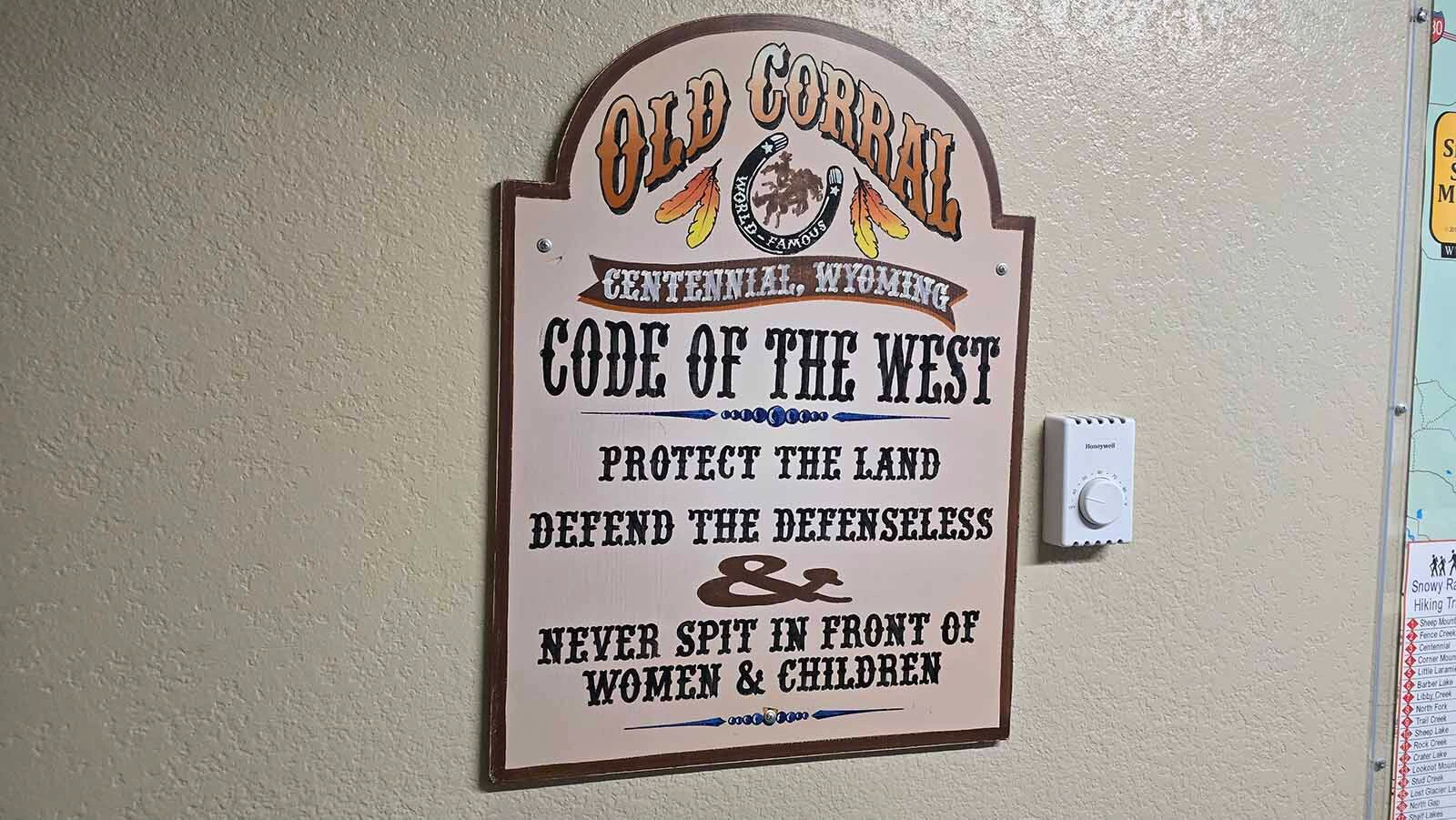
Centennial may not have a city hall, but many of its residents relate to this, Code of the West, found hanging up in the Old Corral. (Renee Jean, Cowboy State Daily) 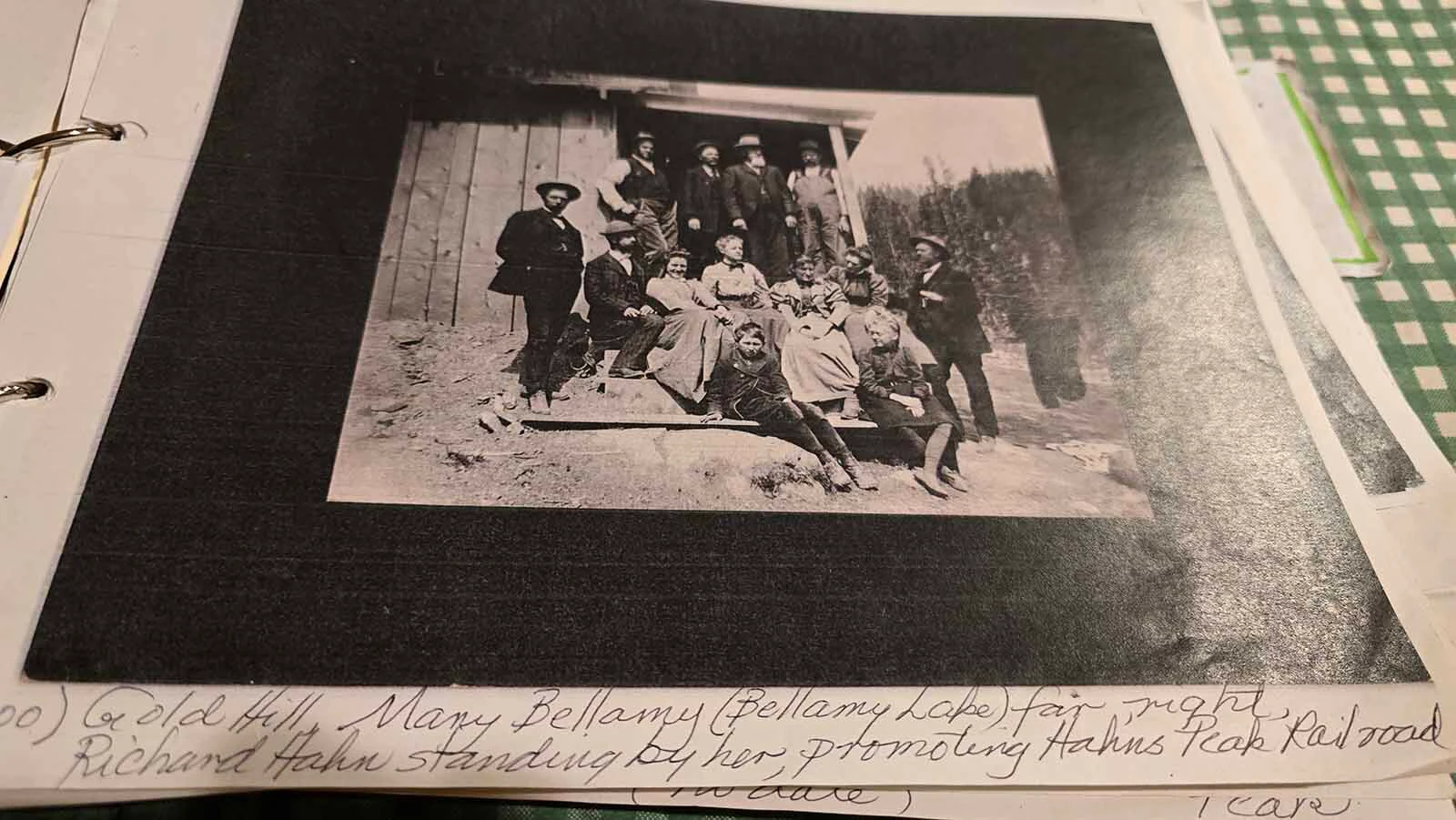
Gold brought many people to the area called Centennial, which named itself that in honor of the nation's 100th birthday, back in 1876. Although unincorporated, the town has persisted since then and is 150 years old. (Renee Jean, Cowboy State Daily)
When Michener Came To Town
One of the town’s legends illustrates how strong Centennial’s identity has become.
James Michener published his novel “Centennial” in 1974. At the time, locals say he mentioned choosing that title because no town in the United States bore that name.
“So he got letters,” Bill Haley said with a chuckle.
“By George, there is a town named Centennial,” Vicky finished, also laughing.
Michener eventually came to the opening of Centennial’s library in 1979, a moment old-timers in town still talk about.
Then-owner of the Old Corral, Pat Self, had donated a small building called the Goodie Shoppe to provide space for this new library, which was heated with a wood-burning stove. The Lions Club provided the wood, while students and teachers removed snow to keep it dry.
According to the library’s history notes, if the small wooden structure couldn’t get to 50 degrees by noon in winter, it would close for the rest of the day.
Eventually, the community organized the Centennial Library and Cultural Association to finance and build a larger library. That was accomplished in 1993, and a grand opening was held in 1994. Today, it operates as a branch of the Albany County Public Library, with trained community volunteers helping to staff it.
It also still has a photo of Michener hanging on the wall, recognizing when the famous author came to Centennial to acknowledge its existence.
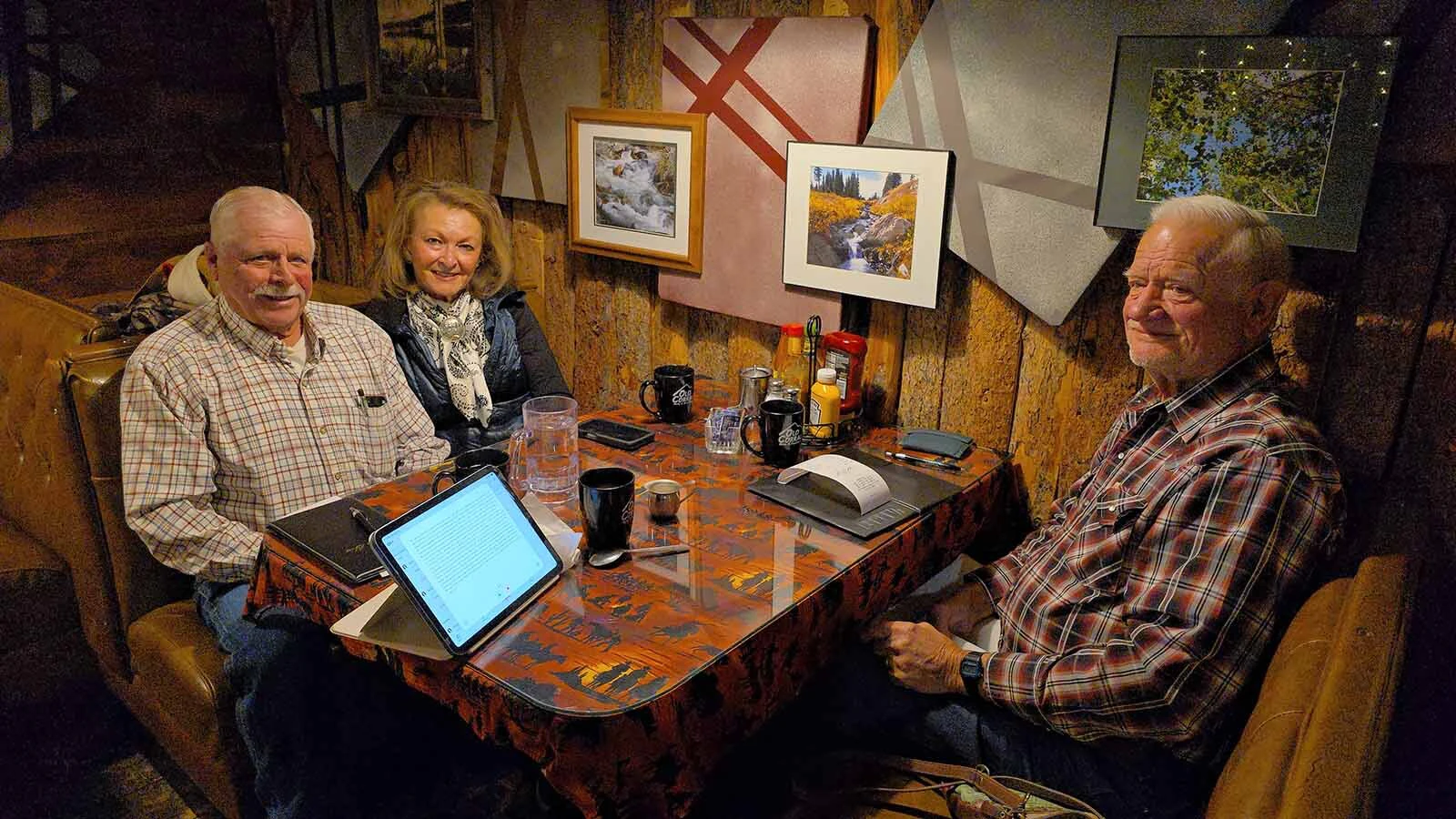
From left, Bill and Vicky Haley and Dick Clifton talk about Centennial today at the Old Corral. (Renee Jean, Cowboy State Daily) 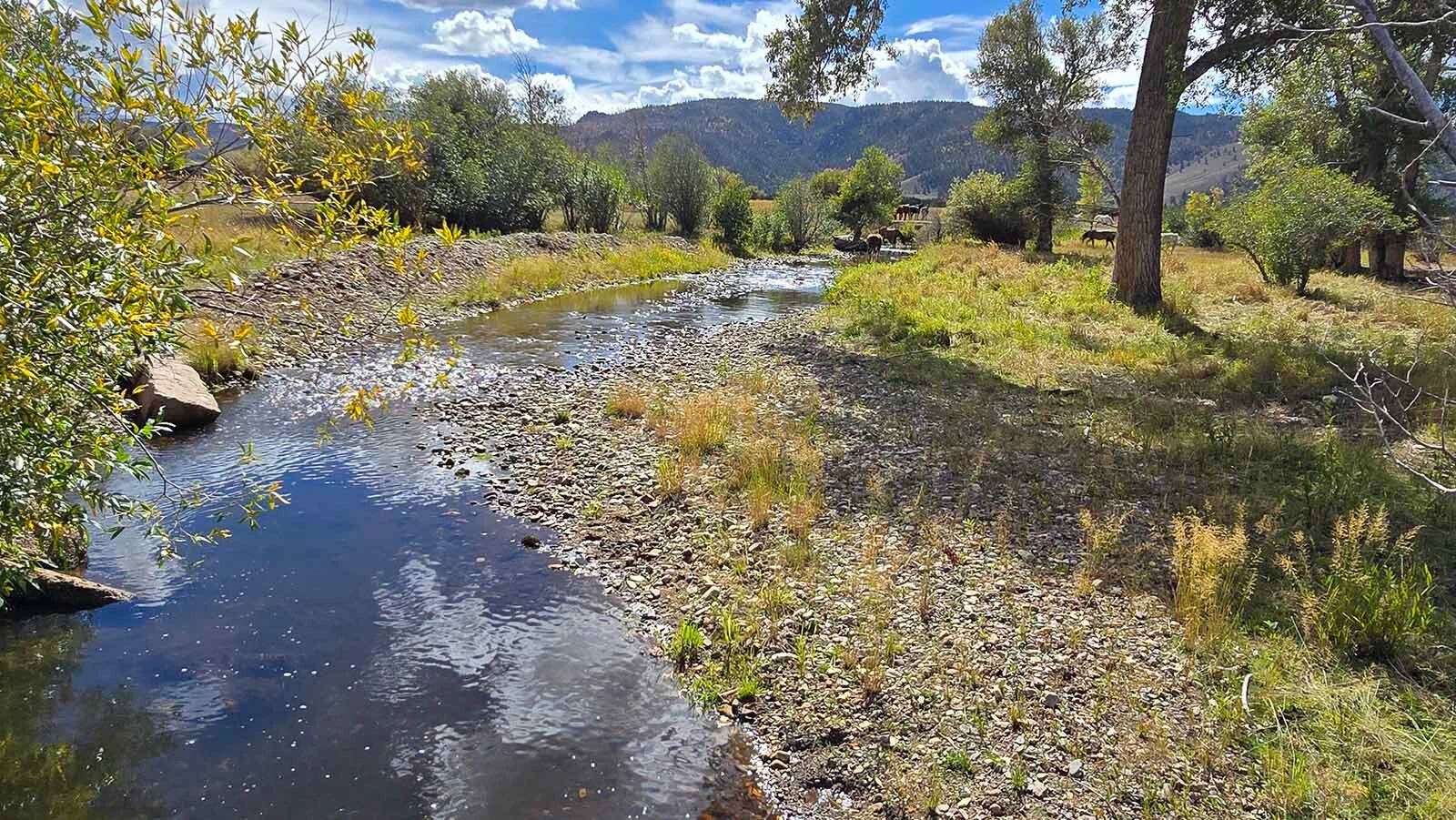
Beauty in the Centennial Valley is everywhere a visitor looks. Here, a small creek meanders on the Deerwood Ranch, where wild horses roam. (Renee Jean, Cowboy State Daily) 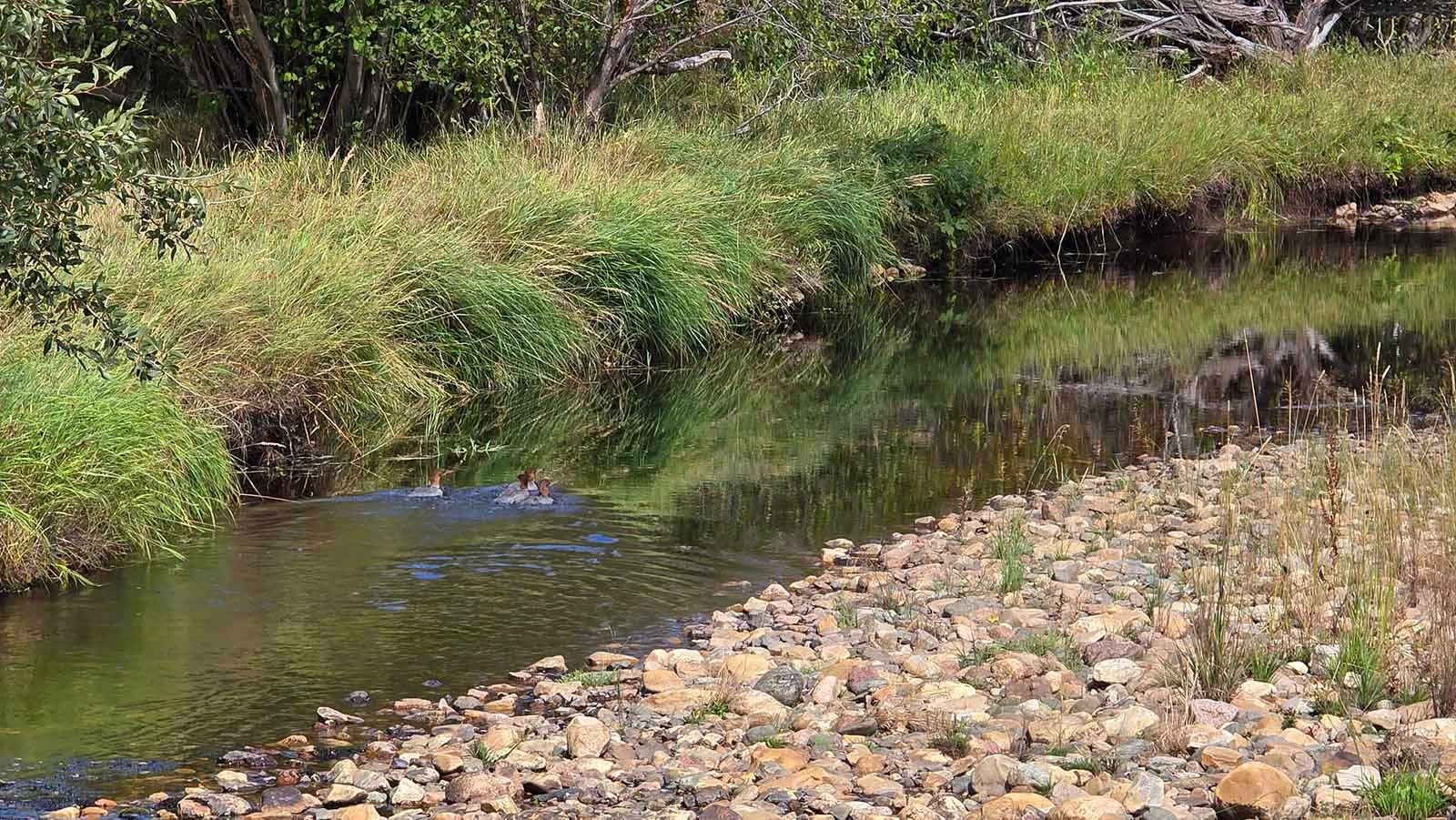
Here a group of wild ducks float down a creek in the Centennial Valley. The area is a fantastic place to see wildlife ranging from moose and black bear to these wild ducks. (Renee Jean, Cowboy State Daily) 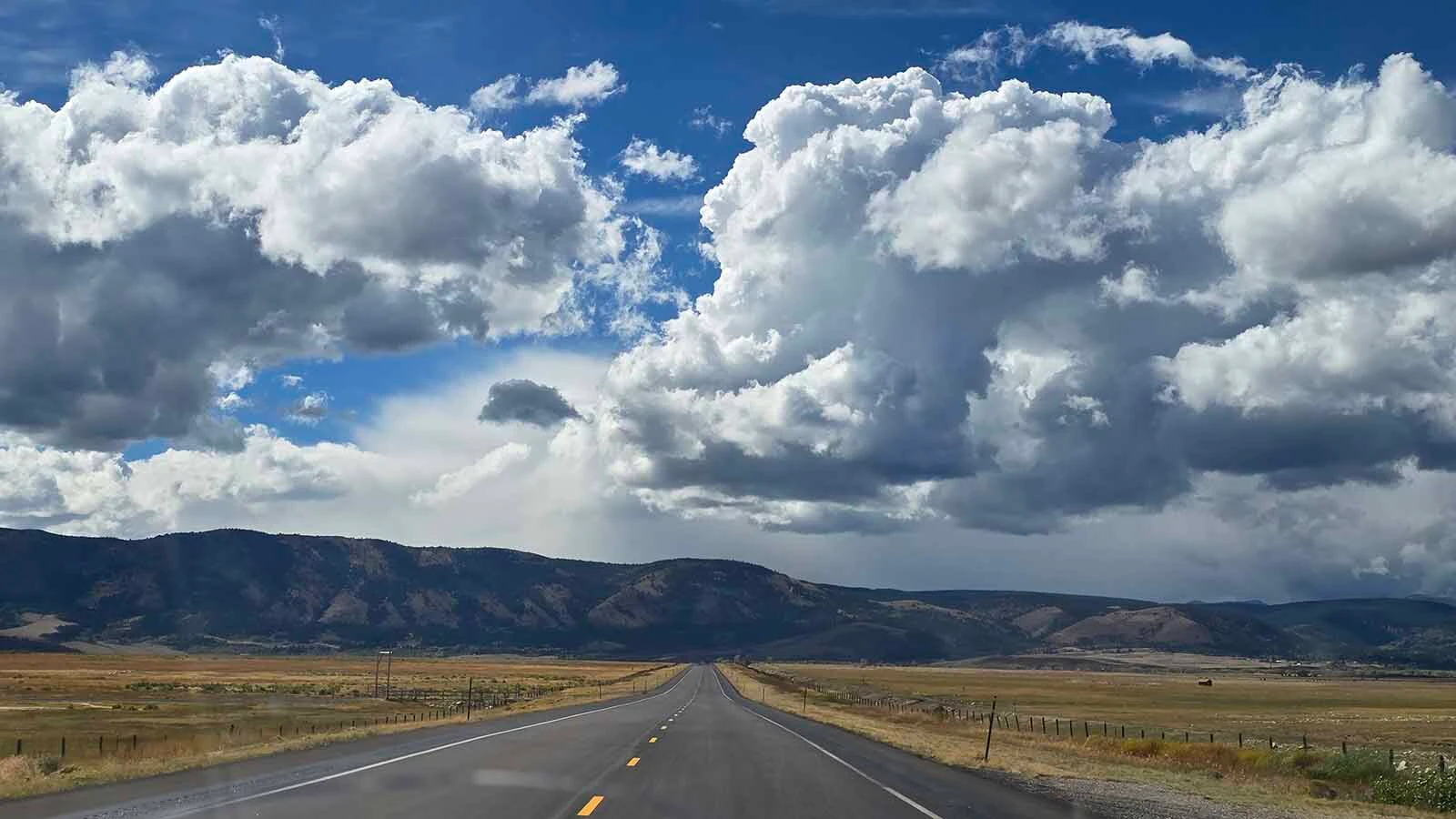
The clouds hang low over the Centennial Valley in the fall. Winter is moving in. It's a signal that winter is moving in soon. (Renee Jean, Cowboy State Daily)
The Guy Who Tie-Dyed Centennial
Centennial’s reputation as a gateway to the Snowy Range has been a magnet for independent souls. They come not for gold or timber but for the freedom to create a life on their own terms.
Kevin Otstot is one of them. He calls himself the man who “tie-dyed” Centennial.
Most Saturdays, you’ll find him seated in front of the Trading Post, selling a collection of T-shirts, skirts, scarves, and other clothing items that have been dyed to look like a rainbow.
Everyone asks him how he came to Centennial. He blames it on the woman who used to own the Trading Post’s bar and restaurant.
“Linda Taylor,” he told Cowboy State Daily. “She’s from California, near where I’m from, and I knew her son.”
Otstot used to chase the Grateful Dead all over the countryside. That landed him in Saratoga one summer.
“I was like, ‘There’s Centennial on the other side of the hill, and Tony Taylor lives there,” Otstot said, the widest wolf grin spreading across his face. “‘I’m gonna go visit Tony Taylor.’ So we came over and visited and stayed awhile and continued back east.”
But things in California were not looking so hot, Otstot said, and his return was reluctant. He spent three more years chasing after the Grateful Dead but then, on his way back west after the tour was over, he stopped by Centennial to visit Taylor again.
“I never made it home,” he said. “That was the summer of ’93, and I’ve been here ever since.”
It was during his years following the Grateful Dead that he learned to tie-dye clothing. It was a way to help pay for his chase. He could buy plain three-packs of shirts at the time for 99 cents, then turn around and sell each one for $5.
“Back in the day, we used to keep our secrets,” he said. “But everybody wants to share their secrets now. So I gather up different techniques on the internet and I try a lot of them. Some work out and some don’t.”
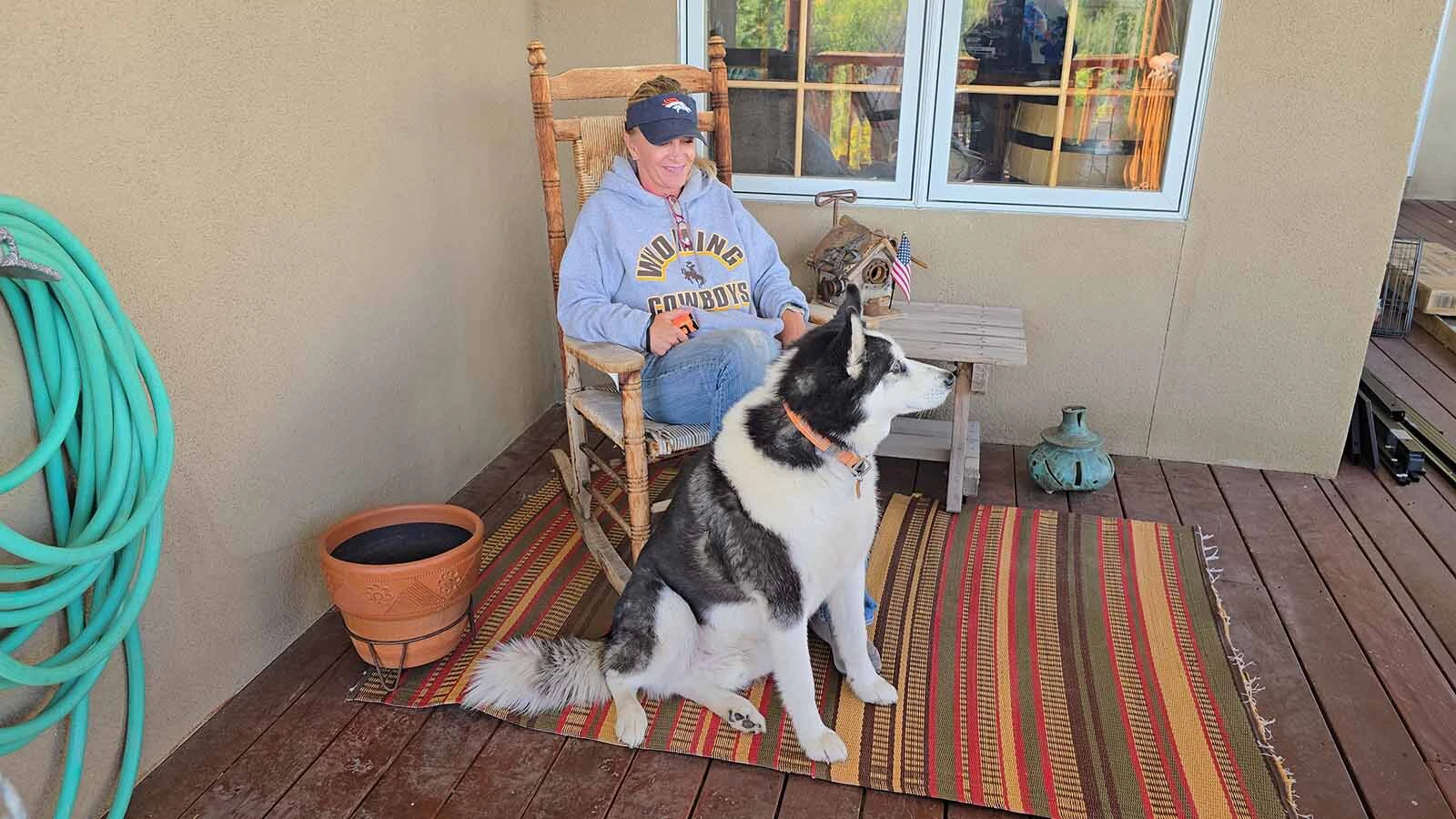
Alicia Brown sits in a rocking chair on her porch, looking at Sheep Mountain as she talks about why she moved to Centennial. (Renee Jean, Cowboy State Daily) 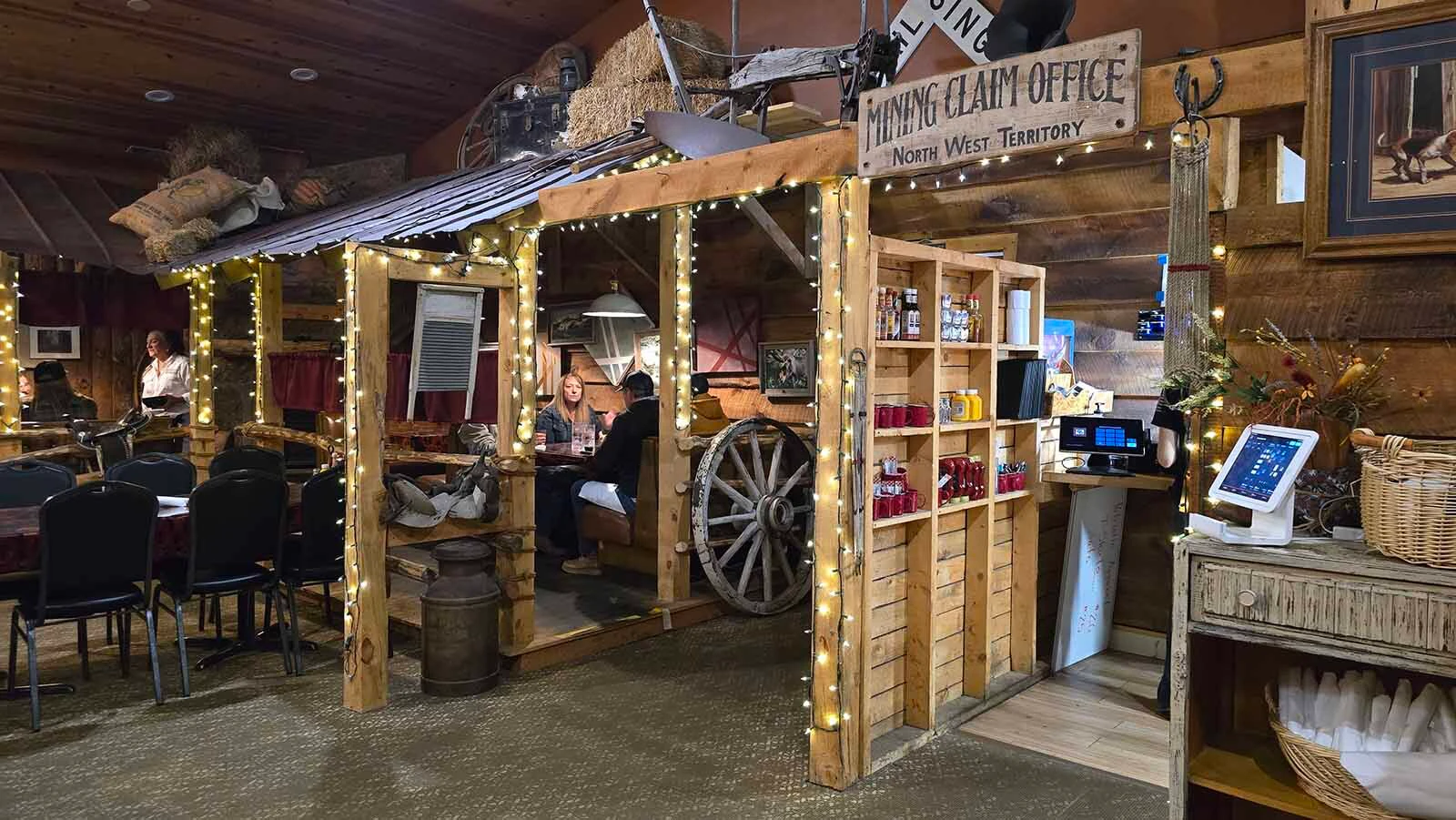
Inside the Old Corral, one of the town's eating establishments. Most of the workforce has to come from Laramie, as housing has become too expensive for the wages they make. (Renee Jean, Cowboy State Daily) 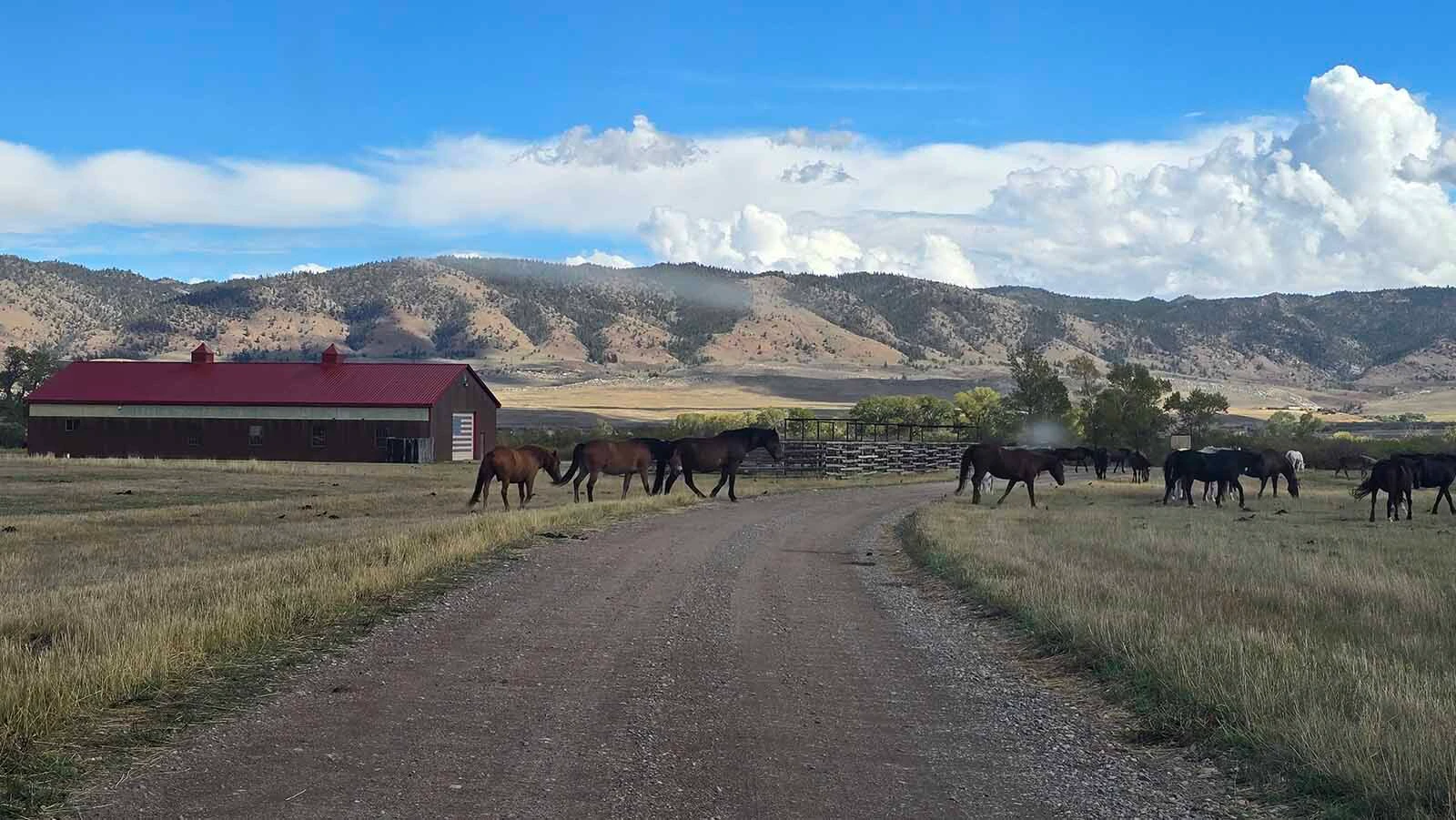
The Deerwood Ranch, where wild horses roam the Centennial Valley. The owners of the ranch consider themselves part of the unincorporated Centennial, which is celebrating its 150th anniversary. (Renee Jean, Cowboy State Daily) Beauty in the Centennial Valley is everywhere a visitor looks. Here, a small creek meanders on the Deerwood Ranch, where wild horses roam. (Renee Jean, Cowboy State Daily)
Centennial Has Been Discovered
What Otstot liked about chasing the Grateful Dead was the music and the sense of community. The music, he realized, he could find anywhere. The community was harder to replace.
Centennial offered that, along with its great outdoors and its sense of freedom.
“We’re free here, even in the world today,” he said. “You turn on the TV and it looks like the whole world’s going to shit. I turn it off and go sit on my porch and I’m just like, ‘Does it really matter?’”
The cops might come if you call them within a day or two if neighbors are feuding or someone is shooting at someone, Otstot said with a chuckle. Then he quickly added that shootings never happen.
“It’s changed a lot,” Otstot acknowledged. “I guess that’s what time does. It was a tighter community, but the Airbnbs have moved in. It’s been discovered and there’s a lot of second and third homes.”
Otstot sees the effect right next door. The house is among the second homes and is not occupied more than 20 nights a year.
“Business can’t find people to work, because the top wage for a cook in this town is $20,” he said.
That’s not enough to make it in the community.
“When I first came here, it was ex-hippies and social dropouts,” he said. “Young, old, rich and poor would all sit at the bar together and share conversation.”
But the new money that’s moved in is different, Otstot said.
“They want their table at the restaurant right now,” he said. “And they take their eight side-by-sides up on the mountain and tear it up. They’re not part of the community.”
Regular people are finding it more difficult to live in Centennial, Otstot said.
“We’ve got a water board. We’ve got a library board. We’ve got a museum board,” he said. “And we don’t have enough people to serve on those boards any more because there’s no place to live that’s affordable.”
Otstot still classifies himself as a social drop-out but pushes back on the idea he’s a hippie.
“Deadheads are capitalists,” he said, gesturing to his racks of tie-dyed clothing. “Hippies aren’t.”
Every time someone buys something, Otstot tells them they’ve just bought the uniform of Centennial. In September, he’s running low on inventory, but this winter he will stock up for the next season.
“In spite of all that gloom and doom earlier, I got here when it was cheap and I love it,” he said. “I’ve bought and sold three homes in this town in 30 years and doubled my money on every single one.”
That came at a cost, he said, as all good things do.
“Where I grew up, there was a good sense of community, but not anymore,” he said. “The town I grew up in, when I was born, there were 25,000 people. Now there’s 700,000. It was beautiful hills of grass and 200-year-old trees. Now it’s strip malls and housing tracts and condominiums.”
That’s an awful future, Otstot said, one he doesn’t want for Centennial.
“I hope you have low readership,” he said, locking eyes with this reporter. “Because if you write a great story, it just brings more people … I’ve told you more than I would tell the cops.”
Contact Renee Jean at renee@cowboystatedaily.com
Renée Jean can be reached at renee@cowboystatedaily.com.


