
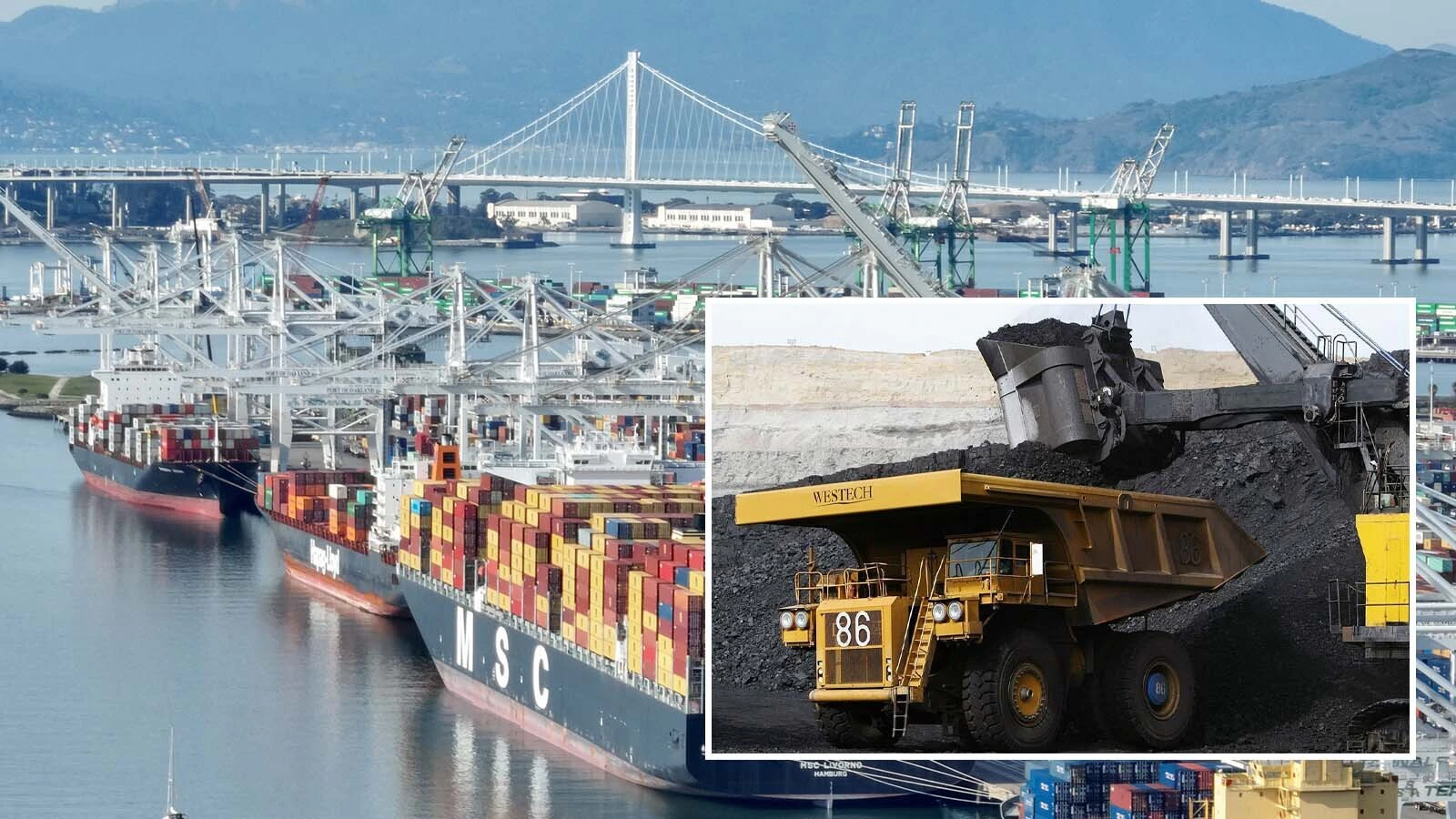
California Gov. Gavin Newsom signed a law Wednesday that adds environmental review hurdles that will slow progress on a planned coal export terminal at the Port of Oakland that Wyoming officials have called essential to the future of the state's coal industry.
Newsom says the reviews are necessary to protect the environment and California residents, while Wyoming industry insiders say it’s a stall tactic to slow — or stymie altogether — any chances of coal ever moving through the port.
The law, Assembly Bill 40, also comes a little more than a year after the California Supreme Court officially ended a drawn-out legal battle that was holding up development of the coal export terminal, refusing to hear the city of Oakland’s objections to the project.
Gov. Mark Gordon told Cowboy State Daily in an email Thursday morning that he has already directed Attorney General Keith Kautz to review that California law and consider potential legal action.
“We will discuss all options, including litigation, to preserve Wyoming's ability to produce and ship coal,” Gordon said.
The law, Assembly Bill 40, requires developers of any coal project handling more than 5 million tons a year to complete a full environmental impact review and report before receiving local agency approval.
Any later change to the type or amount of coal would trigger a new review and report.
Why It’s Important For Wyoming
Gordon has been one of the terminal's most visible backers.
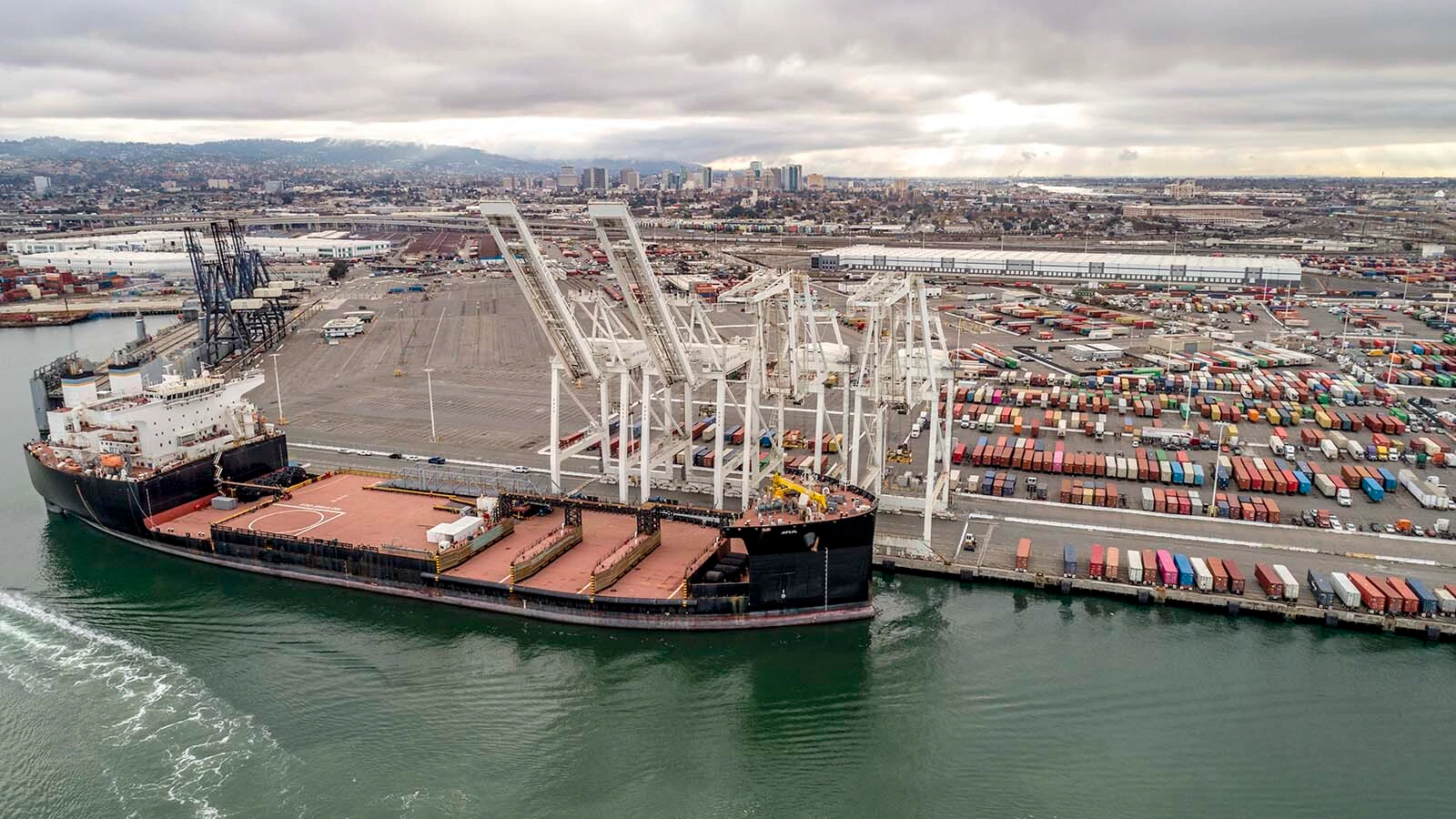
He stood beside President Donald Trump in the Oval Office in June when Trump announced $75 million in Defense Production Act funding for the Port of Oakland project, and Gordon said the Oakland port is essential to Wyoming's coal mines.
Weeks earlier he had signed an agreement with a Japanese coal organization while on a trade mission to Asia. Late last year, a Gordon policy advisor told lawmakers the state was meeting monthly with Oakland operators about getting Wyoming coal to the terminal.
He told Cowboy State Daily on Thursday that he will continue to support and fight for the freedom of Wyoming industries to ship natural resources to international markets.
“I have repeatedly supported the ability of Wyoming's industries to ship our natural resources and products to other states and countries,” Gordon said. “This is a fundamental right states have enjoyed since the founding of our nation.”
'Disappointing'
Travis Deti, executive director of the Wyoming Mining Association, told Cowboy State Daily that Newsom signing AB 40 fits with his political track record.
“It's disappointing, but I don't think it's unexpected,” Deti said. “Governor Newsom is obviously of a political persuasion that doesn't like the coal industry, doesn't like the energy industry.”
Earthjustice, which co-sponsored AB 40, praised the law in a Wednesday statement, saying it protects Californians from toxic coal dust and forces developers to disclose their projects' impacts and plan to reduce them before getting approval.
“Our neighbors are extremely alarmed about the prospect of dirty coal dust spreading into their homes, schools, and places of worship,” said Veronica Eady, executive director of the West Oakland Environmental Indicators Project, in a statement. “This law gives them a process to voice those concerns and demand mitigations.”
'Money Where Your Mouth Is'
While Deti called claims of environmental impact a “red herring and a distraction,” Campbell County commissioner Jim Ford told Cowboy State Daily that operators in the Powder River Basin — the largest-producing coal region in the United States — have already shown that they can produce coal while mitigating impact to the environment.
“Speaking about Wyoming producers, we know we can do our part and we can produce coal safely,” Ford said. “We can produce it in a responsible manner from an environmental perspective, and that's been demonstrated over and over and over again.”
Earthjustice attached a 2023 University of California-Davis study to its statement, which found that coal trains passing a monitor in Richmond, California, added about 8.3 micrograms per cubic meter of fine particulate matter to the air on average, and that coal and petroleum coke dust from a nearby terminal turned up in surrounding neighborhoods.
The study measured coal from Utah rather than Wyoming.
Colin O'Brien, deputy managing attorney for Earthjustice, told Cowboy State Daily that if coal dust can be properly mitigated, AB 40 shouldn't be much of a hurdle at all.
“What AB 40 does is say, ‘Put your money where your mouth is,’” O’Brien said. “Subject these projects to full environmental review and meaningful mitigation.”
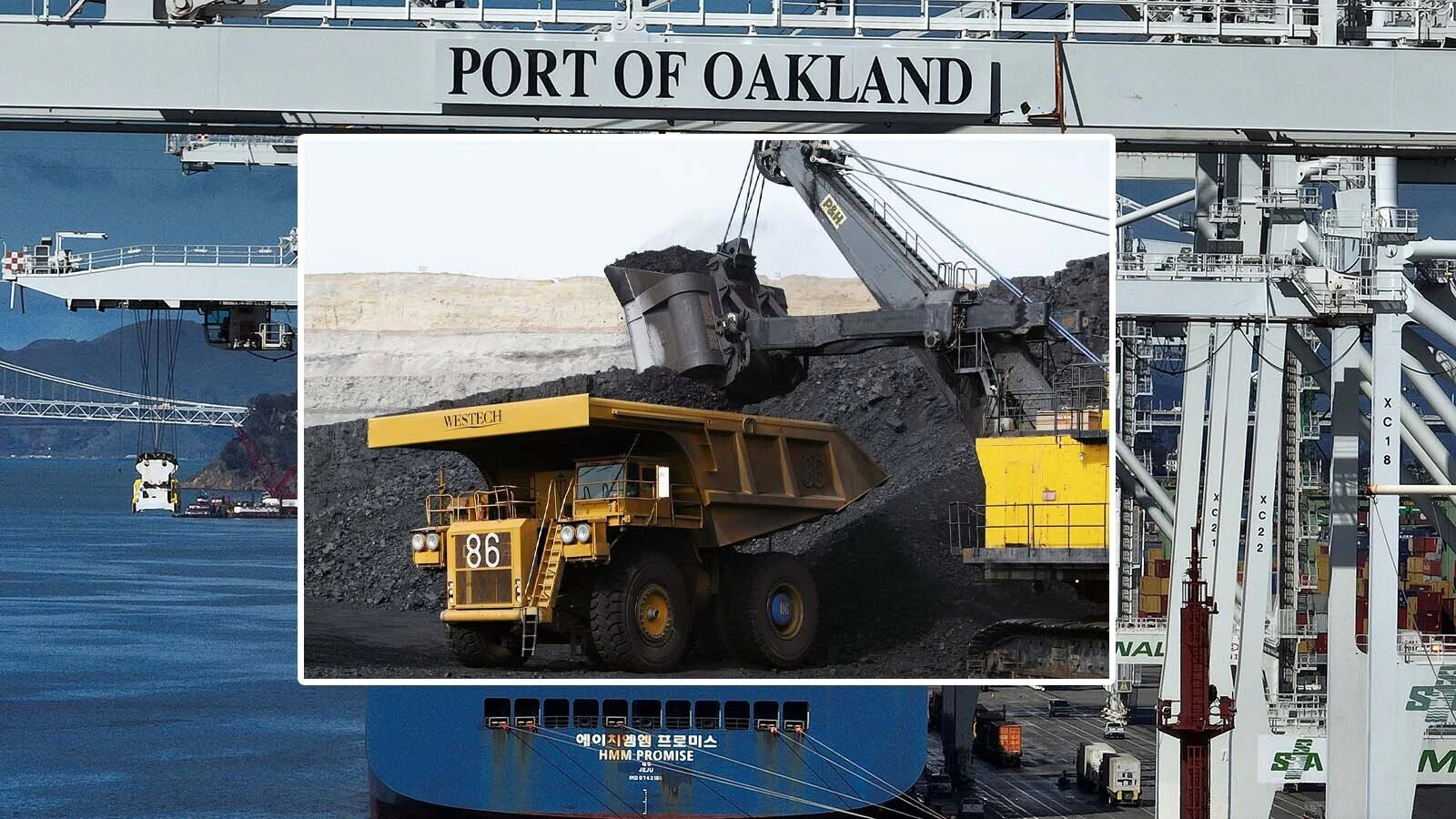
Hope In Asian Markets
Ford, who was born and raised in Campbell County, sits on the Wyoming County Commissioners Association's Energy and Environment Committee and is operations manager of the Integrated Test Center, a carbon capture research site at the Dry Fork Station coal plant near Gillette.
His county sits at the center of the Powder River Basin, where Wyoming coal has been in a long slide. The state produced a record 466.3 million tons in 2008, but output fell to 190.7 million tons in 2024, the first time since 1992 it dropped below 200 million tons.
State leaders have pitched Asian markets as a way to make up for lost demand at home, though efforts to export coal from West Coast ports have repeatedly stalled, with nine proposed Pacific Northwest coal export terminals canceled since 2010.
Ford said that if Asian countries are going to buy coal anyway, the United States can offer them a cleaner product than they would get from other suppliers.
“We think it's the right thing to be able to trade freely and provide energy to our Asian allies,” Ford said. “We have an opportunity because of our tremendous energy reserves of all kinds here in the West, particularly coal, to participate in that market.”
'Nice Little Boom For Wyoming'
Port issues, Ford said, have long been a barrier to that opportunity, and the passing of AB 40 is just the latest hurdle.
“Coal port issues have been a political football that's been kicked around for decades,” Ford said. “It’s a long, long saga about Western coal export.”
Ford said that while the law is a setback for coal export efforts, he doesn't see it as a major blow to the industry's economic outlook.
Wyoming mines produce more than 200 million tons of coal a year, and the White House has said the Oakland terminal would ship more than 12 million tons a year to Asia, though estimates have varied over the years.
Ford said that volume is not nothing, but it would be a small slice of the state's total.
“It'd be single-digit percentages,” Ford said. “But I’d say it's all meaningful.”
For Deti, while the Oakland port’s potential is small right now, it could be expanded if it ever gets off the ground. After a while, even smaller-scale exports stack up.
“A million here, a million there, and pretty soon you're talking real tonnage,” Deti said. “It could be a nice little boom for Wyoming out of Oakland.”
But Deti said he's still hopeful, pointing to the pilot shipments of Powder River Basin coal that Peabody Energy sent through Mexico's Port of Guaymas to Vietnam, as well as other potential export routes in the Pacific Northwest.
“I think we have a real opportunity here, and we have to continue to pursue it,” Deti said.
Emma Jane Jackson can be reached at emma@cowboystatedaily.com.


