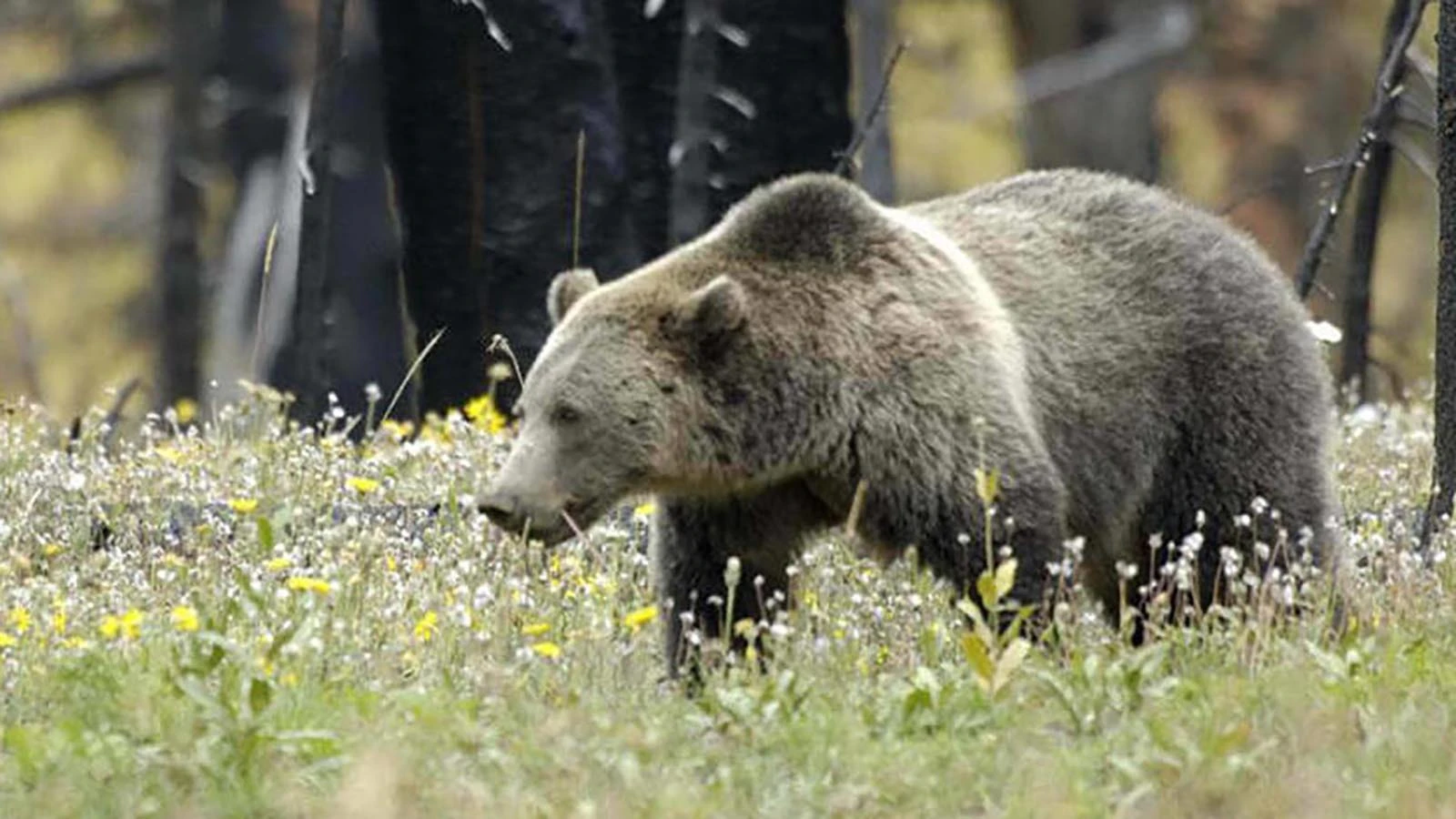
For the third time this year, a grizzly bear has been confirmed near Coeur d’Alene, Idaho, possibly wandering far afield in search of food.
That's been happening across the West this year.
Or it could imply something more.
Grizzly advocates have long argued the sheer number of bears doesn’t matter nearly as much as vast, interconnected habitat when it comes to full recovery of grizzlies in the Lower 48 states.
And the re-establishment of a significant population of grizzlies in Idaho, particularly remote central Idaho, is key to that, bear advocates say.
More bears showing up near Coeur d’Alene, in northern Idaho's Panhandle, could be a small step in that direction, grizzly conservationist Louisa Willcox of Montana told Cowboy State Daily.
“It gives a glimmer of hope that these bears can make it,” she said.
Bears would still have to get across Interstate 90 to reach huge tracts of wild country in central Idaho.
To the east in Montana, I-90 has proven a formidable barrier to any significant intermingling of the Northern Continental Divide and Greater Yellowstone Ecosystem grizzly populations.
While “it’s not unheard of” for grizzlies to be in the Coeur d’Alene area, evidence of a breeding population there is lacking, Idaho Fish and Game Panhandle region spokesman T.J. Ross told Cowboy State Daily.
Caught On Trail Cam
Images of what appeared to be an adult grizzly were captured this month at a black bear hunter’s bait site near Skookum Saddle in the Coeur d'Alene Mountains, the Spokesman-Review reported.
When asked if the photos could be shared with Cowboy State Daily, Ross said the hunter had shown them to Fish and Game but didn’t grant permission for them to be distributed to media.
The sex of the bear is unknown, he added.
The bears most likely to disperse, or wander outside of established territory, are young males, which travel about like “kids on motorcycles,” Willcox said.
A population can’t be established in a new area until females show up and start raising cubs there, she said.
Fish and Game ordered the black bear hunter to remove bait.
That was the right thing to do, Willcox said.
“A number of griz have been killed by black bear hunters over the years. While the bait was removed in this case, Idaho needs to adopt a policy of no baiting in this area and other areas where griz are or can be expected to be,” she said.
Population Pushing Outward?
Fish and Game is trying to collect DNA samples from the grizzly in hopes of learning more about it, Ross said.
It might have come from the Cabinet or Selkirk mountains to the north, which aren’t far from the Coeur d’Alenes.
That means it could be part of the tiny Cabinet-Yaak grizzly subpopulation.
That’s an isolated pocket of perhaps 60 bears in the rugged Cabinet-Yaak ecosystem in far north Idaho and northwest Montana.
If the Cabinet-Yaak bears are, indeed, showing a pattern of pushing outward, that could be good news, Willcox said.
The establishment of new grizzly populations “begins with dispersers,” Willcox said.
So, at least three grizzlies showing up in the Coeur d’Alene region since spring could be a sign of a trend, she said.
A Search For Food?
But bears’ wide movements could be driven by circumstances this year. In Montana and Idaho, as elsewhere across the West, an exceptionally hot, dry year has led to shortages in bears’ natural food sources.
In north Idaho and western Montana, that’s been a huge failure of the huckleberry crop, Willcox said.
Ross said that’s led to more sightings of both black bears and grizzlies in places where people aren’t accustomed to seeing them.
“Like every other Western state, we’ve got bears coming down into the lower elevation areas looking for food,” he said.
And sometimes, bears just get wanderlust, Willcox said, citing a famous grizzly called Ethyl.
Breaking the trend of male bears doing most of the traveling, Ethyl racked up 5,000 miles as she wandered across Montana and Idaho during the 2000s and 2010s.
Her tracking collar fell off in 2014, when she was age 20, and she was never heard from again.
“These bears are showing us with their paws” that they can’t be contained by the arbitrary lines humans try to put around their habitat, Willcox said.
Mark Heinz can be reached at mark@cowboystatedaily.com.