
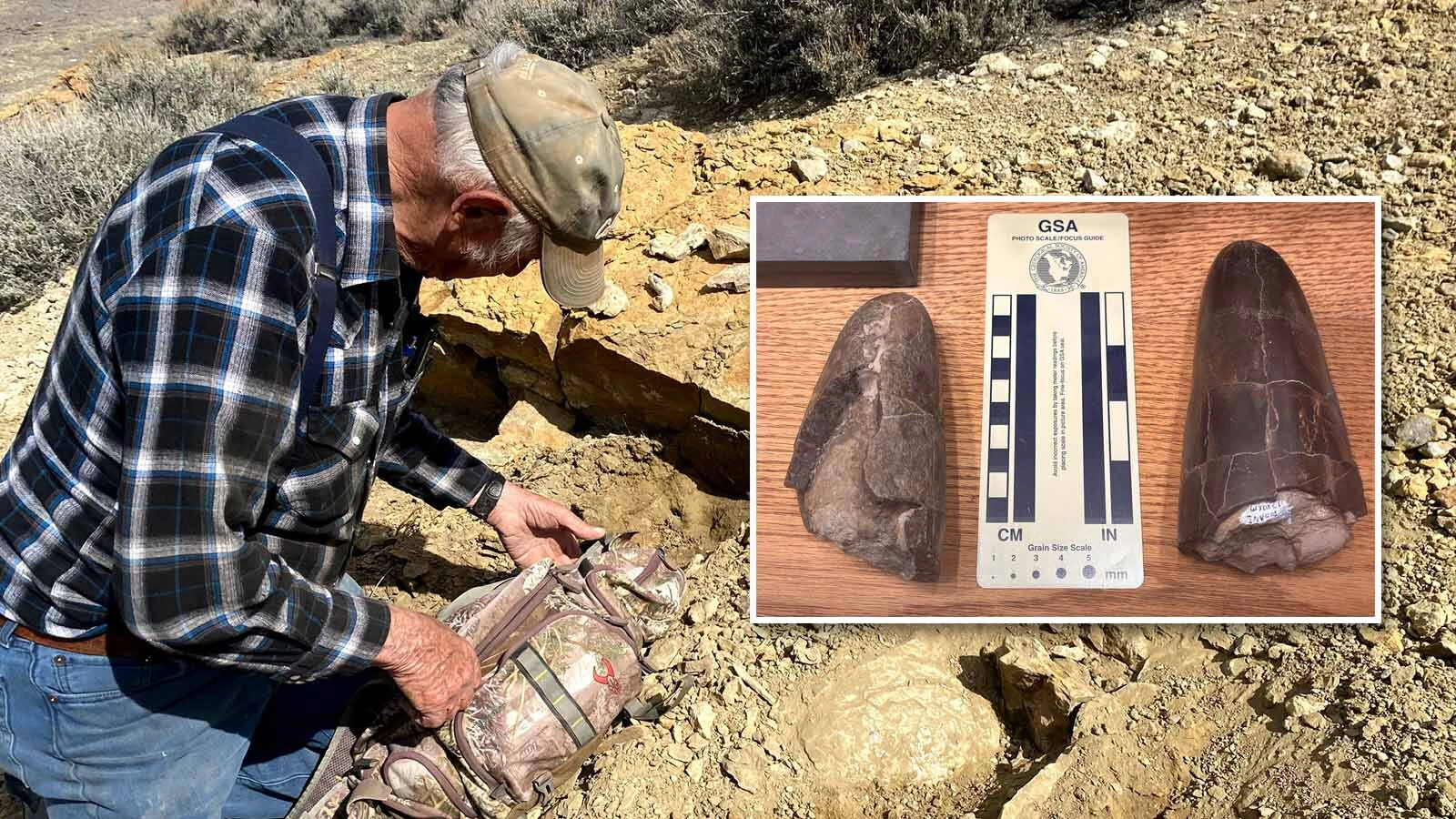
Wyoming’s latest paleontological discovery is the chunkiest “squid butt” ever found.
New research published in Papers in Paleontology announced the discovery of Wyoteuthis linsterorum, a type of prehistoric squid called a belemnite. It lived during the Middle Jurassic, around 160 million years ago, when Wyoming was submerged in warm, shallow seawater.
Two specimens of the new squid were found, near Ten Sleep and Thermopolis, in the Bighorn Basin. Paleontologist Jessica Lippincott, one of the authors of the study, said this "fat" squid is a uniquely important discovery, and she anticipates more will be found throughout Wyoming.
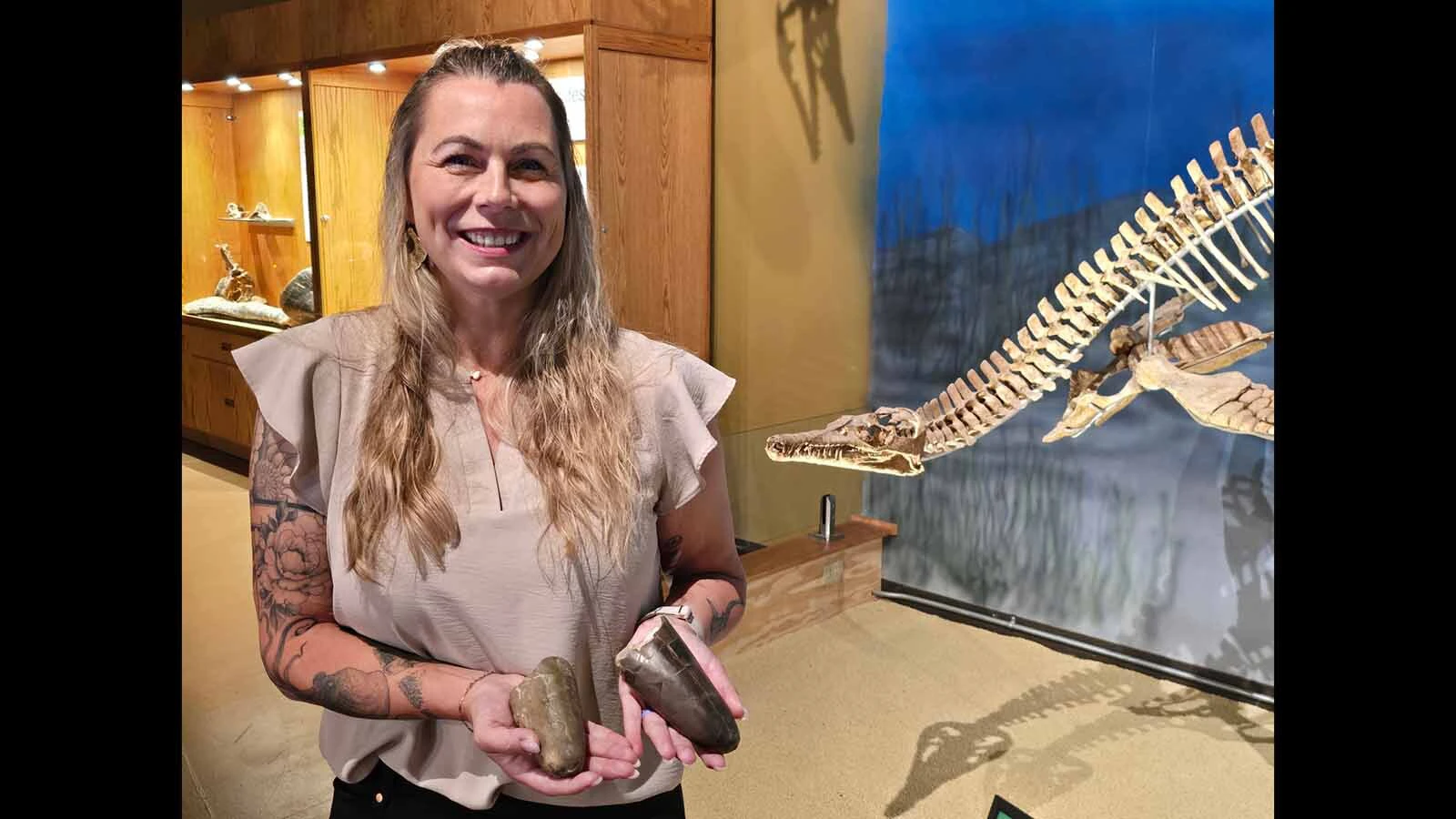
“Belemnites are among the common and recognizable fossils in Wyoming,” she said. “Wyoteuthis is significantly bigger than any other. It’s so big, a lot of people who know belemnites wouldn’t even know it was a belemnite. It’s very exciting.”
The Biggest Squid Butt
Belemnites are an extinct group in the Cephalopoda family, which includes modern squid and octopuses. They lived in oceans and seas worldwide during the Mesozoic Era, when dinosaurs roamed the land.
All belemnites had a cone-shaped shell inside their bodies. Paleontologists call it a rostrum, but most Wyomingites, kids, and fossil collectors call them “squid butts.”
Because the rest of the animal was made of soft tissue, the rostrum is usually the only part of a belemnite that fossilizes.
In Wyoming, belemnites are everywhere. They’re found by the millions in the Sundance Formation, a layer of rock deposited by a shallow island sea that curved across Wyoming 160 million years ago.
Finding belemnites in Wyoming isn’t hard. Finding and studying enough Wyoteuthis for this study took decades, and only two specimens are known to science.
“After spending years fossil hunting in Wyoming and collecting countless fossils of the common Pachyteuthis belemnites here in Wyoming, this one is unlike anything I have ever seen,” Lippincott said.
Like A Sore Thumb
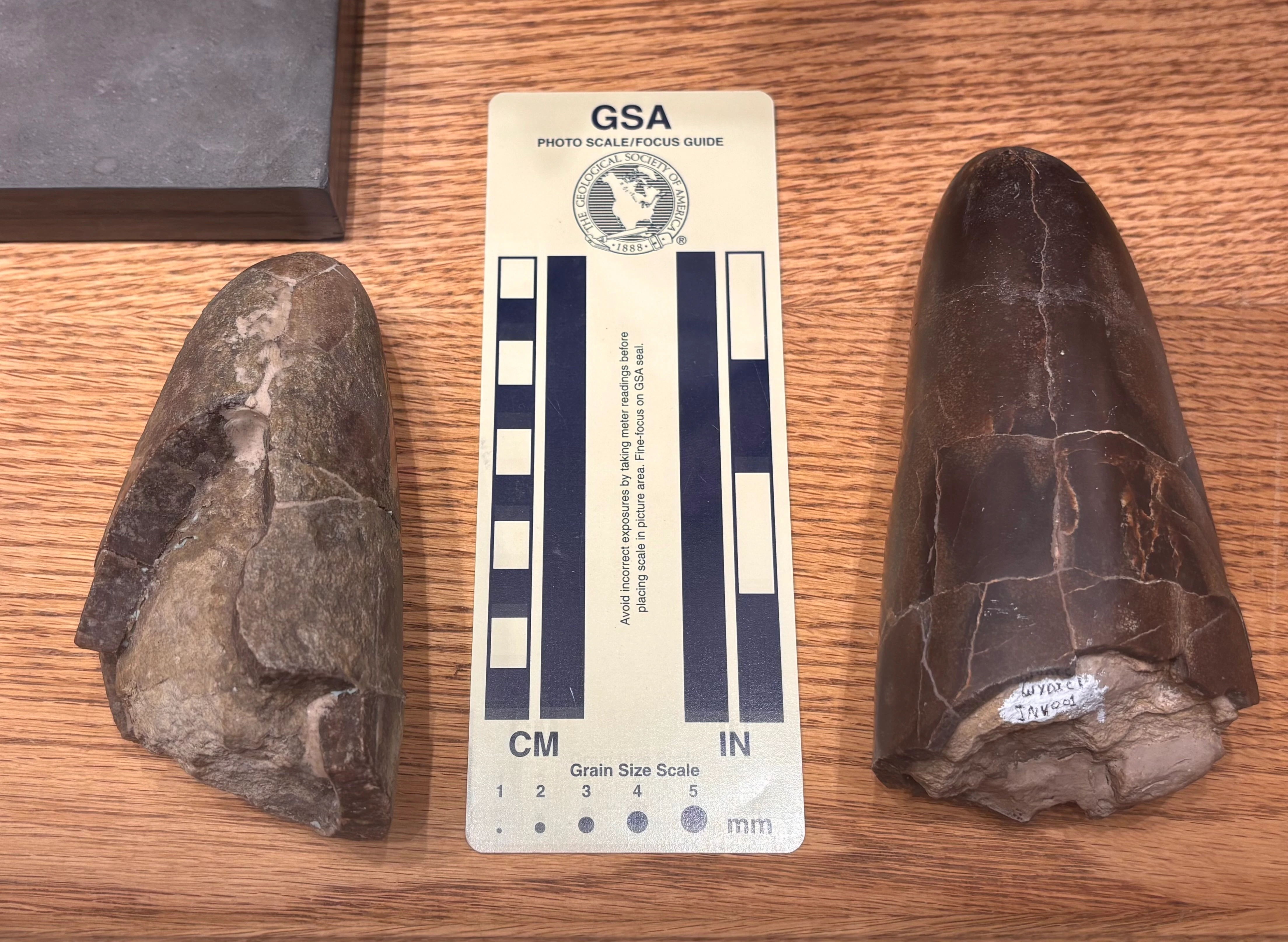
The rostrum of Pachyteuthis belemnites, the common species found worldwide, looks like a bullet. The shell has a pointed tip, a dense calcitic rostrum, and can be up to 4 inches long.
Wyoteuthis is rounder, thicker, and much larger than the largest Pachyteuthis. The two specimens described in the new paper have rostrums almost 6 inches long and around 2 inches thick, making them the thickest known belemnite rostra ever found.
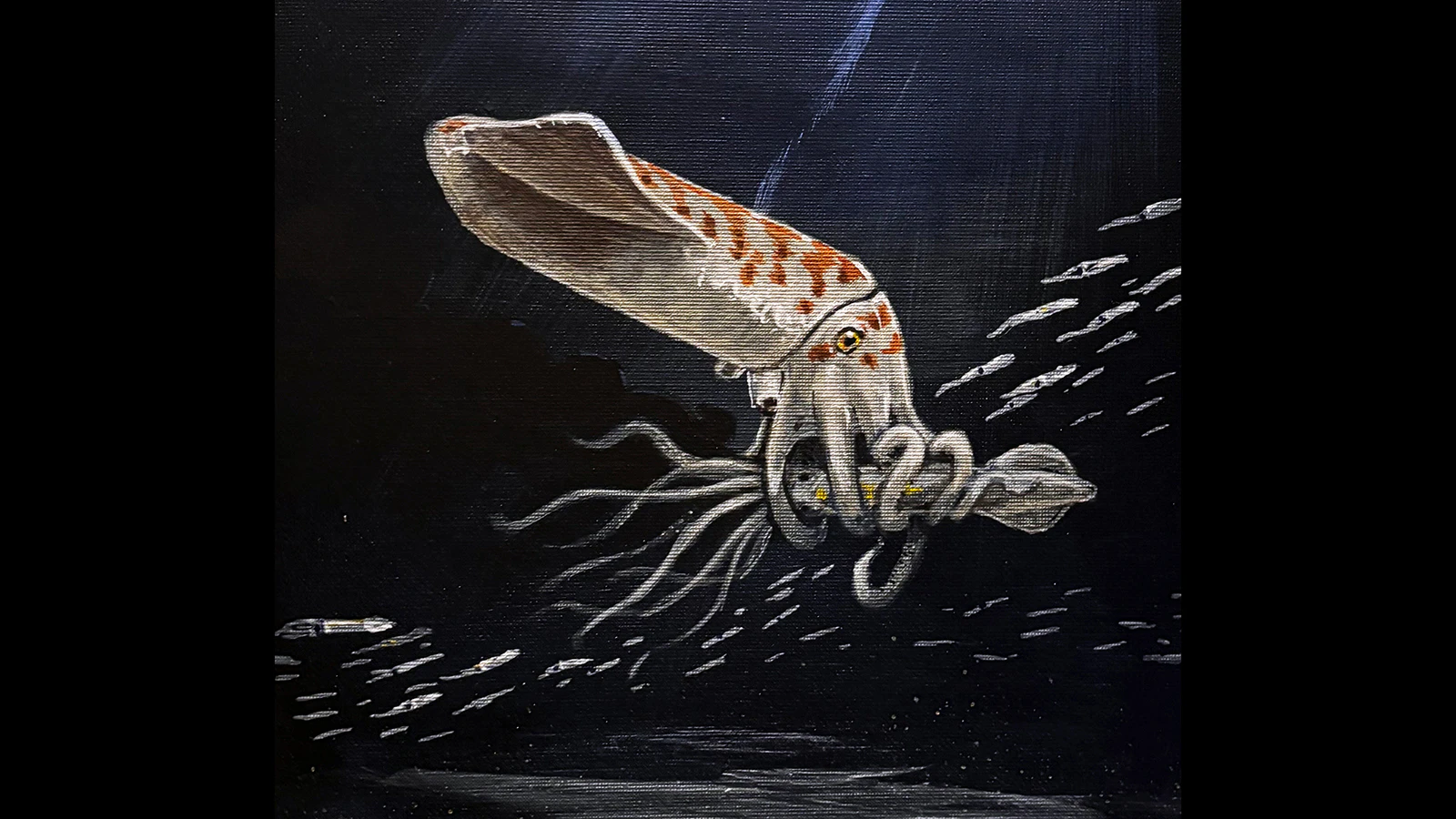
The total belemnite, with its head and tentacles intact, would have been nearly two feet long. Not a giant squid, but currently the largest known species of belemnite from the Jurassic Period.
Also, while the rostrum of Pachyteuthis belemnites ends its rostrum in a point, the end of Wyoteuthis’s rostrum is rounded. It’s more than enough to recognize the chunky belemnite as a new species.
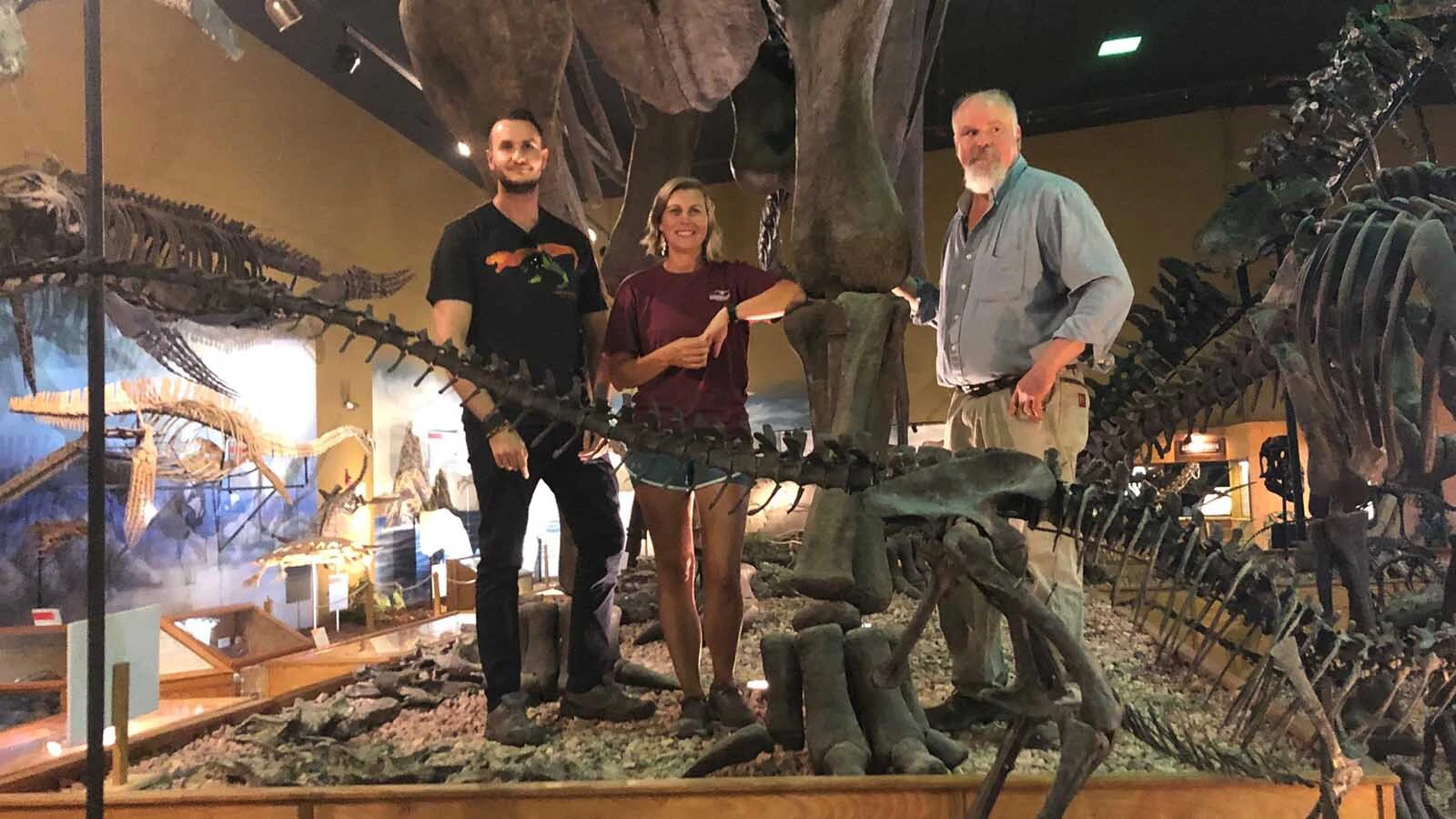
Paleontologist Bill Wahl, another co-author of the Wyoteuthis paper, is a leading expert on the Sundance Formation. He found one of the two Wyoteuthis specimens on the Hot Springs Ranch in Thermopolis with Burkhard Pohl, owner of the Wyoming Dinosaur Center.
“It sticks out like a sore thumb,” he said.
The Linsters' Wyoming Squid
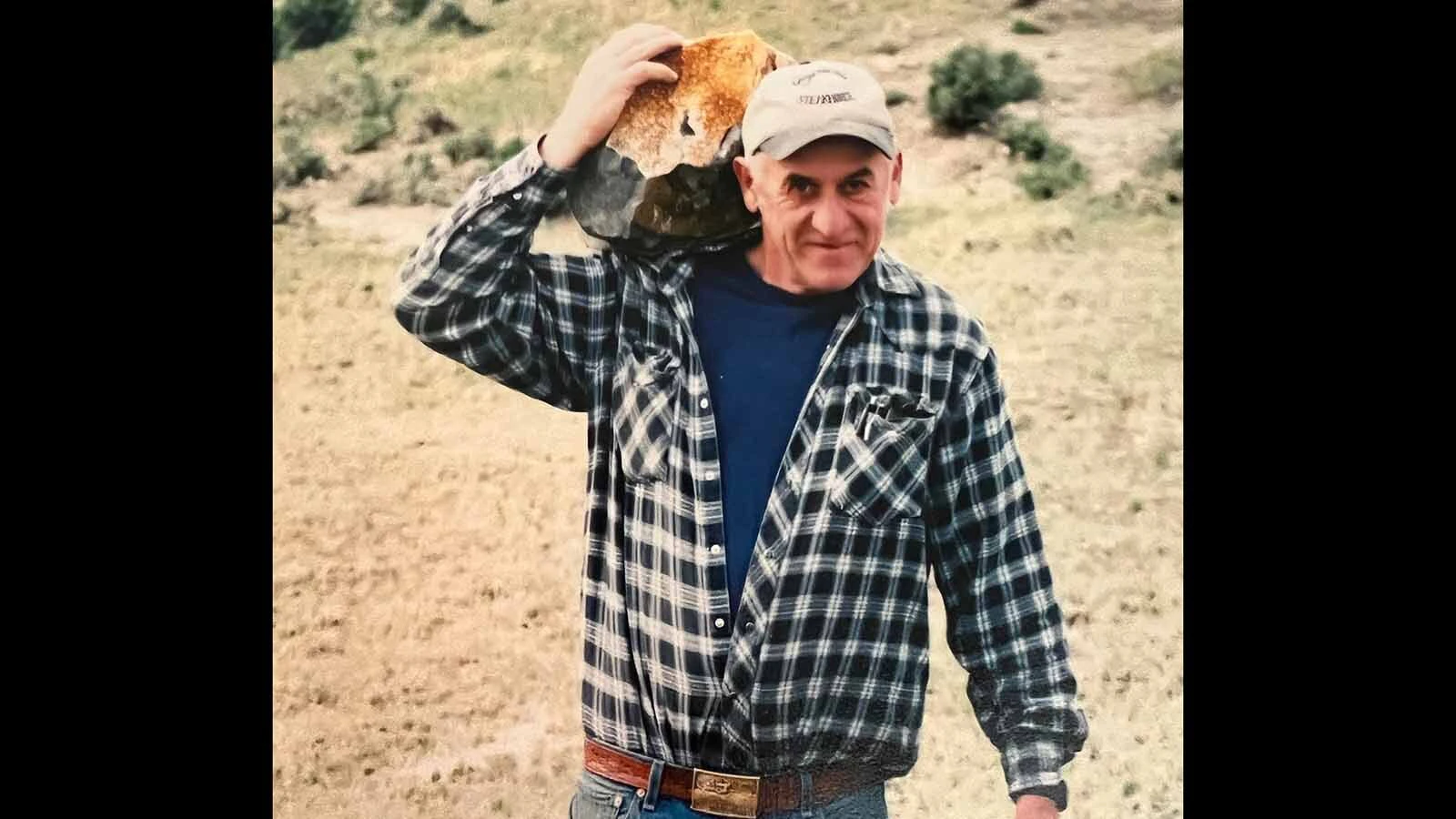
Wyoteuthis linsterorum was named in honor of the Linster family. Cliff Linster found the type specimen of Wyoteuthis in the hills near Ten Sleep.
The Linsters have been prolific paleontologists for decades, going back to the summers they spent digging up dinosaur fossils on their ranch outside Bynum, Montana.
“I’ll be 47 this year, and my parents always told me that I was wrapped in a blanket and set in the dirt while they were looking for marine fossils somewhere in Wyoming when I was 3 weeks old,” said Cliff’s son, Wes. “They were doing it long before I came around.”
Wes spent several summers digging for dinosaurs with his parents. When he was 14, he discovered a new species, Bambiraptor, on the family ranch.
Cliff and his wife, Sandy, “retired” to Ten Sleep to be closer to Wes and his family. They never stopped looking for fossils and Native American artifacts in the area.
Cliff Linster passed away on June 10 at age 82.
“Just the day before he passed away, he and my mom were driving up to that same ridge where he found that belemnite,” Wes said. “He was always game to go out looking for fossils right up to the very end. It didn't matter what type of fossil, he'd still get that kid in a candy store look on his face.”
Dean Lomax, an internationally renowned paleontologist and one of the world's leading experts on marine reptiles, was another co-author of the Wyoteuthis paper. He said he and his peers were “honored” to name the belemnite after the Linster family.
“It’s bittersweet that (Cliff) didn’t get to see it published, but it’s wonderful that we can immortalize him and his family name in the history of paleontology,” he said.
Cliff donated his Wyoteuthis to the Wyoming Dinosaur Center Foundation in 2019 to facilitate the research. Wes believed the name was the perfect way to honor his parents’ paleontological legacy, which he carries on today in Ten Sleep.
“It may not be a new species of T. rex, but I'm honored to have an extinct giant squid bear our family name,” he said. “I know my dad would have thought the same, and he would have been thrilled to have seen this paper come out as well.”
A Big Gulp
Now that Wyoteuthis has been added to Wyoming’s rich paleontological legacy, many questions remain about its life in the shallow Sundance Sea, 160 million years ago.
Belemnites were an important food source for marine reptiles, like ichthyosaurs and plesiosaurs, that lived in the Sundance Sea. Paleontologists have found belemnite rostrums in the preserved stomachs of these animals.
Even with its immense size, Wyoteuthis wouldn’t have been off the menu for marine reptiles. However, it might have leveraged its size to prey on its own kind.
“A possible explanation is that their relatively large size gave them an advantage when hunting co-occurring smaller belemnites,” said paleontologist Alexey Ippolitov. “Modern squid, after all, are hardly picky when it comes to prey. They readily hunt not only other species of cephalopods, but sometimes even their own kind.”
There’s also some speculation that Wyoteuthis might have used its thicker rostrum to survive and hunt in deeper water, rather than sticking to the shallows.
Meanwhile, both Wyoteuthis specimens are on display at the Wyoming Dinosaur Center in Thermopolis.
Lippincott and her peers hope the announcement of Wyoteuthis will reinvigorate interest in Wyoming's Sundance Formation. Finding more specimens will answer more questions about this chunky squid and watery world it inhabited.
And since invertebrate fossils can be legally collected on federal land, the next big belemnite could be found by anybody.
“It goes to show that we are still finding new species of fossils all the time, and people who rockhound or collect invertebrate fossils can also contribute to science,” Lippincott said.
Contact Andrew Rossi at arossi@cowboystatedaily.com
Andrew Rossi can be reached at arossi@cowboystatedaily.com.


