
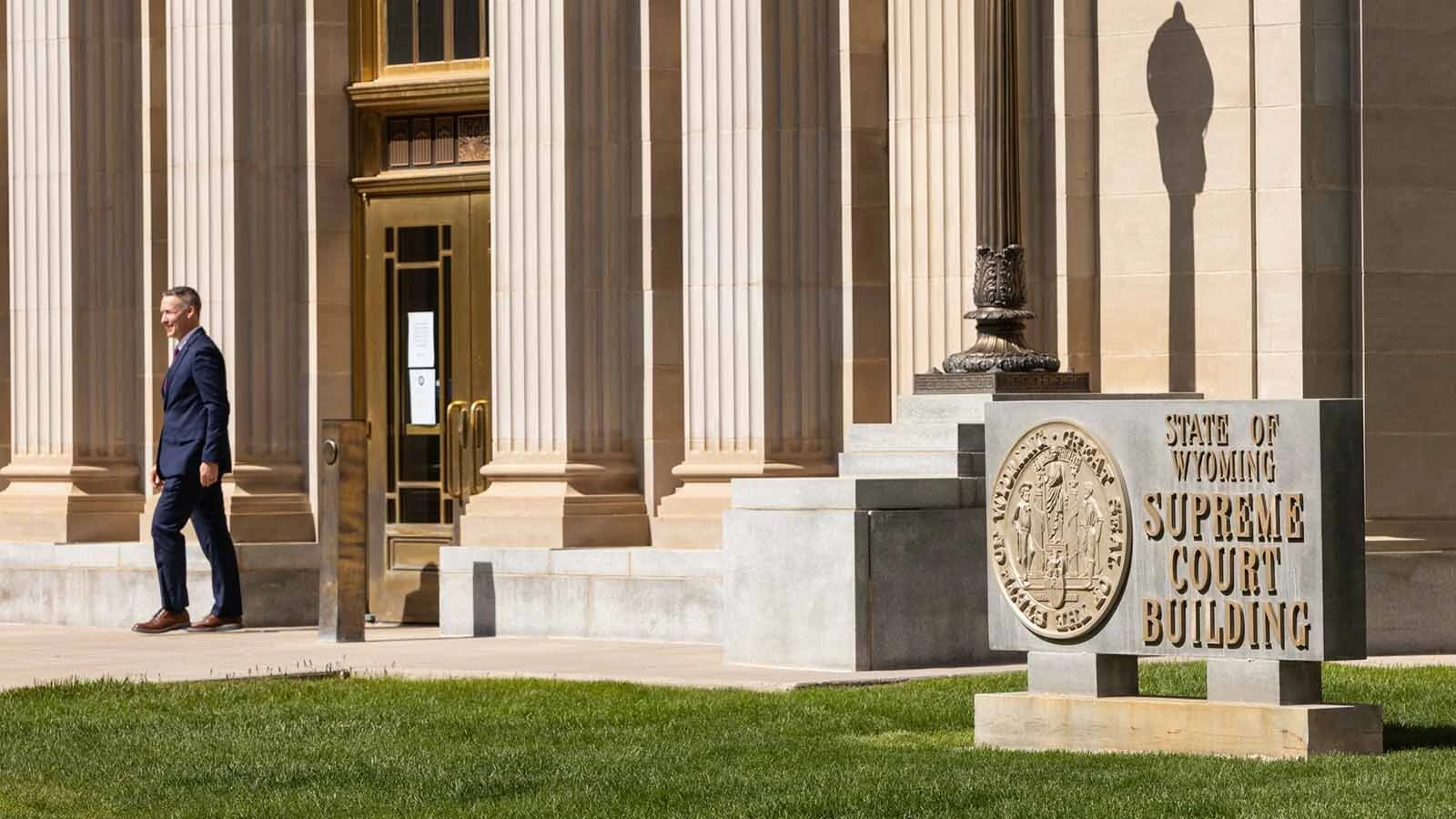
In a three-justice majority opinion, the Wyoming Supreme Court ruled Thursday that the Legislature has been violating the state Constitution by underfunding schools, failing in the recent past to pay teachers adequately and failing to adjust for inflation.
But a lower-court judge was wrong to order the Legislature to buy more computers, hire school resource officers and pay for school lunches, according to the high court's opinion.
Drawing from the Wyoming Constitution's requirement that public education be complete and uniform, the decision imposes a level of school funding on the Wyoming Legislature that courts will review under the most protective constitutional standard in the law, “strict scrutiny.”
“The district court correctly ruled that the legislature failed to maintain a constitutional system for financing public school operations because it did not fund teacher salaries or make inflation adjustments to the (funding model) at levels approximating the true costs of education,” says the majority opinion by Wyoming Supreme Court Chief Justice Lynne Boomgaarden, joined by Justices John Fenn and Robert Jarosh.
“The legislature’s failure to ensure it was funding the cost basis of each component of the (model) created disparity between school districts in a manner that violated equal protection and did not fulfill students’ fundamental right to an adequate public school education,” the opinion adds.
The two-justice dissent by Justice Kari Jo Gray, joined by Judge Joshua Eames (standing in for recused Justice Bridget Hill) called the majority’s conclusion judicial overreach.
Gray wrote the Wyoming Constitution has indeed been read to safeguard regional spending disparities for public schoolchildren, under the highest standard of protection.
Schools are funded by property taxes, and different counties garner different levels of wealth from those. So over the past half-century, the judicial branch has pushed the Legislature to equalize that education funding across regions.
But courts should not apply the strict scrutiny review to the Legislature when faced with claims it's underfunding schools generally or failing to pay for some new technology or service schools allegedly need, Gray added.
In the past, wrote Gray, “We advised that ‘’judicial involvement in the legislature’s appropriation decisions (should be) an absolute last resort’ and ‘having this Court function as an account overseer serves no purpose and inappropriately injects the judiciary into executive and legislative branch functions.’”
Filed by the Wyoming Education Association (WEA) and a handful of school districts in 2022, the case shook the Legislature, pushing it to pass a groundbreaking “recalibration” bill, or recalculation of what public education should cost. Lawmakers are supposed to pass recalibration every five years, but hadn't done so in around 15. They had adjusted for inflation periodically.
Attuned to claims that it hasn’t paid teachers adequately, the Legislature's recalibration confined teacher pay in a “silo” or earmark within the block grant so school districts couldn’t use recommended teacher pay for other things, like activities, equipment, or administrative staff.
The silo brought controversy, with many schools saying it erodes local districts’ control and robs their needs.
The recalibration plan reduced some high schools' activities funding streams also, bringing outcry from small schools nestled in larger districts.
At an August forum just before he won the GOP nomination for Superintendent of Public Instruction, state Rep. Steve Harshman said the Legislature should repeal the whole recalibration plan and revert back to its prior model.
Now The Case
When WEA filed this case four years ago, Gov. Mark Gordon expressed disappointment, indicating school funding disputes should be worked out in the Legislature’s policy realm.
The case wore on, culminating in a weekslong bench trial.
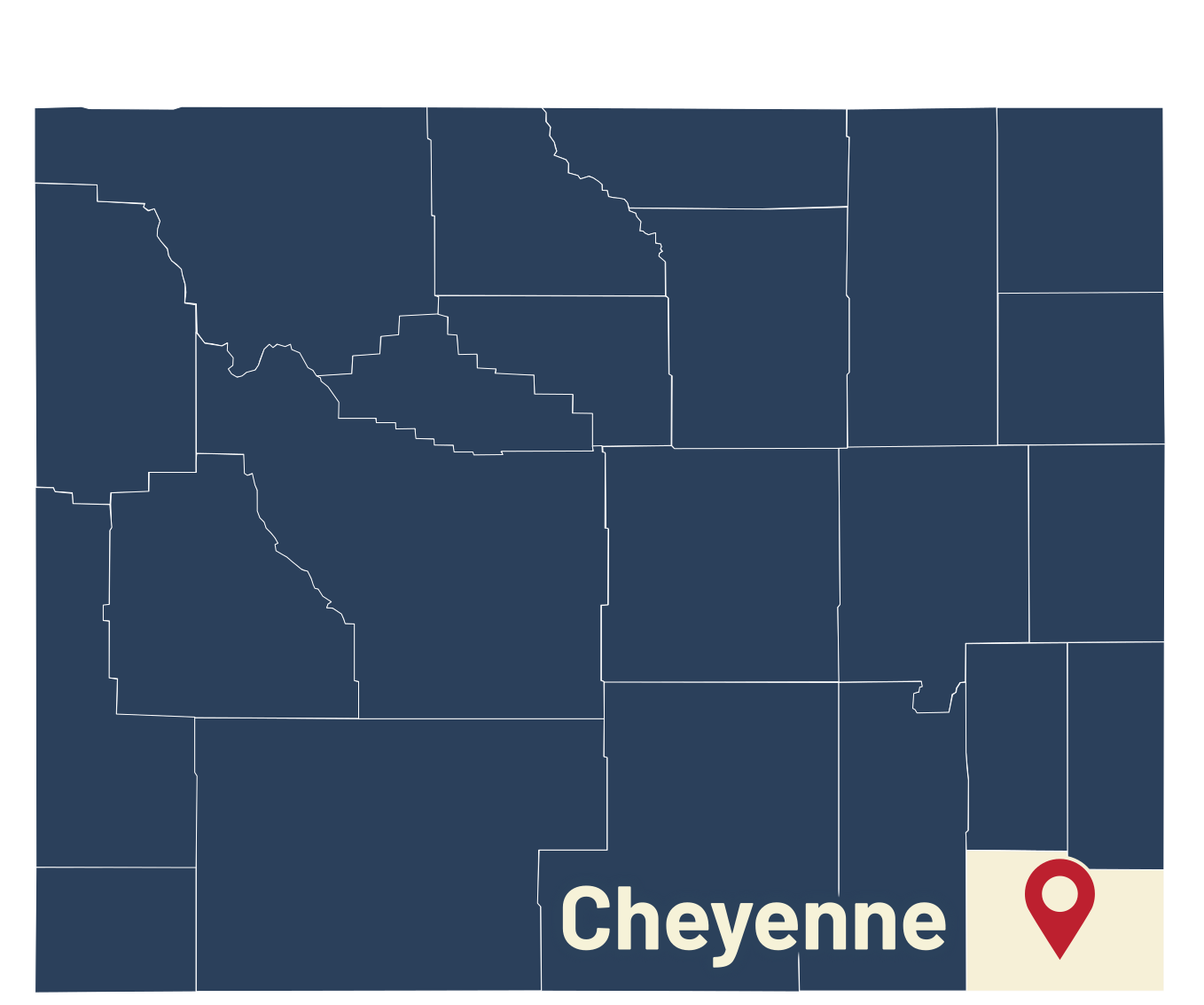
In February 2025, Laramie County District Court Judge Peter Froelicher ruled that schools have been underfunded, the Legislature has underfunded teacher pay and failed to adjust for inflation, and that the Legislature must fund school nutrition programs, pay for one computing device for each student, add school counselors to the elementary grades and fund school resource officers – plus assess school building suitability statewide.
Froelicher was correct about the teacher pay, inflation and funding education according to true cost, ruled the majority.
And the Wyoming Attorney General’s office didn’t contest that the state should fund elementary-level counselors.
But, the majority added, Froelicher was not correct to order lawmakers to provide a computing device for each student, school-lunch/nutrition funding, and school resource officer programs.
“The record does not demonstrate (those provisions) qualified as innovations that require statewide funding,” says the opinion.
Froelicher was also wrong to order the state to school buildings for suitability, the majority concluded. The state already has an acceptable process for that, their opinion adds.
Gray wrote in the dissenting opinion that Froelicher was indeed wrong to impose the new purchases. She concurred with the majority there.
But the majority’s approach was not in line with precedent, wrote Gray.
The majority used strict scrutiny to review the state’s levels of spending. That protective judicial test should only be used, here, for disparities in how the state treats different children, Gray wrote.
Gray also disputed the majority’s establishment of a test to determine when the Legislature should add new innovations or services to its school funding plan.
Clair McFarland can be reached at clair@cowboystatedaily.com.


