
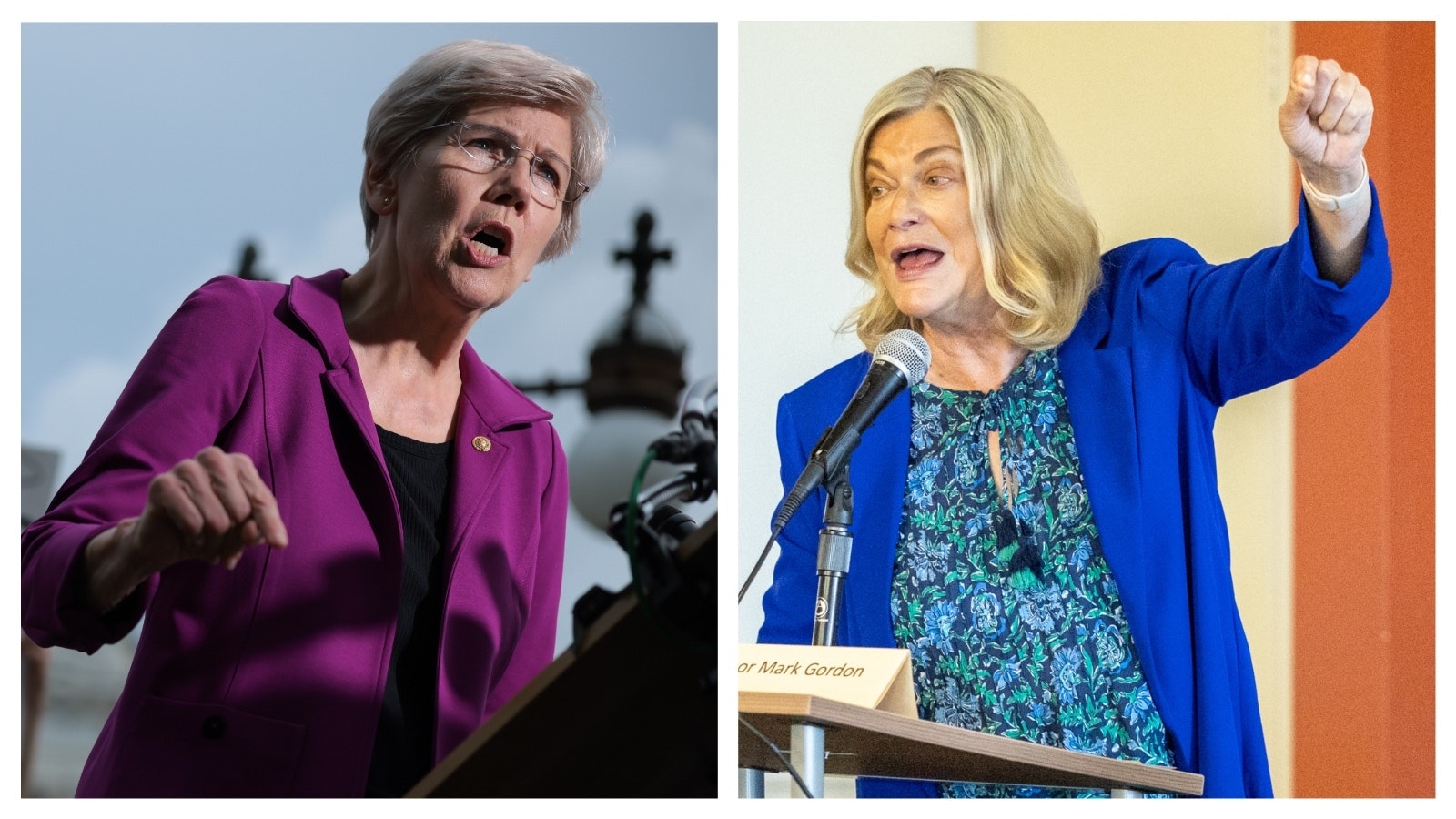
Moments before U.S. Senate Democrats and three Republicans sidelined one of Sen. Cynthia Lummis’s favorite bills, she urged the chamber to consider all the concessions she and other proponents have made to Democrats on cryptocurrency framework.
It wasn’t enough, Sen. Elizabeth Warren, D-Massachusetts, said, listing the $1.4 billion President Donald Trump banked from crypto last year, and her doubts that the legislation could stave off political corruption and inside dealing.
Senate Democrats stood together and three Republicans broke ranks to block the bill, 49-50, from advancing. The three GOP nays came from Sens. Josh Hawley (Missouri), Susan Collins (Maine), and Jerry Moran (Kansas). The bill needed 60 votes to advance.
Regulating and greenlighting cryptocurrency has been a long and dear project for Wyoming’s outgoing junior senator, who’s garnered the nickname “Crytpo queen” and backed a landmark crypto bill that became law last year. The GENIUS Act was the first federal regulatory framework for stablecoins.
“I have spent every single day of the past year fighting to get the CLARITY Act ready for prime time, because Wyoming did not send me to Washington to watch America fall behind,” Lummis told the Senate on Tuesday. “My state sent me here to make sure we lead. Today this body decides whether we keep that promise or sideline American leadership.”
Lummis called the bill a bipartisan effort, pointing to the numerous concessions proponents have made to Democrats, which more than doubled the bill’s length to 635 pages.
The bill sought to end years of regulatory uncertainty by defining the roles of the federal agencies, regulate secondary market trading, and protect consumers – aims considered a boon to U.S. blockchain success.
Concessions
Lummis said Trump has agreed to historic checks and concessions.
“The Democrats still wanted more,” she said. “They wanted independent outside enforcement so President Trump went back to the table and he gave more.”
She also pointed to Wyoming’s history as the leader in creating digital coin framework.
Warren cast the bill as helpless against mounting corruption in the White House.
“I come to the Senate floor today to oppose my Republican colleagues’ efforts to jam through the CLARITY Act,” she said.
Warren said she believes Congress can find cryptocurrency legislation agreeable to both major parties, “but not this bill. This bill poses a massive risk to families, to our economy, and to our national security.”
“We need crypto legislation that stops political self-dealing,” said Warren. This bill, she added, “would turbo-charge its unprecedented corruption.”
Warren noted that Trump has appointed crypto-friendly regulators and promoted the industry in office while he pursues crypto ventures personally.
“The money just kept rolling in,” said Warren. “Trump and his family raked in $1.4 billion from their crypto ventures.”
She also noted that Trump’s haul of 2025 exceeded that of any publicly traded U.S. digital asset company.
Late Sunday, Warren said, Republicans released a new ethics provision they’d negotiated with the White House.
She called it a “tiny little fig leaf” carefully written not to trammel the president’s profits.
Warren said Trump’s “lap dogs” – federal officials – could shut down ethics enforcements against the president.
Lummis later countered that state attorneys general could challenge the federal government over breaches under the bill’s text.
Warren cast that as a meager provision.
She projected other dire scenarios, saying drug cartels, terrorist organizations and rogue states could traffic weapons and pay off government officials using crypto. Scammers could get a pass and Iran and North Korea would find it easier to evade sanctions.
Eighteen state attorneys general opposed the bill’s provisions that, they feared, could have hampered their ability to police digital scams. Led by New York AG Letitia James, that coalition included Republican AGs Kris Kobach of Kansas and Andy Wilson of Ohio.
The bill threatened registration regimes over securities transactions, contained confusing and conflicting language, and stood vulnerable to bad actors, says the AGs’ letter to Senate leaders.
‘Sad!’
Lummis lamented the blockade in a statement released moments later.
She called it a sign that Senate Democrats “were never truly serious about protecting consumers and preserving American leadership.”
“I sat at the table with Senate Democrats working in good faith to get this done while they played games,” said Lummis, adding that Democrats kept moving the goal posts, and Tuesday voted against “real limitations on politicians’ personal crypto investments.”
Lummis said Democrats handed China and foreign competitors the edge, and surrendered “to their radical, socialist base.”
"The once-proud Democratic party is anti-consumer and pro-illicit finance, anti-ethics, anti-free enterprise, anti-worker, anti-livable wage jobs, and pro-socialism,” said Lummis. “The Democrats are now anti-American. Sad!"
Clair McFarland can be reached at clair@cowboystatedaily.com.


