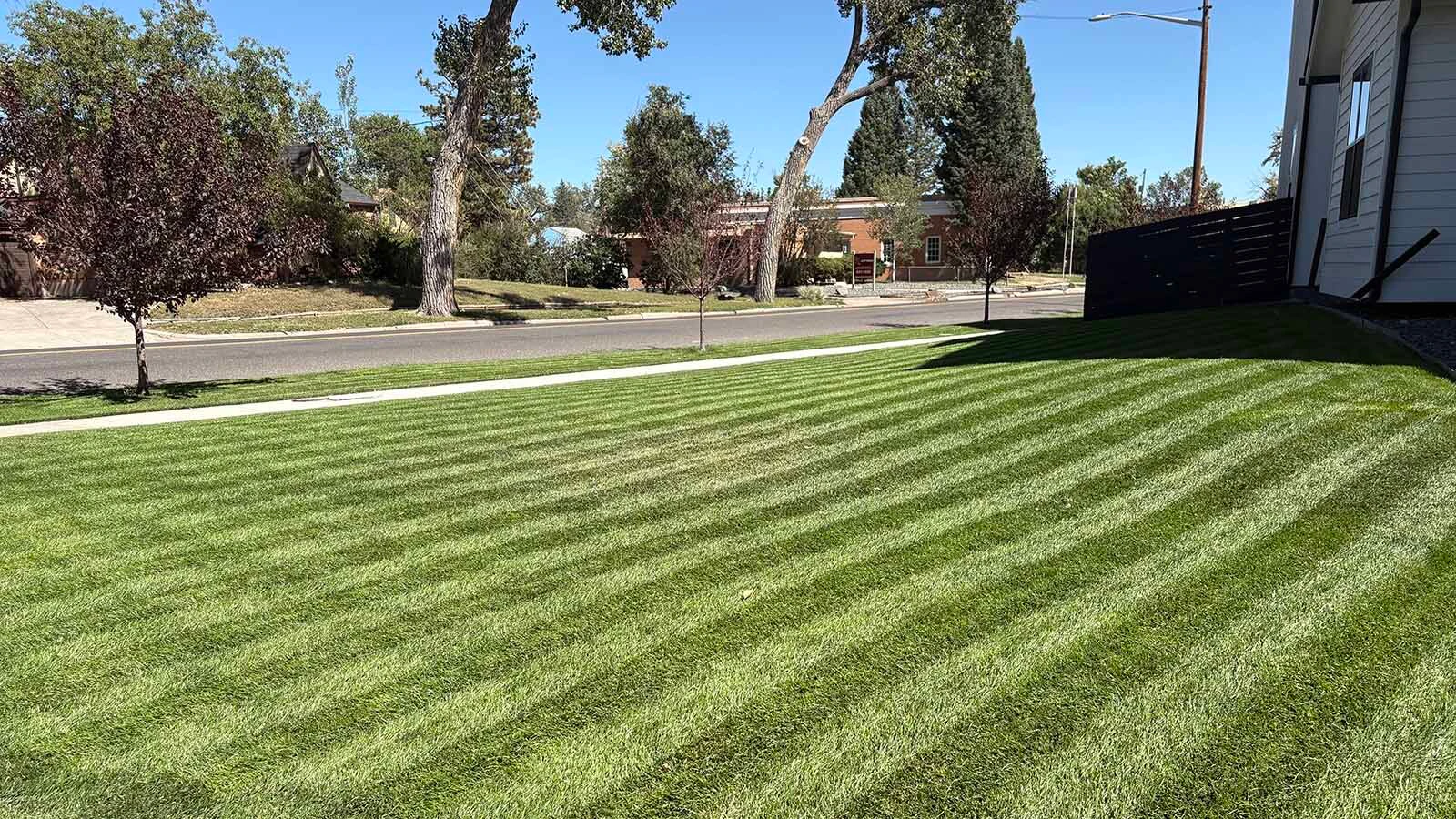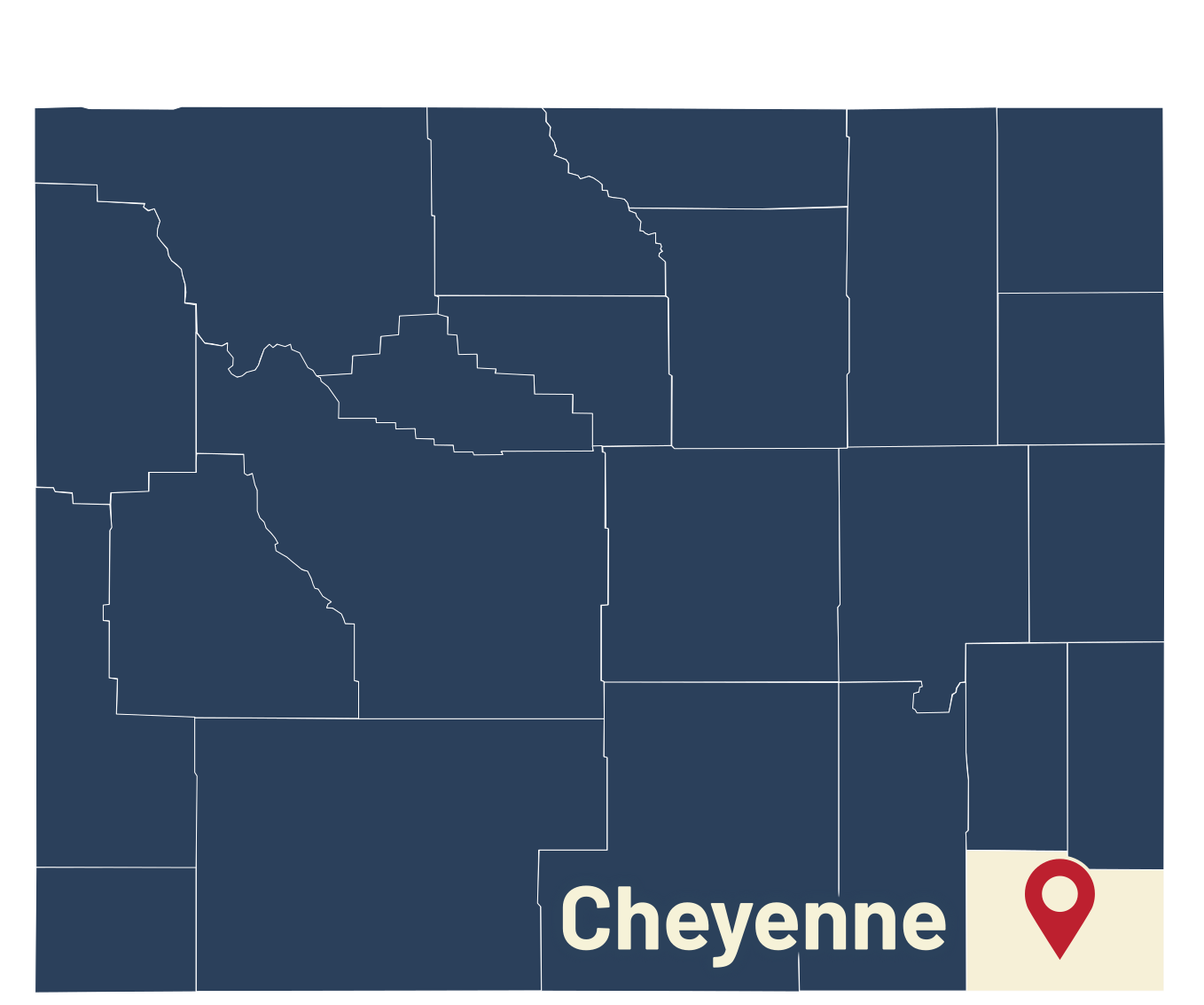
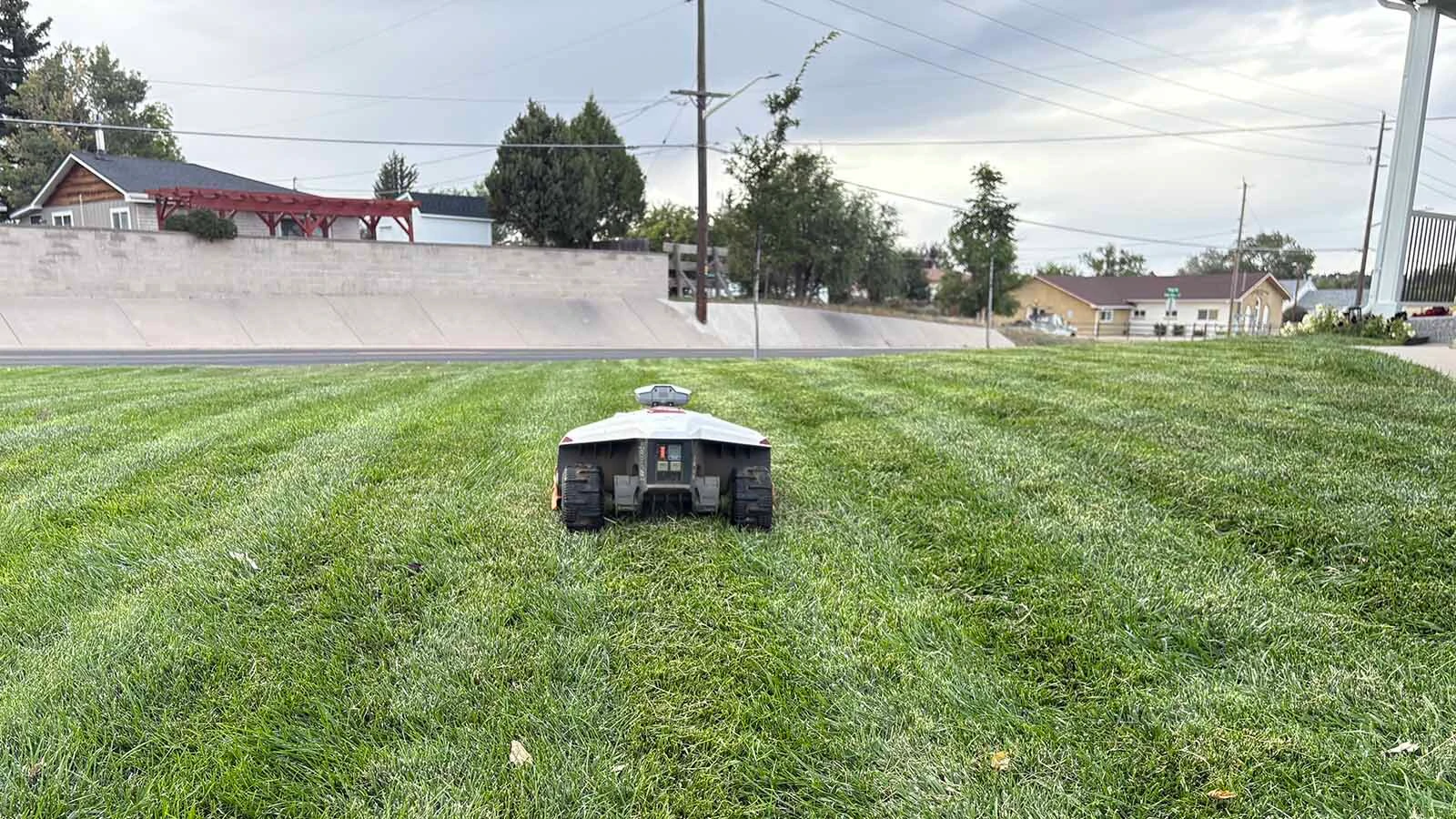
CHEYENNE — The lines in Shawn Ramsdell’s lawn are cut so precisely and with such deep definition they could be mistaken for the outfield grass on a Major League Baseball field.
Not a single blade of grass is out of order, leaving all who pass by with the impression that whoever holds court over this lush, green tapestry must possess a near-obsessive passion for lawn care.
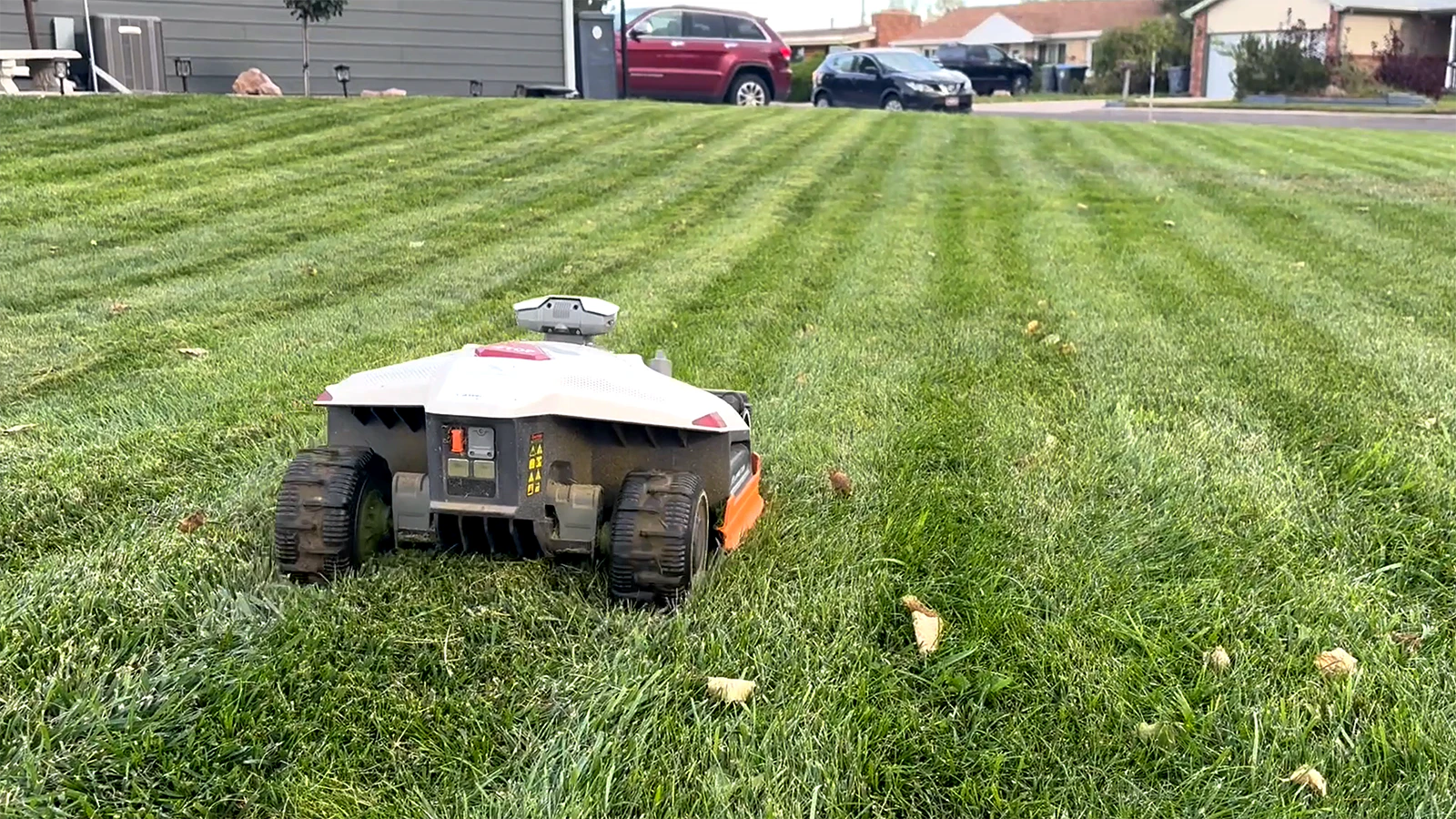
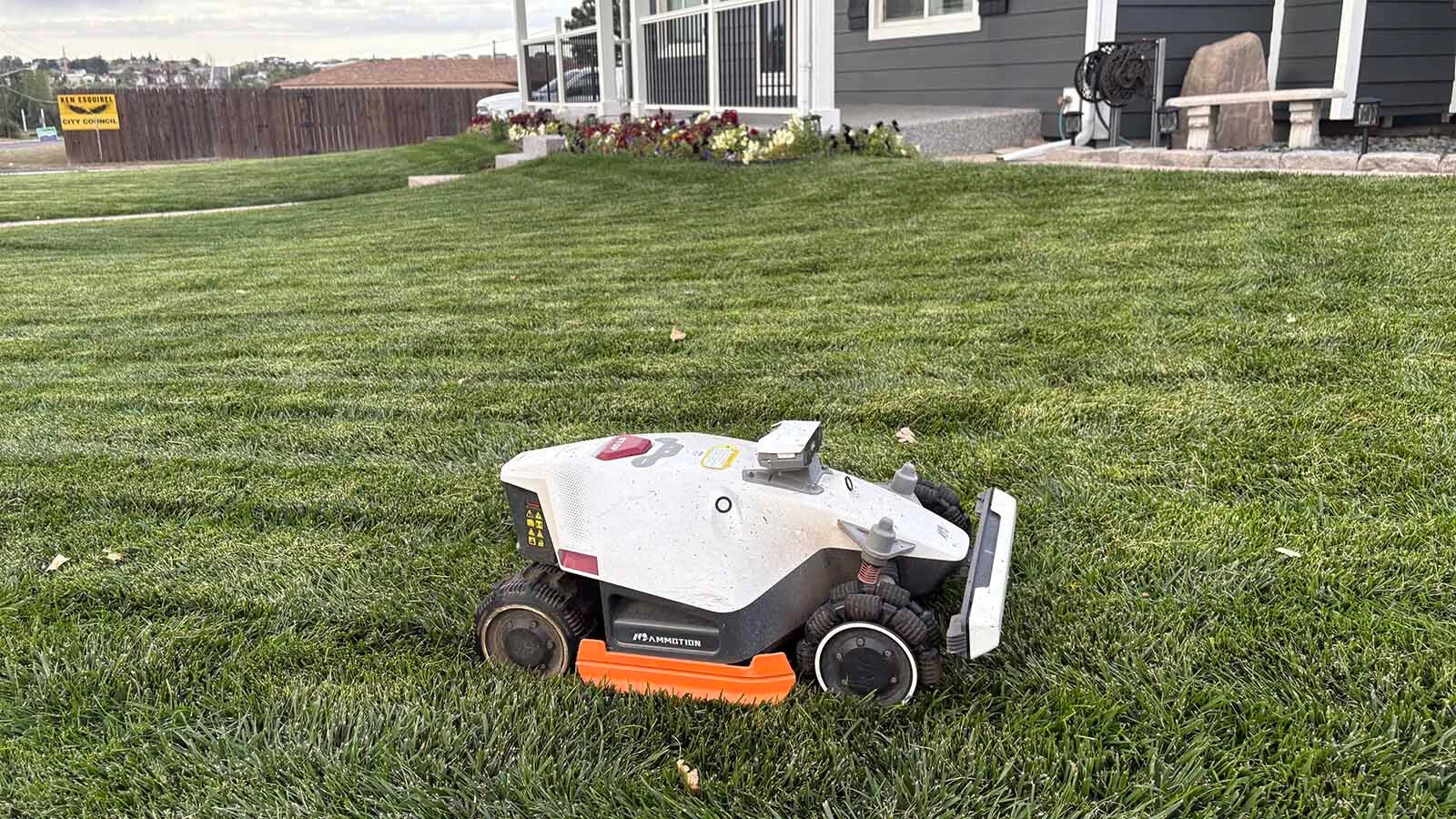
In reality, tending this emerald haven took almost no effort on Ramsdell’s part. It’s all thanks to the work of a robotic lawn mower.
As the robot trundles along, even navigating sharp turns and tough-to-reach spots along a fence line, Ramsdell can kick his feet up and enjoy more of life.
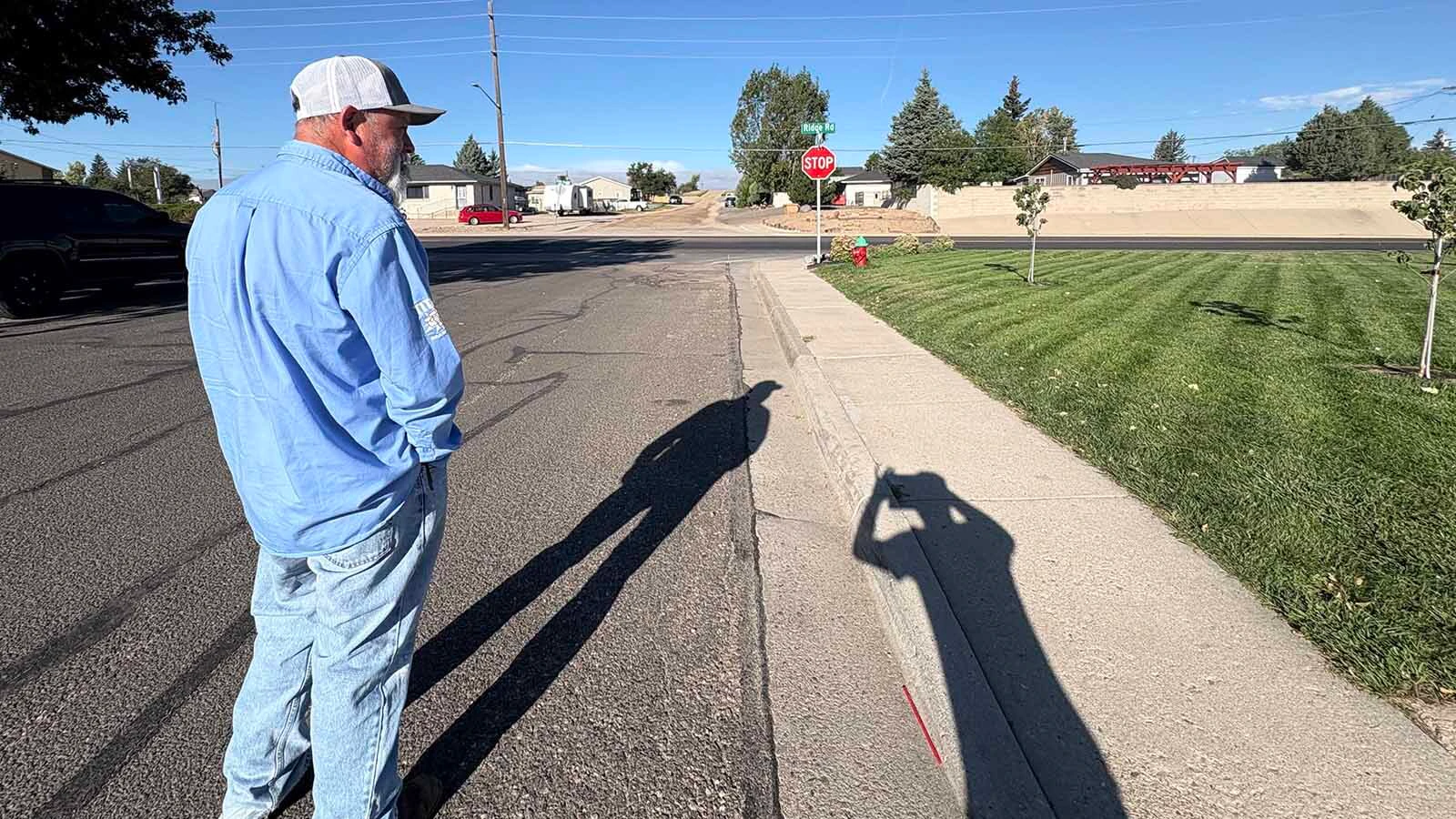
His twice-weekly-cut lawn has become the talk of his neighborhood, with random strangers often stopping to gaze at the masterpiece of sod.
One time, he said, a woman asked if she could walk barefoot through it, to which he obliged.
“We get a lot of compliments, and it’s 90% because of the mower,” Ramsdell said.
Golf Course Robots
Businesses are investing in robot mowers too.
On the western side of the state at the Targhee Village Golf Course in Alta, the mountain business is using a fleet of a half-dozen Kress robotic mowers to cut the course.
Shandy O’Neal, assistant golf pro at the club, sees robot mowers as serving the same role cutting golf fairways as robot vacuums do sucking up lint from a carpet.
They can dictate specific zones for each mower, so when one bot chops the rough, another takes a more fine-tuned comb to the fairways.
O’Neal said the course has saved a significant amount of time using the robots, which perform most of the grass cutting.
“The course is in absolute great shape just because of those guys,” O’Neal said.
The “mowbots,” as some refer to them there, have become a customer favorite on the golf course as well, with many people suggesting they stick fake mustaches and eyebrows on the mowers. One bot was even seen wearing a cowboy hat this season.
“It’s definitely a head-turner,” O’Neal said of the mowers.
Sign Of The Times Or Just Another Tool?
We are living in an increasingly automated and digitized world, with breakthrough technological developments occurring on a near-daily basis.
Robots are moving into factories and warehouses to perform more and more tasks, and artificial intelligence is starting to outsmart the developers who designed it.
Cars now feature self-driving capabilities, and simply by reading this story, you’re almost certainly using digital technology.
When asked if he was concerned the rapid increase of computerized and robotic systems being used in our modern tasks could be a sign this technology could overtake mankind, O'Neal didn’t express concern.
Rather, he simply sees investing in robot lawn mowers as a move most golf courses will take in the near future.
Ramsdell expressed some concern, however, but is optimistic that humans will still be able to block bad actors in most circumstances.
Also, the robots haven’t stolen any jobs at Targhee Village yet.
O’Neal pointed to the fact that relying on the robot mowers has allowed his staff to pursue other projects like adding a par-3 and an 18-hole mini golf course to the course this summer.
As technologically advanced as the robot mowers are, they can still make mistakes.
O’Neal said the robots will occasionally get stuck on an errant sprinkler head or roll over golf balls, and at least one has become stuck in a pond.
They also have certain limitations on uneven ground, which is why his staff still performs clean-up laps after the robots are done and still manually cut all the greens.
When Ramsdell’s previous robot mower got stuck on the edge of a flower garden, it allowed someone enough time to steal the mower.
Time Is Money
Most robot mowers these days run about $2,500 to $3,500.
Cheyenne resident Nick Coonce said he bought his robot mower to save time and take care of his lawn when he’s out of town.
He travels frequently for work, so when he returns home to Cheyenne, he wants to focus on spending time with his family, not worry about an overgrown lawn.
About two years ago, Coonce bought a Mammotion Luba 2 AWD Robot Lawn Mower. Once the mower is constructed, the owner must manually drive it around the perimeter of his lawn zones with a joystick pad.
This is the same mower Ramsdell has, and he bought his for the same reason: to buy himself more free time. Typically, mowing his lawn would be a 90-minute task.
“On a 90-degree day, I’d rather be on my motorcycle or side-by-side,” he said. “Now we have more time where we can do that.”
The Luba 2s can mark “no-go zones” in the Mammotion phone app to help the mower navigate around trees, flower beds, pools, or any other obstacles that need to be avoided.
An owner can also set up connecting paths between different mowing zones if they have separated areas.
The mower also comes with 12 blades and features zero-turn capabilities for turf protection.
The mower is so automated that it can roll itself out and start mowing at any pre-scheduled time the owner sets, and can fully function after dark. If it starts to run low on battery, it brings itself back to the charging station.
It also can cut custom patterns in the grass like zig-zags, chess boards and the logos of your favorite sports teams.
At Targhee Village last season, the course used its robot mowers to cut a giant “TV” in the grass for the initials of the business.
A Brief History
Although they’ve only recently gained widespread popularity, automated lawn mowers aren’t simply another new-fangled product born out of the AI revolution.
The first version of a robot mower came out in 1969 with the MowBot introduced and patented by S. Lawrence Bellinger. It weighed a whopping 125 pounds and sold for $800, the equivalent of more than $7,000 today.
As time passed, robot mowers became more affordable for the everyday consumer, yet still remained a niche product.
The introduction of the Bosch Indego in 2012 represented a breakthrough moment for robot mowers, the first automated mower built with lawn mapping.
Up to this point, robotic mowers had been limited to cutting in a random pattern, leading to inefficient performance despite the man-hours saved.
Now most robot lawn mowers come with built-in visual perception, image processing and AI-based controls to spot undulations in the grass and various obstacles. Many also rely on satellite connections for exact positioning.
But what about the sense of fulfillment one gets gazing upon a freshly cut lawn you mowed yourself?
Coonce said he doesn’t miss it.
“I don’t mind mowing, but if I was home I don’t want to spend time doing that when I can hang out with my family,” he said. “It just takes up that time."